
Sussex Spaniel






Warning: Illegal string offset 'label' in /home/panda/sites/zoonika/wp-content/themes/zoonika/template-parts/animals/animals-param-item.php on line 32
Ð


Breed Description
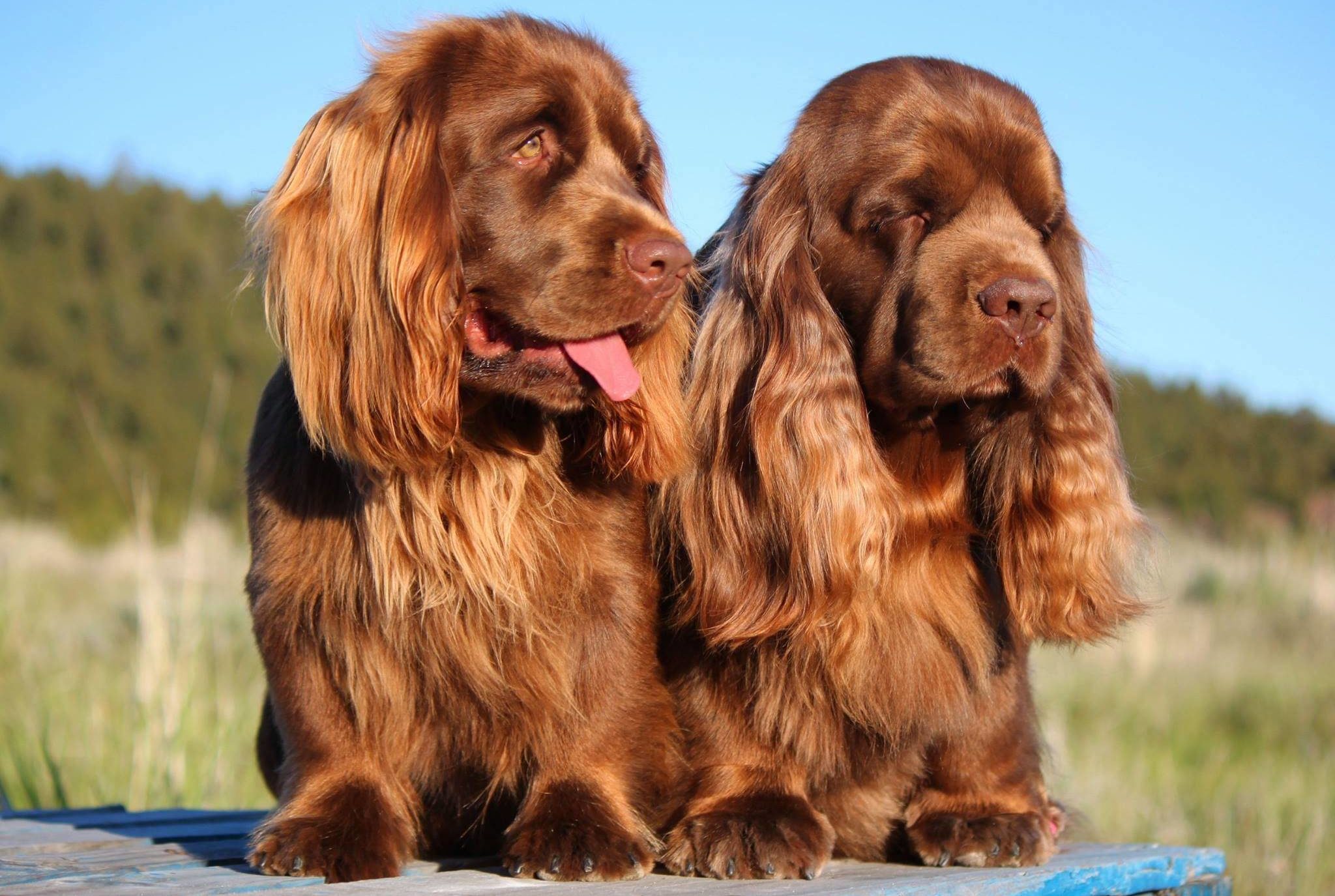
To get straight to the point, I’d like to first highlight the uniqueness of these stocky and short-legged hunting dogs. In 2004, only about 300 new puppies were registered in the United Kingdom, so not every hunting dog breeder in our country is familiar with the Sussex Spaniel.
Despite their rarity and relatively high cost both in the UK and abroad, Sussex Spaniels are older than Norfolk Spaniels, Springer Spaniels, and Field Spaniels. The breed’s history begins in West Sussex (which is why they are often called Sussex Spaniels) around the 1790s. A well-known hunter in those parts, Augustus Fuller, had a pressing need for sturdy dogs capable of swiftly and efficiently navigating the thick underbrush of the area. Additionally, he required a dog that could point to game. The Sussex Spaniel, Mr. Fuller’s pride, has the ability to indicate game simply by sticking its tongue out in its direction and possesses such thick skin that it is not afraid of cuts from sharp stones or broken branches.
It should be noted that the first hunting dog breeder to start selling puppies across the Atlantic was able to rank the Sussex Spaniel among the top 10 hunting breeds in the American Kennel Club in 1884. The first Sussex Spaniel was registered in Britain in 1872.
For reasons unknown, the breed’s popularity began to decline, with kennels breeding Sussex Spaniels, which were priced somewhat higher than other British spaniels, gradually disappearing or shifting their focus to other hunting dogs. Interest fell until 1940, and only after the most brutal war of the 20th century ended was a famous hunting dog breeder from the Foggy Albion, Mr. D. Freer, able to restore the population, leading to the official registration of 10 Sussex Spaniel puppies in 1947. The English also recognized the breed as indigenous and added a special designation, “vulnerable,” due to its extremely low population numbers. This sad title is assigned when fewer than 300 puppies are born within a year. For example, in 2008, breeders and kennels in the UK were able to register fewer than 60 Sussex puppies.
A year later, in 2009, at the 133rd Westminster Dog Show, the Sussex Spaniel Stamp won the grand prize for “Best in Show.” At that time, the dog was already 10 years old, making it also the oldest dog to conquer the podium at such an event.
In both the UK and the US, the breed is valued more highly than in other countries. There, the breeding is handled by the most renowned kennels and breeders. The breed is recognized by the kennel clubs of America, the UK, New Zealand, and is also listed in the American Sphynx registry.Choosing a kennel in our country is not easy, as the list of Sussex Spaniel breeders is very short. Additionally, since the breed is extremely rare in Russia, its price is quite high, and to determine the exact cost, it is necessary to inquire about the price of a puppy from a Sussex Spaniel kennel.
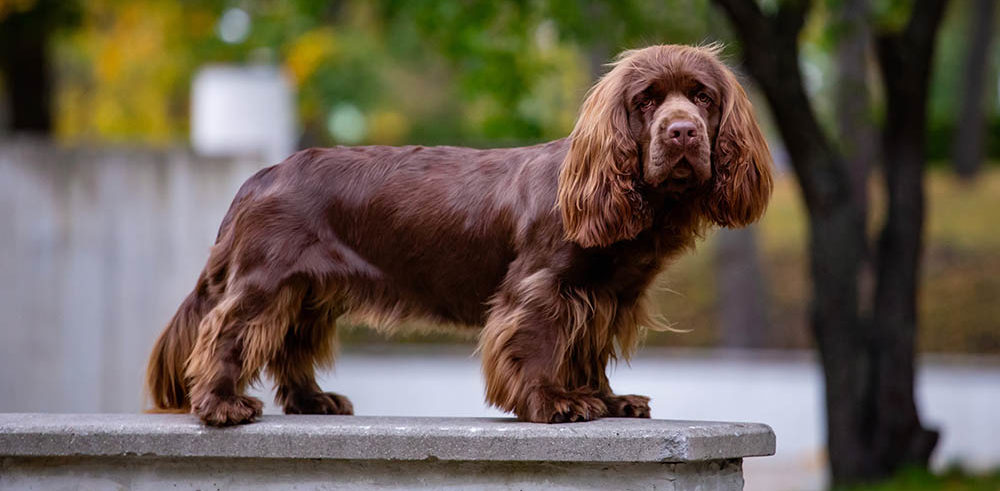
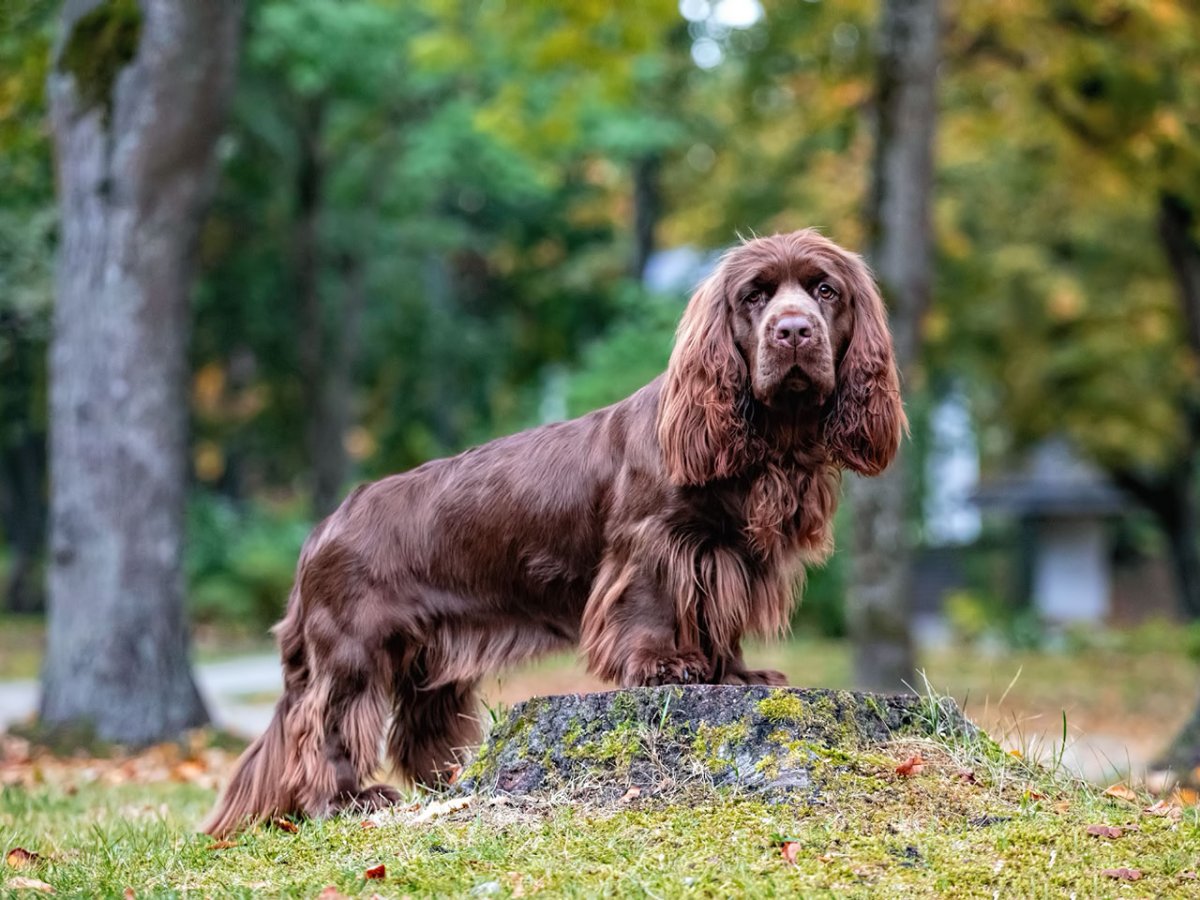
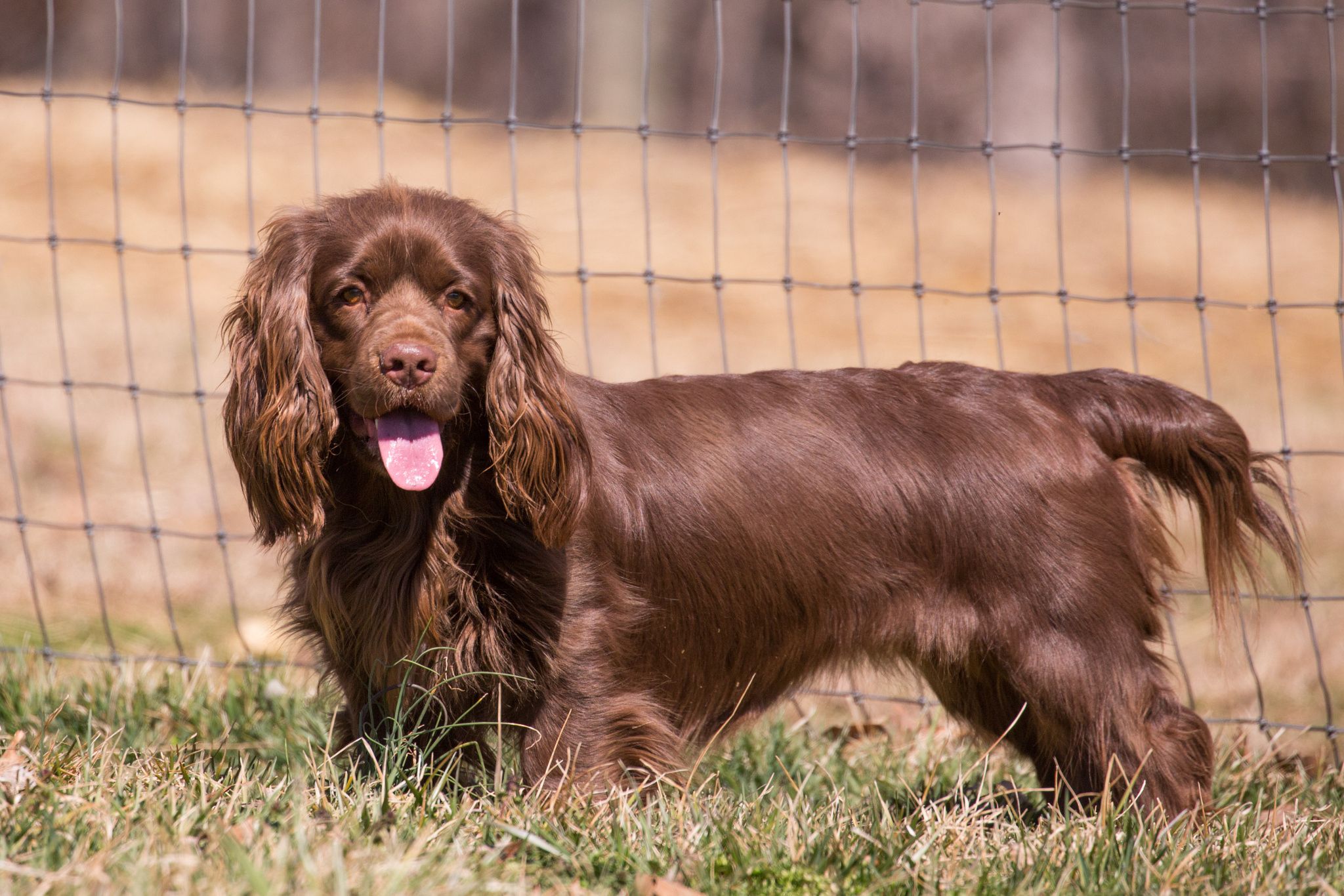
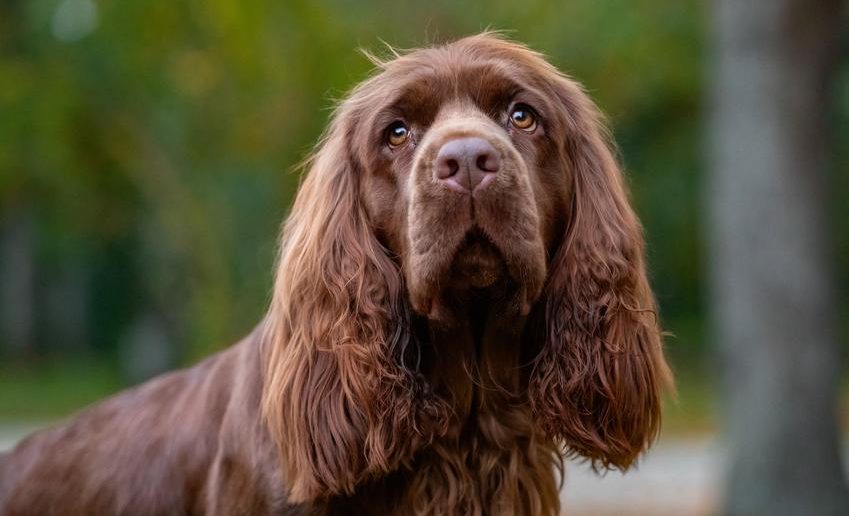
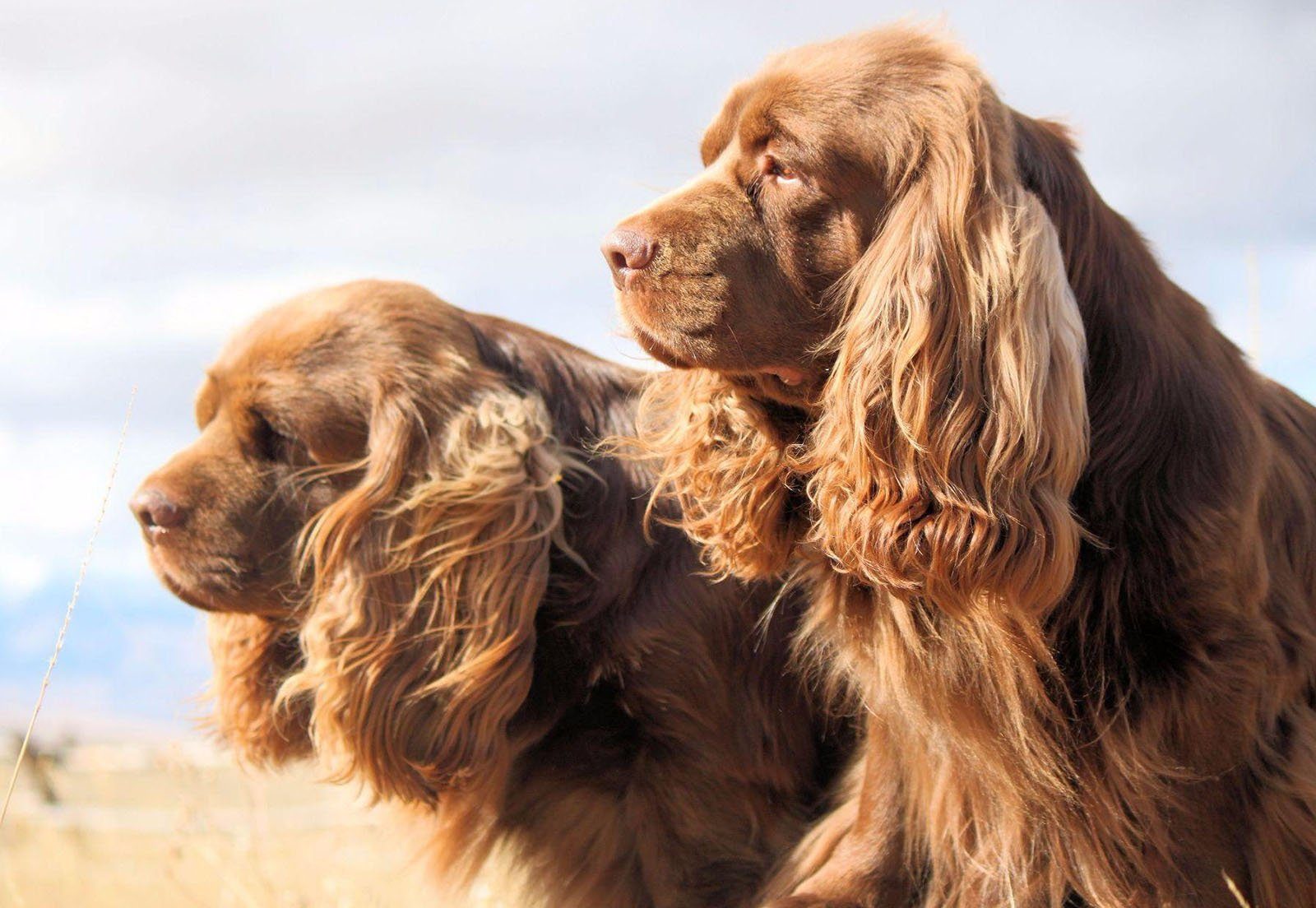
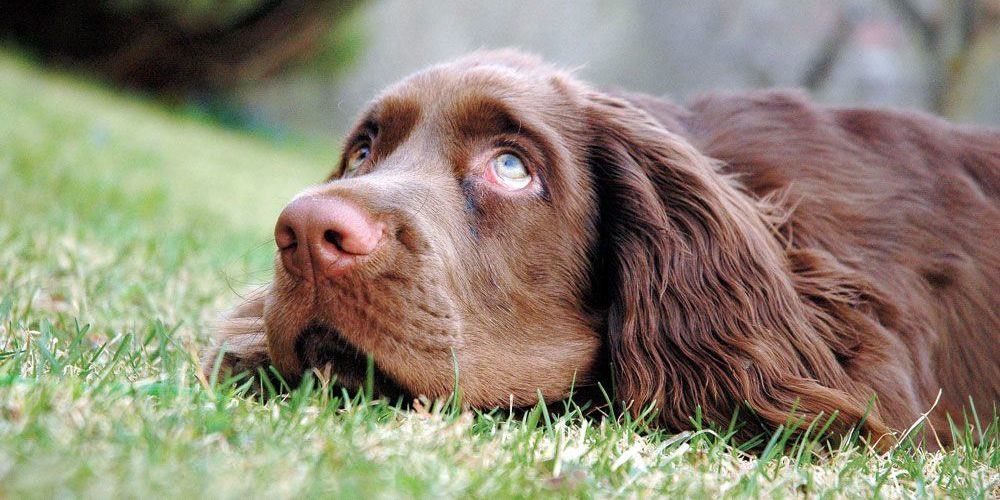
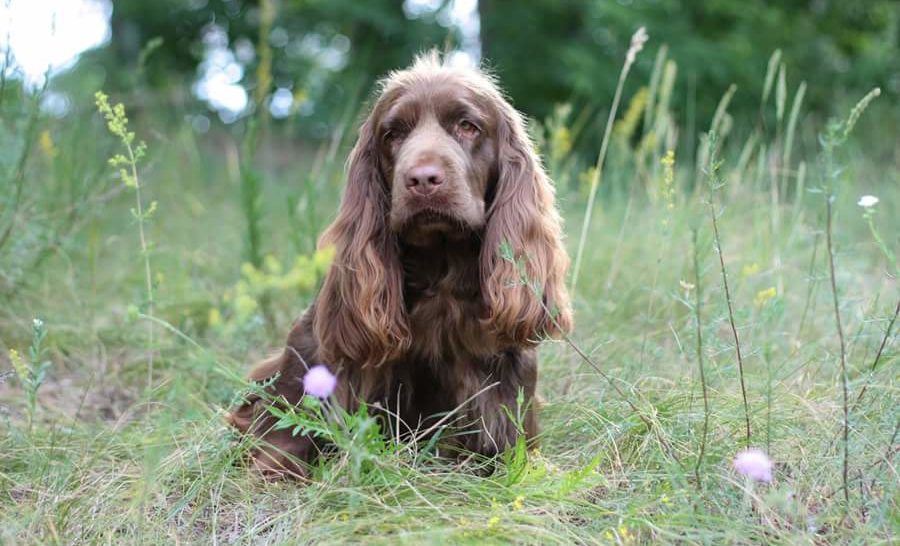
Appearance Among the various spaniel breeds, the Sussex spaniel is considered one of the largest. Its somewhat elongated body can reach a height of 40 – 43 cm at the withers, and it can weigh up to 23 kilograms. They are relaxed and somewhat phlegmatic; they were deliberately bred for retrieving wounded game, most often birds, in the landscapes of Sussex, England. A characteristic feature is not only their unique way of moving and the color of their coat, but also their loud bark, which the dog uses to signal the presence of game during hunting. Their large ears, which hang down on either side of their head, resemble the structure of a Basset Hound’s ears. Their relatively large head appears even bigger in proportion to the short legs of this dog. Despite their agility during work, Sussex spaniels prefer to lead a measured lifestyle when kept as companion dogs. They take on a particularly philosophical, aristocratic look when gazing into the distance while sniffing the air. True intellectuals among hunting breeds. The average lifespan is about 14 years, and with diligent care, this duration can be extended. You can find photos and prices for purebred Sussex spa


Отличительные черты

Голова

Морда

Уши

Глаза

Зубы

Корпус

Конечности

Хвост

Шерсть

Окрас
Character
The Sussex Spaniel is a wonderful partner for all family members. The breed is known for its abundance of positive traits and relatively gentle temperament.
Every time you see a well-trained Sussex, admiration inevitably takes hold. Almost every professional breeder of the breed highlights the following positive characteristics of their nature:
Loyalty: these rare, charming dogs are known for their high loyalty to their owners. They form strong bonds with all family members without singling anyone out. During hunts, they strictly follow their owner’s commands. Additionally, they are capable of serving protective functions. Despite their hunting purpose, many breeders of Sussex Spaniels note their developed protective instincts and recommend them as excellent companions.
Affectionate: they love being around people. In large cities, where space is limited, Sussex Spaniels can be like caregivers for elderly owners, constantly showing them affection.
Intelligence: their high intellect and ingenuity work quickly. This trait makes them good learners. They usually grasp new commands and tasks quickly. They are ready to spend hours participating in the search for their favorite toy-solving such puzzles can be considered their specialty.
Calmness: overall, Sussex Spaniels have a calm and balanced character. They are not prone to excessive excitement and can be quiet and serene in a home environment.Socially oriented: they are sociable, happy to meet new people and other animals, and enjoy playing and interacting with them.Along with all their virtues, some “controversial” traits may emerge in their character, and before finding breeders of Sussex Spaniels, potential owners should learn about these as well:Independence: with some owners, they can display independence bordering on stubbornness. This is especially noticeable if the necessary bond with the owner is not developed or if there is a lack of proper training.Need for attention: their affectionate nature can turn into an overly insistent craving for attention, which can become somewhat intrusive if they are frequently left without sufficient attention and activity.Tendency to obesity: individuals that often stay at home or live in cities can develop a tendency towards excessive laziness and inactivity, often suffering from excessive weight, which can lead to health problems.
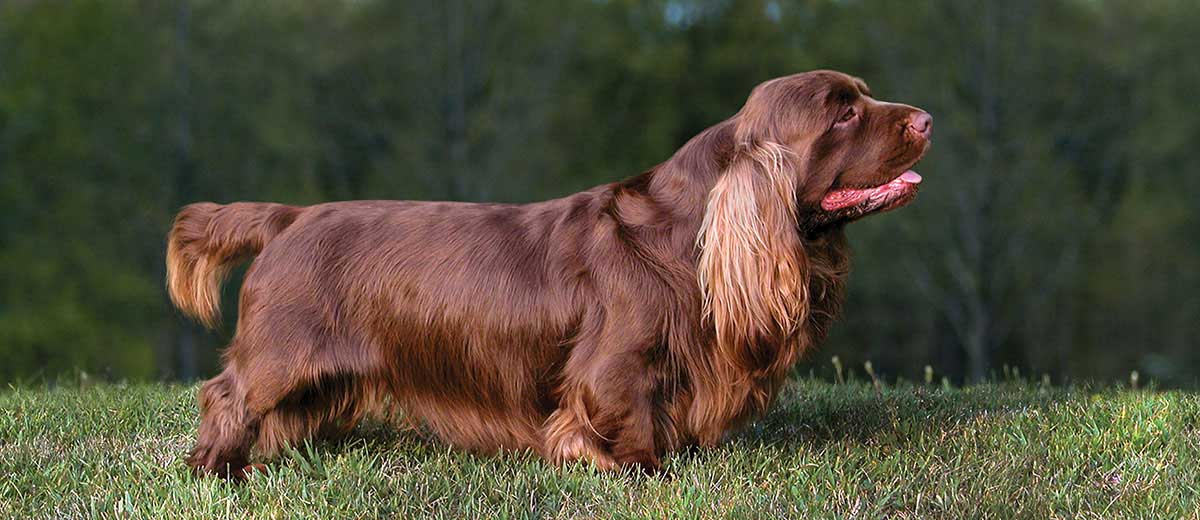
"The only and the loudest."
This is the only spaniel that signals its location vocally when hidden in thick grass during work. This is likely a result of the infusion of hound breeds.Care and Maintenance
If your family enjoys the Sussex Spaniel and you’ve decided to purchase one, experienced breeders of hunting dogs, as well as companion dog kennels, offer several recommendations for caring for these charming pets.
Physical Activity.
It’s essential to ensure that your dog gets plenty of exercise. Even if the dog was bought as a companion, physical activity during daily walks positively affects not only the animal’s body but also its mental state and character development. Long walks and playtime help them expend excess energy and maintain a healthy weight.
Intellectual Stimulation.
These dogs are intelligent and clever, so they require activities that stimulate their minds. Puzzle games, treat hunting, and participation in canine training sessions contribute to their development-this is noted not only by breeders. Dog kennels, which consistently maintain high prices, occasionally host competitions where Sussex Spaniels frequently emerge as winners.
Regular Veterinary Check-ups.Preventive check-ups for Sussex Spaniels to detect potential health issues should not be viewed as a sign of the breed’s weakened immunity. On the contrary, regular exams help maintain strong health-any experienced hunting dog breeder will tell you this. Adhering to a vaccination schedule and other preventive measures (like deworming) will keep your Sussex in good condition.Balanced Diet.This breed tends to gain weight quickly, so it is the owner’s responsibility to ensure a balance of nutrients in their diet. Proteins, carbohydrates, vitamins, and fats must be provided along with minerals according to their age, lifestyle, and individual characteristics. Holistic or super-premium foods work best for this. It’s unwise to skimp on your dog’s nutrition since a visit to the veterinarian, along with subsequent examinations and treatments, will likely cost more. Moreover, controlling portion sizes is easier for the owner than calculating calories with a natural diet.As recommended by veterinarians and well-known dog breeders in Russia, it’s best to choose dry food formulated for hunting dogs or large breeds and to follow the instr
It's very rare!
The breed is very rarely found not only in Russia. Finding a Sussex spaniel kennel even in the UK doesn't allow for immediate purchase of a puppy, as there is a waiting list for several litters in advance.Training and Education
These hunting dogs are considered intellectuals, and many Sussex Spaniel breeders around the world confirm this. However, an owner may encounter certain difficulties in caring for such a pet if they do not pay due attention to socializing and training the puppy.
We suggest you find a Sussex Spaniel kennel on our site and familiarize yourself with several recommendations prepared by renowned dog breeders.
Training Basic Commands. Start training with basic commands like “Sit!”, “Lie down!”, “Leave it!” and “Place!”. Gradually increase their complexity and do not expect immediate results. To establish initial rules and improve communication with your pet, it is recommended to engage in a playful manner for 15-20 minutes a day in a quiet environment, beginning from the first days in the new home.
Positive Reinforcement. Use the method of rewarding during the training process. Reward the dog with treats, praise, or toys for correctly following commands to reinforce desired behavior. Avoid punishing for incorrect command execution or misunderstandings.
Socialization with Other Animals and People. It is essential to start socializing the puppy at an early age, introducing it to various animals, people, sounds, and situations. However, this should be done gradually and under supervision. Visiting public places, engaging with other dogs, and interacting with new people will help your pet become a confident and socially adapted dog.
Patience and Consistency. Training requires patience and consistency. Be patient and constant in training your Sussex Spaniel, use clear signals, and repeat exercises systematically to achieve good results. Do not overload it with overly complex tasks and choose times after sleep and before meals when it is most active. Ensure that the surrounding environment is calm.As practice shows, following these recommendations helps make raising a Sussex Spaniel a more effective and enjoyable activity for both you and your pet. Zoonyka offers puppies with documentation and health guarantees.
Not a hippopotamus, but a dog!
It is noted that the skin of the Sussex Spaniel is very thick. Some breeders of hunting dogs jokingly refer to their favorites as hippos in the dog world for this reason.
How to Choose a Puppy
In Russia, purebred Sussex Spaniels are quite rare. However, for true hunting enthusiasts and fans of companion dogs with a stable temperament, there are several recommendations that can make the purchase easier.
First and foremost, it is important to find a dog kennel with current photos and prices at the time of selection. Often online, you’ll come across dog kennels that list outdated prices for puppies or photos that have lost relevance due to a lack of new litters. For convenience, you can explore verified dog kennels on a map and make your choice from one of them. When purchasing, pay attention to the puppy’s health. When acquiring a Sussex Spaniel, ensure that the parents have negative test results for genetic diseases and confirm that the puppy shows no signs of illness or abnormalities.
During the inspection, note its behavior. A well-socialized and healthy puppy should be active, playful, and curious. Avoid any puppy that shows signs of aggression or excessive passivity.
Pay attention to its appearance, body structure, head shape, coat color, and ensure that the chosen puppy meets breed standards, along with documentation and pedigree. A wide variety of breeds can be found at Zooinika.
Health and Illnesses
Currently, it is known that the Sussex Spaniel is a generally healthy breed. There are no restrictions on breeding or registering new puppies. However, there are several health issues that are more common in Sussex spaniels. Even if you decide to buy a puppy from a reputable breeder, request hip dysplasia screening results from the breeders. This condition often affects one of the hip joints and can significantly impact the dog’s mobility, causing pain if it becomes chronic. Both the chosen puppy and its parents should have a negative test result.
Some hunting dog breeders report an excessive reaction to various allergens, which are most often found in natural food. To avoid this, it is recommended to seek a veterinarian’s advice and choose high-quality super-premium food.
Unfortunately, the structure of their ears predisposes them to more frequent ear infections due to accumulated moisture, especially in the summer heat after your dog has swum in water. Eye diseases (cataracts, glaucoma, retinal atrophy) complete this sad list.
If dental hygiene is poor, the formation of tartar is inevitable and can lead to more serious consequences. Thinking about it? There is a vast selection of ads on the Zoonyka map by city.
Содержание
-
1. Описание породы
-
2. Внешний вид
- 2.1 Голова
- 2.2 Морда
- 2.3 Уши
- 2.4 Глаза
- 2.5 Зубы
- 2.6 Корпус
- 2.7 Конечности
- 2.8 Хвост
- 2.9 Шерсть
- 2.10 Окрас
-
3. Характер
-
4. Содержание и уход
-
5. Дрессировка и обучение
-
6. Как выбрать котенка
-
7. Здоровье и болезни






Comments
Only registered users can leave reviews.
Enter