
Staffordshire Bull Terrier




Warning: Illegal string offset 'label' in /home/panda/sites/zoonika/wp-content/themes/zoonika/template-parts/animals/animals-param-item.php on line 32
Ð


Breed Description
England knows a thing or two about entertainment. Some rather unusual traditions, such as “Worm Catching” or “Cheese Rolling,” remain popular to this day. However, in the Middle Ages, there were much more serious and bloody forms of “entertainment.” This refers to the horrific, by today’s moral standards, spectacle of bull-baiting. A pack of dogs would savage a tied-up bull to death, and the organizers would earn significant profits by setting up betting pools. Typically, bulldogs participated, known for their particularly strong grip.
At one point, bull-baiting was outlawed, and dog fighting became the new trend. Naturally, there was no shortage of participants, but bulldogs, when faced with equally matched opponents, were not as agile as required. As a result, through the breeding of bulldogs, terriers, Dalmatians, and other breeds, the bull-and-terrier mix emerged. These dogs were noted for their strength, agility, and ferocity during combat. The breed quickly gained popularity, providing consistent additional income for their owners. Eventually, the breed underwent a makeover, with the most distinguishing feature being its egg-shaped head-the modern English Bull Terrier.
The Staffordshire Bull Terrier is a variety of the Bull Terrier that became the most widespread and popular in the Staffordshire region. It is impossible to name their exact ancestors, as breeders had only one goal: to produce a dog with excellent fighting characteristics, and they were not concerned with maintaining pedigrees or official documentation.
Soon dog fighting was banned in England, and those who organized it went underground. By the late 19th century, Staffies had nearly vanished because their working qualities (the ability to kill) became obsolete. Nevertheless, there were genuine enthusiasts of the breed who effectively restored their population and promoted their dogs, working diligently to preserve their appearance and change their temperament. As a result, Staffords became excellent companions for the elderly and even for children.
In the first half of the 20th century, in 1935, the first club for Staffordshire Bull Terrier enthusiasts was established, and a breed standard was created. At the exhibitions held, appearance and temperament were valued more highly than the dog’s working abilities. Purebred dogs became fashionable in Scandinavian countries and the USA, where dog fighting was long forgotten, and the breed is now regarded as one of the best family companions with a gentle character.
Today, the Staffy even serves as the mascot for Prince Charles’s Staffordshire Regiment and participates in parades, dressed in a special uniform. The breed’s popularity in England is enormous. Since the 2000s, it has regularly won prestigious dog shows in the companion dog category.
Appearance
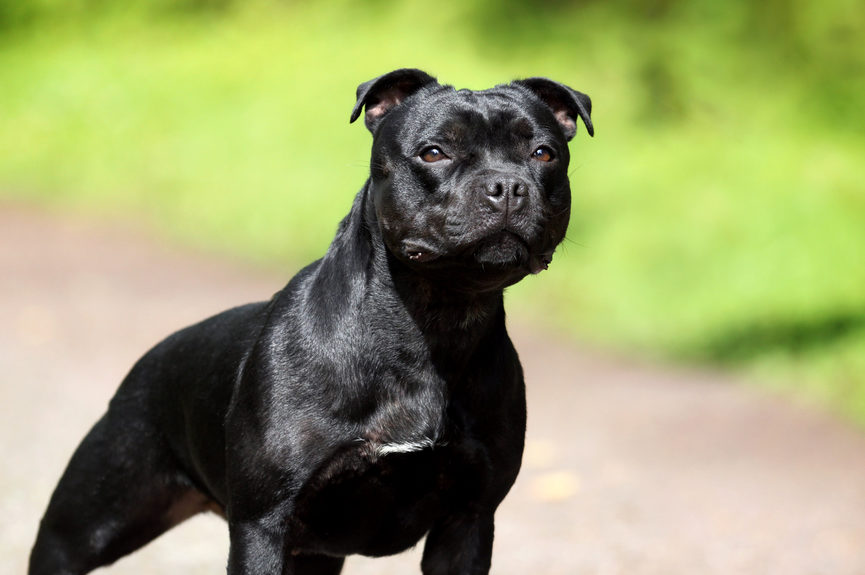
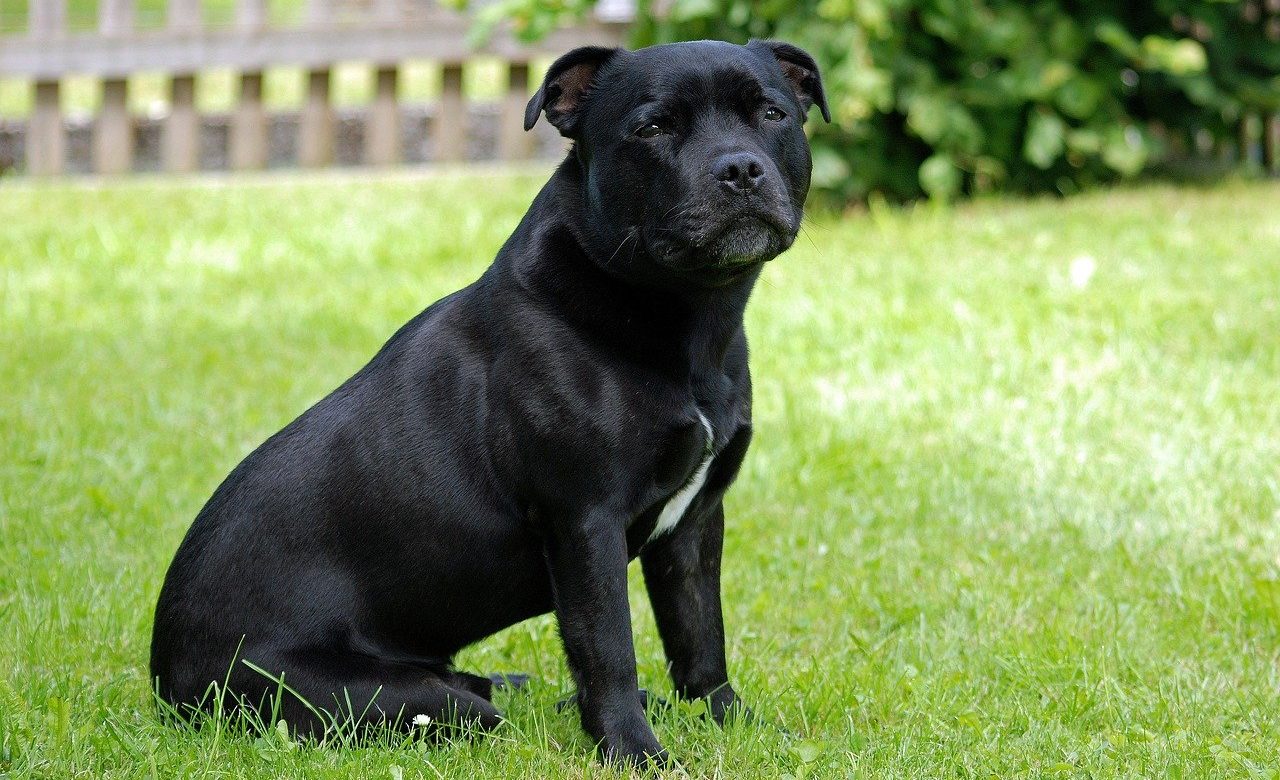
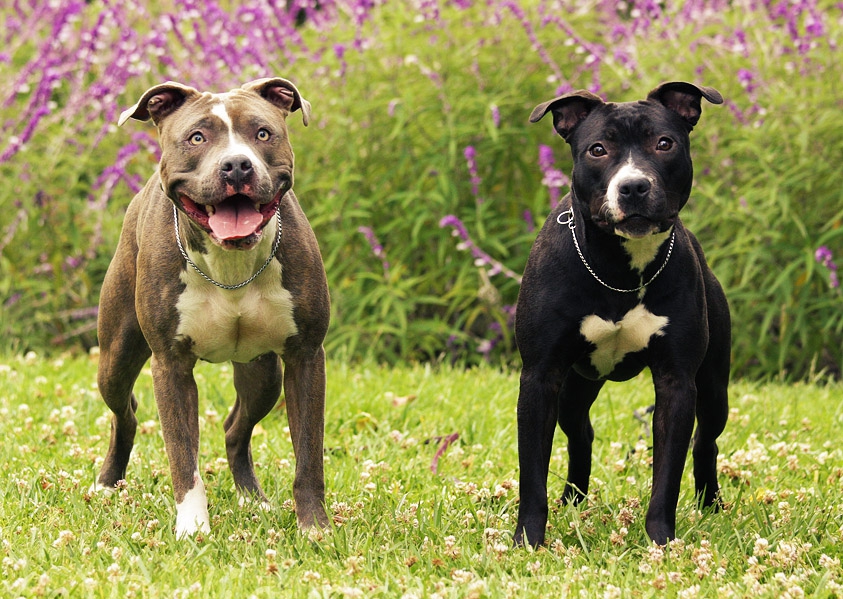
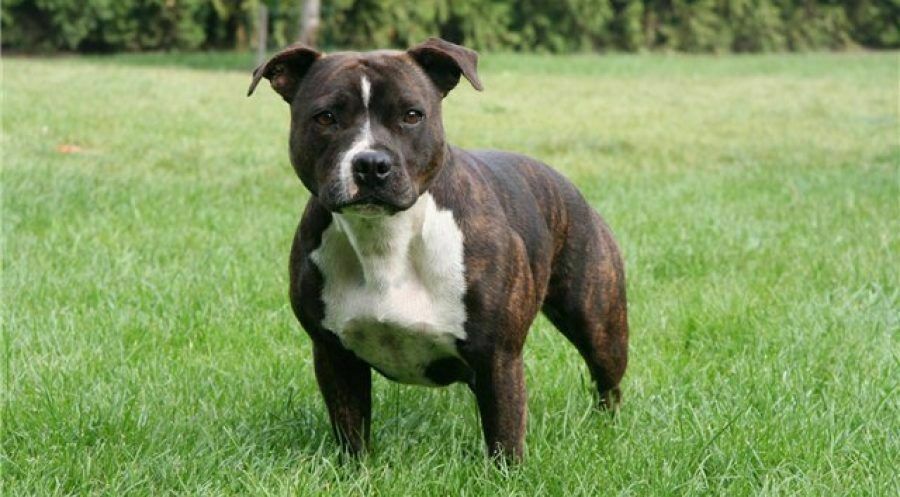
The most compact among the bull terrier family. When placed next to an American Staffordshire Terrier, a standard Bull Terrier, and a Staffordshire Bull Terrier, one can observe not only the size differences (the breeds are listed in decreasing order). It can be said with certainty that the Staffordshire Bull Terrier has the least intimidating appearance. Rather, it’s a “domesticated” dog than a classic “fighter” (a term used for bull terriers in England during the height of dog fighting and long afterward).
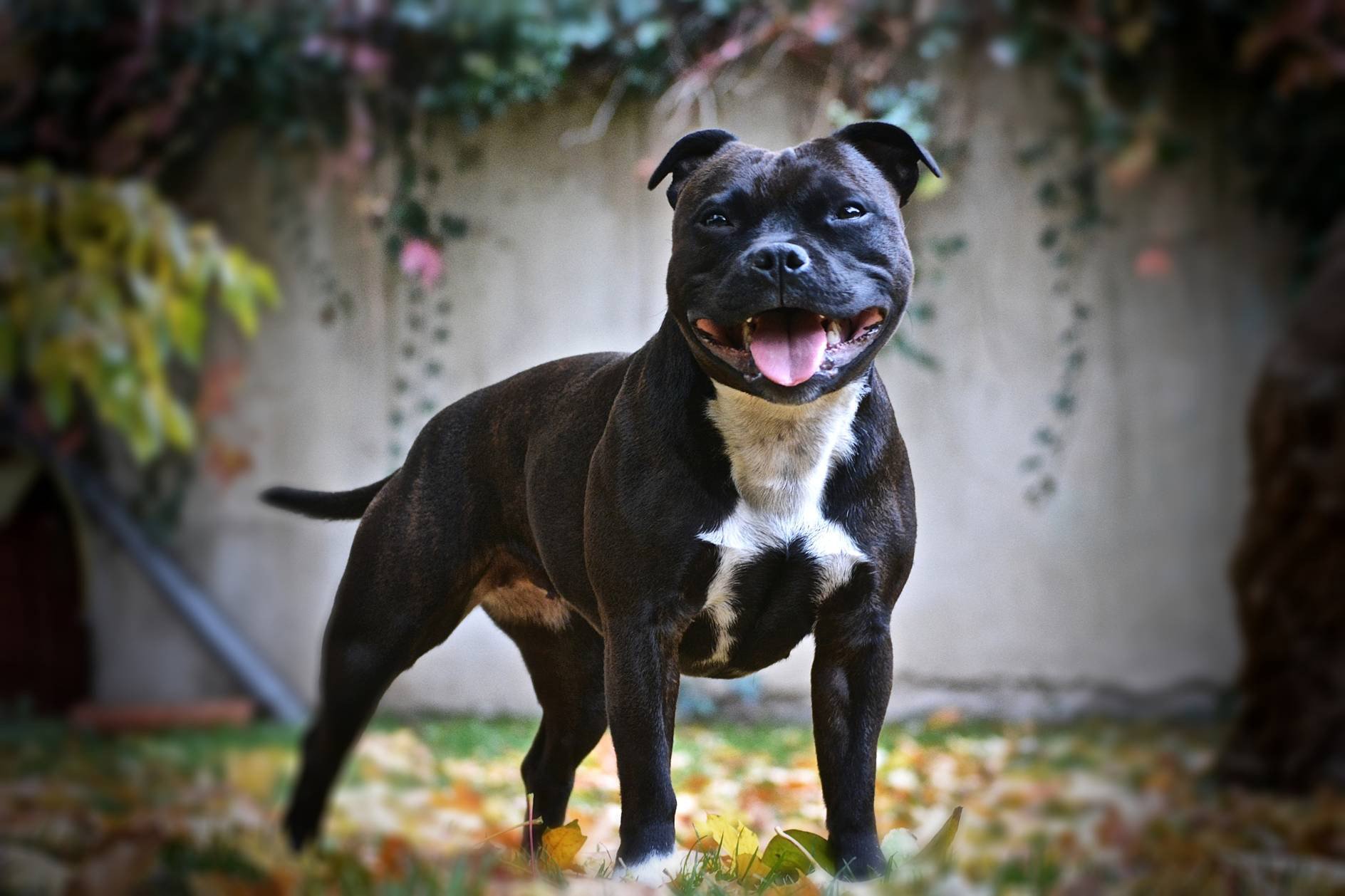
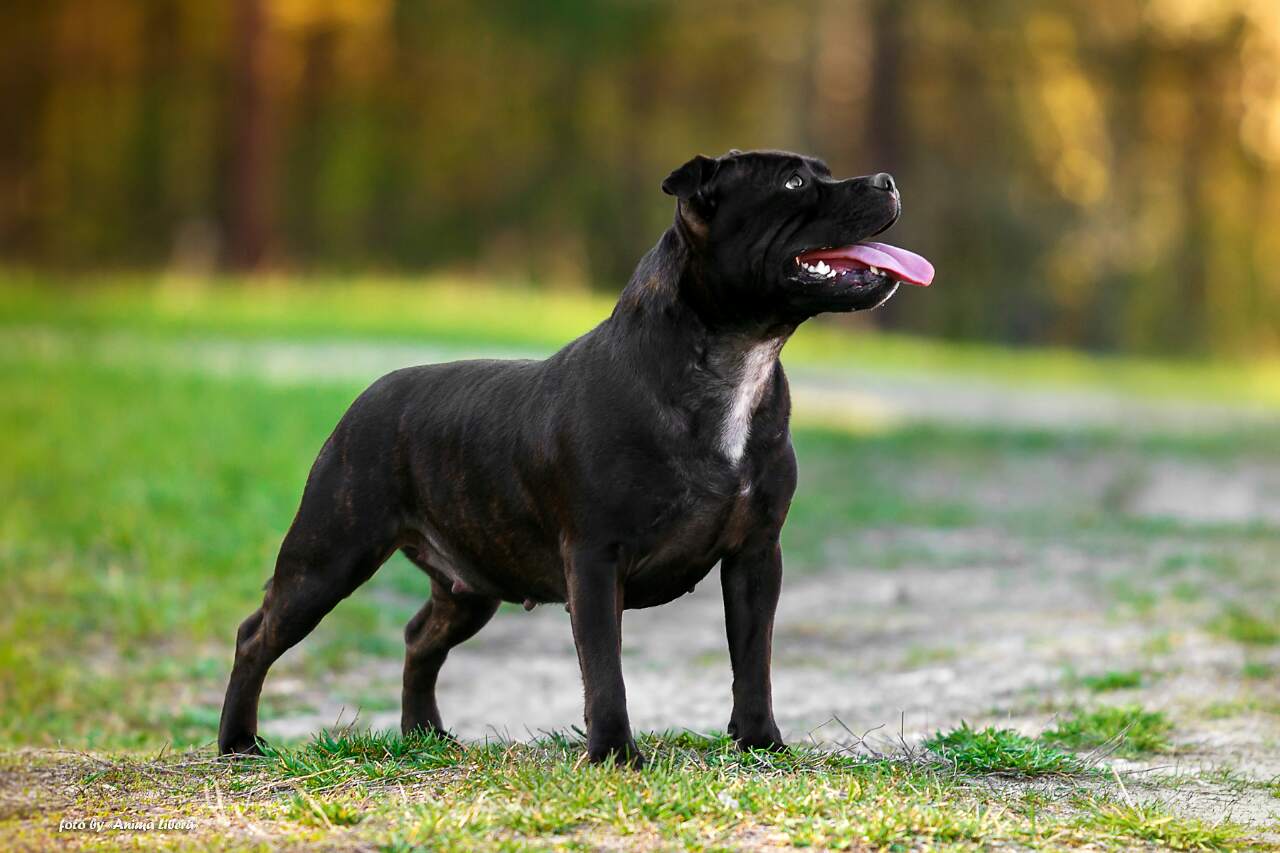
With a height of 35 to 40 cm, an adult dog should weigh between 11 and 17 kg, but in any case, the weight must correspond to the size of the dog. A powerful, stocky, broad-chested dog with an attentive and kind gaze currently prefers athletic competitions: agility, weight pulling for speed, and racing with bicycles.
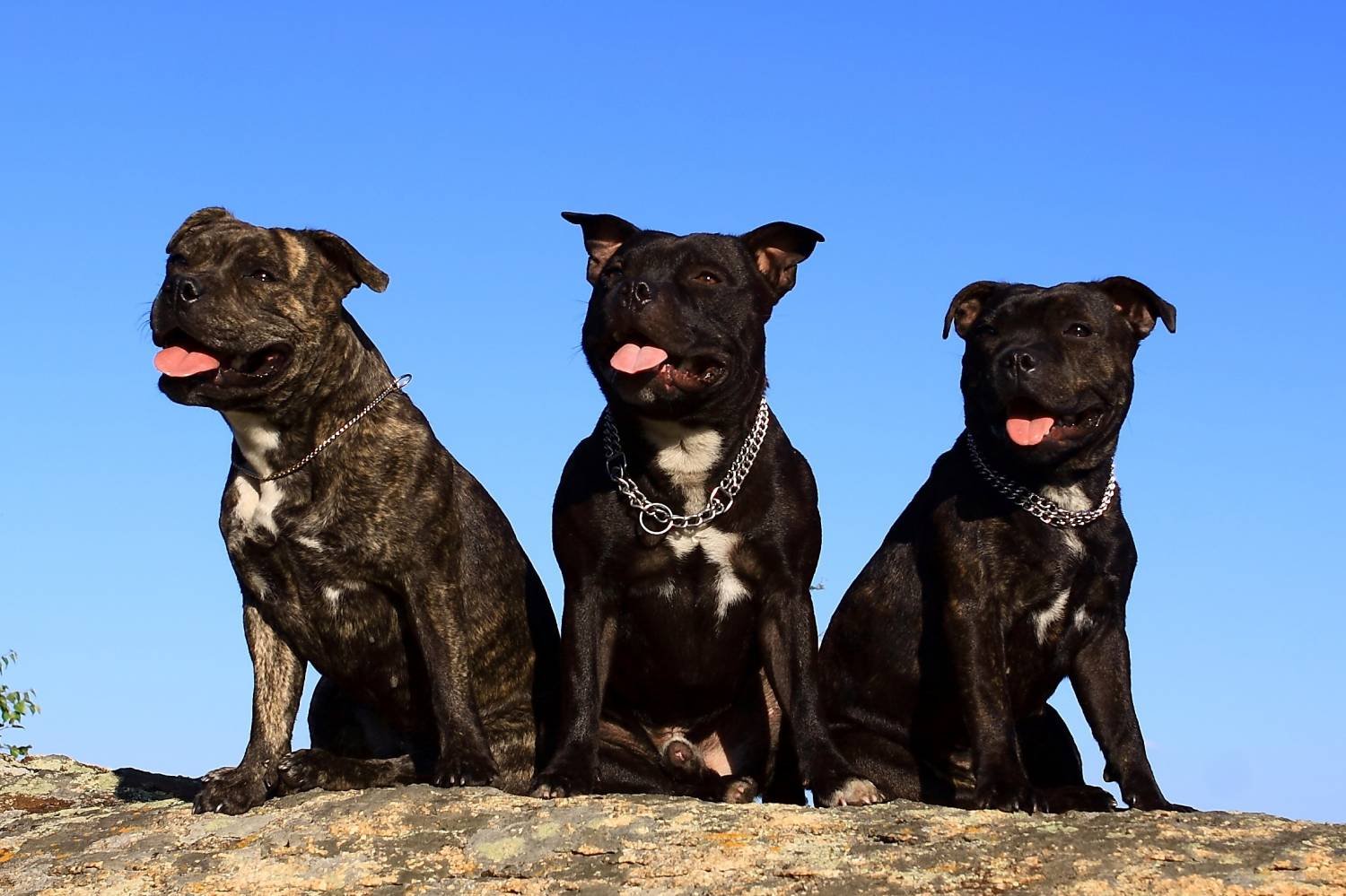
Its short, smooth coat accentuates the well-defined muscles. In its outlines, the Staffordshire Bull Terrier indeed resembles a bull: a strong, muscular neck, a broad chest, and a fairly narrow rear. It is, in a way, the bodybuilder of the dog world. At the same time, it is a very active animal that captivates with its agility and ability to wriggle out of any holds during play with its peers.


Отличительные черты

Голова

Морда

Уши

Глаза

Зубы

Корпус

Конечности

Хвост

Шерсть

Окрас
Character
Talking about the character of the Staffordshire Bull Terrier, many recall the brutal dog fights from various films or the memories of dog owners from the 90s. The heavy, bloody legacy continues to haunt the breed to this day.
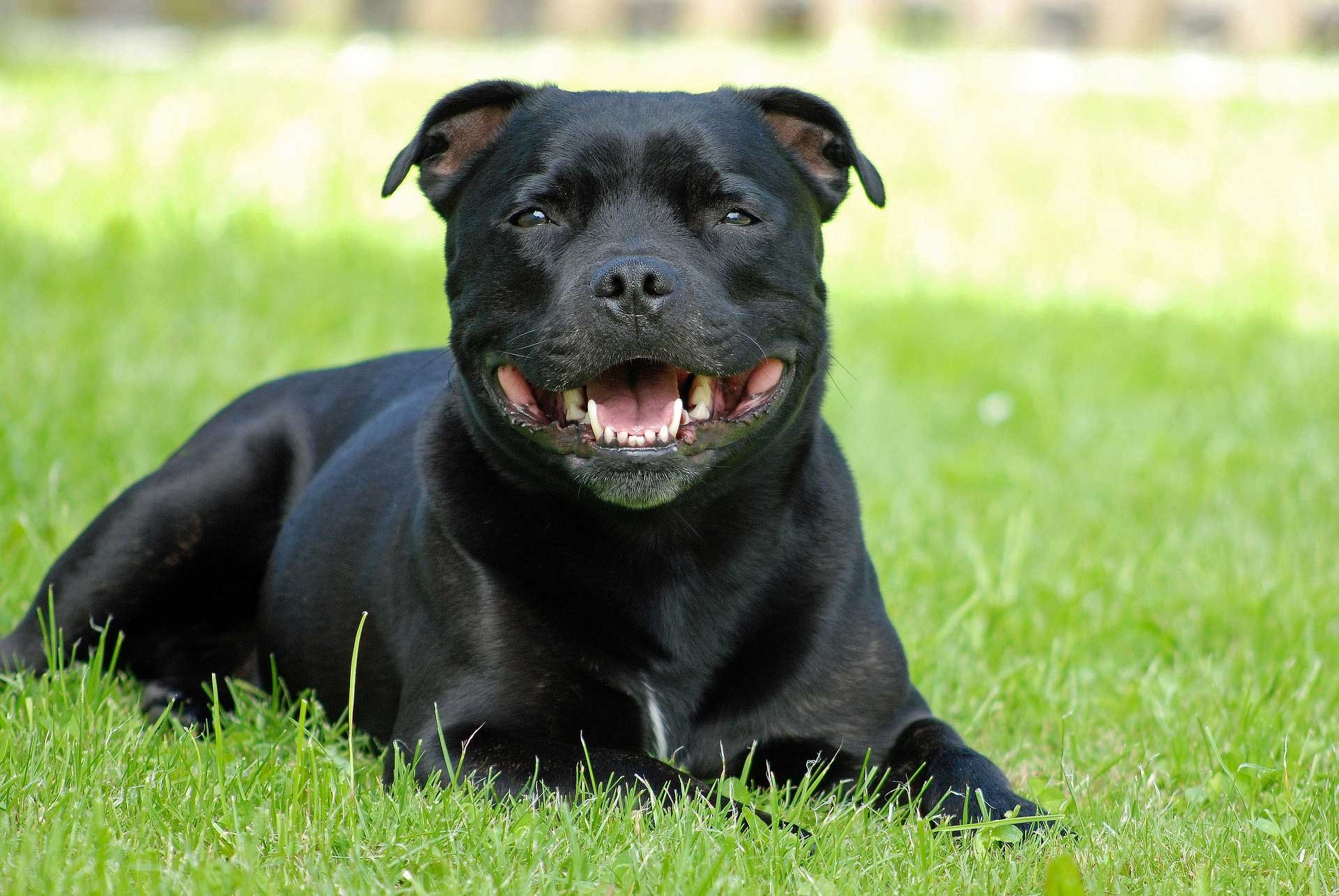
However, despite all these assumptions and memories, it can be confidently said that Staffies are active, peace-loving, loyal, and very intelligent dogs who adore their families. The tenderness with which these powerful dogs relate to children is particularly striking. There is no need to worry if an unfamiliar child approaches the dog. The Staffie will not show any aggression towards them. On the contrary, it will wag its tail happily and “smile” not only with its mouth but also with its extraordinary eyes in that moment. Yes, Staffies are true babysitters.
Of course, there are many horrifying stories that suggest otherwise. But if we examine each specific case, it becomes clear that the troubles were not the fault of the animal but rather of its owners, who didn’t raise the dog properly, or the animal was sick.
To avoid such incidents, the owner must always be the leader in the relationship with their four-legged companion. One should never shout at or hit the animal-doing so will cause tremendous harm, the dog’s psyche can be severely damaged, and a good dog can turn into a real monster at any moment.
Like all terriers, Staffies will attempt to dominate and manipulate you during training or within the household hierarchy. It is important to recognize these moments early on and to counteract them with consistency, patience, and kindness.
At its core, the character of a Staffie reflects the conditions in which it is kept and the relationships within the family it lives with.Having such a dog by your side means you can be absolutely confident that no one would dare to harm its family. Yes, the dog perceives the owner’s family as its own and is ready to protect them until its last breath.Its cheerful nature manifests every day. The rich expressions of the dog never fail to amaze dog owners.A reliable companion will always be there, wherever you go. This breed is very sociable: it easily can run several kilometers alongside its owner’s bicycle, loves playing outdoors or at home, and is even willing to watch TV during the autumn chill (if it has had a good walk beforehand).By the way, the Staffordshire Bull Terrier serves as a kind of test for the courage and bravery of the owner’s acquaintances. Not everyone can approach such a dog without fear. Additionally, these animals can astonishingly sense a person’s inner intentions. If a stranger harbors malicious intent, the dog will immediately sense it and alert you with a fierce growl.
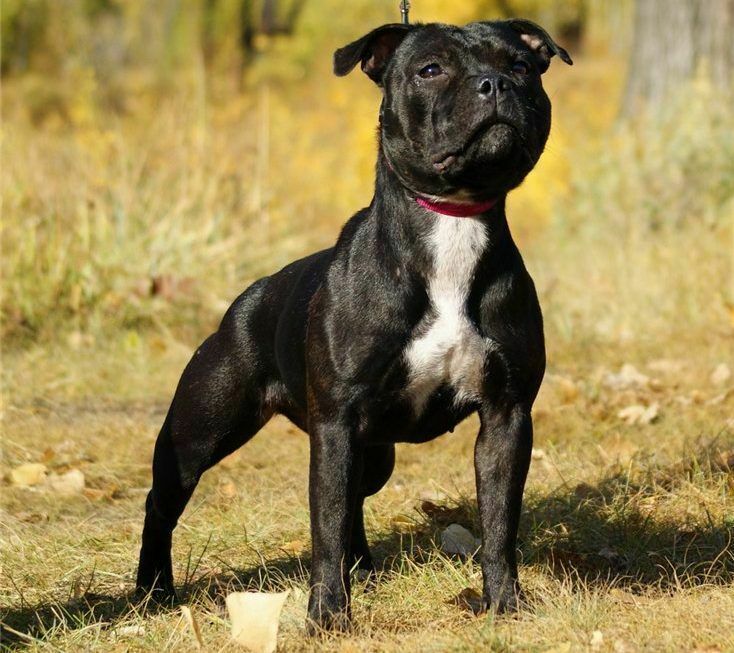
The best guard.
Staffordshire Bull Terriers have a well-developed guarding instinct at a genetic level. They will alert their owners long before an unwelcome guest arrives.Care and Maintenance
It cannot be said that the Staffordshire Bull Terrier requires any special care. The short coat lacks an undercoat, so brushing with special brushes at least once a week will help maintain the shine and cleanliness of your dog’s fur.
Dental cleaning should start at a very young age. This is not only for hygiene but also to help the dog get used to the procedure, so that as they grow older, they respond calmly to it.
Ears should be checked 1-2 times a week and cleaned as needed. Of course, be careful not to let water into the ears during baths.
Eyes are always visible, but a more thorough inspection should be done at least once a week. If there are any cloudiness on the iris, it’s advisable to visit a veterinary clinic. If there are cloudy discharge in the corners of the eyes, there’s no need to panic immediately. It’s quite likely that a cotton pad soaked in warm tea can help alleviate this mild inflammation.
Nails should be trimmed every 10-12 days. It’s generally better to monitor the growth rate yourself and establish an individual trimming schedule.
To prepare the dog for shows, you can visit a grooming salon where specialists can help make the Staffordshire Bull Terrier look its best.The dog’s diet plays a very important role. The huge muscles require food with a relatively high protein content. At the same time, the breed tends to gain excess weight, so it is important not to overfeed them. An adult dog should be switched to twice-a-day feeding. For convenience and to maintain discipline, food should be provided strictly according to a schedule and for a limited amount of time. Fresh water, however, should always be available in the bowl. As for the choice of diet, there is currently a trend towards super-premium ready-made foods, which usually contain all the necessary micronutrients for maintaining the animal’s health. However, if there are any issues related to the dog’s individual characteristics, it is possible to seek a consultation for choosing or adjusting the diet at specialized centers.When it comes to living with other animals in the same house, it’s quite simple. Staffordshire Bull Terriers are calm dogs that can get along well even with cats and other dogs. In some cases, small conflicts ma
Aggressive ancestors
Staffbulls were bred by crossing a bulldog and a Manchester terrier. Both breeds were fighting dogs and actively participated in battles. However, the staffbull terrier was recognized as the best family companion.Training and Education
First of all, you should determine your goals for acquiring a puppy. Is it a pet, a show participant, or a winner of sporting competitions? Or perhaps you want to start breeding Bull Staffordshire Terriers and open your own kennel? Answers to these questions will guide you in the right direction.
It is absolutely essential to socialize your Staffy from an early age. Considering the breed’s rich history, following this recommendation is necessary.
From the first days of the puppy’s arrival at home, you should designate a spot for it and consistently train the dog to use that place. It should be located in a safe area, away from traffic and drafts. Many people keep such dogs in special crates-it’s important that the dog feels at home there and does not perceive it as punishment.
Teaching the puppy its name is of paramount importance. Do not teach the dog to respond to smacking sounds or whistles-these are for street dogs.
Dogs usually go to the bathroom after sleeping or eating. Around the Staffy’s designated spot, you should lay down newspapers or absorbent pads and praise it when it does its “business” on them instead of elsewhere. Gradually, the area of the pads can be reduced as the puppy gets used to a particular spot in the house, which it will recognize as its bathroom.
Before the first walk, your Staffy should reliably perform the commands “come,” “no,” “quiet,” “lie down,” and “good.” Training it to follow these commands is quite simple, as the breed is generally very intelligent and capable. The most important thing is that the training takes place in a calm environment without distractions from onlookers, which can even distract an adult dog.Important! Do not start training during a storm or while loud work is being done (for example, when neighbors are having repairs or throwing a party): your dog will not learn commands due to distractions. Additionally, training sessions should only be conducted when the dog is feeling well and should not exceed 15-20 minutes, as it will tire out and lose focus on the task.It is most effective to train an older Staffy in specialized canine centers where the dog can learn all the necessary skills under a specialist’s supervision. There, you can also take courses in agility and other sports. Under no circumstances should you encourage or develop aggression in your dog! Reliable breeders offer healthy puppies with documentation and pedigree.
Active dog
Staffordshire Bull Terriers are an extremely active breed. They definitely are not suited for homebodies. The dog needs long walks and frequent physical activity.
How to Choose a Puppy
Choosing a puppy is a serious matter. Selecting a Staffordshire Bull Terrier puppy is doubly responsible. An adult dog can pose a threat not only to others but, above all, to the owners themselves if the dog comes from poor lineage.
Carefully study the breed standard and the history of its development. It would be beneficial to visit a few dog shows featuring Staffies and talk to their owners. Pay attention to dog parks in your area-there may be “nannies” there-and observe how they interact with other dogs. This will give you food for thought and help you better understand whether you should take this responsible step.
In our country, this breed is quite popular. It’s best to buy a Staffordshire Bull Terrier puppy from a kennel rather than at a market. After checking the dog’s pedigree and veterinary passport, ensure that the mother dog meets the standard. It’s also wise to inquire with the breeder whether genetic disease tests have been conducted and to review their results.
Inexperienced dog owners may think they can buy a puppy remotely from a kennel. However, you should understand that you are purchasing a living dog for the next 12 to 15 years, not just a well-angled photograph and paid traffic. Therefore, a personal visit to the kennel is essential.
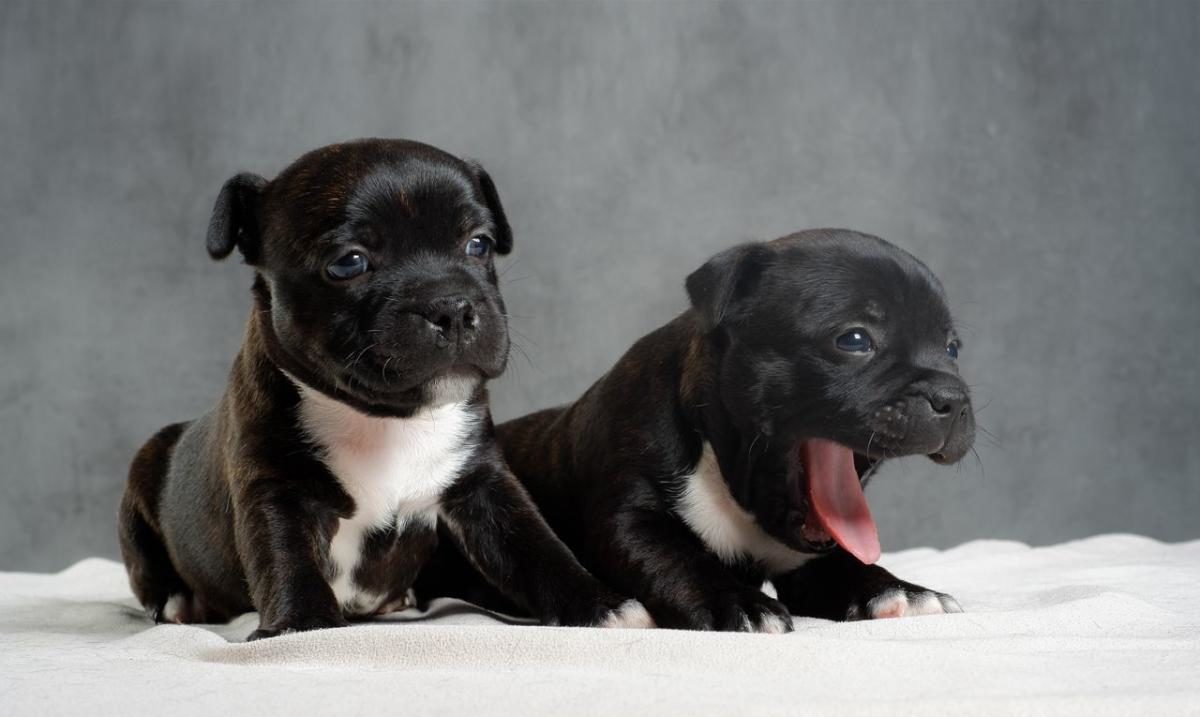
Once you have determined the color and gender of the dog, choose the most appealing but non-aggressive puppy. The condition of the coat and eyes should raise no concerns: the coat should be shiny and free of bald patches, and the eyes should be clear and not watery. The ears should have no odor, as any smell indicates the onset of inflammation. The belly should not be bloated, and the tail should not be tucked between the hind legs-these are basic signs of health. The behavior of the mother dog is very important: an aggressive mother will produce aggressive puppies. A wet nose on your puppy is the cherry on top, a sign of good health. Compare breeders at Zoonik and choose your ideal pet.
Health and Diseases
The Staffordshire Bull Terrier is a relatively healthy and resilient dog. It handles common ailments that usually affect dogs of other breeds quite easily. An active lifestyle, timely deworming, regular veterinary check-ups, and vaccinations all significantly contribute to the dog’s health. Of course, there are other factors that affect the lifespan and quality of life of a Stafford.
These include diseases to which the breed is predisposed. For example, certain types of allergies, such as respiratory and digestive, can disrupt the immune system’s functioning as a whole. The breed’s genetic heritage includes hip dysplasia. Typically, a screening for this condition is requested when purchasing a dog. In our country, it is not mandatory, and in its absence, it is advisable to conduct such a test independently.
Large muscles often suffer from hypothermia, which can lead to myositis-a very painful muscle inflammation. Therefore, in winter, it is better to help the dog by purchasing a warm dog suit.
Hereditary cataracts, which can affect both young dogs and those of middle age, are also included among genetic diseases.
It is worth noting that in recent decades, there have been cases of epilepsy and dementia, which can impact the behavior of animals. Screening for neurometabolic disorders can only be conducted at a specialized veterinary genetics center. – the best site about animals, where you can buy or sell a puppy.
Содержание
-
1. Описание породы
-
2. Внешний вид
- 2.1 Голова
- 2.2 Морда
- 2.3 Уши
- 2.4 Глаза
- 2.5 Зубы
- 2.6 Корпус
- 2.7 Конечности
- 2.8 Хвост
- 2.9 Шерсть
- 2.10 Окрас
-
3. Характер
-
4. Содержание и уход
-
5. Дрессировка и обучение
-
6. Как выбрать котенка
-
7. Здоровье и болезни




Comments
Only registered users can leave reviews.
Enter