
Skye Terrier




Warning: Illegal string offset 'label' in /home/panda/sites/zoonika/wp-content/themes/zoonika/template-parts/animals/animals-param-item.php on line 32
Ð


Breed Description
Sky Terriers have such a vast family lineage that one cannot pinpoint true “relatives.” Looking out at the Atlantic Ocean, the first terriers from the Isle of Skye, Britain, served hunting and guarding functions.
It is rumored that those dogs must have genes from the Maltese Bichon. After all, in the 1600s, Maltese Bichons first appeared on the Isle of Skye, where they encountered the local terriers. Since then, the short-legged, elongated terriers began their history. At that time, John Caius provided a detailed description of the first Sky Terriers.
In those ancient times, dogs were kept solely for practical reasons. Therefore, regardless of their coat length, all terriers, including Skye Terriers, were used to catch rodents on farms or to hunt for martens and foxes.
The breed was so popular that a monument was erected to a Sky Terrier in the capital of Scotland. There is an old legend that a master loved his long-haired dog so much that he died from grief right at the tombstone of her grave.
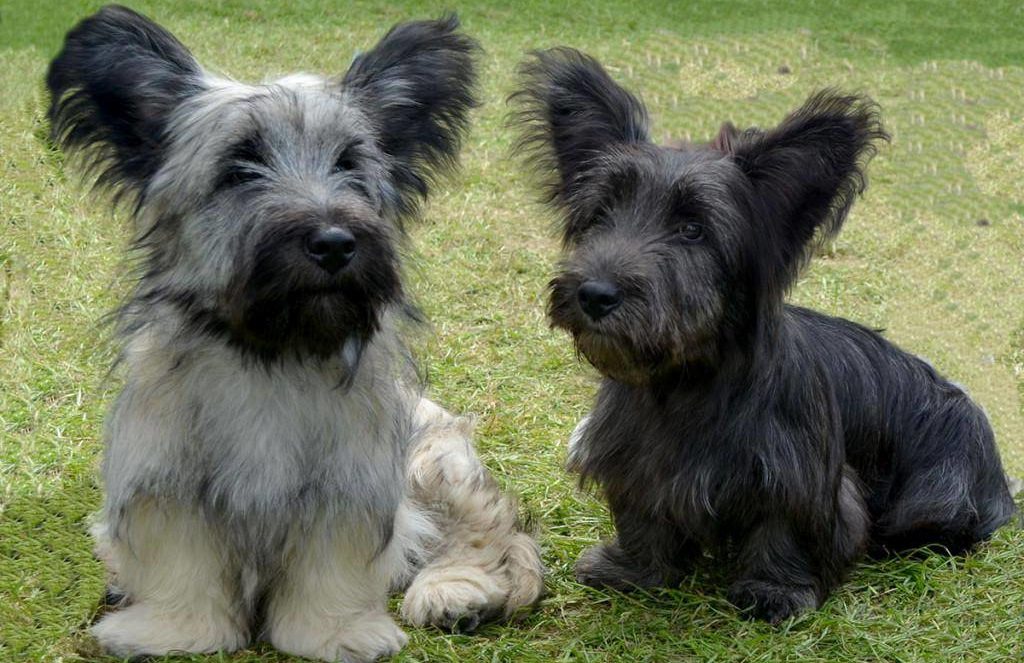
The breed standard mentions not only dogs with erect ears but also explicitly states that there are docked-eared Sky Terriers.
The dogs gained particular popularity during Queen Victoria’s reign. She made significant contributions to their development, establishing several kennels for Sky Terriers, giving these animals a “golden ticket” into high society. Prior to this, dogs were primarily kept by farmers. However, with the establishment of royal kennels, Skye Terriers began to be involved in burrowing hunting-a very popular pastime among English gentlemen.Interestingly, for a long time, there was no distinction between Sky Terriers, West Highland White Terriers, and Scottish Terriers. All these breeds were referred to as Scottish Terriers and were used solely for practical purposes, namely for hunting rodents and martens. Only a few were honored to be held by ladies from high society, serving to rid them of fleas that had strayed from the heads of noble persons onto the bodies of the dogs.The 20th century brought several devastating catastrophes. It is believed that due to World War II, the breed nearly vanished from the face of the earth. Starting in the 1950s, some enthusiasts decided to revive it. As a result, we see today’s dogs with extraordinary appearances and completely unique
Appearance
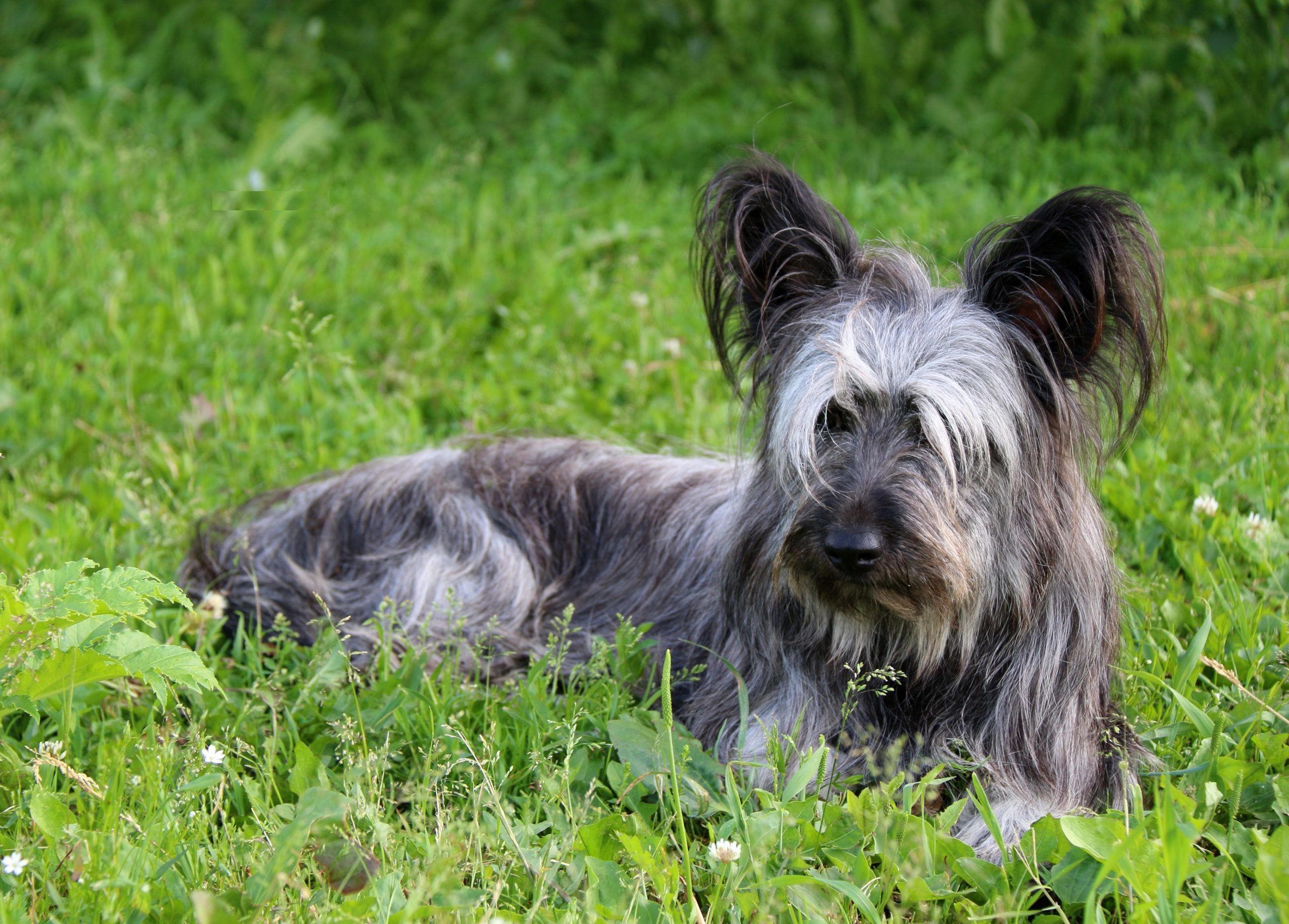
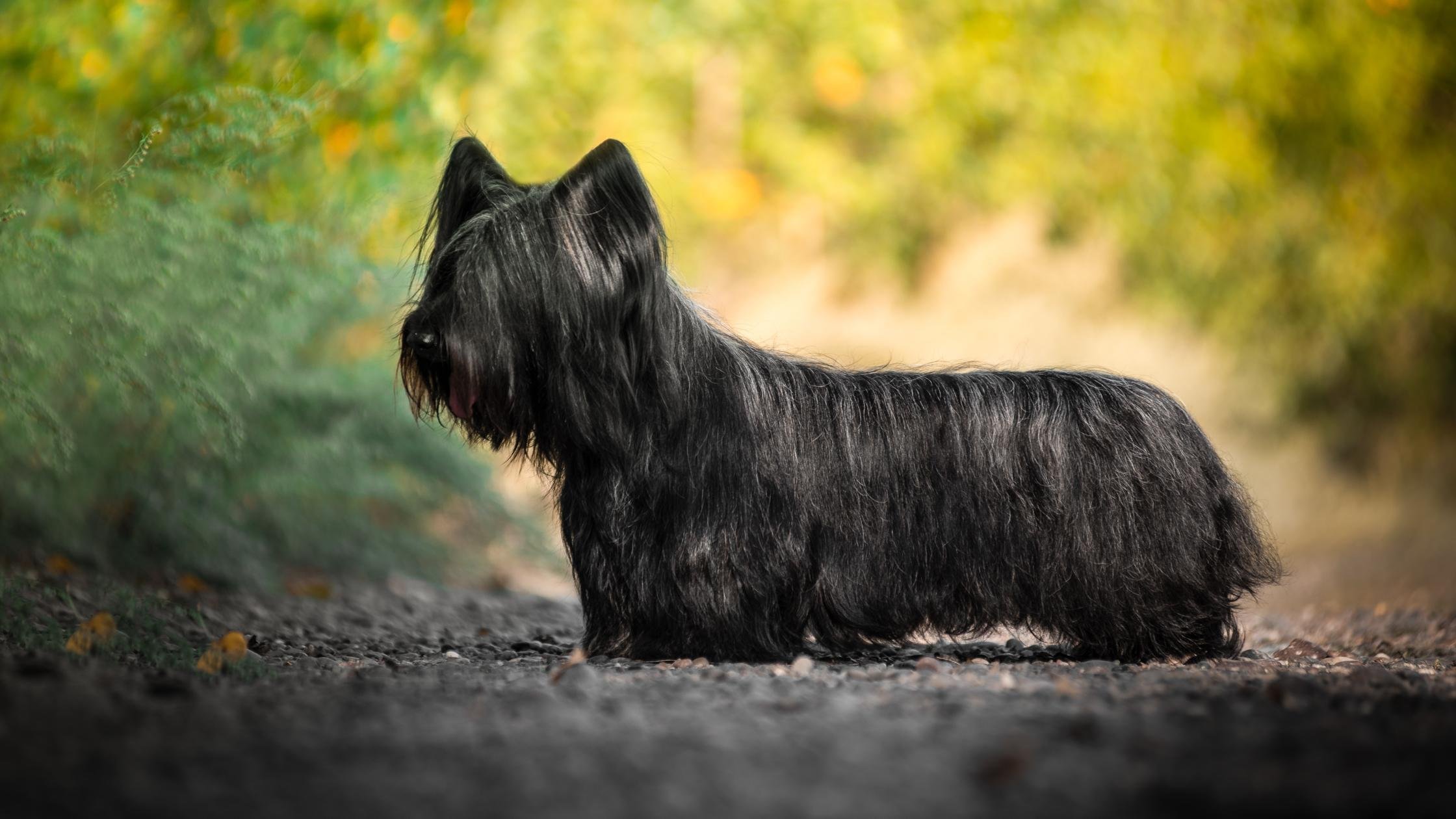
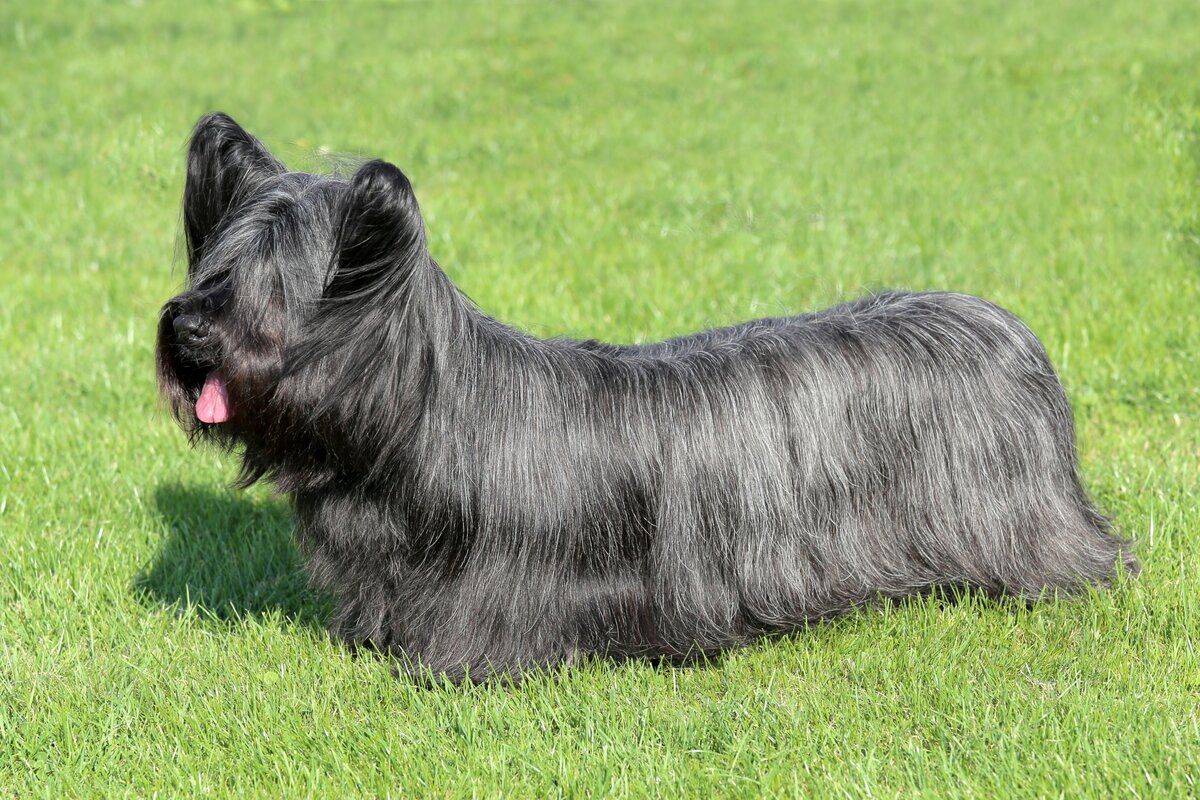
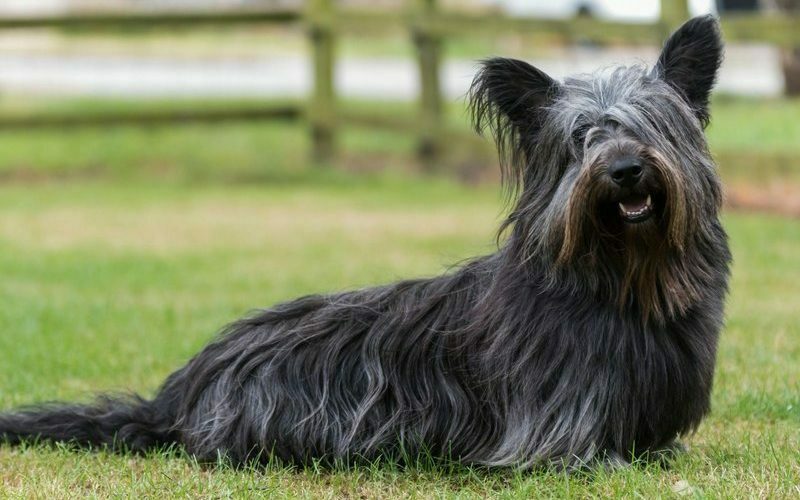
The main proportion specified in the breed standard is the ratio of body length to height at the withers, considered to be 2:1.
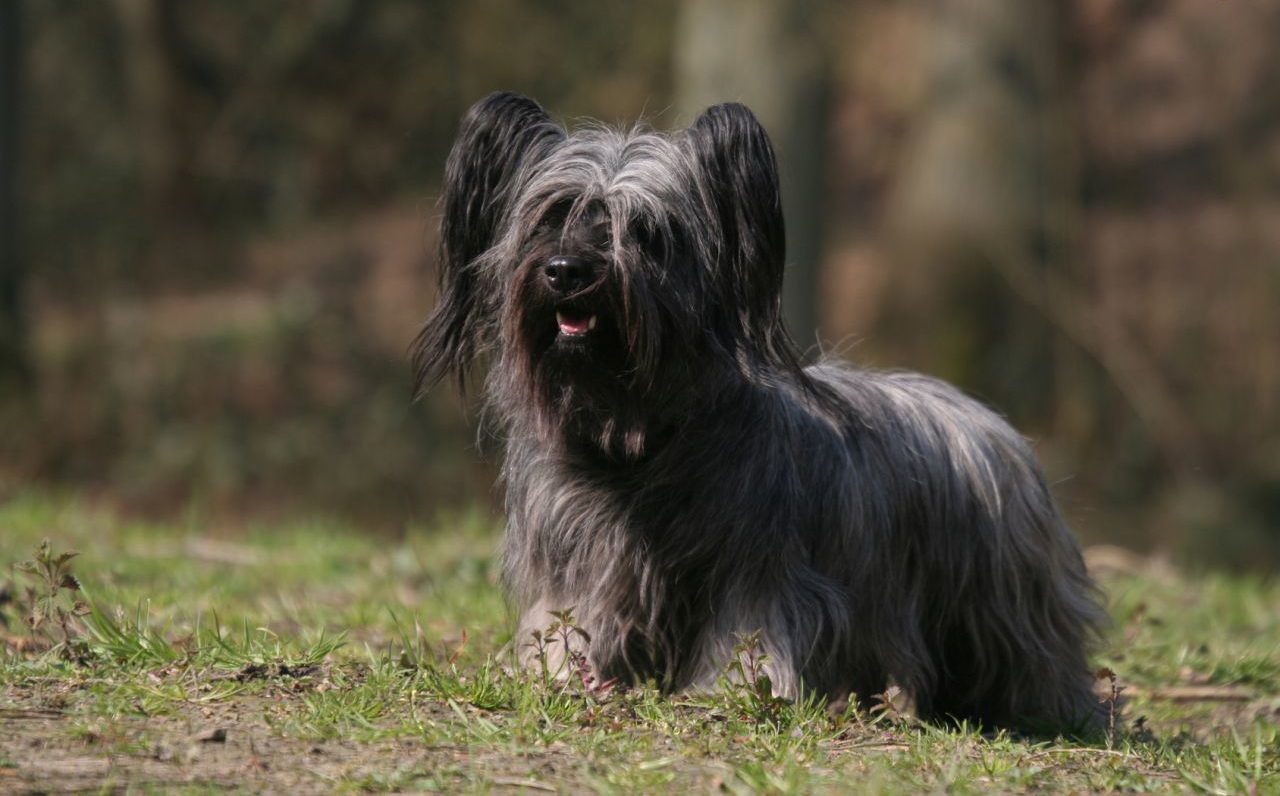
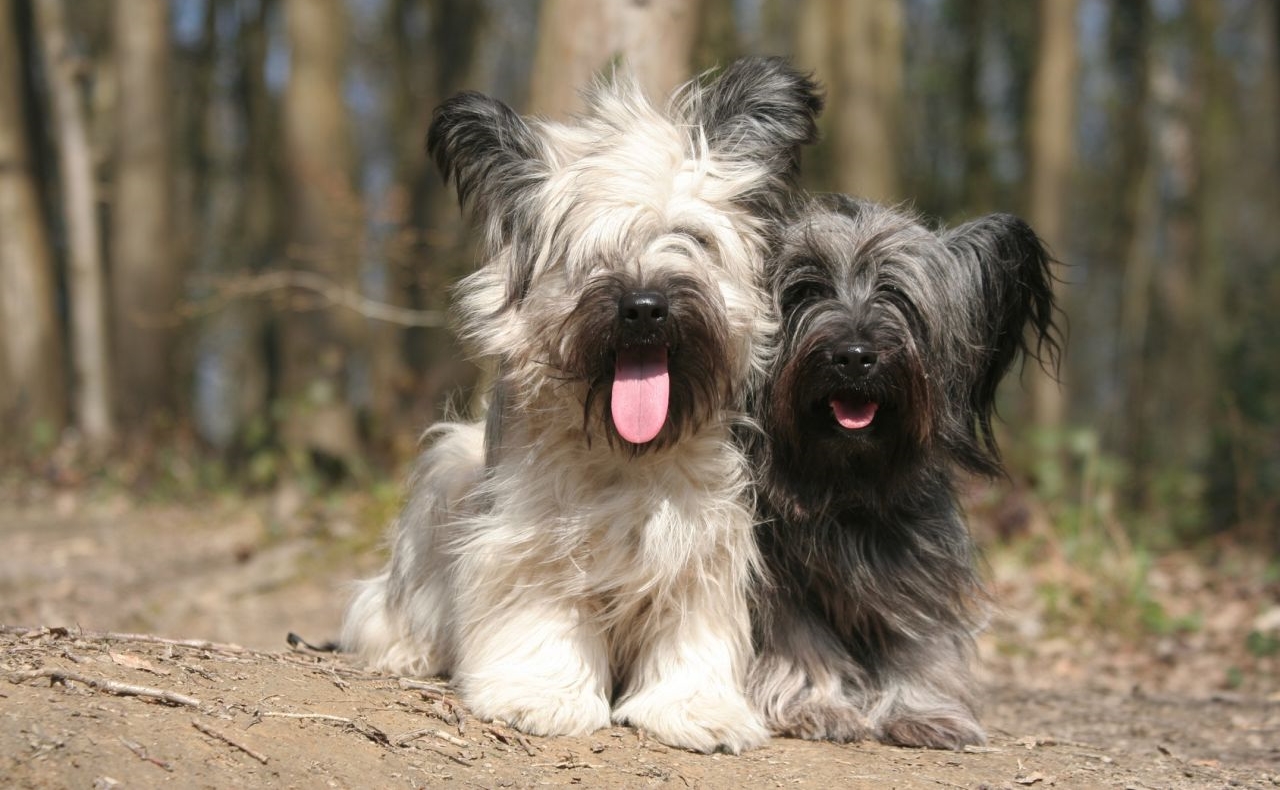
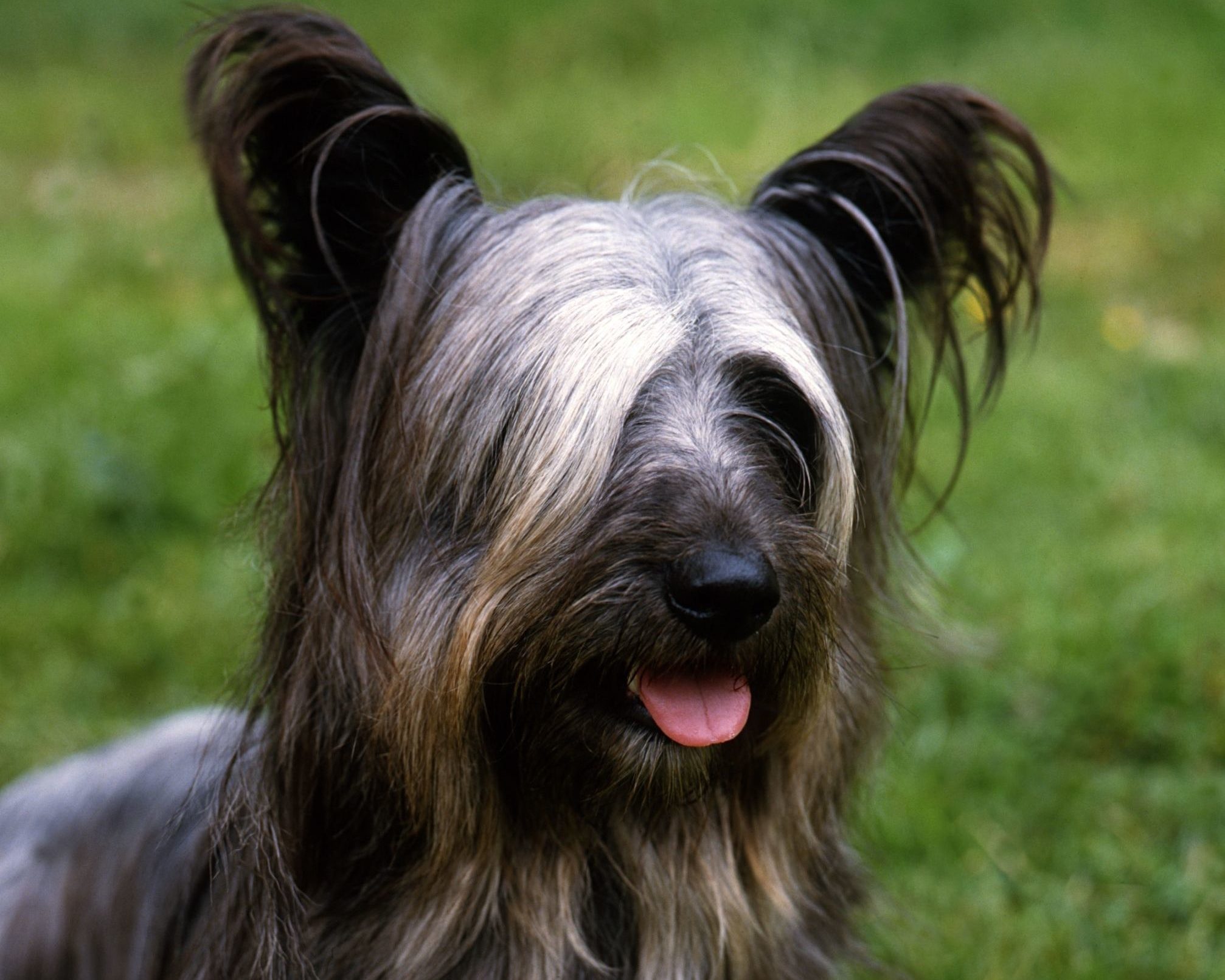
Indeed, such an extravagant appearance will forever remain in memory. After all, a squat dog with an elongated body and incredible fur always leaves an indelible impression on those around. Even experienced dog breeders often confuse Skye Terriers with other breeds.
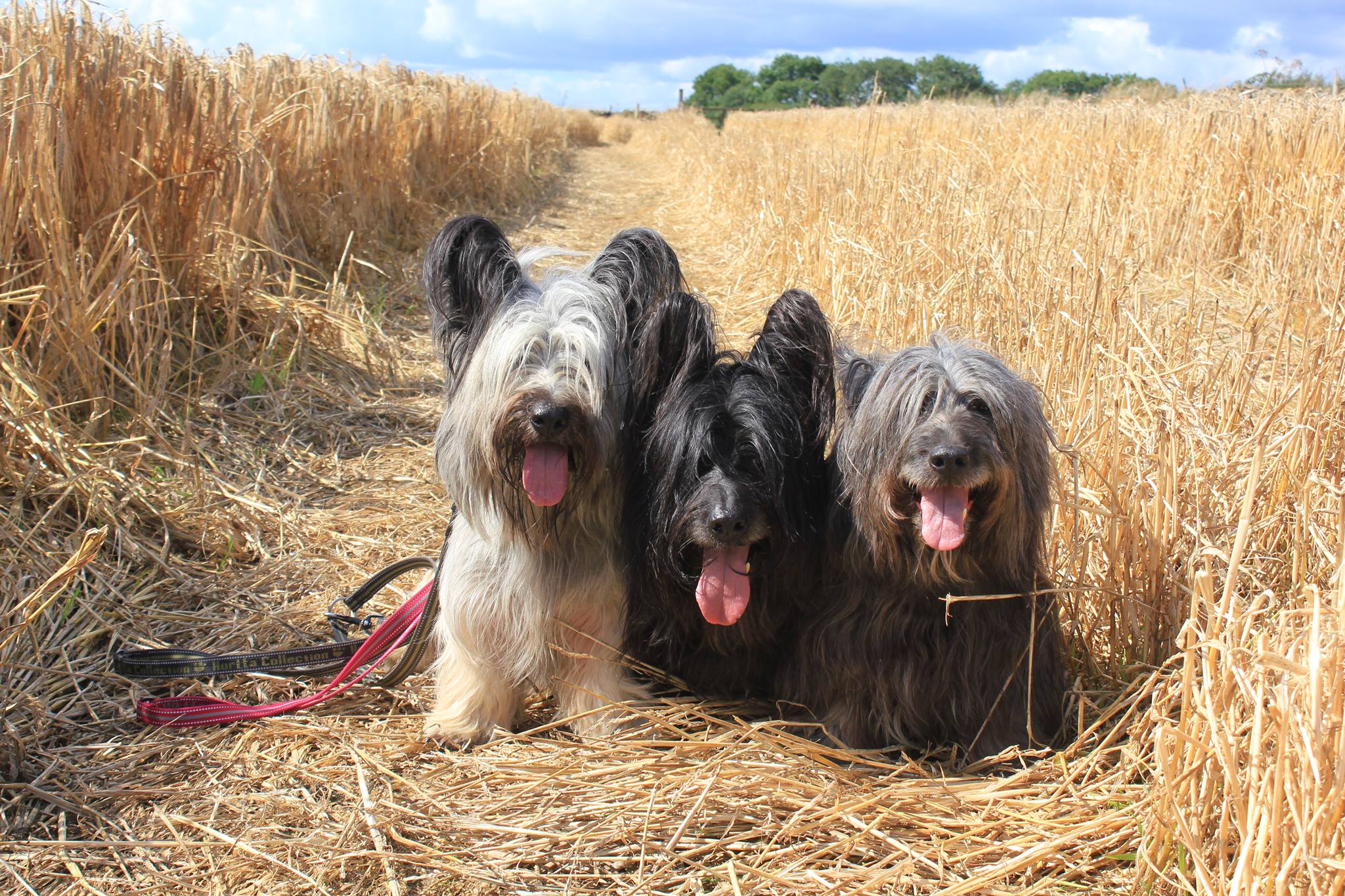
The dog seems as if it is covered with a silk blanket-its fur is that soft. The protruding tongue playfully teases those who look at the dog. Almost always, seeing these dogs improves one’s mood. The coloration of their fur gives the animal the appearance of a shadow that smiles at those it encounters in the middle of the day. The ears poking out from the undergrowth, with strands of fine fur hanging from them, evoke particular fondness. Some dog breeders find a resemblance to a terrier tangled in cobwebs that hang from the animal’s body.
Meanwhile, Skye Terriers are very strong and resilient dogs. With a height at the withers of about 25 cm, their weight should be between 14 and 18 kg. An astonishing fact is that the breed standard specifies the “ideal size of the dog” as the measurement from the tip of the nose to the tip of the tail, which should not exceed 105 cm. By the way, the dogs are sometimes referred to as “Glasgow Terriers” in European countries, and they live from 12 to 14 years or more.


Отличительные черты

Голова

Морда

Уши

Глаза

Зубы

Корпус

Конечности

Хвост

Шерсть

Окрас
Character
Among the many virtues of Skye Terriers, their devotion to their owner is undoubtedly the most prominent. In the capital of Scotland, there is a monument to a dog that lived in a cemetery where its owner was buried. It is said that local farmers took pity on the dog and sent it to a neighboring farm. However, the devoted animal returned and died on the grave of its beloved owner. What breed is commemorated by this monument? “To Bobby the Skye Terrier, the most loyal dog in the world,” reads the inscription.
Without a doubt, a Skye Terrier can have only one owner, whom the dog will idolize. There will be no conflicts with other family members; therefore, these dogs are often kept as companion animals today. They regard guests and strangers with great caution. A distance is always maintained, even after the dog has reassured itself of the guest’s safety.
An excellent memory is another trait of Skye Terriers. Even after a very long separation, the dog remembers the location of its belongings in the house in minute detail. There is no doubt that a Skye will recognize its owner even after many years apart.
Speaking of negative traits, some mention the arrogance of Glasgow terriers. This claim is absolutely groundless! Only someone who desires complete submission from their dog would say this. But a Skye Terrier will never become a servant; it is ready to be a friend. An American breeder asserts that not everyone is worthy of owning such a dog.
Partly for these reasons, such dogs are not very suitable for families with small children. The long-haired beauties are very sensitive, and they get upset when small children pull on their long fur. In such moments, the dog may snap and scare the child. However, teenagers aged 10 and over get along wonderfully with these four-legged companions and have a great time together. The most important thing is to respect the dog’s personal space.
The proud nature of the Skye does not allow it to “fawn” over family members. Hence, a particular cunning is inherent in this breed. They will be sly to achieve their goals. At the same time, “the chosen owner” will never fall victim to the dog’s tricks. It is often said that a fisherman recognizes another fisherman from afar. This proverb applies perfectly to relationships with such a dog.

Symbol of loyalty
Skye Terriers are a symbol of devotion and loyalty, captured in a stone monument in the capital of Scotland.Care and Maintenance
Long-haired dogs typically require more careful grooming. Their fur is both an advantage and a disadvantage. Skye Terriers are a clear example of this. Let’s look at the main aspects of caring for them.
First of all, a puppy needs its own place in the house. A specially designed half-basket bed with a cushion is ideal. The sides of the bed will protect the animal from drafts, and the cushion will keep it warm, especially if the floor isn’t heated. This setup makes the dog more comfortable as well. The removable cushion is washable, which is a definite plus. To teach the puppy to go to its place, repeatedly use the command “place” when the puppy lies down there, and even carry it back if it falls asleep in another spot. It’s best to avoid letting the dog get used to the owner’s bed, as this can negatively impact the discipline of the clever four-legged friend.
One of the owner’s main tasks is to stop the puppy from chewing everything in sight. Therefore, put away your shoes and slippers when leaving the house. If the dog lives with children, explain that they should not play with the puppy using other objects. There are special toys for this purpose. Ensure these toys are always within the animal’s sight. Otherwise, wallpaper, wires, and anything small that the puppy can grab may be damaged. Yes, this will happen before you can break these habits.
During playtime, it’s important not to yank toys out of the dog’s mouth. This can harm the dog’s bite. A great option for playing with the puppy is a carrot or a large apple, but only if you haven’t had the chance to buy special bones for puppies.
Speaking about the puppy’s diet, let’s focus on the eating area. It should not be located in a passageway. Additionally, make sure the food and water bowls are placed on a stand, not directly on the floor. This way, you help the animal maintain the proper posture as per the standards. Portions should be small to prevent overeating. Puppies under 8 weeks are fed six times a day on a schedule. Older dogs gradually transition to a twice-daily feeding routine. To ensure they receive all necessary nutrients and vitamins, more and more dog trainers recommend feeding dogs specialized dry food, which typically contains everything essential, eliminating the need for additional vitamin supplementation. It also makes it easier to monitor and resolve any gastrointestinal issues that may arise.
Skye Terriers love walks. As a rule, you should walk the dog as many times as you feed it. The total time the dog should spend outdoors is no less than 2 to 2.5 hours, with 20-30 minutes of each walk dedicated to letting the dog really play. After all, a Skye is a terrier and needs to “let off steam.”Daily eye checks are essential to prevent infections or more serious eye problems.Dog’s ears should be inspected at least once a week. If any dirt or discharge is found, they should be cleaned with special cotton swabs.Teeth cleaning is another obligatory part of care. At least once a week, remove plaque from the teeth using a toothbrush with baking soda or special products. Don’t let tartar build up; removing it is much harder, and the problems it causes are far more serious.The fur of a Skye Terrier requires the most attention. To maintain the dog’s appearance, start grooming it from the first months. This should be done at least 1 to 2 times a week. To make the process quicker and more effective, start brushing from the ends of the fur, gradually moving closer to the undercoat. Nowadays, it is common to help dogs with dry hair by applying specialized m
Great jumpers.
It is interesting that even small Skye Terriers can easily leap over a two-meter barrier.Training and Education
Training a Skye Terrier is undoubtedly a true test of the owner’s character. The breed is very intelligent, which can lead to willfulness and even stubbornness. If you’re not planning to win first place at dog shows, you can handle the training on your own. Just be generous with rewards for your four-legged student and never raise your voice at the animal. Do not break the trust your pet has in you.
Let’s focus on some basic commands.
“Place” – each time your dog goes to its bed, calmly give the command “place.” Once the puppy gets used to this, try guiding it there while saying the command, especially when you see your dog heading there on its own.
Gradually get your puppy used to the leash and then the collar. Just don’t allow it to tug on the leash or play with it. Your task is to make the animal respect these items and get excited when it sees them. Make sure your dog is accustomed to them before it starts going out. Commands such as “no,” “stop,” and “come here” should also be learned prior to the first walks, as these can save your pet in emergency situations.
Always remember that a trained dog is primarily beneficial for you. The dog itself is not interested in your commands at all. Because of this, training will progress much faster if sessions last no longer than 15-20 minutes, with each successful repetition rewarded with a treat. Generally, Skye Terriers can get distracted by their surroundings, so choose a time and place for training with minimal distractions.
The command “stay” should be practiced daily during walks. When you need to cross the street with your “heavenly” terrier, always give this command and reward it for successful execution. Note that after the command “stay,” the dog may only continue moving on the command “forward.”If you want to use the dog for hunting, training to live game can be done at a hunting facility. In this case, it’s best to involve professionals. Zoonyka connects certified breeders offering puppies with excellent pedigrees.
Lovers of dressing up
Interestingly, skyis love to change their fur color, and they do this several times throughout their lives.
How to Choose a Puppy
The Skye Terrier is considered a fairly rare breed, which is reflected in the relatively high price of these puppies.
To avoid buying a pig in a poke, it’s best to purchase from a reputable kennel.
However, before visiting a Skye Terrier kennel, familiarize yourself with the breed standard and basic dog care rules.
When you arrive to choose your puppy, meet its parents. The veterinary passport should have records of all vaccinations and genetic tests performed. Evaluate the living conditions of the dogs and observe their behavior. If the adult Skye Terriers behave inappropriately, it’s better to refrain from making a purchase, as the habits of the older dogs will likely be passed on to their offspring.
Check what toys the puppies play with. If you notice that the dogs are allowed to chew on shoes or are overly aggressive, this is a bad sign. It’s impossible to predict their future behavior.
It is said that your puppy will choose you. While this can be true to some extent, the Skye is a special dog, and this rule might not apply. Often, the puppy that watches visitors from a distance turns out to be your Skye Terrier.Check the puppy’s eyes and carefully examine its coat. There should be no discharge from the eyes or ears. The coat should be clean and well-maintained, without bald spots or mats. Pay attention to the puppy’s bite. Also, gently touch the dog’s nose with the back of your hand; a healthy animal has a cold and moist nose. If that’s not the case, your puppy may be unwell.Looking for a puppy? Check Zoonik for trusted kennels with documentation.
Health and Diseases
Skye Terriers are generally a healthy breed. Human intervention in their breeding has not significantly compromised their immune system. However, these dogs can still get sick occasionally.
The most common issue is various parasites, both on the dog’s body and inside it. Their long coat acts like a magnet for fleas and ticks during walks. Usually, a special flea collar can resolve the flea problem. Frequent checks of their coat during the summer will help detect ticks early, as they can easily pick them up in the grass while out. Deworming will help prevent internal parasites. Often, the breeder will explain all the nuances related to deworming medications and their timing.
Unfortunately, there are illnesses to which the breed is predisposed. This does not mean that your Skye will definitely suffer from any of these conditions, but they are encountered more frequently in Skye Terriers.
Among the most dangerous diseases for Skye Terriers is Legg-CalvГ©-Perthes disease, which leads to the pathological degeneration of cartilage in the dog’s hip joint. Usually, only one joint is affected. If you notice limping, consult a veterinary clinic immediately.
Patellar luxation is a fairly common ailment. Be extremely careful with puppies under 8 months old. Do not allow them to jump from heights greater than 35 cm, and do not let them go up or down stairs until they are 6 months old. Among other ailments is hip dysplasia, a hereditary condition that is not treatable.
Thinking it over? There is a wide selection of listings on the map by cities on Zoonica.
Содержание
-
1. Описание породы
-
2. Внешний вид
- 2.1 Голова
- 2.2 Морда
- 2.3 Уши
- 2.4 Глаза
- 2.5 Зубы
- 2.6 Корпус
- 2.7 Конечности
- 2.8 Хвост
- 2.9 Шерсть
- 2.10 Окрас
-
3. Характер
-
4. Содержание и уход
-
5. Дрессировка и обучение
-
6. Как выбрать котенка
-
7. Здоровье и болезни





Comments
Only registered users can leave reviews.
Enter