
Shar Pei




Warning: Illegal string offset 'label' in /home/panda/sites/zoonika/wp-content/themes/zoonika/template-parts/animals/animals-param-item.php on line 32
Ð


Breed Description
A versatile dog with a remarkable appearance. Emerging centuries ago, dogs with a hippopotamus-like face were used as herding assistants, and their guarding qualities were highly valued by the inhabitants of the Celestial Empire. A powerful, sturdy dog whose exact origins are shrouded in mystery, it closely resembles the Tibetan Mastiff and Chow Chow. Therefore, there are opinions that it is a result of a crossbreed between these breeds. The dark purple color of the tongue and the dog’s silhouette partially support this hypothesis. Moreover, the Shar Pei possesses excellent fighting characteristics. Its thick skin with short hair and large folds on the muzzle, neck, chest, and shoulders allowed these fighters to escape from opponents’ holds. Strong jaws could deal fatal damage even to larger adversaries. During the Han dynasty, Shar Peis were highly valued by farmers for their ability to win dog fights for public entertainment, thereby providing their owners with additional income.
In the mid-20th century, what seemed irreparable occurred: nearly all Shar Peis were destroyed, and the breed nearly vanished from the Earth. This was due to the conditions created by the Chinese authorities that made it expensive to keep domestic dogs and socially condemned by society. Fortunately, a very small number of Shar Peis were saved and exported outside of China. Only in the 1970s, ethnic Chinese in the USA developed a special plan to restore the population. The breed was saved through the colossal efforts of enthusiasts. Today’s Shar Peis are the result of their diligent work. Initially, American dog breeders named the restored breed the Chinese Fighting Dog in 1971. About three years later, it regained its original name with the opening of the first official club of Chinese Shar Peis. The modern breed standard was officially adopted by the international canine association in 1976.
Currently, the breed is recognized by the Guinness World Records as the “rarest breed of dog” and enjoys extremely high popularity worldwide. The first Shar Peis appeared in our country in 1999. They are now mainly used as domestic companions or decorative dogs. However, all characteristics originally inherent to Shar Peis have been preserved. Therefore, more and more dog breeders are trying to use their plush dogs as guard dogs as well.

Appearance
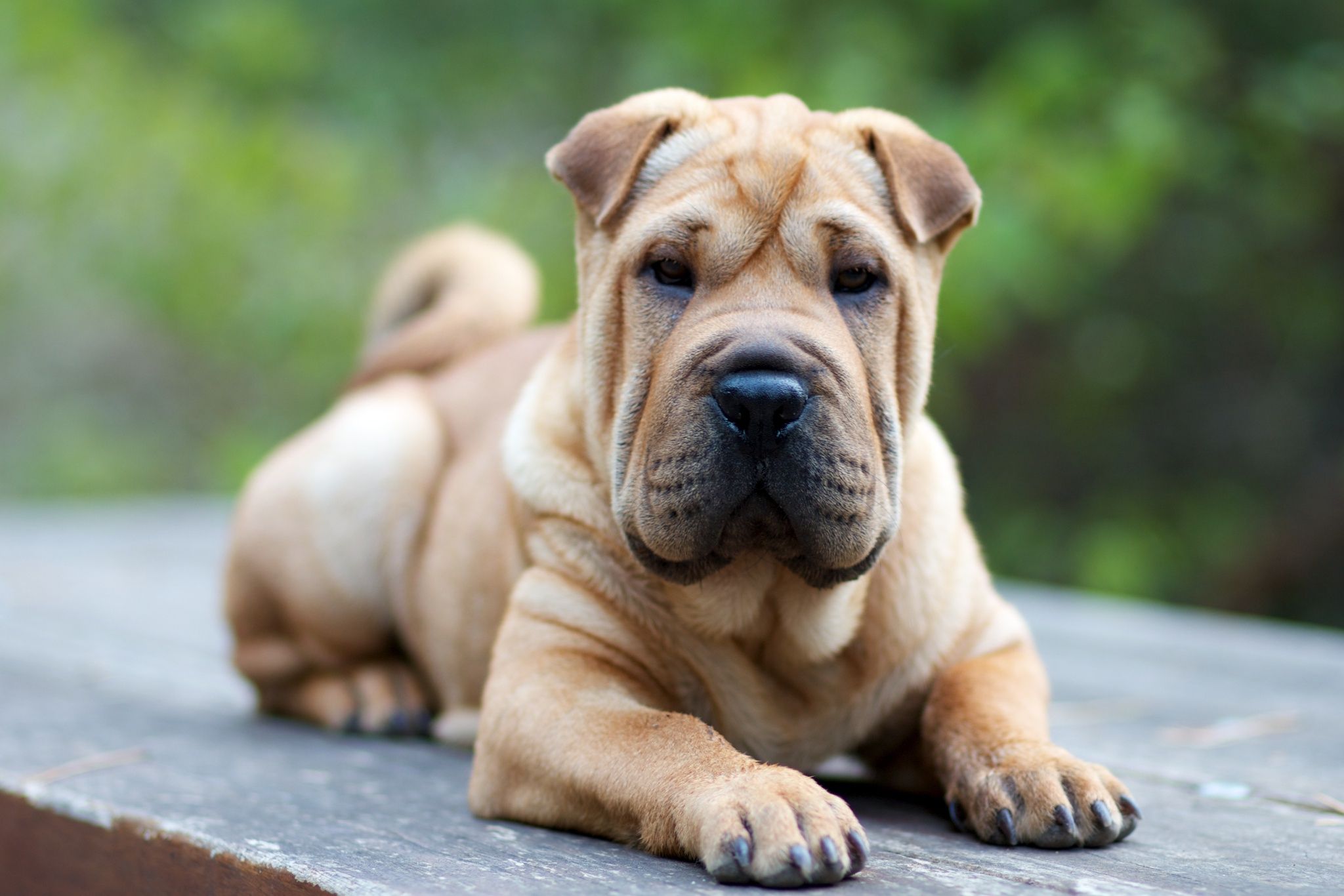
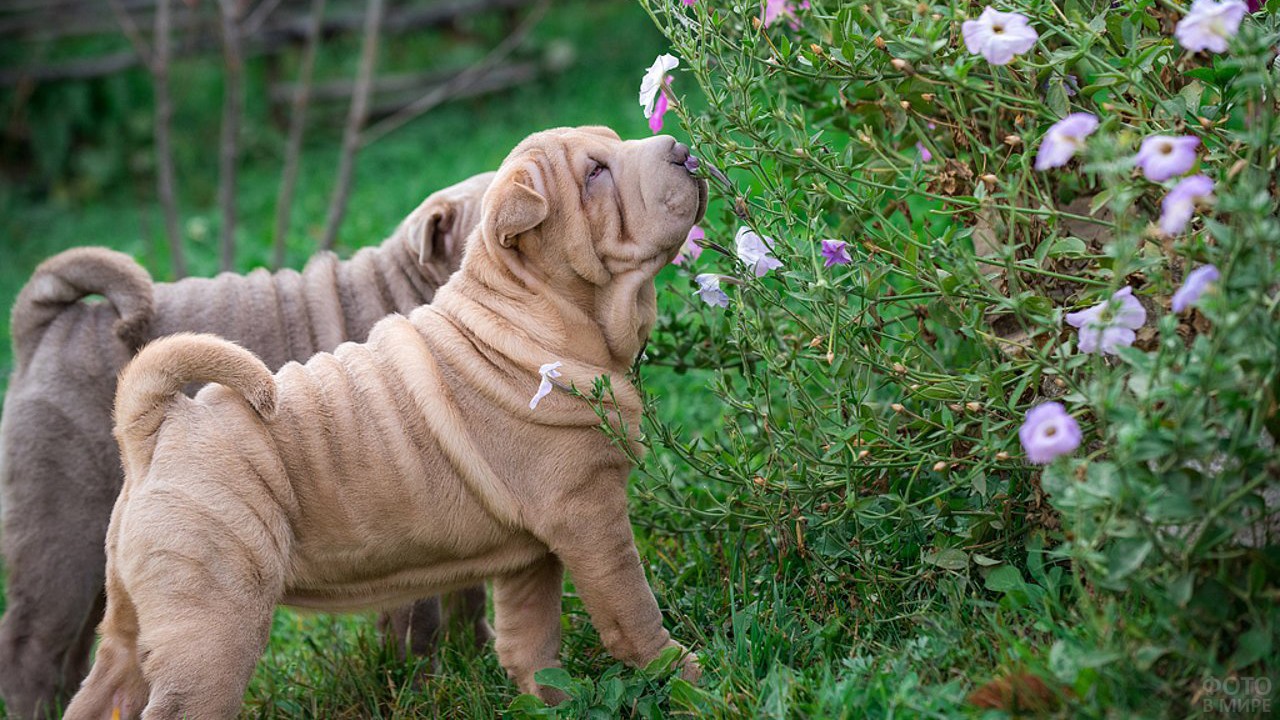
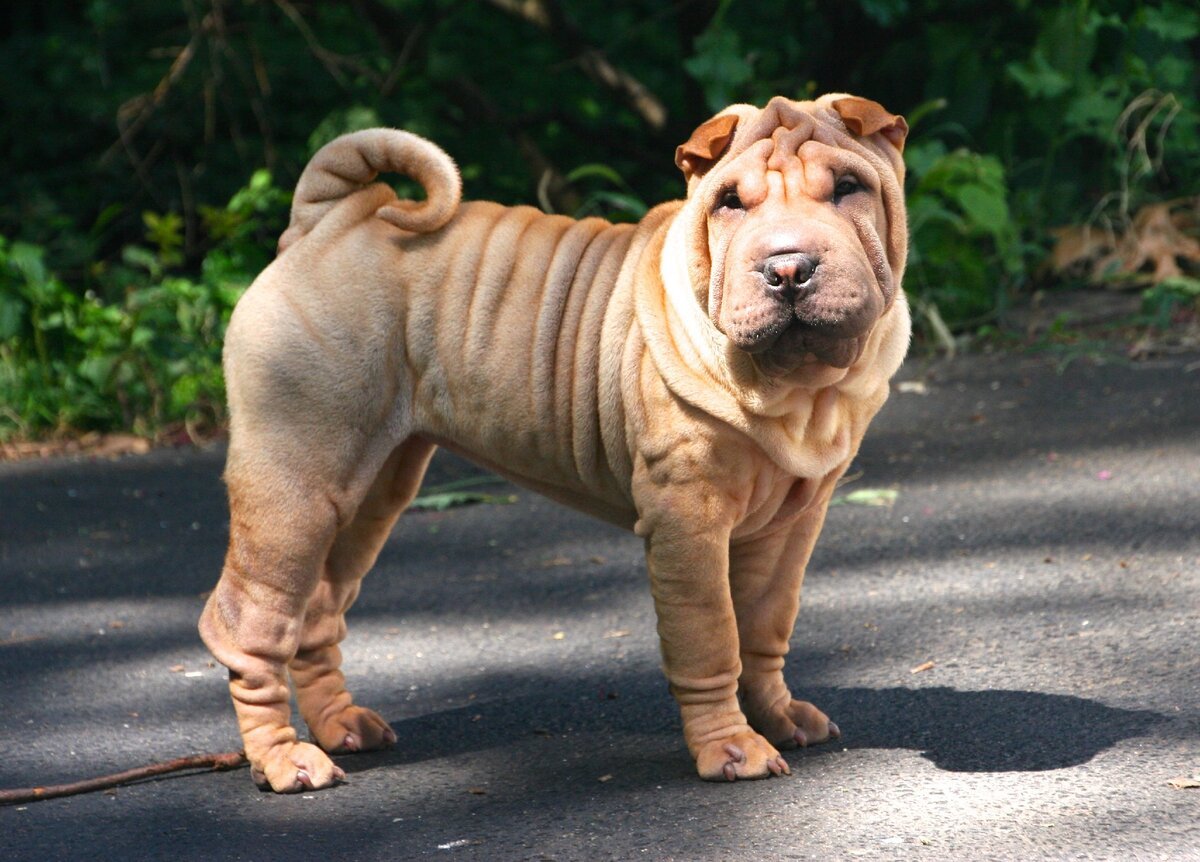
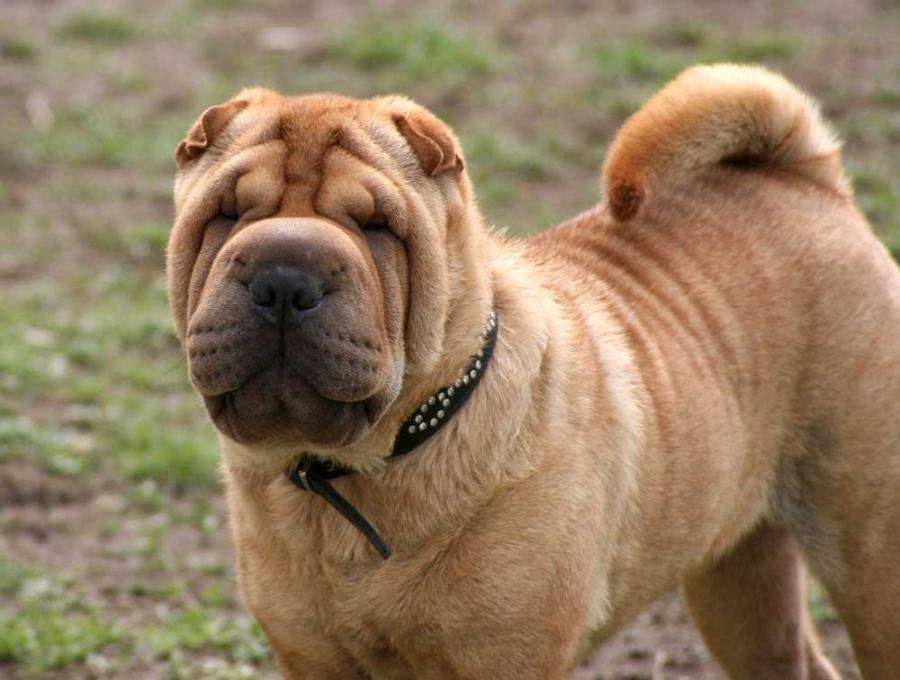
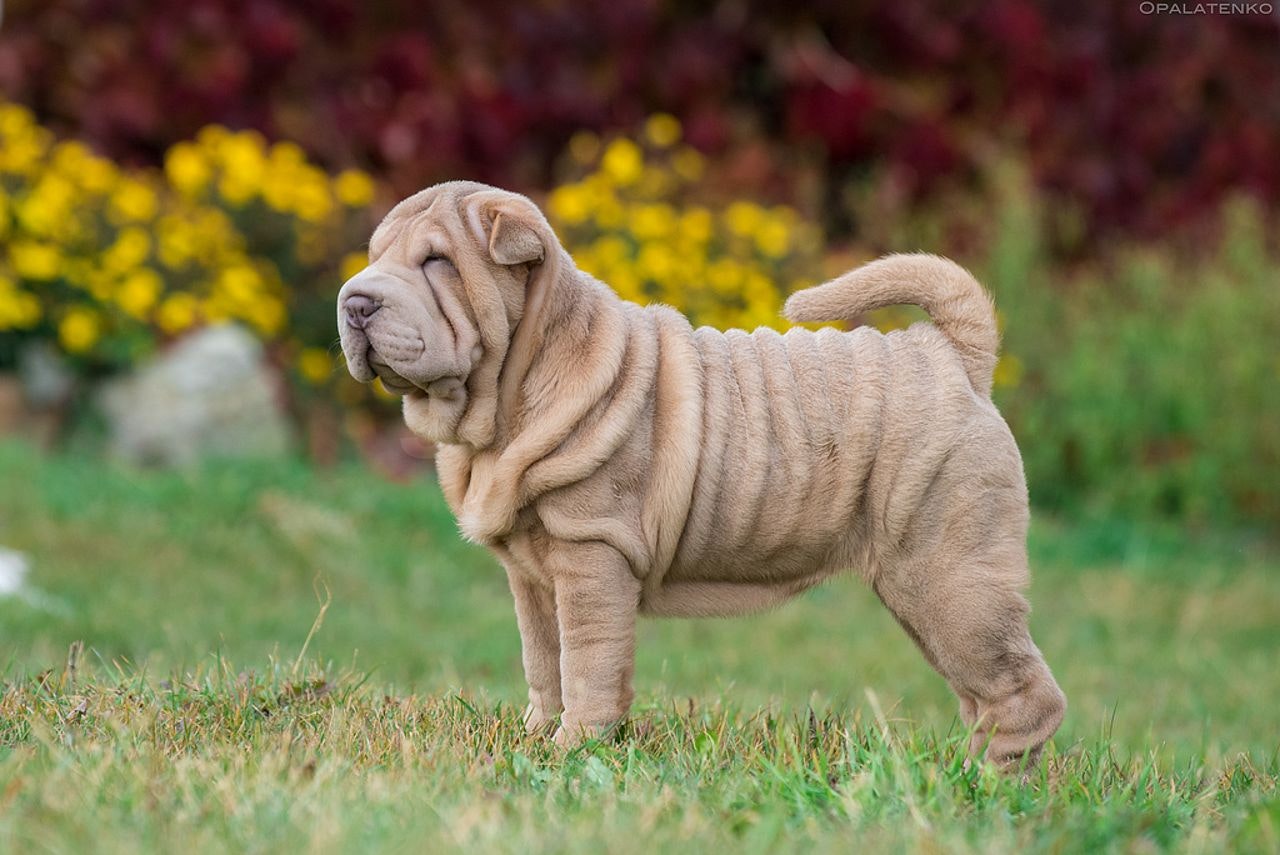
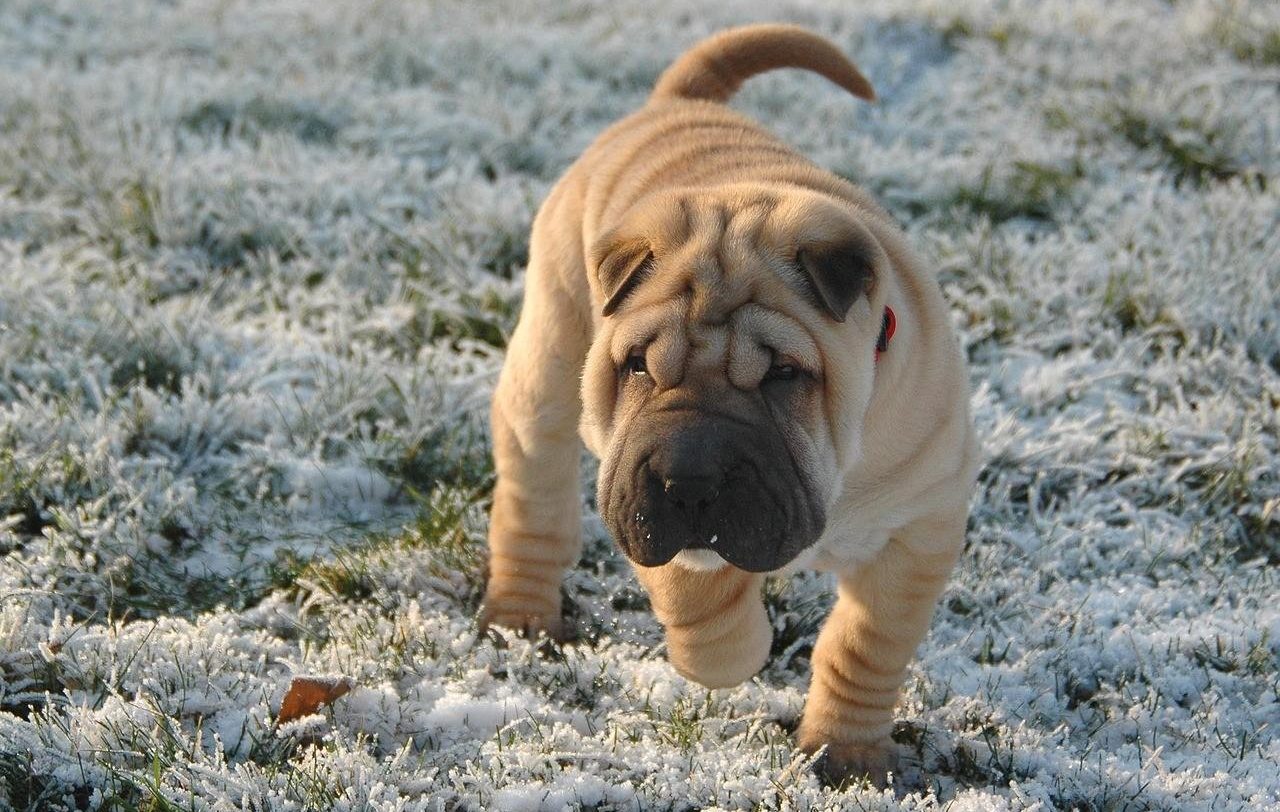
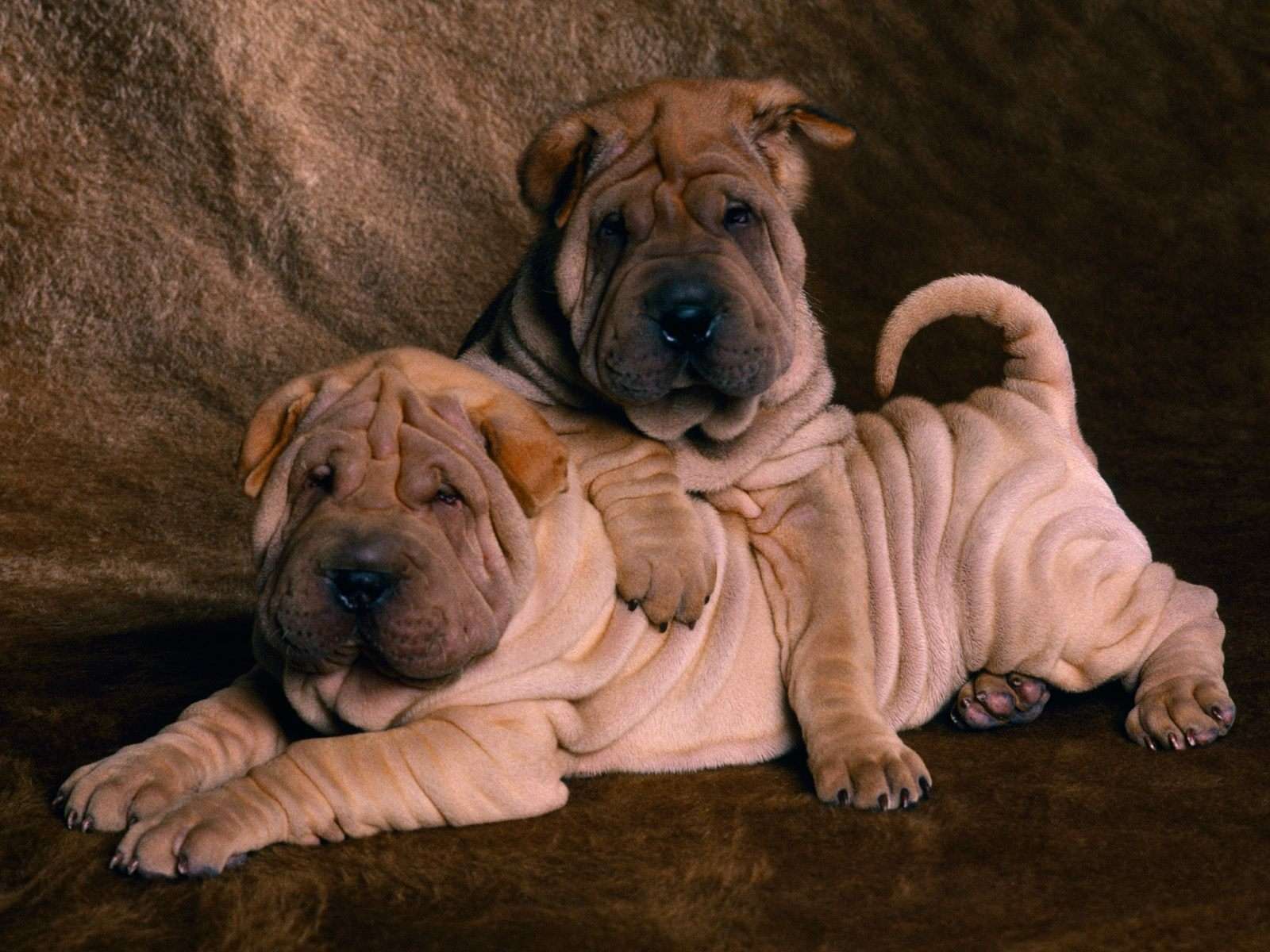
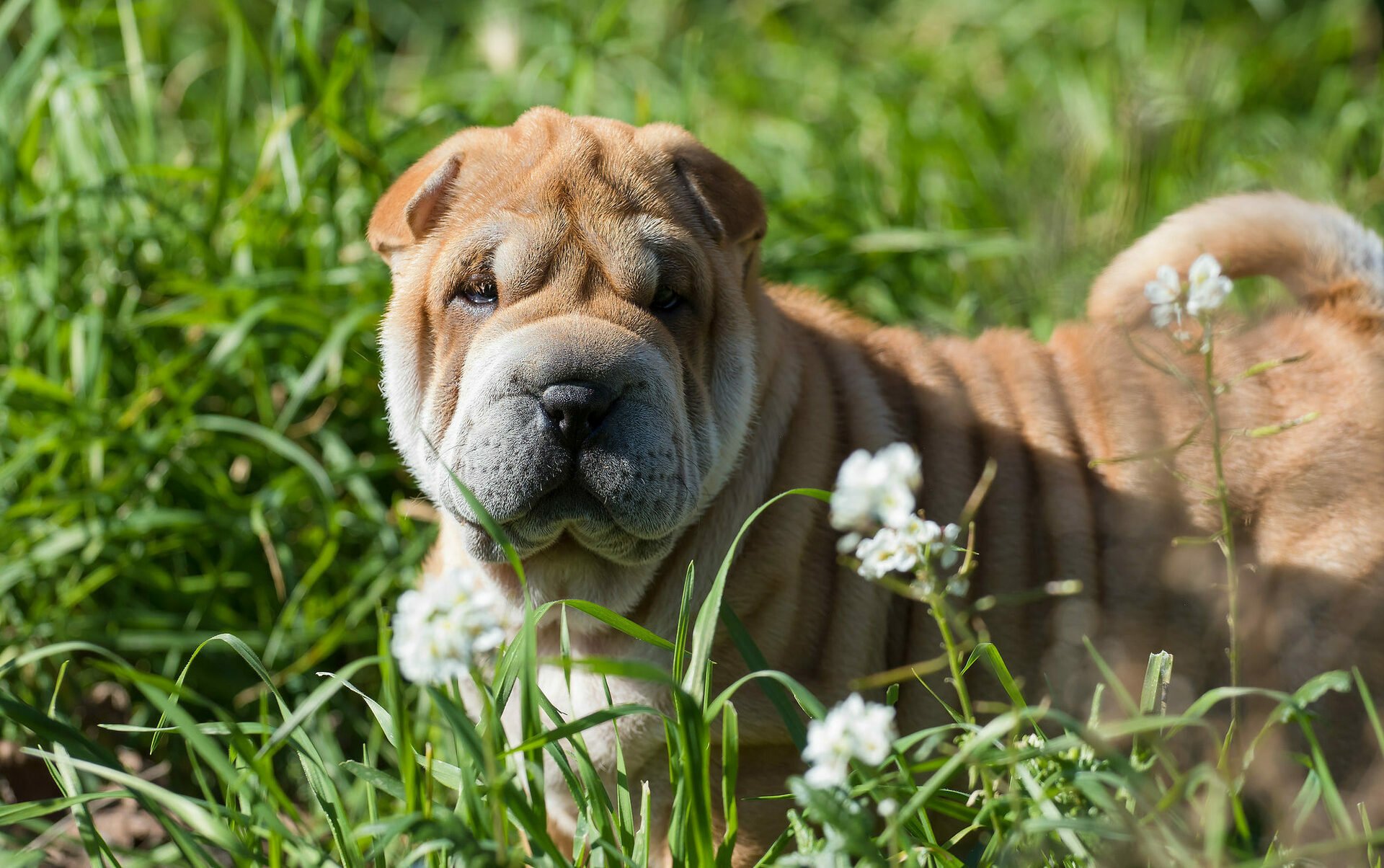
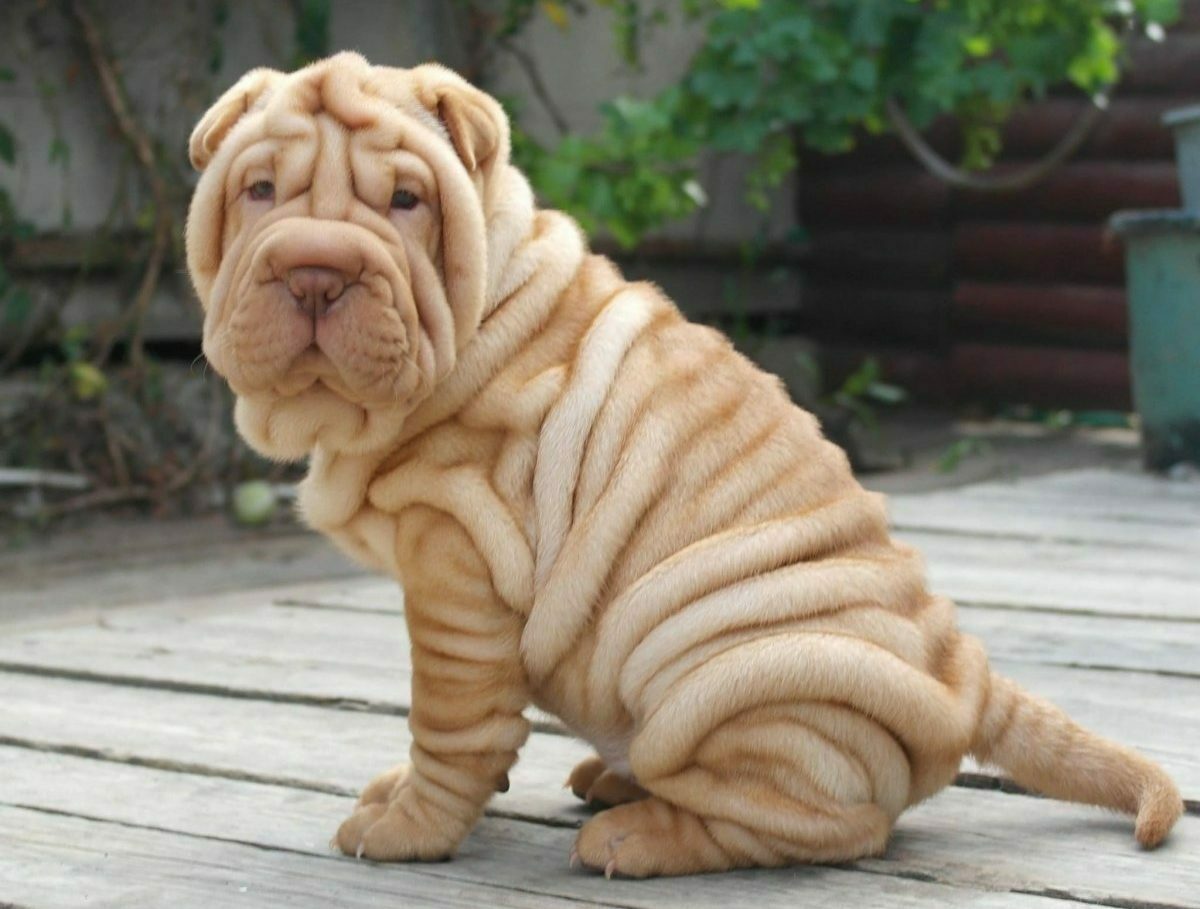
A powerful, compact dog with a square head and a short, curled tail. The name “Shar Pei” can be translated from Chinese as “sand skin,” and it’s hard not to agree with this interpretation. The numerous deep folds of skin on the face cascade down to the chest and shoulders, further spreading across the dog’s back. These cascades closely resemble sand dunes with their characteristic “waves” formed by gusts of wind.
An adult Shar Pei weighs between 18 to 30 kilograms, standing 40-50 cm tall. With proper care, a Shar Pei’s lifespan ranges from 10 to 14 years. The dog’s body proportions are closer to a square shape. It is said that when an owner takes their Shar Pei for a walk, onlookers can count all the folds on the dog’s skin and marvel at its purple tongue, while the owner goes unnoticed. You can check this for yourself.
On the dog’s large head, there are very small triangular ears, giving the plush-looking dog a slightly intimidating appearance. Yes, plush indeed! The Shar Pei’s coat is short, without an undercoat, and feels very much like a plush toy, especially on the face. Despite its stern expression, measured gait, and proud posture, the dog appears very endearing.


Отличительные черты

Голова

Морда

Уши

Глаза

Зубы

Корпус

Конечности

Хвост

Шерсть

Окрас
Character
Despite their serious and intimidating appearance, the Shar Pei’s nature is very calm. They are completely balanced, self-sufficient, and independent. Adult Shar Peis often regard new people with skepticism, but importantly, they do not exhibit aggression; instead, they observe and “get acquainted” from a distance. Only after confirming that these newcomers pose no threat to their loved ones will they allow them to approach. These plush dogs tend to take on a protective role for their family and are always ready to defend all its members.
The dog’s size combined with its innate characteristics makes it a brave warrior. Their unparalleled loyalty to their owner and all family members, along with excellent guarding instincts, make them one of the best security companions.
When it comes to living with other animals in the same space, it is important to note that if a Shar Pei was raised with dogs or even cats, there should be no issues, as the dog will consider them part of its “family.” However, if another animal is introduced into a home where a plush dog already lives, local conflicts or even jealousy towards the owner may arise. It’s worth highlighting that their fighting instincts may lead to disputes with same-sex individuals living under the same roof. In this case, it is crucial to socialize the dogs as early as possible. If necessary, enlisting the help of professional dog trainers and attending specialized courses with your dog is advisable.
The same applies to interactions with children. The dog’s strong and independent character can play a role. The dog will not tolerate rudeness or carelessness. Therefore, children need to be cautious when playing with an adult dog. Pulling its tail or stretching its cute wrinkles will certainly not be permitted. However, the dog is unlikely to harm a child; instead, it may issue a formidable warning in the form of a deep growl, which will be enough to set the young explorer straight. If children understand how to properly interact with dogs, they are unlikely to find a better friend.
Another important point to consider is how Shar Peis handle loneliness. There are mixed opinions on this matter. Historically, these dogs have been excellent guards. Today, according to the FCI standards, Shar Peis are classified as hunting and guard dogs. From this perspective, they can remain home alone all day without damaging their mental health or the household. However, from a humane standpoint, it makes sense not to leave them alone for too long.
It is important to remember that your dog is a natural leader. If, at any moment, the owner shows weakness, the dog will immediately attempt to take the top position in the hierarchy.Like any family dog, Shar Peis can sense the mood of their environment. Therefore, the nature of a Shar Pei consists of generalized traits. In reality, certain characteristics may be softened or, conversely, exaggerated. It is all very individual.
The Legend of the Folds
There is a legend about the emergence of wrinkles in Shar Peis. According to the legend, long ago, dogs were significantly larger and weighed just under 100 kg. Over time, Shar Peis began to shrink, resulting in the numerous wrinkles on the animal's body.Care and Maintenance
Taking care of a Shar Pei, as is customary, does not usually pose significant challenges for owners, provided they initially understand and follow the basic rules of care.
The ears, eyes, and skin folds of your pet require the most attentive care.
Skin folds should be inspected daily if possible, especially after walks. If dirt is found in them, it should be removed with cotton pads and special care products. Otherwise, your wrinkled dog may begin to smell, the folds could become irritated, which can lead to much more serious consequences.
The ears of a Shar Pei need to be checked weekly. If possible, do this more frequently. Despite being covered by the upper edge, dirt, ticks, and other insects can enter the ears during warm weather. Typically, ears are cleaned with a special lotion that can be recommended by the breeder or at a veterinary clinic. It is a relatively simple task, but it’s best to learn how to do it in advance and not neglect it. Particularly careful bathing is necessary to ensure that water or shampoo does not get into the dog’s ears.
The eyes of a Shar Pei are also a vulnerable area. Inspect them regularly. It is common for a dog to have discharge in the eyes. There’s no need to panic about this. It’s important to distinguish between tears and pus. Often, dust blown by the wind can get into the eyes. If it accumulates on the lower eyelid, it can mix with the dog’s tears, turn into dirt, and cause an infection. If you notice pus discharge, consult a veterinarian immediately. They will conduct the necessary examination and provide comprehensive recommendations for the owner’s next steps.
When it comes to maintaining the coat of your wrinkled guardian, remember that it doesn’t require special care. Regularly brushing it with a soft brush is sufficient to help the fur renew itself. Shar Peis do not need haircuts, except for those with fur longer than 2.5 cm. Shar Peis shed twice a year, but this shedding is not noticeable since their fur is very short and lacks an undercoat. There’s no need to bathe the dog frequently; bathing 3-4 times a year is enough, preferably not in cold weather.To prevent your dog from gaining excess weight, it’s essential to choose the right diet. Hard food should not be offered to your pet until they are one month old. However, once they are adults, dry food is the most convenient option for feeding your dog. Opt for premium quality foods, as you can find one that suits your specific four-legged guardian. This breed is prone to allergies, and doing this without a specialist’s advice is risky. Adult Shar Peis typically eat twice a day. Fresh water should always be available in the dog’s bowl. To avoid problems related to skin folds, wipe their rough muzzle after the dog drinks water.Nails usually wear down naturally, but
The oldest breed.
The first mention of the Shar Pei dates back to 206 BC. In ancient scrolls, these dogs are described as having a "rough layer of sand," which is a literal translation from Chinese. Indeed, the fur of these animals feels coarse to the touch.Training and Education
Despite the fact that the breed overall possesses a fairly developed intellect, they are not among the easiest to train. Statistically, they require up to 50 attempts to successfully repeat one command. However, this does not mean that Shar Peis have a worse understanding of what is being requested of them. Rather, they ponder why they need to follow the command and what benefit they will gain from it.
Another reason lies in the character traits of dogs with a “hippo head.” They are naturally inclined to be leaders and may test their owners’ firmness. Therefore, patience is essential before starting training sessions with Shar Peis. It is important to develop a strategy for behavior during training. Harsh treatment and sharp reprimands are highly undesirable. Certainly, this will not yield the desired results and is likely to harm both the training process and your relationship with the dog. Motivate the dog with praise for each successful repetition of a new command. Reward the completion of previously learned commands with treats. Do not force them, as this will hardly spark the dog’s interest. At the same time, there is no need to prolong the training exercises. Dogs get tired quickly and may lose interest in the activity, or even outright sabotage the training.
When should training for a Shar Pei begin? The answer to this question is quite simple. Each puppy, when entering a new home, must learn the rules of that house to avoid breaking them. Training should start with getting the dog accustomed to its name. Alongside this, it should learn its place, and then gradually move on to other, more complex commands. Praise and rewards for successfully completing tasks should be given immediately, and the same goes for punishment: it should not be postponed. The dog must immediately understand what actions are prohibited.
Nowadays, specialized dog training schools or courses are quite popular, and attending these can help achieve the desired results with minimal issues. The best ones are gathered at Zooinika, which offers puppies with pedigrees.
"Shark" behavior
“Shark-like” behavior is one of the characteristics of a Shar Pei. Dogs tend to run around an object of interest. This behavior is typical of fighting dogs and serves as an intimidating tactic.
How to Choose a Puppy
If you are considering getting a Shar Pei, you should carefully weigh all the “pros” and “cons.” Ask yourself: are you ready for a stubborn four-legged creature that requires a lot of attention and whose needs must always be considered?
Study the breed standard to avoid problems when purchasing. Choose a Shar Pei only from a reputable breeder. Never rush into buying a dog. Carefully review the dog’s documents. A breeder who loves their dogs will never sell a puppy to just anyone. They will definitely talk to you to see if you are the right person to trust with their puppy. If the breeder is eager to finalize the deal quickly, it’s best to walk away from the purchase, as this may signal that something is wrong with the puppy.
So, when starting your search, follow these basic rules: the kennel should be clean, the dog’s documents must be in order, the dogs should be active but not aggressive towards each other. Puppies should not be timid or appear unhealthy. Be sure to request a certificate confirming the absence of genetic diseases in the puppy. Inspect the coat color of the little wrinkly friend carefully. Too light colors may indicate genetic disorders.
Otherwise, it’s quite simple: the puppy’s eyes should not be discharge-prone, ears should be free of secretions, and the tail should not be tucked between the hind legs. And the nose! The nose should be moist and cool, remember that! Zooinika offers favorable deals depending on the breed and pedigree.
Health and Diseases
Shar Peis are not champions of health. Skin, eye, and gastrointestinal issues are quite common. However, there are a number of particularly dangerous and frequent diseases specific to this breed.
These diseases include:
– SPAID syndrome, or hereditary fever. This is a severe genetic disorder in which the dog’s immune system continuously attacks itself, leading to ever-increasing inflammation. Life expectancy with this condition is almost cut in half, and there is currently no effective treatment;
– entropion, glaucoma;
– various skin diseases caused by poor care for skin folds;
hip dysplasia;- food allergies, which can be managed by changing the diet and through medication;- esophageal disorder (thickening).Other diseases can be found in all breeds, so we won’t focus on them.Deworming should begin at the age of 1 month and should be repeated every 3 months thereafter.It is important to remember that preventing any disease is easier than treating it. Therefore, following the precise recommendations of breeders and veterinarians will help avoid most health issues for your pet. – the best website about animals where you can buy or sell a puppy.
Содержание
-
1. Описание породы
-
2. Внешний вид
- 2.1 Голова
- 2.2 Морда
- 2.3 Уши
- 2.4 Глаза
- 2.5 Зубы
- 2.6 Корпус
- 2.7 Конечности
- 2.8 Хвост
- 2.9 Шерсть
- 2.10 Окрас
-
3. Характер
-
4. Содержание и уход
-
5. Дрессировка и обучение
-
6. Как выбрать котенка
-
7. Здоровье и болезни






Comments
Only registered users can leave reviews.
Enter