
Scottish Terrier




Warning: Illegal string offset 'label' in /home/panda/sites/zoonika/wp-content/themes/zoonika/template-parts/animals/animals-param-item.php on line 32
Ð


Breed Description
The Scottish Terrier is a very old breed that originated in Scotland. To this day, discussions about the ancestors of these remarkable dogs continue. Beautiful legends are woven about their celestial origins. Based on facts, let’s say that the first mention of “small dogs that burrowed underground for prey” appears in the works of Pliny the Elder in the 50s BC. When the Roman army conquered the British Empire, warriors encountered these dogs with terror. They called them earth dogs and were initially afraid of them. They did not understand why the animals hid underground and considered them messengers of dark forces. When they came across them, the warriors parted, exclaiming “terria!” It is likely that the term “terrier” comes from the Latin “terra,” meaning earth.
There is another version of the breed’s origin. Aberdeen terriers (which is another name for Scotties) included a wide variety of dogs with different sizes and colors. The commonality among these dogs was their usage. Scottish terriers were often used for hunting burrowing animals like foxes, martens, badgers, and rats. Furthermore, farmers’ barns were protected by small, agile dogs with stern looks. Scots cleared them of mice and rats, as well as served protective functions.
The first standard for the Scottish Terrier was established in 1880. The Scottie was described as a terrier with short legs, originating from the highland regions of Scotland. The official Scottish Terrier Club in Britain was founded in 1882, largely thanks to Evelyn Shirley.
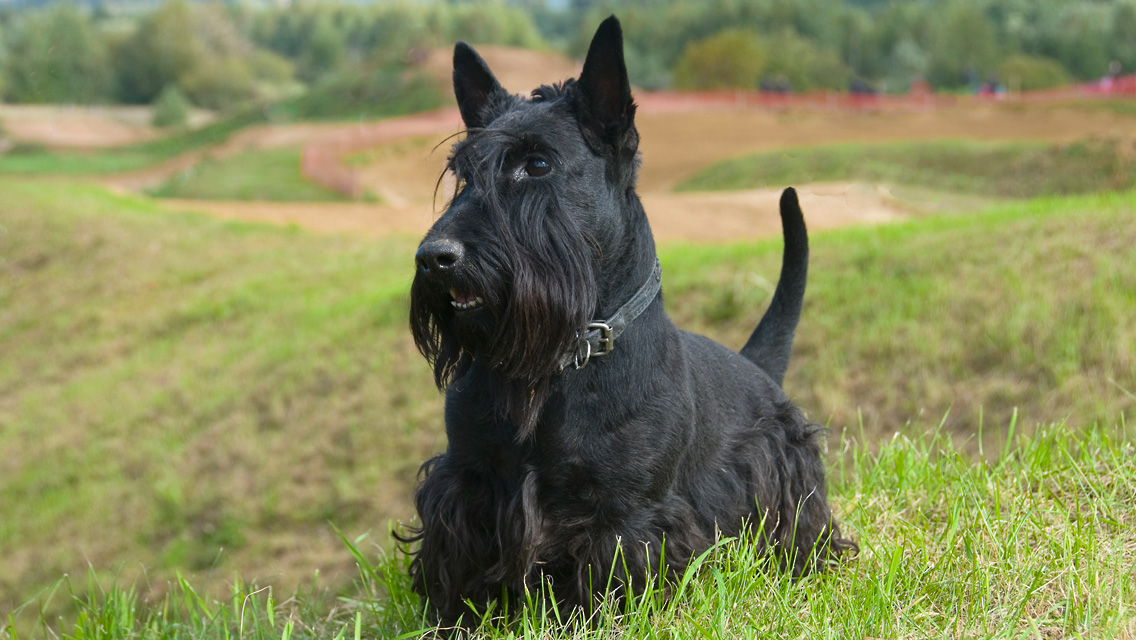
Modern Scottish Terriers are extremely popular worldwide. Retaining their working characteristics, they are often used as family dogs. The charm of these lively “shoe brushes” is striking. When a Scottie is nearby, one forgets that beneath its thick beard and long hair lies a brave hunter capable of overpowering even larger wild beasts. The agile Scot is always the center of attention and rightfully bears the title of “companion dog.” Despite their agility, the breed is suitable for elderly owners as well as families with children. Its stern expression does not repel; rather, it draws attention to its character. Next to the dog, it feels as if a big dog capable of protecting its owner at the slightest danger resides within that small body. In essence, this is true. The unparalleled loyalty and courage of the animal is impressive. Always vigilant, the dog keeps an eye on its family members even during play and is ready to defend without hesitation. Breed enthusiasts almost unanimously say that the movements of the Scottish Terrier are the benchmark for the entire terrier group.
Appearance
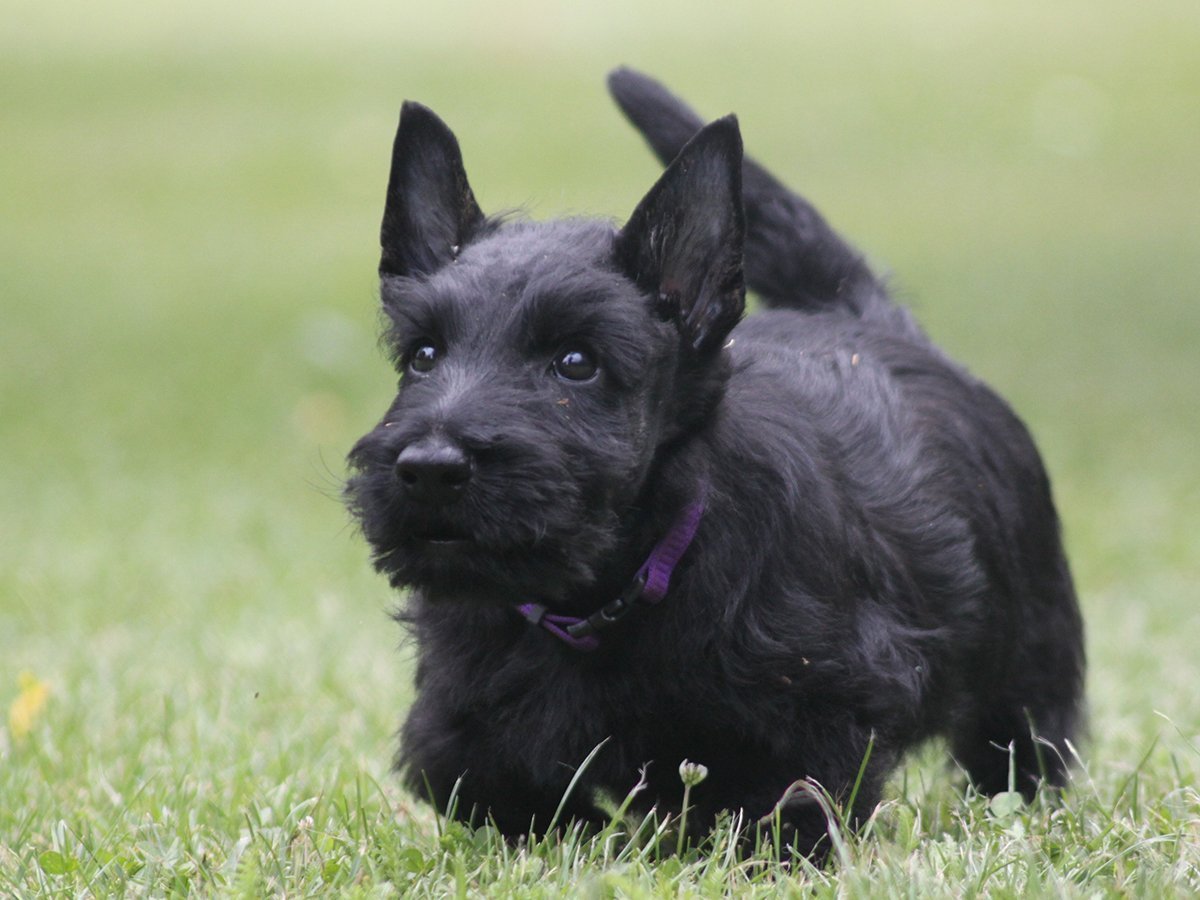
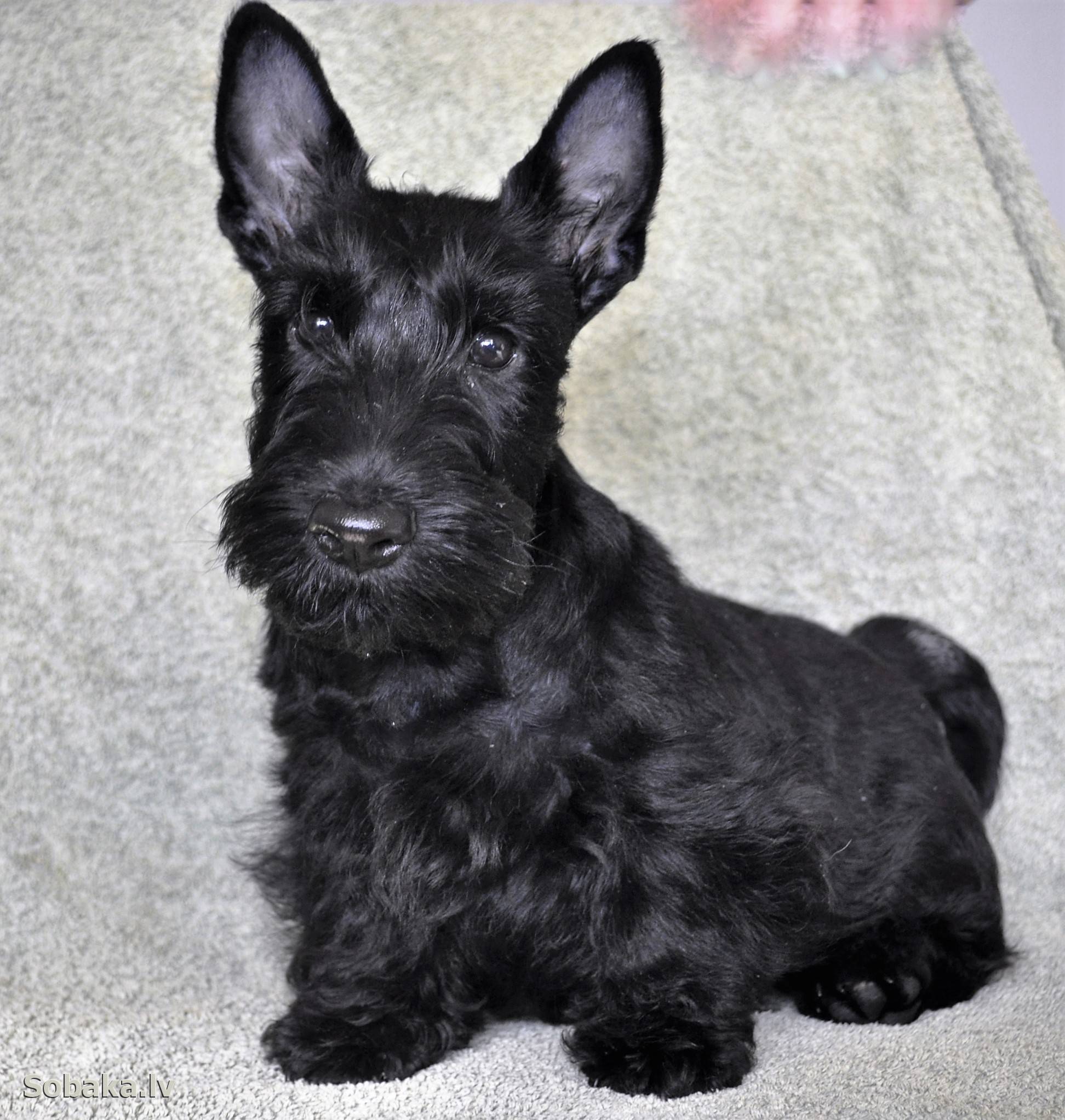
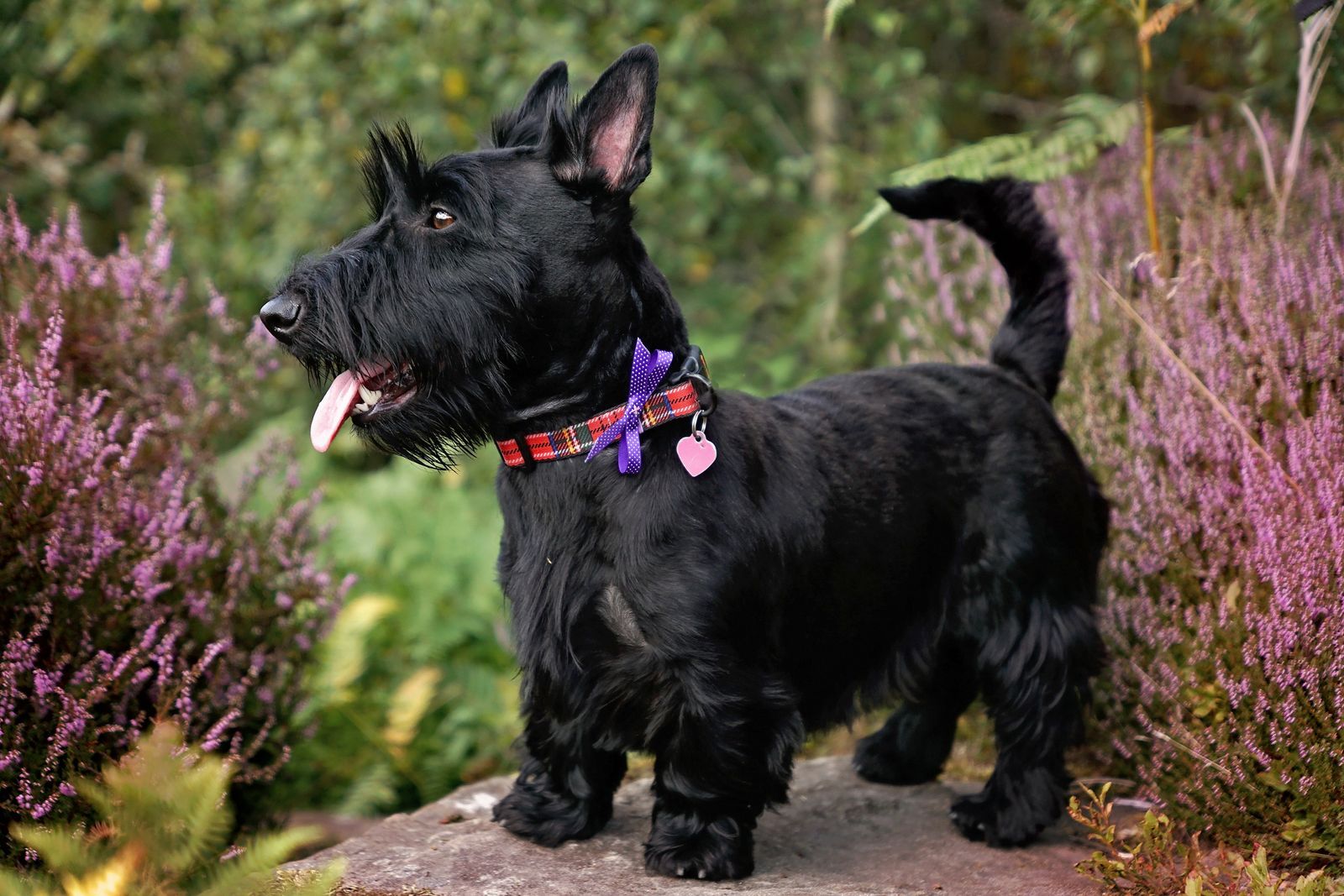
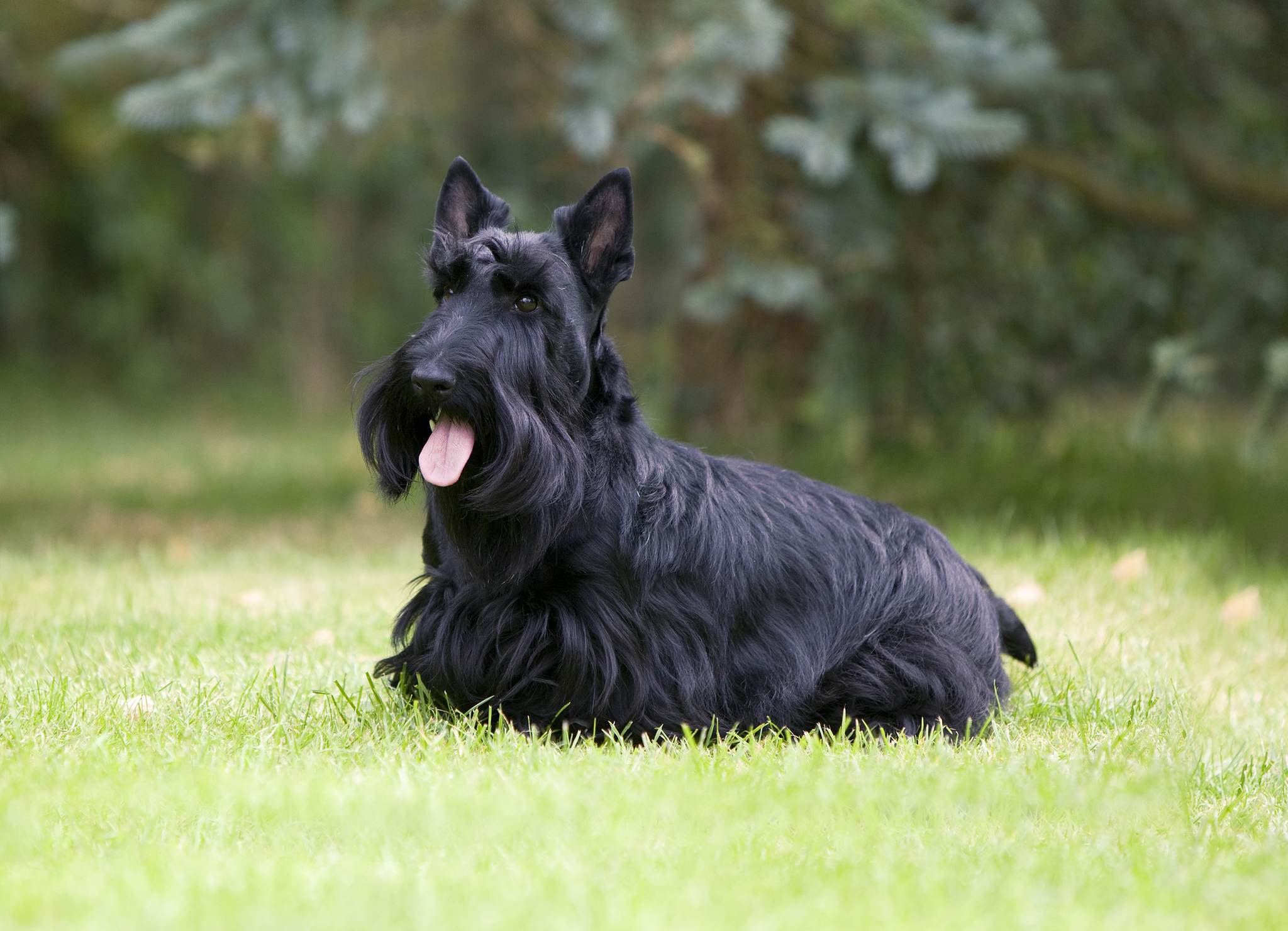
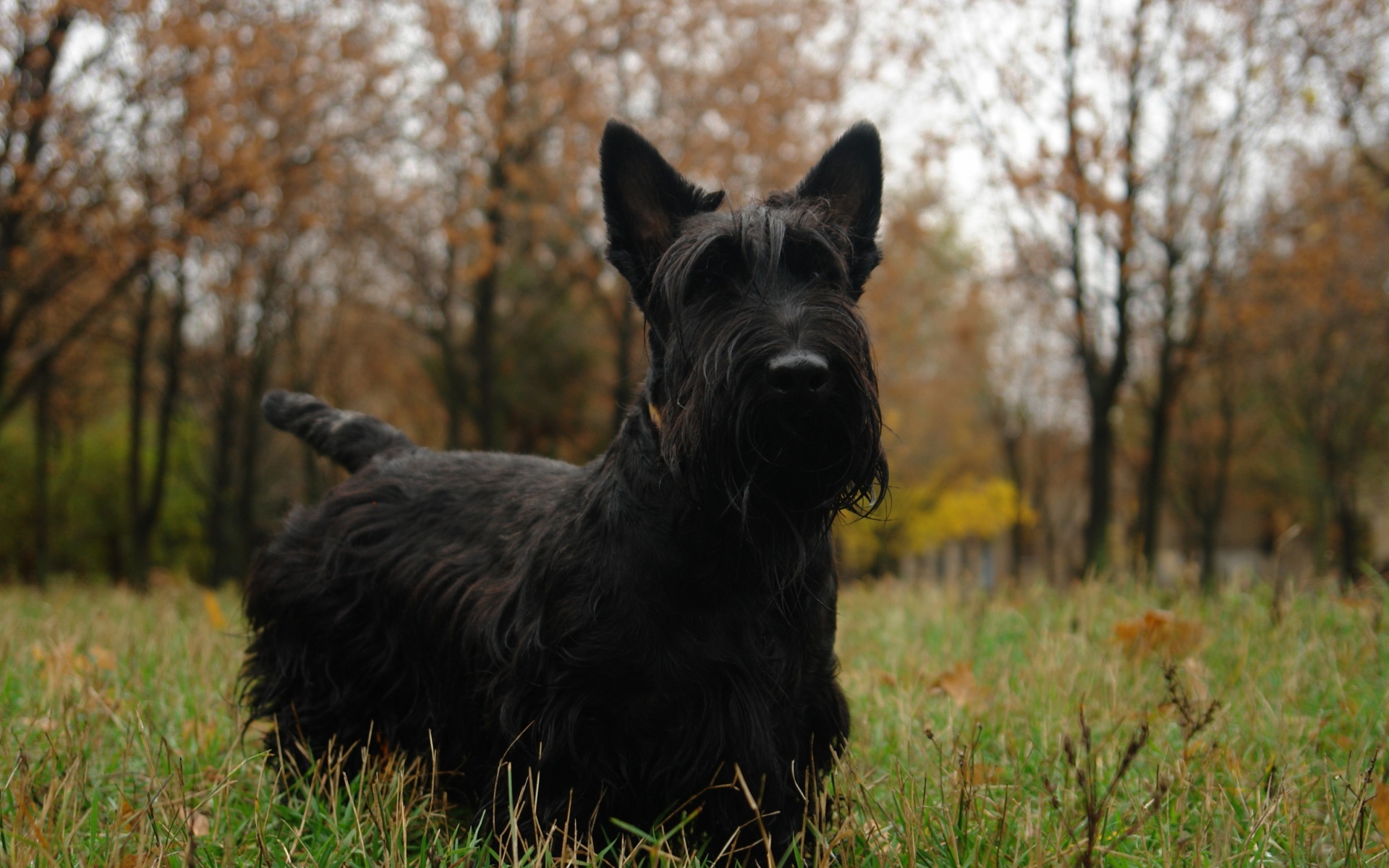
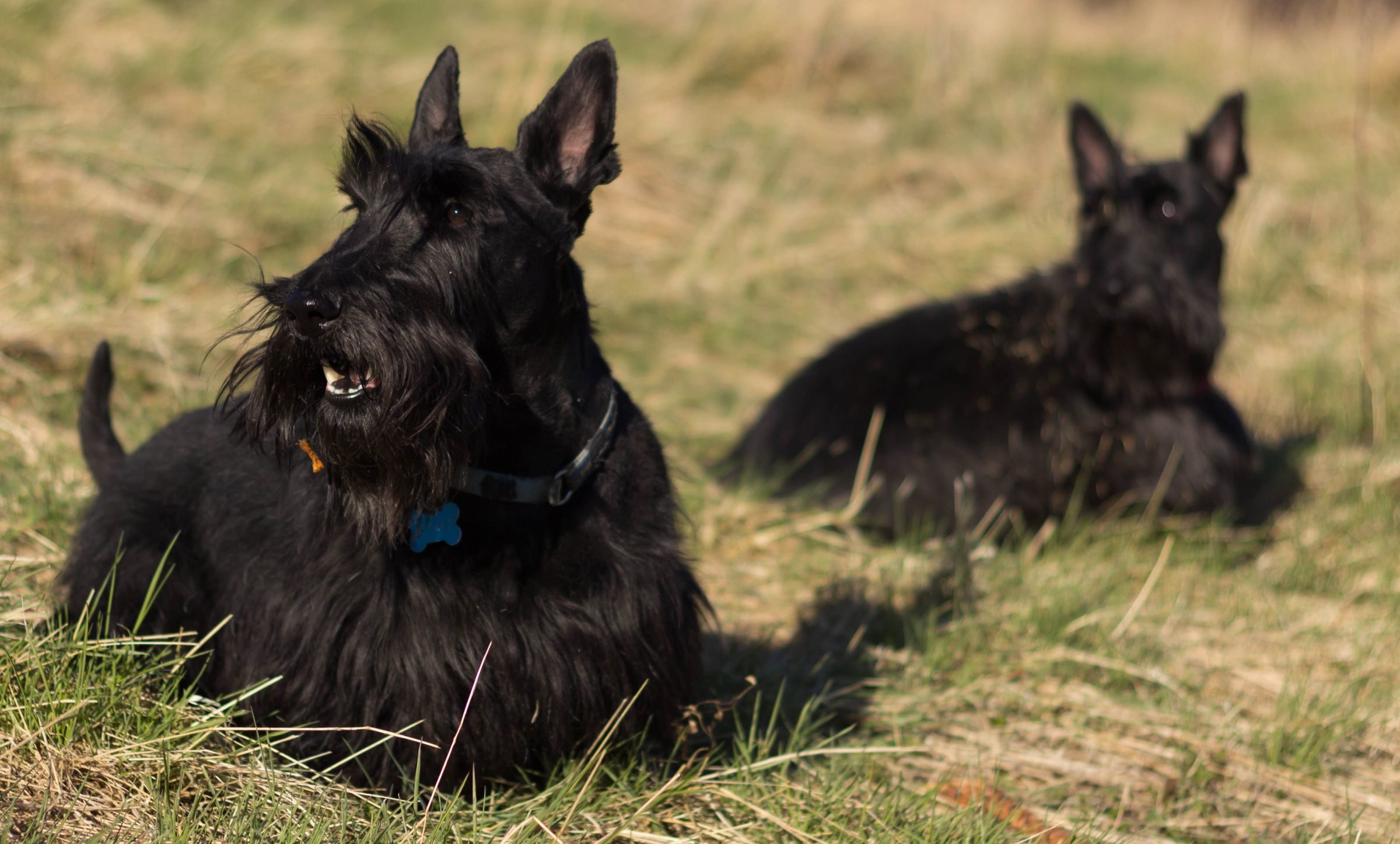
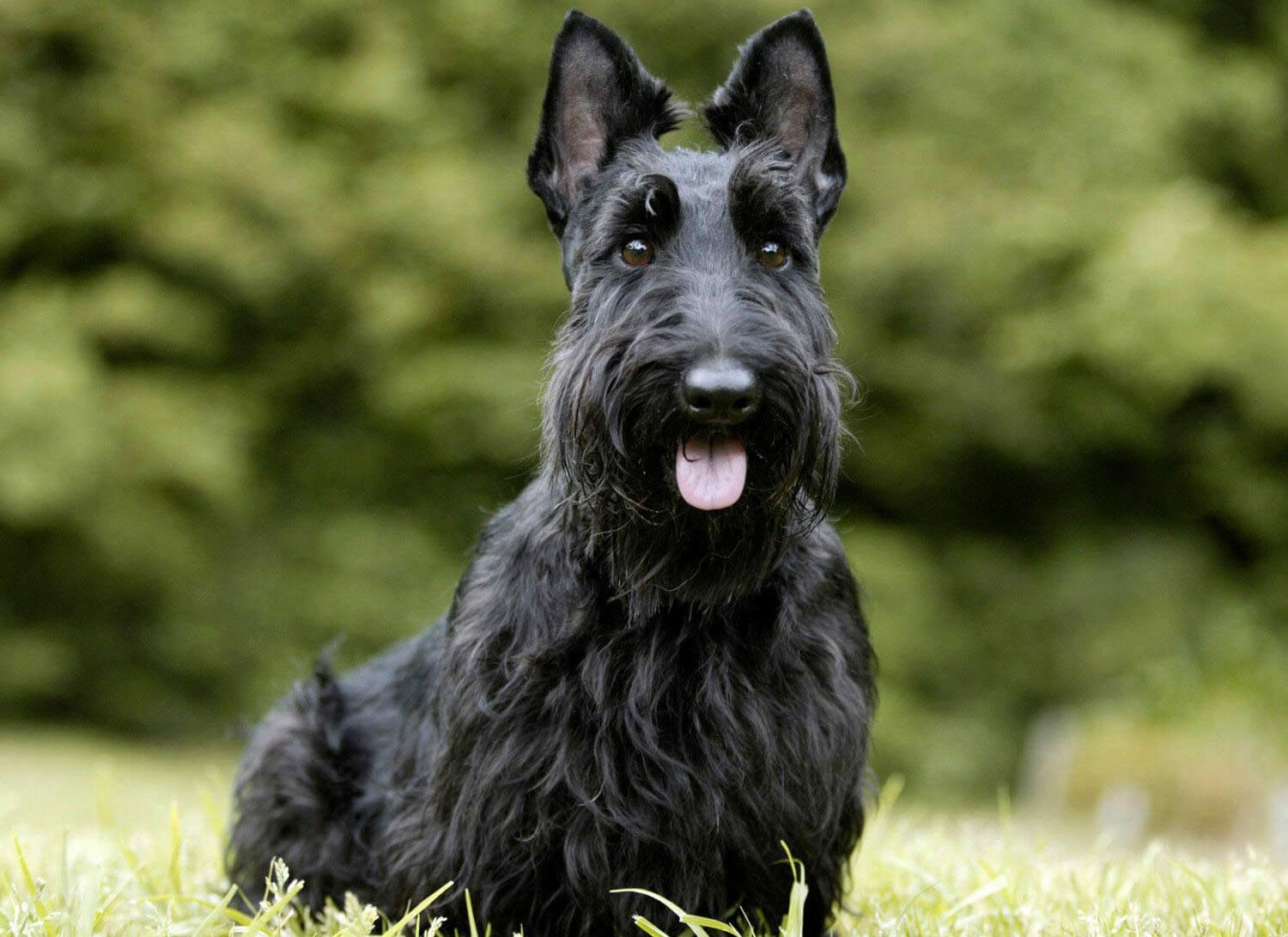
The Scottish Terrier is a working dog with a low profile, short legs, and a somewhat elongated body and muzzle. It is believed that the sturdy body of the animal is perfect for burrowing work. The volume of the chest, jaw structure, and paws enable successful tasks during real confrontations with wild beasts. The unique coat structure also serves protective functions, shedding excess moisture from the animal’s body in rainy weather. During hunting, the fur minimizes damage from animal bites.
According to the standard, modern Scottish Terriers should weigh no more than 10.5 kg, with a minimum weight of 8 kg. With a height at the withers of 25 – 28 cm, these dogs are convenient for travel. When keeping dogs in small urban apartments, owners need to ensure they have regular walks with intense physical activity. The average lifespan is 12 – 15 years, though these dogs often exceed those times. Terriers from Scotland always stand out with their unusual appearance. They are frequently compared to a vacuum cleaner or a broom, as it is customary to leave long fur on their bellies. When viewed from the side, their legs are hidden, giving the impression that the animal moves like a caterpillar, dragging its body along the surface.


Отличительные черты

Голова

Морда

Уши

Глаза

Зубы

Корпус

Конечности

Хвост

Шерсть

Окрас
Character
It is impossible to describe all the facets of a Scottish Terrier’s character in just a few words. This small, short-legged “brush” feels like a big, independent dog at heart. They are very brave and attentive to their owners. Despite their stern appearance, these dogs are gentle and affectionate within the family circle. They are very good-natured and get along well both with young families and elderly owners. The most important thing for them is to feel like a needed member of the family. A bit selfish, these dogs require respect. Therefore, small children need to be careful around them. Scotties dislike hot embraces, unlike toddlers. However, if the child is old enough to know how to behave around dogs, the Scottish Terrier will undoubtedly become their best friend, with whom they can have fun. After all, short-legged terriers are very active and love to run outdoors, just like all children.
Usually, within the family, the dog will choose one person to bond with. The Scottish Terrier sort of “adopts” its owner.
It is worth noting that this breed is very popular among elderly owners. They are often kept as companions. A strong bond develops between the dogs and older people, described as “living soul to soul.” Taking the dog for walks is essential, as there’s no getting around that-you can’t just stay at home.
A curious fact: Scottish Terriers are considered very musical dogs. They love to listen to soft and calm music. Watching them during these moments is a real delight.
These short-legged guardians will certainly sound the alarm if they hear anything suspicious at the door or on the property. It is safe to say that their watchdog qualities are an integral part of their character.
Regardless of the Scottish Terrier’s aristocratic appearance, the mask will drop at the sight of cats. The dog will certainly try to teach its natural enemies a lesson. Only if the puppy grew up with a cat might there be some compromises. However, true friendship will never develop. The same goes for rodents, which your dog will inevitably hunt down-it’s just a matter of time.Strangers are met with caution by representatives of the breed. During the first meeting, the dog will be particularly wary. They will definitely stand their ground if an unfamiliar guest tries to shorten the distance and approach before the animal is ready. Even after the dog is reassured that the stranger poses no threat, the distrust will remain forever.
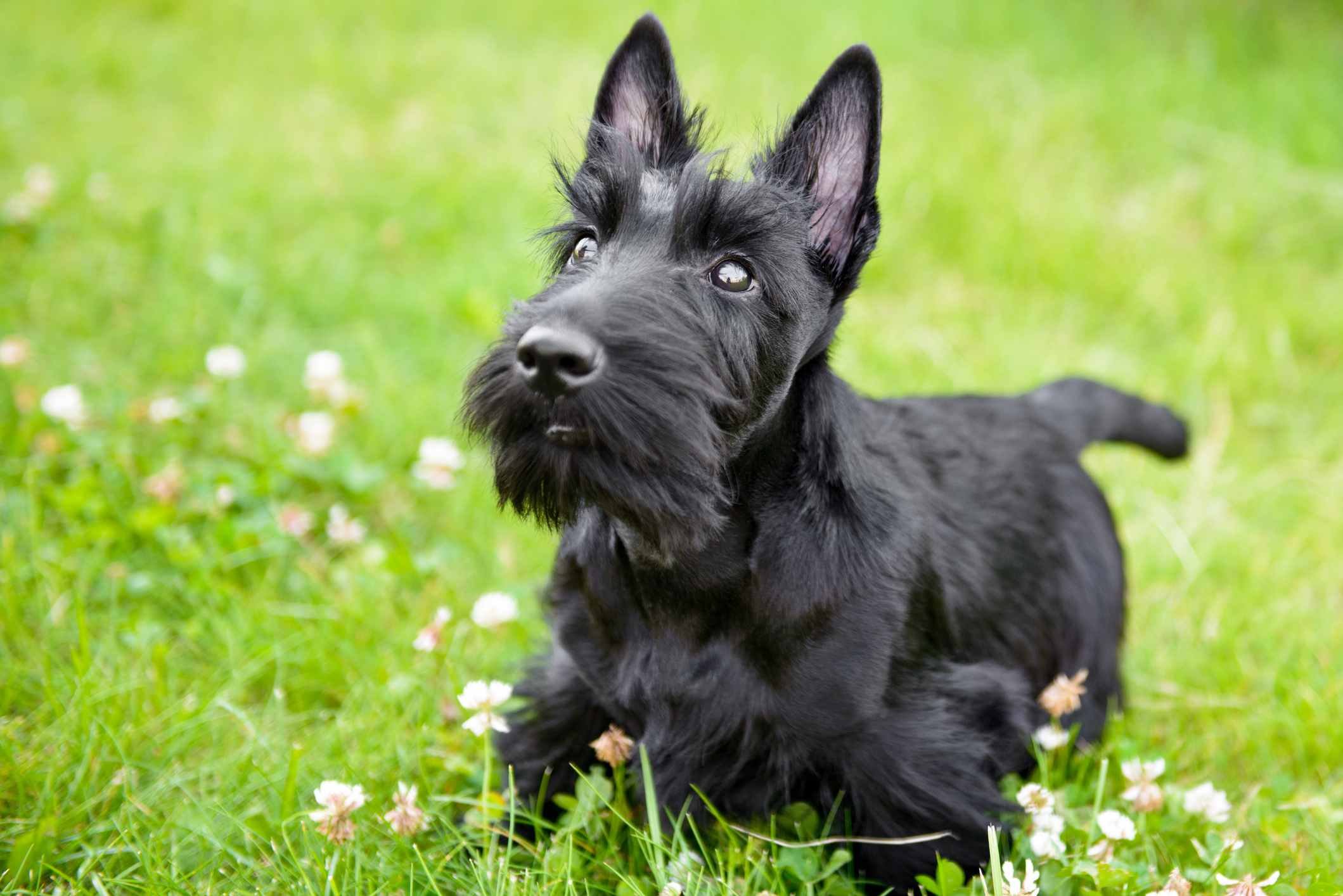
Friend of a physicist.
World-renowned physicist Albert Einstein had a Scottish terrier as a companion.Care and Maintenance
Why did you decide to get a Scottish Terrier? The answer to this question will complicate or simplify your dog care.
Show dogs require significantly more attention to their appearance. If you’re planning to have a family pet, the grooming standards can be much less demanding. Conversely, if you want a working dog, then the focus will be on developing and enhancing hunting skills in your pet’s care.
Scottish Terriers, or Scotties, are energetic dogs that love to walk. Their short legs can comfortably cover over 10-15 km without significant fatigue. Frequent walks lasting 30-40 minutes are ideal. Your “smudge” should have outdoor time at least twice a day. However, with two walks a day, it makes sense to extend the duration to 1-1.5 hours. Excessive physical strain can do more harm than good, so it’s essential to find and maintain a balance. If the dog lives in a country house, provide a section of the yard where the dog can dig. This breed has a tendency to dig, so keep this in mind. If the dog roams freely, expect damage to your plants. Digging is inevitable, and this can be considered a downside of the breed. If you live in a city, when walking your dog, make sure to let them off the leash only in designated dog parks. Be cautious of potential altercations between male dogs, especially in such areas.
Always bring your dog’s favorite treat. During walks, it’s recommended to practice some training elements that can’t be done at home. For example, your dog will happily fetch a stick, providing the necessary energy release.
Despite the special qualities of their coat that protect them from adverse weather, it’s better not to rely solely on these natural traits. In winter or during cold autumn rains, many owners help their pets by dressing them in special dog vests or suits with insulated linings and water-repellent properties.
Note that you should trim your dog’s hair twice a year. This procedure is known as “trimming.” It should be introduced from a young age so that the growing dog responds calmly to it. You can trim your dog more frequently if desired, but spring and autumn are generally sufficient. At other times, basic grooming will do. The most time-consuming tasks usually involve trimming the mustache, beard, eyebrows, and belly hair, commonly referred to as the “skirt” among dog owners, highlighting the Scottish origin of the bearded gentleman. The hairstyle on the head should visually elongate the overall look of the head and muzzle, leaving a longer coat between the ears.Claws must be trimmed at least 1-2 times a month. Long claws can lead to movement issues, so it’s essential to prevent their overgrowth. Relying on natural wear is not advisable. Also, check and trim the hair between the pads on the dog’s paws, inspecting them daily for dirt.An essential part of dog care is nutrition. What you feed your dog is up to you. More breeders are recommending premium dry food. It’s important to choose the food based on the dog’s age and weight, as these foods typically contain all
Presidential dogs
Scottish Terriers are a beloved breed in America and among its presidents. At least two leaders had these dogs: George W. Bush, Theodore Roosevelt, and Dwight D. Eisenhower.Training and Education
“Gentlemen in skirts” require training. From the moment the animal arrives in your home, you need to prepare a space for the puppy. It’s best to designate a special bed for them, located in a calm and safe part of your house. Ensure that the dog’s space is not in a high-traffic area or a drafty spot.
Once you choose a name for your puppy, train them to respond to it. Don’t teach your dog to respond to whistles or clapping your thighs. Methodically and patiently, day by day, reject any attempts by the puppy to solicit your sympathy and climb into bed with you. For many owners, this can be quite a challenge. But you must not give in. The puppy will quickly learn that certain behaviors can lead to exceptions.
Remember, there’s no need to try to teach your dog everything at once. It should be done gradually, from simple to complex. For instance, clearly communicate to your sweet puppy that chewing shoes and playing with slippers is forbidden. Provide them with their own toy and let them destroy it as they see fit. Otherwise, the fuss with your footwear may turn into a bad habit, leaving you without your favorite pair of shoes.
Starting from 2 months old, gradually accustom your dog to a leash. This should be done before the animal goes outside. Don’t forget that the puppy needs to potty. A solution to this issue is a training pad or litter box. After meals or drinking, show the puppy “their toilet.” Each successful “trip” should be immediately rewarded with a treat and praise. The dog will quickly understand what is expected of them. After all, terriers are very intelligent dogs.
Before the dog starts going outside, it’s essential to master the basic commands flawlessly. Commands like “no,” “come,” and “forbidden” will help protect your dog from potential dangers during walks.
As you progress, gradually expand the range of commands according to your expectations from the animal. To achieve better results, you may consider taking training courses with professional dog trainers. This can greatly assist you in achieving the desired outcome faster. Additionally, professional trainers can help to fully unlock the potential of your specific pet. Zooinica connects certified breeders offering puppies with an excellent pedigree.
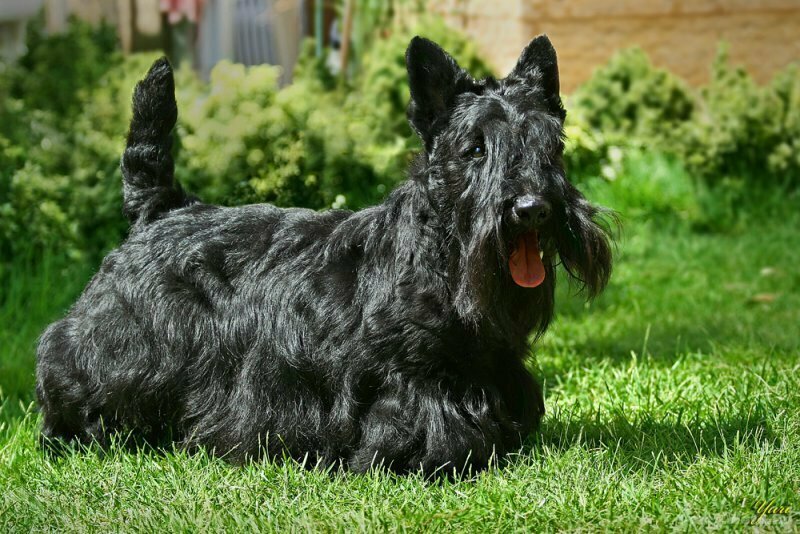
Emotional individuals
Scottish Terriers are quite emotional and don’t hide it. They droop their ears in guilt if they’ve done something wrong and wag their tails excitedly at the slightest hint of joy.
How to Choose a Puppy
Have you decided to get a Scottish Terrier puppy? Then be prepared for a little short-legged companion who will require a lot of your time, and you will be responsible for his antics.
But first, before purchasing, decide what gender the puppy will be. Clearly define the desired color. Trust me, all puppies are so cute that you’ll want to take them all home.
Carefully study all the breed characteristics and familiarize yourself with the Scottish Terrier standard. These dogs are very popular today, so it doesn’t make sense to buy an animal from an unverified source. Choose a reputable kennel instead.
During your visit to the kennel, talk to the breeder and try to clarify all the nuances of caring for and handling their dogs. Pay attention not only to the living conditions of the animals but also to how the communication with you unfolds. A responsible breeder will never pressure a potential buyer into making a deal. In fact, they would rather refuse to sell if they have doubts that their puppy will go to a reliable family.
When selecting a puppy, observe his behavior. It is said that your dog will come to you on his own, and there is some truth to that. However, there are often cases where the puppy studies you from afar. So, check out all the puppies before making your decision. By the way, you might visit the kennel more than once.
Now that you have an idea of which puppy you will take home, examine his eyes and ears. They should be clean and free of discharge. The iris should not have any discoloration. The puppy’s belly should not be bloated, and he shouldn’t be aggressive or overly fearful. With a pedigree from a reliable source – choose the puppy of your dreams.
Health and Diseases
Dogs generally have quite robust health. With proper care and timely vaccinations, issues typically do not arise.
However, certain diseases do occur in Scottish Terriers more frequently than in dogs in general. One such condition is increased excitability of the nervous system. This disorder cannot be diagnosed through tests. In cases where your dog plays outside for a long time in active games, they may experience seizures. No, the dog won’t lose consciousness; it may briefly fall and extend its legs with convulsive twitching. Be sure to take your dog to a veterinary clinic immediately after the first seizure. There, you will receive all the necessary recommendations.
Like many terriers, hip dysplasia and various dislocations are common. However, one of the most dangerous conditions is hemophilia, which unfortunately is incurable. Various allergic reactions are often triggered by an improperly chosen diet, and changing the food usually resolves these issues. If your dog has started consuming more food and water than usual while simultaneously losing weight, these are clear signs of Cushing’s syndrome. This is a very serious and severe condition, so it is essential to visit a veterinarian urgently. You can find one at the Zoonica bulletin board.
Содержание
-
1. Описание породы
-
2. Внешний вид
- 2.1 Голова
- 2.2 Морда
- 2.3 Уши
- 2.4 Глаза
- 2.5 Зубы
- 2.6 Корпус
- 2.7 Конечности
- 2.8 Хвост
- 2.9 Шерсть
- 2.10 Окрас
-
3. Характер
-
4. Содержание и уход
-
5. Дрессировка и обучение
-
6. Как выбрать котенка
-
7. Здоровье и болезни






Comments
Only registered users can leave reviews.
Enter