
Scottish Setter






Warning: Illegal string offset 'label' in /home/panda/sites/zoonika/wp-content/themes/zoonika/template-parts/animals/animals-param-item.php on line 32
Ð


Breed Description
The Scottish Setter, or Gordon Setter, is a breed rooted in the rich hunting culture of 18th century Scotland. Its name comes from the Duke of Gordon, who played a key role in the development of the breed. George Gordon, the fourth Duke of Gordon, began breeding dogs at his Gordon Castle in Scotland, aiming to create the perfect hunting companion for game in the harsh Scottish landscapes.
The foundation of the breed included local setters, which the Duke crossbred with other breeds, including black-and-tan terriers, Irish setters, and possibly greyhounds. The goal was to create a dog that combined speed, endurance, and exceptional scenting ability. The Scottish Setter was ideally suited for hunting in mountainous terrain, fields, and forests, where its keen sense of smell allowed it to detect grouse, pheasants, and other game.
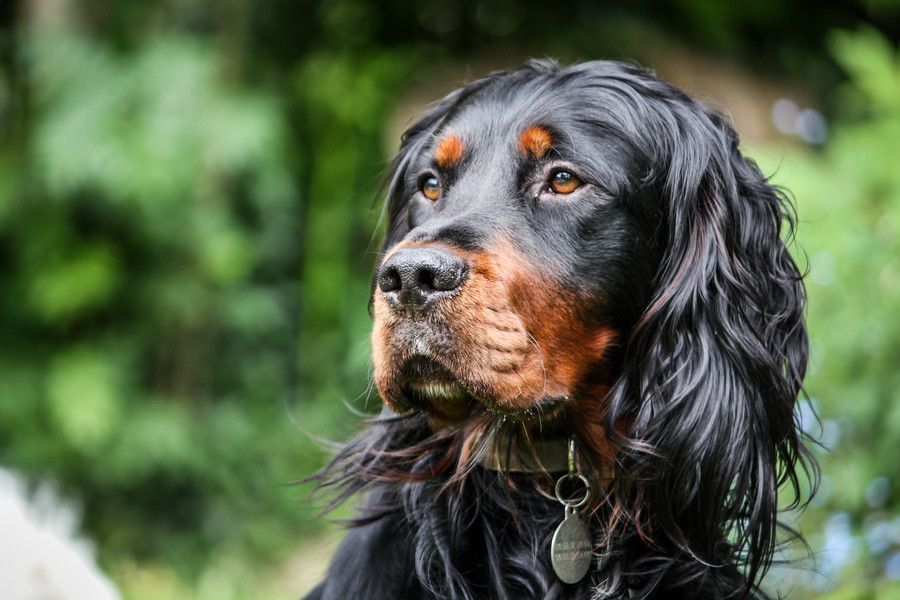
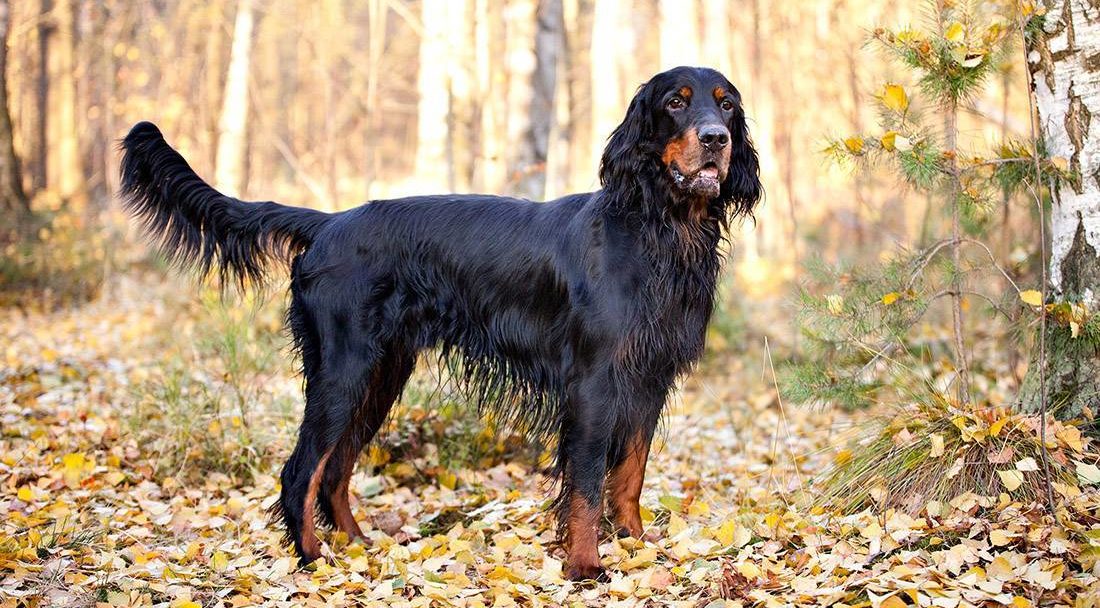
A key feature of the Scottish Setter is its dense, water-resistant black and tan coat, which not only made the dog stand out against nature but also protected it from harsh weather conditions. This coat has become the breed’s hallmark, distinguishing it from other setters. Additionally, Gordon Setters have gained a reputation not only as reliable working dogs but also as elegant companions, thanks to their noble appearance and gentle temperament.
The breed quickly gained popularity beyond Scotland. By the early 19th century, representatives appeared in England, and later in America, where they were valued for their versatility and loyalty. In 1827, the first stud book for Scottish Setters was established, allowing for the standardization of the breed and the preservation of its unique qualities. Dogs from Gordon Castle became the foundation for breeding worldwide.
Today, the Scottish Setter remains a symbol of elegance and hunting efficiency. Its history exemplifies how attention to detail and a passion for hunting created a breed that combined the best qualities of working and domestic dogs while maintaining a connection to Scottish traditions and nature.
The price for a puppy ranges from 20,000 to 40,000 rubles.
Appearance
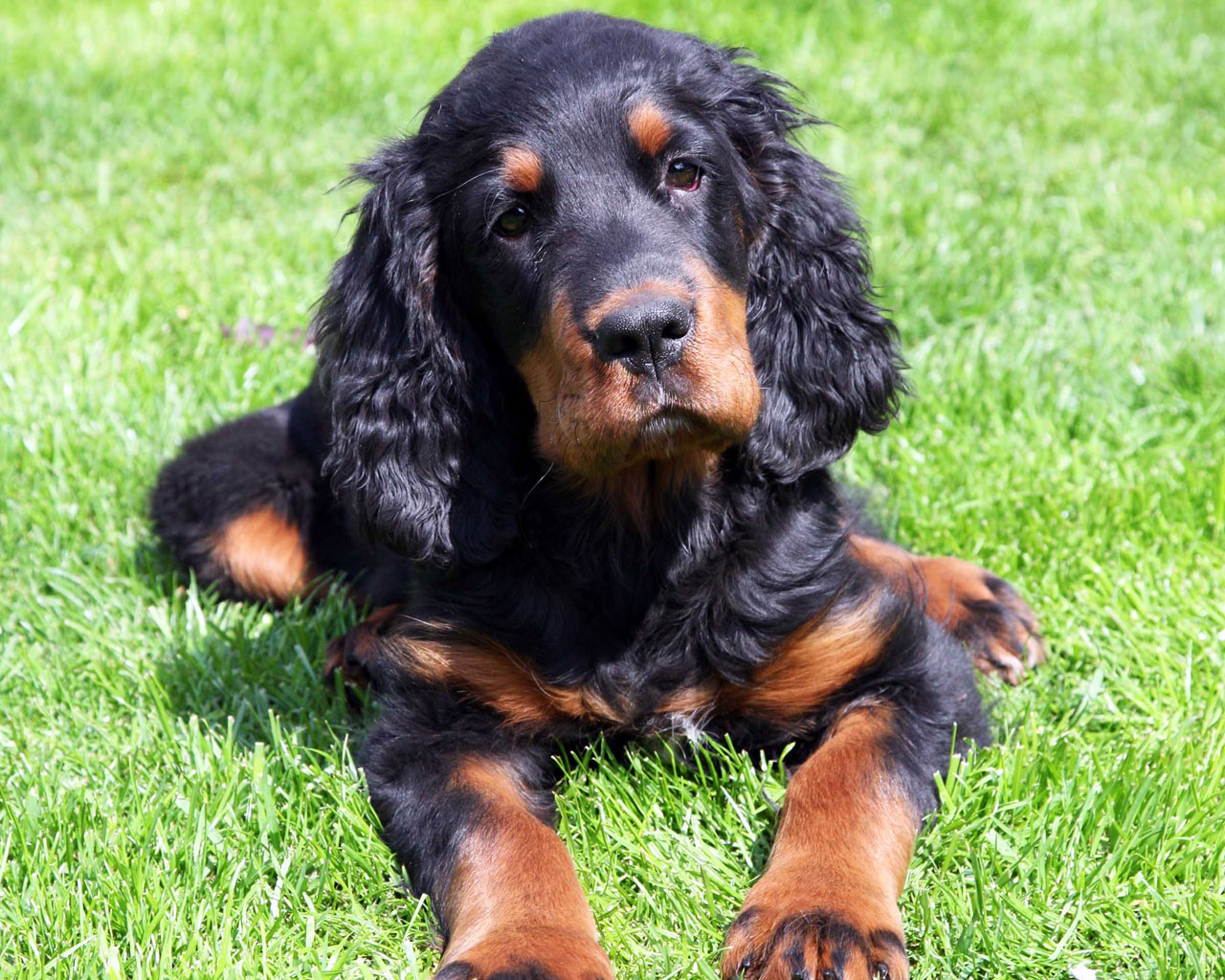
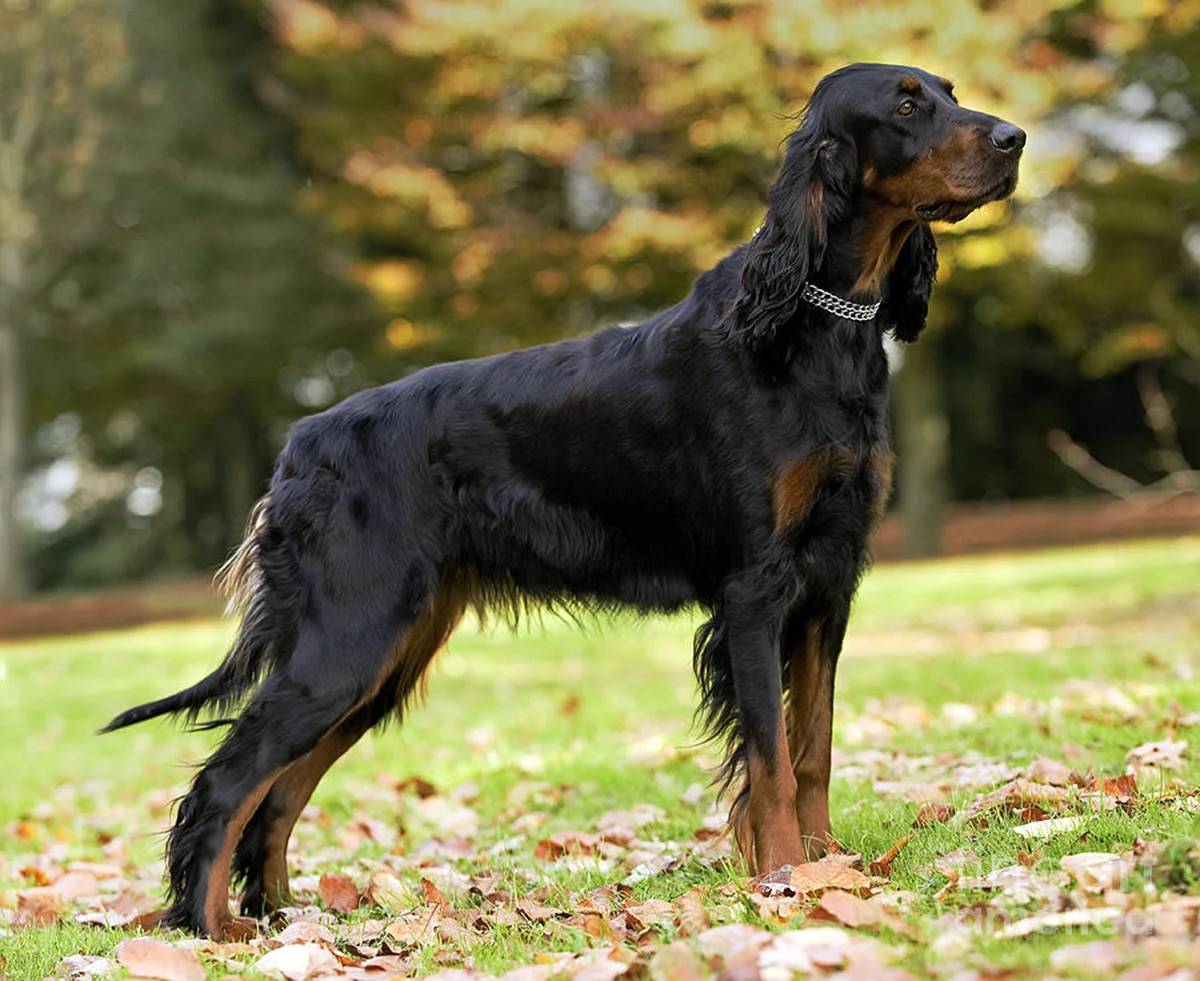
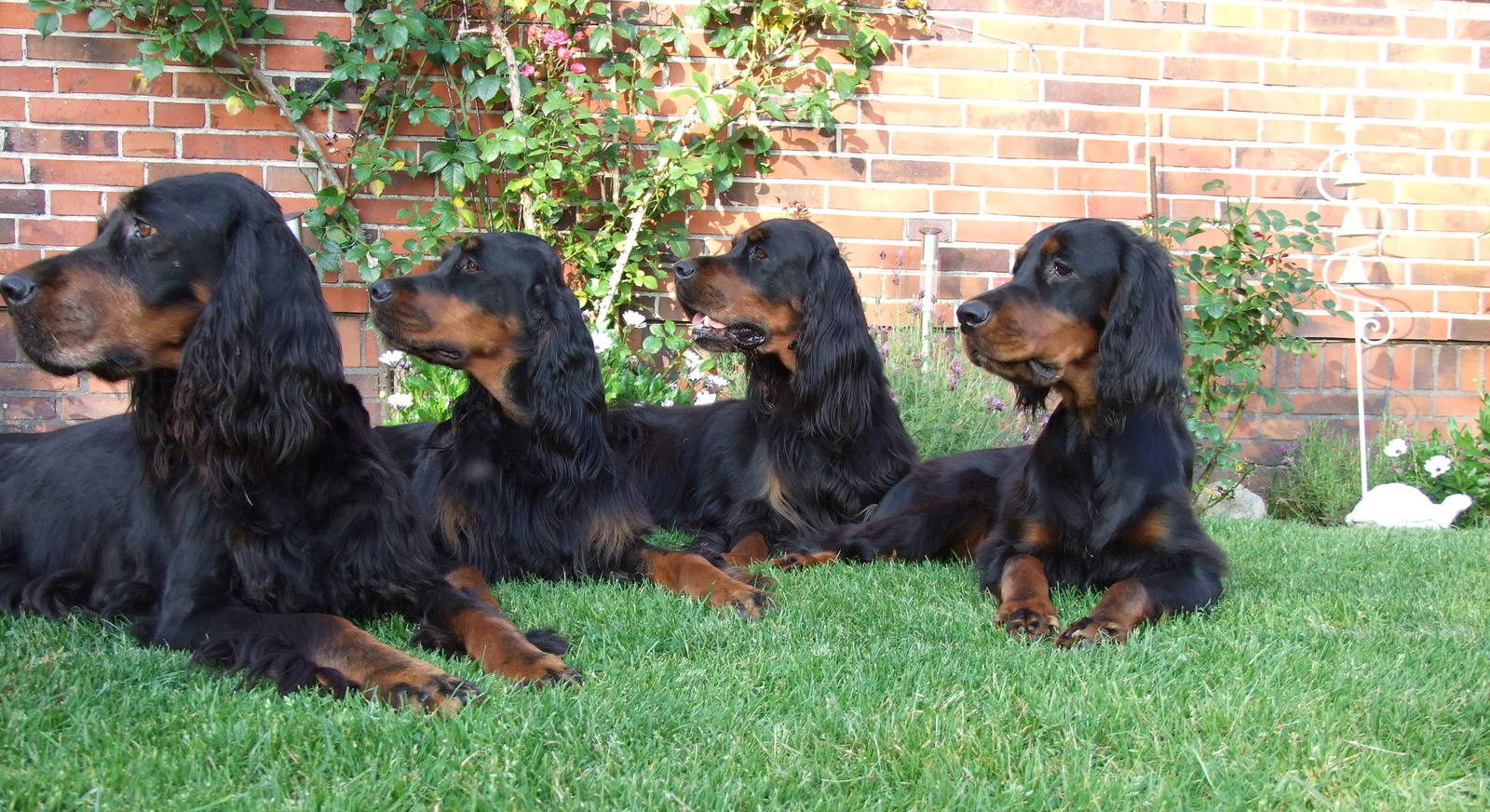
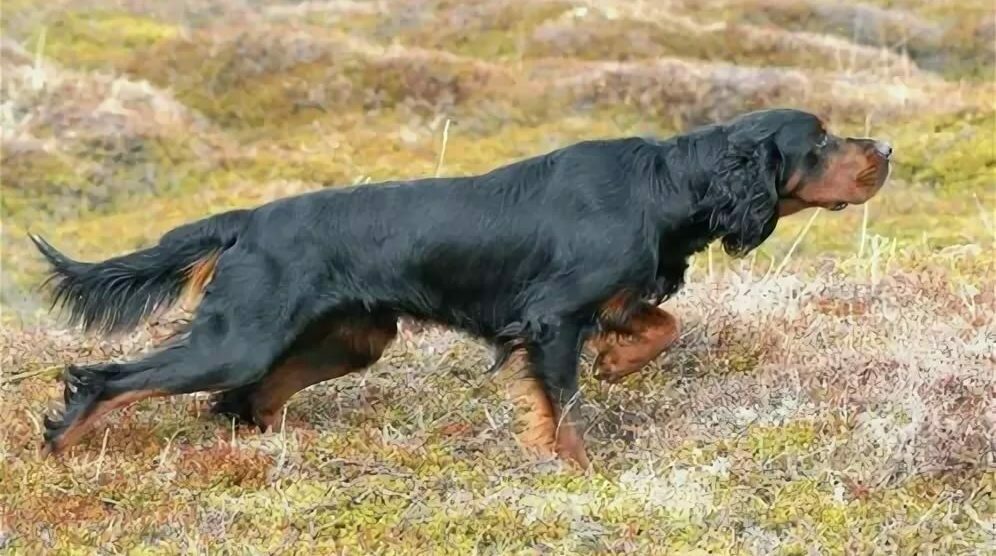
The Scottish Setter, or Gordon Setter, is an elegant and powerful dog with a harmoniously built body that emphasizes its hunting purpose. Its appearance combines strength and sophistication, making the breed versatile for both work and home life. A proportional body with a deep chest and strong back allows the setter to move easily over long distances and across challenging terrain. The long, silky coat lies close to the body, forming charming “feathers” on the ears, tail, and legs.
The average height of the Scottish Setter is 63-68 cm for males and 58-64 cm for females. Weighing between 25 and 36 kg, the dog is sturdy but not cumbersome. These dimensions are ideal for performing hunting tasks that require both endurance and speed. Its graceful movements reflect natural ease and energy.
The lifespan of the Gordon Setter is 10-12 years. With proper care, a balanced diet, and regular physical activity, dogs of this breed maintain their vitality and excellent condition into old age. Their appearance is a blend of classic beauty and functionality, making the Gordon Setter an outstanding representative of hunting breeds.


Отличительные черты

Голова

Морда

Уши

Глаза

Зубы

Корпус

Конечности

Хвост

Шерсть

Окрас
Character
The Scottish Setter has a friendly and balanced character, making it not only an excellent hunter but also a loyal family companion. These dogs are incredibly intelligent, energetic, and persistent, especially when it comes to work or play. They are natural enthusiasts who love to be active and experience new things. Their innate sense and endurance shine in hunting, where setters demonstrate persistence, attentiveness, and the ability to concentrate on tasks for long periods.
In family life, the Scottish Setter is affectionate and devoted, easily bonding with its owner and valuing close contact with people. These dogs get along well with children and patiently tolerate their antics while remaining lively enough for active play. They tend to form strong emotional attachments and dislike being alone, preferring to be part of family activities.
Scottish Setters have a playful and slightly stubborn nature, so it’s important to display patience and persistence with them. They respond well to positive reinforcement, making them excellent learners with the right approach. However, their independence and hunting instincts can lead to a desire to explore their surroundings, so it’s crucial to focus on their training and supervision during walks.
The Setter’s habit of working as part of a team makes it sociable with both other dogs and people. These dogs adore active walks, outdoor games, and tasks that engage their mental abilities. The calm and confident energy of the Setter allows it to adapt easily to different environments, whether it’s an urban apartment or a country house. The Scottish Setter is a dog that harmoniously blends energy, intelligence, and incredible affection, making it a true friend and partner.

Exhibition record holder
The Scottish Setter named "Champion Churchill" has gone down in history by winning over 100 exhibitions during his lifetime, including the most prestigious international competitions. His owner was so proud of his titles and awards that he dedicated a memoir to the dog, detailing his triumphant journey.Care and Maintenance
The Scottish Setter requires regular grooming that takes into account its active lifestyle and coat characteristics. Its long, silky fur needs to be brushed regularly to prevent tangles, especially in areas with longer “feathers” on the legs, ears, and tail. It is recommended to brush them 2-3 times a week, and more frequently during shedding season. Bathing should be done as needed, using gentle shampoos to avoid drying out the skin.
Particular attention should be paid to the ears, which are prone to accumulating dirt and moisture due to their shape, potentially leading to inflammation. They should be checked and cleaned regularly with a soft cloth or special cleaning agents. The eyes also need to be monitored, especially after walks in the woods or tall grass, to prevent dirt from getting in.
Scottish Setters love long, active walks, making daily physical exercise extremely important. They need playtime, running, and opportunities to explore freely. These dogs enjoy tasks that stimulate their mental abilities, such as searching for objects or following commands. Off-leash walks are only possible in safe areas, as their hunting instinct may drive them to chase after prey.
Setters crave attention and do not tolerate loneliness. They are happiest when participating in family activities and prefer to be at the center of attention. Long absences from their owner can lead to boredom or anxiety, so it is better if someone from the family is around during the day.
The setter’s diet should be balanced, with enough protein to sustain its activity level. They are prone to weight gain if they do not get enough exercise, so it is important to monitor portion sizes and the quality of the food.
Setters do not respond well to rough treatment or loud noises. They are sensitive to tone of voice and respond best to a calm and friendly approach. Caring for a Scottish Setter requires time and attention, but in return, they offer loyalty, vivacity, and genuine love, making them an ideal companion in an active and caring family.
Record for accuracy in finding game.
Scottish setters are known not only for their speed but also for their exceptional accuracy. One representative of the breed set a record at a hunting competition in the 1930s by locating and pointing out the location of 23 wild birds in an hour, making him a legend among hunting dogs.Training and Education
The Scottish Setter is best trained using a gentle yet persistent approach based on positive reinforcement. These dogs are intelligent and learn quickly, but they can show stubbornness or get distracted, especially if tasks seem boring to them. For successful training, it is important to have variety in commands and exercises to keep the setter’s interest. They respond well to praise, treats, and rewards in the form of play.
Training should start at an early age, focusing on basic commands and socialization. Setters need early exposure to other dogs, people, and different situations to develop confidence and comfortable behavior. It’s crucial to spend time getting them used to a leash and teaching the command “come,” as their hunting instinct may lead them to chase prey or explore the territory.
The Scottish Setter chooses an owner who demonstrates patience, kindness, and a willingness to give enough attention to the dog. They tend to bond with people who actively participate in their lives, spending time with them on walks and activities. Setters appreciate respect and do not tolerate rudeness or harshness, which can undermine their trust and reduce their willingness to cooperate.
These dogs obey those who show consistency and confidence in their actions. The owner should be a calm yet firm leader, establishing clear rules and boundaries. Setters respond best to a calm tone of voice and encouragement, avoiding yelling or abrupt actions. They need a person who can balance leadership with respect for their independence and individuality.
Scottish Setters are suitable for people with an active lifestyle, as they require plenty of physical activity and mental challenges. They are not only eager to learn and follow commands but also strive to be full partners in their owner’s life. A well-trained setter is an attentive, obedient, and loyal companion who shares the interests and rhythm of their family life. Zoonika offers puppies with documentation and health guarantees.
Hunting with royal luxury.
Duke Gordon, one of the main breeders of the breed, kept his setters in conditions close to royal ones. In his castle, the dogs were given individual attendants who took care of them, monitored their nutrition, and trained them. These conditions allowed for the development of an elite line of setters, distinguished by both their working qualities and external elegance.
How to Choose a Puppy
When selecting a Scottish Setter puppy, it’s important to pay attention to its physical condition, behavior, and lineage. Start by finding a reliable breeder who specializes in this breed, has a good reputation, and comes highly recommended. The breeder should be willing to provide all necessary information about the puppies, their parents, and their living conditions.
The puppy should be active, curious, and friendly. It should willingly engage with people and show interest in its surroundings. Its behavior should be confident without any signs of aggression or excessive timidity. Observe how the puppy interacts with its littermates to see how well it is socialized and adapted to communication.
Visually inspect the puppy. Its coat should be shiny and clean, the skin should be free of redness or irritation. The eyes should be bright, the nose moist and cool, and the ears clean, without odor or discharge. The puppy should be agile, with strong legs and confident movements, showing no signs of lameness or other physical abnormalities.
Be sure to ask the breeder for the puppy’s pedigree, which confirms its lineage and purity of breed. The pedigree helps ensure there are no close familial ties in the bloodline and provides information about the accomplishments of the ancestors, such as working qualities or show titles.
An important document is the veterinary passport, which should record vaccinations, parasite treatments, and the puppy’s health status. Check with the breeder about which vaccinations have been administered and what procedures are upcoming.
Request to see the results of genetic tests conducted on the puppy’s parents, if available. For Scottish Setters, it’s crucial to rule out hereditary diseases such as hip dysplasia or progressive retinal atrophy. Healthy parents reduce the risk of passing these issues to their offspring.Evaluate the living conditions in the kennel. Puppies should grow up in a clean, spacious, and safe environment, with access to fresh water and quality nutrition. Early socialization is another important aspect, so puppies should be familiarized with people, sounds, and various situations.Choose a puppy that shows interest and trust in you. A healthy and balanced puppy will make an ideal companion, capable of bringing joy with its energy, intelligence, and loyalty. Zoonika is a site featuring top breeders with verified pedigrees.
Health and Diseases
The Scottish Setter generally has robust health, but like any breed, it is predisposed to certain diseases. One of the most common issues is hip and elbow dysplasia. This hereditary condition can cause pain and decreased mobility, so it is important to choose a puppy from parents tested for this pathology.
Progressive retinal atrophy (PRA) also occurs in the breed. This genetic condition gradually leads to vision deterioration, especially in low light. To minimize risk, it is advisable to check the genetic history of the puppy and its parents.
Scottish Setters may be prone to hypothyroidism, a thyroid condition manifested by decreased activity, weight gain, and poor coat condition. Treatment requires lifelong management and medication, but with timely diagnosis, the dog can live a full life.
Allergies, both food and contact-related, can also be a concern. Symptoms include itching, skin redness, and hair loss. A well-balanced diet and environmental control help avoid these issues.
The breed shows a tendency to bloat or twisted stomach. This condition is life-threatening and requires immediate veterinary intervention. To reduce the risk, it is recommended to feed the dog small portions multiple times a day and avoid vigorous physical activity immediately after meals.
Setters need regular check-ups for ear diseases, as their shape encourages dirt and moisture accumulation, which can lead to ear infections. Regular ear cleaning and monitoring their condition help prevent infections.The average lifespan of a Scottish Setter is 10-12 years. With proper care, regular veterinary check-ups, and a balanced diet, dogs of this breed can lead active and healthy lives, delighting their owners with intelligence, energy, and loyalty. Considering adopting? There is a huge selection of advertisements on the Zooinika map by city.
Содержание
-
1. Описание породы
-
2. Внешний вид
- 2.1 Голова
- 2.2 Морда
- 2.3 Уши
- 2.4 Глаза
- 2.5 Зубы
- 2.6 Корпус
- 2.7 Конечности
- 2.8 Хвост
- 2.9 Шерсть
- 2.10 Окрас
-
3. Характер
-
4. Содержание и уход
-
5. Дрессировка и обучение
-
6. Как выбрать котенка
-
7. Здоровье и болезни


Комментарии
Отзывы могут оставлять пользователи, зарегистрированные на сайте. Администрация портала проверяет достоверность каждого отзыва.