
Rabbit dachshund





Warning: Illegal string offset 'label' in /home/panda/sites/zoonika/wp-content/themes/zoonika/template-parts/animals/animals-param-item.php on line 32
Ð


Breed Description
The Rabbit Dachshund is the smallest variety of the breed, developed for hunting rabbits and small game that hide in narrow burrows. Its distinction from the standard and miniature dachshund lies in its even smaller size: the chest circumference of an adult dog does not exceed 30 cm, and its weight is typically 3-3.5 kg. These dimensions allow the Rabbit Dachshund to access spaces that even the miniature variety cannot.
Despite its tiny size, the Rabbit Dachshund possesses the same traits as its “older sisters”: an elongated body, strong short legs, a hunting instinct, and characteristic determination. It is bold, energetic, and curious, making it very suitable for life in a modern city.
The breed is valued not only by hunters but also by urban dwellers looking for a small yet active companion. The Rabbit Dachshund retains all the qualities of a dachshund: quick wit, playfulness, and artistry, while adding the convenience of a miniature format.
Appearance
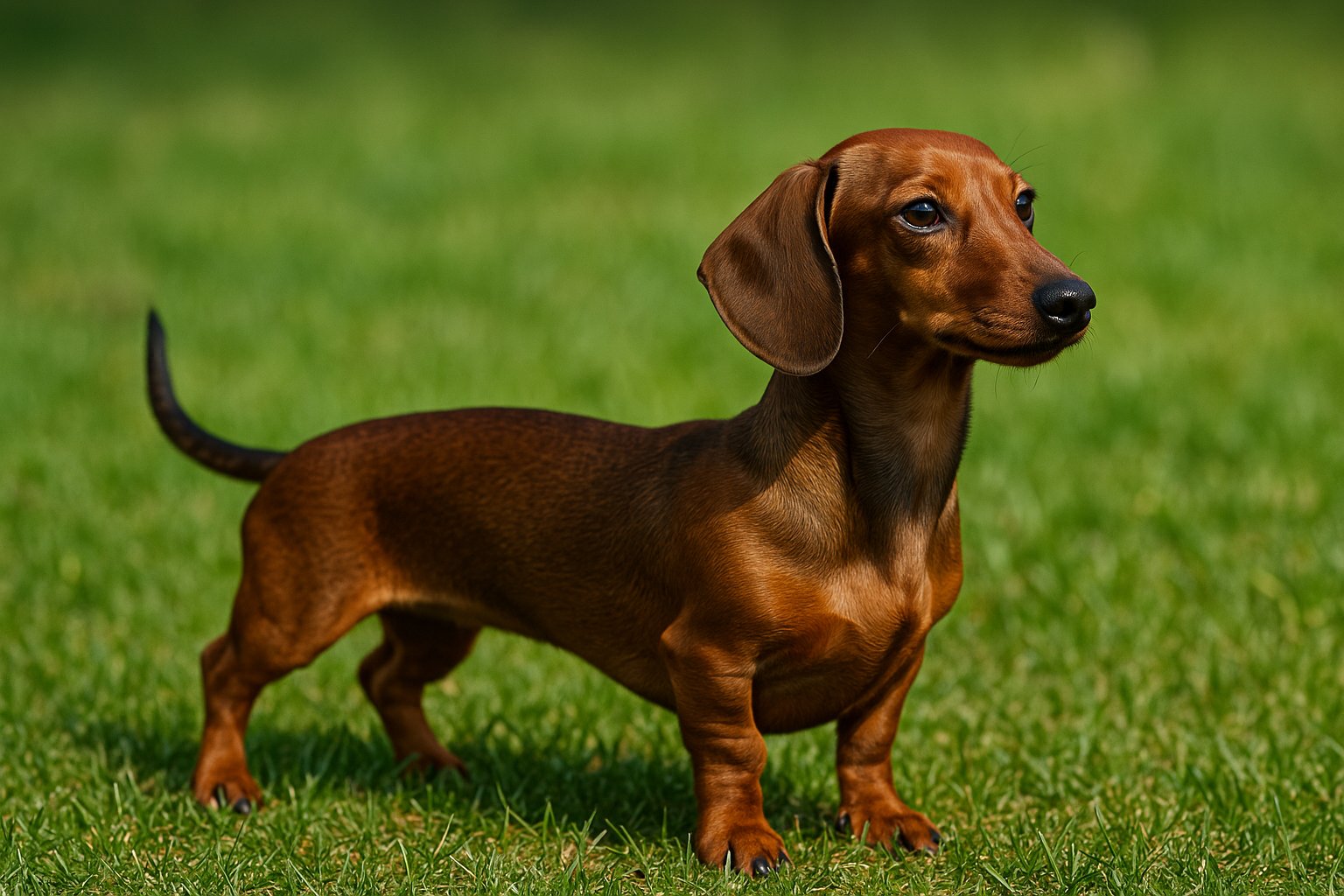
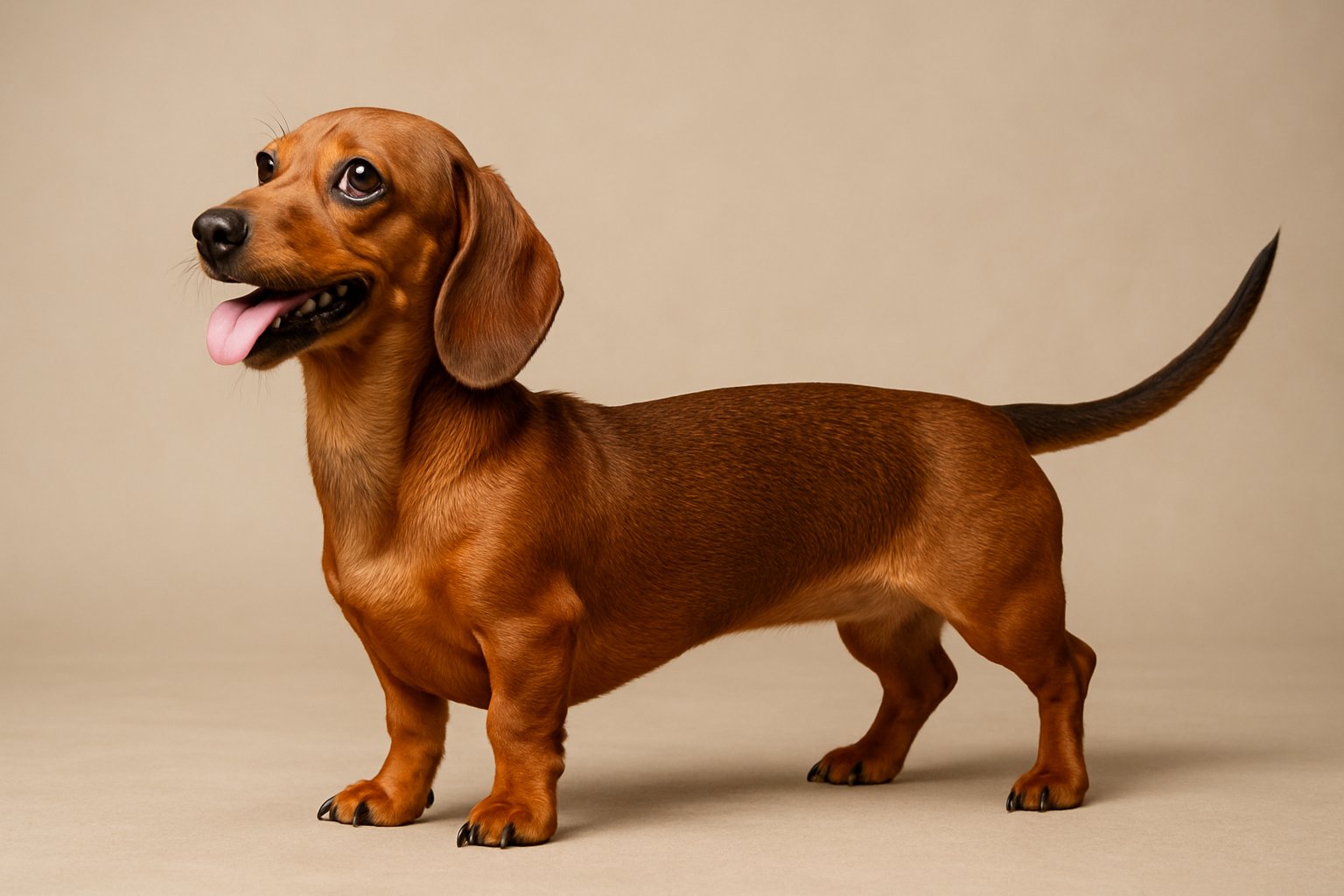
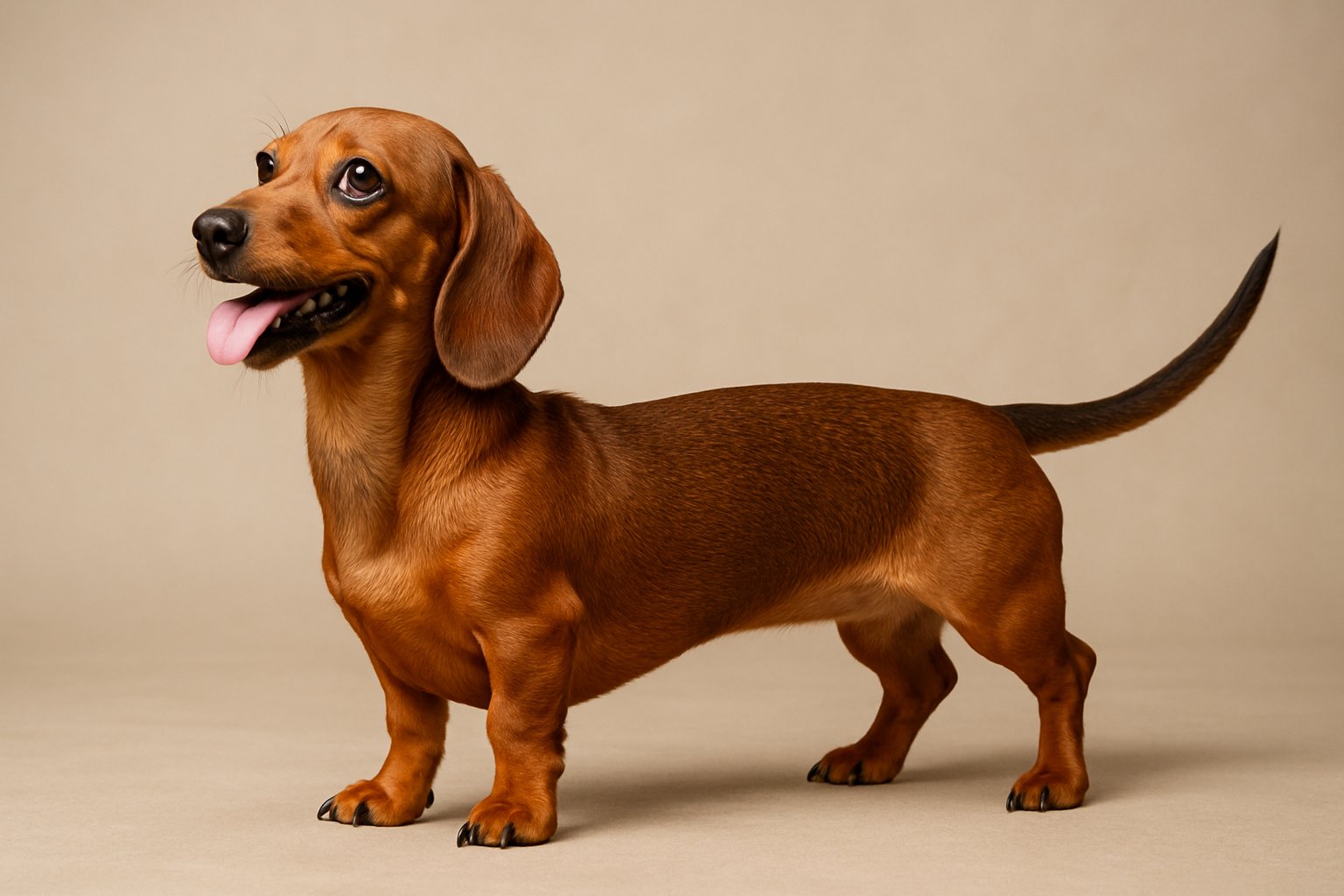
The Rabbit Dachshund is the smallest and most elegant variety of dachshunds, yet it retains all the main breed characteristics. Its body is elongated and muscular, but more compact than that of the standard and miniature types. The height at the withers usually does not exceed 10-12 cm, the chest circumference is up to 30 cm, and its weight rarely reaches 3.5 kg. Despite its diminutive size, the Rabbit Dachshund appears harmonious and well-proportioned. Its proportions are balanced: the elongated body pairs with short yet strong legs, and the chest is developed enough to ensure good lung function. This makes the dog resilient and sturdy, even though it may seem fragile at first glance.
In motion, the Rabbit Dachshund is energetic and confident: its step is springy, and the push of the hind legs is strong, allowing it to maintain pace even during a fast run. A distinctive feature of this variety is the balance between lightness and strength – the dog does not appear “dwarfed” but makes an impression of a capable working hunting dog. Due to its small size, it is perfectly adapted to city life and can accompany its owner almost everywhere.
Rabbit Dachshund appearance


Отличительные черты

Голова

Морда

Уши

Глаза

Зубы

Корпус

Конечности

Хвост

Шерсть

Окрас
Character
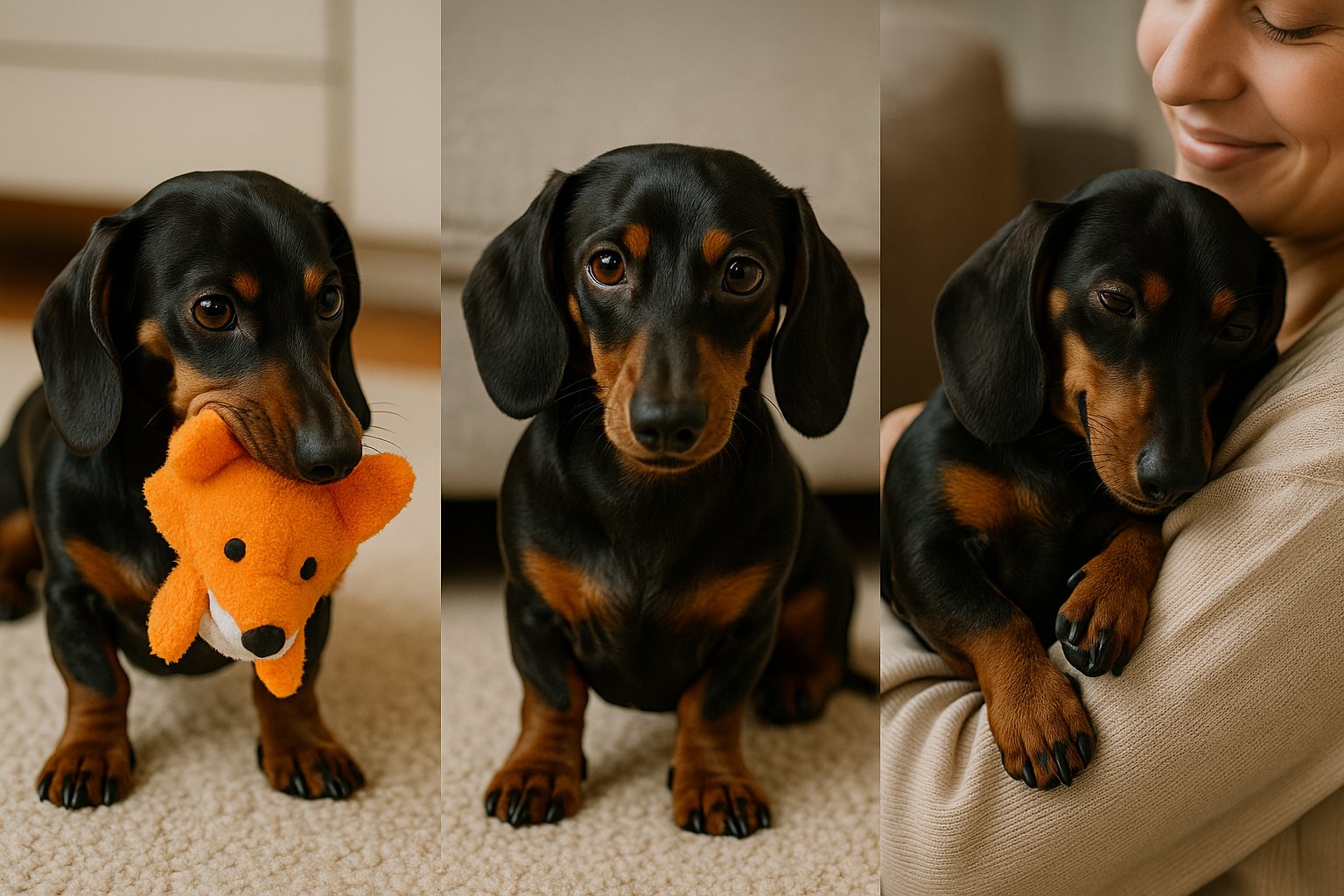
The Rabbit Dachshund is an amazing balance of energy and intellect, but its temperament differs from other varieties. Compared to standard dachshunds, the rabbit version is lighter and livelier: it switches between play and rest more quickly, is less stubborn in daily life, but can be more anxious under stress. In comparison to miniature dachshunds, rabbit dachshunds appear even more emotional and sensitive; they take offense more easily but also recover faster. This is very pronounced: the dog may dramatically turn away or lie down to the side, showing discontent, but just a few minutes later, it may approach first and try to reconcile. Often, the rabbit dachshund brings a favorite toy as if inviting for a truce. Sometimes it begins to insistently lick the owner’s hand or look into their eyes, showing that the offense has passed. This character makes it extremely sociable and easy to communicate with, even for beginners.
This dog loves attention, but unlike standard dachshunds, which have a stronger sense of independence, rabbit dachshunds are more people-oriented and handle prolonged loneliness poorly. When left alone for too long, they may express discontent through barking or mischievous behavior. Puppies are incredibly curious and active: they explore every corner of the house, find loopholes, and demand constant attention. Adult dogs maintain this trait but become more balanced.
Rabbit dachshunds are particularly sensitive to the atmosphere in the home. If there is conflict or a tense situation in the family, the dog may become anxious, while in a calm environment, it is confident and social. Owners should remember that their emotions directly reflect on their pets.
An important feature is the tendency to test boundaries. The rabbit dachshund “tests” its owner to understand what is permissible. If the owner gives in, the dog reinforces undesirable behavior. For example, if allowed to sleep in the bed once, it will demand this constantly.
A unique trait of the rabbit dachshund is its artistry. It can express offense, joy, and even “smiles,” endearing itself to its owners. Many note that the dog can positively influence the family’s mood just through its behavior.
The downside is increased jealousy. If a second pet or even a new child enters the home, the rabbit dachshund may show displeasure and demand attention. It is important to spend time with it and not allow jealousy to take hold.It’s also worth noting its inherent “alertness”: rabbit dachshunds are vocal and react to the slightest sounds. This is useful for guarding the apartment but requires training to keep barking under control. During play, dogs are enthusiastic and may not gauge their strength: it is beneficial to teach them to stop on command, which disciplines them and helps maintain their health.The intelligence and cleverness of rabbit dachshunds often surprise their owners. They quickly figure out how to open cupboards or find treats, so it’s wise to remove potentially dangerous items from the house in advance. Despite their size, rabbit dachshunds possess remarkable bravery. They bark fearlessly at large dogs or guard the home. However, owners must remember that physically, they are no match for larger breeds, so strict supervision is necessary.This dog remains loyal, cheerful, and devoted if the owner is willing to show consistency and patience. The rabbit dachshund
The tiniest huntress among dachshunds.
The rabbit dachshund is not a decorative breed, but a true hunter. It was specifically bred for burrowing hunts for rabbits and hares. Thanks to its extremely narrow chest (circumference up to 30 cm), the dog can squeeze into the tightest rabbit burrows, where even a standard or miniature dachshund would get stuck.Care and Maintenance
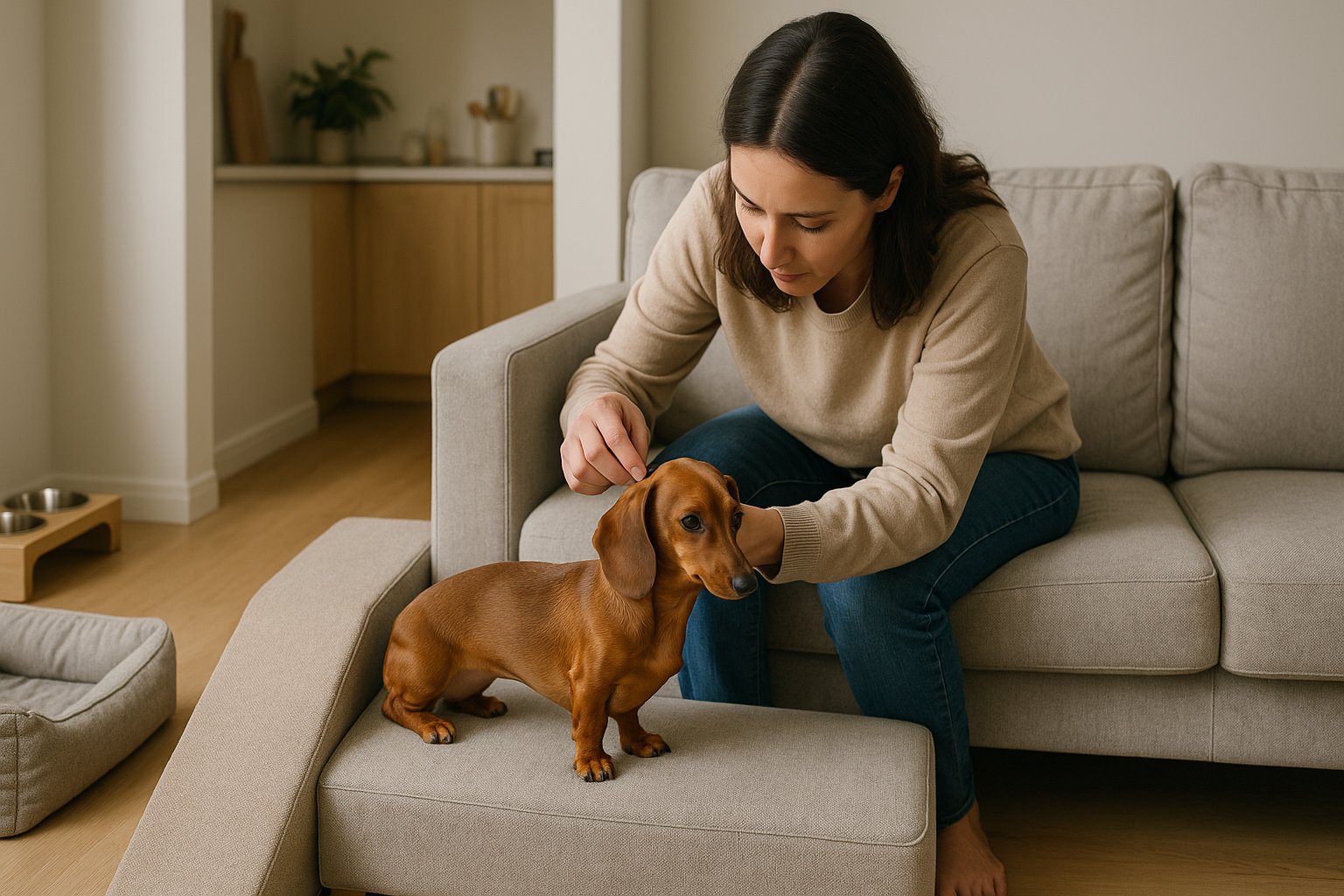
The care of a rabbit dachshund requires attention to detail more than that of standard and miniature varieties. While standard dachshunds cope better with independence and miniature ones require weight management, rabbit dachshunds need even more gentle handling: due to their small height and weight, they are more vulnerable to injuries, cold, and improper feeding.
In an Apartment
A rabbit dachshund feels comfortable even in a small apartment, but it needs regular walks and playtime. It does not handle loneliness well, so if the owner is often away, it’s better to get a second dog. Unlike the standard variety, rabbit dachshunds are noisier and may express anxiety through frequent barking.
In a Private House
In a yard, a rabbit dachshund feels great, but it needs supervision: its small size does not prevent it from digging and hunting for “prey.” Unlike standard and miniature dachshunds, rabbit ones often get stuck in gaps and holes due to their smaller size – owners should check the yard for dangerous spots.
Sleeping and Eating AreaThis variety especially appreciates cozy enclosed spaces where it can hide. A bed-house or tunnel will become a favorite resting place. When keeping a group of dogs, it’s better to provide each one with an individual space; otherwise, competition may lead to conflicts. In the feeding area, it is important to use bowls on stable stands, so the dog does not stretch and overload its spine.WalksA rabbit dachshund should only be outside on a leash or in a harness. Its small size makes it especially vulnerable in crowds and near traffic. Compared to long-haired varieties, whose fur provides extra protection against the cold, rabbit dachshunds freeze more quickly – even during short winter walks, they require clothing. In warmer weather, always check the dog’s body after each walk: ticks hide in the armpits, groin, behind the ears, and between the toes. For long-haired dogs, it’s best to use a fine-toothed comb to catch any parasites.Adapting to New Places and TravelA rabbit dachshund quickly adapts to new conditions if its owner is nearby. During the first walks in a new area, it may behave warily, but it only takes a couple of days to establi
Unique standard only in Europe.
In Russia and most CIS countries, the rabbit dachshund is considered a distinct official breed size, but in many parts of the world, it's not even known. There, dachshunds are divided only into standard and miniature categories. Interestingly, in Germany, the breed's homeland, the rabbit dachshund has a strict standard and is recognized not just as a "small dachshund" but as an independent hunting variant.Training and Education
The Rabbit Dachshund is intelligent but tends to “test” its owner. It might follow a command once and then “forget” it to see if the owner will insist. This is the test of endurance. If the owner gives in, the dog reinforces that behavior.
This is why it’s crucial to develop the habit of completing every command: it’s better to spend an extra minute to achieve the correct execution. The Rabbit Dachshund quickly picks up on where the rules are strict and where it can manipulate, acting in its own favor. The owner must remain calm and persistent because only consistency makes training effective. This approach allows for moving on to practicing specific commands without the risk of the dog turning the process into a game of “who can outlast whom.”
Harsh training methods (yelling, punishment, physical force) are categorically inappropriate. This dog is small and sensitive: roughness breaks trust and makes it anxious.
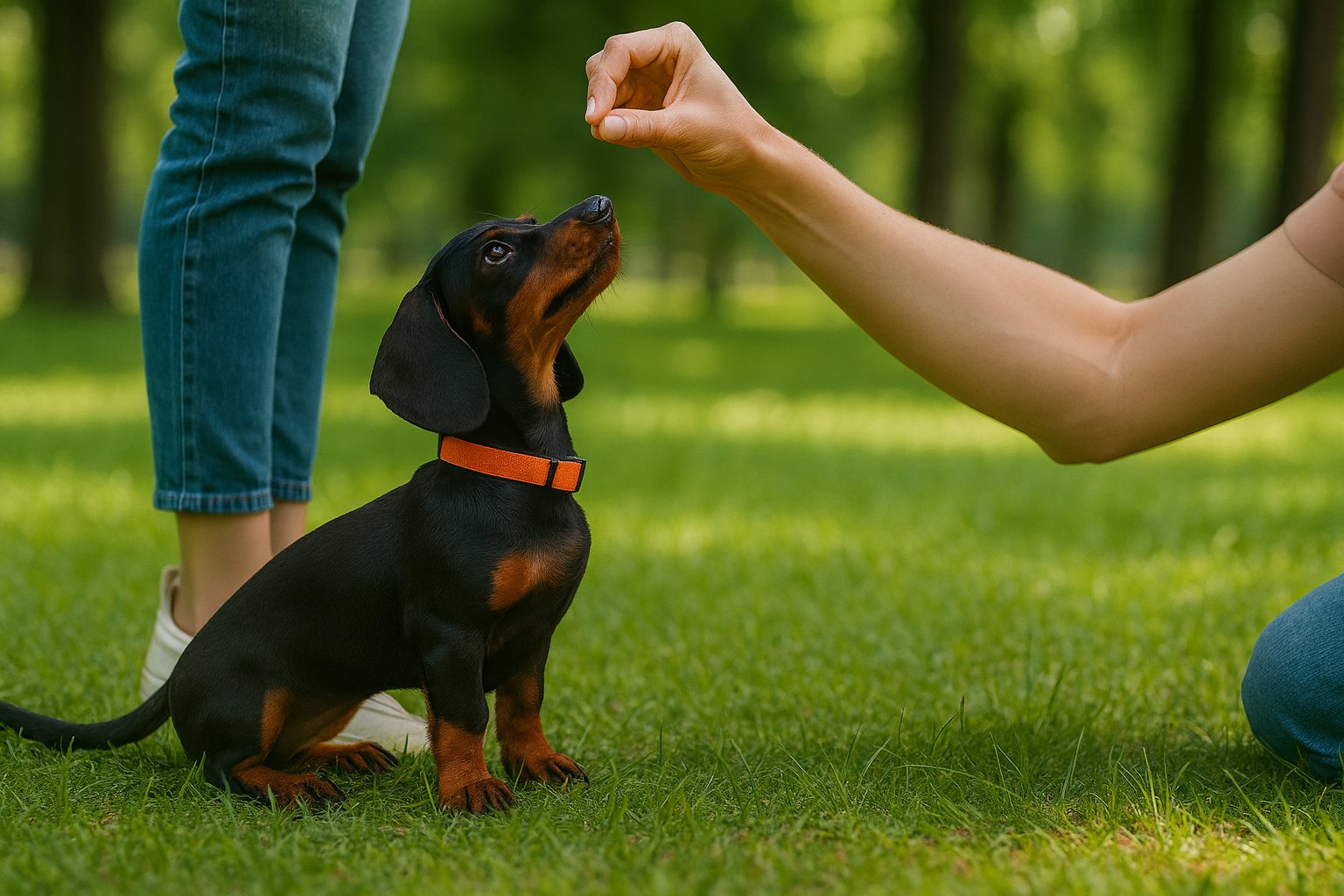
Command “Sit!”
Take a treat in your hand, bring it close to the dog’s nose, and smoothly raise it upwards. As soon as the dog sits, give it the treat and praise it. Repeat 5-6 times during the session.
Command “Lie down!”Show the treat, lower your hand to the floor, and move it forward from the dog’s nose. When the dog lies down, give it the treat.Command “Next to!”Start with short steps. Hold the treat by your left leg, walk forward, and praise the dog for every correct step beside you.Nose work is a mandatory element of training. Start simple: hide a treat under a cloth and let the dog find it. Then make it more challenging: hide toys in another room, create scent trails. This develops the mind and reduces stubbornness.The Rabbit Dachshund learns best in short sessions of 10-15 minutes. Sessions should always end in success and praise. Zoonika offers elite breed puppies with a full set of documents.
Size of a crumb - character of a lioness.
Weighing only 3-4 kg, the rabbit dachshund is capable of fearlessly confronting burrowing animals, and sometimes even rivals much larger than itself. Breeders have a saying: “A greyhound’s heart lives in a rabbit dachshund.” This is why they are adored not only by hunters but also by urban dwellers-for their courage, intelligence, and the temperament of a true “big dog in a small body.”
How to Choose a Puppy
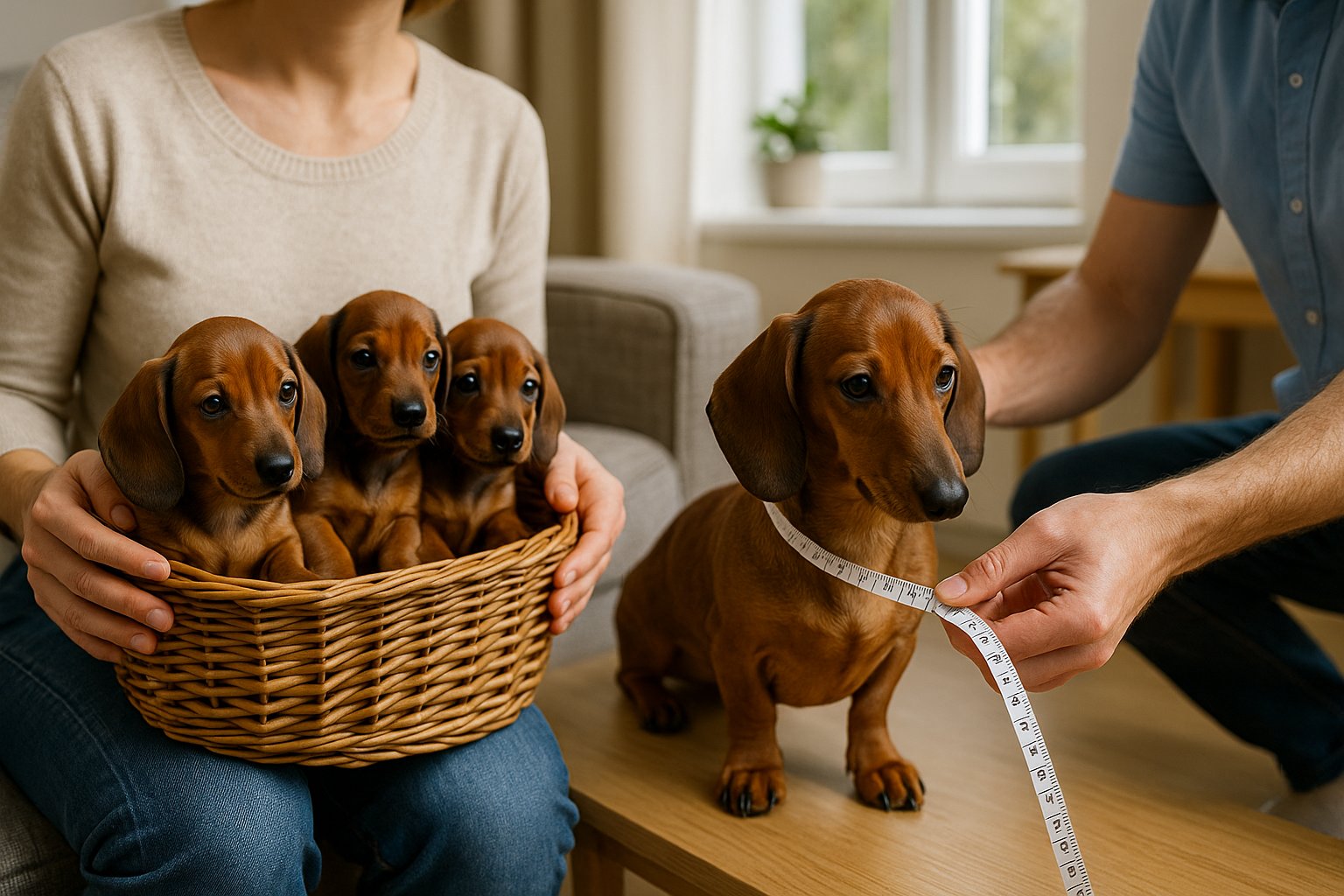
Choosing a rabbit dachshund puppy is a responsible step that affects not only the pet’s health but also the harmony of future relationships. This breed is particularly miniature, which is why it’s essential for buyers to pay attention to details that may seem secondary when it comes to standard or miniature dachshunds. One should not focus solely on appearance-the puppy must meet breed standards and come from reputable parents. It’s important to consider not only the exterior but also the temperament: rabbit dachshunds are very emotional, so it’s best to evaluate the litter’s character early on. Owners should be prepared for the fact that a small size does not simplify care but makes it more delicate and demanding. To avoid mistakes, it’s helpful to prepare a list of criteria in advance and meticulously check each point when choosing a puppy.
Chest circumference. For a rabbit dachshund, it should not exceed 30 cm. Measure the puppy and ask for the parents’ information. “Tip”: if the puppy’s parents are at the edge of the standards, there’s a high probability that he will grow into a miniature one-it’s better to choose offspring from typical rabbit lines.
Teeth and bite. The bite should be scissors-like. Check that the baby teeth are even. Tip: an incorrect bite in puppyhood is almost impossible to correct.
Paws. The puppy should have strong paws and a confident gait. If he stumbles or his paws are “spreading apart,” that’s a warning signal.
Genetic tests. The parents should be tested for PRA and Lafora epilepsy.
Coat and skin. They should be clean and shiny. Tip: a puppy with dull fur may be overfed or poorly raised.Behavior. A healthy puppy is active and interested in people. Lethargy is a sign to exercise caution.With a pedigree at Zoonika, choose the puppy of your dreams.
Health and Diseases
The Rabbit Dachshund has inherited common predispositions shared by all Dachshunds, but its miniature size makes certain issues particularly noticeable. It is important for owners to understand that even the slightest care mistakes can affect health more severely than in standard counterparts. This breed does not tolerate excess weight, improper loads, or negligence regarding preventive measures.
First and foremost is intervertebral disc herniation. The Rabbit Dachshund has an elongated body and short legs, so any additional stress on the spine can lead to injury. Jumping from sofas and windowsills, as well as running on slippery floors without mats, is prohibited.
Obesity is also common, which quickly overloads joints and the back. Even a weight gain of 500 grams for such a tiny dog can indicate serious problems. Owners must carefully portion food and resist those pleading looks when the dog asks for more.
Eye problems in Rabbit Dachshunds occur just as in other breeds: retinal atrophy, cataracts, and glaucoma. Regular check-ups with a veterinarian allow for timely detection of changes.
Due to their small jaws, these dogs often face dental issues, such as crowding, tartar, and periodontitis. Owners should start teaching their puppies to have their teeth brushed from an early age and regularly check their mouths at the vet.
Rough-haired lines may experience Lafora epilepsy. A genetic test for the parents is the best way to prevent this disease in puppies.Additionally, owners should consider their increased sensitivity to cold and respiratory infections. In cold weather, Rabbit Dachshunds can catch colds quickly without clothing, and drafts can lead to bronchitis.With proper care, the average lifespan is 13-15 years. It is important to remember: a caring owner can prolong their pet’s active longevity by monitoring weight, taking care of their spine, and not ignoring regular vet visits.
Содержание
-
1. Описание породы
-
2. Внешний вид
- 2.1 Голова
- 2.2 Морда
- 2.3 Уши
- 2.4 Глаза
- 2.5 Зубы
- 2.6 Корпус
- 2.7 Конечности
- 2.8 Хвост
- 2.9 Шерсть
- 2.10 Окрас
-
3. Характер
-
4. Содержание и уход
-
5. Дрессировка и обучение
-
6. Как выбрать котенка
-
7. Здоровье и болезни





Comments
Only registered users can leave reviews.
Enter