
Pekingese





Warning: Illegal string offset 'label' in /home/panda/sites/zoonika/wp-content/themes/zoonika/template-parts/animals/animals-param-item.php on line 32
Ð


Breed Description
The Pekingese is a small wonder from the Celestial Empire. There exists an ancient Chinese legend that says Buddha descended to Earth to gift humanity something of himself. He saw a lion but thought that the lion was too fearsome an animal, capable of harming humans. Therefore, it was decided to make the lion small and harmless. He reduced the lion to a tiny size, resulting in a tiny dog with a flat face and black eyes. Some dog breeders believe that the Chinese Palace Dog is not actually Chinese, pointing to similarities with Bichons, Spaniels, and Terriers from the British Isles. However, this is not true. Geneticists confirm the Asian origins of Pekingese. Additionally, one can find numerous ancient paintings and frescoes depicting small fluffy dogs with flat faces surrounded by Chinese nobility. As is known, any fiction contains just a part of fiction, while the rest is truth.
It is certain that the Pekingese is a descendant of a larger dog. It was not Buddha but the courtiers of the Chinese imperial families around the 8th century who were responsible for its breeding. A few puppies were taken from China to Europe, where the breed won the hearts of royal families. In the 1860s, the Queen of England became the owner of a charming spotted puppy gifted to her after the occupation of China. The new breed created a sensation among Europeans. To this day, England supports the breed.
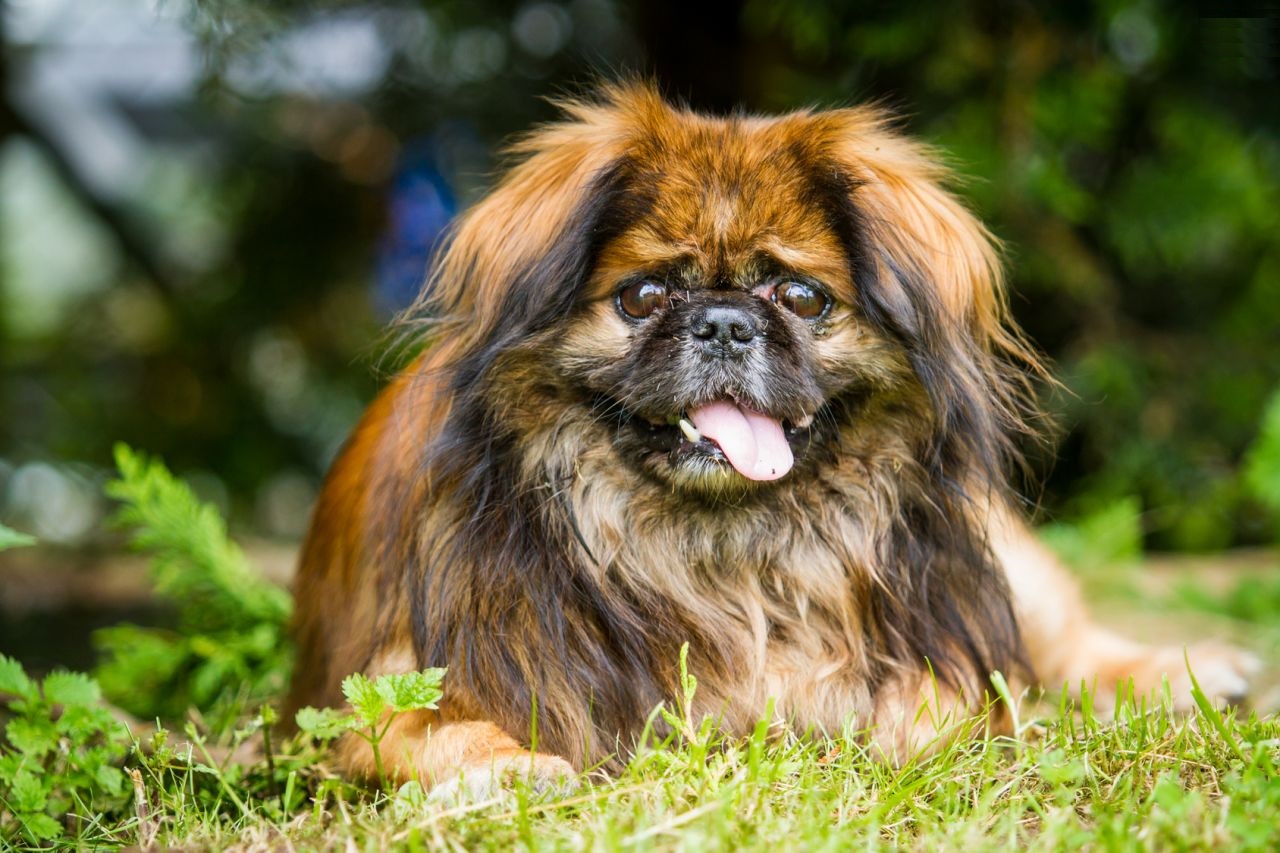
The bright and memorable appearance indeed resembles a miniature version of a lion, especially when the Pekingese listens to something, proudly lifting its head. Undoubtedly, the “Chinese lion” is a domestic dog, ready to stay by its owner’s side for hours. The creed of the breed is to bring joy to its owners.
Certainly, this breed cannot be labeled as “masculine.” Rather, it is a lady’s dog, with an average weight that usually does not exceed 5.5 kilograms. In the USA and Canada, there is even a smaller version of the breed. These dogs weigh just under 3 kilograms. Such dogs are often carried in arms and are sometimes referred to as pocket imperial dogs. Pocket Pekingese are taken to social events, restaurants, or simply shown off to acquaintances as beloved cuties.
The International Canine Federation officially recognized this ancient breed only in 1966. It is noteworthy that in the 20th century, Pekingese with pronounced (extreme) characteristics were officially recognized by veterinary associations in the UK and Germany as victims of cruelty in dog breeding. This came after it was documented that some representatives of the breed were unable to move freely, had grotesquely protruding eyes, and virtually transparent faces.
Appearance
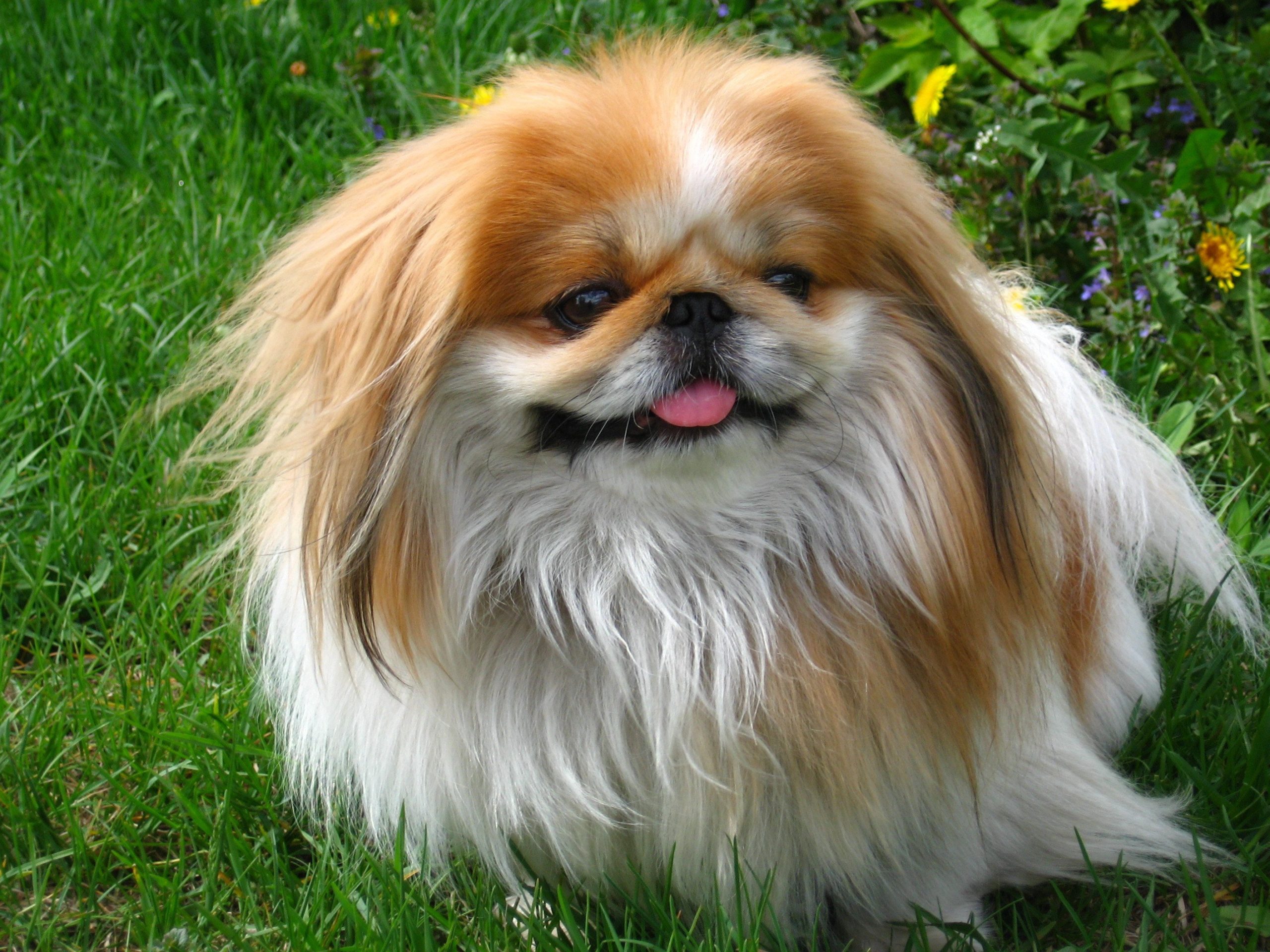
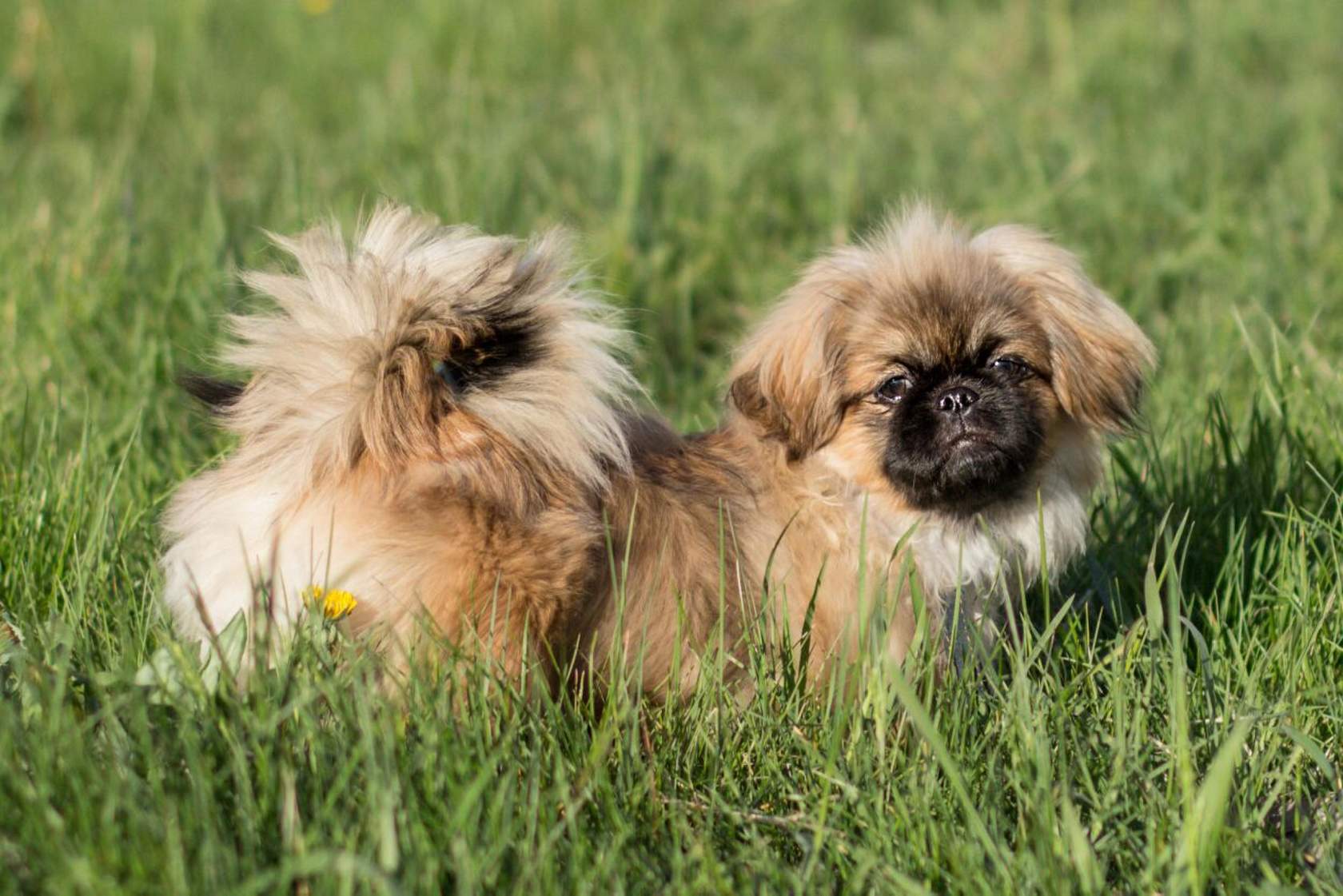
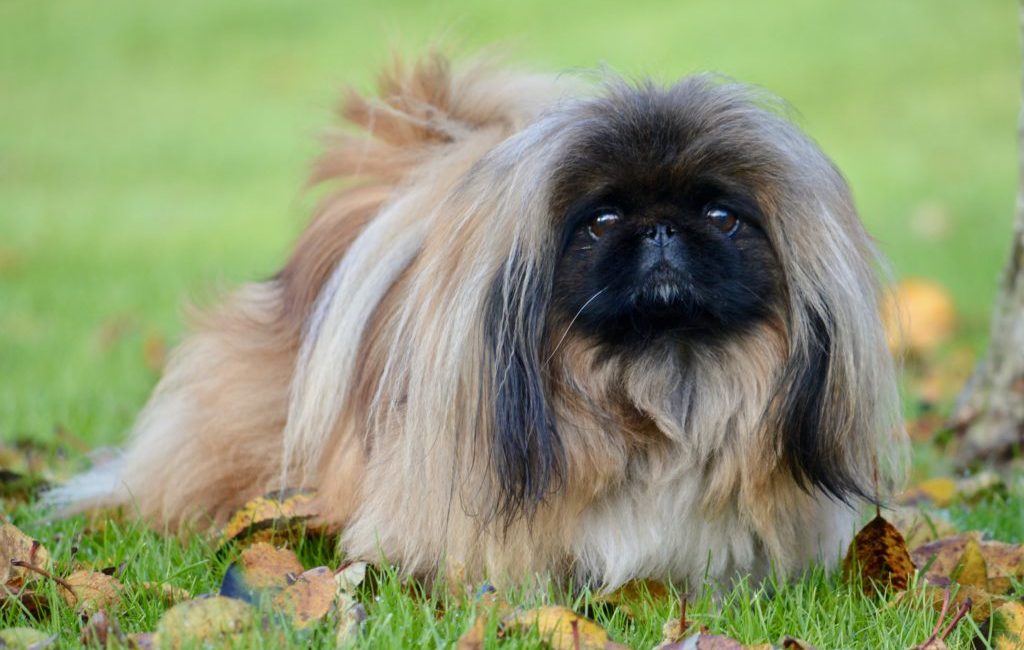
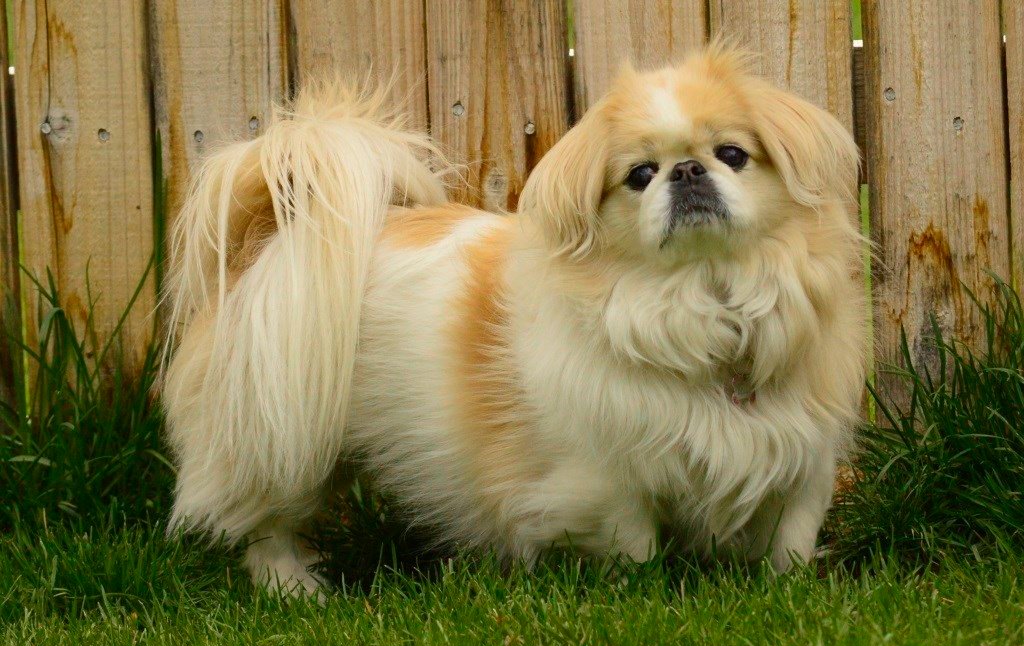
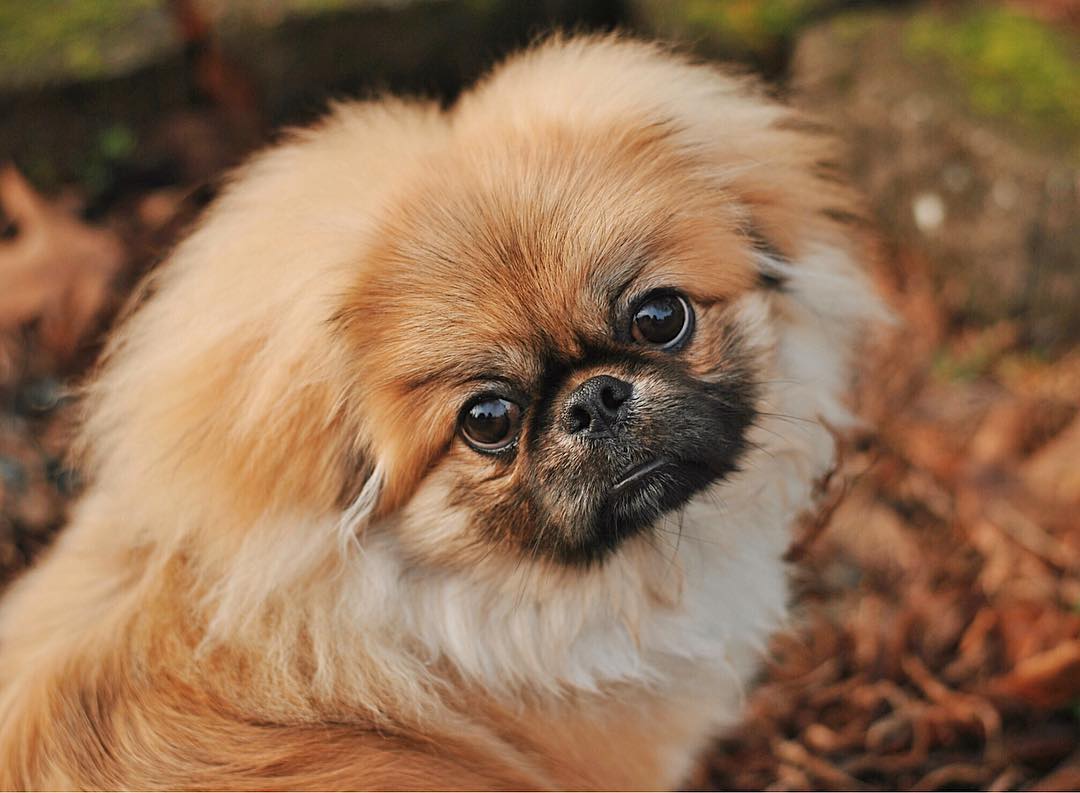
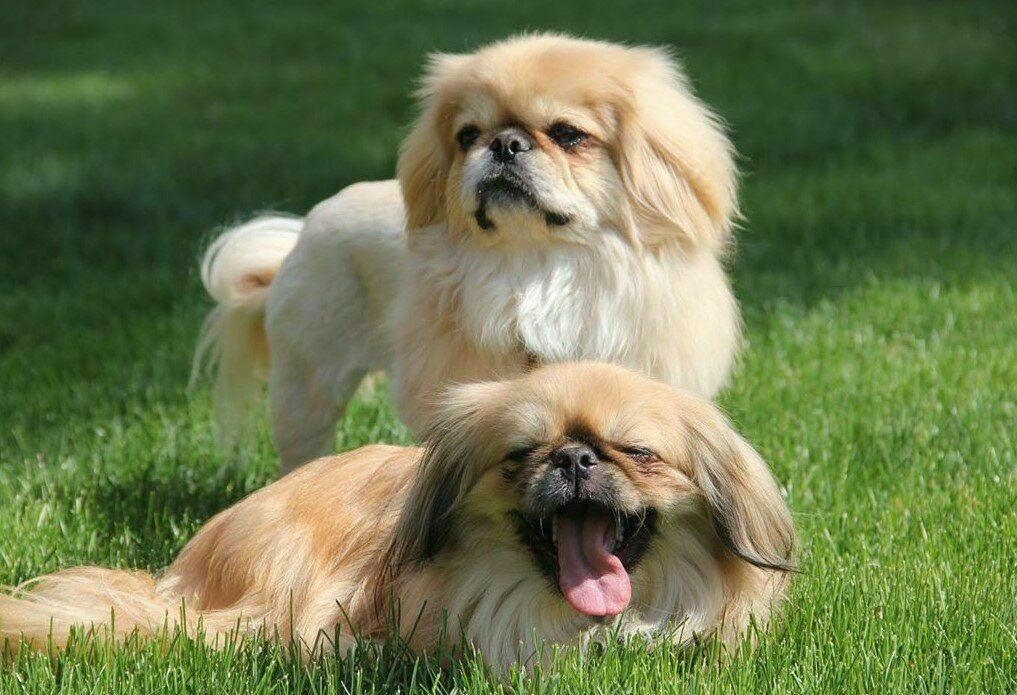
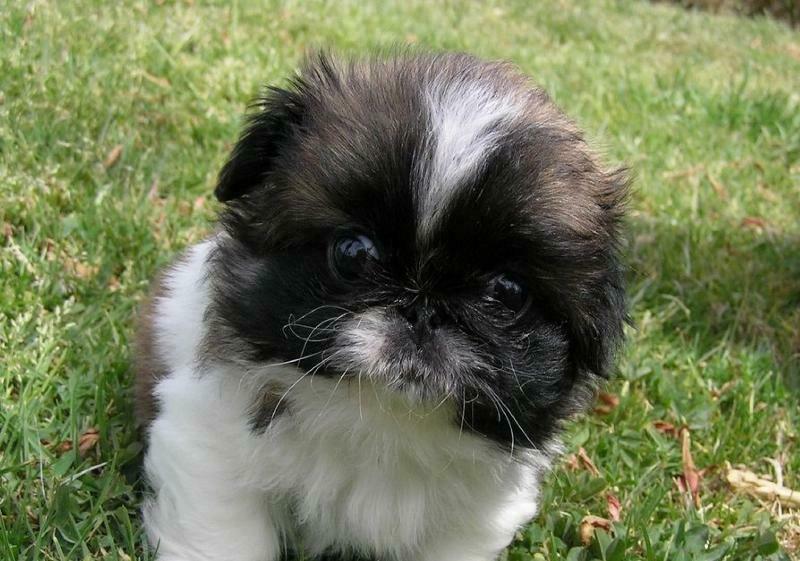
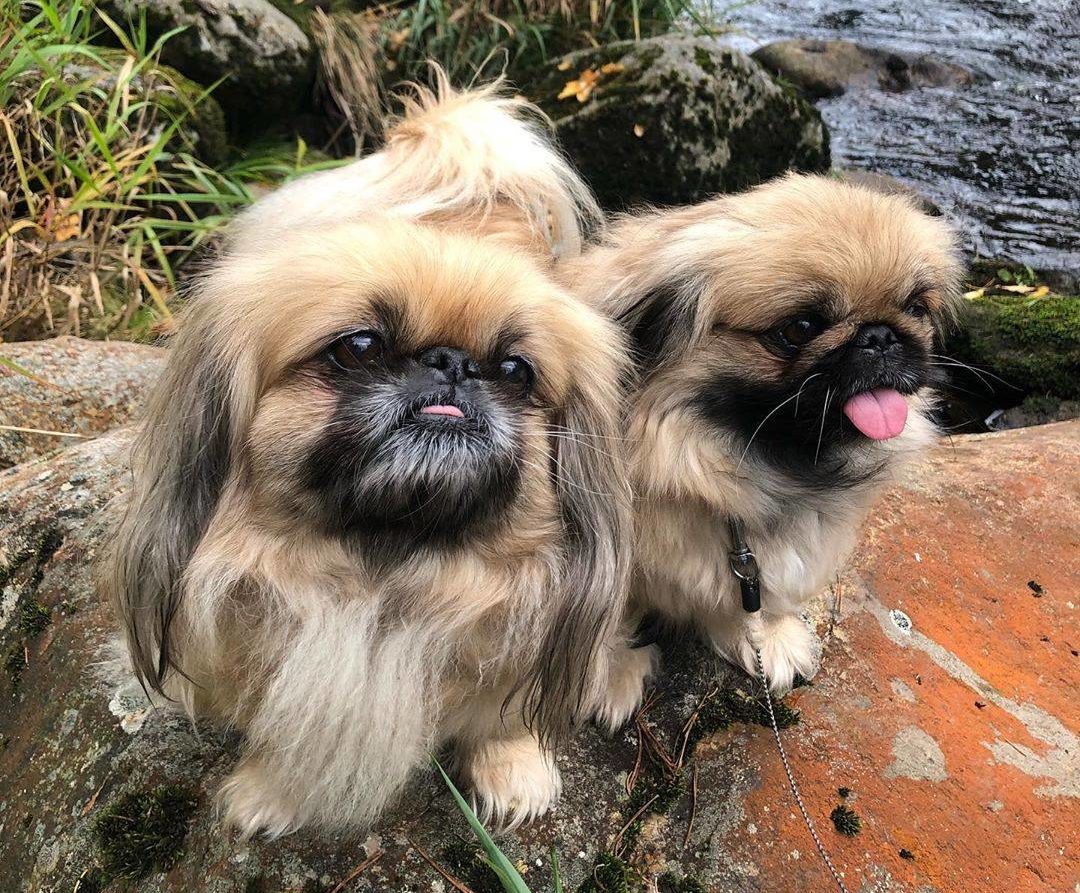
Officially speaking, the Pekingese is a miniature decorative companion dog with long, soft, and silky fur. The color palette is quite broad, ranging from bright red to black-brown. They are moderately stocky, with short, straight legs. They prefer cozy gatherings at home with their owners. Their fluffy tail curls into a ring and rests on their back, which typically signals that the dog is seeking attention and is in good health. Their appearance closely resembles that of a toy dog. This charming Chinese dog not only captivates with its flat nose but also with its affectionate, soulful gaze, which seems to ask those around it for attention or a tasty treat. A kind word is often enough for the fluffy little tail to curve back comfortably behind it. Some resemblance to a lion serves as the breed’s trademark. Their gaze is intelligent, perceptive, and gentle, with slightly slanted eyes. The shuffling walk is a signature of the imperial dog, and a certain aloofness and proud posture are simply part of its character. “Chinese” dogs possess a highly developed sense of self-worth. The “lion dog” has a broad head with a flat black nose and large nostrils. Its ears are smal


Отличительные черты

Голова

Морда

Уши

Глаза

Зубы

Корпус

Конечности

Хвост

Шерсть

Окрас
Character
The Pekingese is an ancient breed with a history spanning centuries. It always prefers the comforts of home over walks and active playtime. A small city apartment is sufficient for its comfortable living, and if you reside in a country house, a small lawn or garden becomes the territory the dog will leisurely patrol in its signature laid-back walk. During such outings, one can observe habits reminiscent of ancient imperial families. The Chinese lion has long been regarded as the best gift among aristocrats, and not without reason. This clever companion dog from the Celestial Empire will get along with all members of your family, but will inevitably choose a favorite. Sometimes proud, and at times even aloof, this dog demands constant attention. Despite its size, it shows bravery bordering on recklessness. It requires almost constant attention and can become somewhat clingy if not properly trained. Aggressive or timid Pekingese are extremely rare; according to FCI standards, dogs with such traits are not permitted for breeding. Occasionally, the Pekingese may fall into a state of melancholy. In these moments, its gaze becomes distant, and the dog resembles a p
The Pekingese is not the best choice for families with small children. It may resist if kids start shaking it or dragging it around during their games or trying to peer into its sparkling eyes. Such attention is unwanted by the “Chinese lion”; it prefers to observe these activities from a safe distance or when admired without physical handling. However, if the children are old enough to understand boundaries, the presence of this imperial dog in the home will benefit everyone.
Each Pekingese coexists peacefully with other pets, even cats. Warm relationships often develop between dogs of the same breed, especially if there are several in the house. They care for one another, lick each other’s fur, and occasionally grumble in their own language, but early socialization resolves these minor character quirks. There is a belief that the Pekingese can melt even the coldest heart and teach one to love. Many owners readily affirm this. This furry noble recognizes its owner’s mood and strives to adapt to it. However, it certainly won’t entertain.
A delightful companion for sitting by the fireplace or watching your favorite series-that’s the Pekingese.
The oldest breed.
Pekingese is one of the oldest dog breeds. Dogs existed in China more than 2000 years ago, and this fact is confirmed by DNA tests.Care and Maintenance
Dogs of this breed require constant and intensive care. During walks, they should not be in the same space as large breeds. Otherwise, the “little lion” may provoke a fight. Of course, a direct confrontation won’t happen as you’ll be nearby.
There are no specific dietary preferences, but it is important to ensure that the dog does not overeat. Pay a bit more attention to their diet: Pekingese lead a sedentary lifestyle, so it makes sense to choose a lighter food that is high in fiber, as obesity issues are undesirable. Do not allow your pet to eat from the table-this will spoil them and could harm their digestion.
Shedding is something every “Emperor” owner will encounter. You should regularly brush the dog with special brushes, and excessively long fur should be trimmed with specialized clippers. After short walks, it is crucial to wash their paws and any soiled areas to avoid issues like dirty furniture or matted fur. Pekingese do not enjoy baths; rinsing off soiled areas under the shower is sufficient. Their nails need to be trimmed at least once a month. Brushing their teeth and cleaning their ears are also essential parts of caring for a Pekingese. Check the eyes of your puppy or adult dog daily. The eyes of a Pekingese are one of their most vulnerable areas. They can be harmed by mechanical impacts or windy weather.
The flat nose with wide nostrils requires constant maintenance. It should be gently cleaned with a rolled-up tissue. Do not allow any discharge from the nose; in this case, it’s better to consult a veterinary clinic immediately.
Important: Pekingese often snore while asleep due to their shortened snout, so be prepared for this.
If you plan to participate in dog shows, it is best to hire specialists who can assist in caring for your “little Chinese.” On hot summer days, you can improve your pet’s comfort by shortening their coat with a trim. In this case, grooming services can be used.
A breed prohibited by airlines.
Some airlines have a list of breeds that are prohibited from being transported on aircraft. Pekingese are on this list. The dog struggles with flights due to the structure of its nose.Training and Education
It cannot be said unequivocally that a Pekingese cannot be trained. Most likely, it will easily learn the commands that appeal to it. If you avoid using the carrot-and-stick method and instead replace the stick with a carrot, progress will come faster. Motivate your “Chinese doll” with tasty rewards, and you will see fairly quick results. This is not a guard dog, but an imperial breed, so it makes no sense to demand commands that are not suited to its status. Considering that Pekingese can be quite selfish, think through your behavior strategy and persistently and patiently pursue your goal. These little dogs constantly observe their owner and look for ways to influence them. You can take a cue from them and play the same game. Never give in to the charm when the four-legged furry doll begs for treats from the table. Please show firmness. It is unacceptable to shout at the dog! This will harm not only it but also the one who shouts. Do not destroy your mutual love with shouting.
After a long day, all your efforts will be rewarded when your loyal friend settles down on your lap and gently looks into your face. Zoonika offers puppies of elite breeds with a complete set of documents.
An open body of water is not a friend to a Pekingese.
It is strictly forbidden to bathe a Pekingese in open bodies of water. Such an experience can be fatal. The wet, dense coat becomes incredibly heavy and can drown the animal.
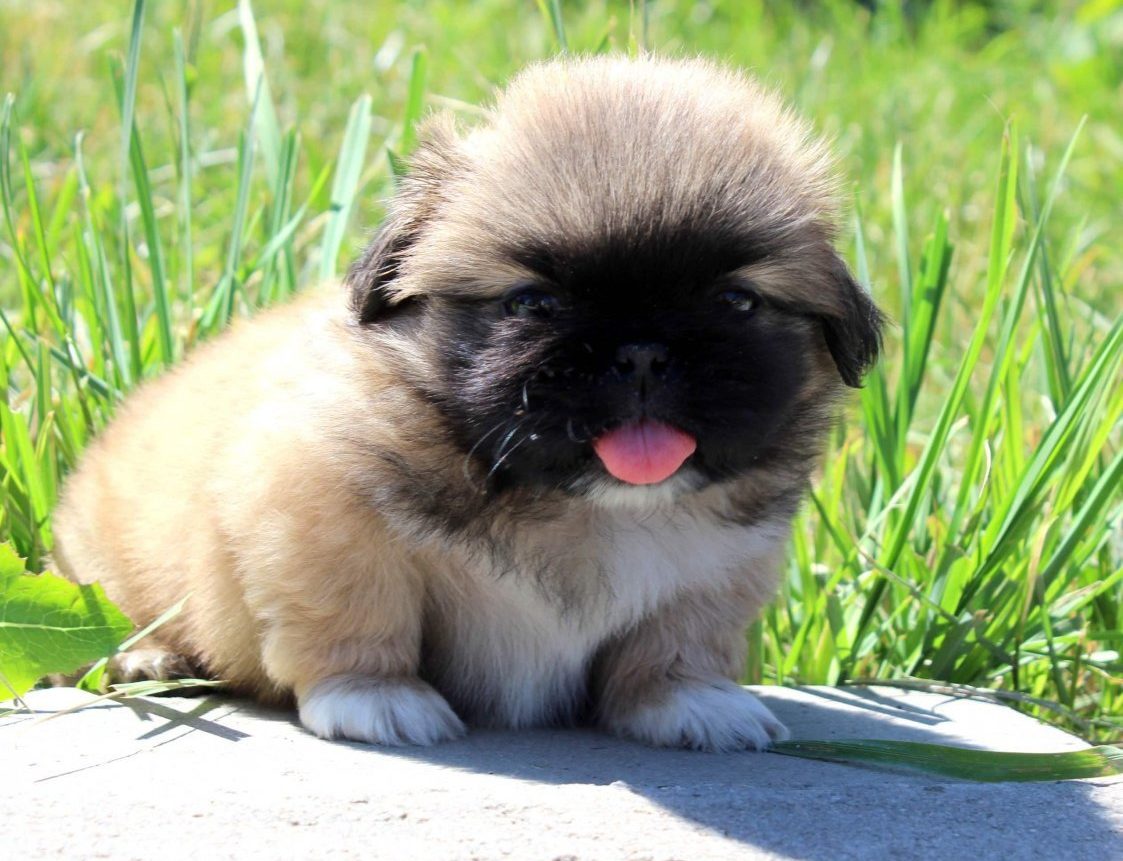
How to Choose a Puppy
First of all, carefully consider whether the temperament of a Pekingese is suitable for you. If you lead an active lifestyle, the dog will be bored at home alone, and you will become its unwitting tormentor. Remember that all family members should have a thorough understanding of the future pet’s character and how everyone needs to interact with it. If these aspects are fine, be prepared for the fact that you will have a creature that needs everything and even more.
You should decide on a place for the dog’s bed. It’s best if it’s a quiet spot in your country house or in your city apartment. Make sure you acquire all the necessary accessories in advance: brushes, leashes, harnesses, nail clippers, food and water bowls. After that, start looking for a breeder. They should have all the documents confirming the pedigree. Otherwise, you might end up with a mixed breed or a puppy with defects that won’t show up immediately. Carefully study FCI standards and only after that proceed to choose a puppy from the best breeders in the country-find your pet on Zooinika.
Health and Diseases
The Pekingese is officially recognized as a breed that has suffered the most from breeding practices. This fact should not be forgotten!
In this regard, it is important to understand that visits to the veterinary clinic may be quite frequent.
There are several health issues to which Chinese imperial dogs are particularly prone. These include various urinary tract diseases, cataracts, and some other eye conditions, intervertebral hernias, and heart diseases. Improper diet or poorly chosen food often leads to obesity.
In hot weather, heat strokes are not uncommon. In cold weather, respiratory issues may occur more frequently.
Remember that most problems can be resolved by approaching dog ownership with awareness and responsibility. Never buy a dog from untrusted sources or online ads. Thinking it over? There’s a huge selection of ads on the Zounika map for various cities.
Содержание
-
1. Описание породы
-
2. Внешний вид
- 2.1 Голова
- 2.2 Морда
- 2.3 Уши
- 2.4 Глаза
- 2.5 Зубы
- 2.6 Корпус
- 2.7 Конечности
- 2.8 Хвост
- 2.9 Шерсть
- 2.10 Окрас
-
3. Характер
-
4. Содержание и уход
-
5. Дрессировка и обучение
-
6. Как выбрать котенка
-
7. Здоровье и болезни






Comments
Only registered users can leave reviews.
Enter