
Parson Russell Terrier




Warning: Illegal string offset 'label' in /home/panda/sites/zoonika/wp-content/themes/zoonika/template-parts/animals/animals-param-item.php on line 32
Ð


Breed Description
Just about 2 to 2.5 centuries ago, the Reverend John Russell, a pastor and passionate hunter, could never have imagined that the result of his life’s work would be divided into two parts. Moreover, one part of his creation would leave its historical homeland and move to another continent.
How did this happen? Initially, the breed he developed in the 18th century in England was called the Jack Russell Terrier. The primary purpose of these terriers was burrowing hunting-a highly popular pastime among gentlemen of that era. Among the ancestors of the breed were definitely Fox Terriers, but there may have been mixes with other breeds as well. More precise information has not survived. Some dogs of the new breed were stocky, slightly elongated, and had short legs; they were called Jack Russells in honor of the breeder (his congregation and friends referred to him as Jack), while others had a square silhouette and longer legs-these were named Parson Russells (from the English “parson”). Hunters valued the working ability of these agile dogs. All variations of the breed gained immense popularity due to their excellent characteristics. They seemed to consider every nuance needed for successful hunting. Brave and tireless, they quickly pursued wild game into their dens, clamped down on them with strong jaws, and dragged them out. Alternatively, they waited for their owner to pull them out with their catch by their stubby tails. Their coat colors contrasted w
In those times, Fox Terriers were often mistaken for wild animals because their coats became dirty with mud and the saliva of game. As a result, hunters could accidentally shoot their own dog, confusing it with a muddy fox.
However, after the pastor’s death, his close associate decided to separate the larger Parson types. This was done in the early 20th century. The first project for the “new” breed stated that the Parson Russell Terrier is an enduring, agile, well-proportioned dog used for burrowing hunting of foxes and badgers. These dogs have sufficiently long straight legs that allow them to move quickly over various terrains. Scars on the animal’s skin obtained during hunting are welcomed and are not considered defects.
Today, Parson Russells are more commonly found and most popular in England, while Jack Russells are more popular in Australia.
An interesting fact: despite its nearly two-hundred-year history, the Parson Russell Terrier was recognized by the FCI as a separate breed only in 2001.
Appearance
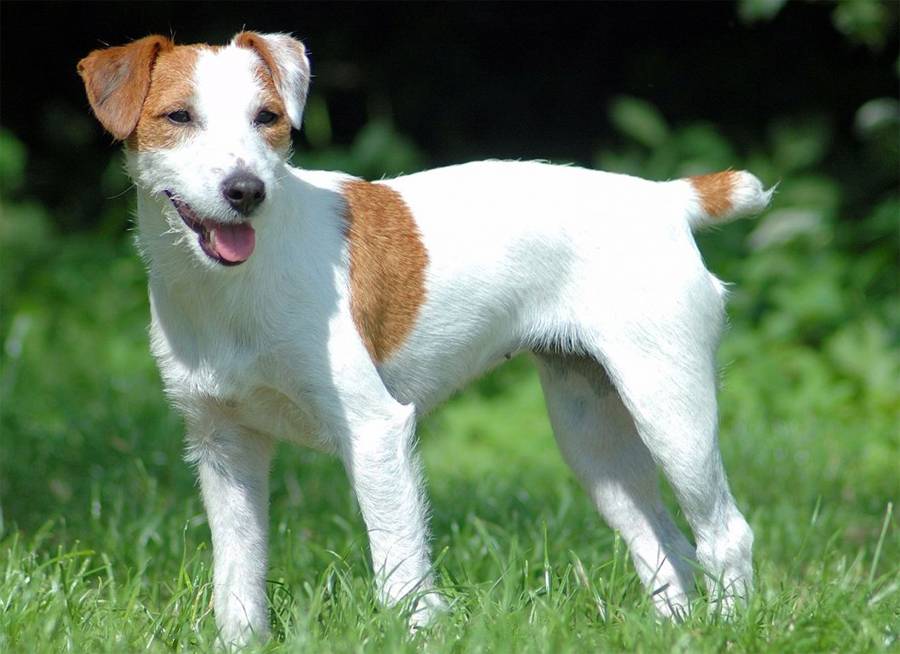
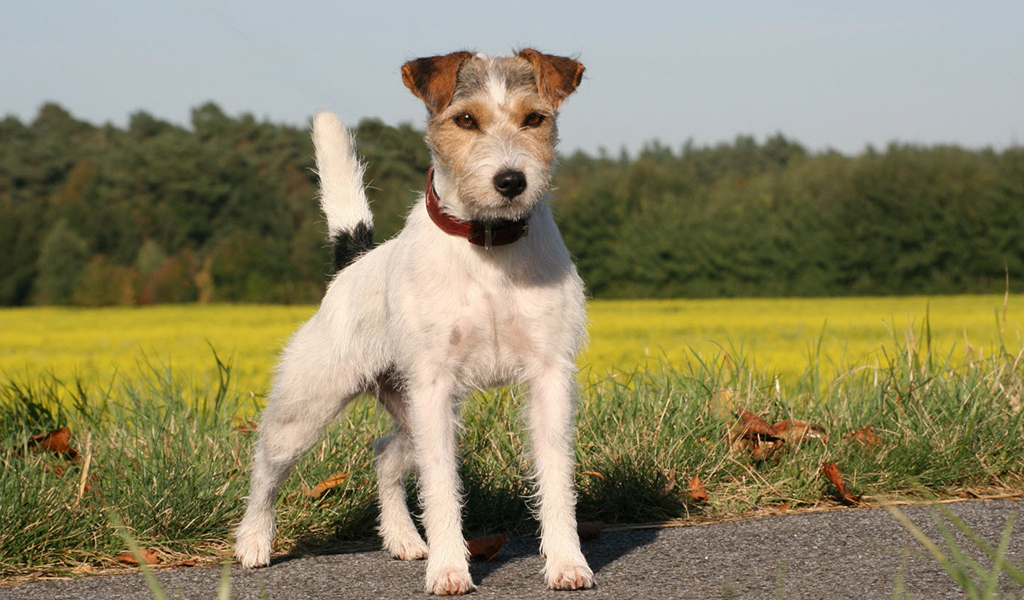
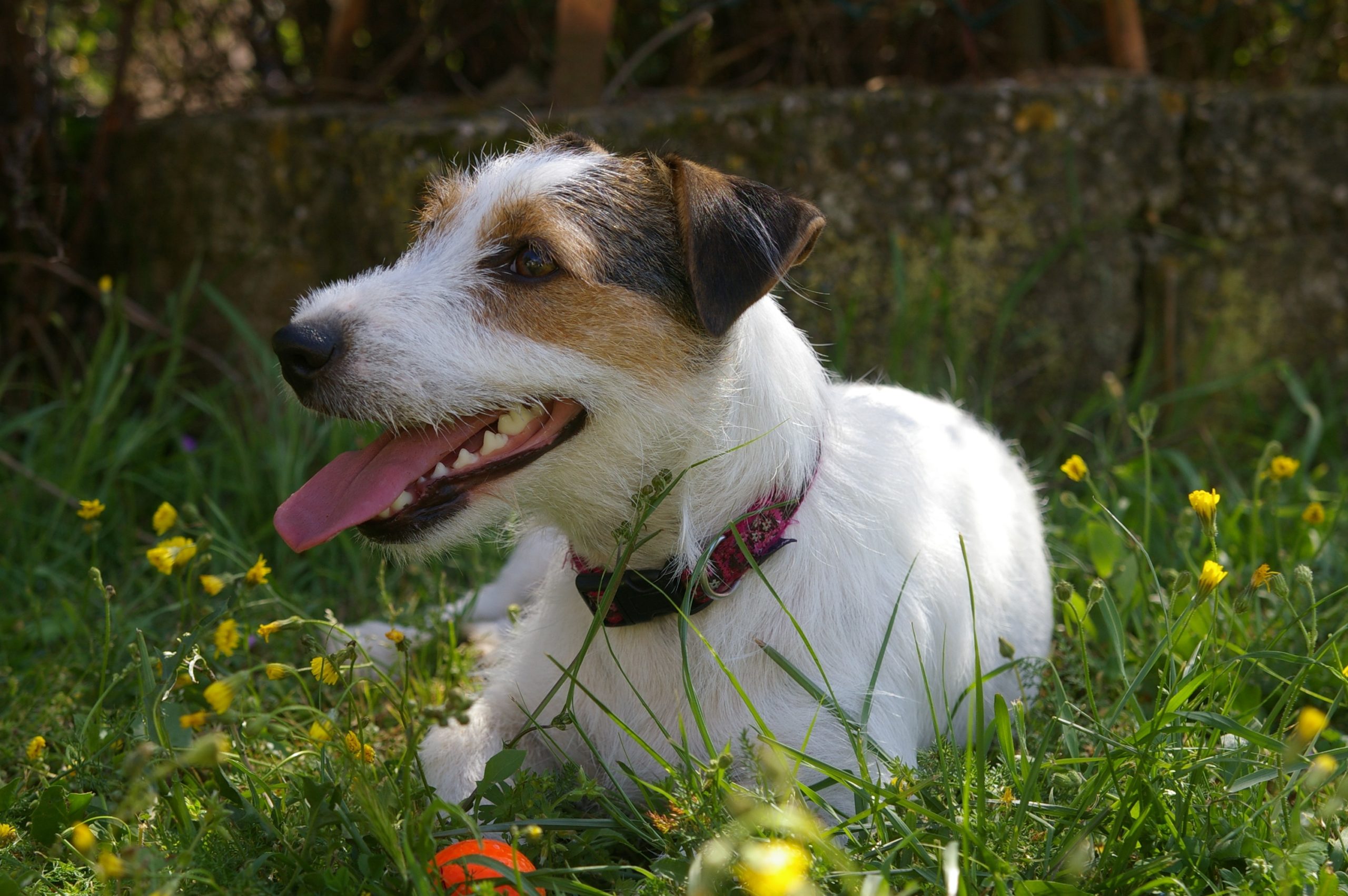
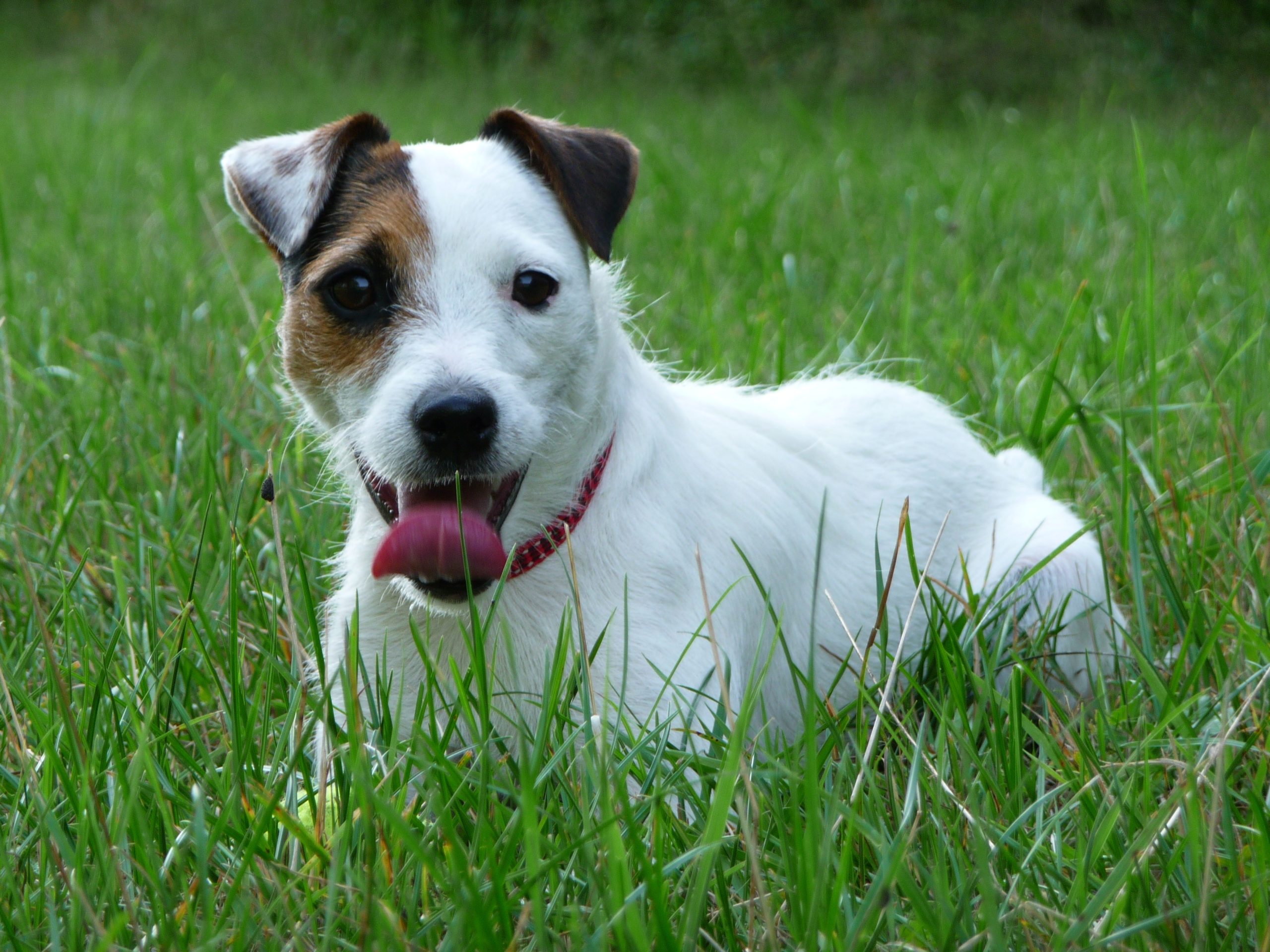
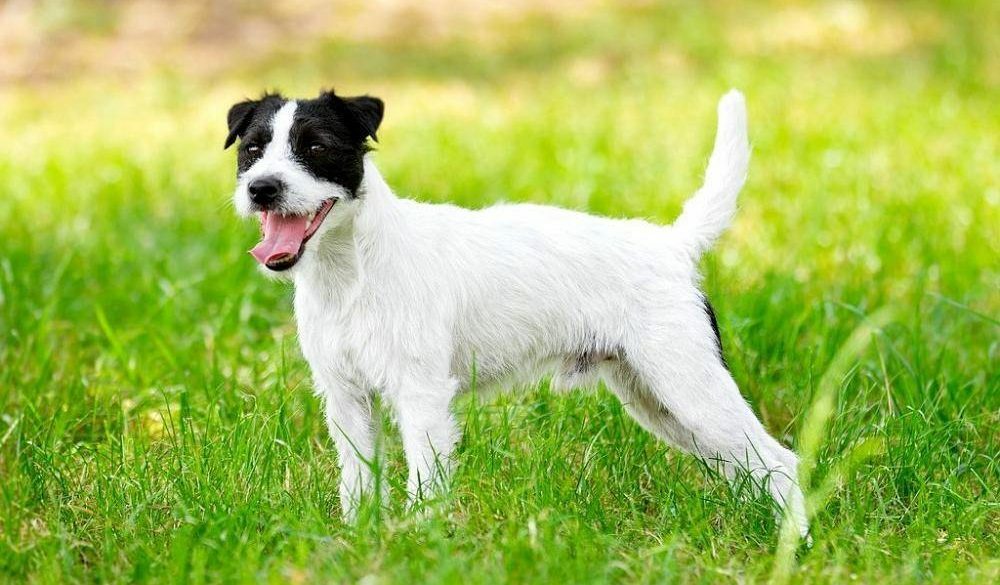
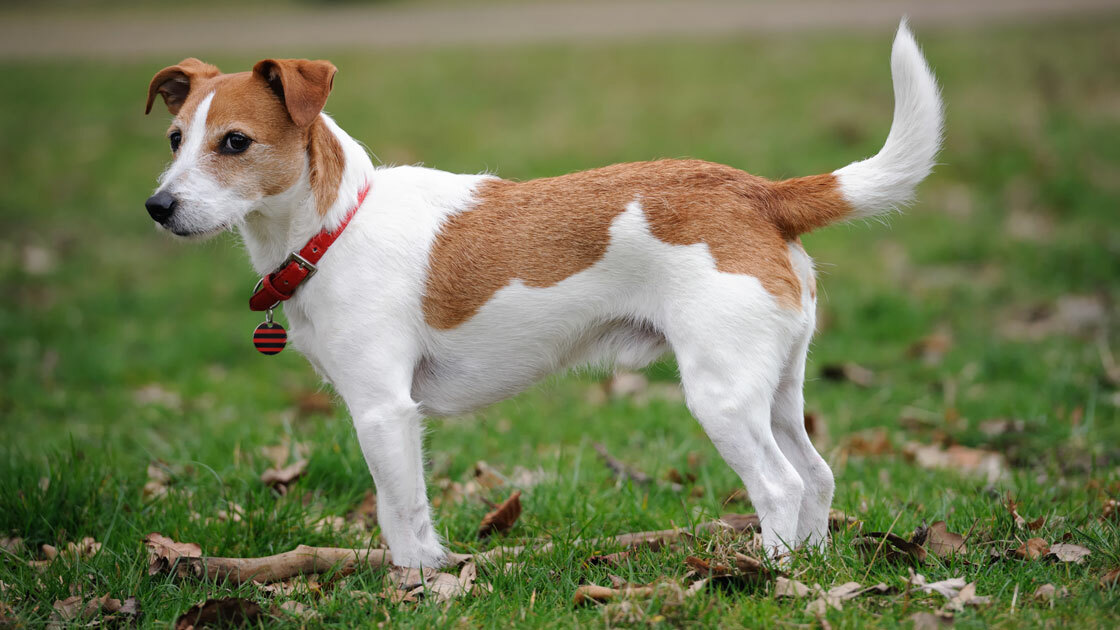
The Parson Russell Terrier is a medium-sized dog with a harsh coat, preferably white. It is well-balanced. The body is muscular but lacks athletic definition. When viewed from the side, the dog has proportions closer to a square than a rectangle, meaning the distance from the withers to the loin is approximately equal to its height at the withers.
The Parson Russell is a very agile and enduring dog with strong jaws. Due to its build, particularly the length of its legs, it can overcome various obstacles in a short amount of time.
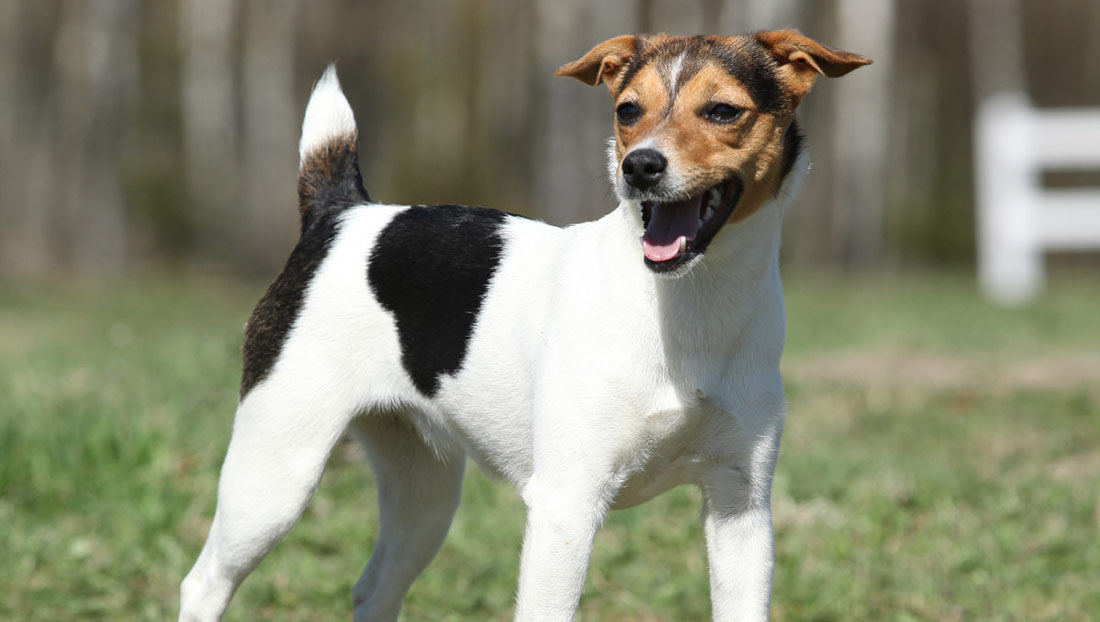
Currently, there are two types of Parson Russells: some have their tails docked while others do not. In the past, tail docking was always performed, but now this procedure is optional and sometimes criticized by animal rights advocates.
The FCI states that the ideal height for a Parson Russell Terrier should be between 33 and 36 cm, with a weight of 6 – 8 kg. However, these parameters can be lower because the main focus for the breed is not on appearance but on maintaining the animal’s working qualities. With proper care, these four-legged companions can delight their owners for 13-15 years.
Hunting breeds have a keen gaze. Fans of such dogs find something wise in their eyes. Others see the outlines of Pastor Russell in their profile.


Отличительные черты

Голова

Морда

Уши

Глаза

Зубы

Корпус

Конечности

Хвост

Шерсть

Окрас
Character
Brave hunter, enamored with the process. Incredibly loyal to its owner and their family, whom the dog considers its own. Unimaginably active, lively, and playful. Tireless wanderer and simply curious, the Parson Russell Terrier is increasingly becoming a popular choice for families as an ordinary household pet.
Distinguished by its highly developed intelligence, it can act independently and make decisions during play and hunting. Capable of training, it prefers commands and exercises related to active movements, running, and jumping. However, dogs can quickly tire of a monotonous training routine and will shift their attention to whatever they deem necessary. The owner will also have to be alert, watching the tail of the mischievous four-legged friend sticking straight up.
During walks, which dogs adore, they are ready to sniff and explore every inch of open space. Children are simply enchanted by the tricks their Parson can perform. It’s worth noting that dogs also love children, as their temperaments are similar, especially when it comes to playing in the park or the woods, where they can dig a hole wherever they please.
If there is no fox around, anything can capture their attention. This is a primary negative trait of Parson Russell Terriers. There is no better provocateur during walks than a dog with a mischievous look. These characteristics can sometimes lead to trouble. However, all the described issues stem from improper upbringing and other factors, but they are quite solvable.
It is said that doctors in England recommend these dogs as a therapeutic means for various psychological disorders. This is due to the extraordinary spirit that accompanies a dog wherever it goes. Additionally, the Parson Russell Terrier has a positive influence on elderly patients suffering from depression.
It is also important to note their cautious attitude towards strangers. A dog will never trust a new person who appears in the house. It may play with a guest, but no more than that. The distance will always be maintained.Regarding the relationship with their owner, regardless of anything, the dog will assert its primary right to communicate with them. A jealous companion will always look for reasons to remind the owner of its presence, trying out various behavioral tactics.

True hunter
Parson is a born leader and hunter. The breed was specifically developed by a pastor who loved horseback riding and fox hunting. This small, agile, and fearless dog navigates easily through burrows to catch small animals. It is also ideal for combating rodents.Care and Maintenance
Is it really difficult to take care of a Parson Russell Terrier, and how expensive is it? In answering this question, it’s important to note that the breed is not particularly demanding in terms of care. They thrive both in the city and in the countryside if you live in a private home. However, there are several essential conditions that breed representatives require.
The most important aspect of caring for a Parson Terrier is regular walks combined with a maximum amount of active play and exercise for the dog. With boundless energy reserves, your dog needs to “recharge” regularly. It is recommended to walk your dog at least twice a day for 1-2 hours. Additionally, it is highly advisable to include 15-20 minutes of exercises during walks. If your children are old enough to be trusted to walk the dog, let them enjoy playing with the animal; it will definitely benefit everyone. In this case, you can slightly reduce the duration of walks but increase their frequency to 3-4 times a day. If you do not follow this recommendation, you should be prepared for your house to be turned upside down in search of that fox for which the good pastor bred this short-tailed hunter. The size of the living space won’t deter the dog-it will try to get into everything.
The largest expense in maintaining a Parson Russell is buying various toys for the dog, which can either get lost or be destroyed by your four-legged friend.
In cases where the owner is often busy at work and cannot devote adequate attention to training, it is best to turn to professionals who can help socialize the dog. Otherwise, a situation may arise reminiscent of the well-known film, where a dog transformed from a sweet, happy jumper into a monster when a mask was put on its face.
A notable feature of the breed is its need for regular grooming. This procedure is called trimming. Since the standard only allows for hygienic trimming of the dog’s coat, it should be done 2-3 times a year. Generally, you can start gradually acclimating a puppy to this grooming procedure at around three months of age. For smooth-coated dogs, brushing with a soft comb once a week is sufficient. By the way, Parson Terriers greatly appreciate this grooming if they are accustomed to it from a young age. You should also understand that brushing has a massage effect and positively impacts your energetic companion’s nervous system.
Feeding is not a problem nowadays. The main criterion for selection is high-quality, premium food. When purchasing a puppy, the breeder will undoubtedly recommend a reliable food that does not cause any issues for the dog’s digestive system. If you plan to feed your pet without specialized food, advice from the kennel or your veterinarian will help. It is essential not to overfeed your jumping terrier and to provide constant access to clean drinking water.Nail trimming is typically done as they grow. It’s hard to specify exact intervals for this procedure since each dog is in individual conditions. However, dogs that are walked more frequently tend to wear down their claws naturally from digging and running more than those that do it at home (e.g., against walls and furniture).The eyes and ears of Parson Terriers require attention after walks. Check them regularly and monitor for any discharge. A dog’s eyes may water after walks in windy weather; however, excessive tearing can signal more serious issues. In such cases, it’s best to consult a veterinarian. The dog’s ears are designed to protect against ticks and dirt. Yet, a dog’s curiosity knows no bounds, a

Tireless dog.
Parsons are very active and require regular physical exercise. Their inherent hunting instinct can only be satisfied through regular walks and outdoor activities.Training and Education
The Parson Russell Terrier is considered a very intelligent breed. Therefore, training is not particularly challenging for those who are ready to patiently and methodically pursue their goals.
The dog’s intelligence allows it to constantly analyze situations and enthusiastically perform exercises that it finds interesting. Typically, these are commands related to jumping, running, and other activities. When it comes to more mundane commands, the dog may quickly lose interest in the process and simply run away. Thus, it is essential to train your dog from a young age with commands like “come,” “no,” “leave it,” and “heel.”
A curious fact: the Parson Russell Terrier is regarded as a breed capable of jumping very high and is in the top 10 breeds in this category. Therefore, incorporate jumping exercises into training when you see your dog starting to lose interest.
It is crucial not to raise your voice at the animal during training. Even if the dog refuses to follow a command, do not shout at it. It may simply be tired. To minimize such situations, do not practice commands for longer than 20 minutes. Physical punishment is a taboo. Violating this rule will inevitably lead to serious consequences and will undoubtedly harm the dog’s psyche.
Training should ideally begin with teaching the puppy its designated place. Never drag your adorable puppy into bed or allow it to play with shoes. It will be extremely difficult or even impossible to break these habits later. Inviting specialists is unlikely to solve this issue, and you may end up with a dog that claims everything around it as its own.
In training a Parson Russell Terrier, leniency should not be shown. The four-legged friend definitely wants to “outsmart” its owner. It simply wants to go for a walk or “catch a fox,” rather than give a paw. And although it genuinely wants to please its human, this game will continue until the owner shows weakness.For the best training results, you can seek professional dog trainers who can help you achieve your goals in a short time. Zooinika offers puppies with pedigrees and health guarantees.
Selfish breed
Parson terriers are quite selfish. They see themselves as the center of the universe and need constant attention and love. They can show jealousy if there are small children in the house.
How to Choose a Puppy
Before bringing a puppy into your home, it’s essential to clearly define the reasons for getting a dog. The Parson Terrier is, by nature, a hunting dog, which means it requires frequent and long walks. If you are naturally a homebody, consider getting this type of puppy only if you are ready to change your lifestyle. Otherwise, the dog will suffer and may cause problems with its mischief.
Once you’ve set your goals, you can begin preparing your home. Designate a space for your future pet and ensure that the puppy has its own bed, toys, collars, leashes, and harnesses. In regions with cold climates, consider getting insulated dog suits, but it doesn’t make sense to buy them in advance, as puppies grow quickly and might not need outdoor walks right away.
Carefully study the breed standard and the rules for their care. Be prepared for the fact that your dog will inevitably get sick and will need treatment. It will require constant attention for the next 15 years.
Buying a puppy from private sellers or online is highly risky. You may end up with a dog that has hidden flaws or is a mixed breed. Choose a reputable kennel and research the conditions in which the animals are kept. Talk to the breeder and check the veterinary passport, not only for the puppies but also for the parents. The passport should include all information about the vaccinations and exams the dog has undergone.
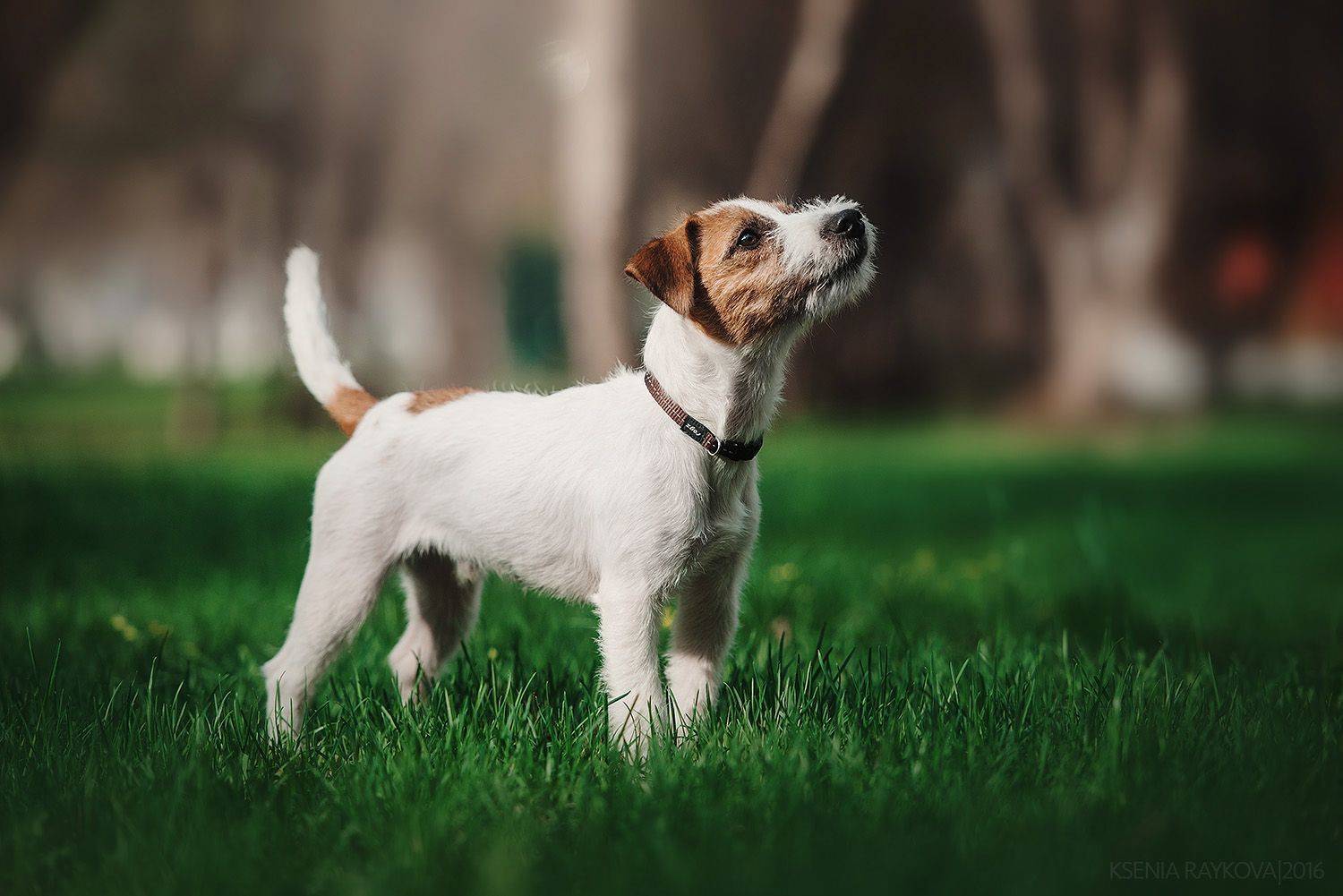
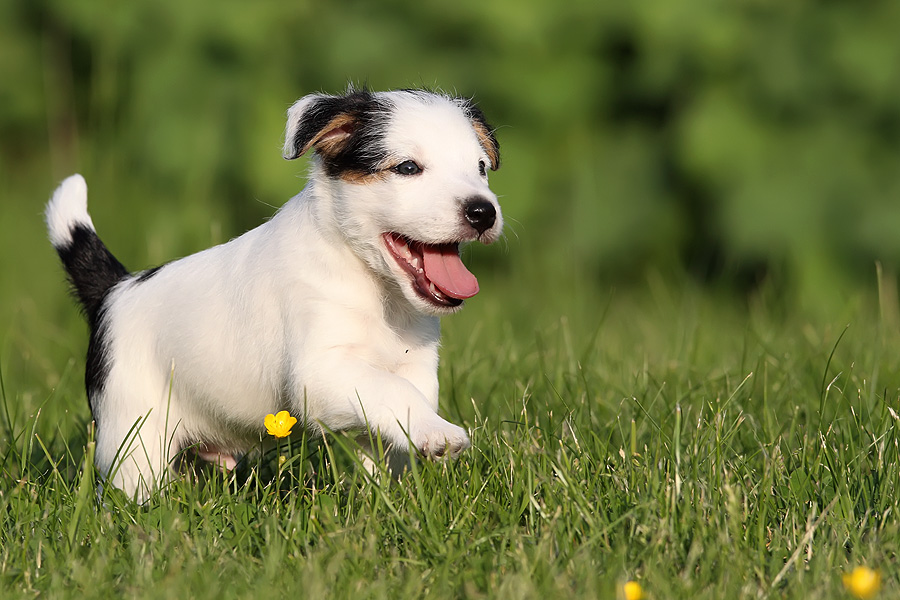
Among the litter, choose an active but not aggressive puppy. If a puppy shows aggression, it’s best to avoid the purchase to prevent future training issues. Carefully examine the puppy’s coat, eyes, and ears. Reject any puppy with cloudy eye pupils, discharge in the ears, or visible defects in the coat. Remember, a healthy puppy won’t whine or tuck its tail. If a little Parson is sniffing around, there’s a high chance it may be blind. Check the puppy’s nose; a wet and cold nose indicates good health.
Importantly, if the breeder is pushing you to finalize the deal, it may signal that they are only interested in making a profit. They might be hiding information about the animals’ health. Therefore, we recommend refraining from purchasing from them and choosing another kennel. Looking for a puppy? Check Zoonyka for reliable kennels with proper documentation.
Health and Diseases
Since the Parson Russell Terrier has only recently gained recognition as a breed and is essentially a larger version of the Jack Russell Terrier, the diseases commonly associated with it are not different from those of its smaller counterpart.
Among the most serious are congenital diseases, including hip joint dysplasia and congenital deafness. Other breed-related conditions include osteochondropathy of the femoral head and various knee dislocations. Typically, dislocations are the result of the dog’s extraordinary agility or injuries sustained while jumping. Arthritis is more prevalent in animals that do not receive an adequate walking regimen and are forced to stay confined for long periods. Complications following a cold can also lead to arthritis or heart problems. Although Parson Terriers have relatively strong hearts, it’s advisable not to overstrain them with physical activities. Gastrointestinal issues may arise from improperly selected food or a simple allergy to one of the ingredients in the diet. This can usually be easily resolved by adjusting the diet with the help of veterinary specialists.
Содержание
-
1. Описание породы
-
2. Внешний вид
- 2.1 Голова
- 2.2 Морда
- 2.3 Уши
- 2.4 Глаза
- 2.5 Зубы
- 2.6 Корпус
- 2.7 Конечности
- 2.8 Хвост
- 2.9 Шерсть
- 2.10 Окрас
-
3. Характер
-
4. Содержание и уход
-
5. Дрессировка и обучение
-
6. Как выбрать котенка
-
7. Здоровье и болезни






Comments
Only registered users can leave reviews.
Enter