
Old English Bulldog






Warning: Illegal string offset 'label' in /home/panda/sites/zoonika/wp-content/themes/zoonika/template-parts/animals/animals-param-item.php on line 32
Ð


Breed Description
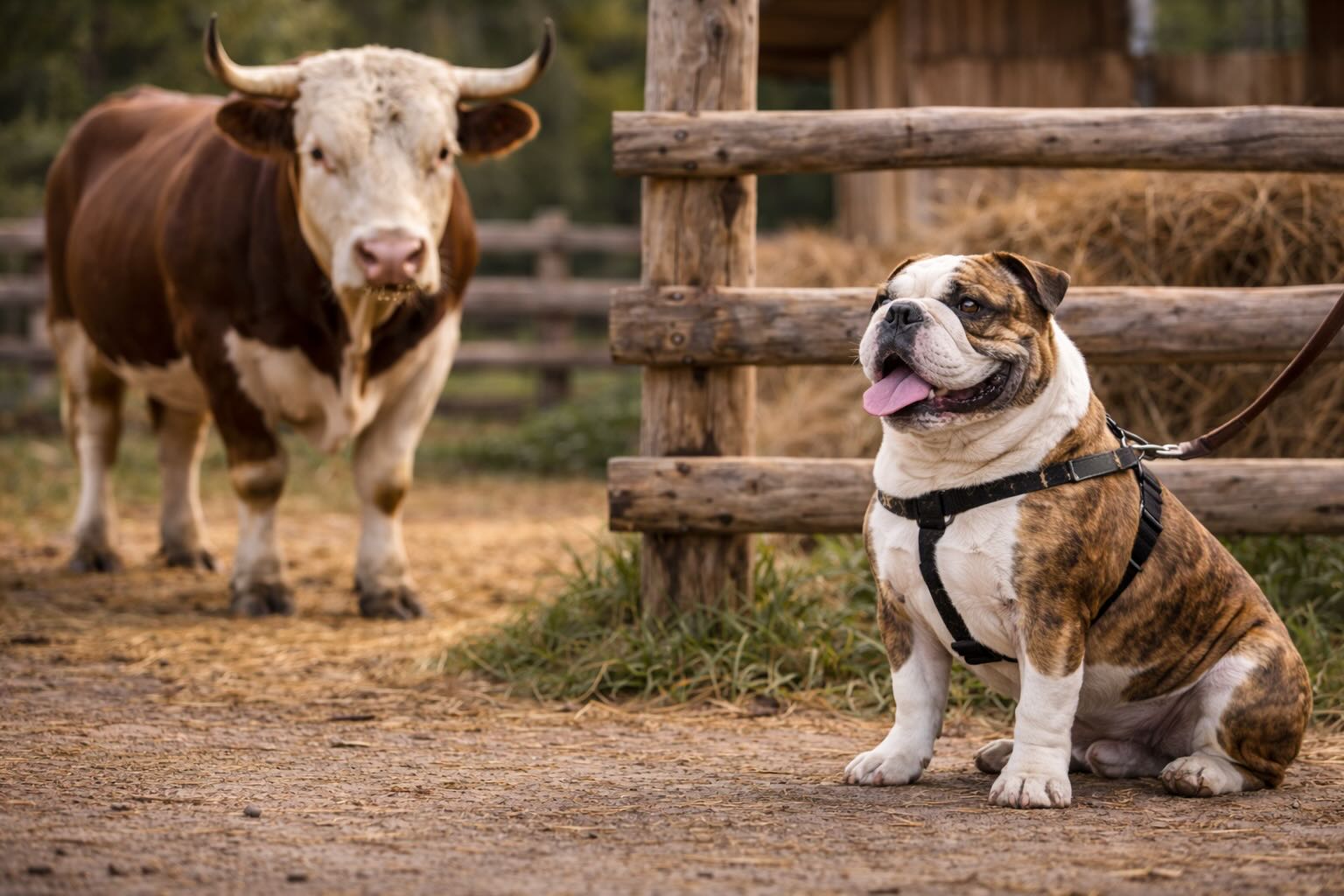
The Old English Bulldog originated in England approximately in the 16th–17th centuries and was developed not for aesthetic appeal but for a very specific and severe functional purpose – participation in bull-baiting. The breed name derives directly from this role: bull (the baited animal) and dog. These dogs were required to seize the bull by the muzzle and maintain a sustained hold despite violent shaking, impact, and attempts to dislodge them.
The ancestral foundation of the Old English Bulldog is generally traced to ancient molosser-type dogs introduced to Britain during the Roman occupation. Over time, these dogs were crossed with native British stock to enhance endurance, strength, and adaptation to local conditions. This selection produced a low-stationed, powerfully built dog with a broad chest, exceptionally strong jaws, and a shortened muzzle that permitted effective respiration while maintaining grip. Notably, human-directed aggression was rigorously culled, as the dog had to remain controllable by its handler during working situations.
Such Bulldogs were bred primarily in the central English counties, particularly within the working communities of butchers and baiting-arena proprietors. They were functional working dogs rather than exhibition animals, and therefore no formal breed standard in the modern sense existed at that time.
Following the legal prohibition of bull-baiting in 1835, the breed entered rapid decline. Some dogs disappeared, while others contributed to the foundation of the modern English Bulldog, which was subsequently developed as a companion type. The historical Old English Bulldog type effectively vanished, and in the 20th century efforts to recreate it represented selective reconstruction rather than direct continuity of the original working lineage.
Appearance
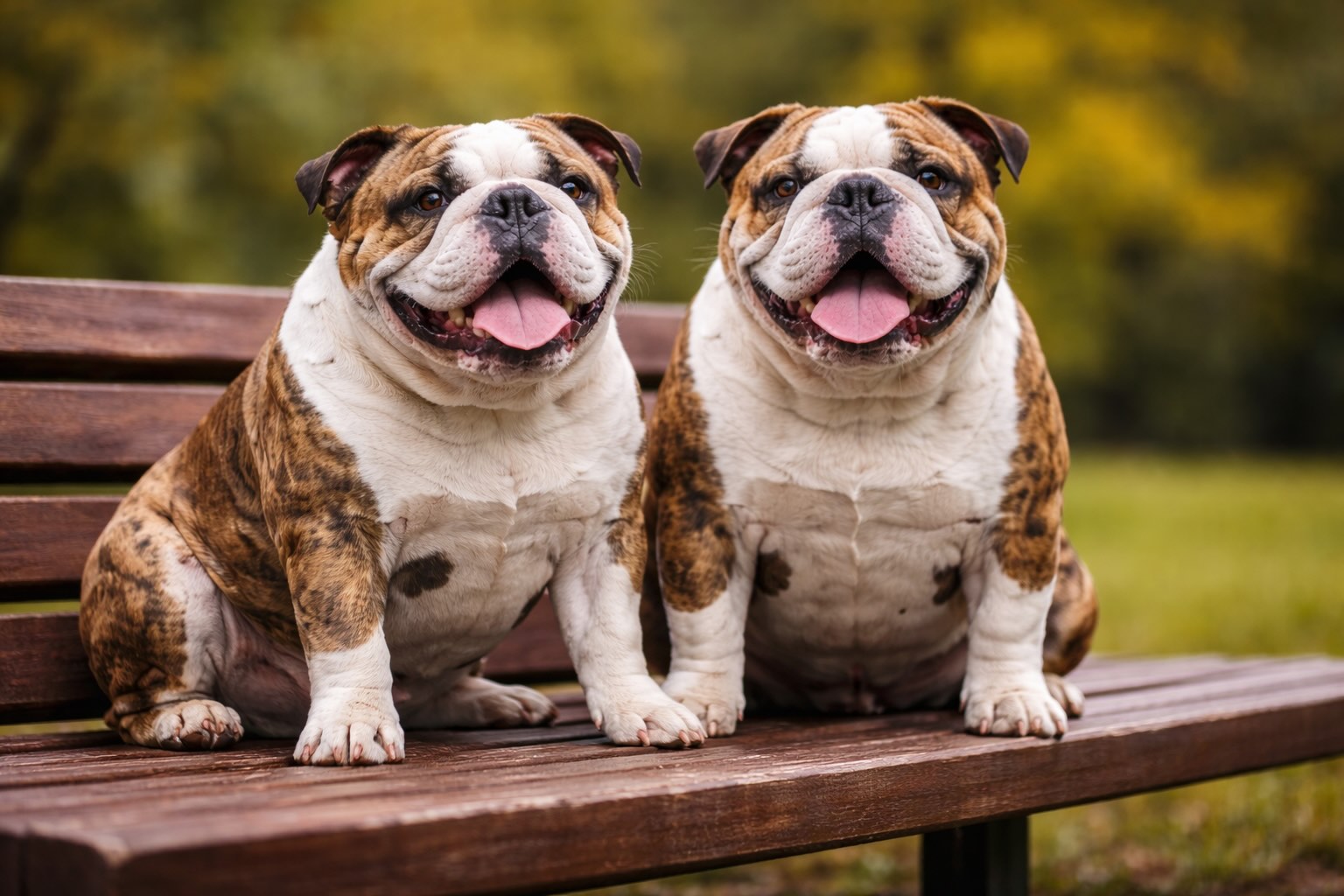
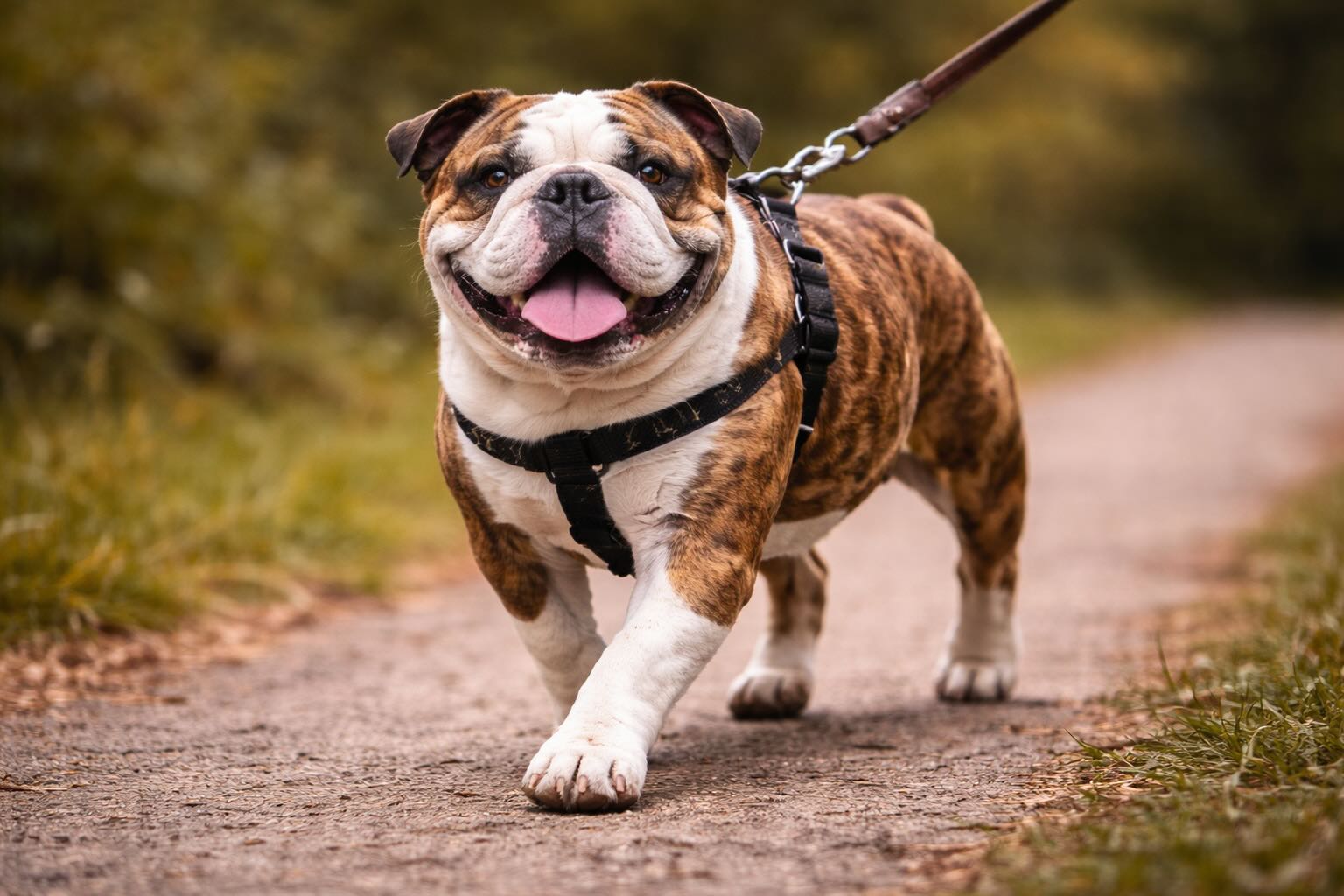
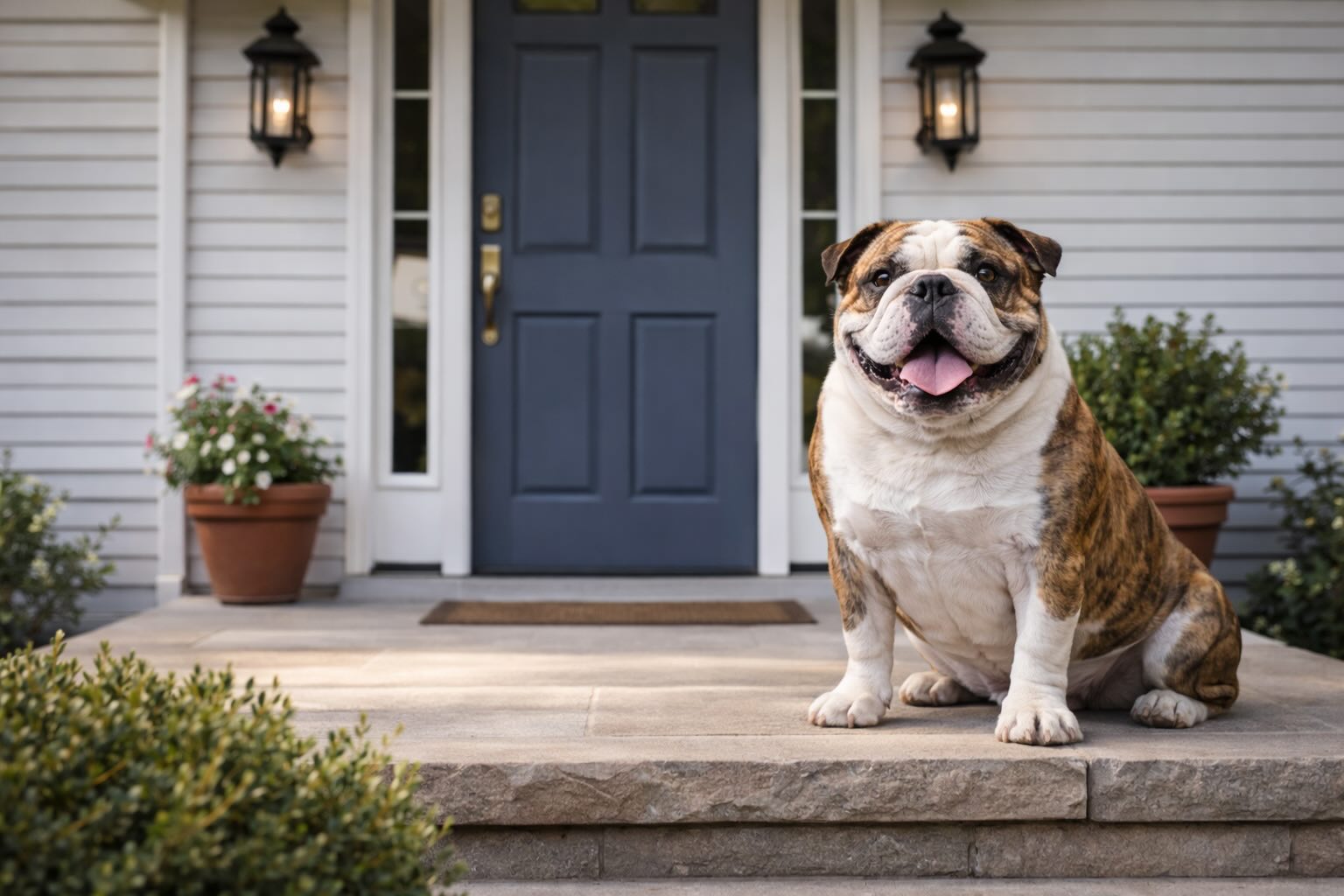
The historical Old English Bulldog differed significantly from the modern, highly exaggerated companion-type Bulldog. It was a compact, powerfully built, athletic dog of medium height, possessing substantial bone without appearing coarse or overdone. The overall impression was one of strength, stability, and functional efficiency, combined with notable agility and working drive. Average height ranged approximately from 40 to 50 cm at the withers, with body weight typically between 25 and 35 kg depending on sex and line, males being distinctly heavier and more robust than females.
The body was compact and slightly longer than tall, with a deep, well-developed ribcage and pronounced musculature throughout. The stance was firm and well-supported, reflecting a low center of gravity. Movement was energetic and resilient rather than cumbersome, emphasizing that this was a true working bulldog capable of rapid response and sustained physical exertion.
The head was proportionally large but not exaggerated. The muzzle was shortened, though not to the extreme brachycephalic degree seen in many modern lines, and did not inherently compromise respiratory function. The undershot bite was clearly defined, enhancing gripping capability. Expression combined alertness with steadiness and composure.
The coat was short, dense, and relatively harsh in texture, offering practical protection without excessive softness. Acceptable colors included brindle, red, fawn, white, and various pied combinations. The appearance of the Old English Bulldog was fundamentally functional rather than ornamental – each structural feature developed in response to the demands of controlling large livestock, requiring stamina, resilience, and physical durability.
Precise historical longevity data are limited; however, it is generally estimated that life expectancy averaged approximately 10–12 years, which was typical for a robust working dog of that era. This was not a decorative breed, but a powerful, well-balanced, physically capable bulldog developed for demanding and often harsh practical work.


Отличительные черты

Голова

Морда

Уши

Глаза

Зубы

Корпус

Конечности

Хвост

Шерсть

Окрас
Character
The temperament of the historical Old English Bulldog was shaped not in drawing rooms, but in working yards and baiting arenas. As a result, its mental profile combined steadiness under pressure, a high pain threshold, and pronounced determination. This was a dog characterized by internal stability – not excitable, not prone to panic, and unlikely to react to external stimuli without clear cause. However, when required, it responded instantly, acting with decisiveness and controlled intensity.
A defining behavioral trait was strong task focus. Once engaged, the dog demonstrated persistence often perceived as stubbornness. In reality, this was genetically reinforced tenacity, essential for confronting and controlling powerful livestock. Uncontrolled aggression toward humans was not tolerated in breeding; the dog had to remain manageable and allow handler intervention. Consequently, when properly raised and directed, the Old English Bulldog exhibited a stable temperament and predictable behavioral patterns.
In domestic settings, this type was not excessively active. It was not inclined toward unnecessary barking or nervous excitability, tending instead toward calm observation. Nevertheless, when confronted with a genuine challenge or provocation, its response could be immediate and highly energetic. The energy displayed was not impulsive but concentrated and purposeful.
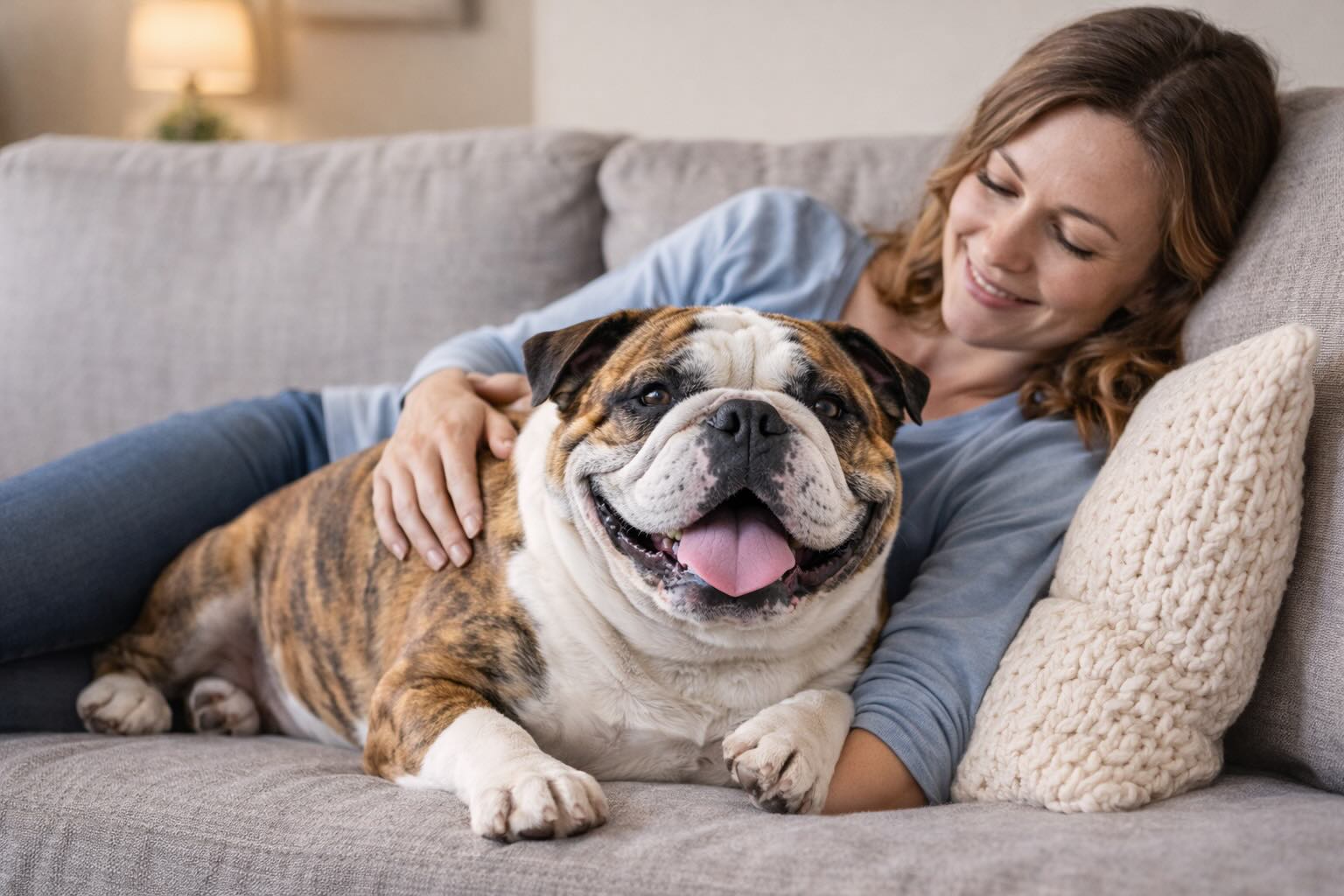
In its relationship with the owner, the Old English Bulldog formed a strong bond without excessive dependency. It responded best to confident, consistent leadership and did not perform well under inconsistent or overly permissive handling. Clear structure and defined hierarchy were important for maintaining balanced behavior. Within a stable environment, the dog demonstrated composure, patience, and a solid degree of social adaptability.
Typical behavioral tendencies included pronounced territorial awareness and attentiveness to surroundings. The dog was not inherently timid and rarely displayed unwarranted suspicion, yet it maintained readiness to defend if necessary. In the absence of a legitimate reason for confrontation, it generally conserved energy rather than seeking conflict.
Overall, the Old English Bulldog represented a dog of strong character, resilient nerve, and marked determination. It was not a soft ornamental companion but a serious, self-assured, physically and mentally robust working type developed for demanding and often harsh practical purposes.
A dog of indomitable fighting spirit
The Old English Bulldog was valued not only for strength but also for exceptional pain tolerance. Historical accounts from the 18th century describe dogs maintaining their grip even when sustaining severe injuries, including fractures. This resilience was deliberately reinforced through selective breeding, making the breed one of the most physically durable molosser types of its era.Care and Maintenance
Care for the Old English Bulldog must take into account its dense body structure, tendency toward weight gain, and well-developed musculature. This is a dog that should never be allowed to become overweight – excess body mass places significant strain on the joints and cardiovascular system. The diet should be carefully portion-controlled, with adequate high-quality animal protein and monitored caloric intake. Overfeeding presents a greater long-term risk than moderate dietary discipline.
Daily exercise is essential, but it must be structured and appropriate. The Bulldog benefits from short, intensive activity rather than prolonged endurance work. It responds well to strength-based exercises, controlled tug work, resistance play, and tasks that involve purposeful movement under command. Aimless running or repetitive long-distance activity is generally not well suited to this type. In warm or hot weather, physical exertion must be reduced significantly due to compromised thermoregulation associated with a shortened muzzle.
The coat is short and requires minimal grooming, though regular brushing with a firm bristle brush helps remove dead hair and stimulate the skin. Bathing should be performed as needed, avoiding frequent use of harsh shampoos. Particular attention should be given to skin folds when present; they must be kept clean and dry to prevent dermatitis or irritation. Routine inspection of ears and eyes is recommended, as the breed can be predisposed to inflammatory conditions.
The Old English Bulldog thrives on structure and consistency. It responds best to clear boundaries, predictable routines, and confident handling. The breed typically values territorial awareness and proximity to its owner, but without excessive dependency. It tolerates fair firmness and respects stable leadership. Conversely, it does not respond well to chaotic environments, inconsistent correction, harsh shouting, or prolonged isolation. Excessive permissiveness can also create behavioral issues, as the breed may test limits if boundaries are unclear.
Given its natural strength, interaction – especially with children or other animals – should be supervised to ensure safety. The Bulldog prefers durable, resistance-based toys and often enjoys gripping and holding activities that reflect its historical working instincts. When managed with balanced nutrition, controlled exercise, and consistent guidance, it is a resilient, composed, and predictable dog that values order, physical engagement, and close contact with its handler.
National symbol of England
During the 19th century, the Bulldog became a national symbol of England, representing determination and unyielding resolve. During World War II, the image of the bulldog was widely used in British propaganda to embody national resilience. This symbolic association remains deeply rooted in cultural perception today.Training and Education
Training the Old English Bulldog requires authority rather than force. This is a strong-nerved, independent-minded dog, and excessive physical pressure or harsh correction is counterproductive. The breed is neither timid nor easily intimidated; raised voices and coercion tend to create resistance rather than compliance. The most effective approach is calm, confident, and consistent handling, where each command is clear, justified, and carried through to completion.
Training sessions should be relatively short but regular. The Bulldog does not respond well to monotonous repetition and may disengage if exercises lack purpose. However, it performs reliably in tasks that have functional meaning – maintaining position, controlled heeling, impulse control, possession management, and structured obedience. Clear sequencing is essential: cue – execution – reinforcement. The breed values clarity and predictability but does not tolerate inconsistency or chaotic handling.
The ideal handler is emotionally stable, firm without aggression, and capable of maintaining boundaries. This breed is not always suitable for inexperienced owners, particularly those without prior experience managing physically strong dogs. The Old English Bulldog is not inherently submissive; it assesses situations and may disregard commands if it does not recognize the individual as a legitimate leader.
The breed tends to select its primary handler based not on affection alone, but on perceived stability and strength of character. It gravitates toward the person who demonstrates composure, consistency, and control. Respect and loyalty develop through structured interaction, shared activity, and routine. In multi-person households, the dog typically aligns itself with the most confident and consistent individual.
The Old English Bulldog obeys the person it considers authoritative. This is not necessarily the one who provides the most food or play, but the one who establishes and consistently enforces rules. With proper guidance, the breed becomes reliable, responsive, and disciplined. Without clear leadership, however, it may assume initiative and begin testing boundaries. Its respect must be earned – and maintained daily through steady, confident handling.
A reconstructed breed
The modern Olde English Bulldogge, developed in the 1970s by David Leavitt, represents one of the earliest structured attempts at reconstructing a historical canine type through controlled crossbreeding followed by type stabilization. The project is widely regarded as a successful example of functional reconstruction aimed at restoring athleticism while reducing extreme brachycephalic traits.
How to Choose a Puppy
Selecting a healthy and psychologically stable Old English Bulldog puppy begins not with the puppy itself, but with a thorough evaluation of the breeder and the parent dogs. The sire and dam should be assessed for temperament, physical condition, respiratory function, mobility, and reaction to unfamiliar people. Balanced adult dogs that display neither excessive aggression nor fearfulness are the primary indicator of sound breeding. If the dam is nervous, overly reactive, or apathetic, such traits may be inherited by the litter.
The puppy should be active, curious, and responsive, with a clear, attentive expression. It should neither retreat in fear from human interaction nor become hysterically overstimulated. A desirable sign is moderate interest, willingness to engage, and quick adaptation to new stimuli. The puppy should stand firmly, move freely without lameness, and breathe without persistent wheezing, stridor, or marked dyspnea.
Physically, attention should be given to clean, bright eyes without discharge, a clear nose, ears free of odor or inflammation, a firm abdomen without distention, and healthy skin without lesions or excessive scaling. The developing bite should already indicate a correct undershot jaw without severe deviation. Breathing should be quiet and efficient rather than labored.
At the kennel, all breeding documentation must be verified. This includes official pedigrees issued by a recognized kennel organization, confirmation of breeding approval or show evaluations where applicable, and documented health screenings for hereditary conditions. For bulldog-type breeds, particular importance should be placed on assessments of hips, cardiac health, and respiratory function where relevant to the breeding line. The breeder should provide a mating record, litter inspection documentation, and an official puppy registration certificate that can later be exchanged for a full pedigree.
A veterinary passport with age-appropriate vaccination and deworming records is mandatory. The puppy must be permanently identified in accordance with national regulations, typically via microchip. A formal sales contract should be provided, clearly outlining the terms of transfer, responsibilities of both parties, and the puppy’s identifying details.
A healthy, mentally balanced puppy is the result of responsible pairing and proper early rearing. Clean housing conditions, structured early socialization, regular human contact, and a calm kennel environment are far more meaningful than marketing claims. The correct choice is not necessarily the largest or most visually striking puppy, but the one demonstrating the most stable temperament and sound physical condition.
Health and Diseases
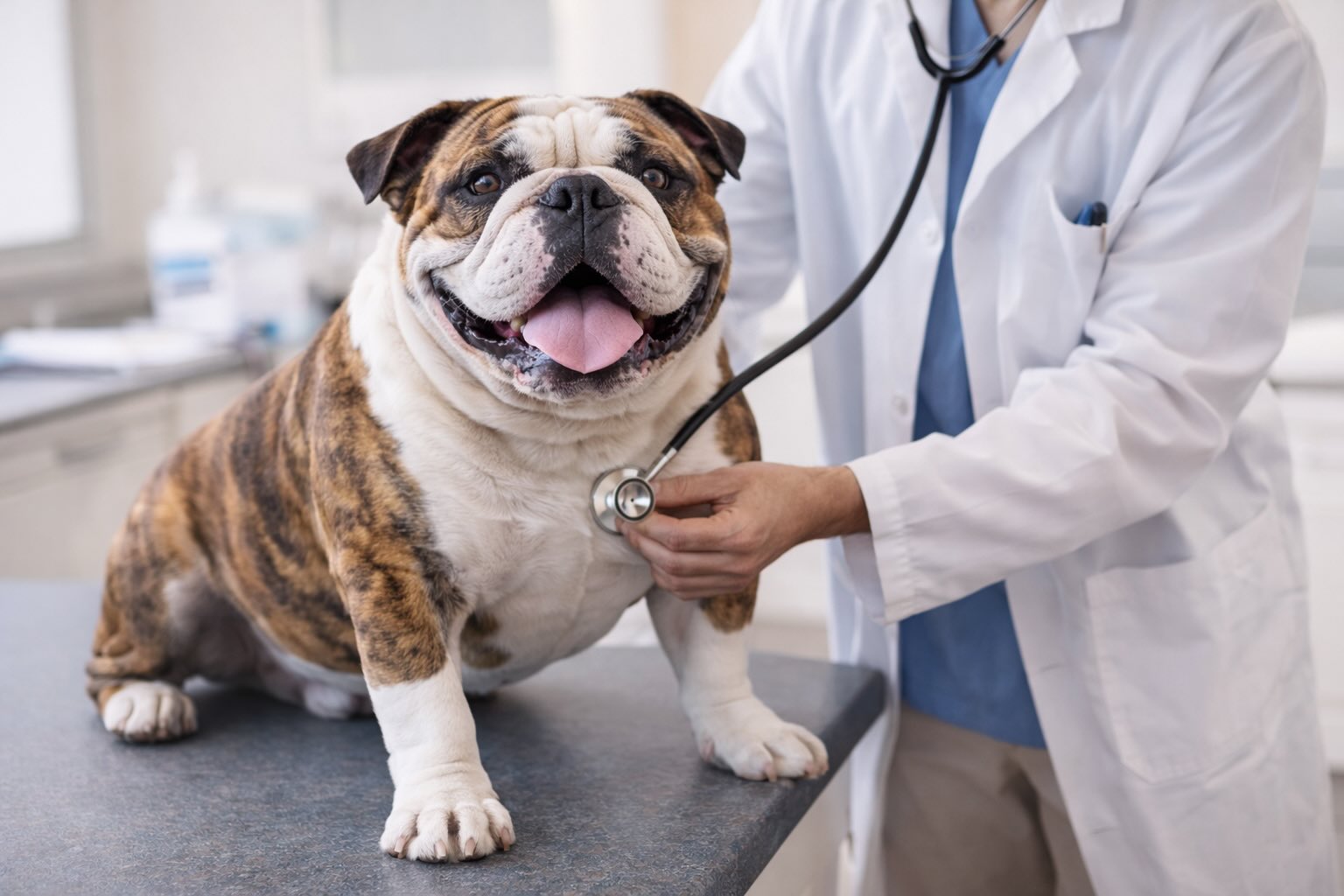
The overall health profile of the Old English Bulldog depends largely on the type in question – whether referring to the historical working bulldog or to modern reconstructed lines. Originally, it was a relatively robust and physically resilient dog with solid overall constitution. However, brachycephalic cranial structure has consistently represented a potential area of concern. Even moderate shortening of the muzzle may be associated with stenotic nares, elongated soft palate, and reduced thermoregulation efficiency. Consequently, respiratory compromise and susceptibility to heat stress remain among the most characteristic vulnerabilities.
The musculoskeletal system requires careful management. The breed’s dense build and substantial musculature, particularly when combined with excess body weight, place significant strain on the hip and elbow joints. Hip and elbow dysplasia, degenerative joint disease, and inflammatory conditions may occur, especially if puppies are improperly raised or subjected to excessive physical stress during growth. Strict weight control and appropriately structured exercise are essential preventive measures.
Dermatological conditions are relatively common, particularly in individuals with pronounced skin folds. Inadequate hygiene or humid environments may predispose to dermatitis, pyoderma, and fungal infections. Although the short coat simplifies maintenance, it does not eliminate susceptibility to cutaneous sensitivity, including allergic reactions, some of which may be food-related.
Cardiovascular health should also be monitored, as congenital cardiac defects and functional murmurs may occur. Breeding animals should undergo proper cardiac evaluation prior to inclusion in breeding programs. Certain lines may also demonstrate ophthalmologic concerns, including entropion, inflammatory eye conditions, and increased susceptibility to trauma.
Reproductive challenges are not uncommon in bulldog-type breeds. Due to anatomical characteristics, parturition may occasionally be complicated and require veterinary intervention, including cesarean section in some cases.
With responsible breeding practices, regular veterinary supervision, and appropriate management, the Old English Bulldog can maintain good quality of life with an average lifespan of approximately 10–12 years. The primary health risks are less a function of the breed itself and more closely associated with exaggerated conformation, obesity, and indiscriminate breeding without proper health screening of breeding stock.
Содержание
-
1. Описание породы
-
2. Внешний вид
- 2.1 Голова
- 2.2 Морда
- 2.3 Уши
- 2.4 Глаза
- 2.5 Зубы
- 2.6 Корпус
- 2.7 Конечности
- 2.8 Хвост
- 2.9 Шерсть
- 2.10 Окрас
-
3. Характер
-
4. Содержание и уход
-
5. Дрессировка и обучение
-
6. Как выбрать котенка
-
7. Здоровье и болезни






Comments
Only registered users can leave reviews.
Enter