
Neapolitan Mastiff




Warning: Illegal string offset 'label' in /home/panda/sites/zoonika/wp-content/themes/zoonika/template-parts/animals/animals-param-item.php on line 32
Ð


Breed Description
The Neapolitan Mastiff is a special dog that, as the name suggests, originates from southern Italy. It is unmistakable not only in appearance but also in its history. It belongs to the Molosser group and is related to mastiffs, Great Danes, or bulldogs. However, genetically, it represents a separate branch, with only the Cane Corso being related to it. This was discovered in 2017 through a comprehensive genetic analysis of over 100 dog breeds involving more than 13,000 dogs, conducted by a team of geneticists led by Heidi Parker. This aligns well with the history told about the Mastino.
According to Swiss dog expert Hans Reber, these dogs have been kept by farmers, craftsmen, and merchants in the vicinity of Naples for many centuries. They were meant to guard and protect families, their property, and at times assist in herding cattle. They also served as a status symbol for their owners, who often allowed their dogs to fight each other. Being the owner of a champion in such fights elevated one’s standing in society. Their temperament has always been extremely calm, gentle, and with a remarkably high threshold for irritation. For a very long time, the Neapolitan Mastiff was a clearly defined breed without a written standard. It was only in 1949 that it was officially recognized as a breed. Piero Scanziani is considered the “father of the Mastini.” On one hand, it is thanks to him that this unique, ancient breed of dog has survived to modern times. On the other hand, modern breeding practices have led to these once extremely sturdy dogs with compact sizes turning, at least temporarily, into pitiful creatures that, put bluntly, were composed only of loose skin and fur and could hardly move. Additionally, this breed was crossed with the “blu
According to history, the Neapolitan Mastiff originated about 5,000 years ago in Tibet. These large dogs excelled in combat and were reliable guard dogs, performing excellently in these roles. They were bred in southern Italy, near Naples, from which they got their name. The breeding of Neapolitan Mastiffs aimed to create large dogs with thick, wrinkled skin to protect them from harm. Moreover, breeders wanted these dogs to be loyal and protective of their families.
Neos are restrained in their expressions, cautious in behavior, and respectful towards their relatives and other dogs. They may have the appearance of gentle giants, but they are not carefree. They can show hostility towards unfamiliar dogs. Neos may dislike interference from others in their family circle because they are closely bonded to their owners.
The price for a puppy ranges from 55,000 to 70,000 rubles.
Appearance
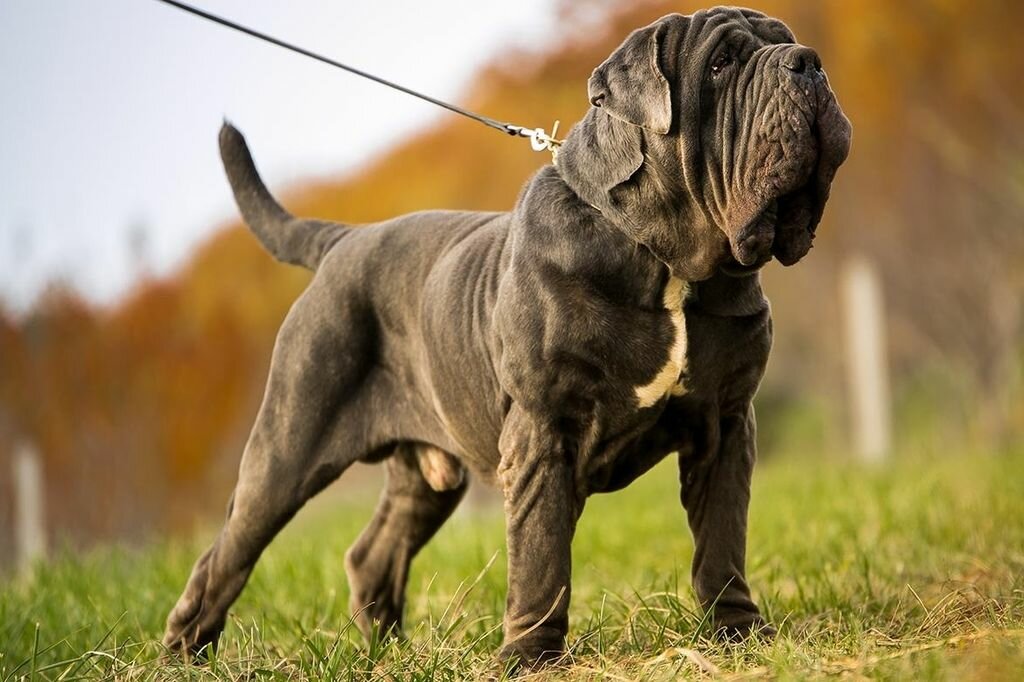
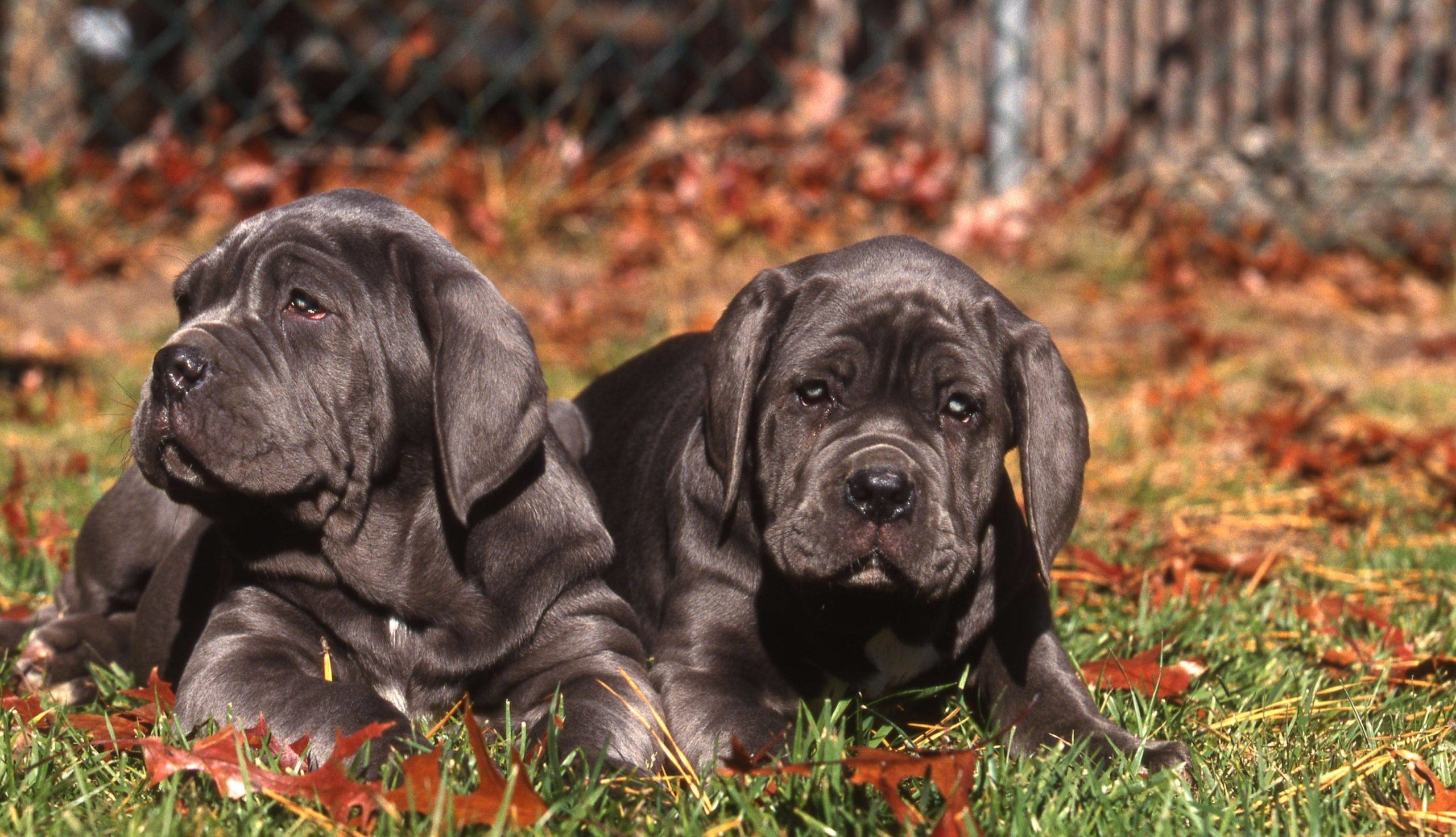
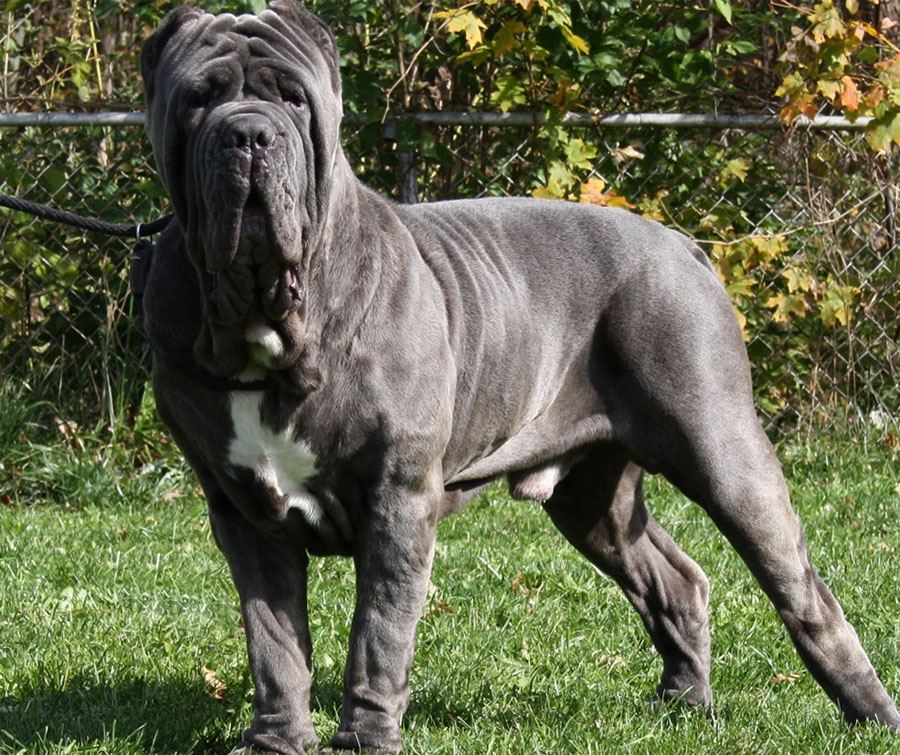
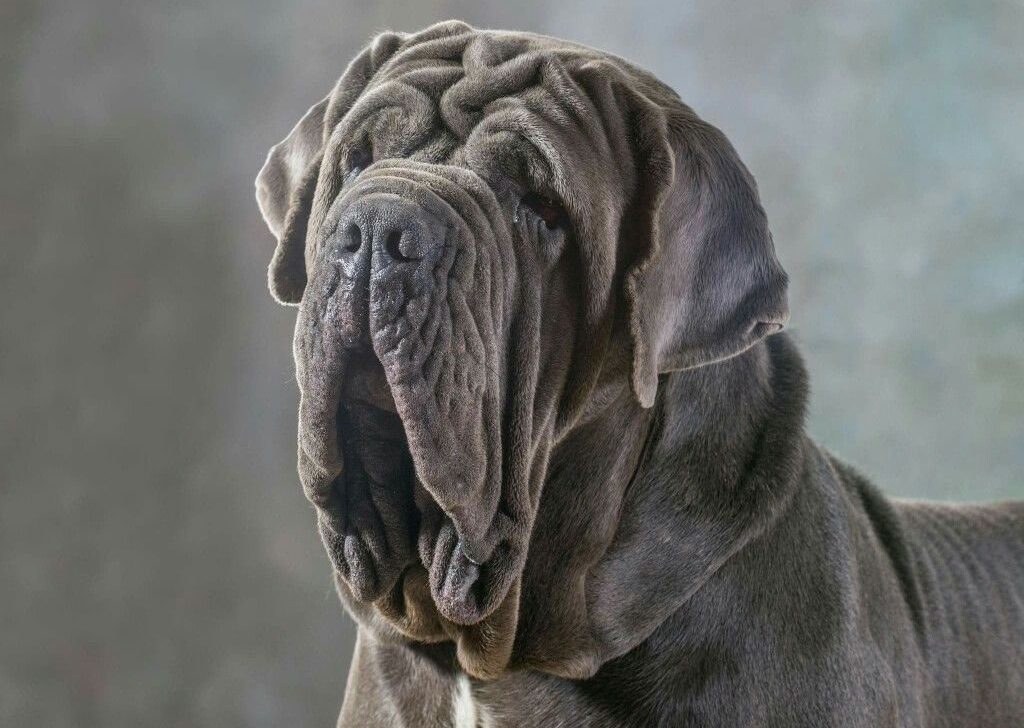
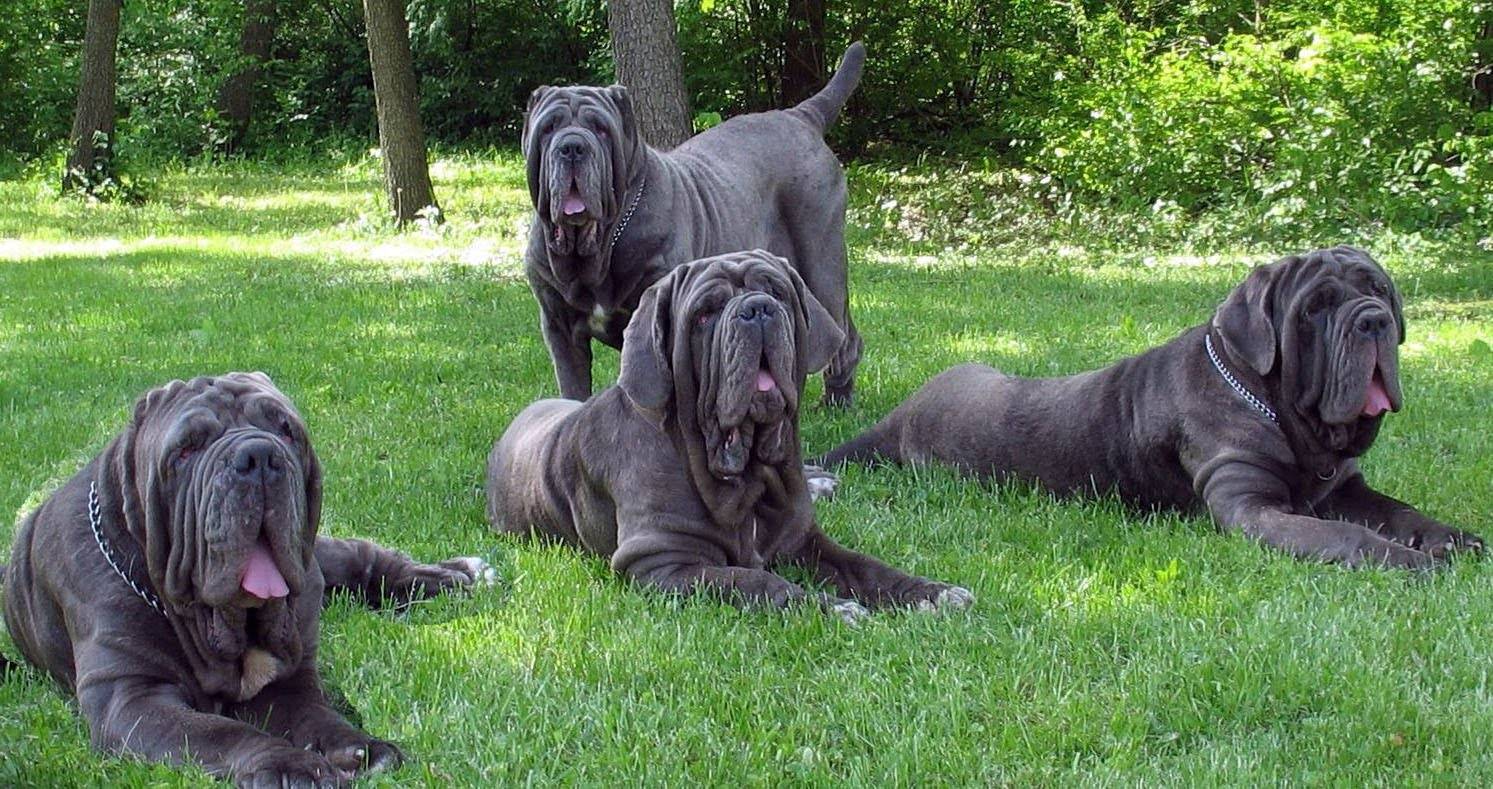
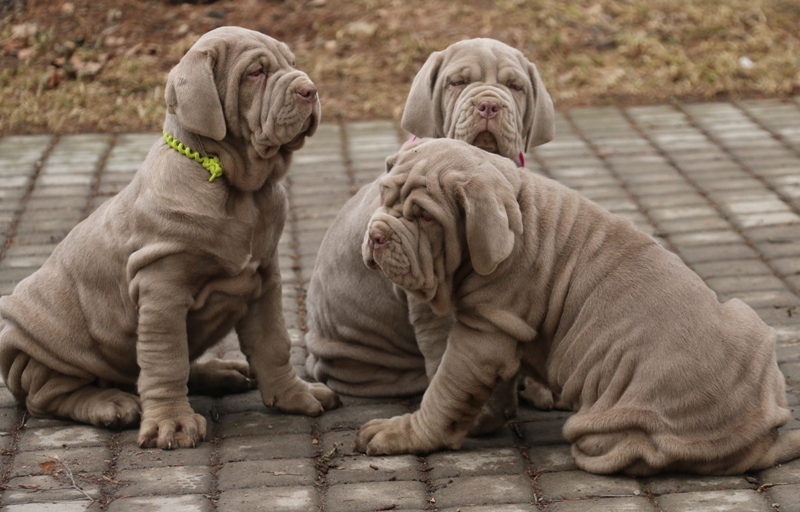
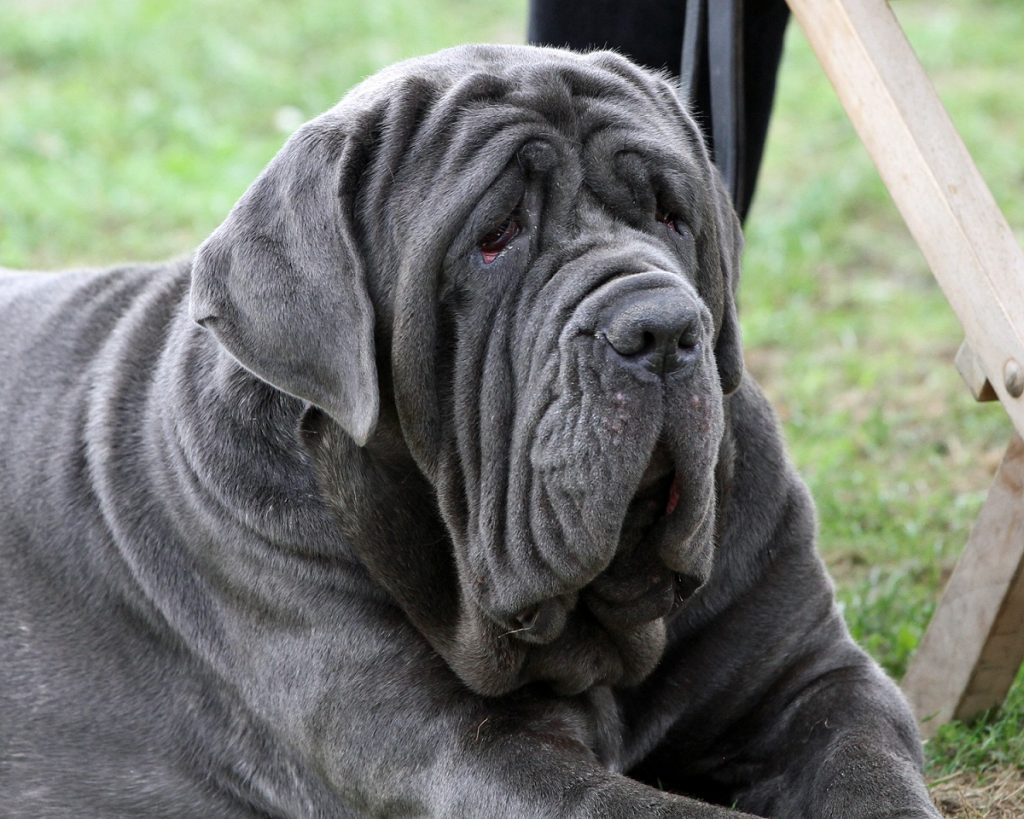
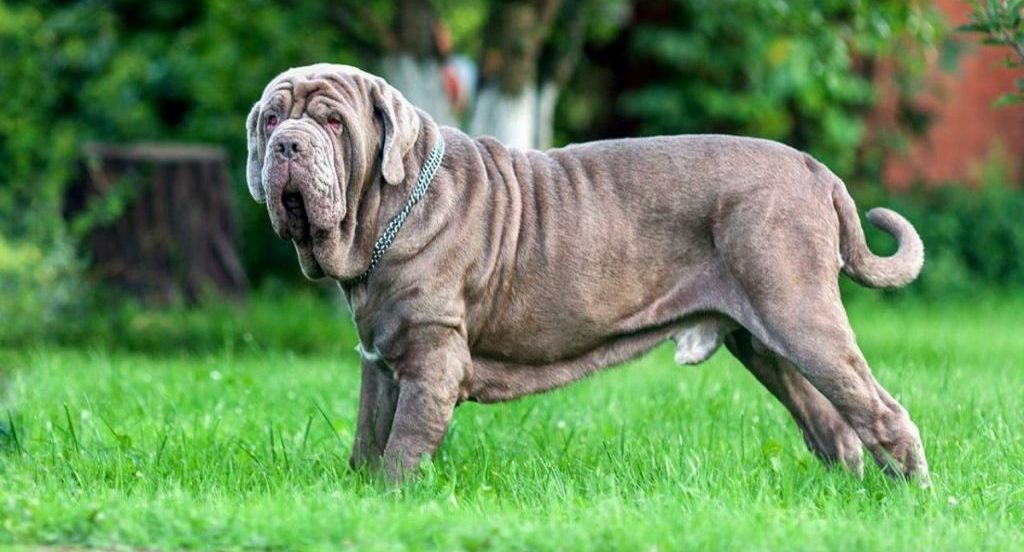
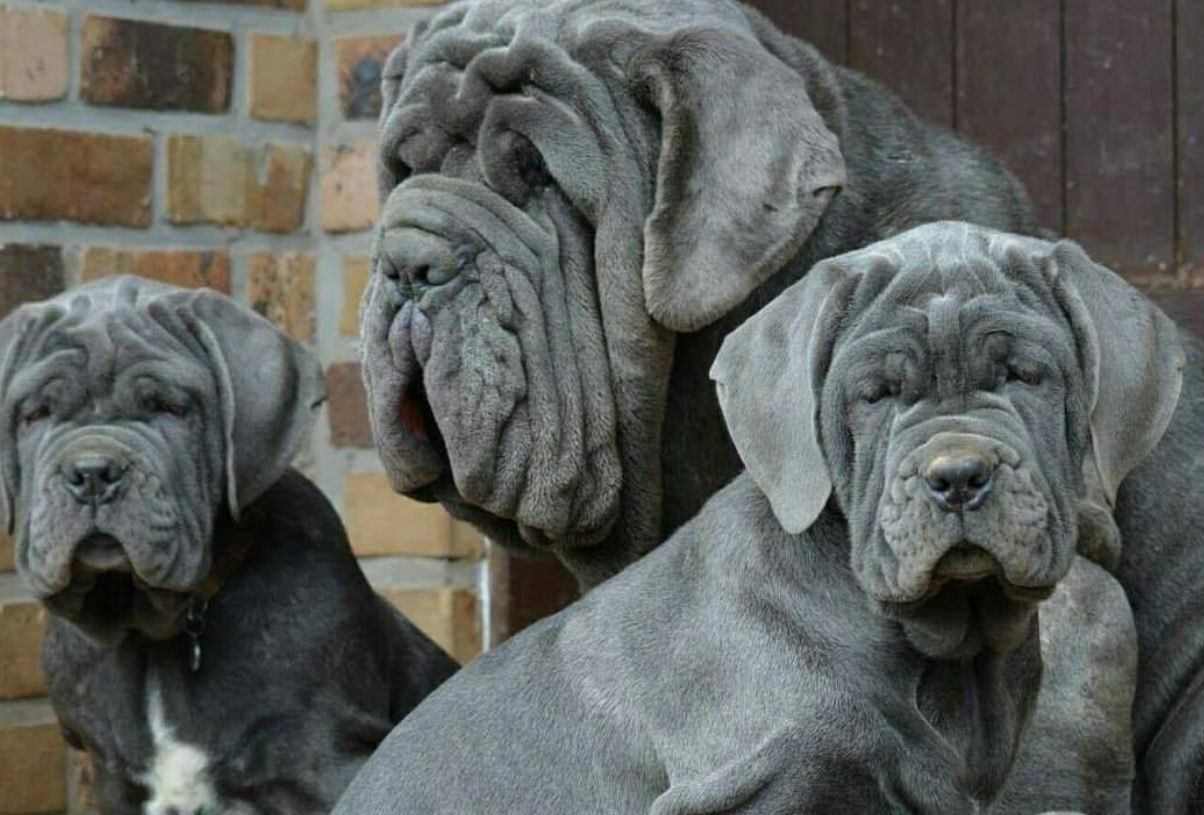
The Neapolitan Mastiff retains all the characteristics of an ancient dog. It is a large dog with a big wrinkled head. Even from a distance, the Neapolitan Mastiff impresses with its formidable build. The massive head stands out particularly. It features a typical Molosser head with pronounced fleshy lips. Its facial expression is cold and calm, leaving a powerful overall impression. Its coat is short and smooth. Modern breeding practices have led to an excess of loose skin with a troubling transition to excessive breeding. For animal welfare reasons, it’s essential to ensure that the skin fits tightly against the body without too many folds and wrinkles. Minor wrinkles are only acceptable around the neck and dewlaps. In recent decades, there has been too much skin and too many wrinkles on the head, sometimes so severe that the dogs can barely see due to the folds. Additionally, excessive wrinkling can lead to infections and itchiness. Original Mastiffs were never known for such presumed magnificence. They are a product of breeding that does not prioritize animal welfare. Care should be taken to ensure there is no drooping eyelid (ectropion).
Powerfully built, with abundant loose skin and heavy bones, they are extremely strong and capable of explosive force, jumping high with their heads off the ground.
The standard height at the withers is between 65 to 75 centimeters for males and 60 to 68 centimeters for females. The recommended weight is between 60 to 70 kg for males and 50 to 60 kg for females. Original Mastiffs were smaller and lighter. In Mastiffs, the length of the body should exceed the height. The Neapolitan Mastiff appears as a huge, heavy dog with a fearsomely large and muscular muzzle. Its long, smooth skull, generously endowed with wrinkles, is approximately twice the length of the muzzle.
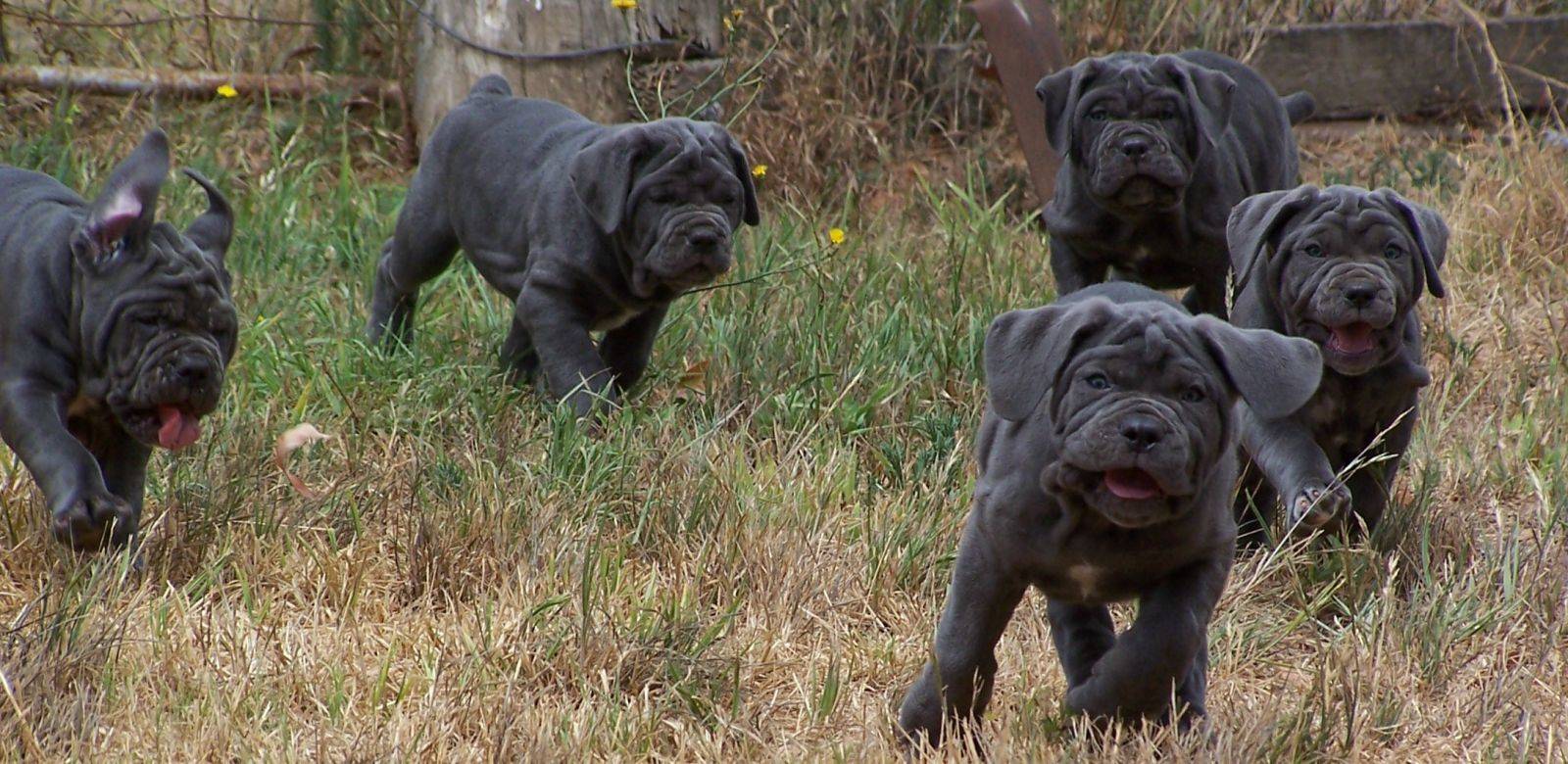
Mastiffs are always of one solid color. The original Mastiffs were mainly from dark brown to black. The so-called “blue,” which is based on a defective gene, was only later introduced to the breed.
Overall, the appearance is well-formed, large, muscular, and robust. The body is slightly longer than the height at the withers. They have a majestic posture with a noble expression. Some loose skin on the body and head is acceptable, but not excessive. Breeding mistakes have cost this once robust dog many years of life. Previously, their lifespan was 12 years; now it is from 6 to 9 years. However, there is no reliable data.


Отличительные черты

Голова

Морда

Уши

Глаза

Зубы

Корпус

Конечности

Хвост

Шерсть

Окрас
Character
The temperament of the Neapolitan Mastiff is gentle, like that of a lamb. He is an absolutely wonderful dog, and very little manages to unsettle him. His exceptionally high threshold for irritation and stoic composure are vital partners to his immense strength. These two poles are firmly and reliably embedded in the character of the Neapolitan Mastiff, just as with all Molossers, for thousands of years. You would never be able to utilize a strong dog who uncontrollably exerts their power or even turns it against your own family. Appropriate controllability has always been intertwined with potential danger and is ingrained in the character of the breeder. As the Neapolitan Mastiff has been a companion dog for several generations, the weight of calmness and manageability has only increased. Therefore, the fact that some federal states have included the Neapolitan Mastiff on the list of supposedly dangerous breeds is merely a sign of technical incompetence. A Neapolitan Mastiff from reputable breeders, consistently trained, is an extremely manageable dog. Sometimes this hefty dog can be a bit stubborn. Only good persuasion and requests for help will
Neapolitan Mastiffs are great for older children; however, they are too large for small kids. In their clumsy behavior, they might accidentally knock over toddlers or step on them, though with no malicious intent.
Establish a rule that children must be calm and not noisy when around the dogs. Excessive noise and activity can make Neapolitan Mastiffs anxious, and their large size can create unfavorable situations with small children. Dogs may also feel the need to protect their children from other kids, especially if they seem aggressive or are fighting. Always supervise playtime so your dog understands that you are in control of the situation. Their temperament is constant, loyal, devoted, and alert.
Today’s Neapolitan Mastiff is often referred to as the “armor of antiquity,” and there is some evidence that he is a direct descendant of Roman Molossers. In 1956, the Neapolitan Mastiff was officially recognized by the FCI. In Russia, it is cared for by the Molosser Club. Annually, between 20 and 60 puppies come under the auspices of the VDH. Neapolitan Mastiffs have always been very rare in Russia. This is especially relevant today due to the technically unjustified inclusion of the Neapolitan Mastiff on the “list of dangerous dog breeds” in certain regions.
Big jealous ones
Neapolitan Mastiffs are overly jealous and can often express their displeasure through unwarranted aggression.Care and Maintenance
Taking care of a mastiff that has not been bred to be overly bulky and healthy is not problematic. Unfortunately, such specimens are very rare. From an immediate care perspective, it’s not an issue: a little brushing here and there is sufficient. However, these large dogs always require high standards of care (see below). The presence of extremely deep wrinkles on the head and body often leads to chronic, lifelong areas of inflammation. They are a source of constant itching for the dogs and can sometimes even worsen their eyesight. Such dogs represent a lifelong and costly care case.
For the Neapolitan mastiff, bathing is rarely required due to its short coat. Eyes and ears need to be regularly checked and gently wiped with a damp cloth or paper towel when necessary. To keep both the dog and yourself clean, it’s advisable to always have a towel handy for wiping the muzzle and lips, especially after the dog eats or drinks. Nail length should also be monitored.
During shedding periods, the Neapolitan mastiff sheds almost as much as other dog breeds. Regular grooming with a natural bristle brush or a grooming glove once a week will help maintain cleanliness and remove excess or dead hair. Bathing the mastiff should only be done when necessary, but be prepared for the fact that it will get wet. Its skin is thick and well-developed.
The Neapolitan mastiff also requires a moderate amount of quality food. Using an elevated feeding bowl can reduce the risk of choking or bloating. The dog’s weight should also be regularly monitored.
It is generally recommended to feed an adult Neapolitan mastiff between 4 to 6 cups of quality food a day, divided into two meals. The best feeding option for such a large breed with a moderate activity level is a special diet formulated for mastiffs. However, just like humans, dogs have individual characteristics and nutritional needs, so the amount of food may vary. An active dog will also require more food than a less active one.
When considering dog food choices, pay attention to the quality. The better the nutrition, the more satisfied your dog will be, and the less you will need to add to the bowl.
Favorite of the commander
The Neapolitan Mastiff is recorded as the oldest dog breed. Similar dogs are still found on ancient rock reliefs. It is also a fact that dogs of this breed accompanied the great military leader Alexander from Macedonia.Obedience Training and Education
Due to their strength, keeping a mastiff is not an easy task. By nature, they have very low requirements. A daily walk and occasional grooming is all that’s needed. The only challenge lies in their food, regarding both quantity and quality. They don’t require a large garden, but having one is beneficial. A small apartment on the hundredth floor wouldn’t be suitable. It’s important to remember that for an adult Neapolitan mastiff, the leash is merely a symbol of control. They can easily maneuver at the end of the leash if they wish. However, they are not inclined to do so, provided they have at least the basic elements of good training.
Neapolitan dogs are as lively, resourceful, charming, and pleasant as the most delightful toy breeds, although most adults of the breed are quiet animals that sleep a lot. Many people perceive a teenage Neapolitan as energetic and strong when awake. It is crucial to train a mastino while young to establish a proper hierarchy as they deal with the firm and stubborn personality of a teenager. Most Neapolitans display an attractive, laid-back adult demeanor by three to four years of age. They do not respond well to harsh training and require an environment that inspires and satisfies them. Be cautious and consistent in your approach.
The Neapolitan is a large, sturdy breed that heats up quickly, so take care during hot weather. A Neapolitan puppy might continue playing longer than they should, so the trainer must intervene before the puppy becomes fatigued. Great caution is required when allowing them to go up and down stairs, as this exuberant puppy may break a knee jumping off the porch or the last steps.
The Neapolitan mastiff makes a wonderful companion, but they are not suitable for runners, dog sports enthusiasts, or active outdoor lovers.
Breed experts do not recommend excessive tug-of-war games or roughhousing, as an assertive mastino will quickly realize they are more significant than their smaller human friend and decide that they no longer need to listen.
Neapolitan mastiffs are very easy to train. You just need to break their stubbornness here and there with consistent gentleness. They want to follow their owner and do so reliably. A key responsibility of a Neapolitan mastiff owner is the continuous training of their puppy. Only they, and not the leash, allow for wonderful walks in nature, which along with this great four-legged friend, become a balm for the souls of people accustomed to the hustle of everyday life. At Zooinic, they offer elite breed puppies with a full set of documents.
Drooling giant
Excessive salivation is a specific characteristic of the breed and is not considered a defect.
How to Choose a Puppy
Buying a Neapolitan Mastiff should be a long-term and thoughtful decision. You should carefully consider whether you have all the prerequisites to enjoy many happy years together with this strong and, above all, large companion. Keeping such large dogs is also a financial commitment. Additionally, there is an above-average risk of health issues. If you are looking for a puppy, you must ensure that the dogs have not been bred to be overly bulky and wrinkled. You should inquire about the lineage, their appearance, their health issues, and their ages.
To get a Neapolitan Mastiff with a stable temperament, it is worth visiting a reputable breeder in person. For animal welfare reasons, you should refrain from buying puppies from wrinkled parents.
Mixes with Neapolitan Mastiffs are quite rare and not recommended due to their size, strength, and numerous genetic defects (complex breeding issues).
The mind of the imposing Neapolitan Mastiff is gentle, like a lamb. He is truly a great guy. Unfortunately, undesirable events in breed development have negatively affected him, making it very difficult to find a healthy Mastino today. Zooinika is the best place to choose from a variety of listings.
Health and Diseases
Neapolitans are known for their resilience. A common mild condition known as cherry eye manifests as redness and inflammation in the corner of the eye. In most cases, this issue does not lead to physical damage. Despite pronounced wrinkles and loss of skin elasticity, most dogs might not experience skin problems.
Large breeds face various health issues that this breed tends to avoid. Bloat, a life-threatening condition, can affect any dog with a deep chest. Although the causes of this condition are unknown, owners should be aware of the symptoms of bloat and know how to respond if it occurs. Hip dysplasia is also seen in Mastiffs, as in other dog breeds.
Any questions related to animal welfare should be discussed with the dog’s breeder and a veterinarian. – the best website for buying or selling a puppy.
Содержание
-
1. Описание породы
-
2. Внешний вид
- 2.1 Голова
- 2.2 Морда
- 2.3 Уши
- 2.4 Глаза
- 2.5 Зубы
- 2.6 Корпус
- 2.7 Конечности
- 2.8 Хвост
- 2.9 Шерсть
- 2.10 Окрас
-
3. Характер
-
4. Содержание и уход
-
5. Дрессировка и обучение
-
6. Как выбрать котенка
-
7. Здоровье и болезни






Comments
Only registered users can leave reviews.
Enter