
Kerry Blue Terrier





Warning: Illegal string offset 'label' in /home/panda/sites/zoonika/wp-content/themes/zoonika/template-parts/animals/animals-param-item.php on line 32
Ð


Breed Description
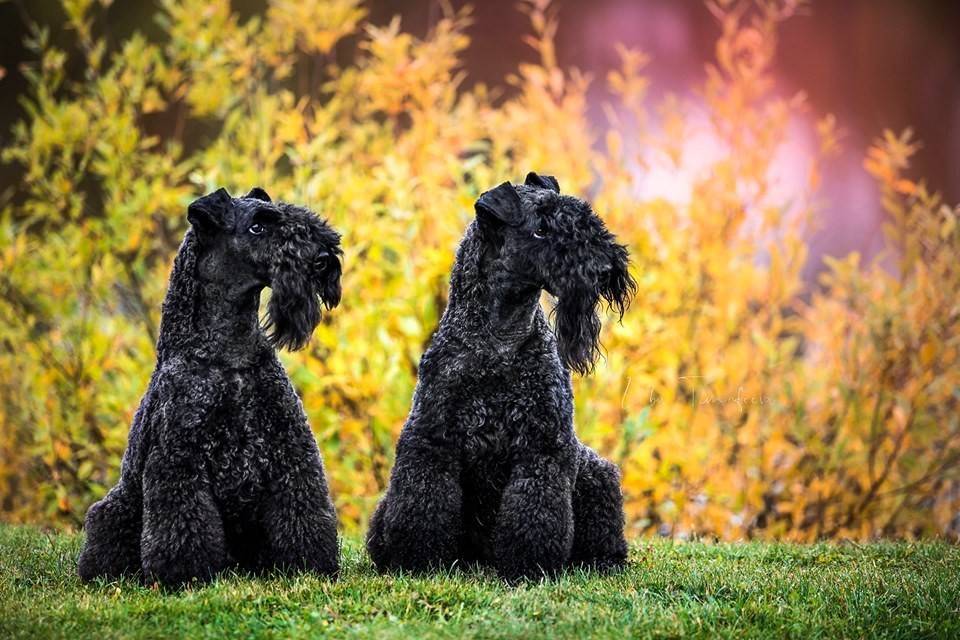
At first glance, the profile of the Kerry Blue Terrier gives the impression that this dog is chiseled from stone. As if part of the stone circle from the Druid’s Altar suddenly came alive and left its usual place. The powerful, rugged, mysterious, and at the same time alluring appearance of the dog captivates. So where does such a remarkable breed actually come from? The answer to this question is both complex and simple. Undoubtedly, the breed has no divine origin and hails from Ireland. To be precise, from County Kerry, which is farthest from England. No one can say exactly when Kerry Blue Terriers first appeared. Of course, there are many beautiful legends about the origin of these dogs. One such legend tells that a farmer once decided to breed his own dog that would be different from all the terriers of the time. For reference, farmers of that era could not afford purebred mastiffs, so they used various dogs to guard their farms and lands. Almost all of these dogs shared a small size and a wiry coat that repelled dirt, as well as the ability to fetch martens, badgers, and rats from their burrows. This farmer wanted a dog with soft, thick fur resembling tha
Appearance
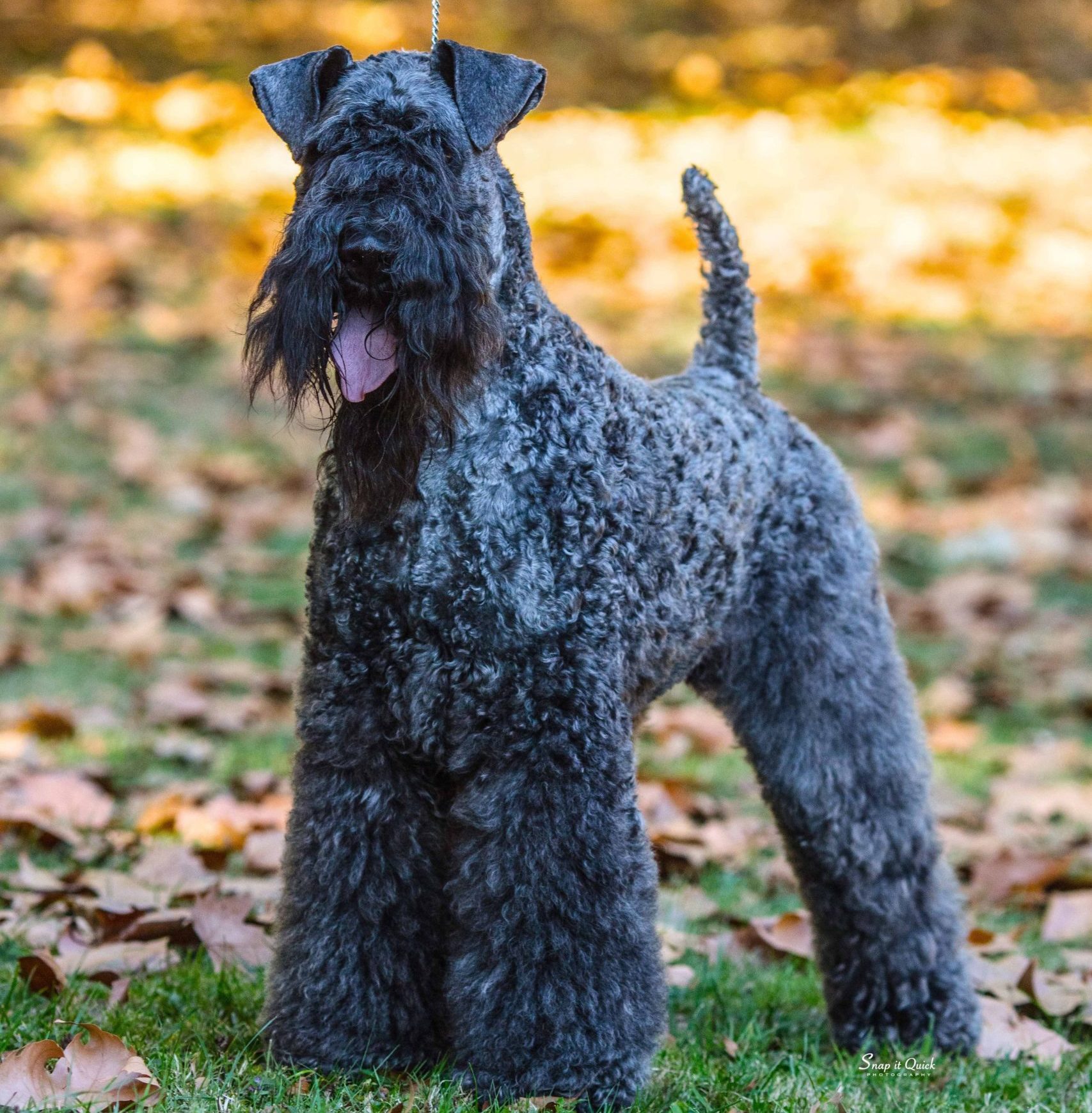
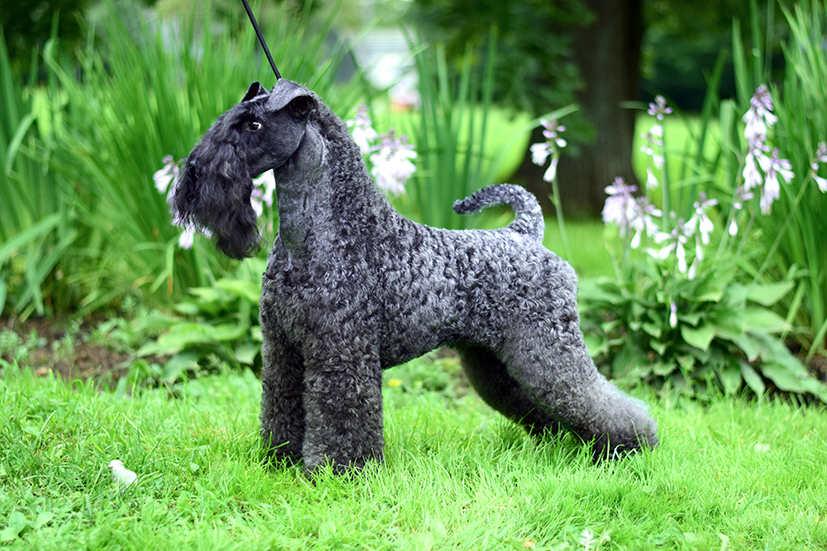
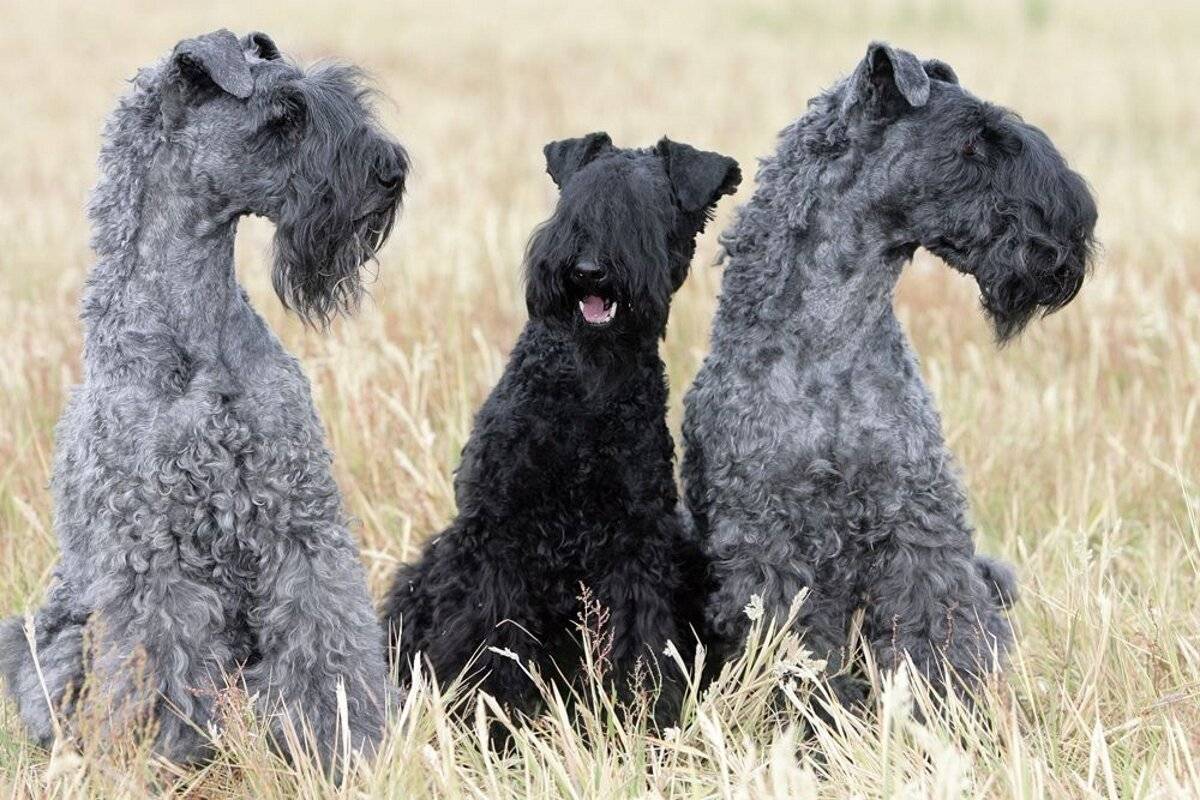
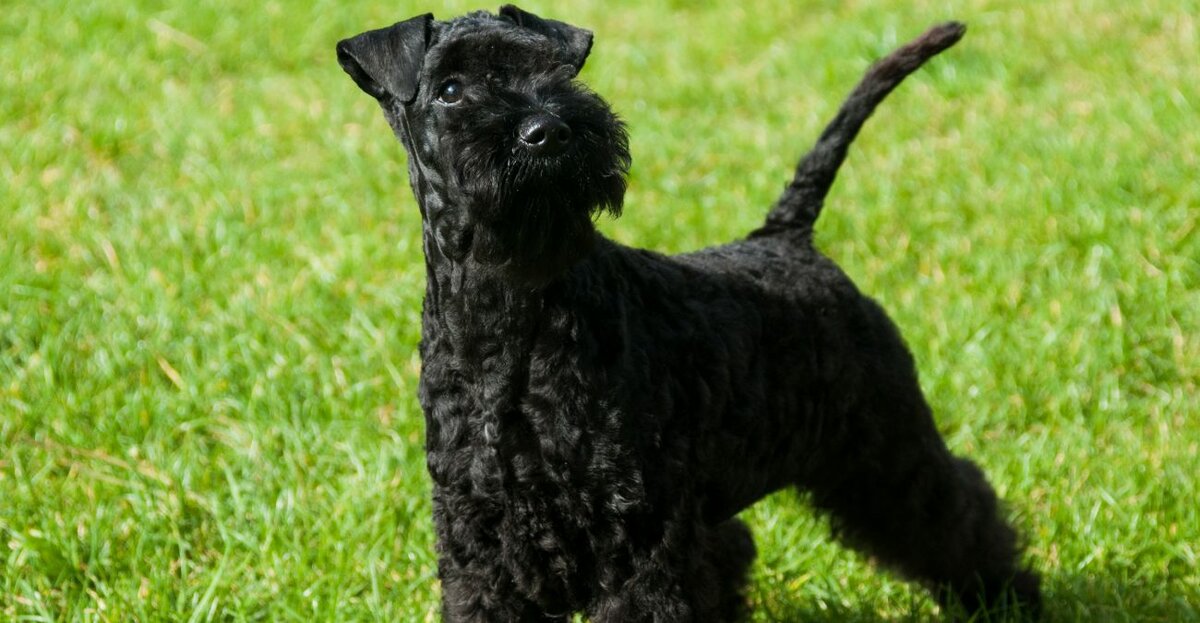
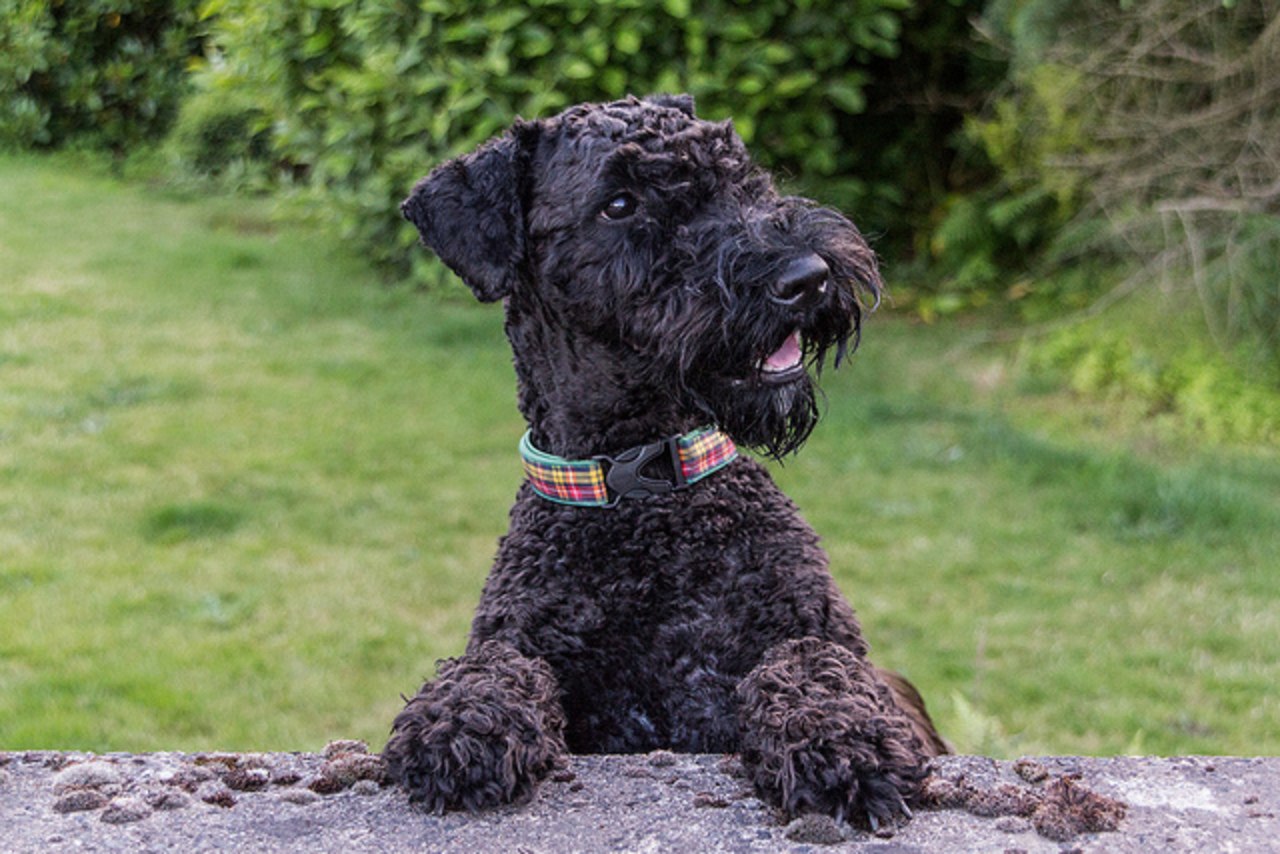
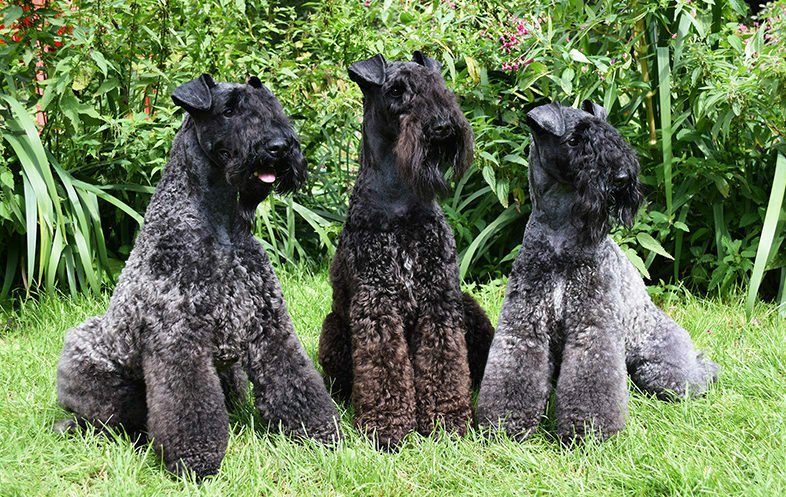
The Irish Blue Terrier, or Kerry Blue Terrier, is a dog that always attracts keen attention. The recognizable outlines of this medium-sized terrier are a must, though not the most distinctive feature of the breed. The unusual “hairdo” and beard are what truly set these dogs apart. Adding the finishing touch is the gray-blue color of their beautiful, soft coat. It’s worth noting that dogs with a good pedigree often have a uniquely striking blue sheen to their fur.
If we express it dryly and officially, the Blue Irish is a well-built medium-sized terrier with well-developed musculature. Typically, male Kerry Blues are just slightly larger than females. An adult male stands 45-50 cm at the shoulder, while a female measures 41-45 cm. Their weight ranges from 15-18 kg. Despite this small size difference, the females also have more graceful lines, while the males are more muscular and robust.
It’s surprising how much can be seen despite that fringe! However, there’s no need to worry about that. These dogs see everything around them very well and are known for their vigilance and readiness to protect their family members.
In today’s world, these dogs make excellent family pets. They are ready to follow their owners anywhere: by car, plane, or train-it doesn’t matter to them.


Отличительные черты

Голова

Морда

Уши

Глаза

Зубы

Корпус

Конечности

Хвост

Шерсть

Окрас
Character
The unusual appearance of the Kerry Blue Terrier hides an equally extraordinary character. Its hunting instincts shine through when the dog defends its interests or protects its family. An excellent guard not only alerts the owner to intruders but can also handle a burglar with its powerful teeth.
This breed is known to be very intelligent, capable of making the right decisions swiftly when necessary. These dogs adapt well to both city apartments and country living.
Nowadays, more and more people are keeping them as family dogs. Families with children often choose Kerry Blue Terriers, gaining not only a guard and protector but also a beauty, a nanny, and a therapist all in one.
It’s hard to imagine how gentle and affectionate these dogs are with all family members. They will never impose themselves, but they struggle with loneliness. The dog’s attitude towards strangers is generally neutral, yet it constantly “scans” the tones and body language of its loved ones regarding the unfamiliar person. It’s remarkable how accurately the blue Irish dog senses its family’s feelings. If they need a mood boost, the animal will come up with tricks, ensuring that sadness quickly dissipates.
What your dog always looks forward to is a long walk with vigorous physical activity. Dogs love running in the fresh air, which makes them ideal companions for teenagers aged 10 to 12. However, children should first be instructed on how to behave around such dogs.
There are rumors that the breed is quite aggressive towards other dogs. Their fearless nature can lead them to confrontations over any issue with any opponent. However, this can be debated, especially with examples of dogs that were socialized from a young age.Even cats living in the house can feel safe. Your dog will treat them as equal family members, but outdoor cats should steer clear of this four-legged hunter.Like all terriers, the Kerry Blue will always try to test the boundaries of the rules established in the house. It’s essential for you to be firm; this way, the animal will stay by your side but not above you in its hierarchy.For these dogs, feeling like a needed and loved member of the “pack” is very important. This will help your pet remain calm. Take them out often, play, and allow them to run – this will preserve and enhance the best traits of their character.
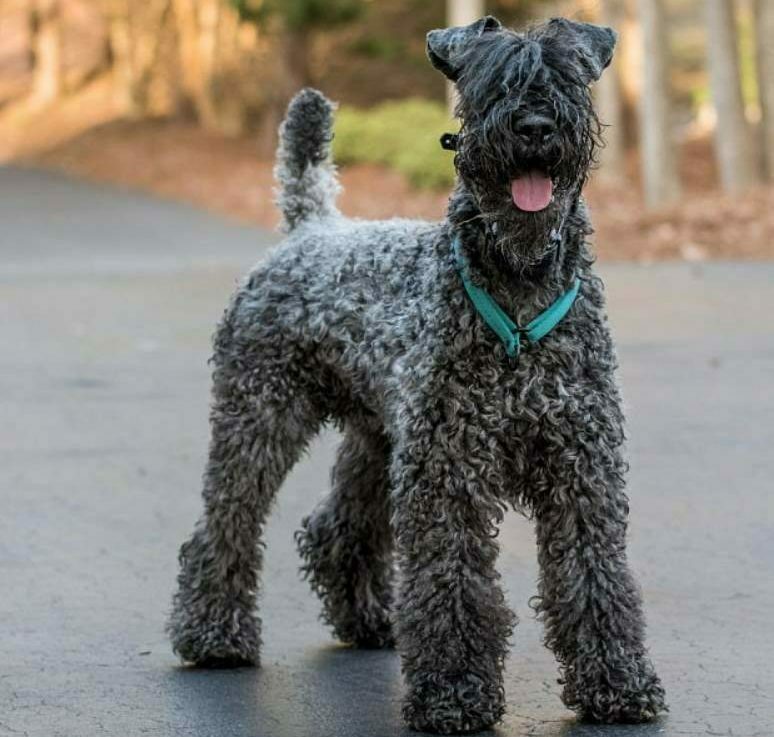
In the past, excellent hunters.
Blue terriers were actively used for hunting in the past. As a result, the dogs' fur was clipped short to make it easier for the animal to navigate through underbrush during hunts.Care and Maintenance
It’s important to note right away that keeping a Kerry Blue Terrier requires a lot of effort. With excellent health, these strong and graceful animals need regular walks. Of course, in the hustle and bustle of city life, not every owner can find 1.5 to 2 hours a day to walk their dog. It’s crucial to physically exercise the dog so that it can run and tire itself out.
The breed with a short tail loves to swim, so that should be considered if there’s a body of water nearby. If the dog lives outside of the city, providing a well-fenced area for walks will help keep your flowerbeds intact.
Caring for a dog requires certain skills. For example, a daily check of the eyes is not complicated. You just need to ensure that there’s no white discharge in the corners of the eyes, which is often caused by dust. If it appears, you can rinse the dog’s inflamed eyes with warm water or a light tea solution.
Ear inspections should be conducted at least once a week. By six months, you need to form the correct positioning and curvature of the ears, which can be done by using tape to achieve the ideal shape. Breeders usually provide detailed guidance on this in the kennel.
Teeth are the dog’s “tools,” and a caring owner always pays attention to them. Teeth should be brushed at least once a week with special brushes and dog toothpaste. It’s best to start this process when the pet is a puppy, so that when they are an adult, they will respond calmly to the procedure. Never use human toothpaste!
Nails should be trimmed at least twice a month. Both mechanical clippers and special electric grinders can be used. It’s important not to let the nails grow too long, as this will cause pain when the dog moves and can lead to foot deformities. Remember, modern dogs cannot naturally wear down their nails as wild relatives do, since pets spend less time outdoors.In addition to nail care, regularly check the pads on the paws and trim the hair between them. If this procedure isn’t done regularly, dirt can become trapped and injure the dog’s toes.The Kerry Blue Terrier’s coat requires the most care. To maintain a presentable appearance, the dog needs to be washed, trimmed, and brushed.Washing typically takes place every three weeks. However, if your proud Irish dog gets very dirty during a walk, it can be done more frequently as needed.Brushing should never be done on dirty fur. It is usually done right after washing or during the drying process. Brushes with fine bristles not only groom the dog’s appearance but also massage its skin.Tip: To avoid strong dirt accumulation in rainy weather or during autumn muck, it’s better to dress your dog in a special su
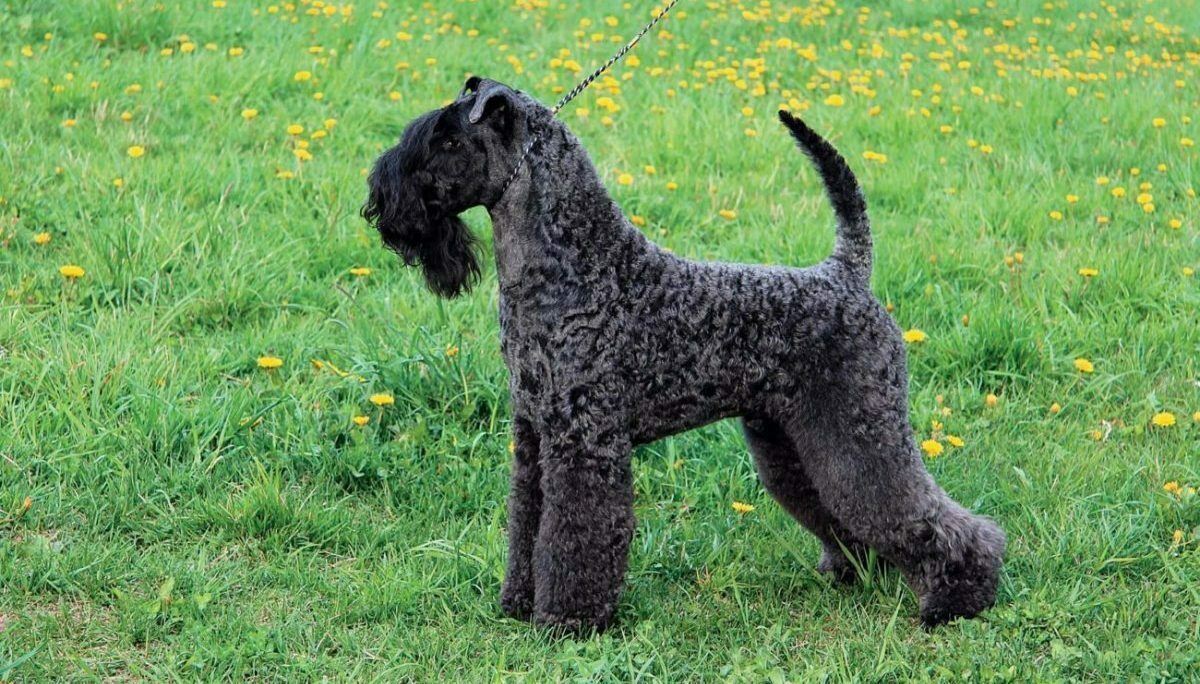
Universal dog
Kerry Blue Terriers are a versatile breed that helped farmers in Southern Ireland with house protection, looking after children, herding large livestock, and dealing with rat infestations.Training and Education
Hunters with blue fur have always lived for humans. Unlike other terriers from the Emerald Isle, the Kerry Blue is more docile in training.
It’s best to start training from the very first days of the animal’s arrival in your home. Initially, the puppy should get used to its designated place. It should be the safest spot in the entire apartment for the animal. Each time the puppy approaches its spot, quietly say the command “place” so it remembers it faster. Even when the dog falls asleep away from its spot, gently move it to its designated area. At the same time, you can train the puppy to respond to its name.
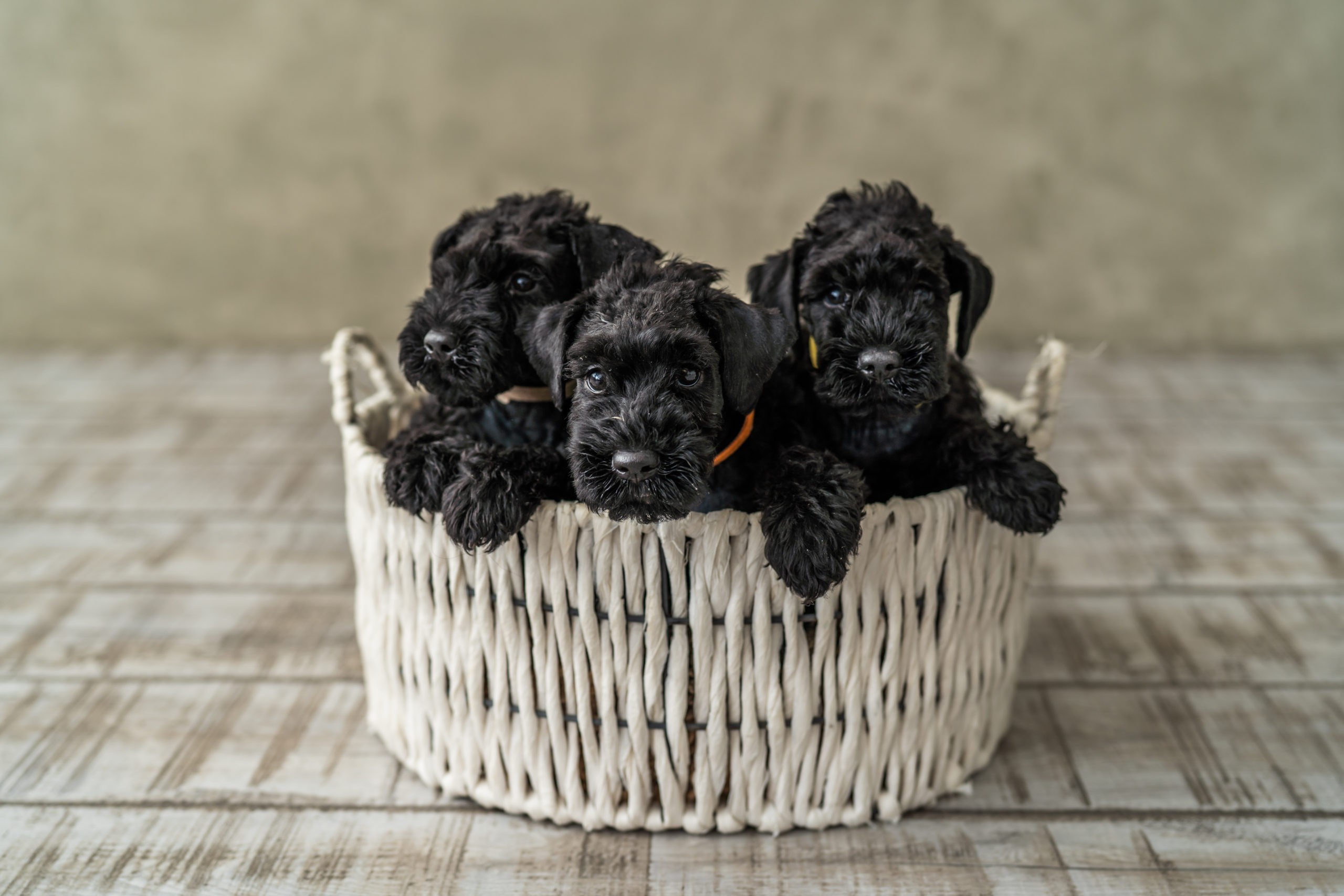
Once all vaccinations are completed and the dog can go out for walks, your blue (though still black at this stage) puppy should be accustomed to wearing a collar and leash by this time. Keep in mind that you need to gradually introduce your dog to a muzzle, as this is required for keeping dogs in urban areas.
During walks, utilize the dog’s mobility. Alternate between play and practicing commands. As an owner, you should be prepared for a bit of “stubbornness” from your dog. It’s not worth yelling or scolding. Encouragement and praise yield far better results. In the beginning, bring along the dog’s favorite treats to “lessons” and reward it for each successful repetition of a new command. As the commands become more complex and the dog grows older, it’s better to replace treats with the dog’s favorite toy. With a Kerry Blue Terrier, you can only come to an agreement, but you cannot force it to obey.
Don’t overexert your dog during training. Fifteen minutes is enough for it to lose interest. Also, it’s better not to try to teach everything at once. Gradually but persistently transition from simple commands to more complex ones.
It is very important to train your dog not to take food from strangers or off the ground. This could save your pet’s life.If you want to achieve perfect results, we recommend consulting professional dog trainers. There are many clubs today where you can receive quality services.However, be cautious about “specialists” who are always present online. Typically, their verbosity and various “quality guarantees” lack concrete results. Reliable sources like Zooinik offer healthy puppies with documentation and pedigree.
Harlequin
In the 19th century, the breed was called the Harlequin Terrier, primarily because some of the terriers had a reddish-blue coat color.
How to Choose a Puppy
Do you want to buy a Kerry Blue Terrier puppy? Then you may need to be patient and wait your turn. This breed is not widely available in Russia and is considered quite rare. If possible, you can bring a puppy from abroad, but in any case, several conditions must be met.
First, carefully study all the breed characteristics. Think about whether you are ready to take care of a new full-fledged family member for the next 15 years or more. It would be very helpful to talk to dog owners on forums online or visit a breed kennel.
If you’ve made your decision, follow the basic recommendations for choosing a puppy. An active, brave, non-aggressive puppy with clear eyes and well-groomed fur embodies the most vivid traits of a healthy pup. It is very important to check the documents not only for your little friend but also for the parents.
Second, communicate with the breeder and ask all the questions you have “up front.” We recommend avoiding a purchase if you feel pressured to finalize the deal or if any documents for the dog are missing.
Third, while the presence of a microchip, documents, and the breeder’s integrity are secondary, the main indicator of a healthy dog is its cold, wet black nose and cheerful demeanor. From the best kennels in the country-find your pet on Zooneek.
Health and Diseases
Irish Water Spaniels are known for their robust health. The climate of their homeland has provided the breed with everything necessary to feel comfortable in any weather conditions.
To prevent common diseases, timely vaccination of the puppy is essential. The vaccination schedule will be provided by the breeder or veterinarian; it is crucial to follow it rigorously. The first vaccination must occur at 8 weeks of age, and the dog must receive a deworming treatment before the first vaccination. It is also important to note that allergic reactions to vaccinations are possible.
Breed-related diseases are monitored through genetic testing. This includes hip dysplasia, a severe condition that deforms the hip joint, leading to limping and, eventually, immobility in the dog. While having such a test is not mandatory, dogs that are carriers are not recommended for breeding.
Keratosis is a skin condition affecting the paws, where callous growths form on the pads. This hereditary condition is quite unpleasant for both dogs and their owners.
Some corneal diseases, such as cataracts, are encountered in older animals. Occasionally, Kerry Blues may be diagnosed with eyelid entropion or conjunctivitis. Genetic diseases are relatively rare in this breed.
Содержание
-
1. Описание породы
-
2. Внешний вид
- 2.1 Голова
- 2.2 Морда
- 2.3 Уши
- 2.4 Глаза
- 2.5 Зубы
- 2.6 Корпус
- 2.7 Конечности
- 2.8 Хвост
- 2.9 Шерсть
- 2.10 Окрас
-
3. Характер
-
4. Содержание и уход
-
5. Дрессировка и обучение
-
6. Как выбрать котенка
-
7. Здоровье и болезни







Comments
Only registered users can leave reviews.
Enter