
Irish Wolfhound




Warning: Illegal string offset 'label' in /home/panda/sites/zoonika/wp-content/themes/zoonika/template-parts/animals/animals-param-item.php on line 32
Ð


Breed Description
Ireland has given the world not only wonderful whiskey, emerald hills, and valleys but also several remarkable dog breeds. The largest and perhaps the oldest of these is the majestic Irish Wolfhound, the pride of the Emerald Isle.
Firstly, it’s important to clarify that among their ancestors, there is evidently bloodline from dogs that were taken from ancient Egypt. The earliest written references to large Irish dogs date back to 391 AD. These dogs were enormous, powerful, and varied not only in color but also in coat length. They were transported to Rome, where they participated in gladiatorial battles and were showcased in fights against lions-all for the entertainment of the crowd.
In their homeland, they were used for entirely different purposes. The Celts, who settled the Emerald Isle, valued size, speed, and strength in their dogs above all else and paid little attention to the appearance of their four-legged companions.
These colossal dogs enjoyed unprecedented popularity among the local nobility in the 16th and 17th centuries. They were considered a valuable gift, usually presented as several puppies, each wearing a collar adorned with precious gems. The number of wolfhounds in a pack indicated their owner’s status. Wolfhounds were most commonly employed for hunting deer, boars, and wolves. It was forbidden to export these giants outside of Ireland.
Peasants and farmers could not afford to keep such beasts. Moreover, they were not allowed to hunt large game; they relied on terriers for hunting foxes, martens, and rats.
The effectiveness of wolfhounds was so great that by the 18th century, nearly all wolves had been exterminated, and the dogs were then used in combat. Their strength was such that an adult dog could easily unseat an armed rider. Naturally, facing an enraged animal “one-on-one” was beyond the capabilities of that rider.In 1885, the first club for wolfhound enthusiasts was established. It was founded by Captain Cromwell, who effectively gave this breed a second life. The main goal of the club’s members was to support the working qualities of the dog. Not appearance, but the ability to quickly track down and eliminate a wolf was paramount. Since 1886, the “Graham Transitional Shield” has been awarded annually to the owner of the club’s best wolfhound. The Irish take such pride in their breed that images of these dogs appear not only on stamps but even on small coins. To this day, these dogs serve in the army and in the guard of crowned personalities.
Appearance
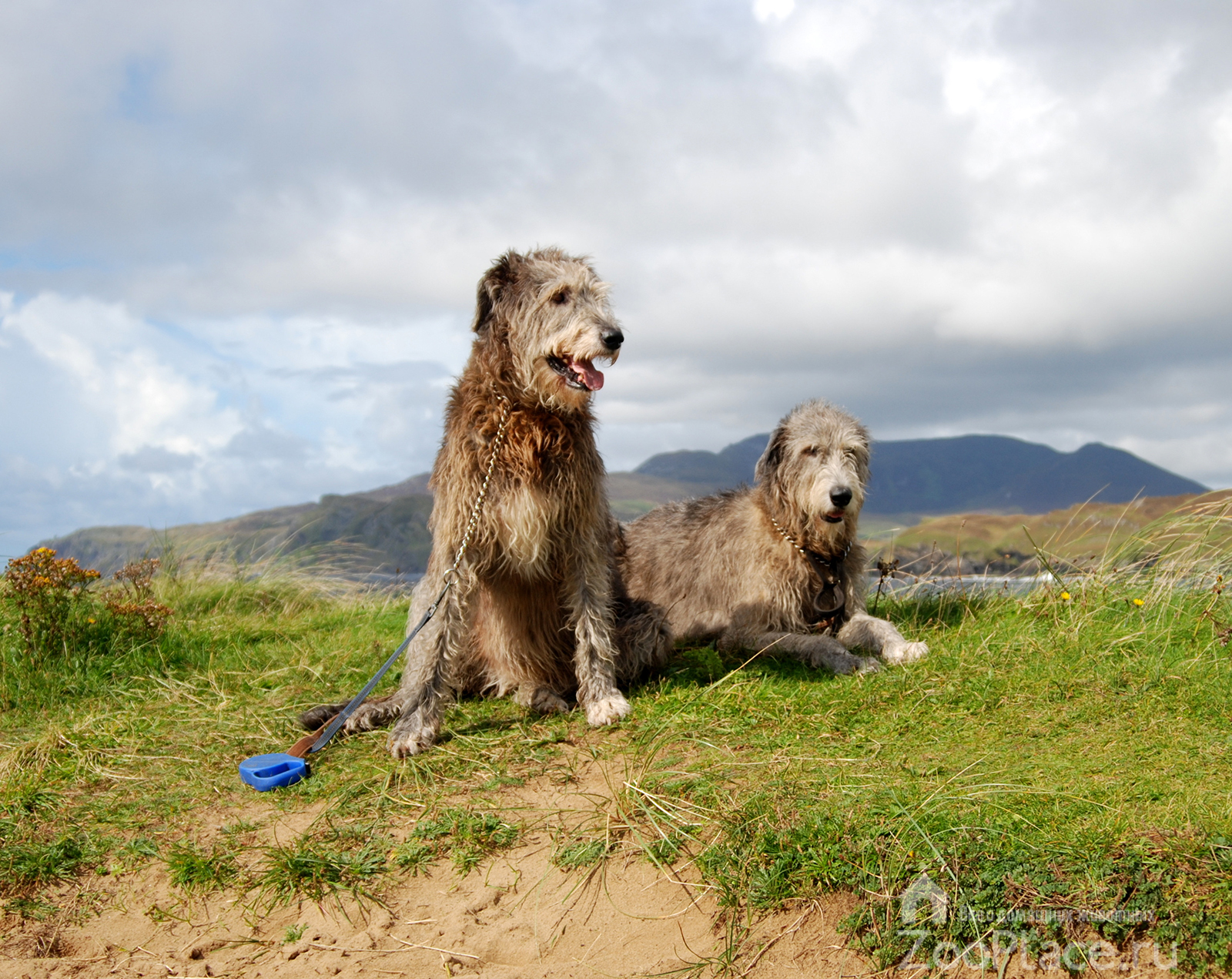
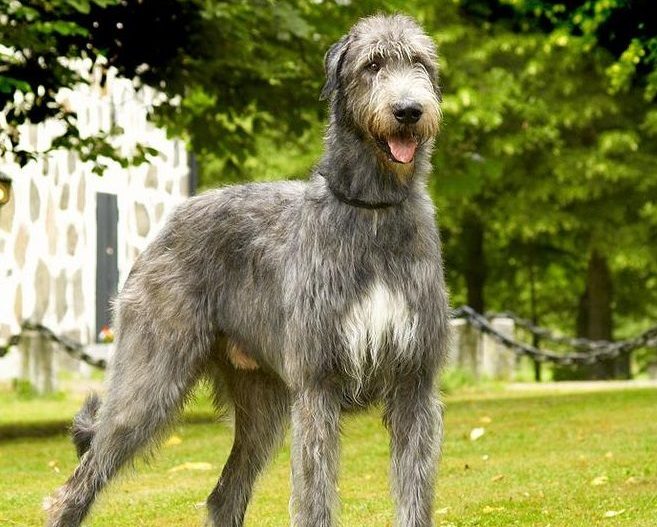
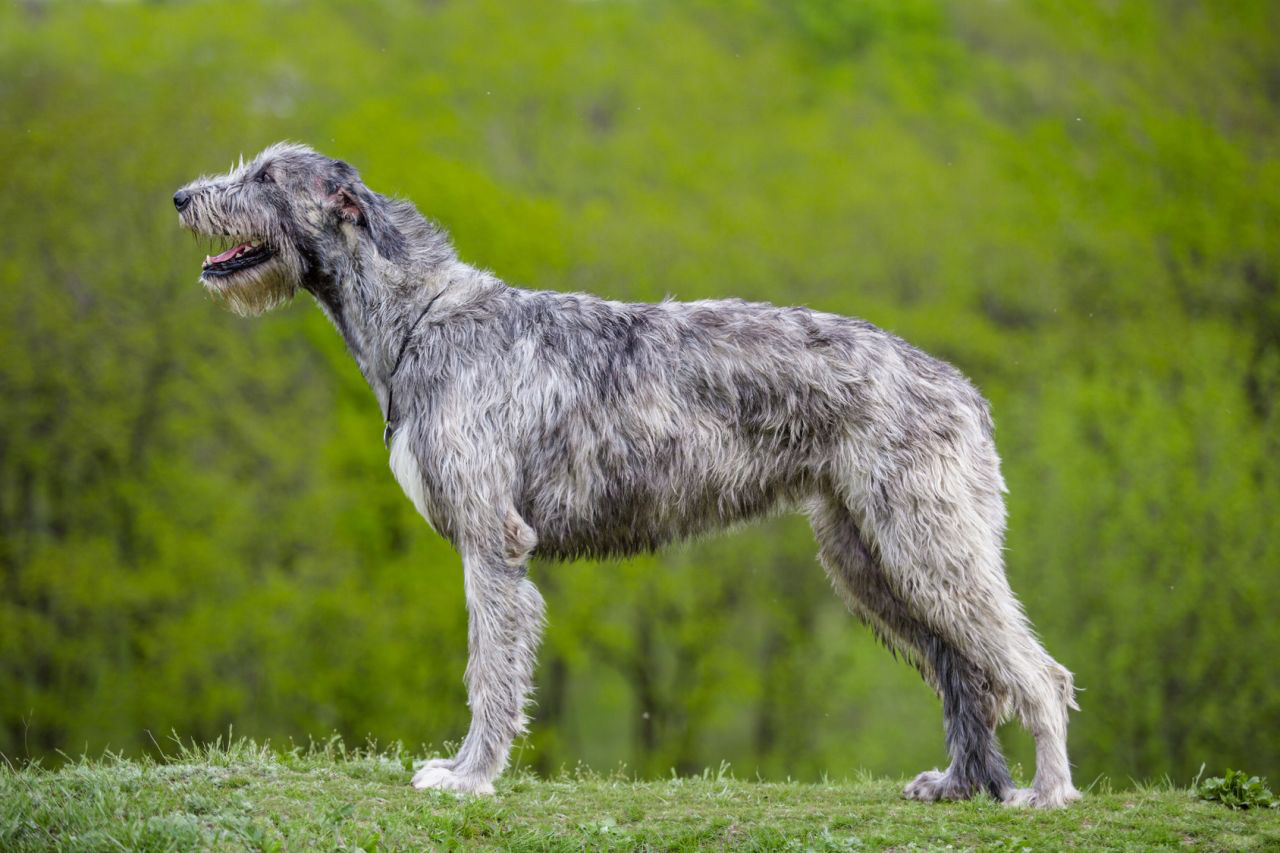
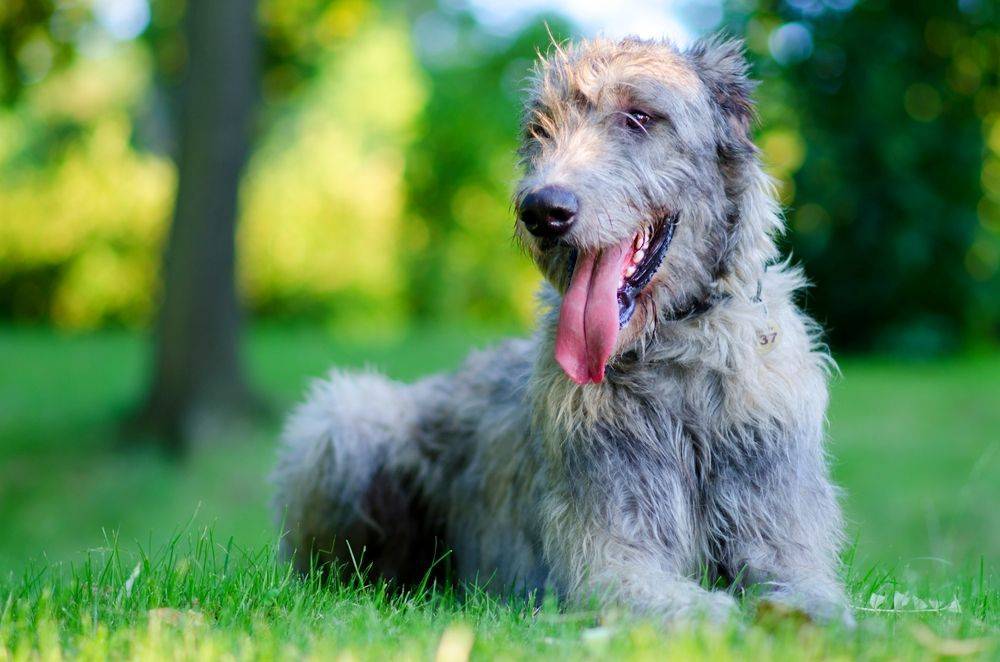
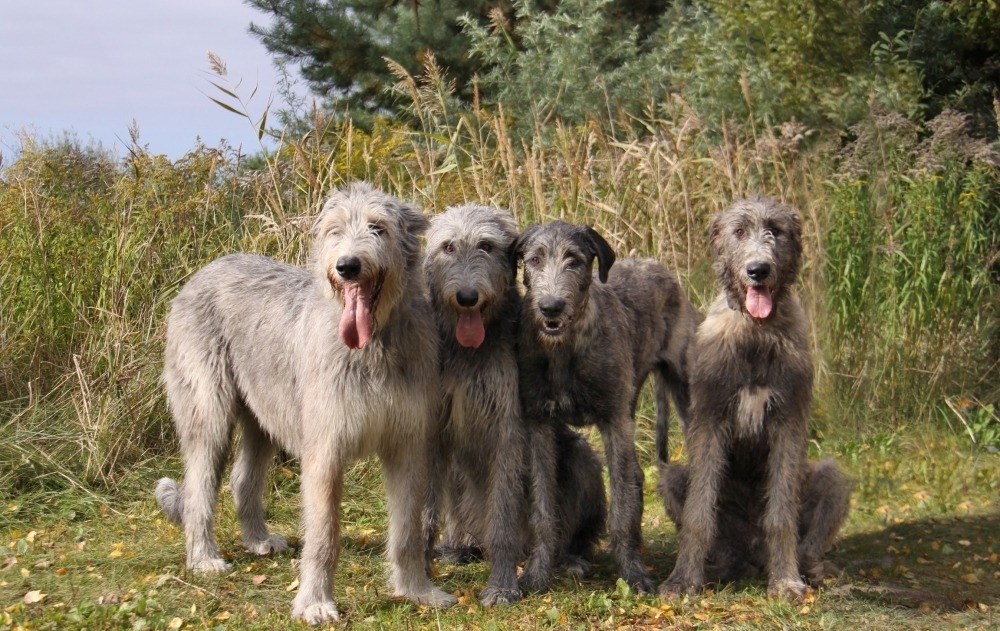
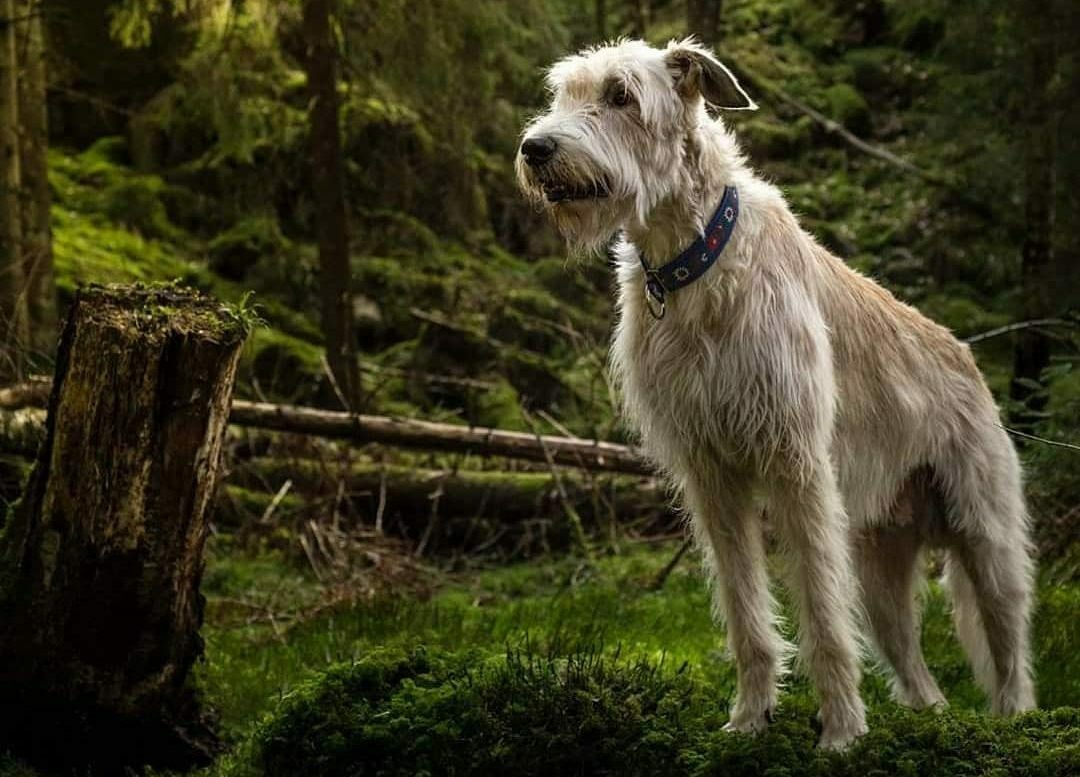
“The face is terrifying, but they are kind inside” – words from a famous song perfectly reflect the looks and character of Irish Wolfhounds. The size of adult dogs is both impressive and awe-inspiring. With a height of 80 to 86 cm and weighing at least 55 kg, Irish Wolfhounds are listed in the Guinness Book of Records as one of the largest dog breeds on Earth. Despite such formidable characteristics and their hunting purpose, the temperament of these Irish dogs is very balanced and gentle. Unfortunately, they can’t be called long-lived: they live no more than 10 years.
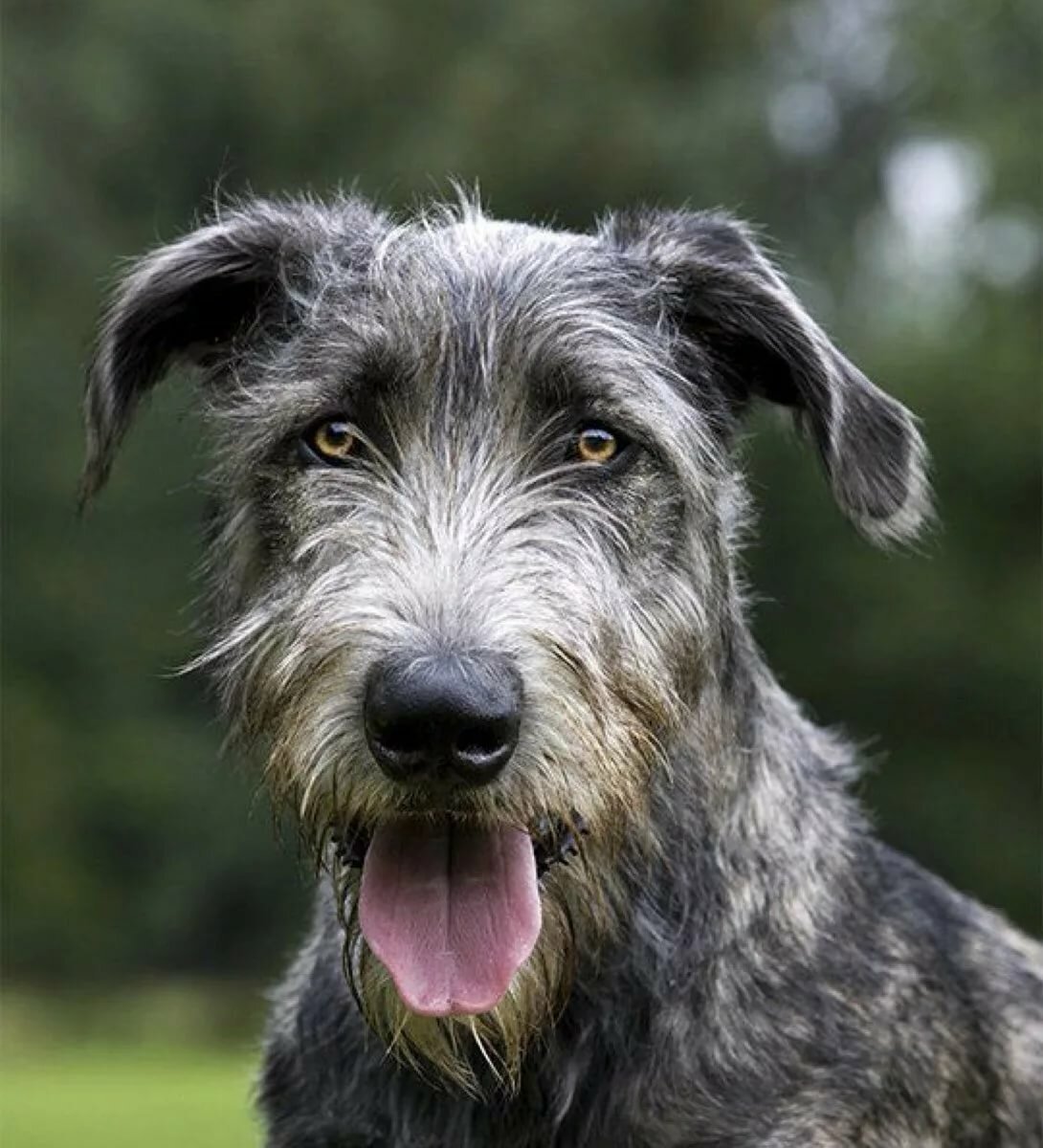
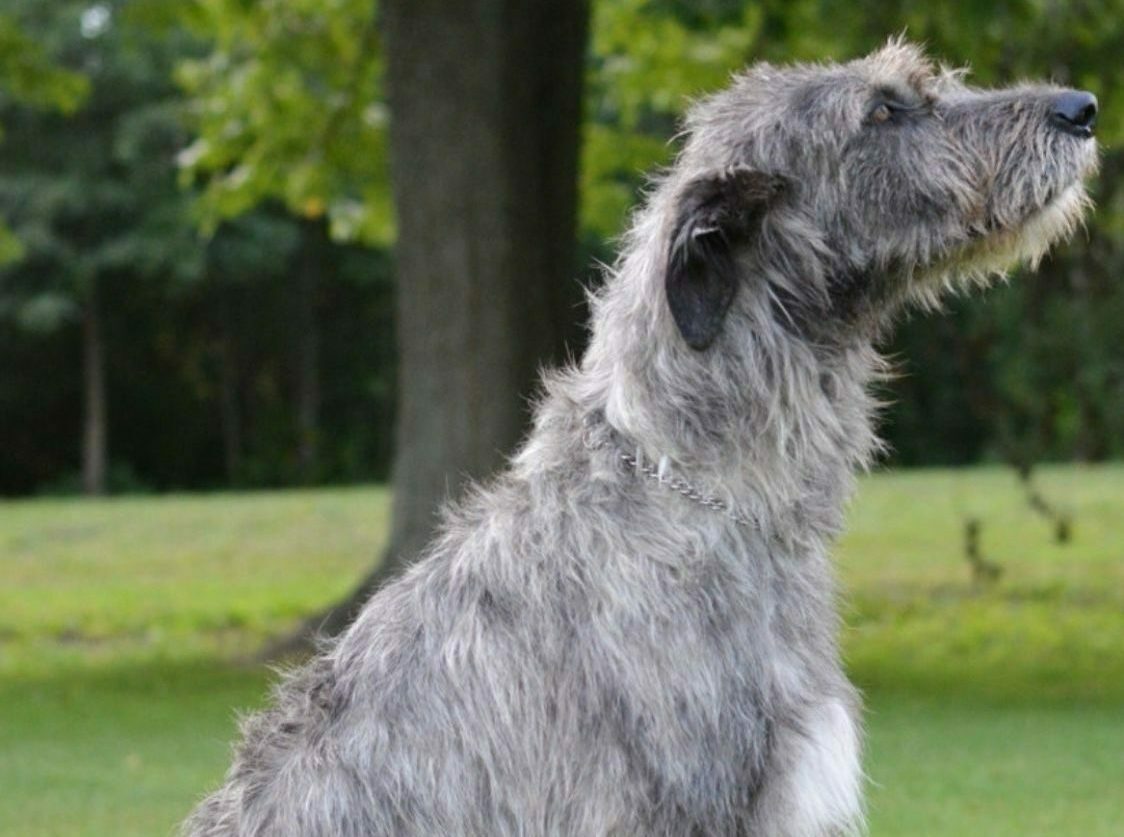
The coarse coat with a beard on the muzzle, their agility, and at the same time, immense power – these are the distinctive features of these large dogs. They do not appear as massive as Great Danes. Although the Irish Wolfhound should resemble a deerhound, he is indeed more powerful than his Scottish counterpart.
What, then, is the beauty of the breed? Perhaps, this question can only be answered after having one of these dogs by your side. An extraordinary magnetism emanates from somewhere deep within the dog. A proud gait, a regal posture, a wise and understanding gaze – this is its beauty.
An astonishing fact: it has been noted that a person with malicious intentions sees a ruthless monster in the Irish Wolfhound, while a kind-hearted person first notices its joyful smile and the gentle sparkle in its eyes.


Отличительные черты

Голова

Морда

Уши

Глаза

Зубы

Корпус

Конечности

Хвост

Шерсть

Окрас
Character
The standard states that at home, these dogs are gentle and mild-mannered, yet fearless in battle, like a lion. This is essentially true.
To elaborate on the temperament of the Irish Wolfhound, it is entirely fair to note its tenderness towards its family. The dog reserves its leadership qualities for hunting, while at home, it acts as a nurturing caregiver, even with small children.
It is surprising that such a colossal dog can adapt even in a city. However, in this case, it will require walking much more frequently and for longer periods. There will also be more challenges in care. After all, keeping such a dog under control in an extreme situation is no small feat. At home, the dog is virtually trouble-free. Owners unanimously claim that there is no more peace-loving dog than the Irish Wolfhound.
Aggression in daily life is not characteristic of the St. Patrick’s Wolfhounds. Breeders and trainers strive to eradicate this trait in the animals. Otherwise, the dog poses a real threat to its surroundings. Statistics show there are only a few cases where such a dog has attacked a person. In one case, the dog was simply mortally ill, which triggered the aggression. Aggressive dogs are not allowed to breed. There are ongoing debates among specialists about euthanizing animals that attack humans. Moreover, excessive timidity or nervousness are also seen as faults that need to be eliminated.
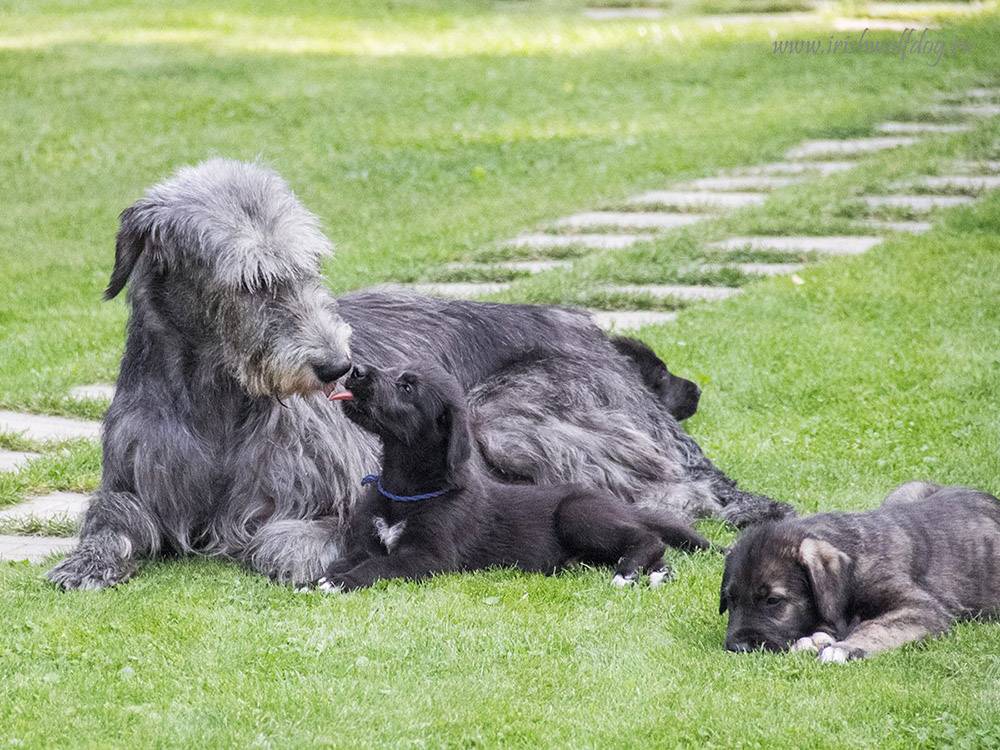
Cats, small breed dogs, and birds are family for the Irish Wolfhound, not prey. The tenderness with which this massive caregiver interacts with small children is astonishing. There is a legend about a nobleman who returned home and saw his wolfhound covered in blood. Without understanding the situation, he killed the dog with a sword, thinking it had eaten his young daughter. Distressed, he rushed to the backyard where he found a torn-apart wolf and his unharmed heir. Only then did the wealthy man realize that his loyal dog had saved his daughter’s life by killing the wolf. The blood on the dog’s fur was evidence of the struggle. After that, the Irish Wolfhound was buried with honors, and a monument was placed at its grave.
It is very important for the dog to feel reciprocated affection. By giving tenderness to its surroundings, the animal expects to receive back a piece of warmth from its owner. A calm environment enhances the dog’s positive traits. The opposite effect can occur if the house is not peaceful.
Guard of Buckingham Palace
Irish Wolfhounds have earned the approval of the Buckingham Palace and have been permanent guardians for over a century.Care and Maintenance
Let’s clarify right away that an Irish Wolfhound can live in a city apartment, but a country house is far preferable, both for the dog and the owners.
Does the Irish require a lot of care? Yes, indeed, the breed demands a tender approach.
Firstly, the bowls for food and water should be on special stands so the dog doesn’t have to bend down too low to reach its food. After eating, it’s best for the dog to rest a bit, as activity right after meals can often lead to bloating. Such a large animal shouldn’t lie on a hard floor, as it can hurt its joints. Ideally, the dog should have its own soft bed. You should be prepared for the “little one” to sit with you on the couch and enjoy watching your favorite series.
Looking at such a giant, one immediately wonders how much it eats in a day. Owners say it can be up to 1 kg of dry food daily. Additionally, it’s better to remove uneaten food after meals. Dogs shouldn’t stretch their stomachs and overeat.
Keep in mind that such a large dog won’t be searching for crumbs under the dining table. Its height allows it to take whatever it deems necessary straight from the table. Much depends on how the dog has been raised. It’s important to pay special attention to such nuances when socializing and training a puppy.
Another important issue concerns toilet habits. These concerns aren’t unfounded. If a terrier puppy makes a mess outside the designated area in your apartment, it likely won’t cause major problems. However, if a growing Wolfhound commits such an act, the consequences can be quite substantial.What kind of care does the coat of an Irish Wolfhound require? First, it’s worth noting that its fur signals the internal state of the dog. Typically, dry and brittle fur indicates parasites in the digestive tract or an improperly balanced diet lacking fats. Dogs that rarely go for walks and spend most of their time indoors usually have much shorter and less dense fur compared to those that are frequently outside. To maintain the coat properly, it should be brushed as often as possible, ideally with stiff-bristled brushes.As previously mentioned, teeth are essential tools for dogs. They need to be cleaned at least once a week. Specialized brushes can help prevent tartar buildup. Ears should be cleaned at the first signs of dirt or wax. Inspect them at least once a week and ensure that no water or ticks get inside during the summer.Eyes, like all dogs, require close attent
The main character
Representatives of this breed are often featured in various historical films. In battle scenes, Irish wolfhounds would pull riders off their horses.Training and Education
Very intelligent dogs easily understand their owner’s demands. Activity does not hinder them at all. On the contrary, regular physical exercise not only improves their physical condition but also helps stabilize their mental health. The greatest interest for wolfhounds from the Emerald Isle lies in coursing. This is a unique type of dog sport where a pack of dogs chases a lure. During this, the speed of the greyhounds can reach 60 km/h! Despite their tolerance for domestic cats, your quiet one might still chase a passing cat outdoors.
At home, you should first familiarize the puppy with its designated spot. A large dog will sit on any available stool regardless. However, by training the puppy to its place, you will be able to sleep in your own bed instead of sharing it with your four-legged companion.
The dog will certainly not follow commands at a high speed. After 7-10 repetitions, the Irish wolfhound will make it clear that it is doing so very reluctantly. It wouldn’t hurt to teach your dog the command “quieter” if you live in a city. After all, even a one-year-old puppy can growl like an adult lion.
It’s best if a professional dog trainer takes care of the training for such a dog. Each mistake made can lead to unpredictable consequences.
If you decide to train the dog yourself, remember that you cannot force it to do something. Monotonous exercises will not yield the desired results either. The greatest success will come from alternating training exercises with your puppy’s favorite games. Until the age of 10-12 months, treats usually serve as the main motivation. Reward every small success of the puppy. Praise, a gentle voice, and treats will help achieve the desired results quickly. It is forbidden to shout at or hit your dog!
Importantly, do not practice commands that could provoke irritation or aggression in the dog. No one needs sad consequences. For these large animals, it is much more beneficial to reliably execute commands like “come”, “no”, “stay”, “beside”, “wait”, “walk”, and similar ones. And these giants also love to fetch the ball. With pedigree at Zoonik – choose the puppy of your dreams.
Ancient breed
It is reliably known that dogs arrived in England in 300 BC on Celtic ships. Mastiffs were used in dog fights and for hunting wild animals.
How to Choose a Puppy
First, note that the Irish Wolfhound is a rather rare breed not only in our country but globally as well. Therefore, a puppy of this breed cannot be inexpensive. However, the high price is not the main goal of breeders. The Irish Wolfhound is a dog for the soul.
Before making a choice, first assess your capabilities. Caring for such an animal requires a serious financial investment. If your living conditions and financial situation allow for this breed, it’s best to begin by studying the standards and genuine reviews from owners of these dogs on forums online.
Carefully review the offers from kennels in our country. There aren’t many of them, to be honest. Choosing a kennel does not guarantee that there will be available puppies, and you may have to wait in line for one.
When you start selecting your Irish Wolfhound, do not pick it up by the scruff. Nervousness and cowardice are bad signs; such a puppy is not worth acquiring. A healthy puppy should show interest in its surroundings, be cheerful and active. Generally, puppies already have all the necessary vaccinations recorded in their veterinary passport. Microchipping is also done before purchase. Reputable sources offer healthy puppies with documentation and pedigree.
Health and Illnesses
Unfortunately, the giant size of the Irish Wolfhound comes with health issues. As noted, this breed is not classified among the long-lived.
In addition to general illnesses that any animal may experience, this breed is prone to specific ailments. The most common and troublesome are various issues related to the musculoskeletal system and spine.
Hip dysplasia is a condition where the joint develops abnormally, leading to limping and eventually complete loss of mobility.
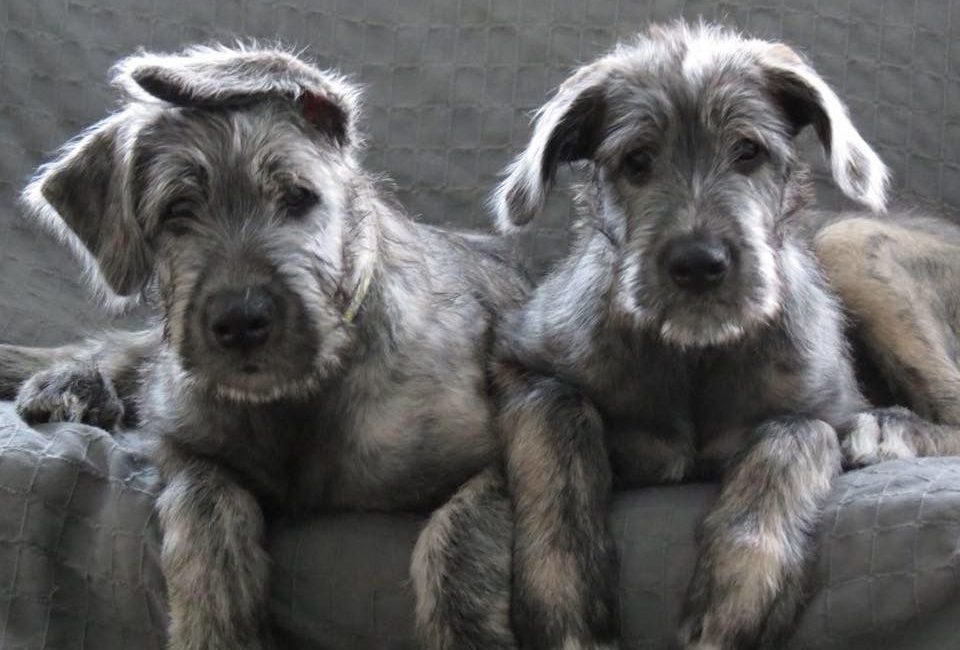
Knee joint dislocations are often the result of improper handling of the puppy. Irish Terriers mature very late, remaining “puppies” until around two years old. This means their joints and muscle structure are not fully developed yet. Therefore, it is highly discouraged for dogs under 12 months to jump from heights, and for those under 10 months to descend stairs independently. They should use an elevator, while they can ascend by themselves.
Often, gastric torsion occurs if the dog runs around immediately after eating without resting.
As mentioned, a dog’s joints suffer from lying on hard floors. It is essential not to neglect recommendations and provide the animal with a soft bed.Back issues (osteochondrosis) are common, especially if the dog is not very active. Additionally, children should not be allowed to “ride” on the dog. While the Irish Wolfhound may not mind, serious back problems can arise later. Cataracts are more frequently seen in older dogs.
Содержание
-
1. Описание породы
-
2. Внешний вид
- 2.1 Голова
- 2.2 Морда
- 2.3 Уши
- 2.4 Глаза
- 2.5 Зубы
- 2.6 Корпус
- 2.7 Конечности
- 2.8 Хвост
- 2.9 Шерсть
- 2.10 Окрас
-
3. Характер
-
4. Содержание и уход
-
5. Дрессировка и обучение
-
6. Как выбрать котенка
-
7. Здоровье и болезни






Comments
Only registered users can leave reviews.
Enter