
Irish Soft Coated Wheaten Terrier





Warning: Illegal string offset 'label' in /home/panda/sites/zoonika/wp-content/themes/zoonika/template-parts/animals/animals-param-item.php on line 32
Ð


Breed Description
Until 1937, the Irish Soft Coated Wheaten Terrier was considered merely a variety of Irish terriers. The fact is that around 2 to 2.5 centuries ago, the inhabitants of Saint Patrick’s Island were unable to keep large dogs due to the inability to feed them, and harsh laws stated that dogs worth more than 5 pounds were a privilege of the nobility. As a result, farmers bred dogs primarily for hunting small rodents, foxes, otters, or badgers. Of course, each dog also served as a guard, protecting its owners’ property.
In each county, dogs of various colors and sizes were predominant. Almost all were successfully used in burrowing hunts, meaning their sizes were not particularly large. Irish terriers is a general term for most dogs of that time. The residents of the Emerald Isle did not find it necessary to maintain strict documentation when breeding certain dogs. Their main concern was the maintenance and improvement of the animal’s working qualities.
Due to the prevalence of specific characteristics, they gradually began to differentiate them into breeds from the 17th and 18th centuries. For example, the Kerry Blue Terrier hails from County Kerry, and the Parson Russell Terrier was created for burrowing hunts by a shepherd. However, all share common “terrier” roots.
A significant role in the formation of the Wheat Terrier was played by the suppression of the Irish Catholics by the English. These attempts led to small dogs being used in poaching expeditions. Loud and attentive, Wheaten Terriers alerted their owners to impending threats, allowing poachers to escape in time.
Thus, a group of dogs with long hair and a square silhouette emerged. Their fur was softer than that of other terriers, and in 1937, the Irish Soft Coated Wheaten Terrier was officially recognized as an independent breed by the Irish Kennel Club. The International Dog Association recognized the breed only in 1957.
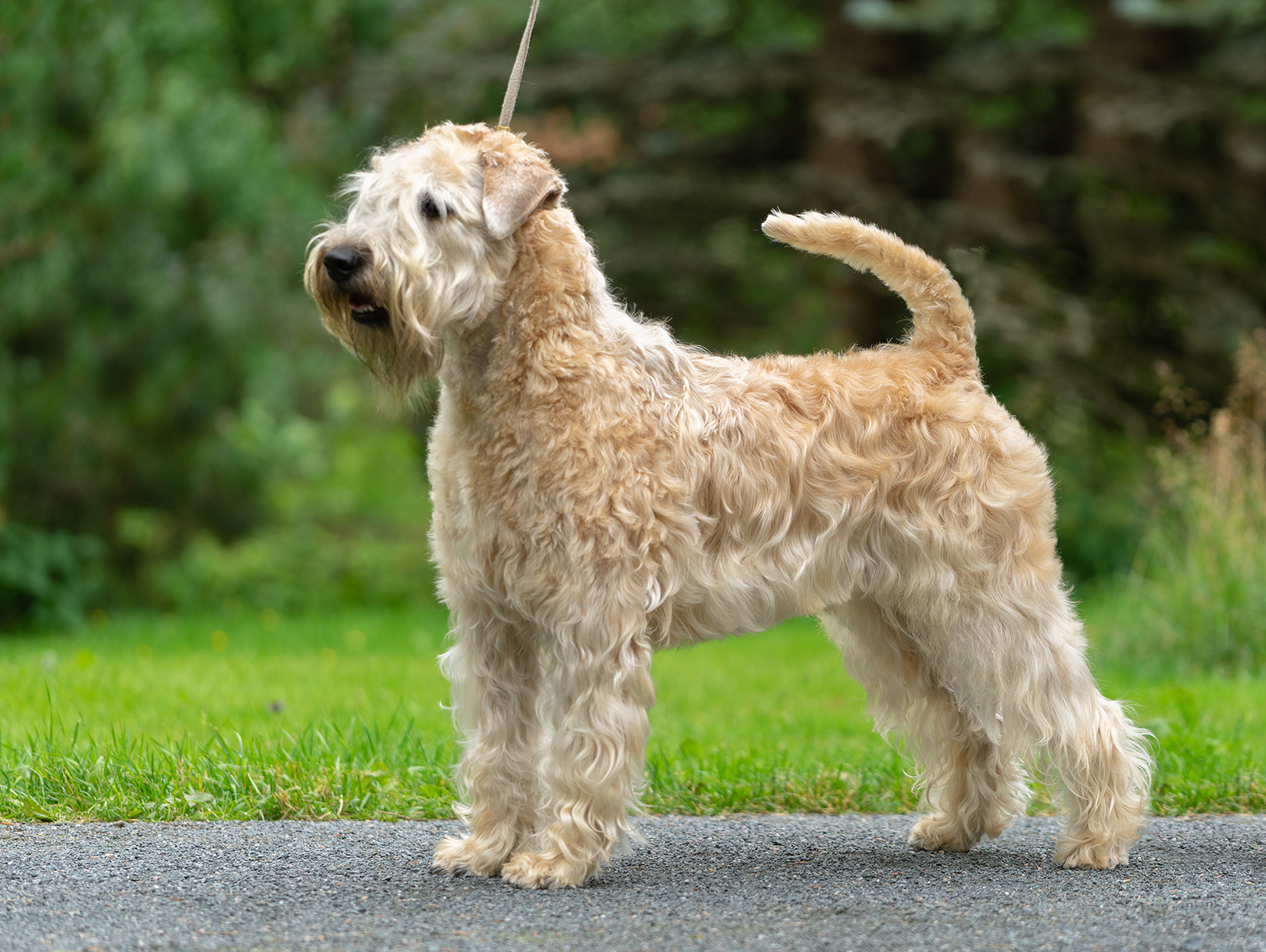
Today, the standard describes Wheaten Terriers as resilient, compact, and harmoniously built dogs, not too stocky but not long-legged either. With a height at the withers of 46 to 50 cm, Wheaten Terriers weigh between 17 to 20-21 kg.A curious fact: one of the ancestors of the Soft Coated Wheaten Terrier was often used in taverns in kitchens. Such dogs were called “spit hounds” because the short-legged Wheaten turned the spits on which large game was roasted, such as wild boars.
Appearance
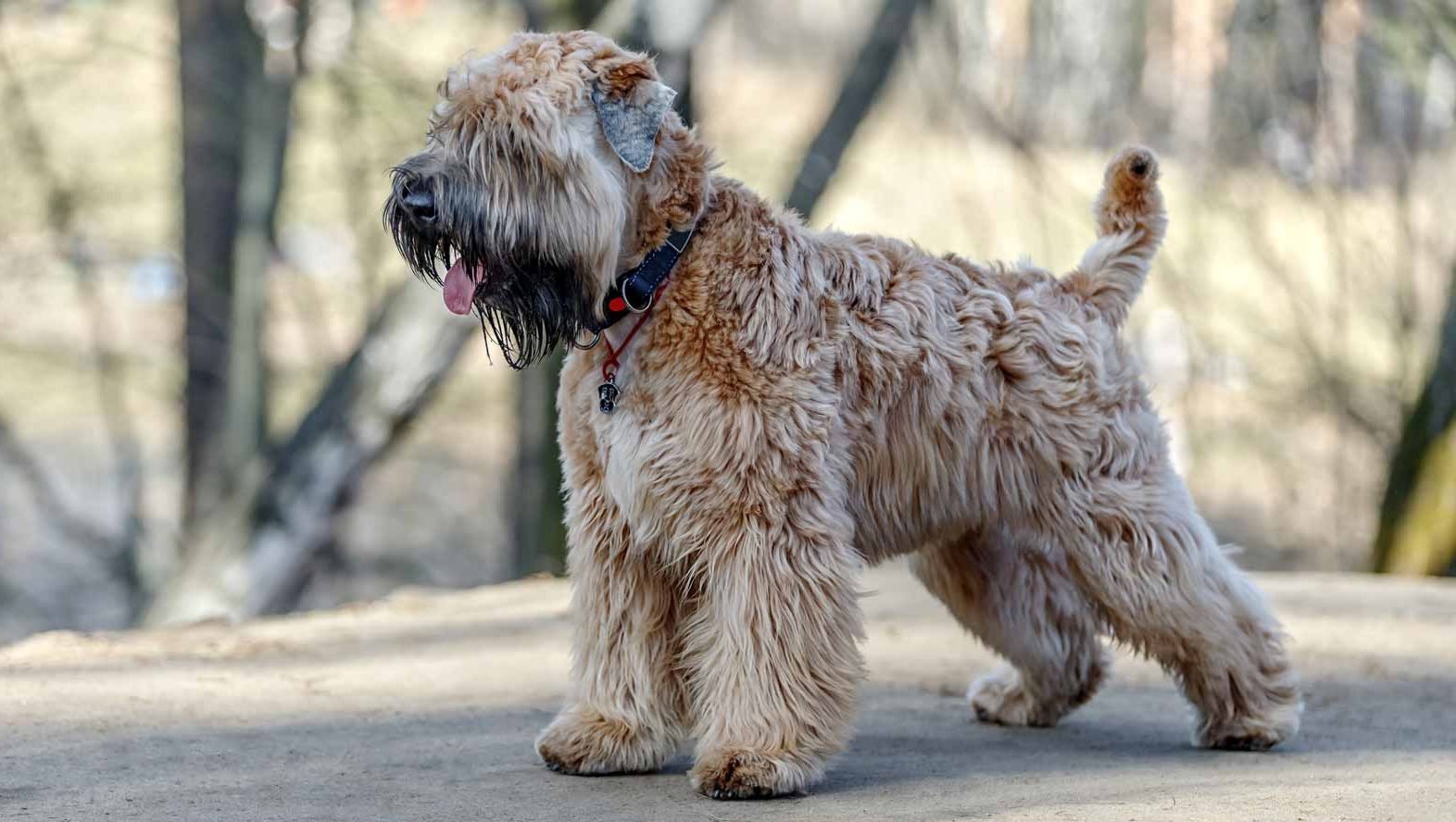
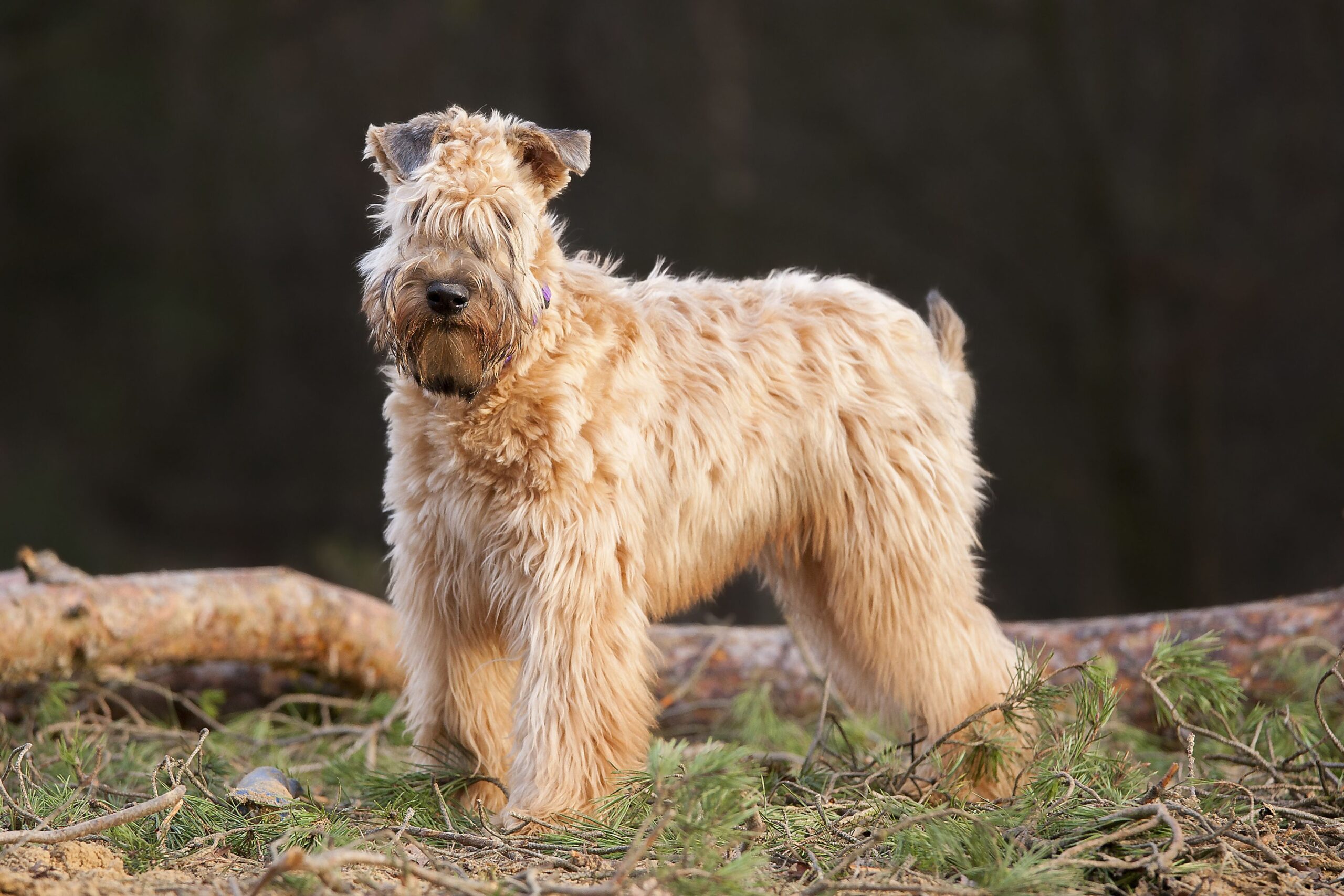
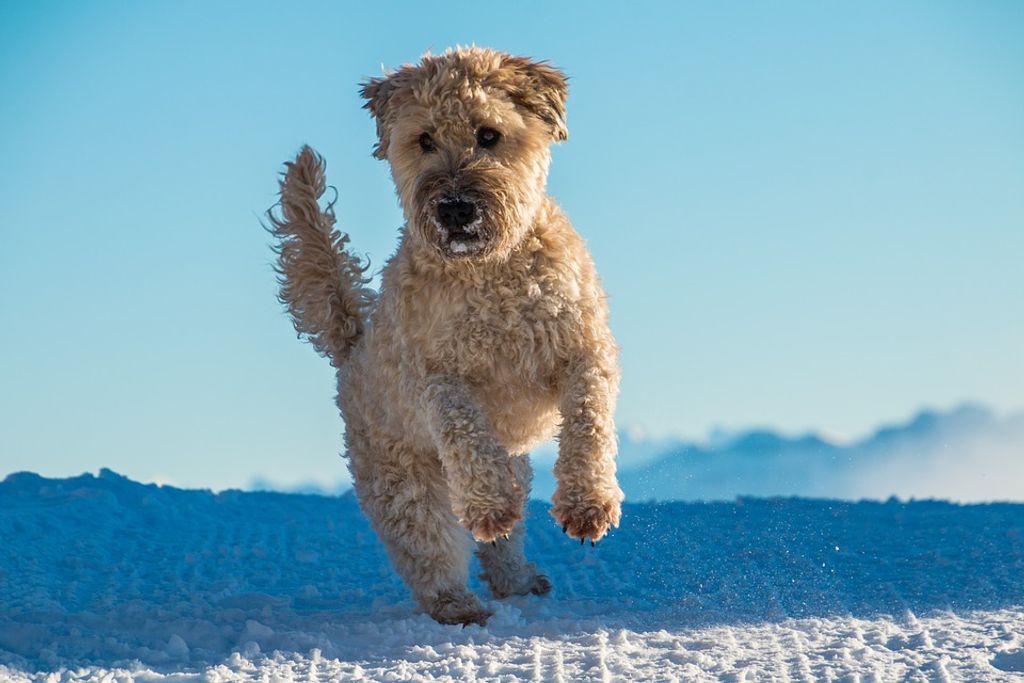
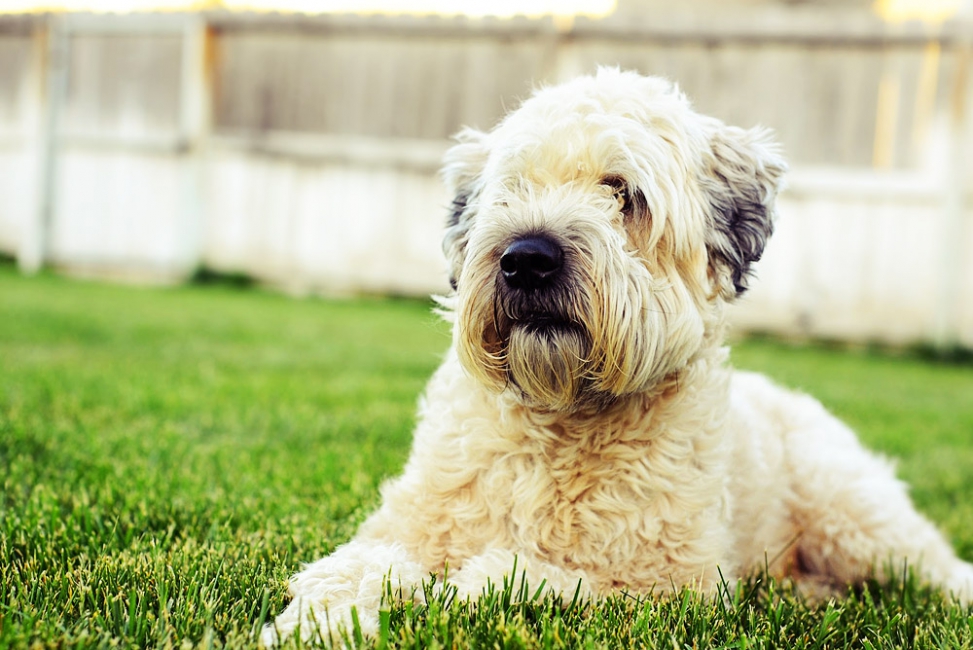
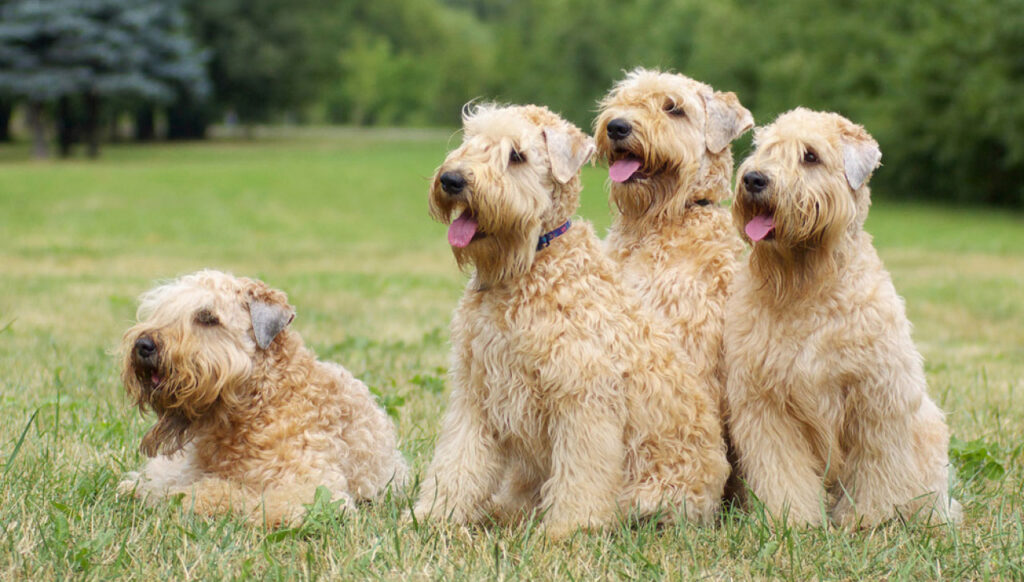
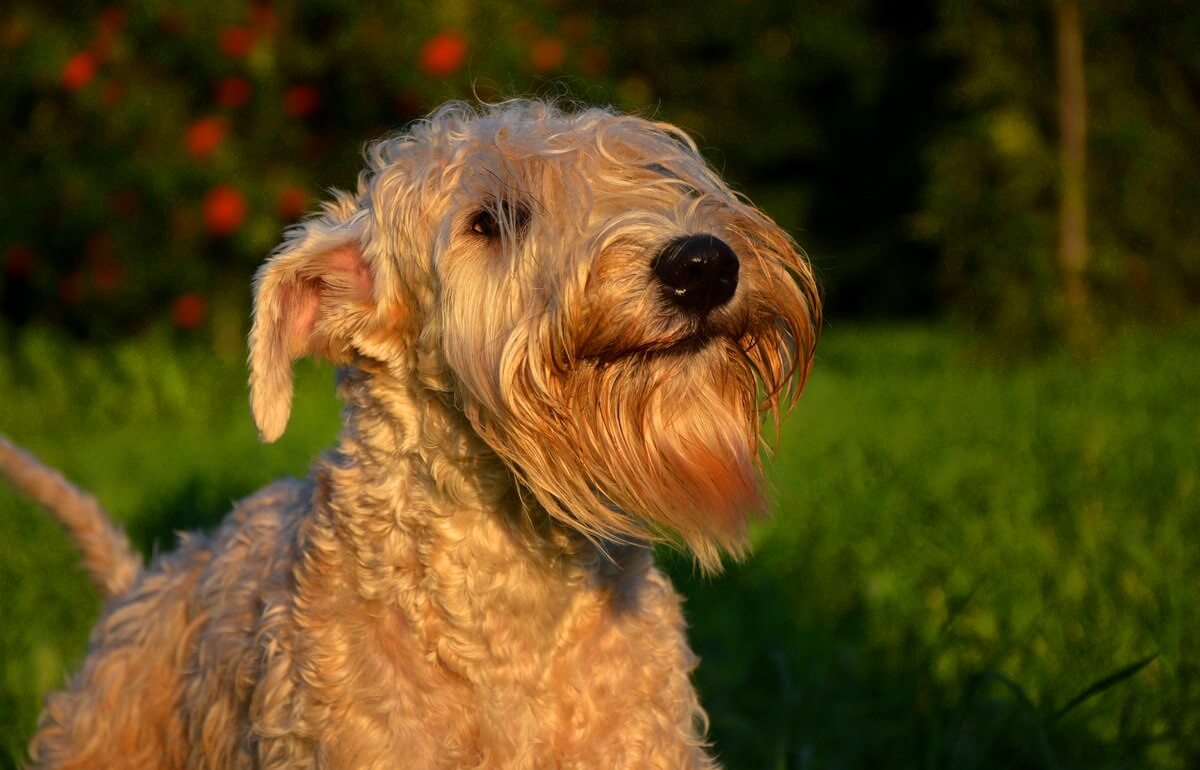
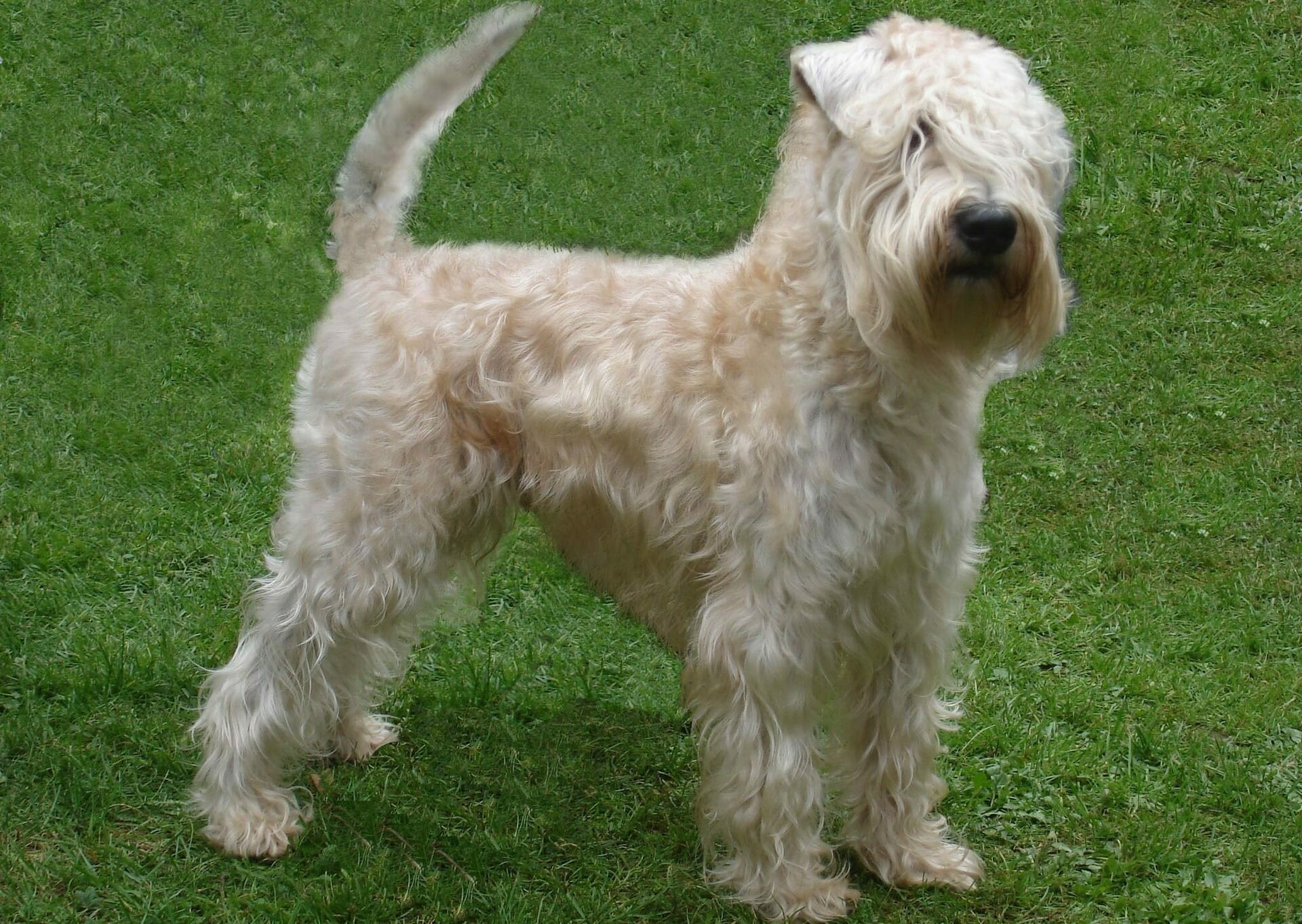
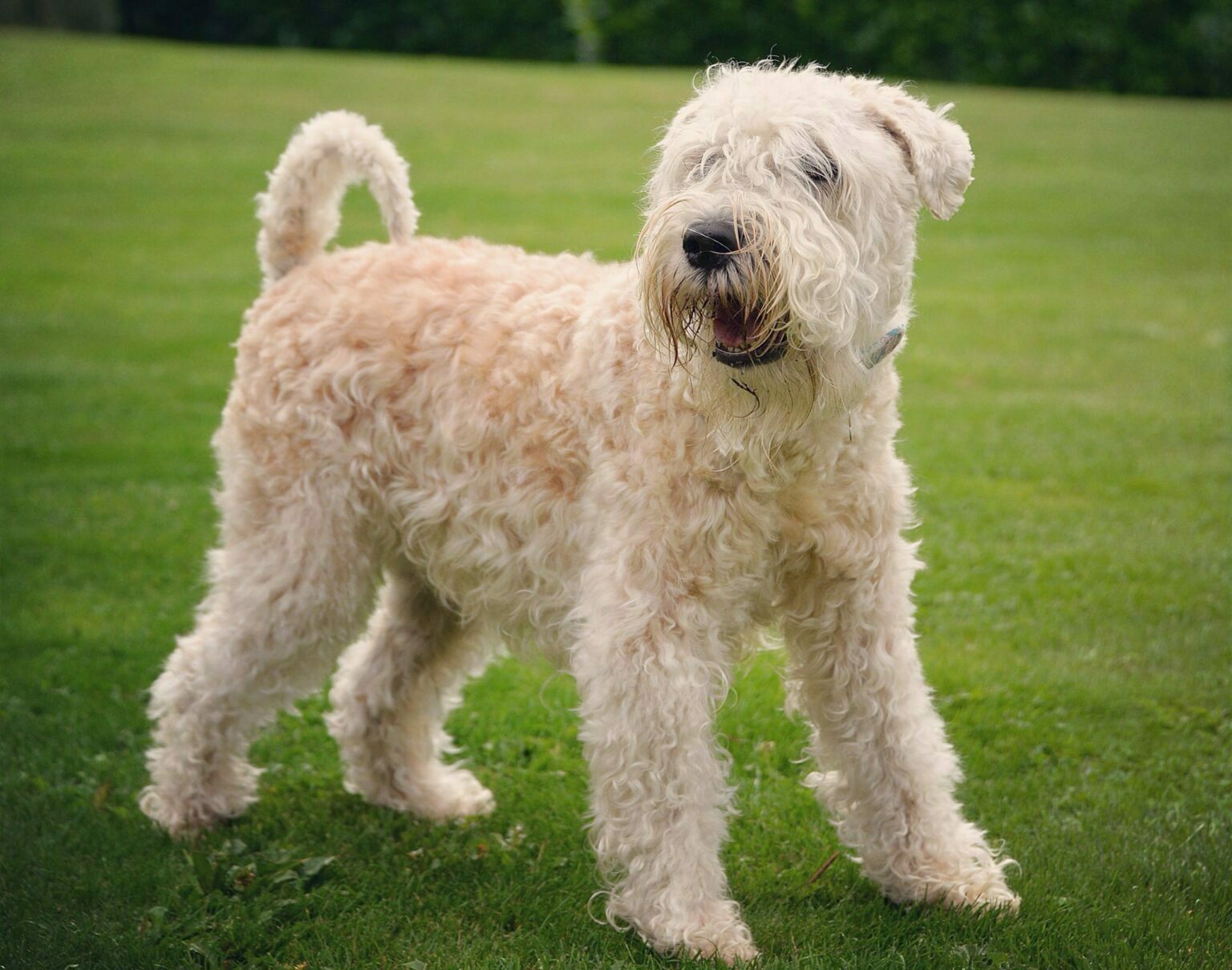
The Wheaten Terrier is a tall terrier with a distinctive appearance. Its sturdy build and square profile are highlighted by its soft, long coat and friendly demeanor. The coat does not curl but falls in waves across the dog’s body. It has a unique texture and color, which is how the breed got its name. Visually, the dogs appear very strong and active.
Modern Wheaten Terriers owe their appearance, and perhaps their existence in general, to Maureen Holmes, who made a significant contribution to the breed’s development in the 20th century. She was instrumental in promoting the grooming of these shaggy country terriers. Prior to this, the breed standard prohibited cutting or plucking the fur of Irish Wheaten Terriers.
There are two types of Wheaten Terriers: natural and trimmed. Natural-type dogs are not groomed and retain longer fur; they are more inclined to hunt and have slightly coarser hair. Trimmed Wheaten Terriers mainly come from England and the USA. They have a more squat profile, and their coat is noticeably softer in texture. These “Irish” terriers are more elegant and possess herding skills.


Отличительные черты

Голова

Морда

Уши

Глаза

Зубы

Корпус

Конечности

Хвост

Шерсть

Окрас
Character
What is the character of the wheaten terrier? This question truly concerns anyone who has seen such an adorable dog. In fact, its character closely resembles its appearance. For instance, a classic wheaten terrier with long hair is more of a rural dog, with all the implications that come with it. It is more independent, sometimes even stubborn, and very active. Trimmed wheaten terriers are noticeably “domesticated” terriers. They are better suited for living in urban apartments but remain active and cheerful. Some might argue otherwise, but long-haired terriers are indeed descendants from Ireland and are more geared for work. Up until 1970, there were competitions for holding a badger in a one-on-one match. Trimmed dogs represent the English “breeding,” then later the American version, where the requirements for animals differ somewhat.
But it is certain that Irish wheaten terriers make excellent companions, eager to adapt to household rules. The most important thing is for the dog to see a true leader by its side. Otherwise, the wheaten manipulator will try to take the top spot in the household hierarchy.
Centuries of service to humans have left their mark on these dogs’ character and behavior. Active and kind-hearted, they will make good guardians of your apartment. With their loud barking, they alert you (and your neighbors) to suspicious noises at the door.
There’s no doubt that children and a wheaten dog will get along well. Dogs love children and are ready to play with them for hours on end. Of course, it’s not advisable to leave a newborn alone with a four-legged friend, but even with small children, these dogs find common ground (and sometimes get into mischief together-how could it be otherwise?). By around 7 to 8 years old, your child can handle walking the dog. It’s just a matter of explaining basic rules for interacting with a wheaten dog and providing treats and toys for their four-legged companion. For a while, gadgets will be forgotten, and your child can take a break from the digital world.
Wheaten terriers generally do not show aggression towards strangers. They usually alert a newcomer with loud barking, indicating that approaching closer could be dangerous. If any family member is threatened, these dogs react instantly. Fearless, they are ready to protect their loved ones to the very end.
They have a hard time with loneliness, becoming noticeably bored and may “organize” the home out of boredom.
Unnoticeable to the eye.
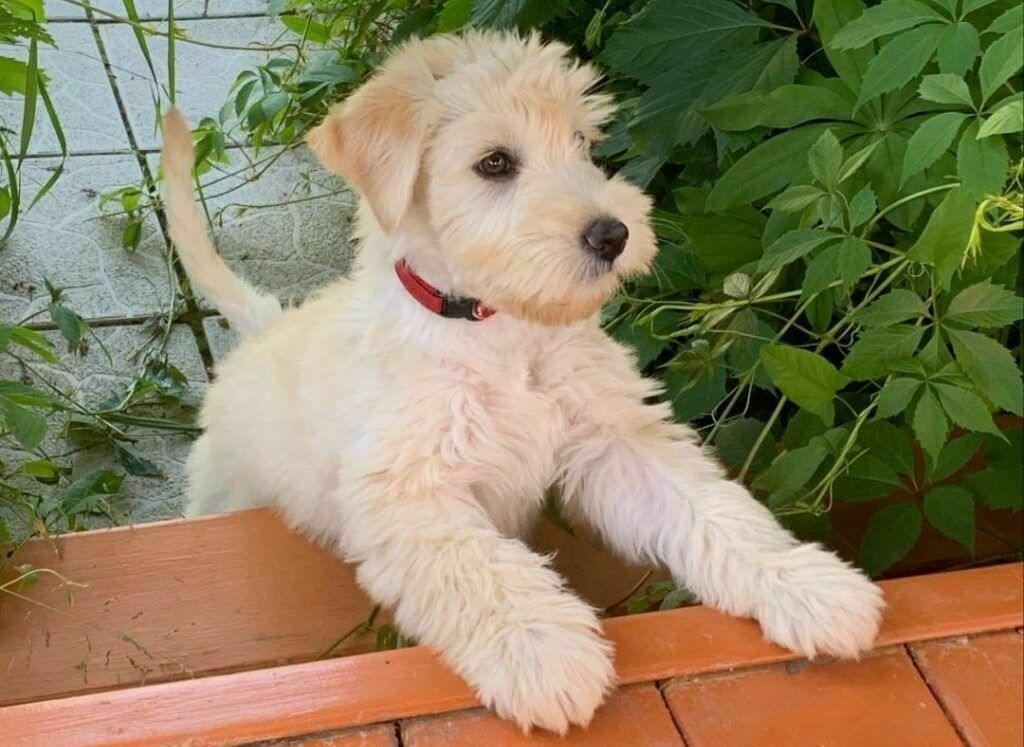
The wheat golden color of the breed was developed intentionally. The coat blended perfectly with the dried grass in the field, allowing the dog to perform its functions unobtrusively.Care and Maintenance
The Irish Wheaten Terrier is a versatile breed that thrives both in the city and in a private home. Eager to please its owners, the dog easily adapts to household rules and learns new commands quickly. However, it is crucial to remember that at its core, this is a terrier. Therefore, ample exercise is necessary. Calm walks will not suffice; a maximum of movement and physical activity is the key to proper dog care. An adult dog should be walked at least twice a day for at least an hour each time. During walks, it is vital to let your “little fireball” run freely. A great option is to take a bike ride with your four-legged companion. If that’s not possible, simply let your dog off the leash in a designated dog park and play with its favorite toy. Of course, this should only be done if there are no aggressive dogs nearby; otherwise, the terrier’s temperament can lead to fights.
It is surprising how peacefully cats can coexist under the same roof with an Irish Wheaten friend. The dog will get along well with them, but outside, it will show no mercy and will try to catch any “prey.”
The coat of the Wheaten Terrier requires the most attention.
If you don’t hand-strip the dog, it is necessary to brush it at least once a week. Otherwise, the Wheaten Terrier will end up looking like a barking bear. However, the more often you brush it, the better it is not only for its appearance but also for the dog’s nervous system. While the brush takes care of the dog’s coat, the skin gets massaged, and the dog enjoys the process immensely.
Yes, these dogs shed very little, but they tend to get quite dirty during walks as they explore various nooks and crannies. The heavy dirt will fall off as they dry, but the coat can go from golden to simply dirty. A scruffy Irish “mutt” is unlikely to earn respect in our country, so bathing will need to be done more frequently. It’s best to do this at least once every ten days, using a special shampoo recommended by the breeder or veterinarian.
Note that puppies change their coat to adult fur, so they need to be brushed daily with special brushes featuring fine teeth.It’s important to check the dog’s ears regularly. The “explorer” loves to dig up treasures, and dirt can easily get into its ears. Clean the inner parts of the ears weekly. A regular cotton pad, moistened with a special lotion, will help keep the dog’s ears in good shape. During the summer, check your dog’s ears more frequently, as ticks or water can easily get in while it swims.The eyes require daily inspection. They are usually clean and moist, without cloudy discharge in the corners. If the corners of the eyes are crusty, gently rinse them with warm water or a weak tea solution. However, if the discharge doesn’t clear up, the veterinarian will prescribe treatment and advise on further actions.Nails must be trimmed with clippers at least once a month. Naturally, dogs who walk more often wear down their nails naturally, but it’s still essential to monitor their condition for the dog’s health. The most sensible approach is to establish a nail trimming schedule, which comes with experience. Be careful not to cut too short, as blood ve
Multifunctional breed
Until recently, the soft-coated terrier was used for practical purposes on farms: to eliminate rats and mice, as well as for hunting badgers and otters. In pastures, when herding livestock, the dog performed the functions of a shepherd.Training and Education
To ensure that your Wheaten dog becomes a true family pet and well-mannered companion, it is essential to teach them the rules of behavior at home and at least a basic set of commands (unless, of course, you plan to participate in dog shows).
Like all terriers, the Soft Coated Wheaten Terrier is considered a very trainable dog. However, they can sometimes show a bit of character and be somewhat stubborn. In such cases, patience is crucial, and you must never force the animal to obey. You won’t achieve anything through force or yelling. The best motivator in their early age is treats, which can be given as rewards for following commands. As they grow, their favorite toys can serve that purpose.
Training and education can be simplified by utilizing the natural instincts of the Wheaten. Active exercises that involve jumping, playing chase, and hunt-like tasks evoke great enthusiasm.
You should begin raising your Wheaten companion from the very first days of their arrival at your home. Start with getting them accustomed to their name and designated spot, and leading them to the toilet in the appropriate place.
Once they are comfortable with that, you can move on to commands that can be practiced at home: “come,” “no,” “don’t,” and “okay.” These commands should be mastered before the dog goes for walks outside. By this time, it is also important to accustom the puppy to a collar and leash. It’s crucial not to pull your dog by the scruff. This can severely negatively impact the dog’s psyche, turning a lively hunter and companion into a submissive lackey and beggar.
During walks, it’s best to work on new commands that cannot be practiced at home, such as “fetch,” “speak,” and “bring it.” However, do not work with your dog for more than 20 minutes, as they will tire of monotonous repetition and lose interest in the activity.If you’re interested in participating in dog shows, it would be beneficial to take a handling course with professional dog trainers. Nowadays, there are reputable canine centers that offer their services, including home visits. Zooinik provides puppies with documents and health guarantees.
Signalman in war
During the First World War in 1914, dogs of this breed were used as messengers on the front lines.
Choose a Puppy
The Wheaten Terrier is a wonderful companion for families. When selecting your puppy, it’s essential to align your lifestyle with the traits of an adult dog. It’s very important that the puppy feels safe in its new home and is surrounded by care.
Since this breed is not as common as some other terriers, there may be limited offers for purebred puppies. It is advisable to contact a kennel where you can learn about the specifics of caring for the dog and receive tips that are not mentioned in guides.
After studying the breed standard and choosing a kennel, you can move on to selecting a puppy.
Among the entire litter, you’ll likely be drawn to the most beautiful, active puppy. However, there’s no need to rush. Pay attention to the other puppies as well. It’s not uncommon for the puppy that quietly observes from a distance to be the one that has a special connection to you. This behavior isn’t due to shyness, but rather a curiosity about its future owner.
It’s important to understand that an Irish Wheaten Terrier puppy is still just a puppy. This means it should have a wet and cool nose, clear eyes with a bright gaze, a coat without bald patches, a tail that isn’t tucked between its hind legs, and ears that are pain-free.
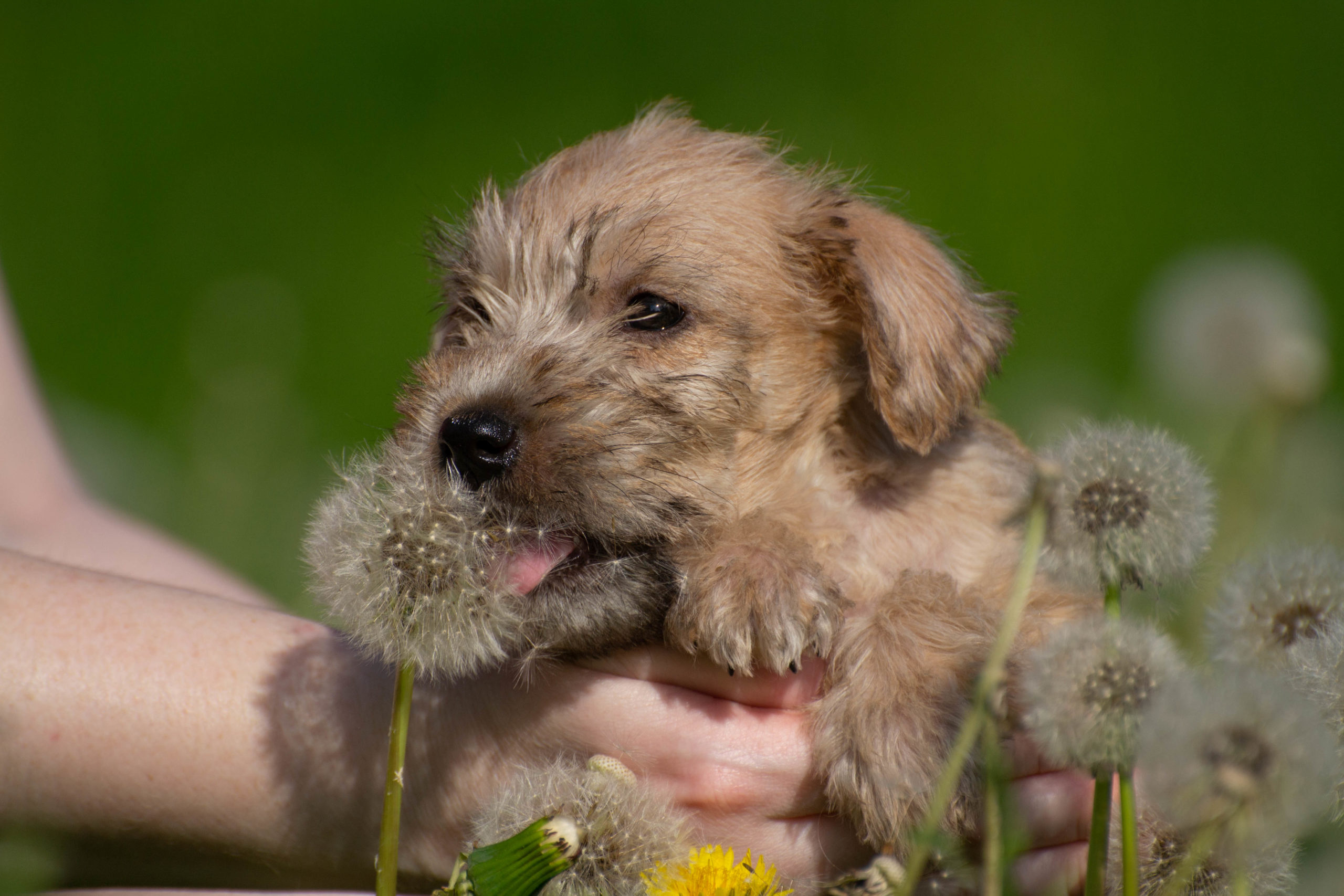
Of course, the puppy’s veterinary passport should include all the vaccinations and screenings that have been performed. In a good kennel, the puppy will already be microchipped or branded.An interesting fact: Wheaten Terrier puppies can be brightly colored in shades of red or gray with dark gray muzzles, which is completely normal. Over time, their coat will develop the desired pigment. Compare from trusted breeders at Zoonica and choose your ideal pet.
Health and Illnesses
Unfortunately, there are no dogs that are completely free of health issues. Like all animals, Wheaten Terriers can sometimes experience illnesses. Overall, the breed is fairly healthy, but there are certain diseases that Soft Coated Wheaten Terriers from the Emerald Isle are still susceptible to.
The most insidious of these are genetic diseases, the predisposition to which can only be determined through specialized screenings.
Among these unpleasant conditions is progressive retinal atrophy. Unfortunately, the gradual decline in vision function ultimately leads to complete blindness. This ailment does not respond to treatment.
Hip dysplasia starts with mild lameness and, sadly, can result in a complete loss of mobility. Sometimes the progression of the disease can be accelerated by improper care of the dog. For instance, it is strongly advised not to let a puppy under 6-8 months old go down stairs. The still-developing hip joints bear loads that they cannot handle. Consequently, they become improperly formed, leading to the progression of the disease.
Some kidney issues, which can currently be found in young dogs, used to be more common in Wheaten Terriers later in life. These include renal dysplasia. It has been noted that such problems are almost never diagnosed in dogs from Ireland. – the best site for animals where you can buy or sell a puppy.
Содержание
-
1. Описание породы
-
2. Внешний вид
- 2.1 Голова
- 2.2 Морда
- 2.3 Уши
- 2.4 Глаза
- 2.5 Зубы
- 2.6 Корпус
- 2.7 Конечности
- 2.8 Хвост
- 2.9 Шерсть
- 2.10 Окрас
-
3. Характер
-
4. Содержание и уход
-
5. Дрессировка и обучение
-
6. Как выбрать котенка
-
7. Здоровье и болезни






Comments
Only registered users can leave reviews.
Enter