
Great Dane




Warning: Illegal string offset 'label' in /home/panda/sites/zoonika/wp-content/themes/zoonika/template-parts/animals/animals-param-item.php on line 32
Ð


Breed Description
The Great Dane is the oldest modern dog breed in Germany. Many consider it the Apollo among dogs, named after the Greek deity. Indeed, the Great Dane is a dog of special grace and unique, impressive charisma and elegance. The origin of the Great Dane is only partially rooted in Germany. It is said that in the 16th century, Great Danes emerged in England, as described in historical sources, “by crossing a mastiff with an Irish greyhound.” The term “Dogge,” an old English word for “dog,” from which today’s “dog” is derived, also indicates a British line of ancestry. However, this type of dog was bred in ancient times and is depicted on stone tablets. In continental Europe, old bull-baiting breeds were also regularly crossed with greyhounds and hunting dogs, as these crossbreeds were well-suited for the nobility’s large hunts for boars, bears, and wolves. Over time, a separate breed emerged, featuring bloodlines from mastiffs, greyhounds, and some hunting dogs. In 1867, the Viennese cynologist Leopold Fitzinger distinguished three variants of the Great Dane: the ordinary mastiff, the English, and the Danish. Even today, the Great Dane is known in
In Egyptian tombs dated to 2200 BC, images of dogs resembling the Great Dane were discovered. They had shorter legs and body shapes similar to mastiffs. These dogs traveled to several other countries through traders, and the Germans were responsible for further developing the breed into the dog we know today. The agile, graceful dog known as the Great Dane is believed to have been created by crossing the original breed of mastiffs with greyhounds.
The Great Dane is often depicted as a gentle giant, but it instinctively takes a defensive position when the situation demands it. It is affectionate and caring, virtues that should never be undermined by encouraging hostile actions.
This breed gets along well with children, and kids love them. Due to their large size, they are not recommended for families with very small children, as their large tails may accidentally knock them over.
These large dogs can learn to get along with other animals, especially if raised with them from a young age.
The price for a puppy starts at 30,000 rubles and can reach over 100,000 rubles.
Appearance
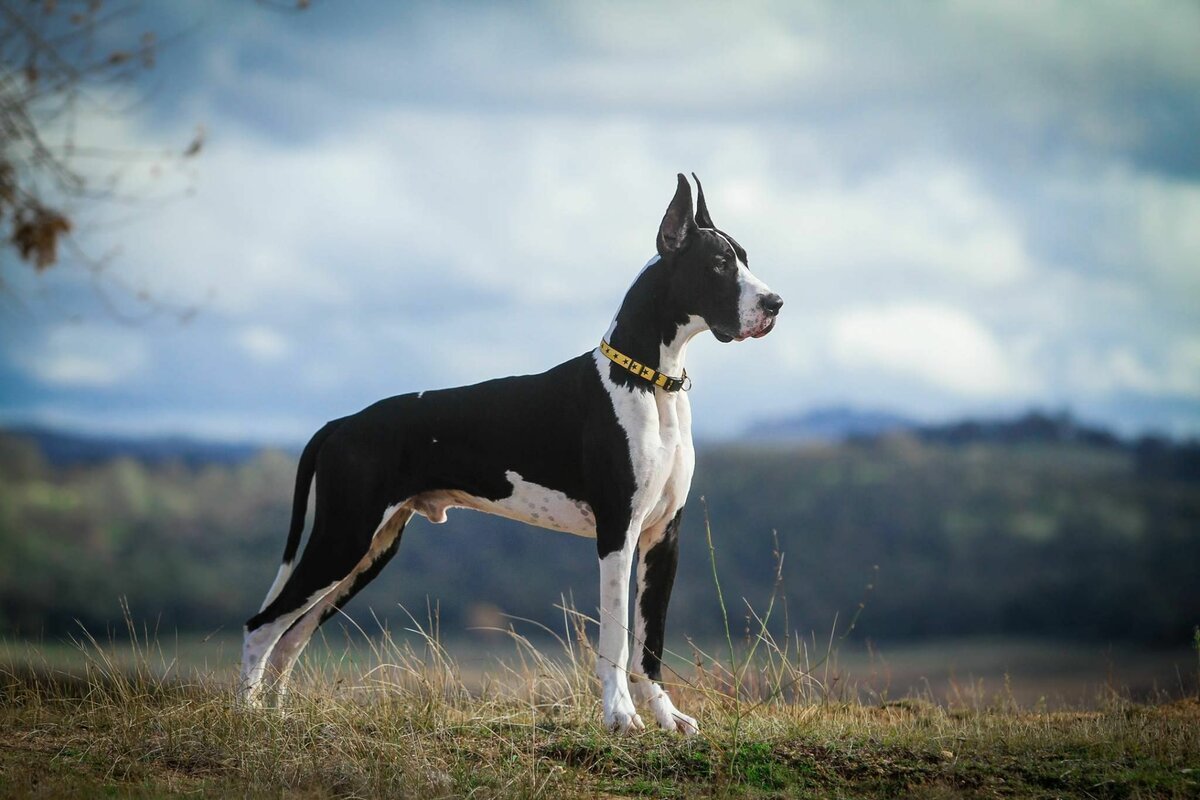
The Great Dane is world-renowned and recognized globally. It is considered the Apollo among dogs. The Great Dane is an extremely large and powerful dog, yet at the same time, very elegant and sensitive. It has a dignified, sovereign, and graceful appearance. The Great Dane possesses a unique charisma. As early as 1914, animal artist and dog expert Richard Strebel admired the breeders of Great Danes who:
… created for us a dog that can genuinely be considered the most perfect dog ever created in terms of size, symmetry, strength, and elegant movements.
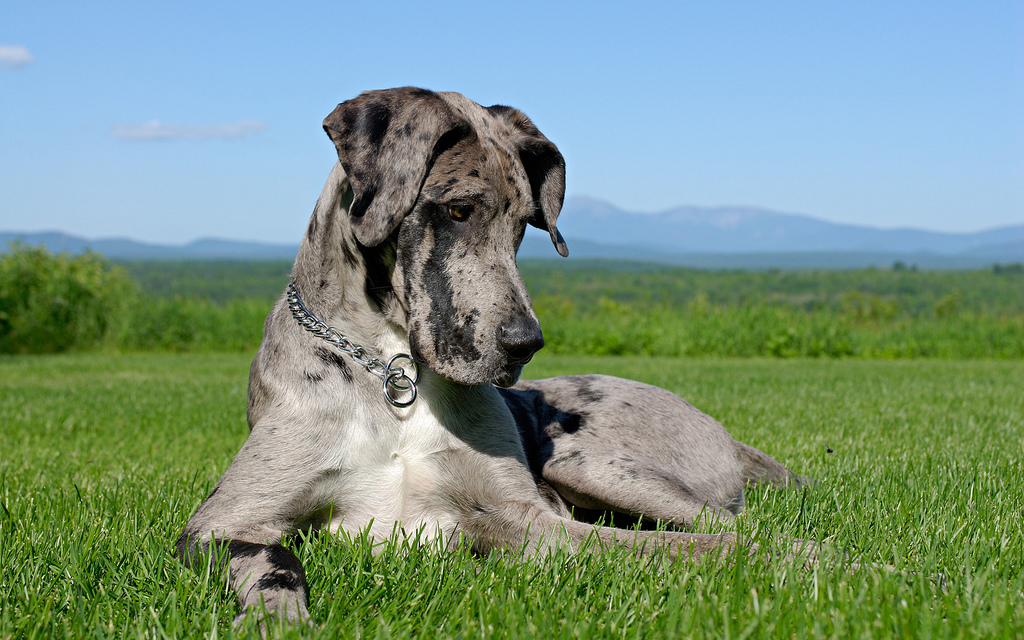
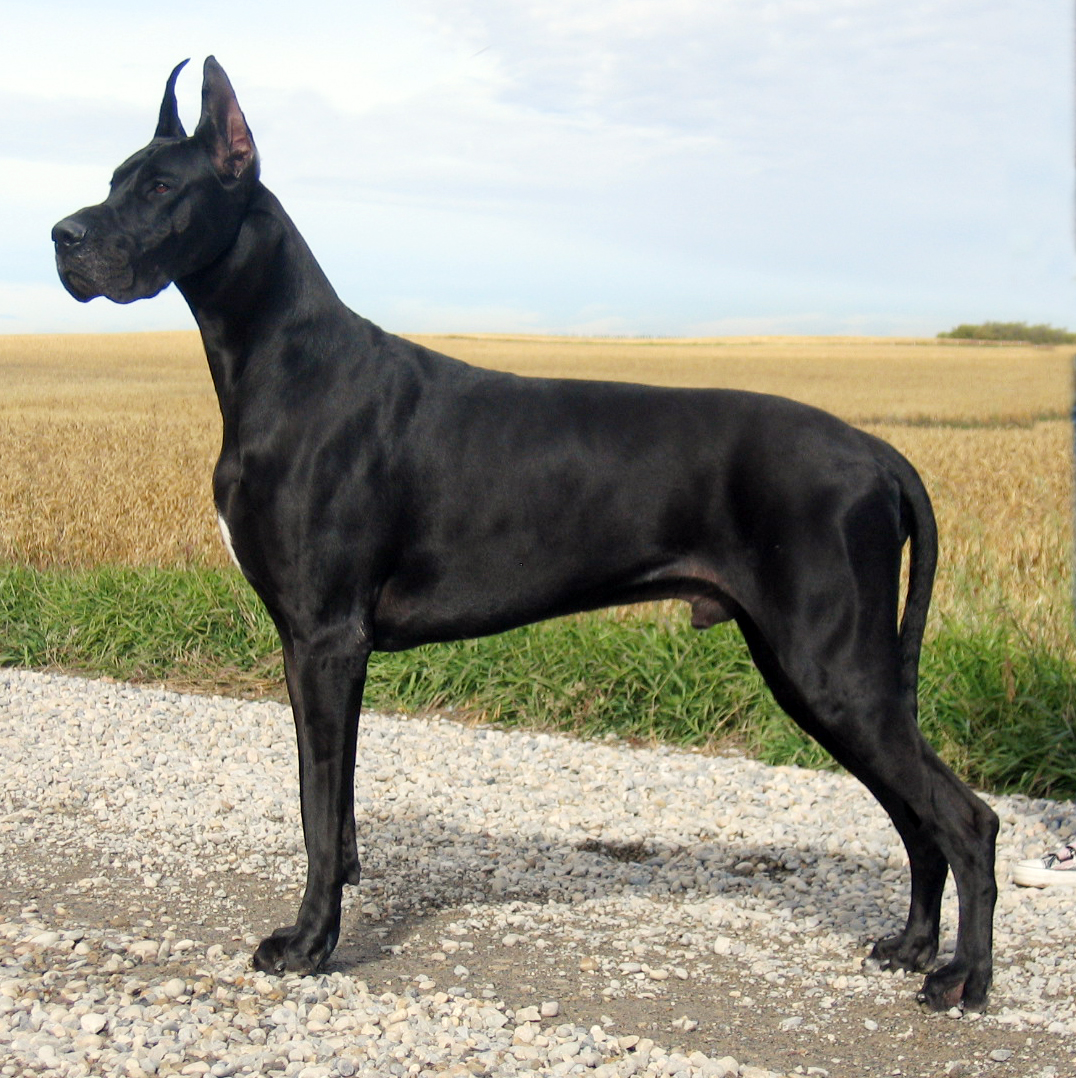
Unfortunately, such respect for Great Danes is not always shown by their breeders and enthusiasts today. Regardless of their health, they are used for extreme breeding, known as gigantism, as well as for games with defective genes to exploit rare coat colors. While around 1900, the height at the shoulder for males was still 76-80 cm, the current FCI standard says “not less than 80 cm” with no clear upper limit. This gives the Great Dane the dubious honor of being the tallest dog in the world. According to the Guinness Book of Records, the tallest was a male Great Dane named “Gibson,” measuring 108 cm. Gibson reached nearly 7 years of age but spent the last few years on three legs. The Great Dane “Zeus” from Michigan, USA, reached a height of 112 cm and died at just 5 years old: dubious records at the expense of the dogs’ well-being. The Great Dane is impressive enough without such questionable extremes. Their sovereign and elegant appearance is also highlighted by their silky coat. It features a very short, tightly fitting muscular body. The coat has a slight sheen and comes in colors such as fawn or black, brindle, or spotted.
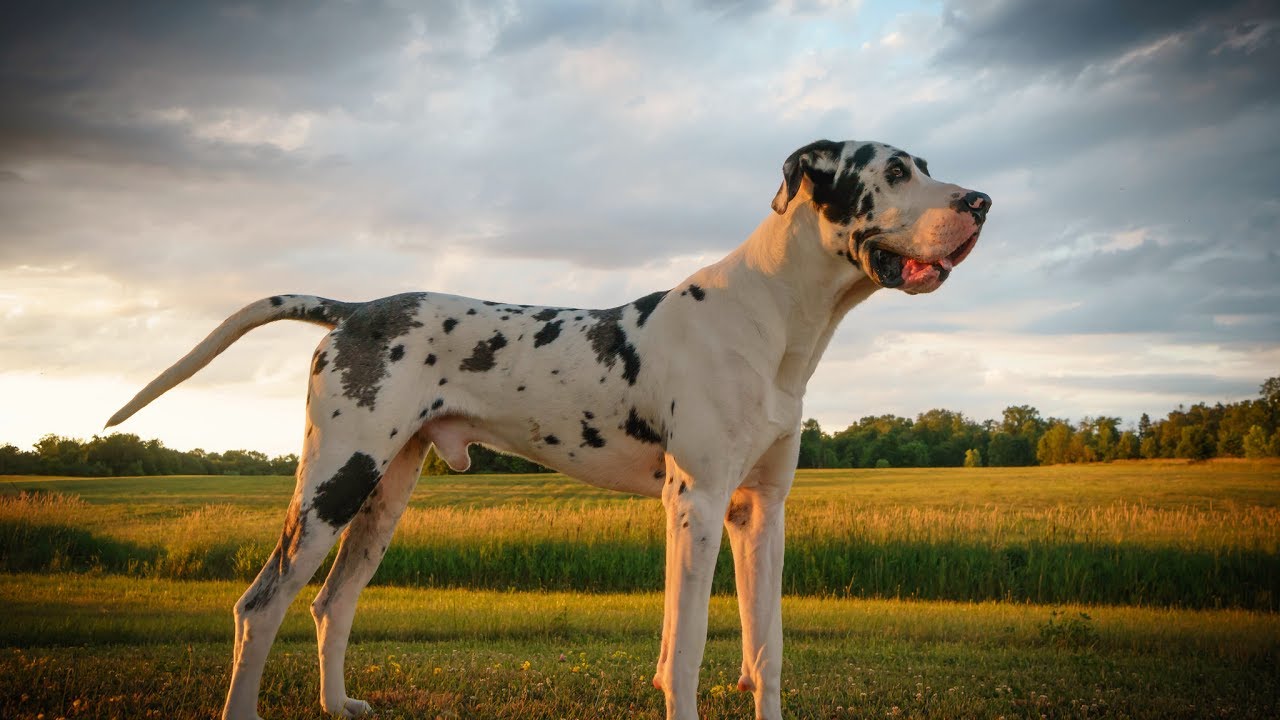
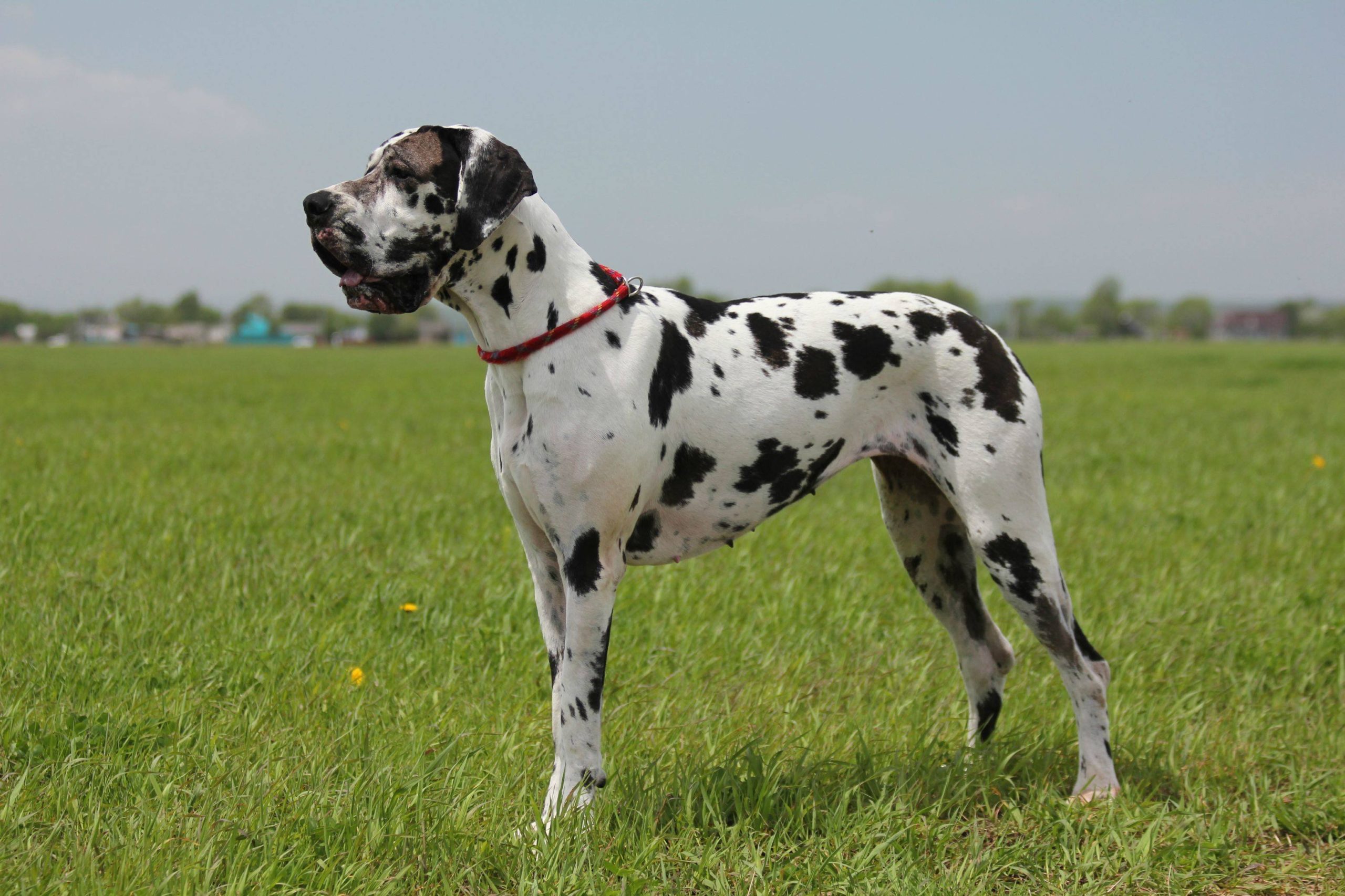
Very muscular, with a strong yet elegant build, it has a bold look, ready to go anywhere and do anything. The head and neck are held high, the tail is level with the back or slightly raised, but never curls over the hind legs. The elegance of the body and grace of form are striking.
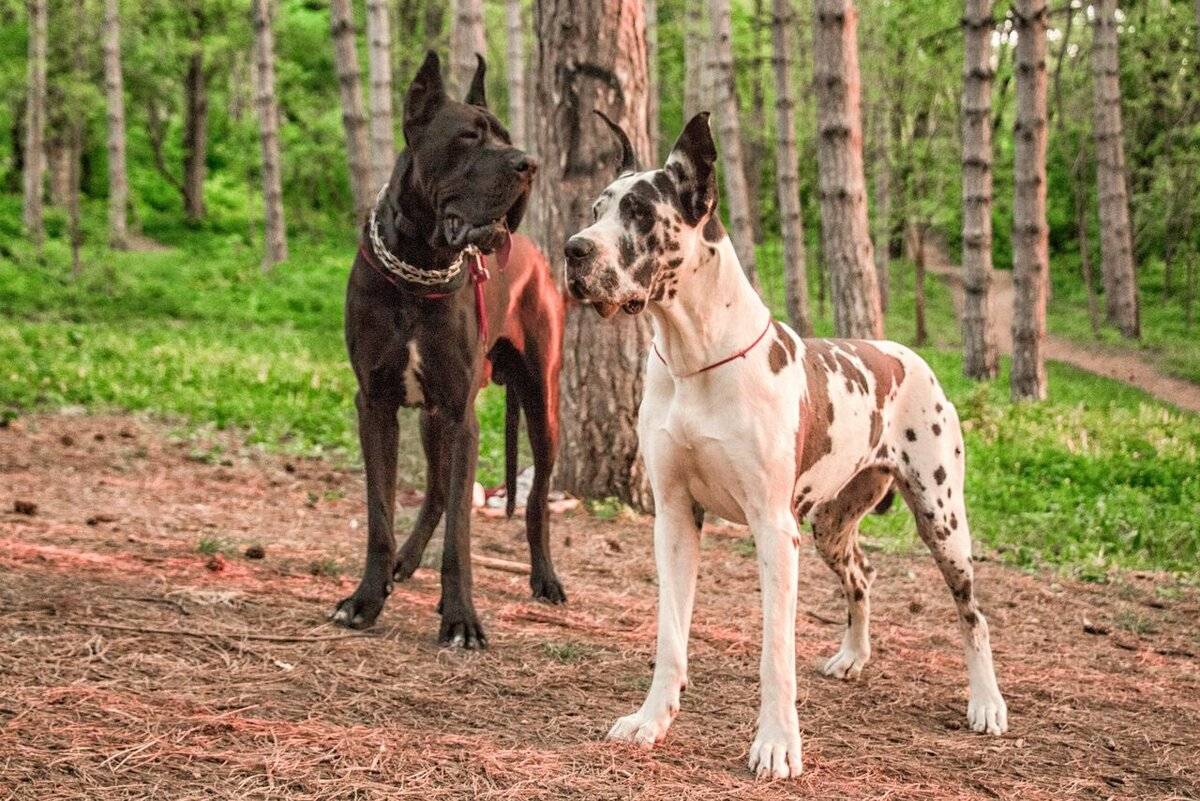
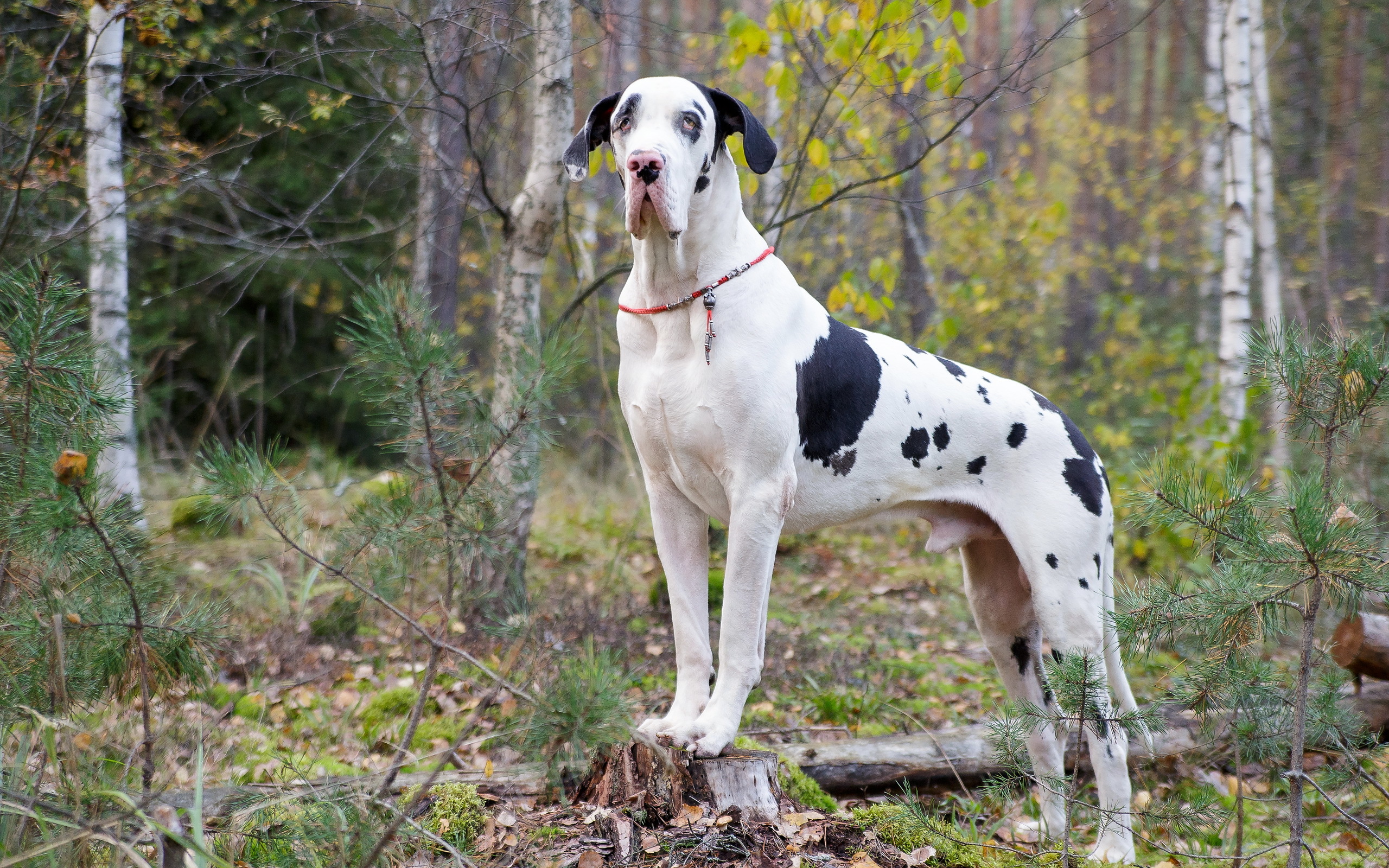
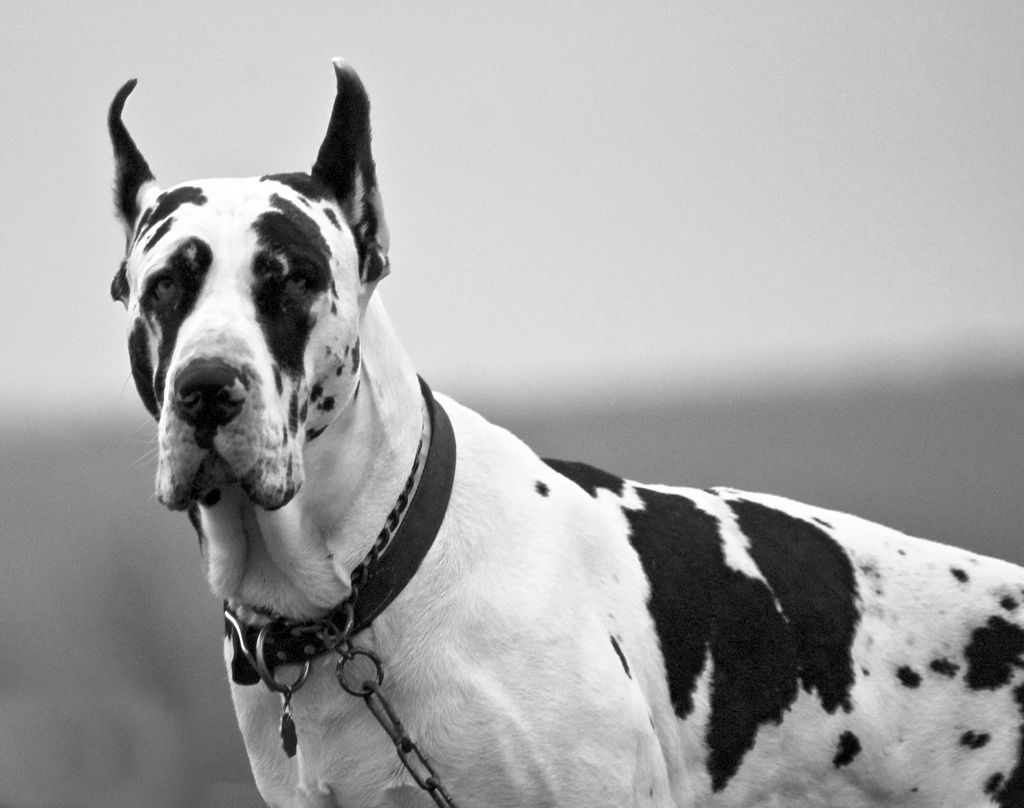
The coat is short and smooth, available in various colors, including brindle or fawn, blue, black, or harlequin, with black patches on a white background.
The sizes are impressive. Male Great Danes range from 76.2 to 86.3 cm in height and weigh from 54.4 to 90.7 kg. Females range from 71 to 81.2 cm in height and weigh from 45.3 to 58.9 kg. The Great Dane has magnificent dimensions and a strong, proportional body with smooth musculature that stands out for its grandeur, strength, and grace. This breed is one of the largest working dogs.According to statistics from the British Kennel Club, the life expectancy of the Great Dane has slightly increased to 7 years from an extremely low level of 6 years and 6 months in 2004. Generally, the larger and more unusual the coat color, the lower the expected lifespan. By the age of 8, the Great Dane is officially considered a senior. Without gigantism and bred healthy, it could have a lifespan of 10-12 years.


Отличительные черты

Голова

Морда

Уши

Глаза

Зубы

Корпус

Конечности

Хвост

Шерсть

Окрас
Character
Although the Great Dane has an imposing, and for some even intimidating appearance, it possesses a very sensitive, gentle character that craves a firm and knowledgeable hand to guide it consistently. In terms of temperament and size, the Great Dane is not a dog for beginners. Nevertheless, few companions can be as enthusiastic as this dog. Chancellor Otto von Bismarck, who was accompanied by Great Danes throughout his life, openly admired the intelligence and skills of his dogs and is said to have remarked, “I hold great respect for my dog’s understanding of human nature-she is swifter and more thorough than I.”
The “Iron Chancellor,” as Bismarck was known, was certainly no dreamer. It is said that he thought about his dogs even on his deathbed. After his passing, his mastiffs were, of course, buried in the cemetery of his castle, which can still be visited today. The Great Dane has a very high threshold for aggression. However, one must remember that it possesses immense strength. This strength is always theoretically on a leash, as it can break free when it comes to action. Therefore, professional training and care are vital.
The Great Dane is very alert but does not bark frequently. When it does bark, the sound is a deep bass. A healthy, well-bred, not overly large Great Dane is a dream for any dog lover-a dream that, unfortunately, rarely comes true in our densely populated, often unfriendly world for dogs.
The Great Dane is gentle with children and loves them, especially if they grew up together from a puppy age. Parents must remember that they generally don’t know how big they are and need to be taught how to behave around small children.
As with any breed, teach children how to approach dogs and play with them, and always supervise their interactions closely. Teach children not to disturb a nursing or resting dog and not to try to take food from a dog. The Great Dane is known as a friendly giant, affectionate and playful with its family.
They get along well with other dogs and pets. Great Danes generally get along with other animals, especially if they were raised together, but some members of the breed may show aggression toward unfamiliar dogs. Overall, they are social creatures.A watchful expression, powerful and majestic movement, demonstrates dignity, combined with a good-natured character without nervousness, friendliness, and sociability.
Питомники
Выбор питомника по городу, породе и отзывам
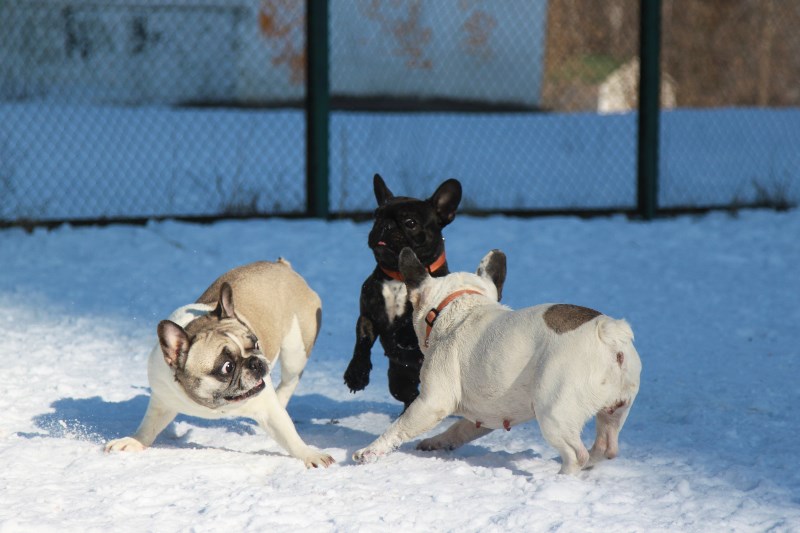
Golden line
Height record holder
Great Danes are true giants in the world of dogs. A record has been set for a Great Dane whose height reached 110 cm.Care and Maintenance
Keeping a Great Dane is very challenging and expensive. The necessary quality and quantity of food, potential veterinary expenses and medications, direct and indirect transportation costs, and much more require financial stability from the owner. If a Great Dane wants to sit on the couch, it needs at least the space of a two-seater car. Furniture made from solid faux leather has proven to work well. A Great Dane should not be kept in a small apartment; a house with a garden is essential. Ideally, you should live in a rural area. Busy central city areas are not where these large dogs feel comfortable. It is not uncommon for both the dog and owner to encounter rejection or even open hostility here. This should be taken into account. The extraordinary appeal of their appearance does not always work in favor of the Great Dane. Sometimes owners want the dog more as a status symbol than as a pet. Therefore, the actual standing of the Apollo among dogs often has little to do with the divine.
The coat requires little maintenance. We recommend a rubber brush with spikes and a curry comb. Short-haired dogs tend to get tangled in carpets, blankets, soft furniture, or in the car.
Although a Great Dane’s short, smooth coat sheds less than that of double-coated dogs, the Great Dane is the largest breed in the canine kingdom. Thus, the larger the dog, the more likely it is to shed. They are classified as moderate to heavy shedders.
Brushing your dog with a medium-bristle brush, a rubber grooming glove, or a grooming mitt once a week can help minimize shedding.
Shedding occurs profusely during the shedding season, which happens once or twice a year, making it necessary to brush them more frequently during this time. The frequency of bathing your dog will depend on its daily activities. The nails of a Great Dane should be trimmed regularly if they are not worn down naturally to avoid discomfort.
They shed evenly throughout the year, except in spring or autumn when shedding may increase. Brushing them once a week and bathing as needed is the best way to minimize shedding and remove excess hair.Monitoring the diet of a Great Dane puppy is more crucial than for other breeds. Danes go through a growth period as puppies, so it is recommended to feed your Great Dane puppy food specifically designed for large breeds and to avoid any supplements, especially calcium.Special dietary requirements for giant breeds must be followed, otherwise orthopedic issues may develop.The amount you can feed your dog varies significantly based on its age and gender, so it’s best to consult a veterinarian or nutritionist for feeding advice.A Great Dane consumes a large amount of food. At the same time, this food should be of very high quality and specifically formulated, especially during the growth period that can last up to two years. To avoid bloat, a height-adjustable feeding stand should be used, which can be purchased at specialized stores. Feeding can be quite messy, requiring cleanup of both the dog and the feeding area after meals.
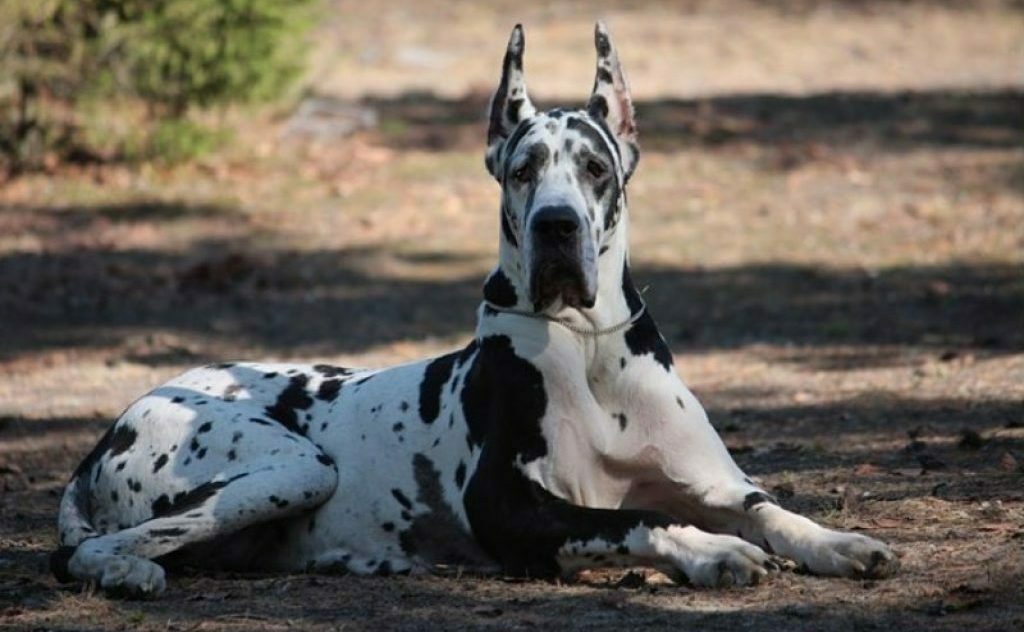
English Mastiff
The Royal Dog is the second name for the breed. This name perfectly describes the impressive size of the dogs.Training and Education
Early socialization and puppy care activities are recommended. For a large and powerful breed like the Great Dane, obedience training is very important. Great Danes are friendly, respectful, and eager to please dogs that respond well to consistent and firm training.
They need human contact, affection, and interaction with other people and animals to thrive. In terms of exercise, Great Danes do not have specific demands-excluding issues related to their size. While they are generally laid back and quiet indoors, they still require physical activity appropriate for their age. They will need a good walk at least once a day and will enjoy a large yard to play in. They make excellent running and hiking companions, but owners should wait until the dog is two years old to avoid damaging the developing joints of a young pup.
Many Great Dane owners are overly cautious about training their puppy because, at a young age, Danes are quite fragile. Exercise should match the dog’s age. This breed has an excellent sense of smell, so it is recommended to keep them on a leash in unsafe areas. Agility, obedience, tracking, weight pulling, and sports like flyball are all popular activities for Great Danes. Adult and senior Great Danes are content to spend most of the day sleeping on the couch and then going for walks a few times a day. Owners should spend 30 minutes to 1 hour twice a day training their Great Dane as a foundation for activity. Zooinc offers puppies with pedigrees and health guarantees.
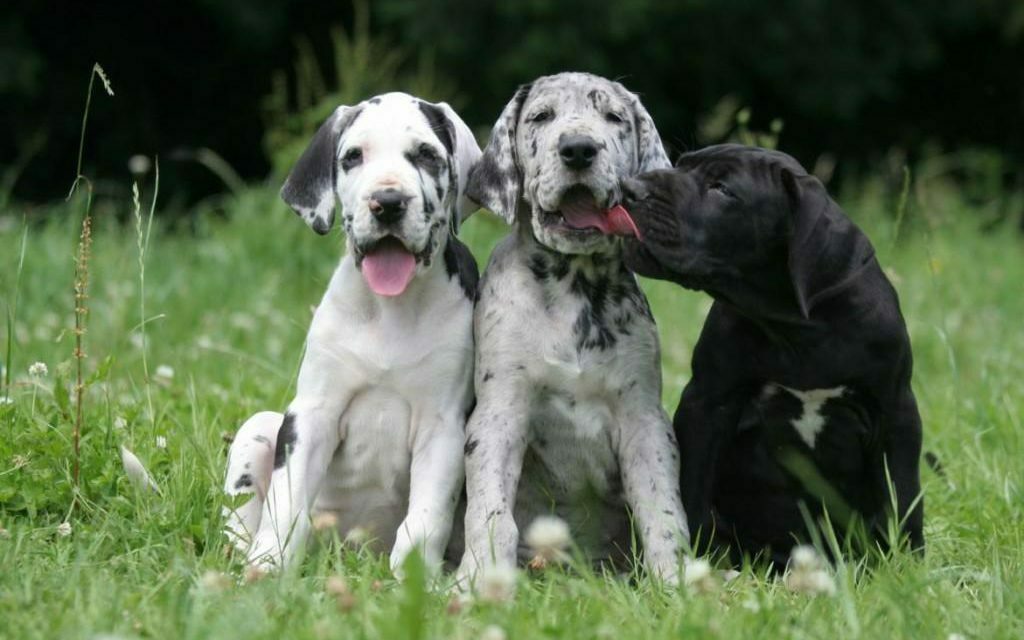
In ancient times...
In ancient times, similar canine representatives were present in many countries. They served as participants in dog fights, assistants to the military in operations, and guard dogs for property protection. In England, they were primarily used for hunting. However, the breed name “German” was assigned because the first standard for it was developed in Germany.
How to Choose a Puppy
If you want to share your life with a Great Dane, you must first have a clear understanding of what it means to live with such a large dog in practical terms. You should search for a breeder well in advance of making a purchase and establish connections here. The breeder should screen their dogs for any particular risk of hereditary diseases. This is a given in serious breeding. Puppies should only be purchased from parents no taller than 80 cm at the shoulder and colored in yellow, brindle, black, and spotted patterns. Additionally, you should focus on preventing inbreeding. Please consider the ages of the puppy’s ancestors. Those interested in dogs can also find Great Danes through one of the dog rescue initiatives that specialize in this breed.
The Great Dane is a large dog that wants plenty of activity. However, you are unlikely to see them on the street, even though with 1,200 puppies a year, they rank ninth on the list of the most popular dogs in the UDH, ahead of breeds like Bernese Mountain Dogs or Chihuahuas, which you see much more frequently outdoors. These giants are often locked away once they outgrow the puppy stage and, being poorly socialized and trained, can no longer be managed by an owner who does not know how to handle dogs. A Great Dane is not a yard dog! It seeks and needs a loving bond with its human family. It is intelligent and sensitive. Last but not least, you should also think about what to do if this large, sometimes 90-kilogram dog gets sick and needs to be carried. Therefore, purchasing a Great Dane should be carefully considered. A Great Dane is not a dog for novices. Their strength and potential danger require experienced, loving socialization, training, and leadership. They are sensitive and intelligent and are quick to forgive their owner’s mistakes. They enjoy being guided and raised, but without any means of coercion. Many standard dog training methods do not work on G
Although the Great Dane is not a rare dog, its mixes with dogs of other breeds or mixed breeds are quite uncommon. This is a good thing. Because this giant with an inadequate temperament, something like a terrier, would pose a serious danger to people. Compare from reputable breeders at Zoonyk and choose your ideal pet.
Health and Diseases
It is highly recommended to visit a veterinarian at least once every six months to ensure that your dog is healthy and happy at all stages of life.
DCM (dilated cardiomyopathy), bloat, Wobbler syndrome, ED (elbow dysplasia), HD (hip dysplasia), spondylosis, and allergies. Breeding with color patterns based on hereditary diseases, such as merle or the harlequin gene (blue brindle, gray brindle, black-and-white spotted), leads to additional health issues for the individual and the population. Due to overbreeding and breeding selection that is unilaterally focused on exterior traits, individuals with idiopathic aggression, although rare, currently exist, creating nearly unsolvable training challenges. The same applies to their extremely low life expectancy.
Gastric dilatation-volvulus (GDV), also known as bloat, is a leading cause of death in Great Danes. Owners can learn how to recognize the signs and symptoms of bloat and what to do when it occurs. Many breeders and owners use a treatment known as prophylactic gastropexy (also referred to as “preventive surgery”) to help reduce the more severe symptoms of volvulus.
Other health issues that can affect the breed include vision and heart defects, hypothyroidism and autoimmune thyroiditis, as well as hip dysplasia.
It is no coincidence that the Great Dane is also called the Apollo among dogs. It is exceptional in every way. Its majestic charisma captivates and soothes at the same time. Unfortunately, the breeding issues have played a cruel joke on it, often resulting in a lifespan of barely six years, along with being a frequent visitor at veterinary clinics. The cost of maintaining a Great Dane is also quite high. In contrast, the initial acquisition costs can be negligible. Thus, you should never “skimp” when choosing a puppy. – the best site for animals where you can buy or sell a puppy.
Содержание
-
1. Описание породы
-
2. Внешний вид
- 2.1 Голова
- 2.2 Морда
- 2.3 Уши
- 2.4 Глаза
- 2.5 Зубы
- 2.6 Корпус
- 2.7 Конечности
- 2.8 Хвост
- 2.9 Шерсть
- 2.10 Окрас
-
3. Характер
-
4. Содержание и уход
-
5. Дрессировка и обучение
-
6. Как выбрать котенка
-
7. Здоровье и болезни



Comments
Only registered users can leave reviews.
Enter