
English Springer Spaniel






Warning: Illegal string offset 'label' in /home/panda/sites/zoonika/wp-content/themes/zoonika/template-parts/animals/animals-param-item.php on line 32
Ð


Breed Description
The most popular spaniel for bird hunting and small game has a rich history. This magnificent companion breed was developed in England during the Middle Ages. There are some artistic works depicting similar animals dating back to the 15th and 16th centuries, but some sources trace their first appearance to the 14th century.
At that time, the English Springer Spaniel was referred to as the Shropshire or Norfolk Spaniel. Lord Norfolk bred hunting dogs and made significant efforts to impart the desired characteristics to his pack. However, the breed was fully established around the 19th century. And, although the name “spaniel” indicates that the ancestors of these four-legged hunters were originally brought from Spain, the English consider this breed their own and take pride in it.
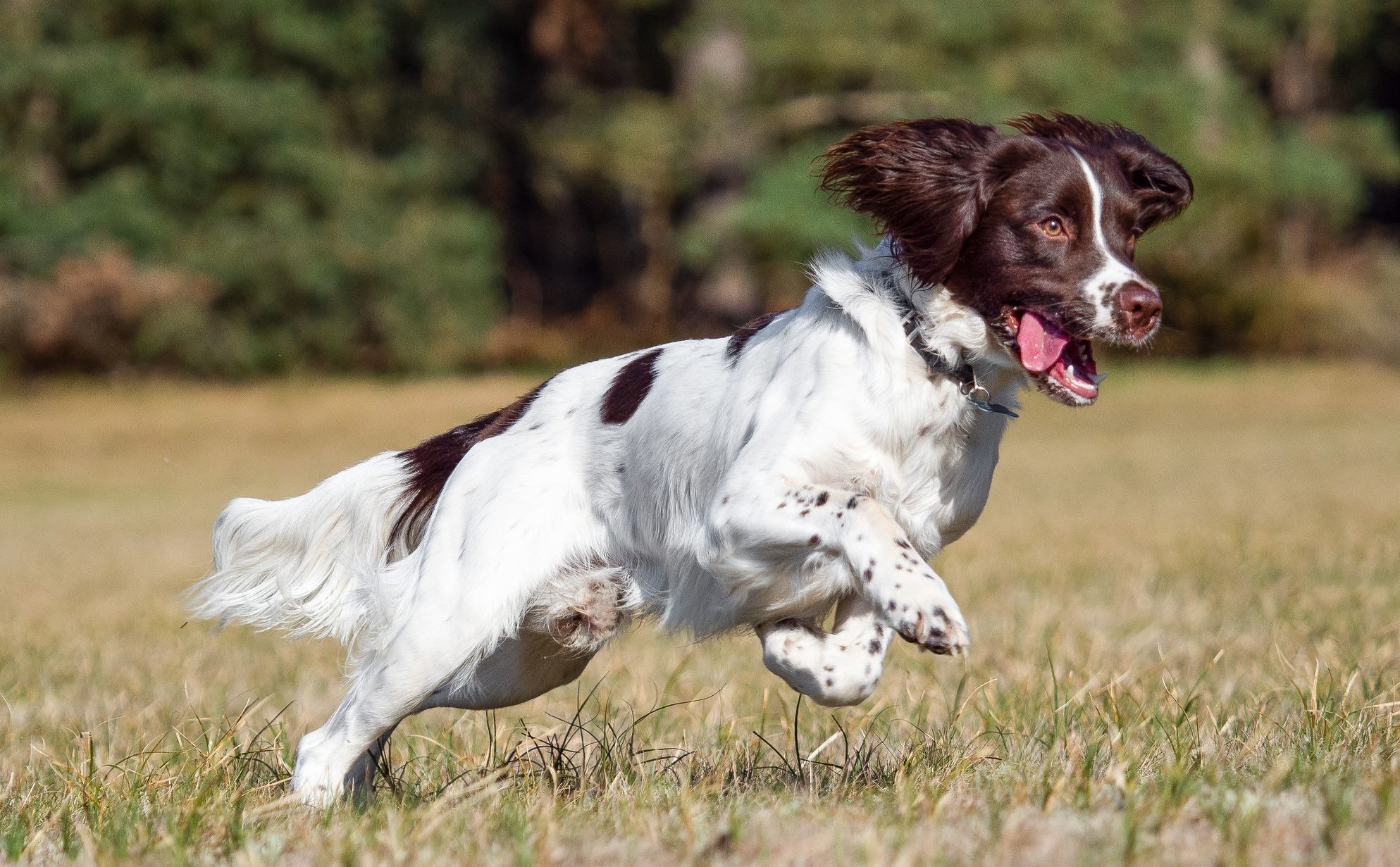
Having a nearly identical pedigree to all spaniels, the “springer” has the longest legs. It gets its name from its unique actions during hunting. “Springer” in English means jumper. Upon spotting game, the dog would leap out of the underbrush to scare it and direct it towards the waiting net. After the introduction of firearms, these jumpers proved to be highly effective in bird hunting and retrieving game, including hares. For instance, in dense thickets where a pheasant or woodcock might hide, the Springer Spaniel excels at guiding the birds towards the waiting hunter. It can maneuver directly to the bird when the hunter cannot get close enough and jumps on it.
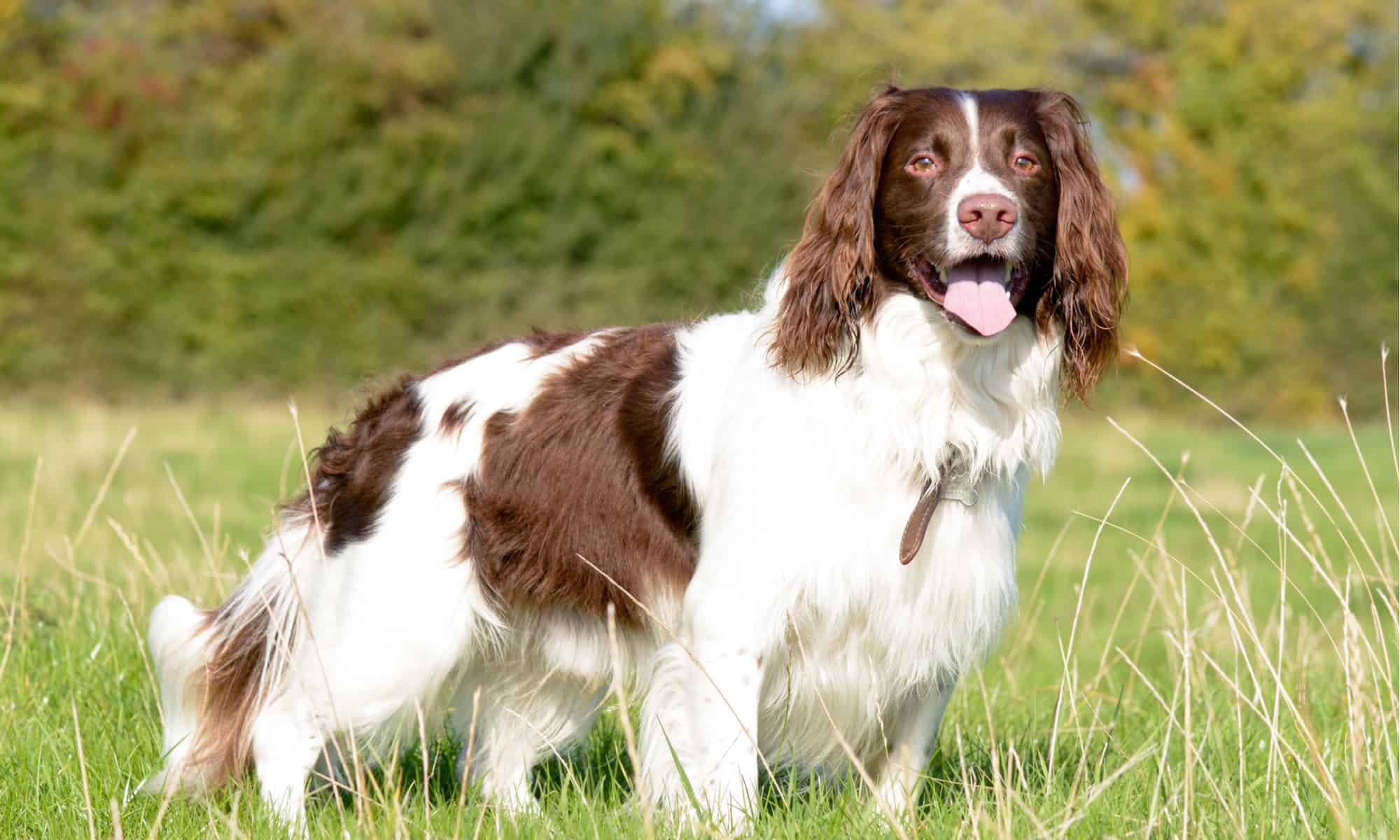
Looking at the early depictions of Norfolk Spaniels, the differences in appearance are clearly visible. While the first dogs were mainly tricolored-considered the classic color-today, two-colored dogs have become the most prevalent.
The breed standard was adopted in England in 1902. By the mid-20th century, the residents of Foggy Albion recognized the “jumping hunter” as the most common and sought-after dog in the country. Remarkably, in the USA, the breed received official recognition somewhat earlier than in its historical homeland.
This is truly a talented and versatile dog, often called upon for search and rescue work. Its popularity continues to grow today, not only in the UK but also in other European countries. Russia is no exception.
Appearance
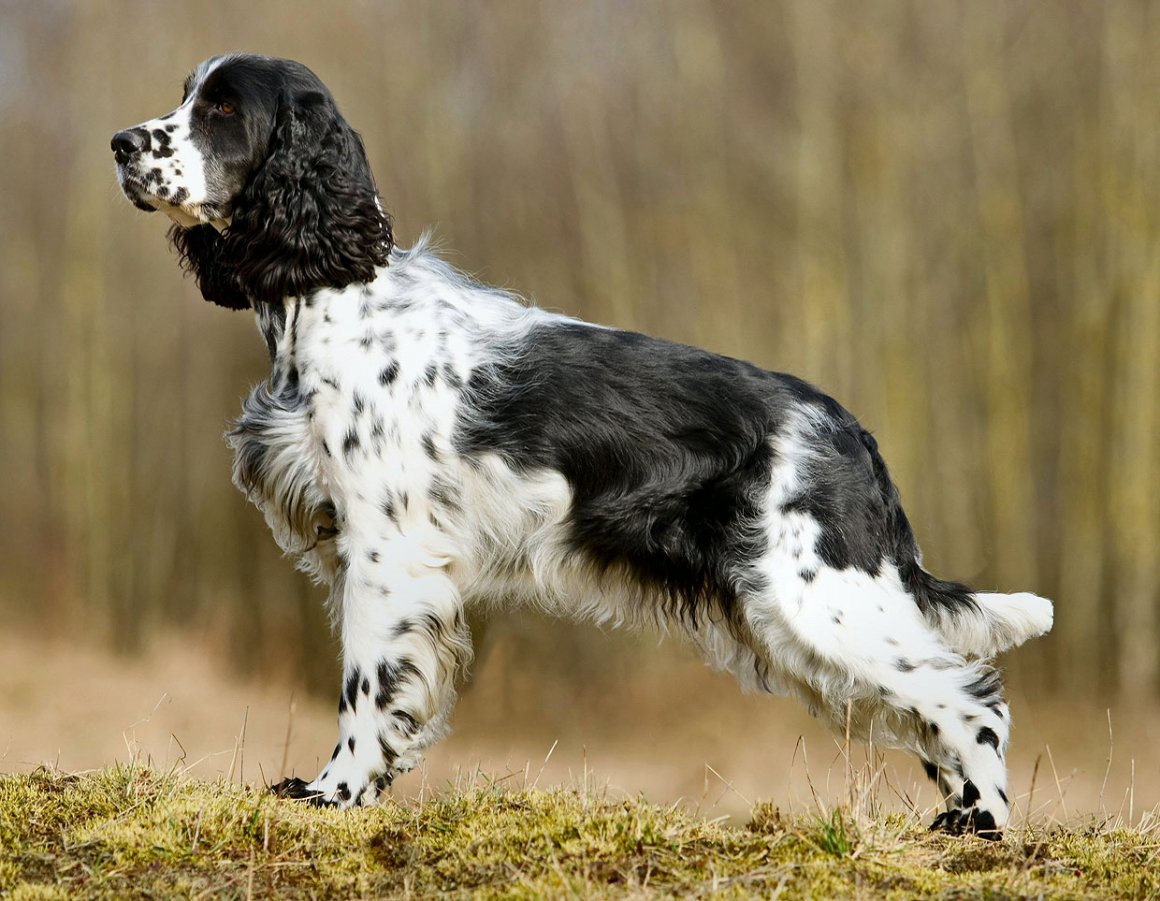
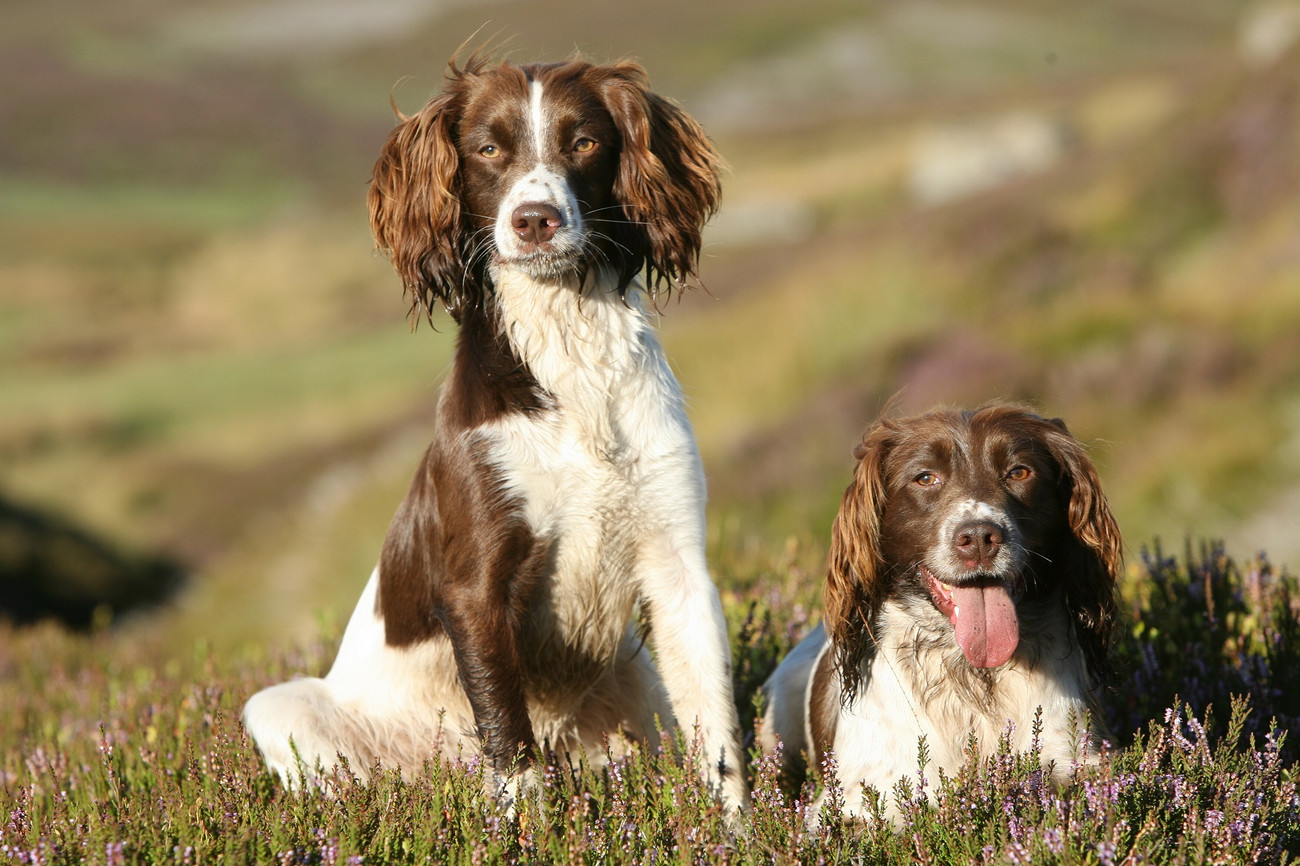
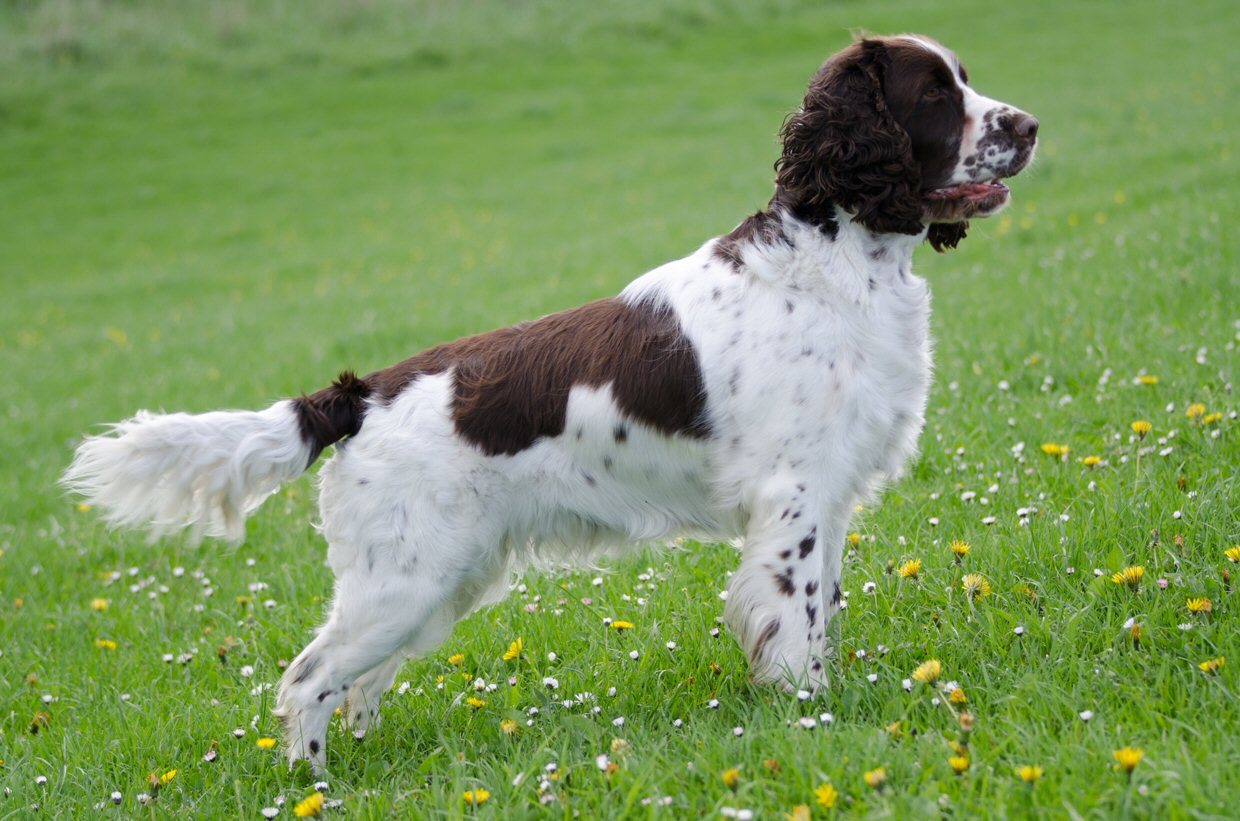
The exterior of the breed has changed over a long time. Today, we can see two varieties: working (field) and show (exhibition).
Naturally, the dogs that participate in exhibitions have more graceful body lines and denser fur. They tend to have a more melancholic temperament and have less developed hunting characteristics. Their “melancholy” is quite unique, as show dogs are also very active and playful.
Field or working springers are more compact, their coat quality is noticeably lower, but they have more developed instincts for flushing and retrieving game.
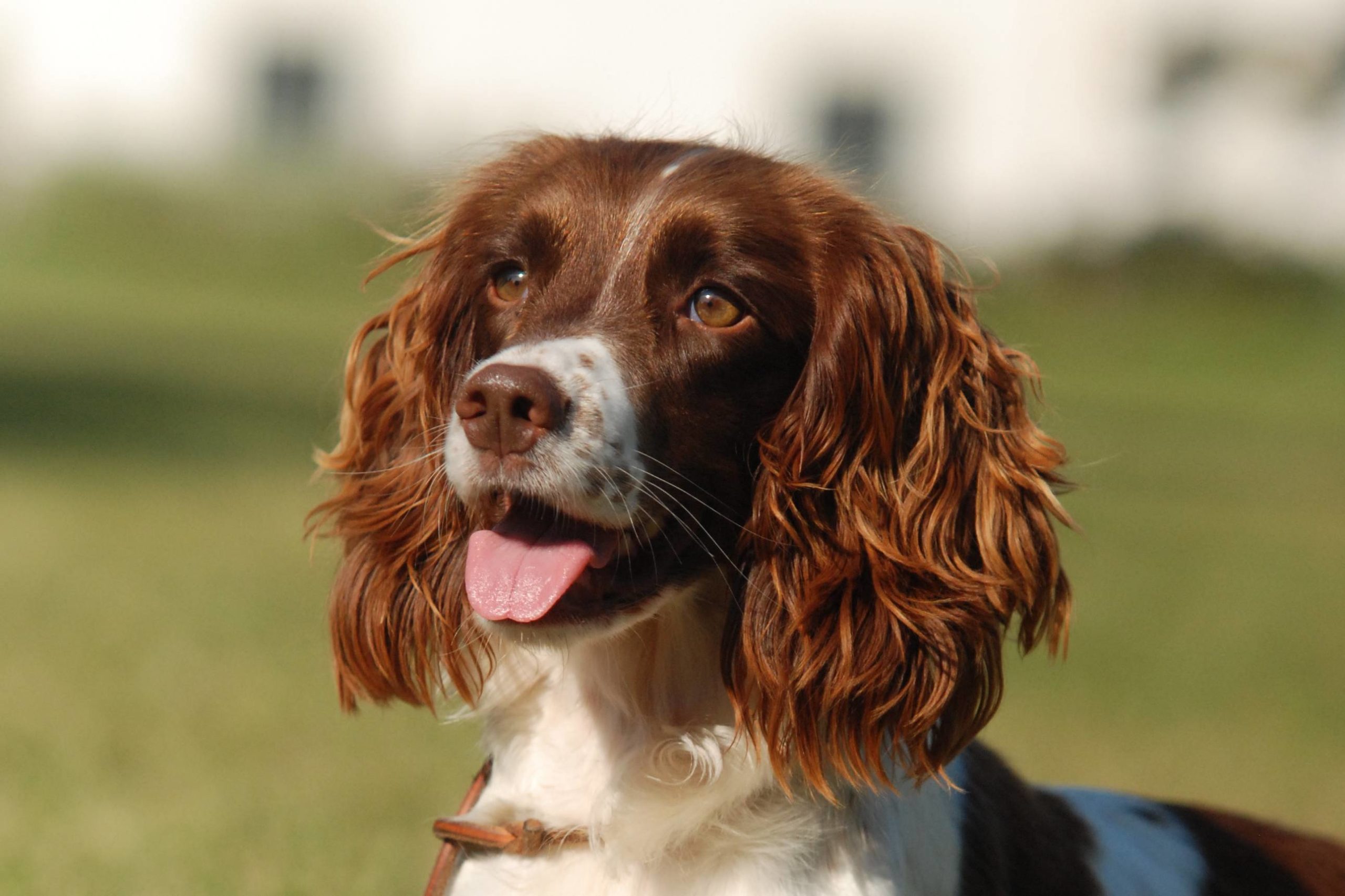
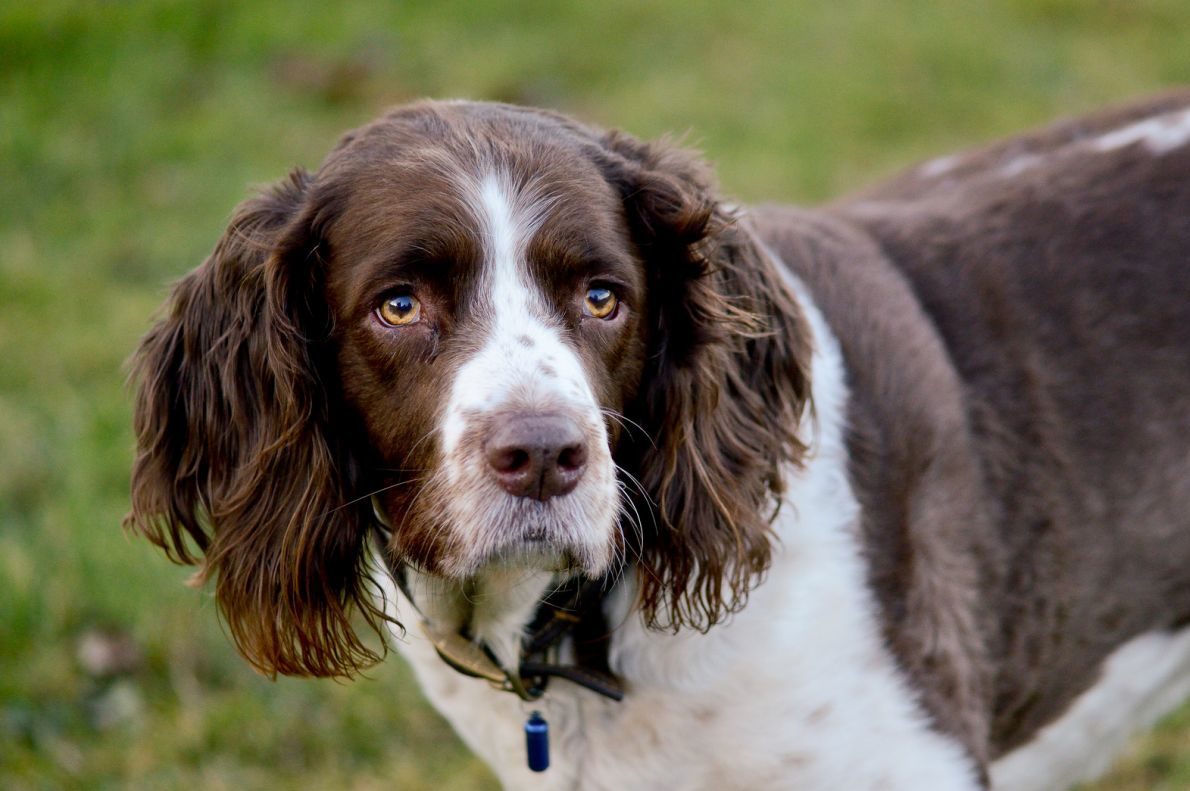
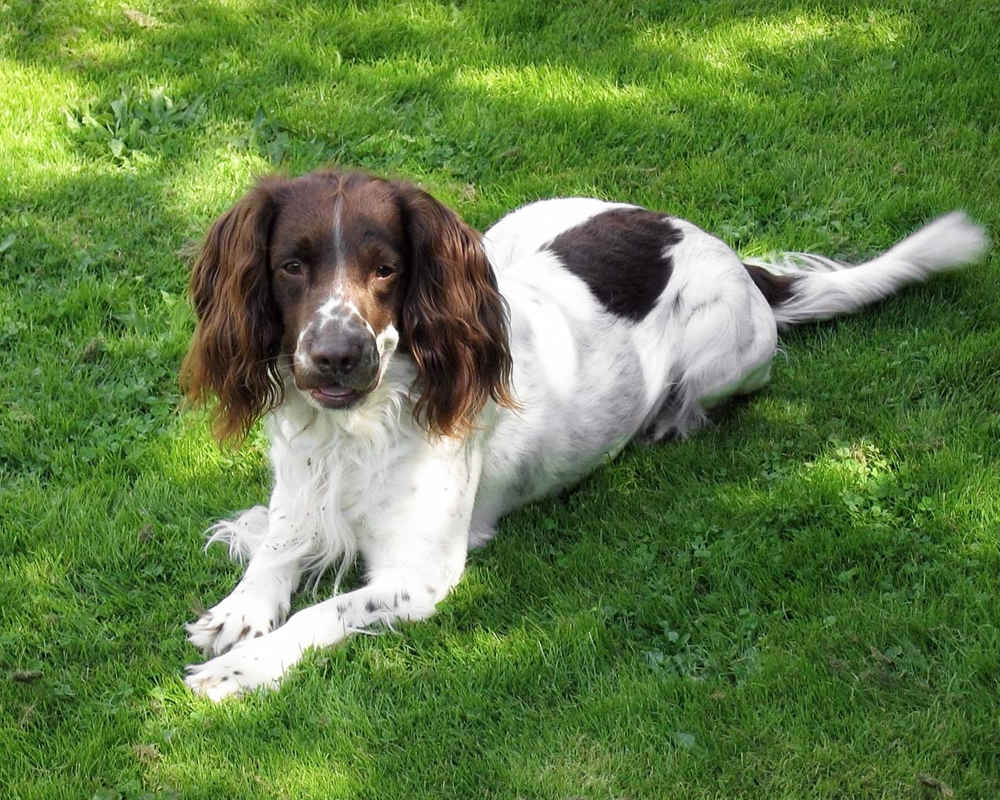
The breed standard for the springer spaniel describes the dog as cheerful, the tallest and most daring of all spaniels. If its closest relative, the cocker spaniel, was bred for hunting snipe, then springers, being taller, are more versatile. Compact and sturdy, they typically live between 12 and 14-15 years. Female springers are noticeably shorter, averaging about 48 cm, while males are around 51 cm, sometimes a bit taller. Their weight is roughly the same: 23-25 kg.
The year 2018 brought them widespread recognition in the USA – the English springer spaniel became 27th on the list of the most popular breeds. Many celebrities decided to get “jumpers,” including Oprah Winfrey and George W. Bush.


Отличительные черты

Голова

Морда

Уши

Глаза

Зубы

Корпус

Конечности

Хвост

Шерсть

Окрас
Character
It can be confidently stated that the “springer” is not only a hunter but also a wonderful family companion dog. The friendliness for which springer spaniels are known allows them to coexist in any home. The presence of other pets is not particularly important to them, as long as they are not birds or dogs of the same sex. They see the former as prey and the latter as rivals.
They are often referred to as “clingers,” as they love to be close to their owner. They get along well with children, developing the most sincere feelings during interactions. It can be quite difficult to stop this joyful company, as both the dogs and the kids enjoy active play. There is no need to worry about the children during these moments; the dog is quite patient with their antics and is excellent at taking on a nanny role.
One of the positive traits of the springer spaniel’s character is its adaptability to changing living conditions. They handle train or car moves easily, always ready to accompany their owner, regardless of whether the owner is going hunting, fishing, to the forest, or the park; the dog just wants to be by their side.
They possess well-developed intelligence, allowing them to sense their owner’s mood through cues known only to the dog. Additionally, they can learn a large number of commands given through gestures.
As mentioned, they are very sociable. However, this trait can have a negative aspect: dogs do not enjoy being left alone for long periods. During those times, they may howl, bark loudly by the door, and occasionally damage household items.
Perhaps this is one of the most practical dogs in terms of character. If necessary, they will always alert with loud barking when a stranger appears on the street, standing guard. Springers feel completely at ease in dog parks, and during walks in the park, you can be confident that they won’t get lost. However, for added security, it’s still best to get a collar with geolocation, giving the owner peace of mind.Despite some differences between show dogs and field springers, once they return home, they all turn into beloved pets. However, this difference is immediately apparent in the field: show dogs are less equipped for harsh conditions.Homebodies will have to adjust their daily routine if they decide to adopt such a pet.All owners assert that springer spaniels are completely devoid of aggression. While at home, they can serve as guardians.
Irreplaceable searchers
The English Springer Spaniel is actively used in the police, drug control, and search and rescue teams. The dog has a unique super-sensitive sense of smell.Care and Maintenance
English Springer Spaniels are relatively easy to care for and thrive not only in private homes but also in apartments. They do require regular physical activity to maintain their health, which is an essential consideration.
These dogs are excellent swimmers and love to run and play. If the dog lives outside of the city, it’s best to allow them free access to a fenced area during warm weather. A fence higher than 2 meters can help prevent the dog from escaping after birds and protect the owner’s flowers. It’s not advisable to chain such dogs; they should roam freely. Ideally, allocate a 4×4 meter area for them to play. During hot weather, the dog can stay in the shaded part of the area or come inside. Some owners cover the area with sand, but this is not strictly necessary. It’s sufficient to keep the play area free of construction debris and broken glass to prevent cuts and injuries during digging.
When living in an apartment, regular walks are crucial until the puppy reaches 8 to 12 months. Once they reach this age, a minimum of two walks per day of 1.5 to 2 hours with strong physical activity greatly improves the dog’s quality of life. A good indicator that it’s time to end the walk is when your dog stops running and walks calmly beside you. They enjoy swimming, so having a body of water nearby is a definite advantage, especially on hot days.
During walks, it’s essential to monitor the dog’s behavior closely, as it can reveal a lot.
In summer, insects like ticks can crawl into their ears. If the dog frequently shakes its head or tries to scratch inside its ear, this may indicate a foreign object in the ear canal or an existing inflammation.
If the dog starts limping, it’s best to check its paws during the walk: a pebble might be stuck between their toes, they could have a cut, or their nails may be too long. More serious reasons for limping can be found in the “Health and Diseases” section.Caring for an English Springer Spaniel is quite straightforward, especially if you develop a specific routine.Ears should be checked at least twice a week. They should be cleaned with a special swab during each inspection, not with cotton swabs, to avoid injury to the pet.Nails should be trimmed from the first months of life. By acclimating the puppy to this procedure, you can avoid the need for a groomer later on. You will need to buy dog nail clippers, prepare cotton pads, and hydrogen peroxide for disinfection. Some dog owners use nail files on their pets, which is a longer process and can be harder for the dogs to tolerate. The nail should be trimmed about a third of the way down because inside the nail is pulp with nerve endings and blood vessels. If damaged, the animal may be restricted in movement or experience pain for a long time.Brushing teeth with odorless dog toothpaste should be done at least 1 to
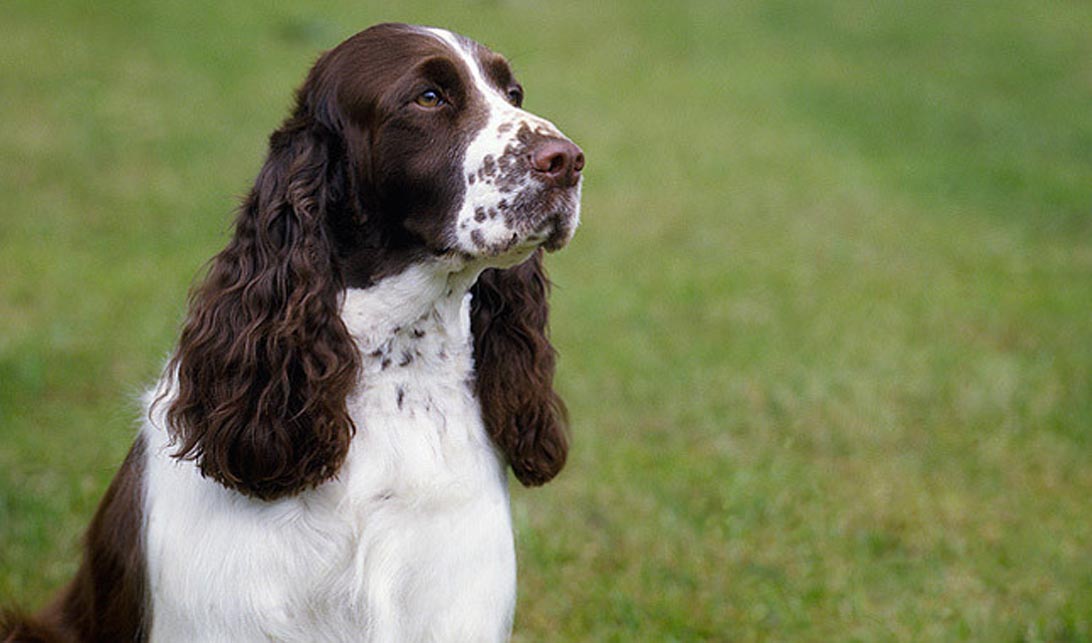
Two subtypes of the breed.
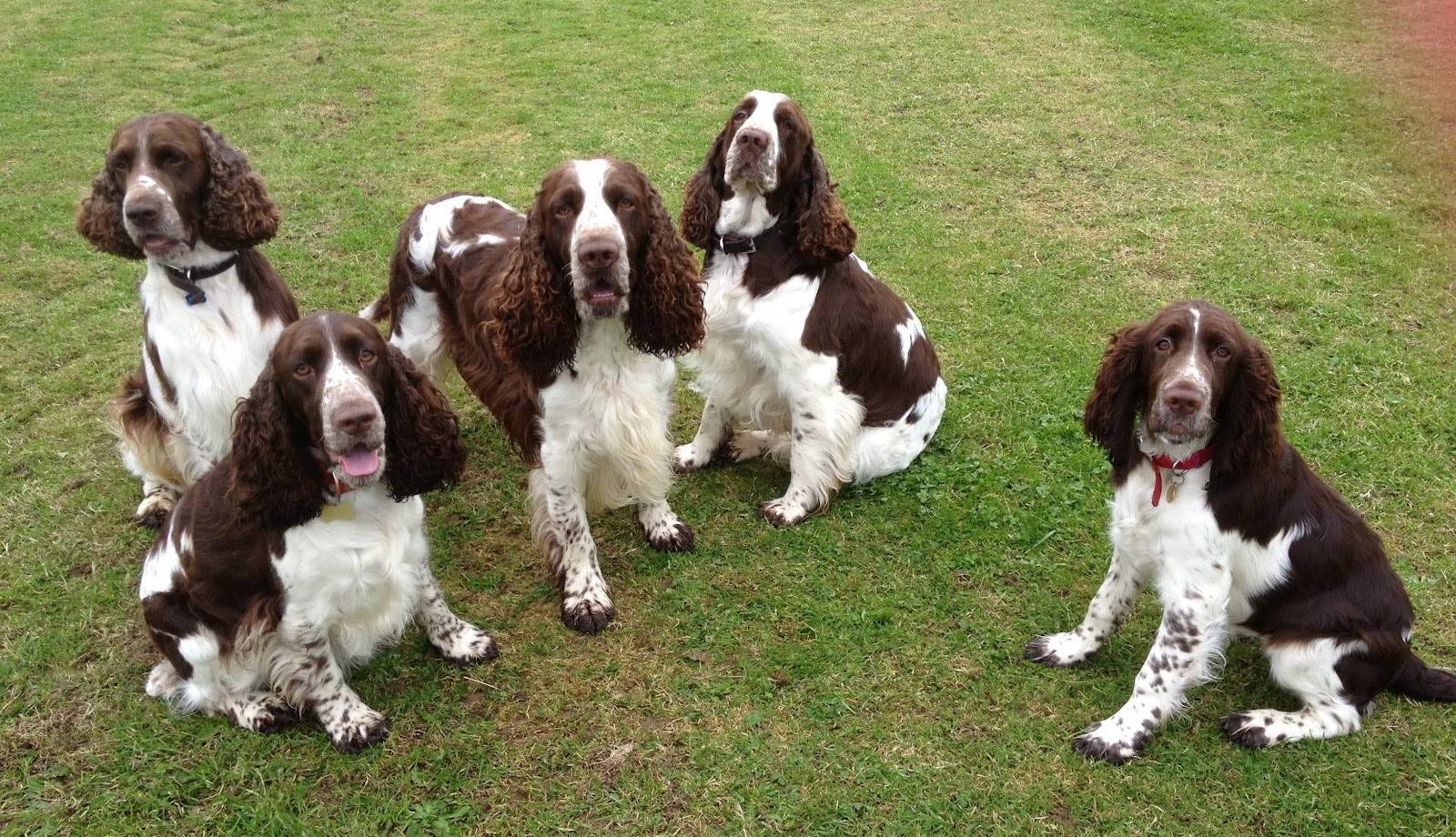
There are two main subtypes of English Springer Spaniels - field spaniels and show spaniels. However, these two breeds differ significantly from each other in appearance and purpose. Field spaniels are smaller, with shorter ears and short fur, bred specifically for working needs. Show spaniels, on the other hand, have a stockier build, long fur, and ears, and are the more common type of the breed.Training and Education
The Eared Jumper is quick to learn various commands. Its character is driven by a desire to please its owner, so it quickly masters new material. The first thing a puppy must learn is its own name. Without this, its further development is impossible. Next, the little hunter gets accustomed to its place in its new home. It is the owner’s task to reward the puppy each time it correctly follows the command “place.” Adhering to established rules in the home is also a part of the training process. These rules must never be violated by anyone. Otherwise, the family companion may grow into a bold and sneaky freeloader.
By the time the puppy develops immunity from vaccinations, it is essential to teach it commands such as “no,” “come here,” “sit,” “lie down,” “paw,” “speak,” and “quieter.” Basic retrieval training can also be introduced using its favorite toys. In any case, patience and consistency in training are necessary. Punishing the puppy with shouting, or pulling it by the scruff, can harm its psyche and undermine the owner’s authority. Hitting the dog is strictly forbidden.
The best results come from using treats the dog loves as rewards. Given its propensity for games, training can also take place during playtime on walks. However, sessions should not last longer than 20 minutes, as the dog may tire and start to lose focus. Daily practice for several short sessions works best. Besides treats, tactile contact is also important: springers are very gentle and enjoy light petting.
The owner’s tone also significantly influences the dog. If it misbehaves, it’s essential to speak firmly, but without shouting. They are smarter than people often think and understand a lot.
Of course, if hunting skills need to be developed, it is advisable to contact a kennel center and undergo training with a specialist. Training is conducted at special training stations. When choosing a trainer, it is best to consider certified kennel centers rather than getting swayed by advertisements from various pet bloggers. Reliable sources offer healthy puppies with proper documentation and pedigree.
Dogs with high IQ
Dogs have a high IQ, evidenced by their recognition as the 13th smartest breed among all dogs.
How to Choose a Puppy
Choosing an English Springer Spaniel puppy requires a responsible approach. Before making a purchase, it’s important to determine the goals for which the pet will join your home.
This breed is not suitable for couch potatoes and homebodies, as it requires frequent and long walks.
After thoroughly studying the breed standard, you can start looking for a kennel. It’s much better if it’s located nearby, allowing you to visit and evaluate the dog’s living conditions while personally meeting the breeder. However, if you are interested in breeding the breed, you can purchase an English Springer Spaniel from an overseas kennel club.
Once you’ve chosen a kennel and puppies are available for sale, be sure to visit and check the veterinary passport, where you’ll find records of vaccinations and deworming. Verify the pedigree and observe the mother of the puppies. Her behavior will give you insight into the psychological traits of the litter.
Each puppy may be charming, but you need to select one that fits your objectives. The most active and cheerful one is your choice: it should meet standard criteria, be over 8 weeks old, have a clear gaze, clean coat, and a moist nose without signs of aggression towards its siblings. Additionally, its joints should be pain-free, it shouldn’t limp, and its belly should not be swollen. With a pedigree from Zoohnika, choose the puppy of your dreams.
Health and Diseases
Overall, this is a very healthy breed. Of course, springers can also get sick. But their immunity is quite strong – that’s a fact.
To avoid purchasing a puppy with hidden genetic issues, it’s recommended to reach out to reputable breeders who conduct screenings for genetic disorders.
Unfortunately, hip dysplasia has affected this breed as well. With hip dysplasia, one of the hip joints forms incorrectly, leading to movement difficulties. Considering the temperament and activity level of an English Springer, this can be detrimental to the dog. It is crucial not to let a puppy under 8 months jump off beds or go down stairs.
Phosphofructokinase deficiency is a genetic disorder to which Springer Spaniels are prone. Fortunately, it occurs quite rarely and only if both parents have genetic impairments. Regardless of the dog’s purpose (field or show), glucose is improperly metabolized, and the muscles do not receive the necessary energy.
Retinal dysplasia and retinal atrophy are extremely unpleasant hereditary diseases. In any case, a full life is impossible with such ailments. Often, months go by before the problem is identified. The first signs include night blindness, bumping into surrounding objects, and a lack of response to previously learned hand signals.
Are you considering getting one? There is a huge selection of listings on the Zooinka map by city.
Содержание
-
1. Описание породы
-
2. Внешний вид
- 2.1 Голова
- 2.2 Морда
- 2.3 Уши
- 2.4 Глаза
- 2.5 Зубы
- 2.6 Корпус
- 2.7 Конечности
- 2.8 Хвост
- 2.9 Шерсть
- 2.10 Окрас
-
3. Характер
-
4. Содержание и уход
-
5. Дрессировка и обучение
-
6. Как выбрать котенка
-
7. Здоровье и болезни






Comments
Only registered users can leave reviews.
Enter