
English Mastiff




Warning: Illegal string offset 'label' in /home/panda/sites/zoonika/wp-content/themes/zoonika/template-parts/animals/animals-param-item.php on line 32
Ð


Breed Description
Mastiffs are magnificent, powerful animals that have been known to the world for over 2000 years. It’s hard to even call them dogs, considering their extraordinary character, size, strength, and rich history.
The “mastiff” group includes 7 distinct breeds, differing in standard requirements and temperament, as well as their geographical origins. What unites all these breeds is their giant size and weight, excellent physical attributes, fighting power, certain exterior traits, temperament, and historical use of dogs for hunting, herding, guarding caravans, and accompanying prisoners and slaves.
The Old English Mastiff is one of the oldest representatives of this group. However, the question of what dogs were its ancestors remains a mystery, and as often is the case, there are several legends about it.
According to one version, the English mastiff is a descendant of ancient dogs whose remains have been found in Tibet, India, and even Egypt. There are many artifacts depicting enormous dogs that closely resemble modern mastiffs. These fierce dogs hunted tigers and lions, unafraid of wild predators.
Another hypothesis claims that several Molossians were brought from Central Asia as pack animals and guards. Allegedly, they are the ancestors of the Old English Mastiff.
But the British consider this breed to be inherently theirs. To support this, the English cite claims that the Romans discovered gigantic dogs during their colonization and invasion of Britain. They were so impressed by their temperament, strength, and ferocity that they took several of these animals back with them and later used them in battlefields and as gladiators. After the decline of such brutal competitions, they became the ancestors of several other breeds that spread across modern Europe.Regardless, the ancestors of modern mastiffs have always been alongside humans, serving them in one way or another.In London alleys, they participated in bear and bull baiting. After baiting was declared illegal, they took part in dog fights in pubs until that pastime was also banned. Interestingly, they were too slow for dog fighting, which prompted breeders to cross them with other dogs. Although records of breedings were not kept, it is certain that the old mastiffs gave rise to several other English breeds.Powerful dogs have always been very loyal to their owners, regardless of their popularity. The number of such animals remained consistently high thanks to ent
Appearance
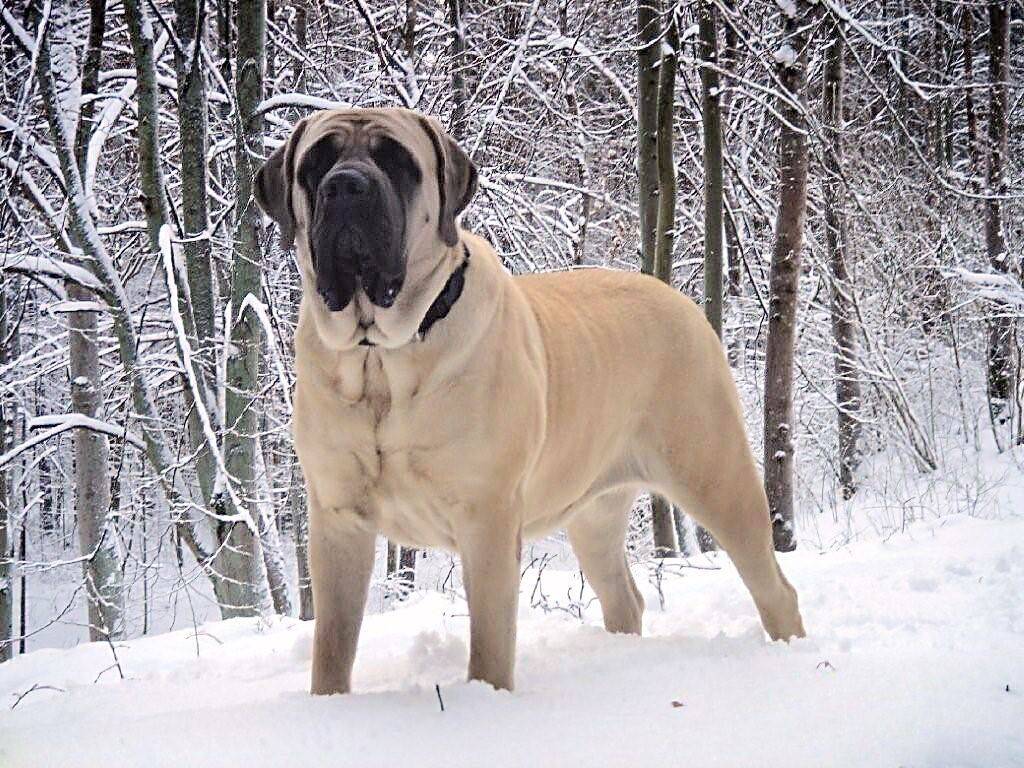
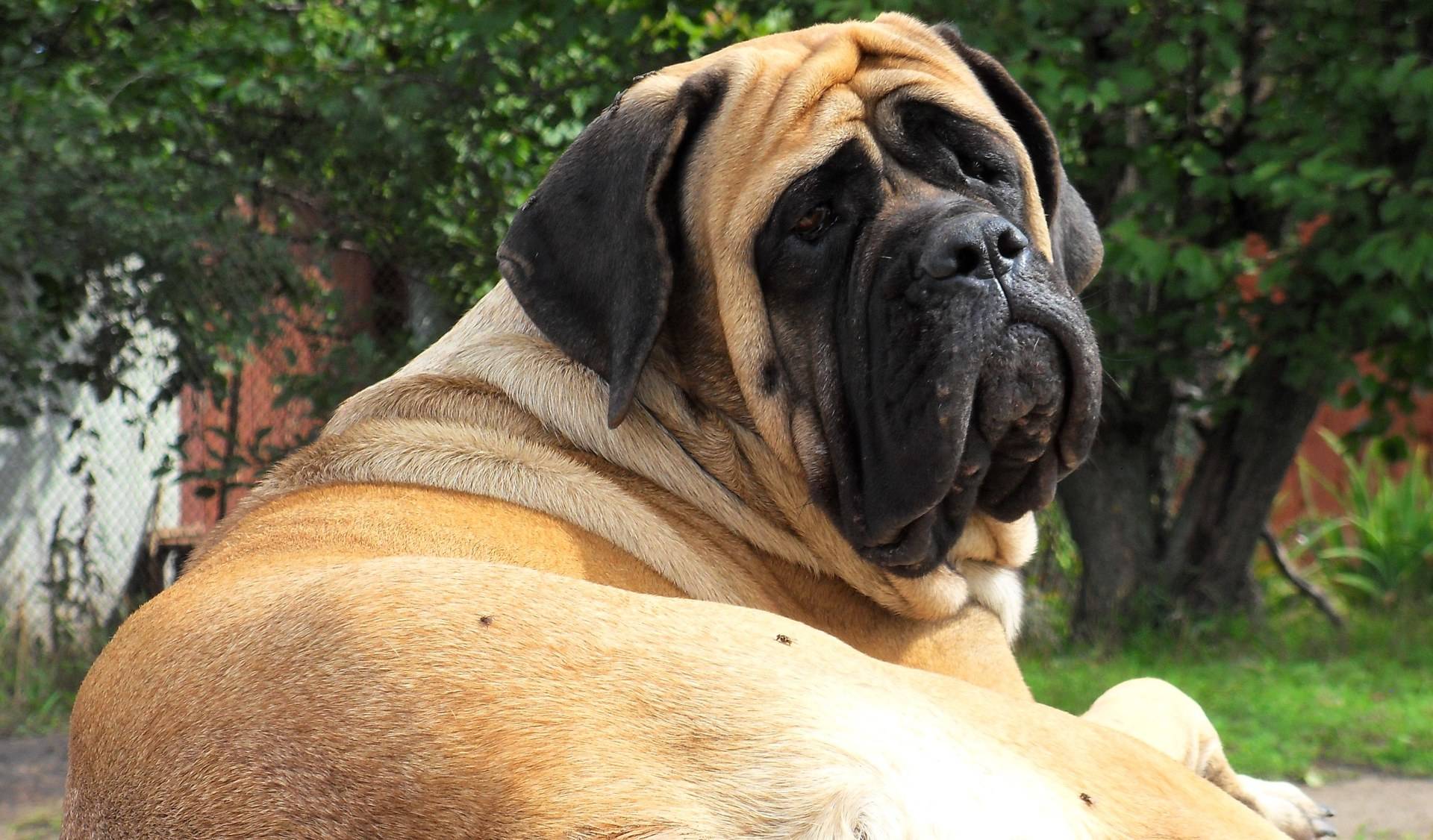
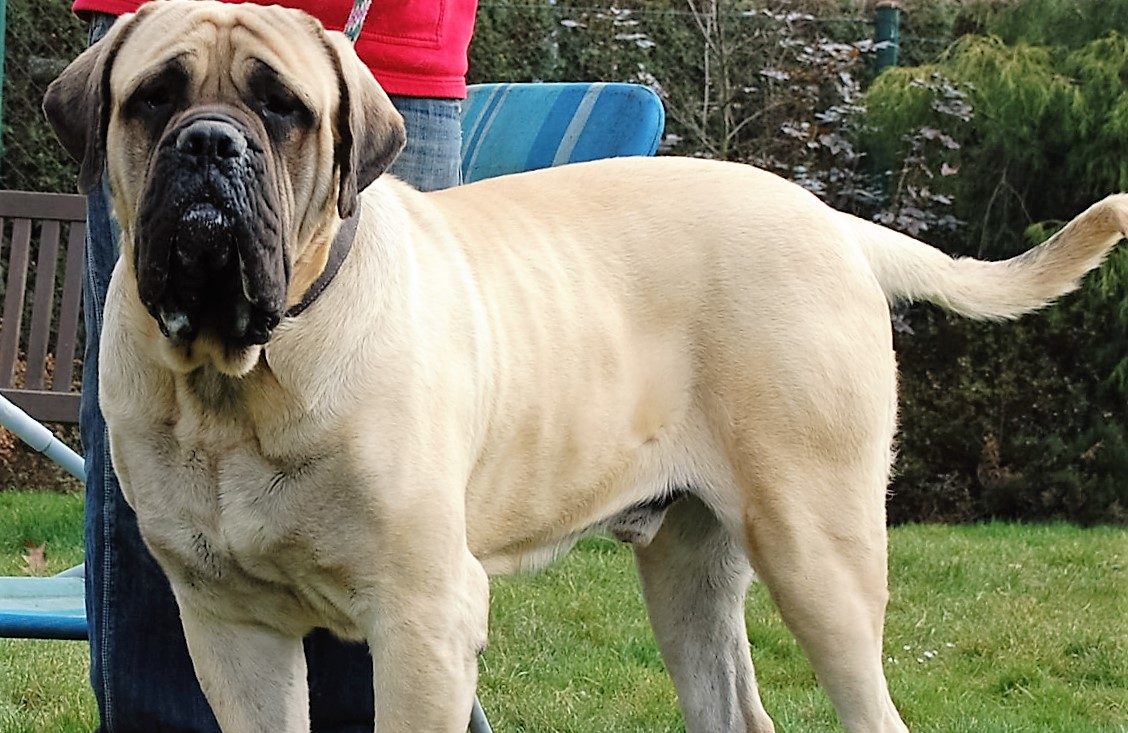
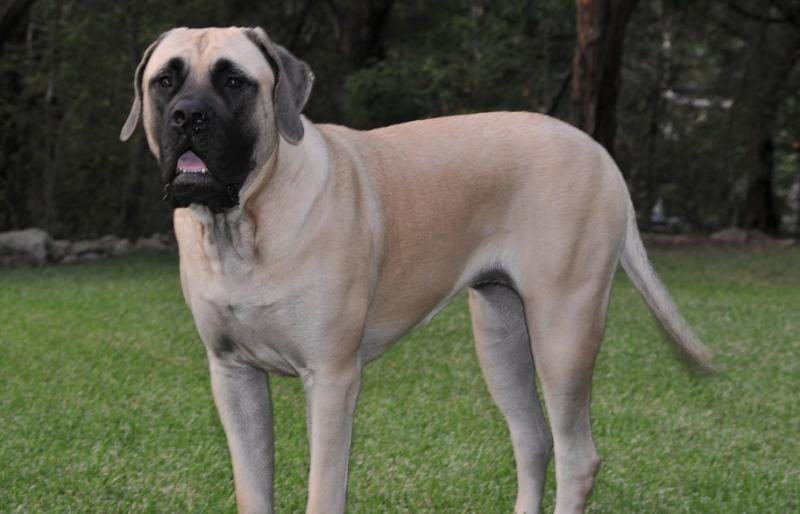
One of the largest dog breeds on the planet. A breed that may fall short in height compared to the Irish Wolfhound, but in overall appearance and power, it significantly surpasses it.
The weight distribution of the English Mastiff is approximately 1 kg for every 1 cm of height. Although the ideal English Mastiff is not regulated by height or weight according to standard, sources indicate that males should stand at least 75 cm at the withers, and females no less than 69 cm, with weights ranging from 68 to 72 kg. Many breeders claim that in practice, dogs grow an additional 5 cm beyond these parameters.
An interesting fact: the heaviest dog in the world, according to a 1989 record in the “Guinness Book of World Records,” was an English Mastiff measuring 94 cm in height and weighing 155 kg, with an overall length of 251 cm.
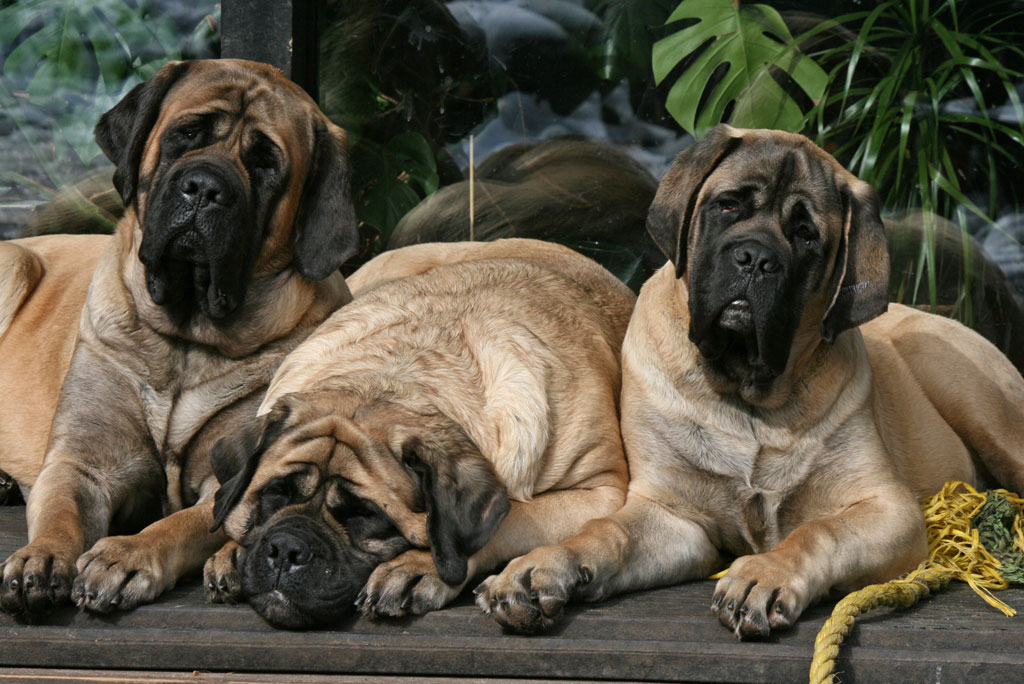
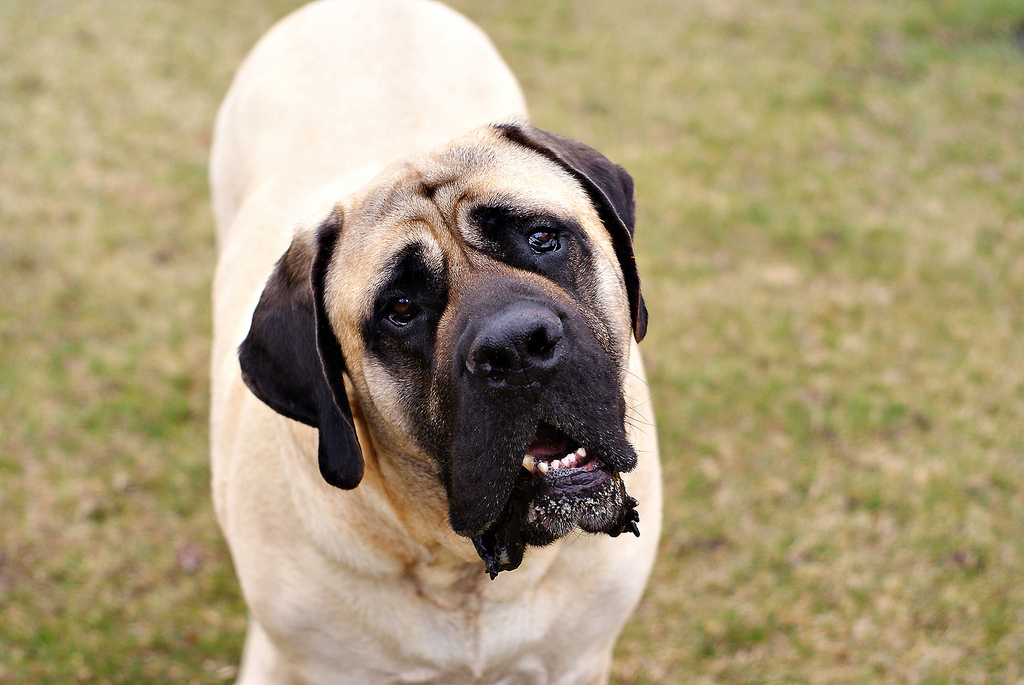
Despite their enormous size, the Mastiff is a compactly built dog with short fur, a large head, and powerful musculature. The aggressiveness of dogs is a thing of the past, and today, this breed is a wonderful family dog with a gentle temperament, always protective of its loved ones. At first glance, it may seem somewhat lazy, but in moments of work, it surprises with its agility.
Dogs possess a sense of dignity, which is clearly expressed in their measured gait and wise, attentive gaze.


Отличительные черты

Голова

Морда

Уши

Глаза

Зубы

Корпус

Конечности

Хвост

Шерсть

Окрас
Character
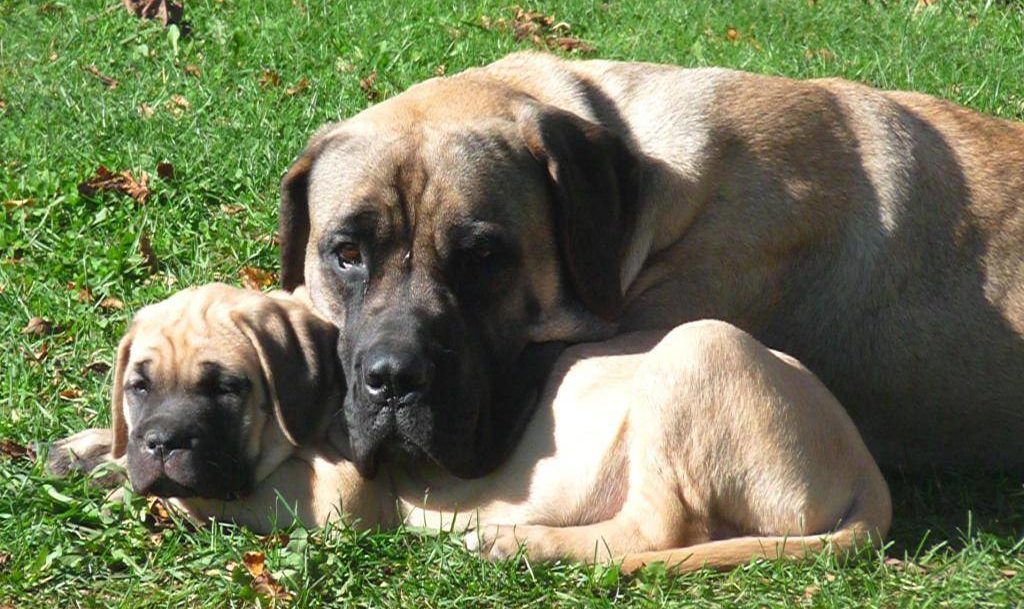
The English Mastiff today is the polar opposite of its ancestors, who were known for their ferocity. Modern Mastiffs are more likely to lick and cuddle than to bite. Even cats can expect peace with the toothy giant. Moreover, these powerful dogs often take their meowing companions under their wing and treat them as if they were their own puppies.
However, courage and fearlessness remain an integral part of the Mastiff’s character. The breed can now be considered versatile, as these dogs possess excellent protective qualities, and their formidable appearance clearly indicates that it’s best not to act up in their presence. Their loud, incomparable bark can only be compared to the sound of a tractor horn.
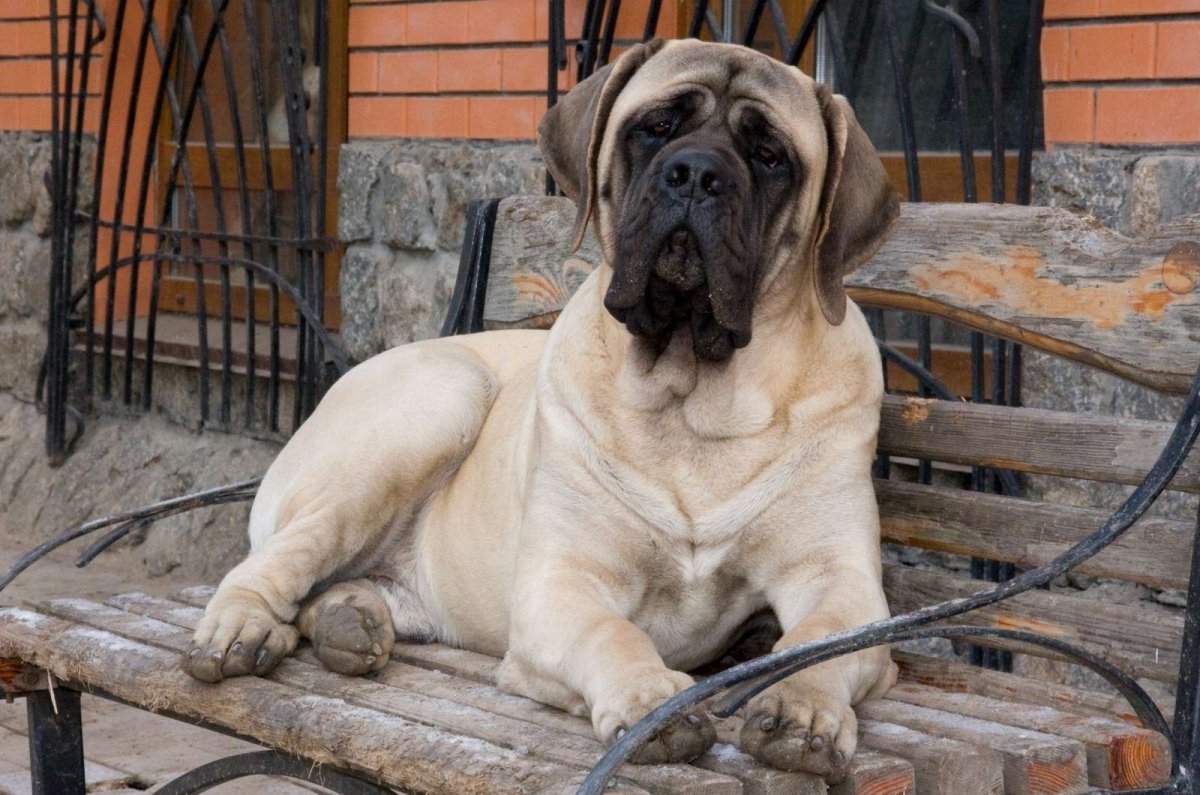
Calmness around such a dog is guaranteed. A significant role in this tranquility is played by the animal’s absolute confidence. With a wise gaze, the dog takes its time and is ready to lie by the fireplace next to its owner for a long while. These enormous couch potatoes can easily sit on their owner’s lap and snuggle up, expressing their loyalty and boundless love. However, such displays of affection aren’t always pleasant considering the size and weight of the animal. Additionally, the vast mouth is always full of drool, which the dog will inevitably leave as a sign of its special affection.
Despite its kindness, the dog can instantly transform into a true Cerberus if any of its loved ones are threatened or if another dog wants to test its strength.
Strangers are always met with suspicion and remain within the Mastiff’s sight. Even once convinced of the safety of the dog’s family, a guest will still feel the intense gaze of the four-legged guardian. But the Mastiff will not attack. At most, it will “lay down” an intruder on the floor, corner, or tree and then await its owner’s command.
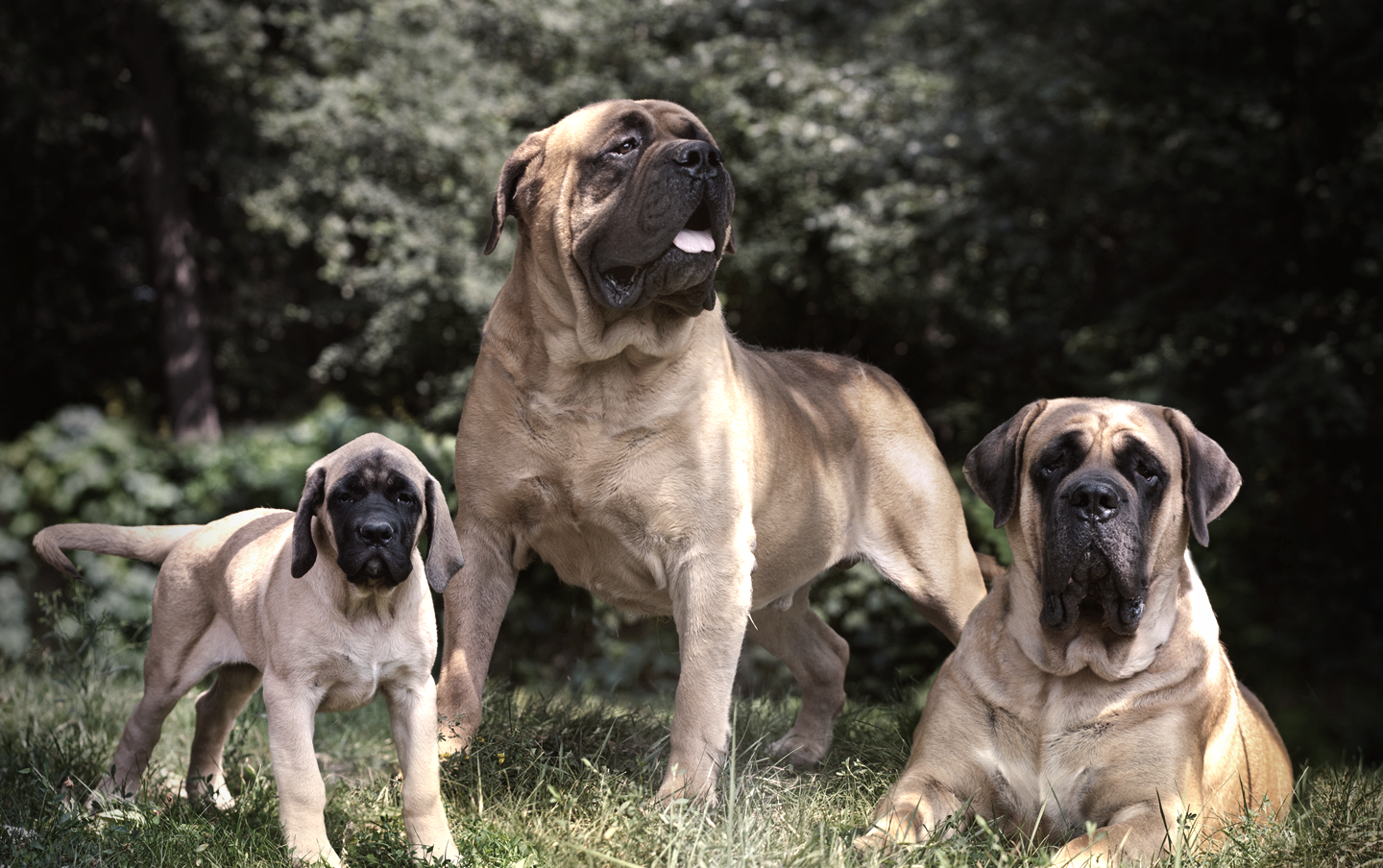
An amazing cleverness allows the animal to determine its own responsibilities, for instance, when you venture out into nature. The dog will silently patrol the area, as if marking its boundaries, and choose a spot from where it can observe everything around, lounging comfortably.A curious fact: there is a family in England that has three English Mastiffs of different genders. One of the dogs has unfortunately become nearly blind. The youngest of the trio has taken on the role of looking after the blind dog, aiding her in navigating outside. He guides his “friend” away from the corners of houses with his body or tries to get ahead when he sees that she’s approaching stairs. Also, this four-legged helper oversees the children’s games with the semi-blind dog: if they become too involved and the dog feels threatened, he intervenes and stops the game. But at other times, he mind his own business while keeping a watchful eye on what’s happening.
Mr. "Mastiff"
According to one legend, the word "mastiff" originated from a distorted version of "master of thief," meaning "lord of thieves": during the day, mastiffs were kept on a leash so that they would be fiercer at night.Care and Maintenance
Where is the most comfortable place to keep an English Mastiff?
The giant’s easygoing nature allows it to live both in the city, in a small apartment, and in a country house. One might think that the dog’s size requires a lot of space. Not at all. The dog is very homey and loves to lounge in its spot, so the size of the place it lives in is not of primary importance. However, there are two caveats: everything will be covered in drool-be prepared for that; and the dog’s tail, when it happily greets its owner, can cause havoc by knocking over anything nearby.
This breed is not suited for active recreational activities. An adult dog doesn’t mind playing ball in the yard or on a playground, but not for long. Don’t expect your Mastiff to run alongside your bicycle for several kilometers in the woods. This breed is also prone to injuries.
Twice a day, 40 to 60 minutes of calm walks is usually enough. Of course, during this time, the dog will have some fun. It’s recommended to monitor its mood. Certainly, allowing a 24-hour lounging period with breaks for meals and bathroom needs is also not advisable, as it can lead to excess weight and heart problems for your dog.
Feeding an English Mastiff is a very important part of care.
Overfeeding the dog is highly discouraged. The bowl should be placed on a raised stand and removed 10 to 15 minutes after feeding begins. After that, a “quiet time” is designated-several minutes of rest, but no play, as there’s a risk of bloat. It’s crucial for Mastiffs to receive nutrition that supports their muscles, so their diet should be high in protein. Additionally, calcium is important for the dog’s bone health. What food to choose for a Mastiff? Opinions vary: some dog owners prefer natural food like beef, cottage cheese, vegetables, and fish. Others believe that super-premium dry food is ideal for their dogs as it contains everything necessary. In any case, a sudden change in food is highly undesirable. It’s best to ask about food options when purchasing a puppy, as breeders have experience and can provide valuable recommendations.Hygienic care includes teeth brushing, bathing, nail trimming, coat brushing, and ear cleaning.From the first days of your puppy’s arrival at home, get it accustomed to these procedures so that it responds calmly to them in adulthood.Using tooth powder or special toothpaste on a brush will keep your dog’s teeth
The stomach of a mastiff is the best cut of precious stones.
Jewelers in ancient Alexandria considered the stomach of a mastiff to be the best way to cut precious stones. The dog was fed meat along with a precious stone and a handful of bones. During the digestion process, the stone was polished perfectly, and the masters only needed to make a few final adjustments.Training and Education
Raising a mastiff should begin in the very first weeks of life. Training a dog lasts its whole life. Obedience training should be based solely on positive reinforcement. These are the foundational principles that will help you raise a true noble English “gentleman.”
While the puppy is not yet walking outside and is waiting for its immune system to strengthen after vaccinations, you should teach it to maintain order in the house, which should not be broken by anyone.
The puppy will quickly learn its name and its place in the home as well. Placing training pads in its “favorite” spots will help prevent the consequences of its activities. Each time the dog goes to the bathroom in the designated place (on the pad), it should be praised. Gradually reduce the number of these accessories so that the dog starts going exclusively in one spot.
However, you must fight against the habit of eating under the dining table from the very start. If you don’t teach the little puppy not to beg for food from the table, the adult animal may take what it likes and not even thank you afterward.
Commands such as “sit,” “lie down,” “come,” “no,” “okay,” and “walk” should be mastered by 4 to 5 months of age. Also, make sure to get the puppy accustomed to a collar, leash, and harness before moving on to a muzzle. This requirement is essential if you live in a city.
During command training, the dog may test your character’s strength. The most important thing is not to lose your temper and not to give in. If that happens, it is unlikely you will regain the dog’s full trust.Given the weight and power of a mastiff, it’s better to have professional help in training. Nowadays, there are plenty of dog training centers offering various courses for both dogs and their owners. Training for a “service dog” should definitely be entrusted to a professional.Apricot giants are often used as rescue dogs. It’s nearly impossible to train such a skill on your own. Currently, weight-pulling competitions are very popular. In this case, specialists in dog training can be of great assistance. Mastiffs also participate in agility competitions, which is especially fascinating to watch. The best breeders offering puppies with pedigree are gathered at Zooinika.
The largest
English Mastiffs currently hold a leading position in the ranking of the largest breeds. The record book even has a registered dog weighing 156 kg and standing about 1 meter tall at the withers.
How to Choose a Puppy
Buying a purebred and healthy mastiff is not easy. A bird market is not the most suitable place to acquire a pet, especially a mastiff. At best, you’ll end up with a mix of various breeds that resemble the mastiff. It’s hard to make any assumptions about the health of such a puppy.
Therefore, it’s essential to purchase a puppy only from a kennel. In our country, there are several such kennels, but puppies are not always available, and you should be prepared to wait for a litter.
Before buying, weigh all the pros and cons. Assess your living conditions and financial situation soberly, as a large dog requires significant financial investment, especially if you plan to participate in shows.
After studying the breed standard and selecting a kennel, remember that females older than 6 years, as well as those younger than 20 months, should not produce offspring. This requirement is set by the Kennel Club.
Do not buy a puppy based on photos or videos, even if they are provided by a reputable kennel. It’s best to visit in person, meet the breeders, interact, and ask all your questions. Prepare these questions in advance.
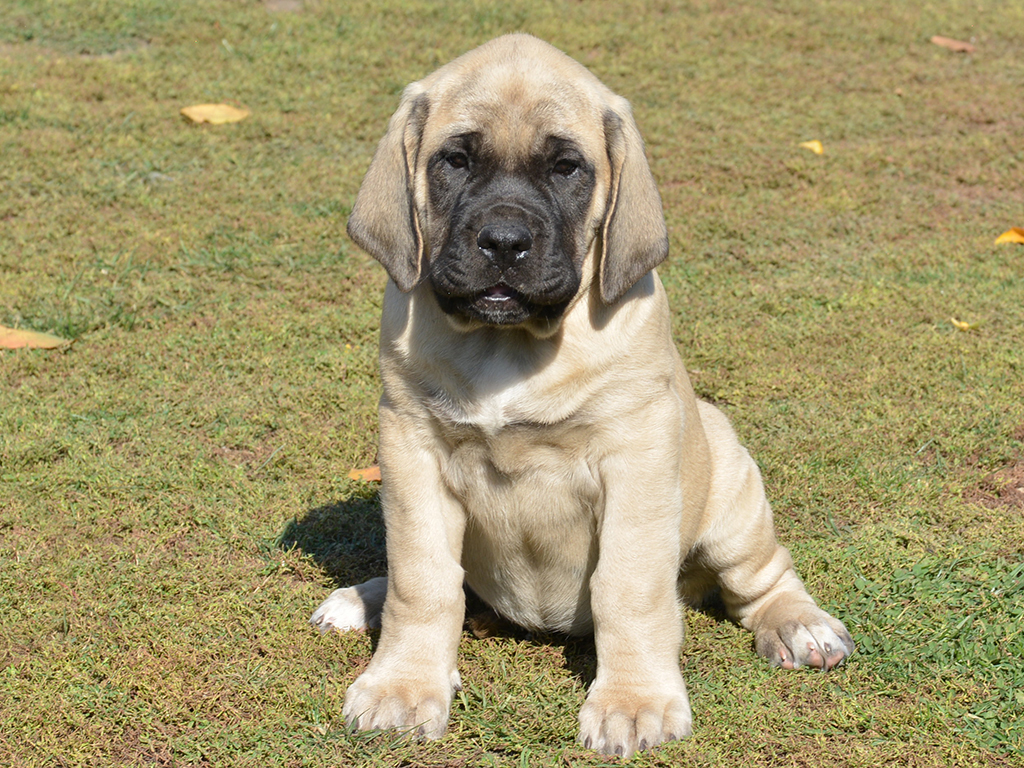
When communicating with breeders, get acquainted with all the puppies and their mother. You will likely realize which of the little “tanks” is yours. It should be bold but not aggressive. The coat should be clean and free of bald spots, and the eyes and ears should be clean. Pay attention to the puppy’s joints and movements. Even slight lameness or unsteadiness in walking should deter you from making a purchase, as these can be symptoms of dysplasia. Learn from Zooinic and get an excellent pet.Do not buy a puppy younger than 3 months.
Health and Diseases
Unfortunately, the English Mastiff does not possess excellent health. Their large weight is one of the main causes of ligament tears and elbow joint dislocations.
Hip dysplasia is among the genetic diseases that affect usually just one joint. Therefore, it is highly advisable not to let puppies under 6 to 8 months run on slopes, and for dogs living in urban conditions, going down stairs is strictly contraindicated. Even jumping off the couch can seriously injure a puppy, leading to lifelong consequences from the injury.
Among breed-specific diseases, issues with the cornea can frequently lead to complete blindness. Progressive retinal atrophy is one of the most serious of these conditions. The most important thing is to detect the illness promptly, as it can appear in animals of any age.
Cataracts more often occur in the latter half of life.
It is crucial to allow your Mastiff to rest for a while after eating. This can prevent the dog from experiencing gastric torsion, which, though not common, can arise. The danger lies in the rapid progression of this condition, which almost always results in death.
Regrettably, such grave illnesses as cancer affect many dogs of all breeds, and the English Mastiff is no exception. However, the breed does not exhibit any particular predisposition to oncology. Zooinika is the best place to reach a wide audience.
Содержание
-
1. Описание породы
-
2. Внешний вид
- 2.1 Голова
- 2.2 Морда
- 2.3 Уши
- 2.4 Глаза
- 2.5 Зубы
- 2.6 Корпус
- 2.7 Конечности
- 2.8 Хвост
- 2.9 Шерсть
- 2.10 Окрас
-
3. Характер
-
4. Содержание и уход
-
5. Дрессировка и обучение
-
6. Как выбрать котенка
-
7. Здоровье и болезни






Comments
Only registered users can leave reviews.
Enter