
English Bulldog




Warning: Illegal string offset 'label' in /home/panda/sites/zoonika/wp-content/themes/zoonika/template-parts/animals/animals-param-item.php on line 32
Ð


Description of the Breed
The Bulldog is an inherently British breed that embodies the spirit of the Misty Albion. The name of the breed originates from the English words “Bull” and “Dog.” This ties back to the medieval period in England when it was quite popular to stage something akin to gladiatorial contests or the Spanish bullfights: bulls, and sometimes even bears, were pursued by powerful dogs to the cheers of the crowd. The massive mastiffs and other large breeds excelled in this. However, over time, the organizers of these shows began to notice that they needed new dogs, as English mastiffs were rather slow.
Breeders started to cross their dogs with others, resulting in what were known as “bull dogs” – a transitional variant between molossers, mastiffs, and old English bulldogs. It is possible that these were the precursors of the dogs later referred to as English bulldogs.
Old English bulldogs were significantly smaller than mastiffs, but their grip astonished everyone. These broad, stocky dogs often ended fights with a “kiss of death.” Their huge, powerful jaws would envelop the nose and mouth of a bull, clamping down and cutting off the air supply – ultimately suffocating the bull.
In the 18th century, bull baiting was made illegal. As a result, giant dogs gradually lost their relevance. However, the public still demanded entertainment, leading enterprising Englishmen to organize fights between dogs of various breeds. Bookmakers began to rake in huge profits from dog fights, which were often held illegally outside the city or in pub basements. After 1835, such events went completely underground. Large mastiffs were not particularly agile in confined spaces, so the old English bulldogs came into the spotlight. These bulldogs looked different from modern ones but possessed the necessary strength and endurance for bloody battles. Their large, hefty heads, nearly absent necks, and thick, wrinkled skin prevented other dogs from suffocating bulldogs when they grabbed their throats. Conversely, the strong large jaws of these “gentlemen” could easily maim even larger opponents.
However, even this pastime eventually gave way to beauty. In 1873, the Kennel Club recognized the breed as independent, and breeders began the meticulous work of preserving and improving the appearance, trying to eliminate the bloodthirstiness and aggression of these four-legged locomotives as much as possible.
In the 21st century, the English bulldog is rightly considered a cult British breed.
Appearance
Winston Churchill believed that the bulldog is an extraordinary beauty that people have taken to the absurd. In the 21st century, the English bulldog ranks first among the 20 most popular dog breeds in England. Considering its global recognition, it’s safe to say that the bulldog would make it into the top five of that list.
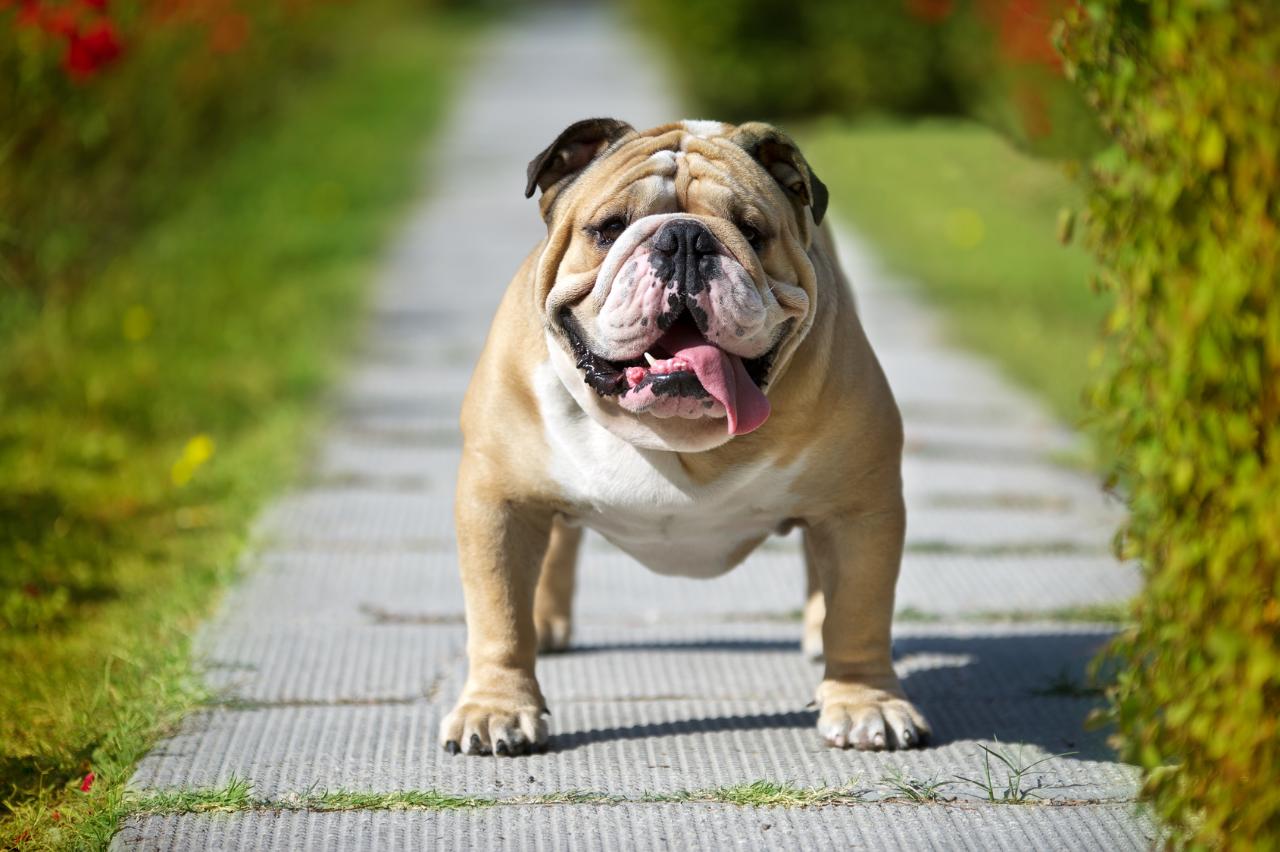
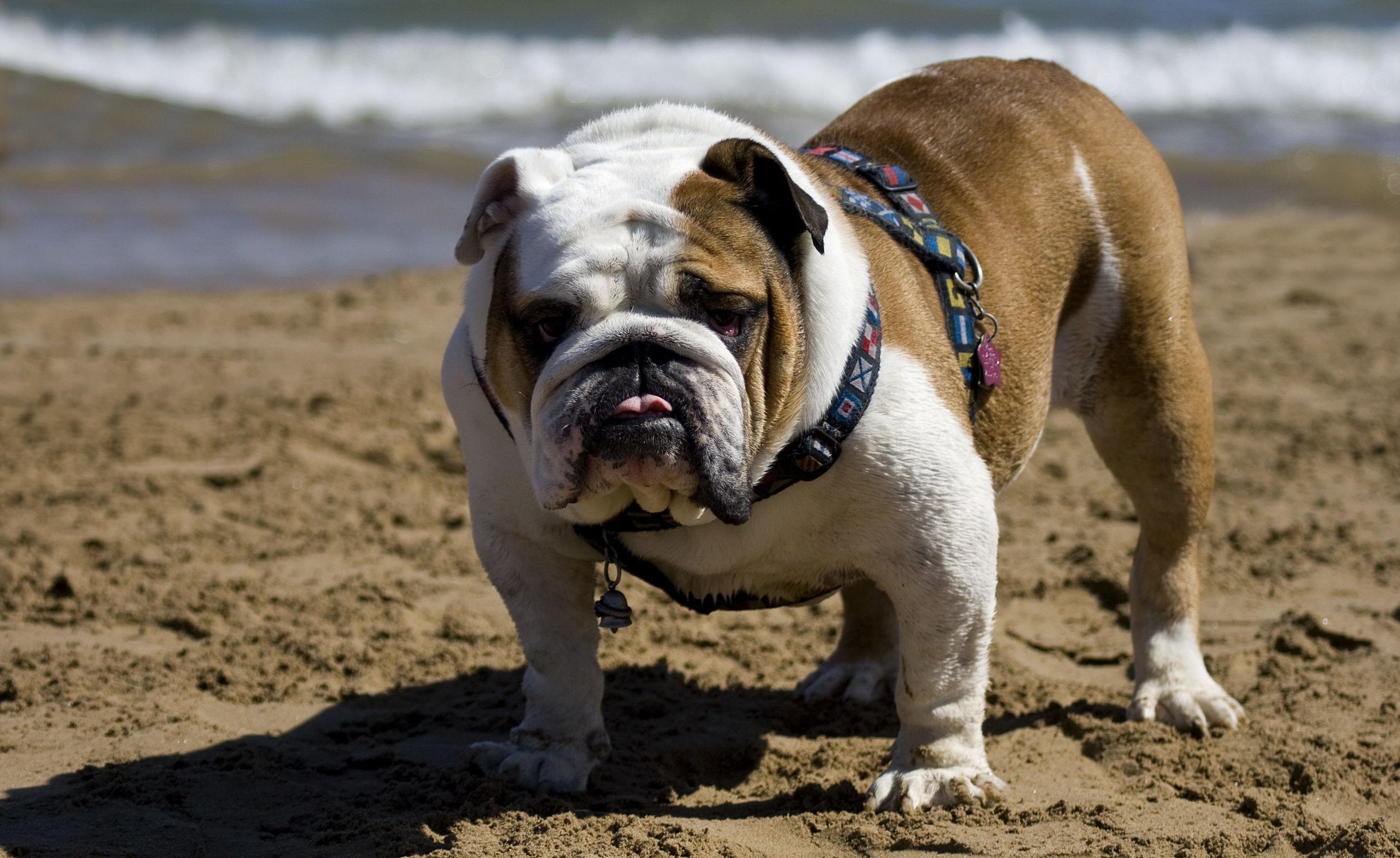
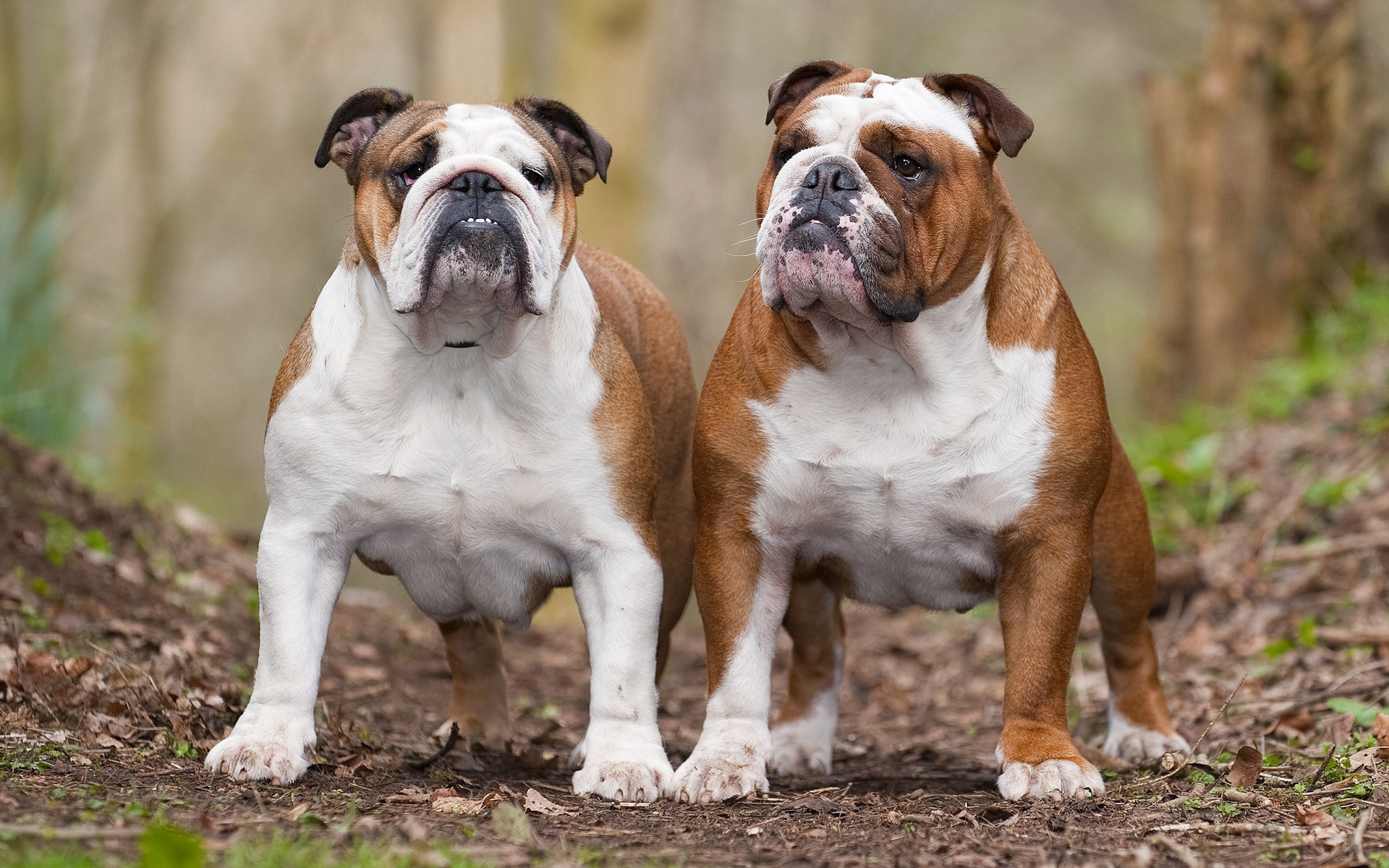
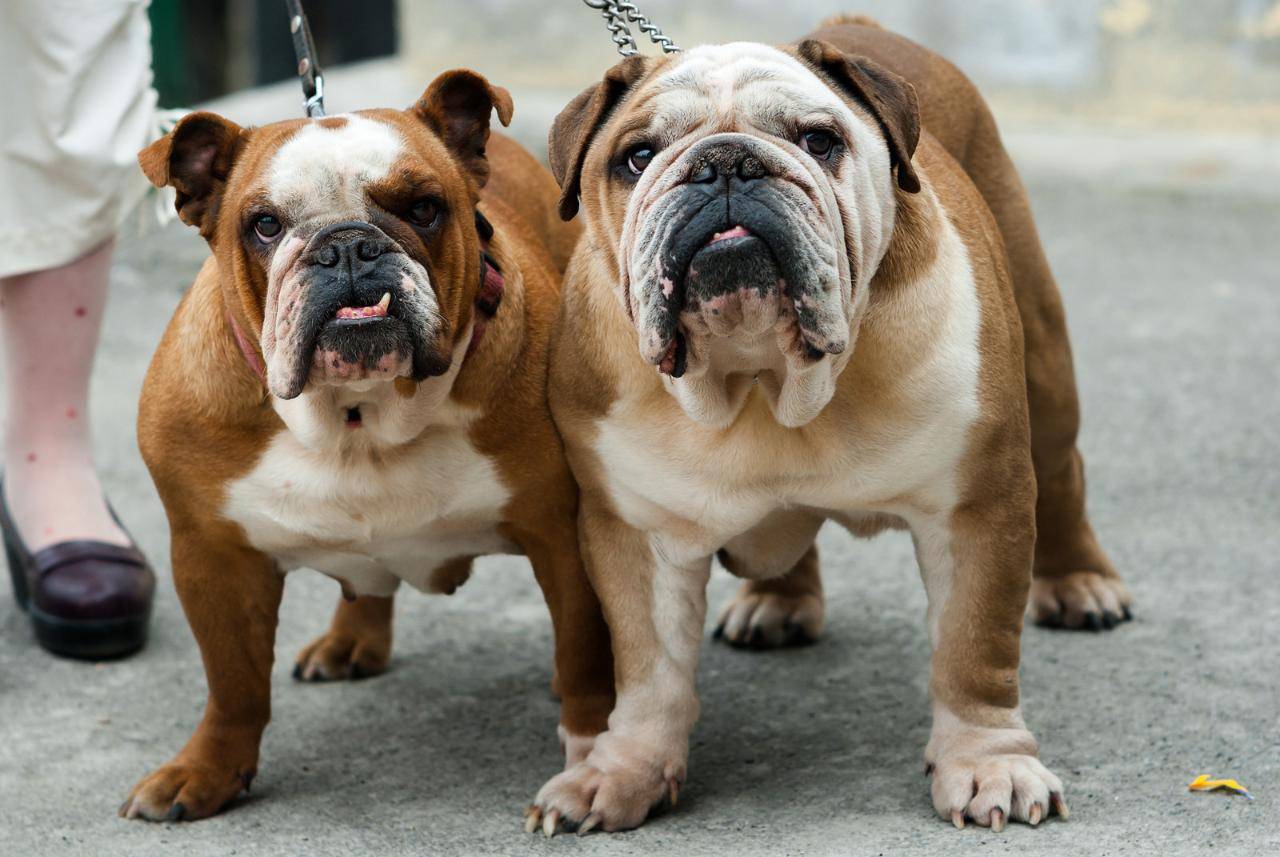
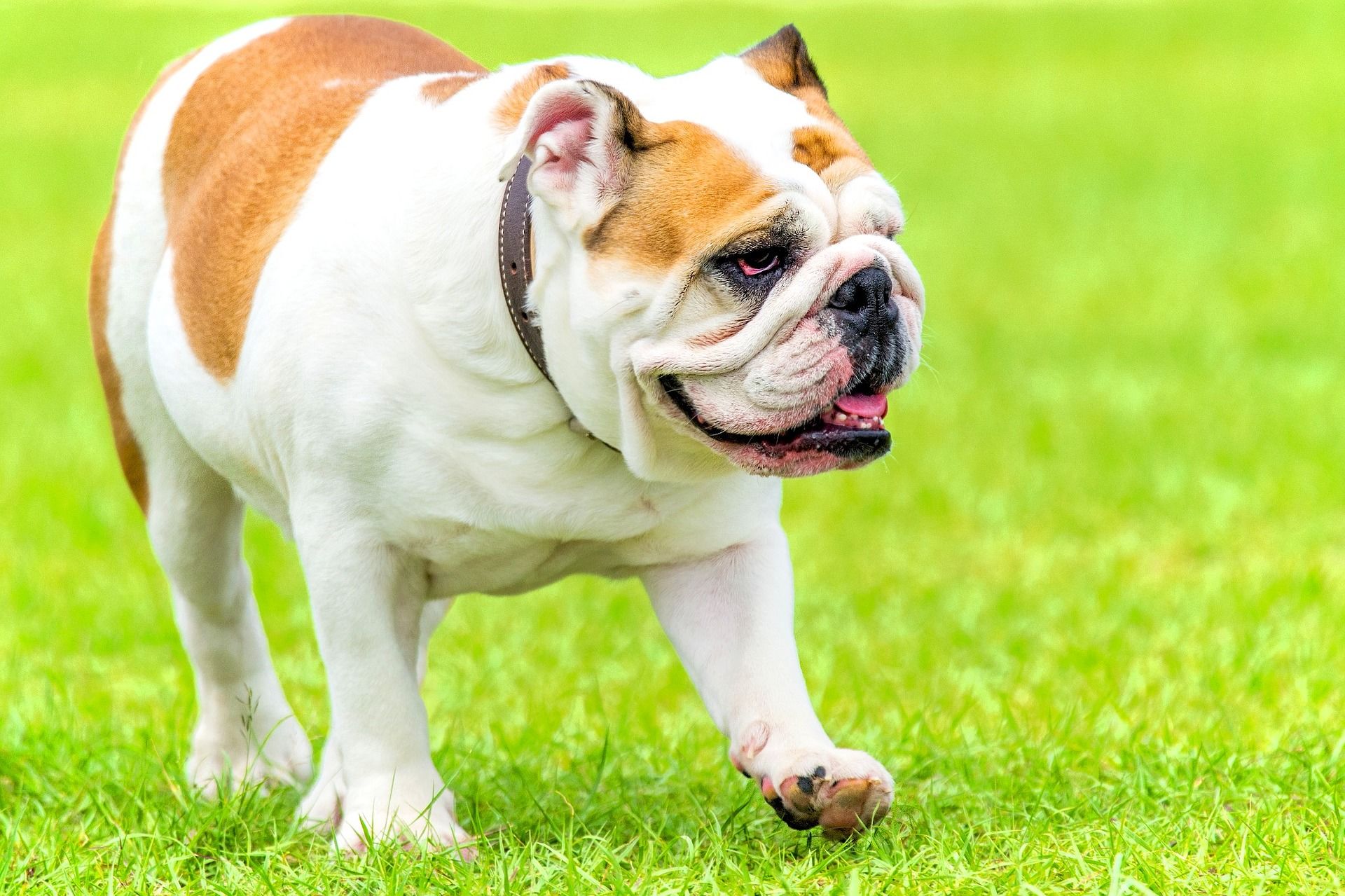
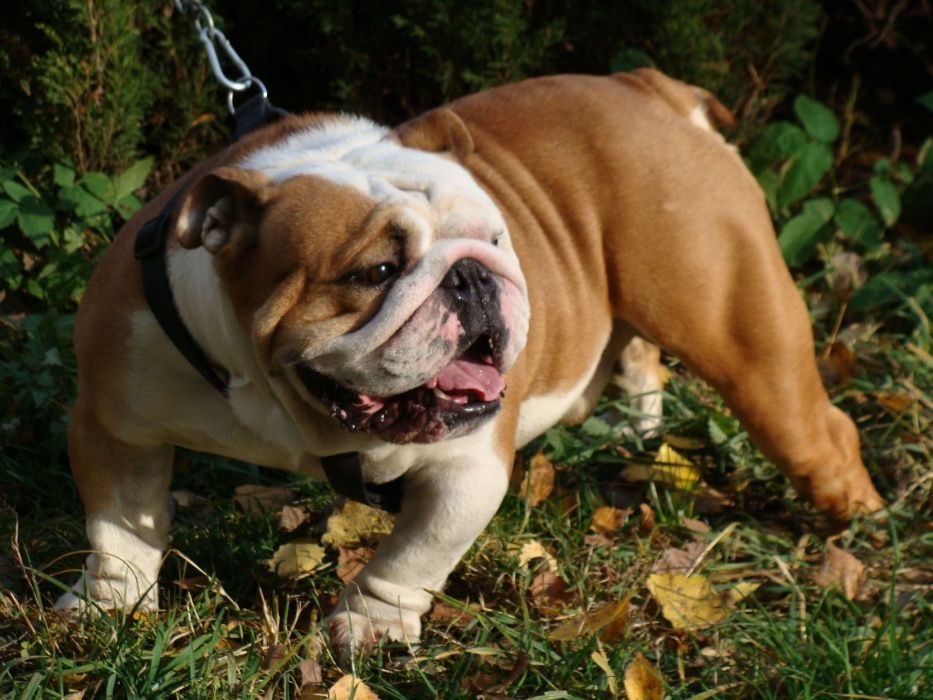
The gloomy, wrinkled face of this low-set dog with an expansive chest captures the heart not only with its unusual appearance but also with its signature bulldog gait.
Due to their relatively compact size, bulldogs make excellent companions for both adults and children, and their rather bloody past is hardly remembered. The average lifespan of these surly dogs from the Misty Albion ranges from 8 to 12 years, although some have lived beyond the 14-year mark. Thick-skinned, these dogs, like hippos, usually don’t rush anywhere.
Weighing between 23 and 25 kg as per standard, an adult dog stands 30 to 40 cm tall at the shoulder. The short coat emphasizes their muscle structure, and when the dog runs, it closely resembles a barrel of whiskey on short legs, rolling from side to side. Meanwhile, you can hear the earnest puffing, as bulldogs have very short muzzles.


Отличительные черты

Голова

Морда

Уши

Глаза

Зубы

Корпус

Конечности

Хвост

Шерсть

Окрас
Character
The gloomy appearance of the “puffing Englishman” is a stark contrast to his kind nature. Affectionate, loyal, and sociable, these dogs seem to try to convince their owners that the bloody fights of their past are just a nightmare.
A wonderful family dog will get along with every family member. The breed is suitable for both young families and older owners leading a calm lifestyle.
Dogs have a constant need for interaction with humans. Some notes of selfishness show that when a dog sleeps, which happens quite often, he doesn’t need anyone. But as soon as the “barrel” stops snoring, he wants company-preferably one that doesn’t make him run around but rather strolls leisurely in nearby areas.
“Never stand if you can sit, and never sit if you can lie down!” said Winston Churchill, and these words perfectly reflect the character of the English bulldog.
As for relationships with children, the dog loves them, although he feels like the “older brother,” not allowing overly familiar treatment. With older children, the dog behaves very reasonably, obeying when needed but not servilely submitting.
One of their remarkable character traits is patience. Cats do not disturb bulldogs, at least those that live in the same house. They, like ancient sages, look down kindly and only react to external stimuli in extreme circumstances.As quick and restless as terriers are, bulldogs are calm and unhurried. Though their movements may seem somewhat comical and light, they never rush anywhere. Their self-confidence may lead to a situation where the owner has to come up with “detours” for the gloomy dog to start performing certain actions.Essentially, the character of the English bulldog reflects a purely British mentality: it’s my way or the highway.Recalling Jack London with his immortal work “White Fang,” only one dog was able to defeat the main character, who conquered all – and that was a bulldog. Even now, despite his peaceful demeanor, if it comes to an actual fight, the bulldog won’t let go of his opponent until victory or his own demise. Therefore, the breed is considered a great guard, hunter, and protector.Some dog owners have noted that if an “Englishman” is offended by some dog at the park, he will remember it forever and will surely take revenge wh
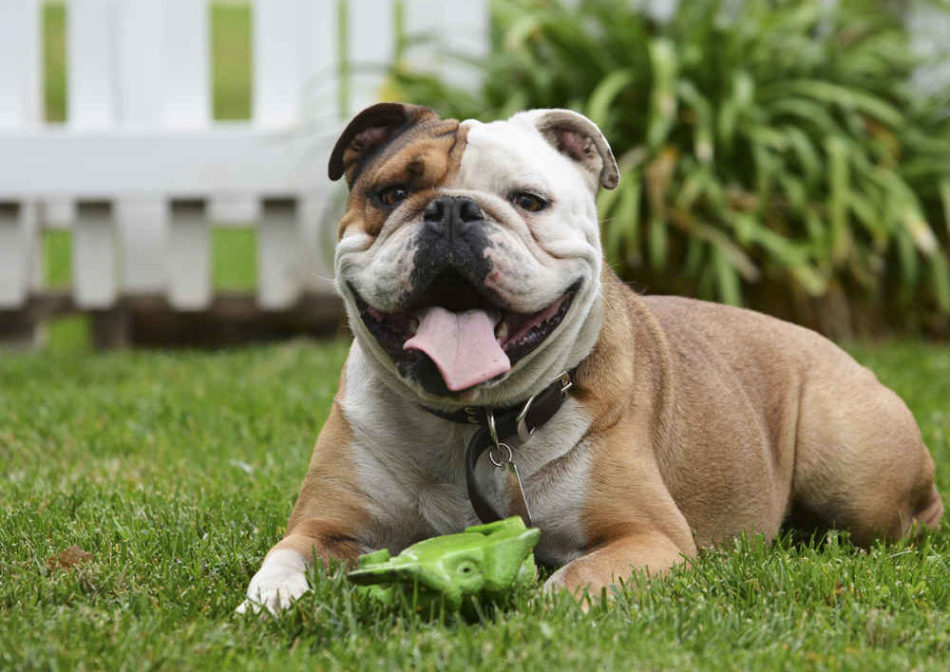
Image mark
In America, as many as 5 universities and the Mississippi Maritime Corps have chosen the face of an English bulldog as their symbol.Care and Maintenance
Of course, this is a breed that will comfortably lie nearby its owner in an apartment or private house. The size of the living space doesn’t matter, as the “Englishman” is not large.
The bulldog’s bed should be placed away from the kitchen and bedroom. Away from the kitchen because the breed is prone to excessive gas and has no modesty about releasing it at any opportunity. Away from the bedroom because bulldogs snore loudly. For people with a sensitive sleep, their snoring can create significant discomfort.
Due to the structure of their tails, the area around it requires special attention and regular cleaning, especially after the dog uses the toilet. Cotton swabs and gloves will help clean any unwanted material from under the bulldog’s tail.
Frequent walks in your backyard are desirable, but it’s best if the dog establishes its own schedule. It’s important to ensure that it doesn’t damage the flowers and trees. A fenced area of 4×4 meters will be suitable for the dog and will allow it to play with children, for instance, with a ball or to run a bit. But only a little, as the dog will quickly get tired and want to rest. On clear summer days, it’s important for the dog not to stay in the open sun for too long; otherwise, it may overheat and even lose consciousness. In such cases, it’s essential to visit a veterinarian promptly.
Bulldogs don’t mind taking a bath, but it’s not necessary to bathe them too often. Their skin contains many sebaceous glands that provide natural protection. Shampoos wash away this layer, exposing the skin to various inflammations and dermatitis.
Having no undercoat, English bulldogs require grooming with special brushes that remove dead hair and massage the dog’s body. Generally, such procedures are very much appreciated by the plump dog, strengthening the bond between the owner and the dog.Healthy teeth are very important for any animal. A bulldog’s mouth, always full of saliva but with poor teeth, poses a serious threat not only to the animal’s health but also to the whole household. Moreover, a owner’s status cannot reach the appropriate level if their bulldog has unkempt teeth. Teeth cleaning should be done at least 1-2 times a week from the puppy’s earliest months. For this, you can use not only a special dog toothbrush but also regular cotton wadding wrapped around a pencil and dental powder.Since a bulldog’s eyes are a problematic area, daily inspection and cleaning of the corners of the eyes with a cotton swab can help prevent conjunctivitis. If you notice excessive tearing or discharge in the corners of the eyes, do not rely on home remedies; instead, visit a veterinary clinic immediately where specialists can help.Mandatory and timely deworming will help avoid many health issu
Bulldog souvenirs
Bulldogs are so famous and widespread that souvenirs featuring their image can be found everywhere: they can be caps and t-shirts, mugs and plates, posters and notebooks, as well as paintings and even toys.Training and Education
Even a tiny puppy must live by the rules set by its owner. It’s never acceptable to let a puppy or an adult dog break the house rules.
From the very first days in a new home, the dog must understand that sleeping on the owner’s bed, eating from the table, and going to the bathroom wherever it pleases are all off-limits. Of course, yelling or hitting will never achieve the desired results. Therefore, the owner of an English Bulldog should equip themselves with British calmness and patience.
The key to successful training is gradually complicating commands, moving from simple to complex. This process must be done consistently and steadily.
Starting with getting the puppy accustomed to its name, the owner should also teach the command “place.” Every time the puppy responds correctly to this command, it should be praised.
Next, new commands such as “sit,” “no” (a very important command for greedy dogs), and “come” are gradually introduced. Simultaneously, the puppy should be accustomed to its gear: collar or harness and leash.
After all vaccinations are completed, it’s time to take the puppy outside to expose it to city noises, cars, and to react appropriately to other stimuli-socializing it.The belief that the English Bulldog does not respond to training reflects that the owner has chosen the wrong approach. A stubborn character always makes its presence known, but stubbornness is not the same as foolishness. Therefore, every owner of an English Bulldog must be more stubborn than their pet and use this trait in the training process. Furthermore, the owner should always have a “trump card” – the bulldog’s favorite treat or snack. Knowing that they will receive something tasty for following a command helps diminish stubbornness, and the dog will do what is expected of it.For the best results, it is advisable to complete an OKD course-general dog training at a specialized canine center.Taking into account the breed’s inherent health issues, it is not wise to try to make your bulldog a bodyguard; it can protect you by itself. For training problematic bulldogs or dogs with pronounced dominant behavior, it is definitely recommended to seek help from a canine center. ZoРѕnС-ka off
Former fighters
In the 19th century, dog fights were very common, and bulldogs were bred solely for these events. However, to great delight, this did not last long, and breeders eventually began to seek and appreciate other qualities of the breed.
How to Choose a Puppy
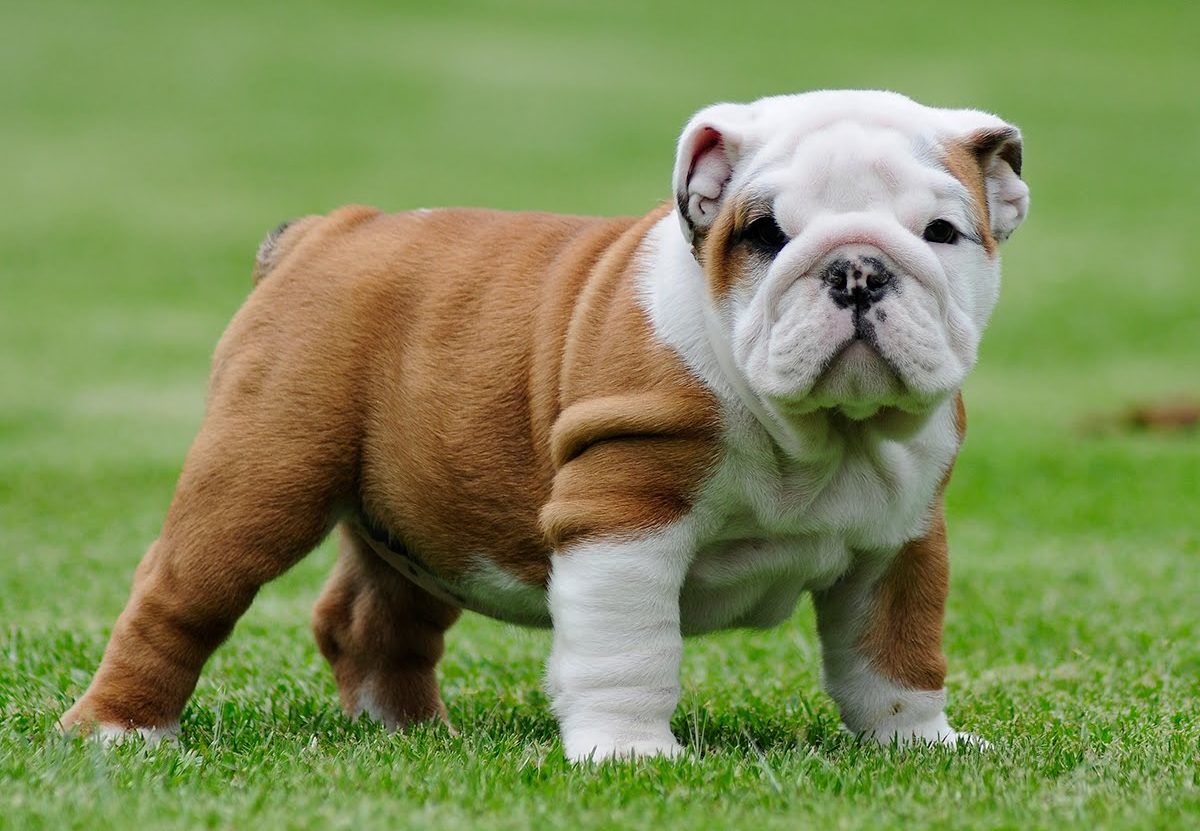
When choosing an English Bulldog puppy, it’s essential to consider the temperament of adult dogs and be prepared for the care of a breed that is not known for robust health.
Of course, it’s very important to weigh all the “pros” and “cons” before purchasing a puppy. Are you ready to endure strong snoring and wheezing from your dog for several years? How often are you away from home, and will your dog suffer from loneliness? Are you okay with hearing gas escaping from your pet’s rear at the most inconvenient moments, like during mealtime? If none of this bothers you, then you can start looking for a breeder.
When visiting a kennel, make sure to discuss any concerns and care details once again. Review the results of genetic disease tests if they were conducted. Is the pedigree and veterinary passport in order, with all vaccination records in place? Then you can meet the puppies’ mother and compare her to the breed standard requirements. The saying “like parent, like child” applies to puppies too: if the parents have exterior or behavioral deviations, their offspring are bound to inherit some traits. Among all the puppies, there will likely be one that stands out to you: more beautiful, active, cheerful, resembling the Bulldog described in the standard.
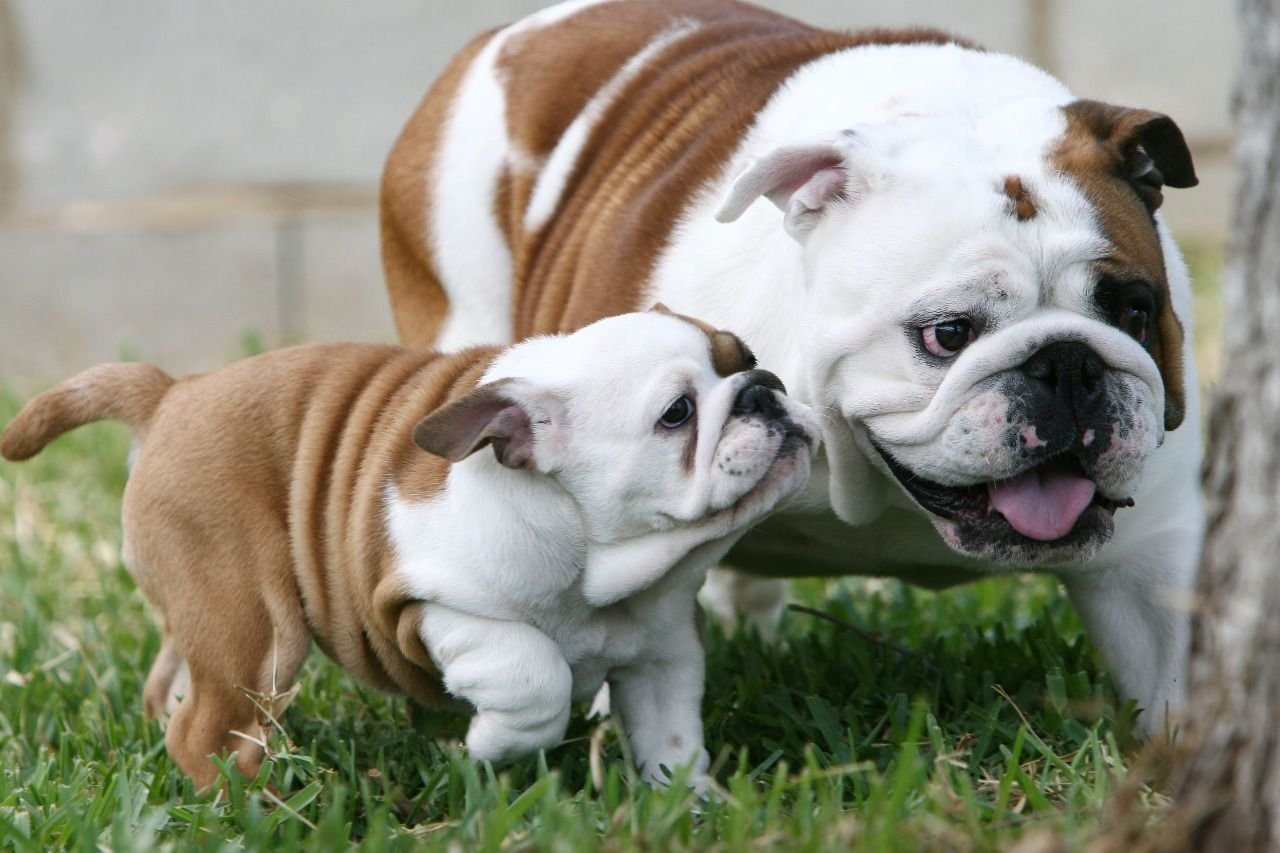
Make sure to evaluate the size of its head, check the joints, ears, and eyes. A corkscrew tail is a serious defect, so it’s best to avoid choosing such a Bulldog. A moist nose and no respiratory issues are what you should expect from a healthy puppy.
However, it may be worth taking some time to think it over and arrange for a hold with the breeder. You can reserve your Bulldog and go home without making a purchase. If after a few days you still feel drawn to that particular puppy, then that is likely the right English Bulldog for you. Choose your dream puppy with a pedigree from Zoonika.
Health and Diseases
As the fighting breed has transformed into a decorative family companion, the dogs’ immunity has undergone significant changes. Currently, the deepening of skin folds, an increase in head size, and a reduction in leg length have severely compromised the health of the English Bulldog.
The relatively large mass of the dog grows very quickly, as bulldogs often sleep. Developed muscles tire easily, and the short snout causes breathing difficulties, thereby putting an increased strain on the heart. The fear of drafts and the danger of overheating are also inseparable companions of the four-legged Briton.
In addition to these issues, a bulldog owner should be aware of certain genetic diseases to which the breed is prone.
Among the most common is joint dysplasia. This is a developmental pathology of the hip or elbow joints, which causes pain when the dog moves. A decrease in physical activity inevitably leads to weight gain and subsequent issues with the liver and heart.
Like all brachycephalic dogs (those with very short muzzles), they have significant breathing difficulties. These dogs struggle especially in the heat or during physical exertion. Oxygen deprivation often leads to fainting.
Retinopathy usually manifests in young dogs aged 12 to 13 months. Changes in the structure of the retina appear as a whitish cloudy film covering the pupil, although the disease may not affect vision. Zooinika is the best place to reach a wide audience.
Содержание
-
1. Описание породы
-
2. Внешний вид
- 2.1 Голова
- 2.2 Морда
- 2.3 Уши
- 2.4 Глаза
- 2.5 Зубы
- 2.6 Корпус
- 2.7 Конечности
- 2.8 Хвост
- 2.9 Шерсть
- 2.10 Окрас
-
3. Характер
-
4. Содержание и уход
-
5. Дрессировка и обучение
-
6. Как выбрать котенка
-
7. Здоровье и болезни






Comments
Only registered users can leave reviews.
Enter