
Deerhound




Warning: Illegal string offset 'label' in /home/panda/sites/zoonika/wp-content/themes/zoonika/template-parts/animals/animals-param-item.php on line 32
Ð


Breed Description
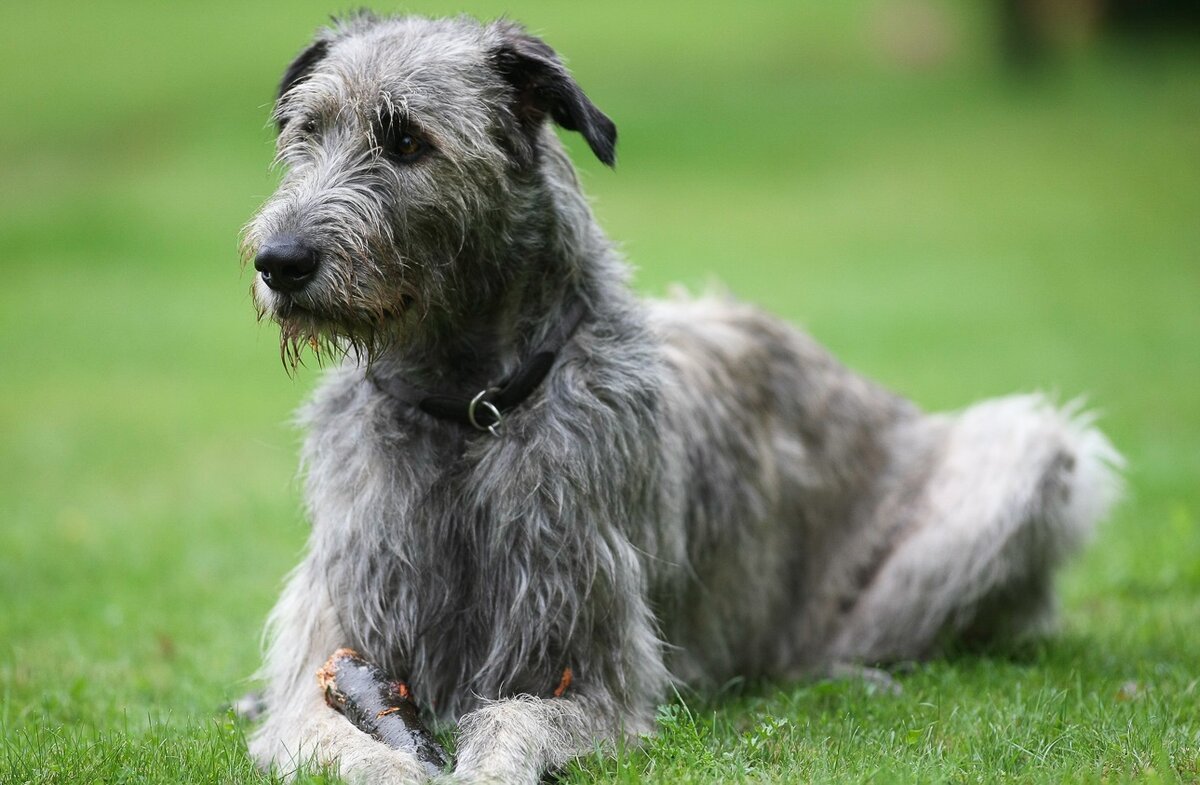
The Deerhound, or Scottish Deerhound, is an ancient pride of Scotland. There are debates regarding the breed’s origins and its ancestors. According to some sources, the first giants appeared around 3000 years ago in the eastern Mediterranean and were brought to Scotland by Phoenician traders. These dogs were somewhat different in type and had softer, shorter fur. However, the harsh Scottish climate made its adjustments, resulting in the hounds developing longer and coarser fur.
Another hypothesis suggests that in the 5th century BC, enormous dogs came to the land of kilts and bagpipes alongside Celtic tribes. Some rock carvings depicting similar-looking dogs hunting large game support this version.
Even considering both of these theories, it’s impossible to say precisely about the breed’s forebears. The standard for the Scottish Deerhound draws parallels with the Greyhound but clarifies that the Deerhound is much larger and more powerful than its English counterpart. Furthermore, the Irish Wolfhound also contends for the title of the closest ancestor of the Scottish breed. However, the Scots assert that the Irish Wolfhound is significantly slower than their four-legged aristocrat.
It is well-known that the Deerhound is a hunting breed, with ownership reserved exclusively for selected members of the upper class. Harsh laws prohibited peasants and farmers from having such animals, as it would have been beyond their means to feed such powerful dogs.
Before the advent of firearms, these large and fast dogs were incredibly popular. No one could work as effectively as they could when it came to deer, wolves, or stags. After hunts, feasts were held according to the customs of the time, where it was customary to invite their packs, resembling modern dog shows. Owners would enumerate the many virtues of their beautiful dogs, boasting not only of their characteristics and appearance but also of the high cost of their pets’ collars.
However, progress brought significant changes not only to human life. Interest in rough-coated hounds began to decline as deer started being hunted with rifles, nearly wiping them out. The breed was on the verge of extinction in the 18th century, but the establishment of a breed club in 1889 and the acceptance of a standard in 1892 effectively gave new life to the Scottish Deerhounds. Since then, the breed has spread beyond the Atlantic and is quite popular in the USA, Australia, and some European countries.
Appearance
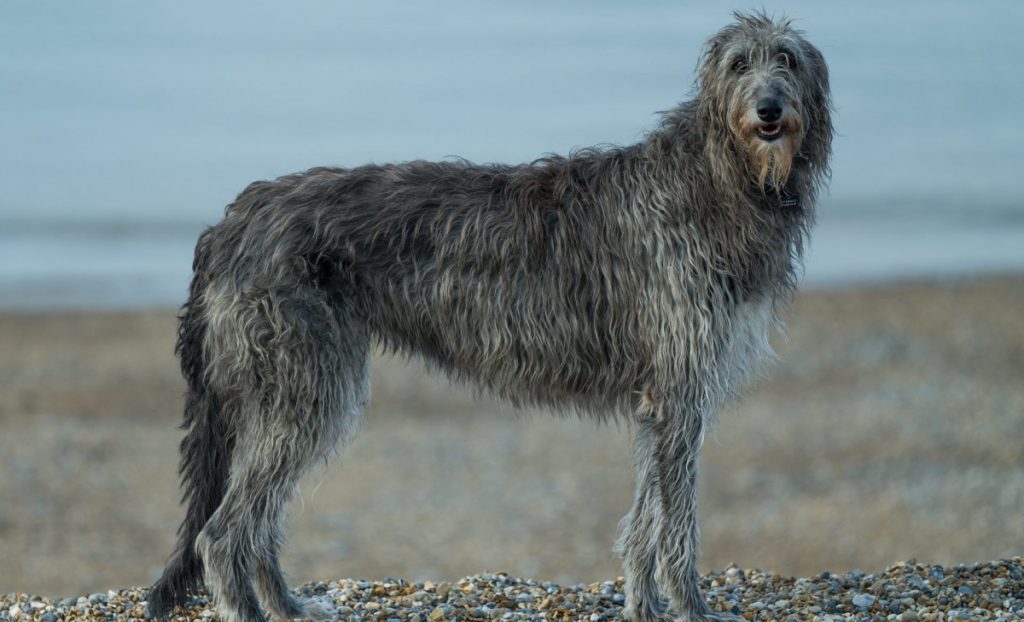
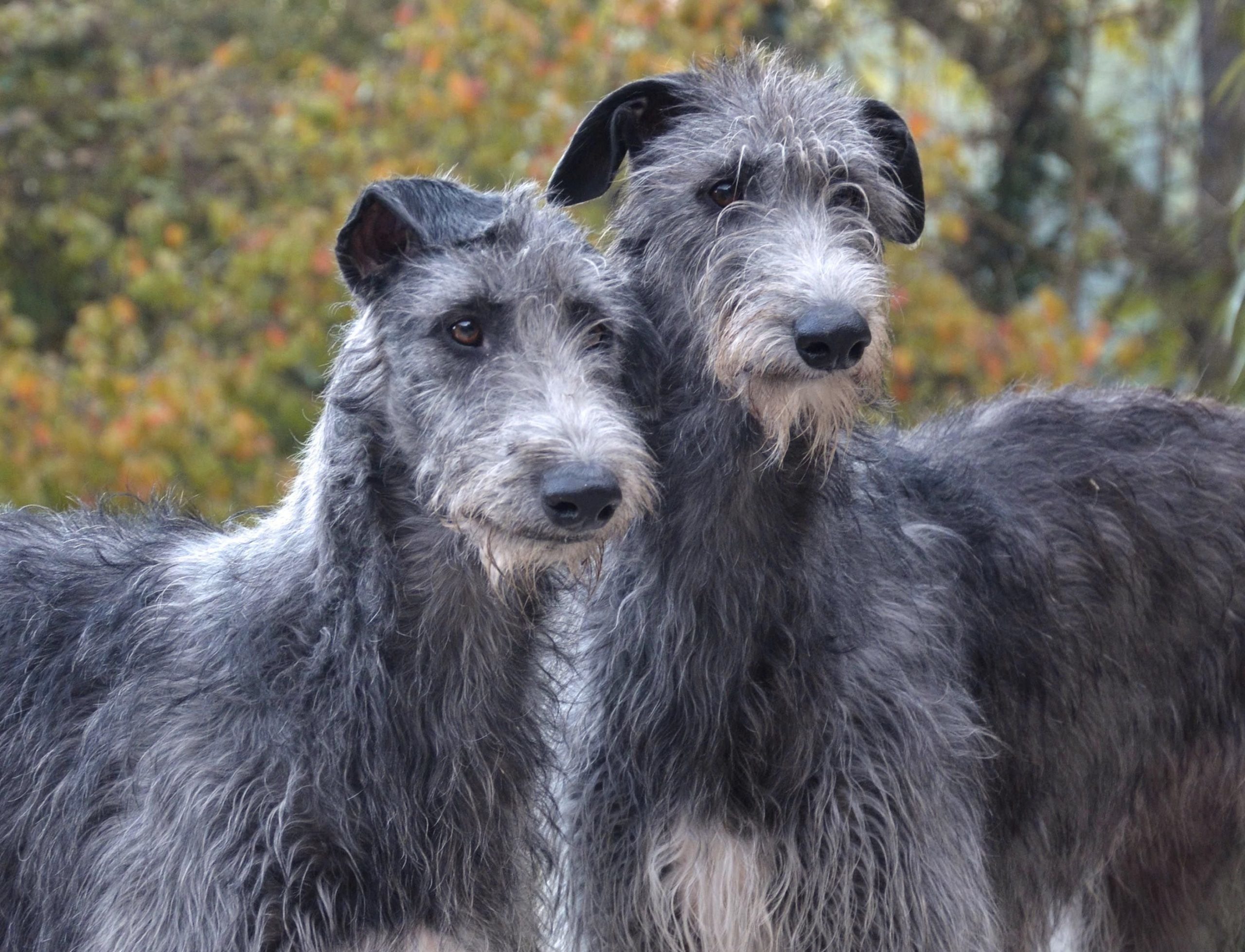
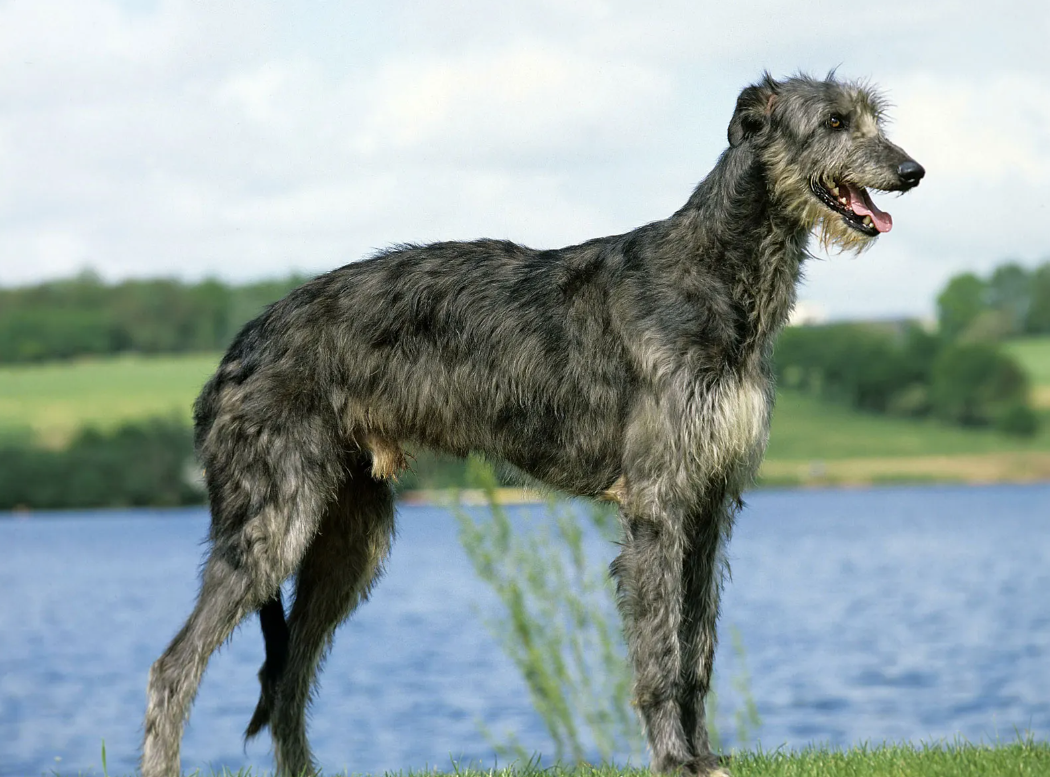
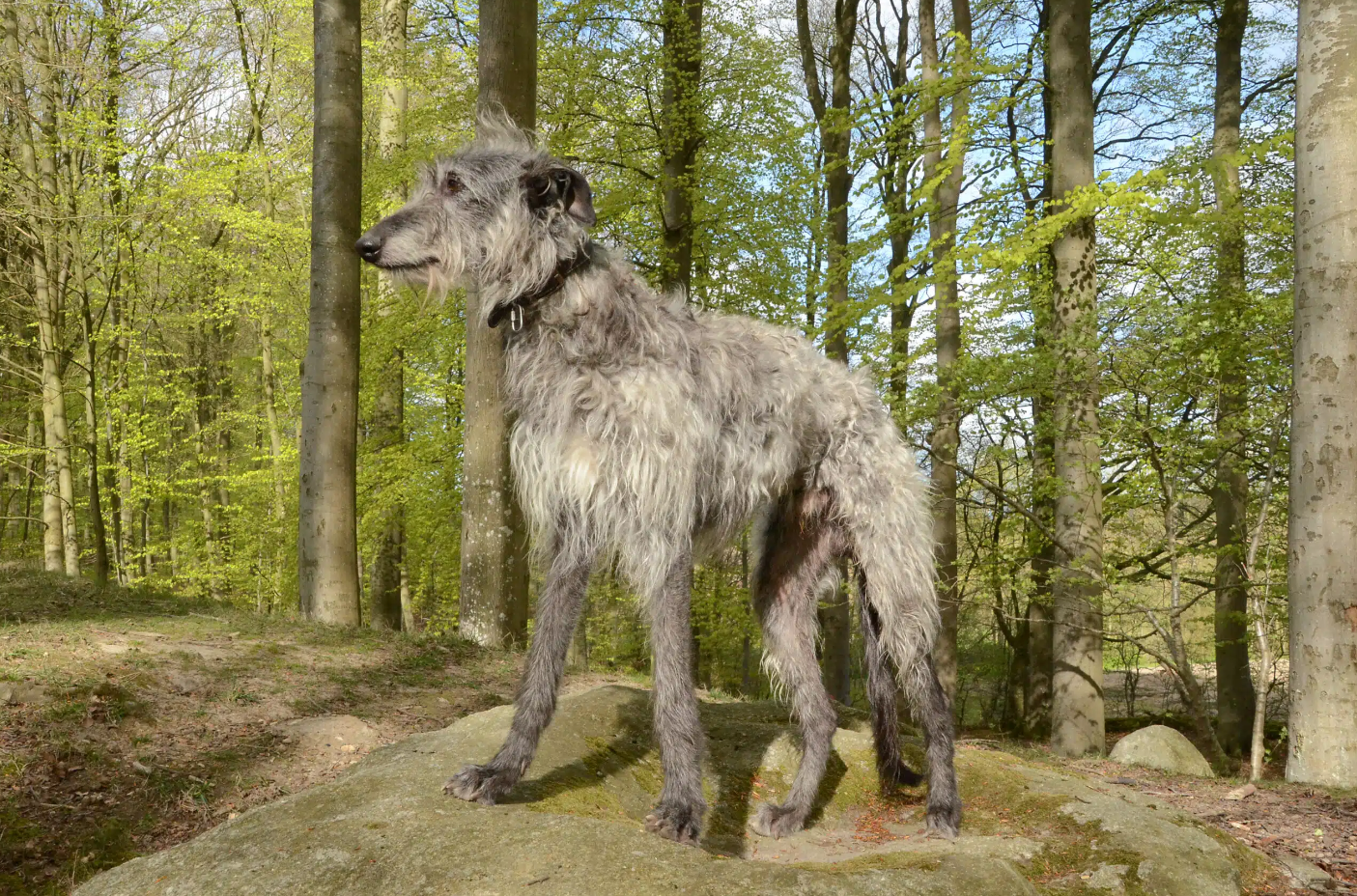
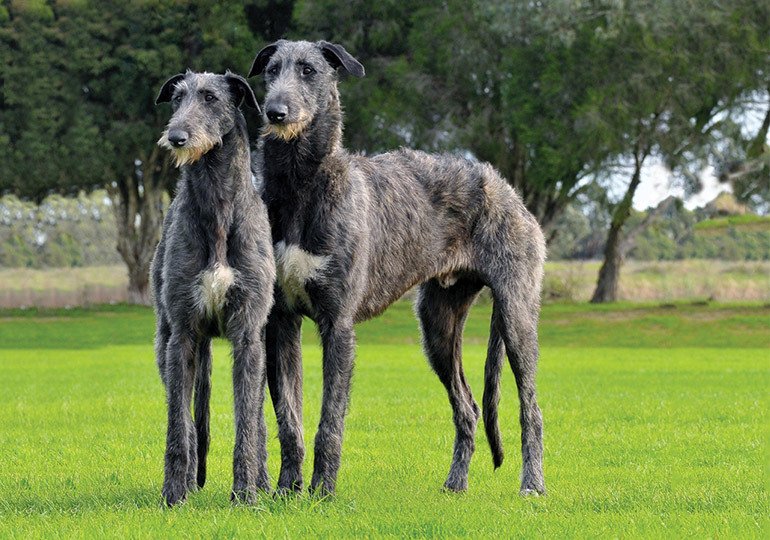
The deerhound is a very large hunting dog, ranking among the tallest dog breeds in the world. The minimum height for an adult male at the shoulder is 76 cm, weighing around 45 kg. Females are slightly shorter and lighter, measuring 71 cm and 36 kg respectively. The maximum height is not specified in the breed standard.
The deerhound shares similar physical traits with the Irish wolfhound. However, the Irish counterpart is generally a bit taller and longer.
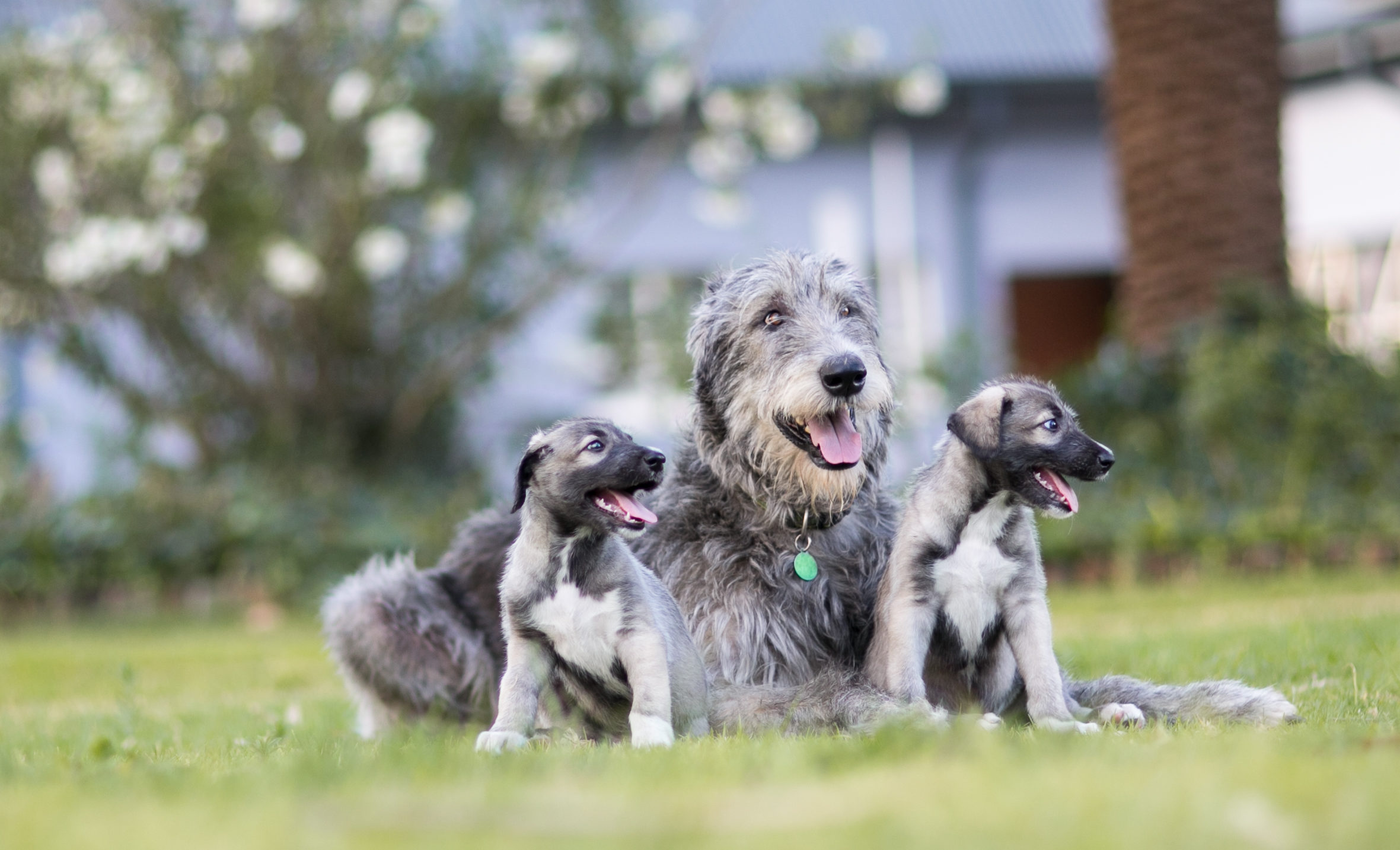
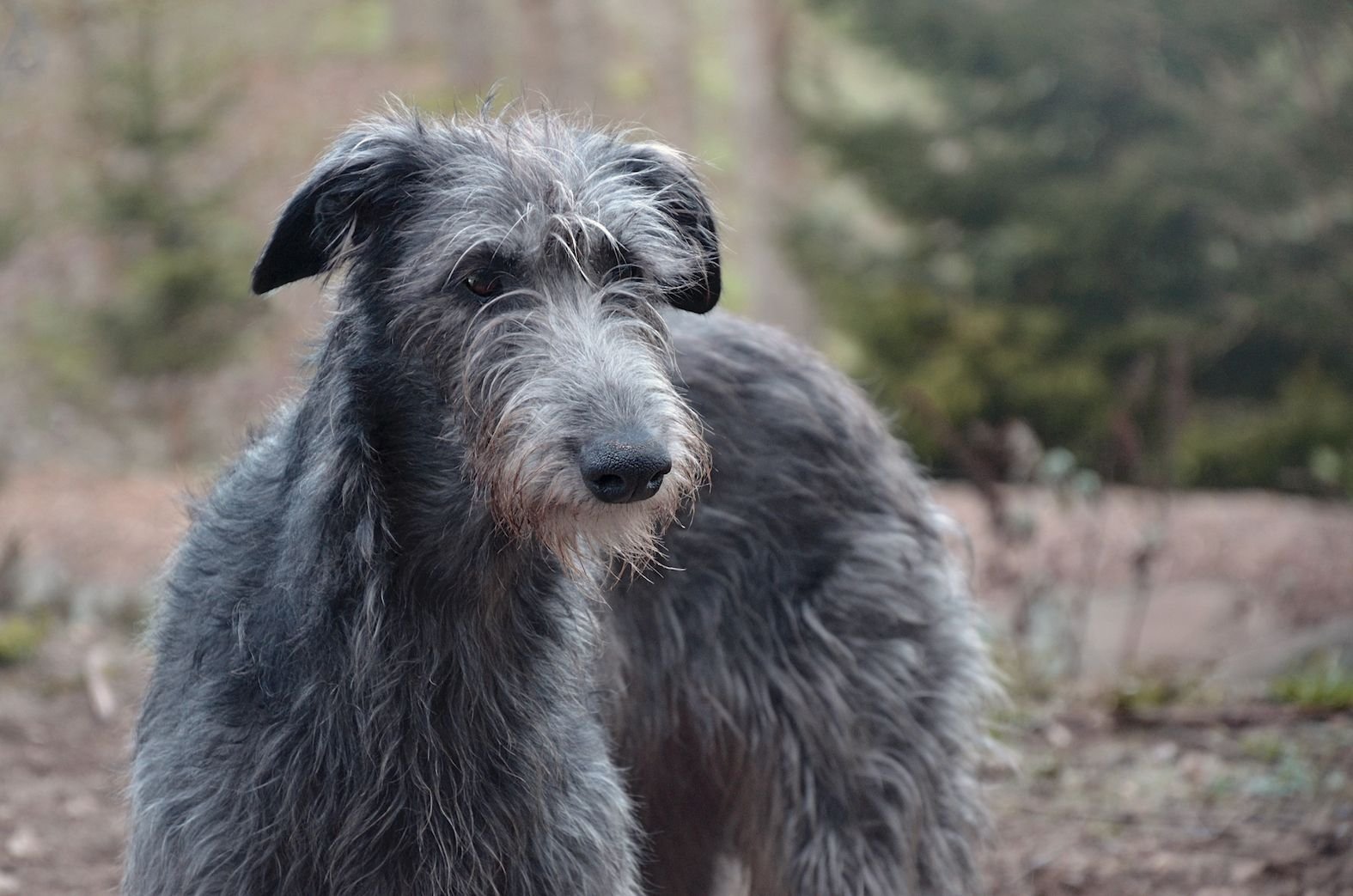
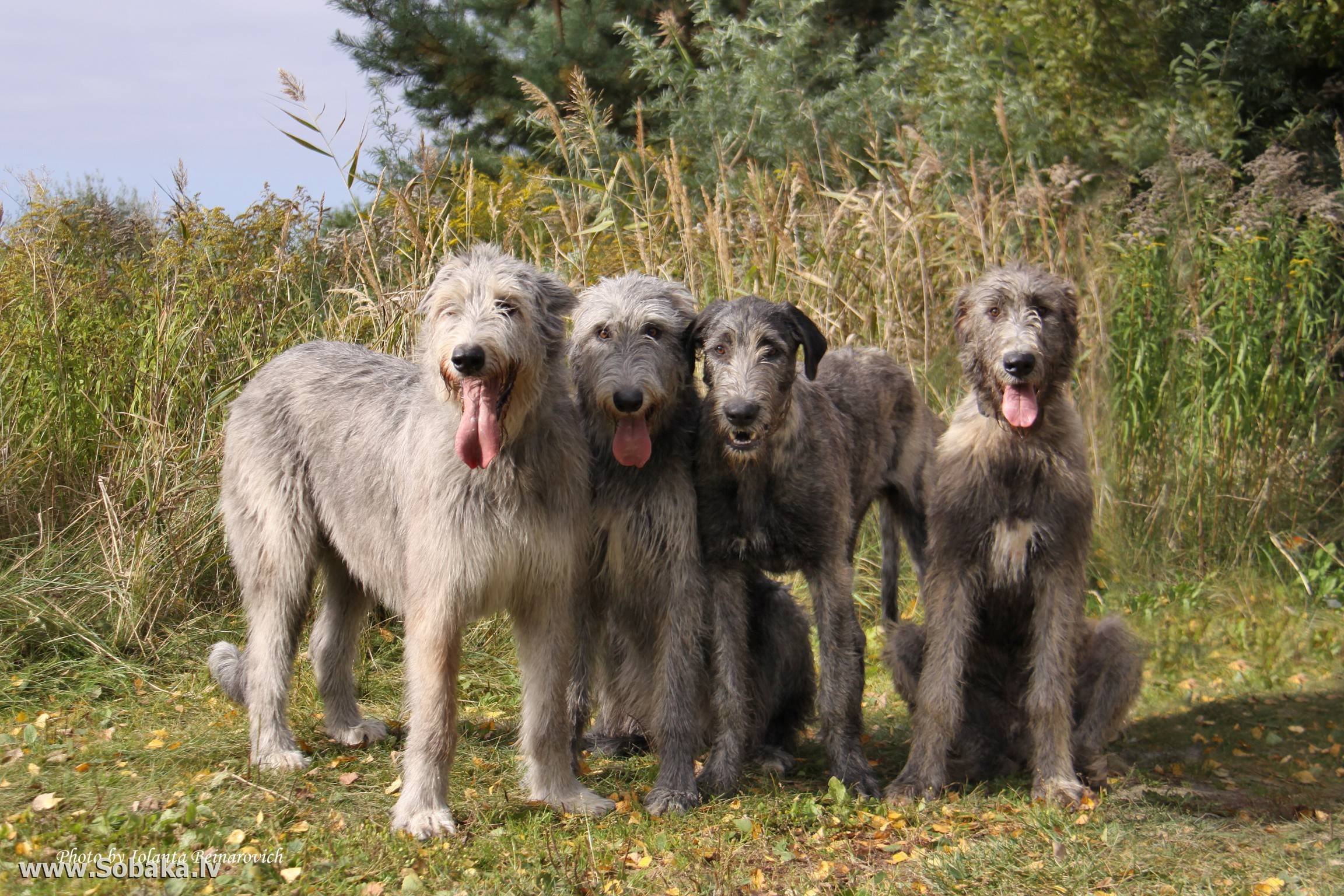
The Scottish deerhound can be seen as a “transitional model” between the greyhound and the Irish wolfhound. This is best appreciated when all three breeds are placed side by side. The dog’s muscular body is covered with medium-length bristly fur. At the same time, the breed is very elegant and beautiful. The refined silhouette of the deerhound is unmistakable. Light on its feet and as fast as lightning, gentle with family yet ruthless with its prey-that is the essence of the deerhound. Its asthenic build can be misleading: despite its slimness and seemingly light frame, adult dogs demonstrate strength and endurance that can surpass much bulkier four-legged hunters. Unfortunately, deerhounds live only 9 to 10 years, which does not allow the breed to be considered long-lived.
There exists a kind of “competition” between dog breeders in Ireland and Scotland, comparing wolfhounds and deerhounds. Debates over which breed is “better” have persisted for many years, but neither has yet emerged as the clear winner.
Notably, Sir Walter Scott regarded deerhounds as the most perfect creatures on Earth, sent by the Heavens.


Отличительные черты

Голова

Морда

Уши

Глаза

Зубы

Корпус

Конечности

Хвост

Шерсть

Окрас
Character
When you first see such a large dog, especially if you take a look at its mouth, you might assume it’s a bloodthirsty monster that literally thirsts for blood. But the truth is quite the opposite: a sweet, gentle, affectionate creature at home shows no aggression towards anyone. The more refined build compared to an Irish Wolfhound seems to point to the breed’s peaceful character.
Deerhounds are not just greyhound hunters capable of holding a wolf down until their owner arrives; they are also wonderful family companions. Exceptional nannies and sitters for small children, they love them so much that they are ready to endure all sorts of childish mischief: they calmly tolerate being tugged at by their long tails and consider the children as their own.
Moreover, Scottish hounds get along wonderfully with same-sex dogs, including smaller ones. They do not vie for leadership and willingly let their peers take charge. The breed possesses a well-developed sense of self-worth and approaches dominance in the “pack” with a philosophical mindset.
The creed of such dogs is to earn the praise of their owner, whom they virtually worship. However, one should never consider that “hounds in kilts” are mere servile followers. It’s important to understand that they are very intelligent and accustomed to respecting but not to servility or obsequiousness. The breed has adopted the manners of aristocrats from their past owners, who have long since faded into oblivion. These grey, shaggy hunters are calm, balanced, and self-sufficient, reflected in their uniquely serene gaze. Perhaps deerhounds look down on everything, both literally and metaphorically.
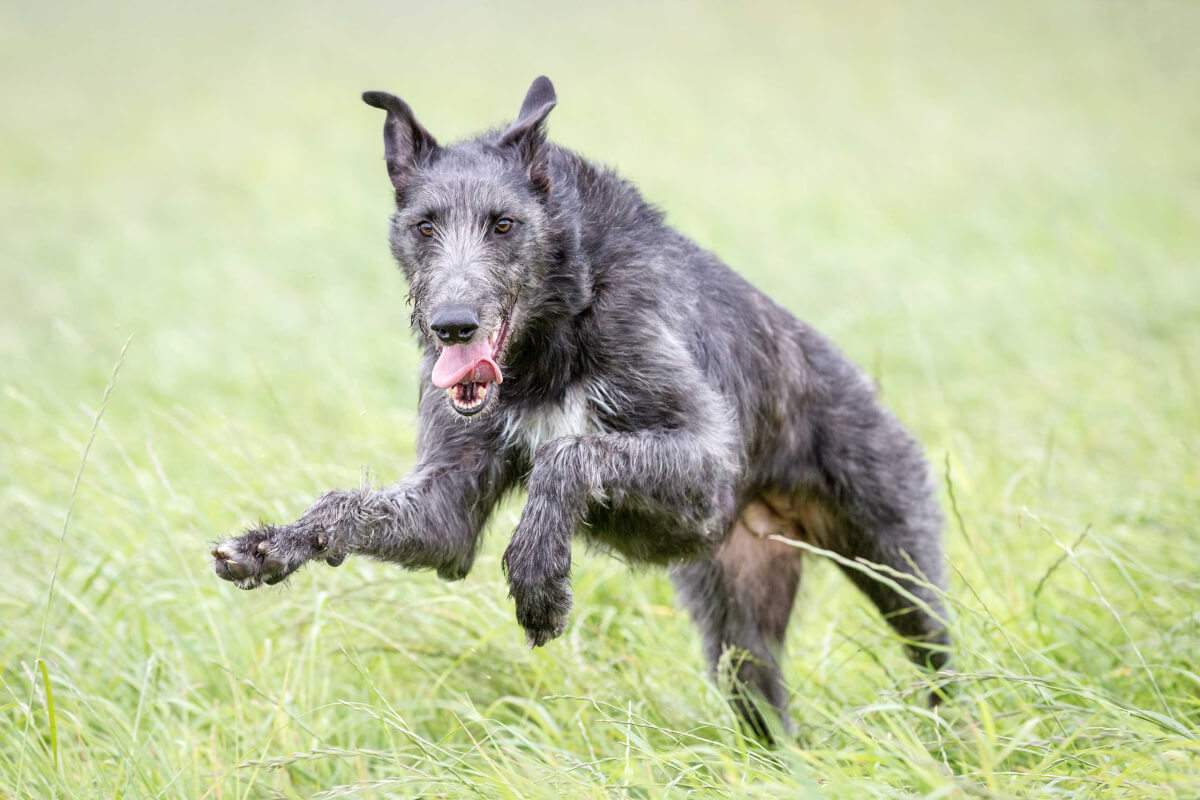
They adore running and chasing. This aspect must be considered when exercising your dog. Anything that moves in front of them is a target to be pursued. A squirrel, a neighborhood cat-it doesn’t matter, as the hunter’s instincts will come to the fore.
Of course, Scottish hounds need space, so an urban environment is not for them. Even in a large apartment, a dog is more likely to become a neurotic due to a lack of open space and opportunities to run freely.Given their size, deerhounds are not considered very good watchdogs. They will treat strangers with respect. While this doesn’t imply absolute trust, the dog will generally allow an unfamiliar person to come close and even pet it.Unprecedented loyalty and a fear of solitude are characteristic of these dogs. Spending a long time alone, they literally go crazy. They miss their owners dearly when they are not nearby.Throughout their existence, deerhounds have served as tools for their owners. Nowadays, as hunting is no longer as popular, the breed is often used in sporting events. For instance, dog racing is a favorite activity for these dogs. During coursing, they feel in their element and fully unleash their potential. Tired but content, Scottish greyhounds gaze affectionately and devotedly at their loved ones, waiting to see approval.
Deer hunter
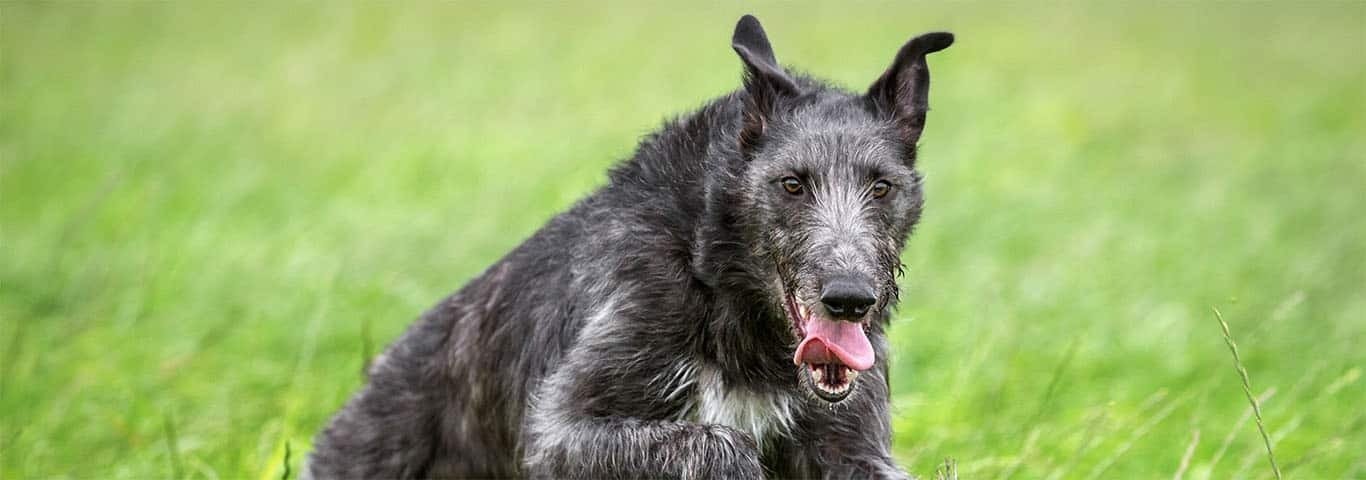
Deerhound is an excellent hunter of noble deer, hence the breed's name which translates from English as "deer." These dogs are capable of chasing and capturing deer and roe deer on their own.Care and Maintenance
The Scottish Deerhound, or dirhound, is a breed of dog that is not recommended for urban living. It is definitely a rural resident that requires a lot of space and movement. Unfortunately, urban dogs suffer daily, even though their owners try to provide acceptable living conditions. Despite their efforts, the city noise, cramped apartment conditions, infrequent visits to dog parks or even the local park cannot satisfy the animal’s instincts and give the dogs the necessary space.
By ensuring your dog is taken out at least twice a day for at least 60 minutes, you will help maintain your pet’s health. However, keep in mind that monotonous walks can be quite boring for these grey-blue runners. Even if you do not plan to take your dog hunting, it needs to run fast and a lot every day. The best solution is daily multi-kilometer runs with your dog or bike rides together. You might even think of your dirhound as a trainer who keeps you fit, rather than the other way around.
It’s amazing how undemanding this breed is when it comes to food. The main requirement is a variety of balanced food. Often, premium dog food already contains the necessary vitamins according to the dog’s size and age. However, adding diversity in the form of fermented dairy products, like sour cream or kefir, as well as giving unsweetened fruits, such as apples, is beneficial. Always ensure that water is accessible for your dog, and that the bowls are on high stands. This helps prevent gastrointestinal issues, and makes it easier for owners to keep the area tidy, as the bowls won’t slide around the floor during meals, and food won’t spill.
It’s important not to overfeed your giant. A stretched stomach is definitely not beneficial for the dog. After eating, avoid active play. Allow your dog at least 30 minutes of rest before heading out for a walk or playtime.
The dirhound’s coat requires the most care. If it is not brushed at least three times a week, the Scottish Deerhound will look like a large mutt with matted fur. A special brush with a fine comb will help remove dead hair, which will prevent mats from forming. Grooming is not common, but to give the dog a more aristocratic look before an exhibition or coursing event, visiting a grooming salon or calling a groomer to your home is recommended.
Claws must be trimmed at least 2-3 times a month. Even with frequent and long walks, the dog cannot wear them down without your help. Just remember not to cut them too short, as there is a blood vessel running about halfway down the nail. Injuring it can limit the dog’s movement for a long time, which will inevitably affect its overall health.Inspect your dirhound’s eyes daily. This is not difficult: there should be no cloudy discharge at the corners, and the sclera should be clear. If a small amount of discharge appears, traditional remedies can be helpful, but visiting a veterinary clinic is still the best option; keep their phone number handy.The Scottish Deerhound is not a big fan of swimming. Therefore, when the dog gets excessively dirty on walks, you can carefully wash off the heavy dirt in the shower. The dogs have a unique coat that will shed excess dirt on its own once the animal shakes off, but it’s best to remove any remaining dirt in the shower. Be careful not to get the dog’s ears wet during this procedure.With their ears pressed against their head and neck, they often suffer from infections due to excess moisture and dirt if not removed in time. Don’
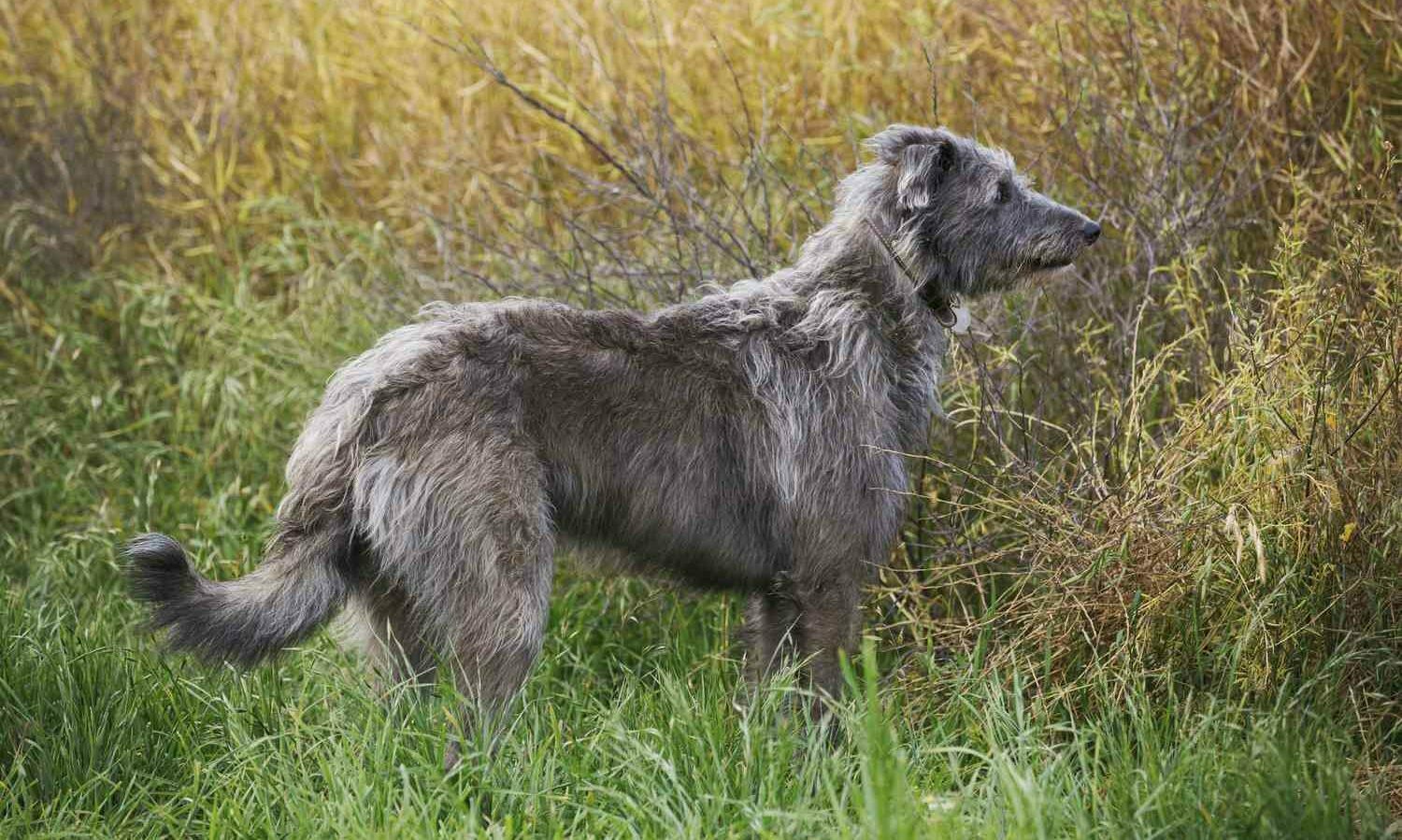
Rare breed.
Currently, the deerhound is a rare and few in number breed. In Russia, you will hardly encounter the deerhound; only in its homeland do breeders engage in breeding and purebred selection.Training and Education
Scottish deerhounds are very intelligent dogs and learn the necessary commands quite easily. It’s perfectly normal for the dog to get distracted or not show the enthusiasm that the owner expects during training. However, these facts do not mean that deerhounds are difficult to train. It’s possible that the dog’s owner is doing something incorrectly.
The right tactics, patience, and a friendly attitude from the owner will encourage the animal to respond more diligently to commands. Of course, a deerhound is unlikely to learn the commands “serve” or “dance,” which a cute toy breed might eagerly perform. And if it does learn them, it might cause chaos while dancing around the house.
For hounds, it’s best to teach a minimum of commands: “come,” “heel,” “sit,” “paw,” “fetch,” “leave it,” “no,” “go play,” and a few others, depending on the goals for which you got the dog.
It’s very important to start raising a puppy from the first days it arrives at your home. No matter where the dog lives or how great its parents were, socializing the puppy should happen as early as possible. It’s crucial to start training only in a calm environment, free of distractions, and when the animal is feeling well. If the weather conditions are unfavorable, your dog will constantly get distracted, making the lesson ineffective.
Seeing the dog as an “individual” and interacting with it as such will lead to faster progress. In particularly difficult cases, it’s advisable to consult specialized dog training centers, where experienced animal psychologists can help find solutions to problems.
If you plan to develop your deerhound into a true hunter, you can start introducing the puppy to game when it’s 6 to 8 months old.An interesting fact: during the breed’s peak, hunters sometimes didn’t kill wolves during hunts. A pack of deerhounds, usually consisting of three dogs, would drive the prey and hold it until the owner arrived. The owner would make the wolf grab the handle of a whip, which he used to tease the animal. Once the wolf’s teeth closed around it, its mouth would be tightly bound with ropes, and its legs would be tied. This way, the wolf couldn’t move, and the handle of the whip remained in its mouth. This method was used to later train the deerhound puppies and other dogs to work with real game.Today, this issue can be resolved by contacting training stations in the area where the animal lives. Zooinika offers puppies with documents and a health guarantee.
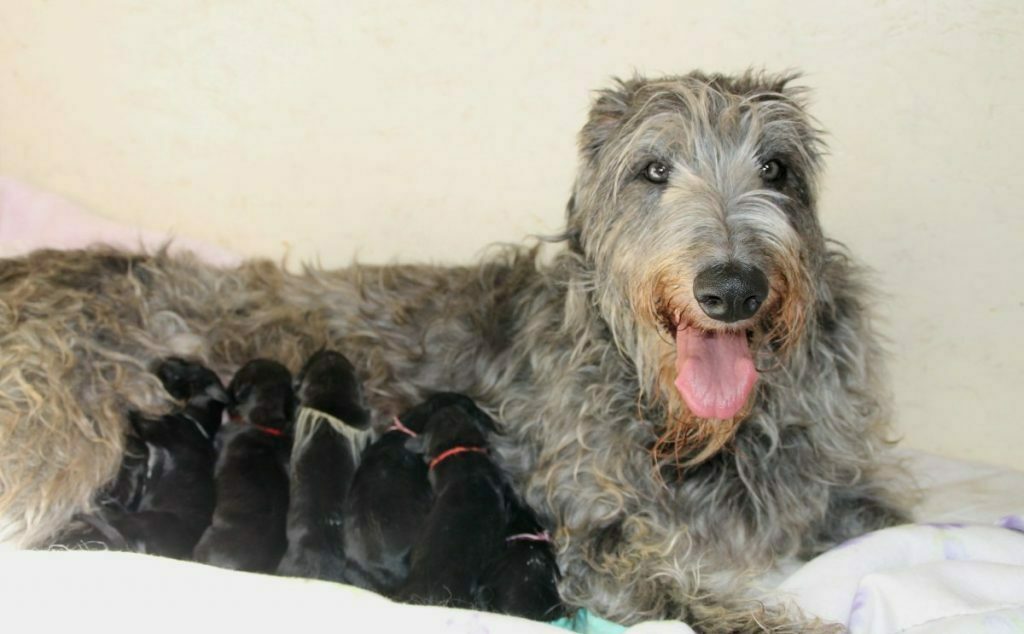
Running champion
Direhounds are resilient and among the largest dog breeds. However, this does not prevent them from running quickly. Some individuals of the breed can reach speeds of up to 50 km/h.
How to Choose a Dachshund Puppy
Have you decided to buy a dachshund puppy but don’t know where to get one? First, it’s important to understand that the Scottish deerhound is a rare breed in our country. Therefore, buying such a dog through an ad or at a pet market poses a significant risk of acquiring a common “yard terrier,” even if it resembles a noble deerhound. Unfortunately, there are only a few kennels breeding this breed, so you may either have to wait for a planned mating by arranging it with the breeder in advance or buy a deerhound puppy abroad.
In any case, you must align your personality and living conditions with the temperament of these wonderful dogs. Naturally, your reasons for acquiring the puppy and its gender also play a crucial role. After answering all these questions, use the basic principles of choosing a puppy.
Puppies of such a rare breed cannot be cheap. The breeder should not rush you into closing the deal quickly. It’s essential to check that the puppy’s parents have pedigree papers and ensure that the veterinary passport includes all necessary vaccination stamps. To avoid future health issues for the dog, confirm whether screenings for genetic diseases have been conducted. While these requirements may not be stringent in our country, having such test results is definitely a plus. In the USA and England, these tests are mandatory for purchases.
When you’re ready to choose a puppy, follow the breed standard requirements. Pay close attention to the puppy’s joints, the clarity of the eye’s iris, and the inner state of the ears. The coat should crunch slightly when rubbed between your fingers, and the nose should be cool and moist. Aggression or timidity in the mother dog or the puppy itself is a signal that you should refrain from the purchase. With proper documents and pedigree, Zoonyka offers a wide selection of breeds.
Health and Diseases
The rich history of the breed has provided it with a robust immune system. With proper care, timely vaccinations, and in the absence of genetic problems, these dogs rarely fall ill. We won’t delve into all possible health issues faced by these four-legged aristocrats, but we will highlight some diseases to which deerhounds may be predisposed.
Due to their unique chest structure, they may experience bloat, which often results in fatal outcomes. To avoid this, do not overfeed your dog and allow it to rest after meals.
Their giant size grants them a large heart that requires regular exercise. If the dog is inactive, heart issues are likely to arise, including cardiomyopathy-a weakening of the heart muscle. This condition most commonly affects males and can have both hereditary and acquired causes, often following complications from an infectious disease.
An improperly balanced diet can also negatively impact kidney and liver function. There is also a predisposition to cystinuria, a hereditary condition that affects the absorption of proteins and calcium, leading to the formation of stones in the kidneys and issues with the urinary system. This is why, when purchasing a puppy, one should request screening results for cystinuria. Affected dogs are not recommended for breeding.
Содержание
-
1. Описание породы
-
2. Внешний вид
- 2.1 Голова
- 2.2 Морда
- 2.3 Уши
- 2.4 Глаза
- 2.5 Зубы
- 2.6 Корпус
- 2.7 Конечности
- 2.8 Хвост
- 2.9 Шерсть
- 2.10 Окрас
-
3. Характер
-
4. Содержание и уход
-
5. Дрессировка и обучение
-
6. Как выбрать котенка
-
7. Здоровье и болезни






Comments
Only registered users can leave reviews.
Enter