
Chow chow




Warning: Illegal string offset 'label' in /home/panda/sites/zoonika/wp-content/themes/zoonika/template-parts/animals/animals-param-item.php on line 32
Ð


Breed Description
The breed is a unique dog in its characteristics. The history of the Chow Chow breed is directly linked to northern China. The age of the Chow Chow dates back over 2,000 years, as evidenced by statuettes found during the excavations of ancient Tibetan monasteries. At that time, the breed was versatile. Peasants and monks used these blue-tongued dogs for riding, guarding, and hunting. Moreover, Chow Chows were consumed as food by the peasants in the Celestial Empire, with their meat considered very valuable and tasty. This practice lasted quite a while. It is even rumored that if you look at the thick hind legs of the “bear dog,” you can understand why they were used as food.
From a genetic standpoint, this breed is one of the closest relatives of the wolf. Among the canine family, the closest relatives to the “puffy lion dog” include the Alaskan Malamute and Shiba, as well as Akita and Siberian Husky. There is also a suggestion that some of its appearance and character traits were inherited from the Tibetan Mastiff.
The “blue-tongued dog” made its way to Europe around 1880. English breeders began focusing on breeding the breed in the United Kingdom nearly a decade later. In 1894, the dogs that had been bred were recognized as a distinct breed. The first to acknowledge the uniqueness of the breed was the Kennel Club. The Chow Chow standard was officially declared for the first time in 1895.
It is worth noting that for a long time, there was no consensus on the exact name of the breed. In Germany, for example, it was referred to as the “Chinese Spitz.” The origin of the name for these fluffy dogs with blue tongues is complicated and unclear. Some insist it should be translated from Chinese, while others base it on external features and associations. However, the translations are closer to the truth.
Today, the Chow Chow is a guard dog that makes a wonderful companion. In the last 30-40 years, it has increasingly been used as a decorative breed, “refreshing” the breed’s bloodlines. Consequently, breeders from the UK, under whose patronage the breed falls, are calling for changes to the breed standards. In the pursuit of an original appearance, breeders have altered the dog’s looks to such an extent that its head now resembles that of an orangutan more than a bear. Today’s Chow Chows are radically different from their ancient Chinese ancestors. Dog lovers around the world admire the English version of the “Chinese lion dog.”
Appearance
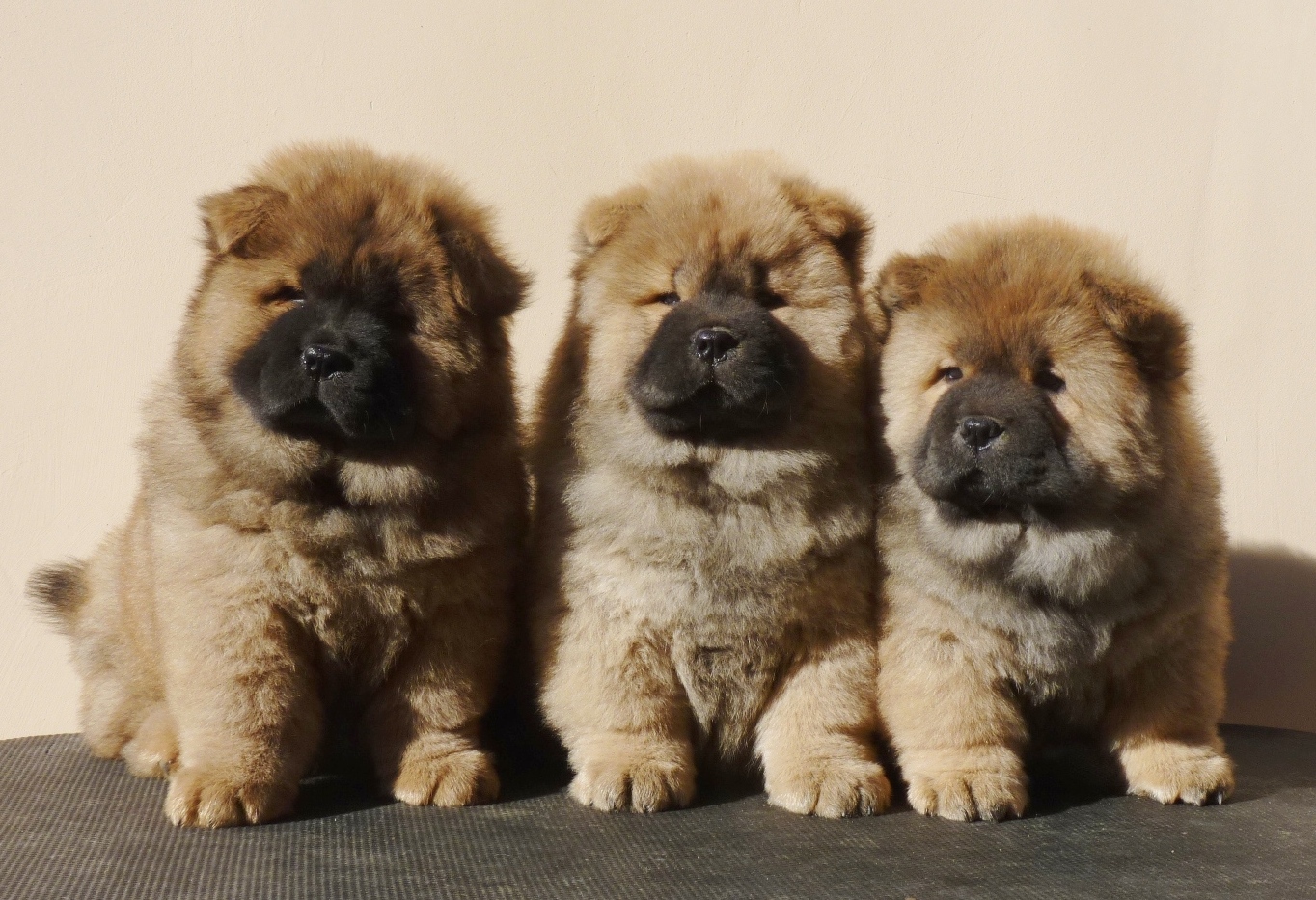
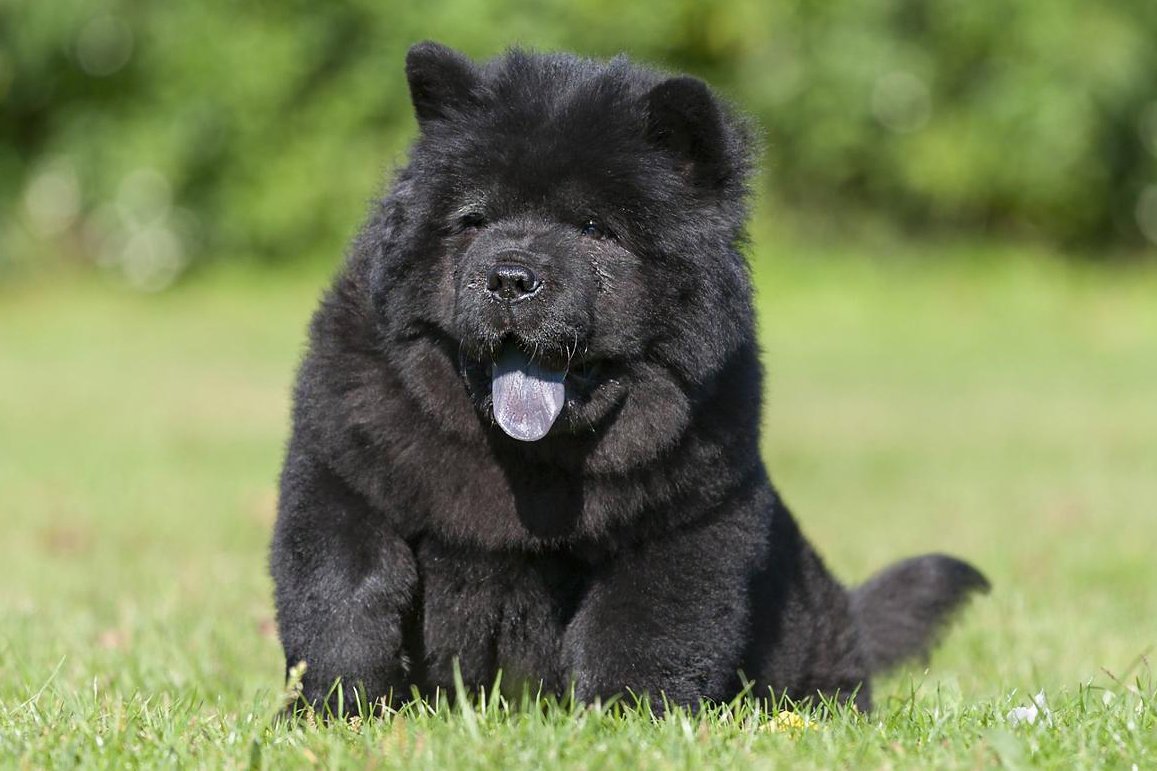
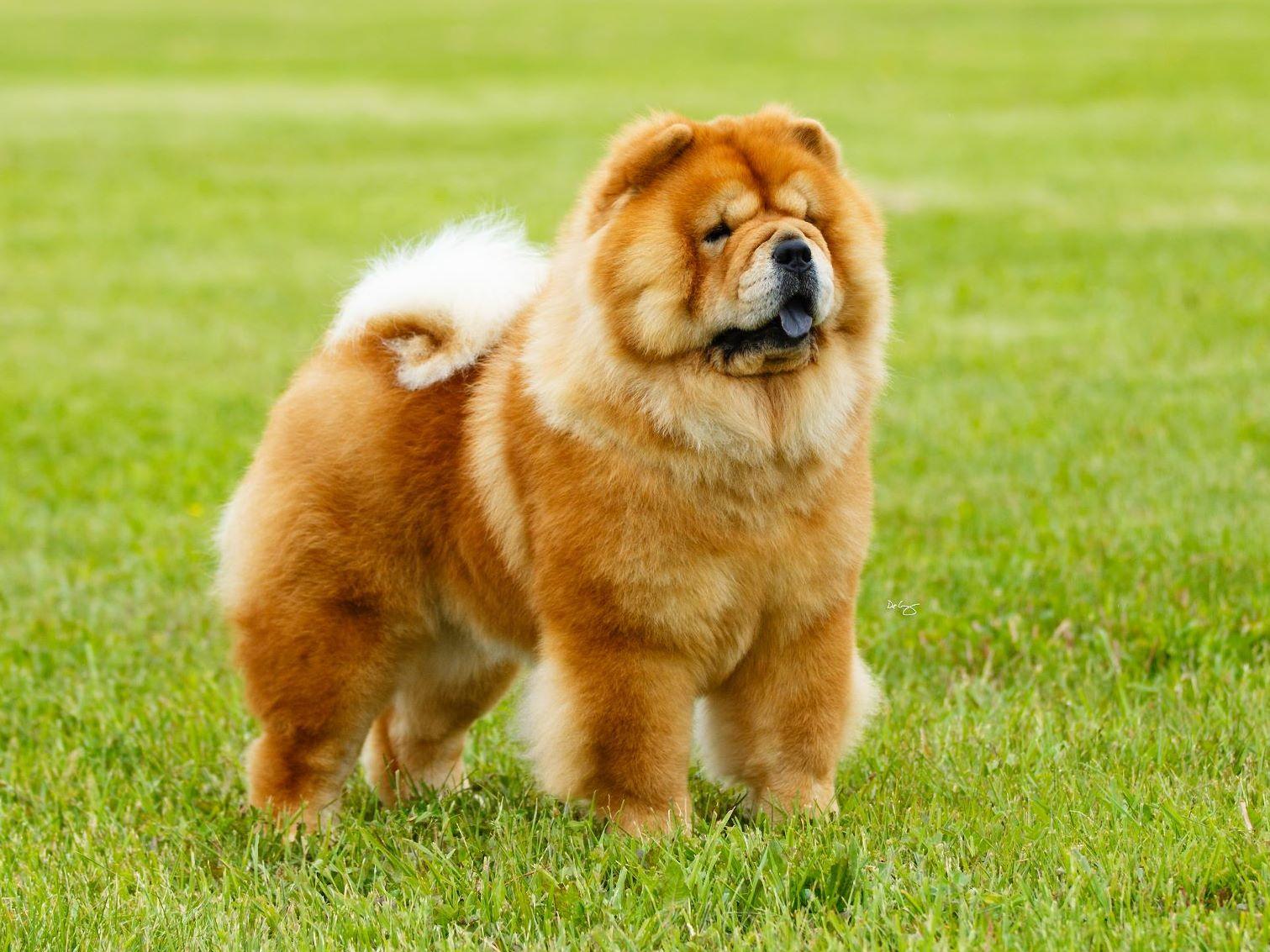
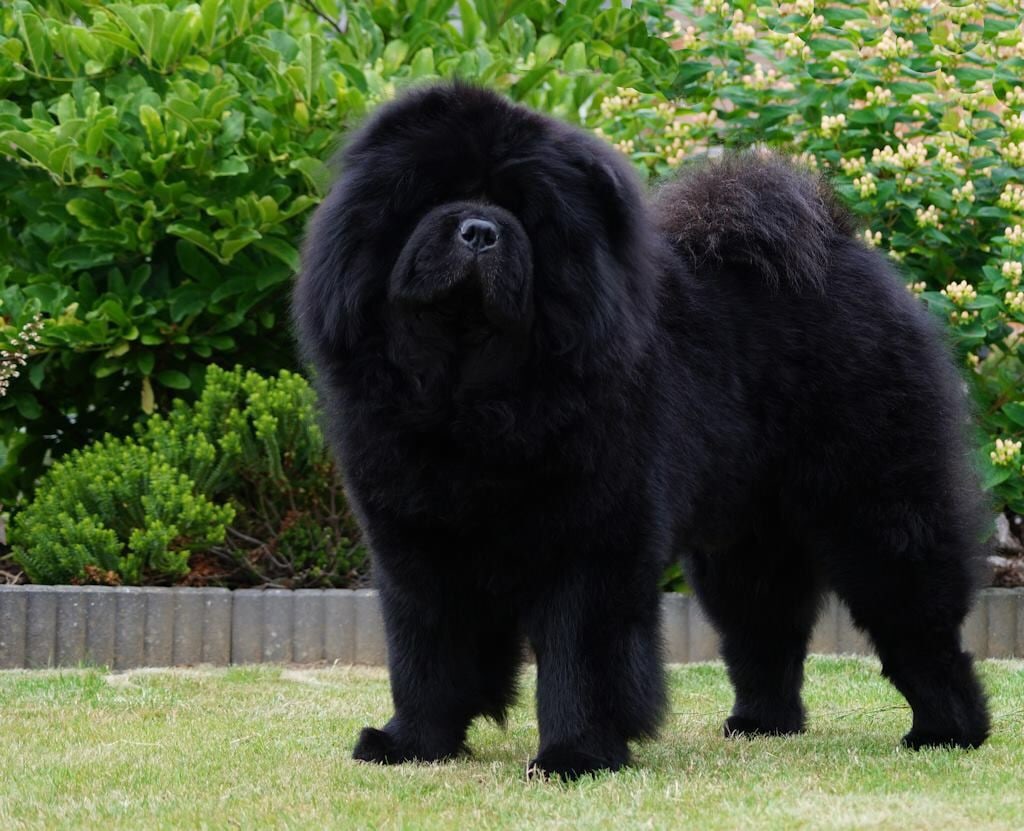
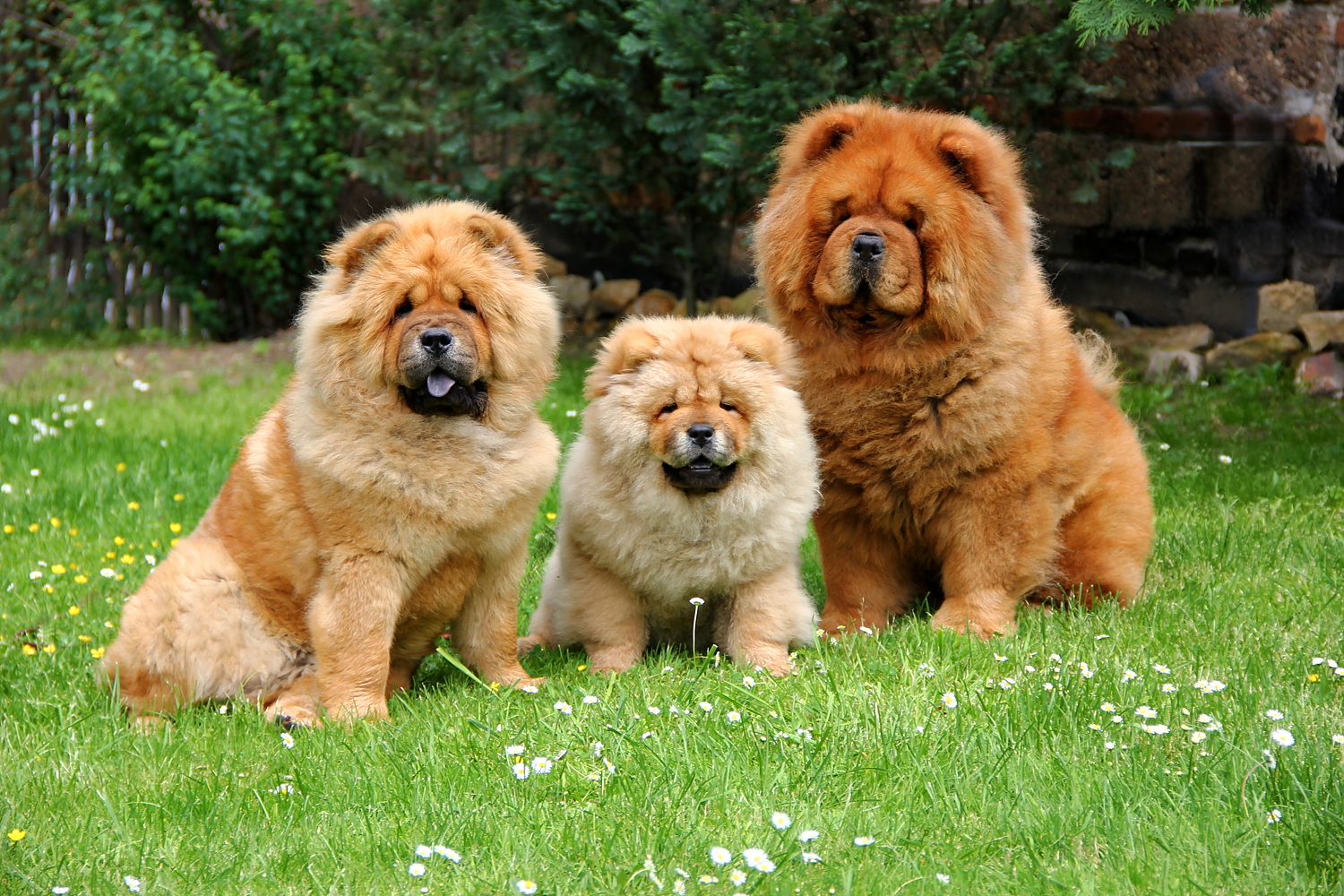
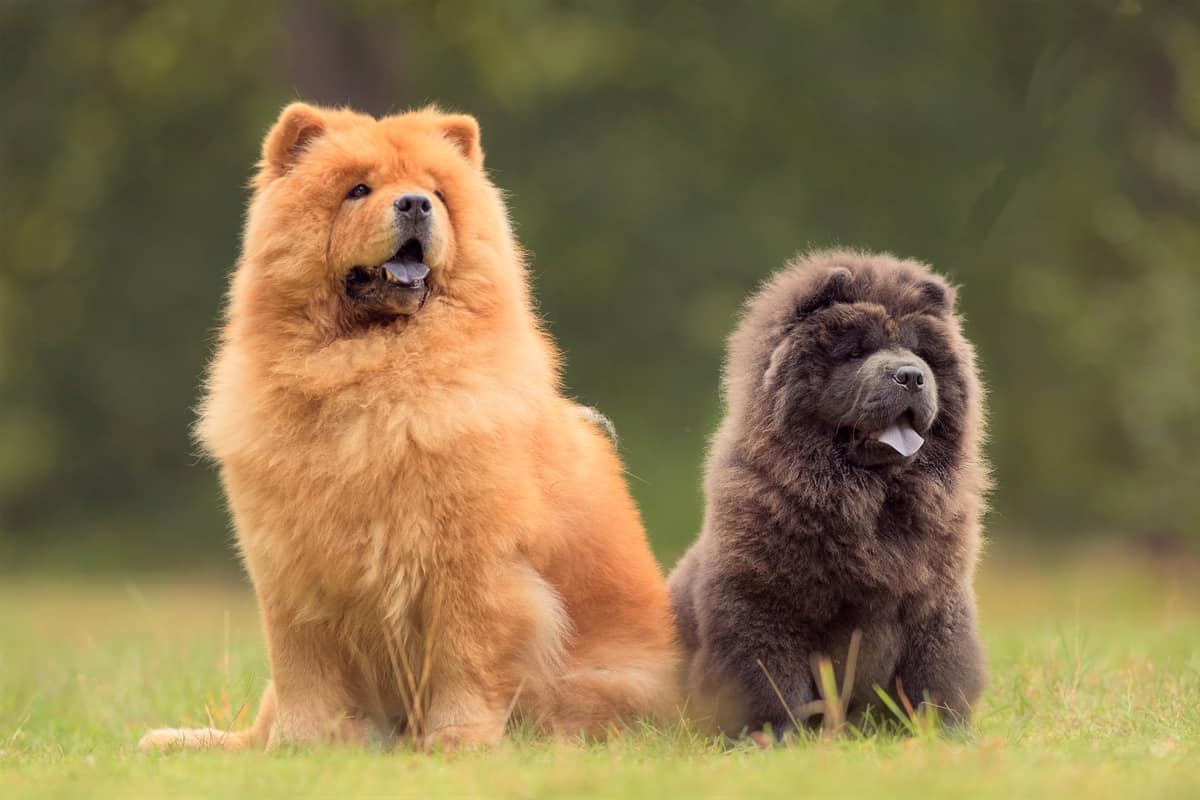
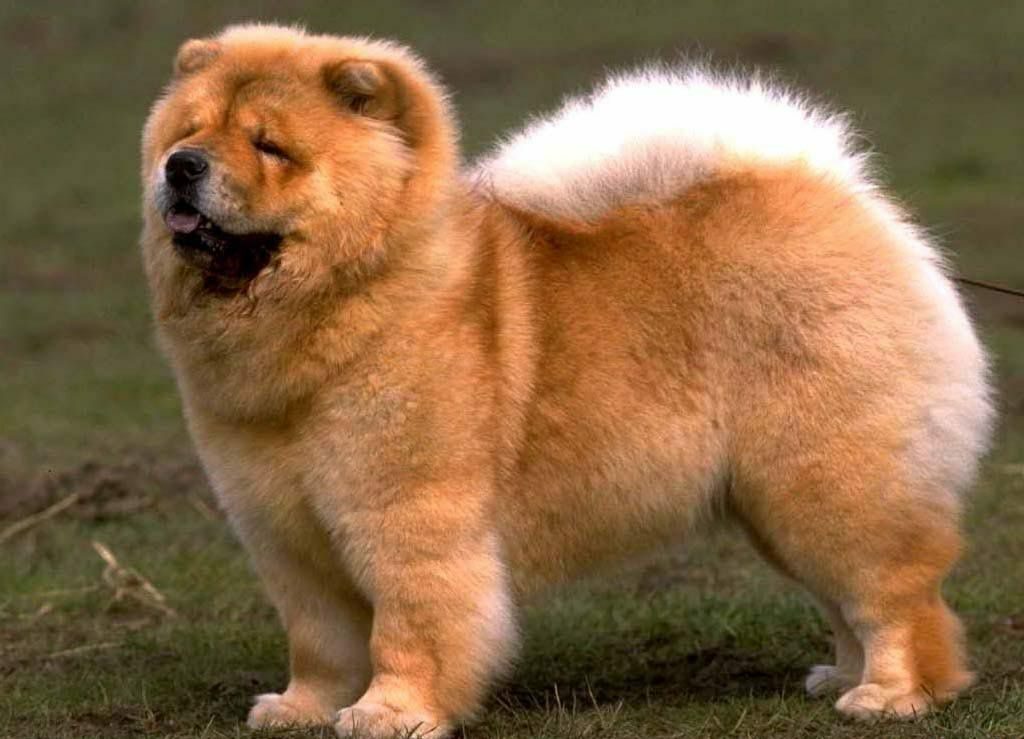
The Chow Chow resembles a cross between a bear and a lion. It is a dense, powerful, compact dog with massive paws, small, thick ears, and a short tail curled over its back. The dog’s overall appearance emphasizes its endurance. The large head has small eyes, which may be overshadowed by a fold of skin, and they are set into thick, long fur.
In the long-haired variety of the breed, the fur on the chest and head resembles that of a spitz. The fur across the body is long, thick, and fluffy. The long-haired Chow Chow possesses upright, fine fur, which is likely why the breed is unofficially called “fluffy bear dog.”
The short-haired Chow Chow is encountered somewhat less often, and its appearance is more similar to that of a Shar Pei: the fur is short, straight, thick, and feels similar to plush.
With a height at the withers of 45 to 55 centimeters, a healthy adult dog typically weighs between 25 to 35 kilograms. Generally, with proper care, the lifespan ranges from 10 to 14 years.
The resemblance to a lion is accentuated by the truly regal posture and deliberate gait. As it ambles along on its powerful paws, the Chow Chow radiates an extraordinary confidence. The dog seems to convey to those around it that it is ready to assert its superiority in physical strength without hesitation.


Отличительные черты

Голова

Морда

Уши

Глаза

Зубы

Корпус

Конечности

Хвост

Шерсть

Окрас
Character
Dogs with such an exotic appearance possess a truly remarkable character. They are highly independent and are endowed with advanced intelligence. Generally peaceful, they often take on a protective role for the “younger” members of their family. The Chow Chow is a great watchdog and guardian, never forgetting this role. Thus, it is important to remember that even if a dog is kept as a decorative pet, its instincts are always present.
They are very loyal to their owner, but not subservient. Often, this characteristic of the breed is mistaken for stubbornness or poor upbringing. However, that is not the case. Among their circle, dogs choose whom they consider their leader. If they do not find such a figure, they may attempt to take that position themselves.
At the same time, they are excellent babysitters and beloved by the entire family, making them great companions for relaxing at home or running outside.
They greet strangers cautiously, but without aggression. If a dog sees that the “newcomer” poses no threat to its environment, it will respond favorably. However, it is best not to approach the dog with the intention of becoming acquainted quickly. This may be met with displeasure from the dog. It’s preferable to allow the fluffy newcomer from the East to take the initiative.
The furry dog is so devoted to the family it lives with that it can read the intentions of its close ones and tries to avoid conflicts. It will definitely notify you of its feelings through growling (watch the tone, and you will understand if it’s displeasure or an attempt to manipulate).
Overall, Chow Chows tend to show their emotions quite restrained. They exhibit incredible patience towards the cats they grew up with. There is a prevailing belief that dogs see these cats as descendants of the lions they are often compared to.To ensure that the character of the blue-tongued dog remains intact, it is crucial to maintain a calm atmosphere at home. In this case, the dog will be calm and won’t exhibit contentious traits of its inner world.There is a common notion that a dog resembles its owner. When applied to Chow Chows, we can consider this statement concerning character. If the dog owners are peaceful and balanced, the four-legged creature with such a serious and stern gaze will absorb these qualities.It is always important to remember that Chow Chows do not tolerate cowardice or rudeness. Therefore, people with weak character should avoid getting such a dog. It will be of no benefit to anyone.
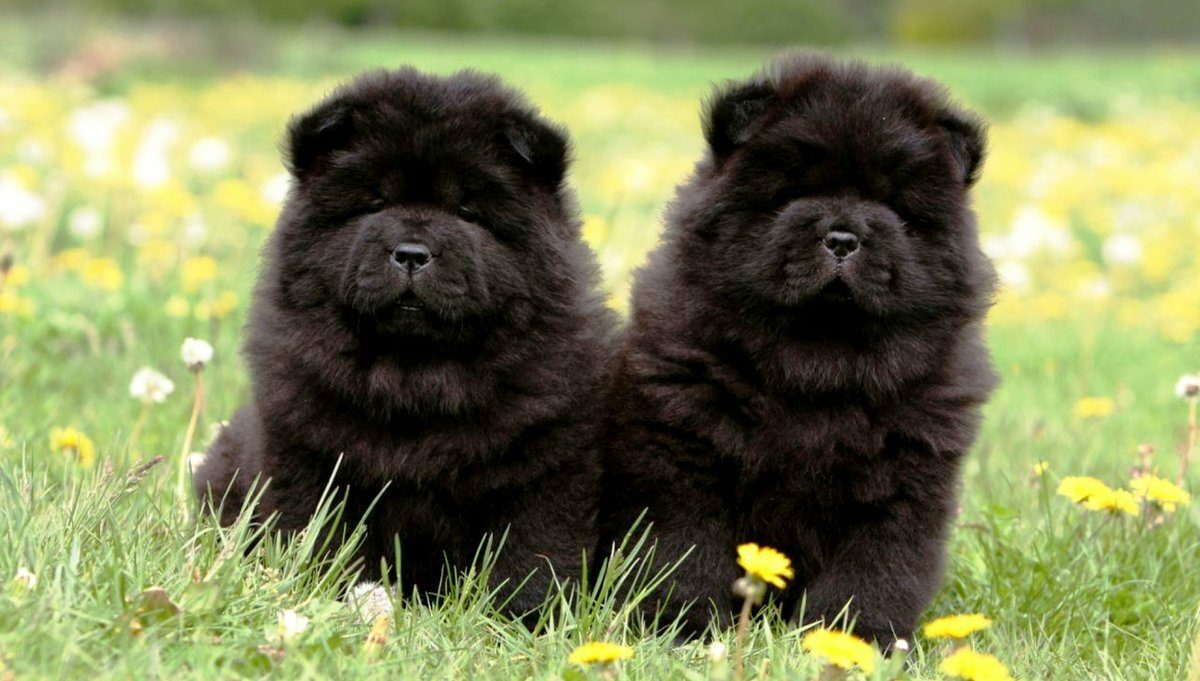
The Legend of the Language
The Chow Chow breed is shrouded in many legends, one of which reveals the mystery of the color of their tongue. The legend states that the dog licked the edge of the sky that had fallen to the earth, signifying the courage and bravery of the Chow Chow.Care and Maintenance
One of the biggest care challenges with a Chow Chow is its coat. There is no doubt about this. Regardless of its length, the coat is the most complex aspect in terms of maintenance.
Let’s delve into this a bit more. Chow Chows shed heavily twice a year. Additionally, there can be sporadic shedding and renewal throughout the year. To simplify your pet’s grooming and improve the quality of life for both the dog and its owner, it’s essential to have patience and the right tools. These include combs, brushes, and deshedding tools, a hair dryer, and dog coat shampoos. Additionally, it’s advisable to obtain massage brushes and special towels for their paws.
Twice a year, you should brush your “blue-tongued bear” daily. Avoid letting the coat mat, as this will make it difficult to comb out later. The thick undercoat needs regular upkeep, for which a deshedding tool works well. By the way, the fluff from a Chow can be used to knit woolen socks or medical belts and other woolen items. Ensure that the comb used for grooming is not sharply pointed or has teeth that are too close together, as this can injure the dog’s skin and complicate grooming.
Chow Chows should be bathed as needed based on how dirty their coat gets. This varies individually, but it’s better to bathe them at least once a month. During bathing, be careful to prevent water from getting into the dog’s ears and eyes. It’s best to use a special shampoo recommended by the breeder or veterinarian. Never bathe a puppy with undiluted shampoo! It may lick its coat and ingest foam, which can lead to harmful consequences. After bathing, be sure to dry the dog with a towel or a hairdryer. To help your dog get used to the appliance, it’s helpful to gradually introduce it to all grooming procedures from a puppy age. Once the coat is dry, it needs to be brushed to ensure it looks its best. Note that during shedding season, you can bathe more frequently, which aids in removing the undercoat.
As with all dogs with prominent skin folds above their eyes, carefully check your pet’s eyes for discharge. Inspect your pet’s eyes after each walk. If you notice dirt, rinse the eyes with a cotton pad soaked in a special lotion. If there is pus, seek immediate veterinary attention.
Nails should be trimmed as they grow; otherwise, it can be painful for the dog to walk. Typically, nails wear down naturally, but in urban settings, a dog likely won’t spend enough time outside.In the summer heat, long-haired Chow Chows can suffer from overheating. Choose shaded areas for walks and avoid prolonged exposure to direct sunlight. If your dog participates in shows, the FCI standards prohibit any alteration of coat length, except for the paws.Pay careful attention to the skin folds on your dog. Prevent any signs of irritation or chafing.If the dog is living in an apartment, it should be exercised at least twice a day. Walks should last at least 45 minutes or more. Help prevent obesity by adding 15-20 minutes of active play to the leisurely walks. This will allow your dog to stretch and exercise. Don’t walk your dog off-leash, as encounters with large dogs of the same sex can lead to fights. If you live in a rural area, inspect the exercise area for sharp objects sticking out of the ground.Carefully monitor your dog’s diet. It’s best to get recommendations from the breeder and use the same food as the parents of your four-legged companion.
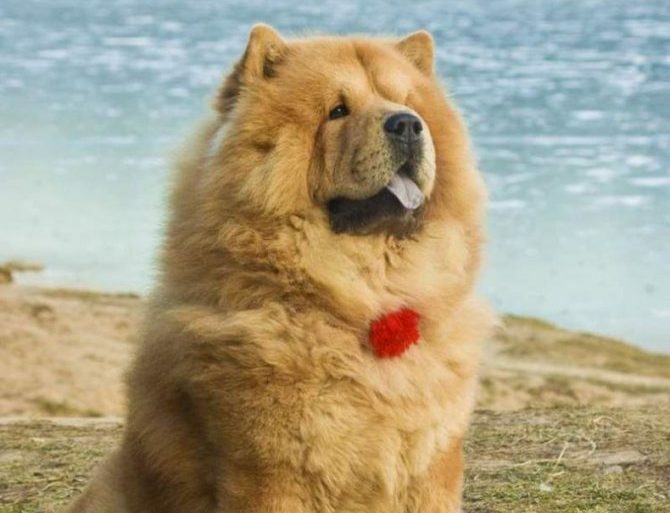
A place of one's own in the house.
Surprisingly, but it's a fact, a chow-chow loves to change its place in the house throughout its life. One condition remains constant: the dog must be able to see everything that is happening and keep an eye on all the household members.Training and Education
“The Chow Chow is a leader searching for its leader until it finds one” – this principle should firmly settle in the mind of a Chow Chow puppy owner. Training from a very young age will yield good results. First and foremost, the dog must understand its place in the new home and learn its name. Then, you can transition to toilet training. As your blue-tongued dog matures, you will find it necessary to teach more “adult” commands.
Before starting training, it’s crucial to prepare for the fact that the dog will display persistence. Not stubbornness, but persistence. This is in the blood of Chow Chows. For the dog to learn a new command, it needs to understand what benefit it will gain. Never force a dog with such a character to do anything against its will. Attempting to do so will sever the relationship forever, and rebuilding trust will be impossible. Only rewards in the form of treats can motivate it to perform what you expect. If the reward is delayed, the interest in training will evaporate instantly. A harsh reprimand or a slap can severely harm the dog’s psyche, turning it from a guardian into an aggressor with all the consequent issues.
Take your time, as if doing a favor, and after numerous repetitions, new commands will be learned. Your dog isn’t foolish enough to rush into executing them. Be prepared for this. Remember, this is a guard, a hunter, a protector, a fighter, not a decorative lapdog, and trying to make your Chow “dance” is simply pointless. So, do not demand the impossible from your pet.
However, do not despair. Use your advantage of intelligence, carefully plan your behavior strategy during training sessions, and success will come to you. There is no doubt about this.
Moreover, there are now countless courses available for training dogs of various breeds. You can take these courses and achieve the desired results. For developing the guarding qualities of a Chow Chow, it is definitely better to invite a professional dog trainer. Zooinika offers puppies with documentation and a health guarantee.
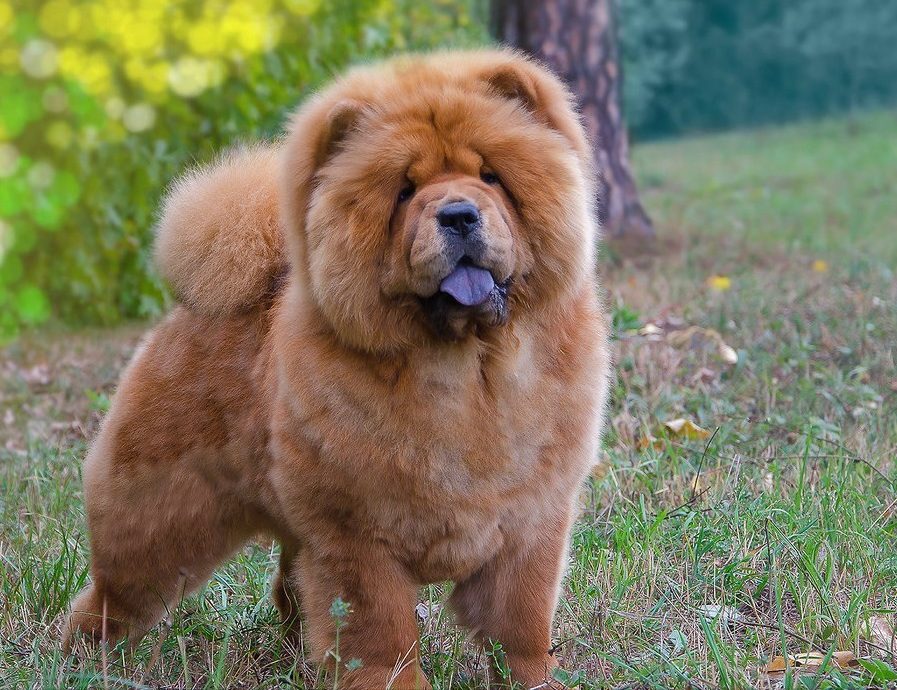
Chows don't like water.
Dogs of this breed cannot stand water. They can easily refuse to go for a walk in rainy, damp weather. However, a chow will not turn down a bath.
How to Choose a Puppy
Before getting a puppy, please firmly determine if you are ready to welcome another leader under your roof. If you need such a four-legged friend, start preparing your home. Decide in advance where the dog will live, acquire all necessary accessories: food and water bowls, various grooming tools, as well as leashes, collars, and muzzles.
Carefully choose a kennel and breeder. Thoroughly check all documents and certificates for the puppy, and ensure that the living conditions for the dogs in the kennel are acceptable. It’s also a good idea to see the puppy’s mother. The dog should not have any defects listed in the breed standard.
If you have clearly determined the sex of your future companion, you can proceed with the selection.
Like any puppy, the “lion cub with a blue tongue” should be active and clean. One of the most obvious signs of a healthy dog is a cold and wet nose. Be sure to check this. The puppy’s belly should not be bloated. The puppy itself should not be hiding or tucking its tail. Its ears and eyes should not be dirty or have any discharge. The coat of a healthy puppy cannot have bald spots, so be sure to inspect it. Of course, if you notice that dogs have fleas, it’s best to change the kennel and not purchase a dog from there. This is a serious reason to doubt the integrity of the breeder. At Zooinik, you’ll find only verified offers with a health guarantee.
Health and Diseases
Among the most dangerous diseases that Chow Chows suffer from is myopathy. This genetic condition leads to the atrophy of all the muscles in the animal, causing the dog to lose its ability to move and eventually to breathe. Currently, there is no treatment for hereditary myopathy in Chow Chows.
Skin-specific diseases, such as dermatitis, occur quite frequently if hygiene recommendations are not followed or if the diet is improperly chosen. If you notice the first signs of allergies in your dog, consult a veterinary clinic immediately.
Entropion of the lower or upper eyelid is another condition characteristic of this breed. In this case, the eyelashes grow inward towards the eyeball, causing significant discomfort for the dog. However, this condition can be successfully treated by surgeons.
Hip joint dysplasia is considered a disease that is inherent to Chow Chows. Therefore, it is not recommended to take them up or down stairs until they are 6 months old.
Remember that your “fluffy lion” suffers greatly from overheating in hot weather. Since the FCI standard prohibits shortening the coat, it is advisable to avoid walks in direct sunlight during hot weather.
Timely visits to the veterinarian will help minimize health issues for your beloved dog. Do not forget to visit the veterinary clinic for vaccinations. Preventive check-ups should ideally be conducted at least twice a year. Thinking about it? There’s a huge selection of listings on the Zooinika map by cities.
Содержание
-
1. Описание породы
-
2. Внешний вид
- 2.1 Голова
- 2.2 Морда
- 2.3 Уши
- 2.4 Глаза
- 2.5 Зубы
- 2.6 Корпус
- 2.7 Конечности
- 2.8 Хвост
- 2.9 Шерсть
- 2.10 Окрас
-
3. Характер
-
4. Содержание и уход
-
5. Дрессировка и обучение
-
6. Как выбрать котенка
-
7. Здоровье и болезни



Comments
Only registered users can leave reviews.
Enter