
Border Terrier





Warning: Illegal string offset 'label' in /home/panda/sites/zoonika/wp-content/themes/zoonika/template-parts/animals/animals-param-item.php on line 32
Ð


Breed Description
In the Middle Ages, farmers in Ireland, Scotland, and England had packs of various breeds of dogs that helped maintain order in their barns and protect their homes. Each region had its own predominant breed in terms of color, size, and certain exterior traits. For example, County Kerry was famous for its gray-blue terriers that excelled at working with otters in water, while in the outskirts of Edinburgh, there were other hunters specializing in catching rats and hunting for martens. In England, small dogs that were excellent at fox hunting were quite common. Despite their small size, they kept pace with horses and fetched the cunning red thief from his den.
Border terriers emerged right on the border between England and Scotland-short dogs with wiry hair, short muzzles, and equally short tails. The breed derives its name from the English word “border” and “terrier” (by the way, “terrier” can also be translated in one sense as a soldier of the territorial army).
Easy to care for, these small dogs didn’t require much food but effectively fulfilled their duties. It’s unknown how the breed always got along with other, even larger, dogs. Typically quiet, active, and with a unique appearance, border terriers began to spread across England and Scotland in the 18th century. The ancestors of the “borderers” are said to be Dandie Dinmont terriers and Bedlington terriers, while other theories suggest they came from completely different terriers living in neighboring areas.
Until 1880, border terriers did not have an independent name and were given local nicknames based on their owners’ last names or the name of the county. It was only from this time that the breed acquired its modern name.
However, this was just another one of many terriers that were very common in England at that time. Breeders held onto their dogs for quite a while until the English Kennel Club recognized the breed’s independence in 1920. In the U.S., it was accepted ten years later. The breeders’ concerns that their dogs would not find admirers turned out to be unfounded. Today, over 4,000 puppies are registered annually in the UK. The breed is less popular in the U.S. and Germany, but it is still quite well-known.
In the 21st century, there is no more agile terrier than the border terrier. The little “earth soldier” can overcome any obstacle. He finds a way out of nearly any dead-end situation. With a brave heart beating in his chest and a true “processor” in his head, he makes the right decisions even in the most extreme situations. This positions the breed among the smartest breeds in the United Kingdom.
Appearance
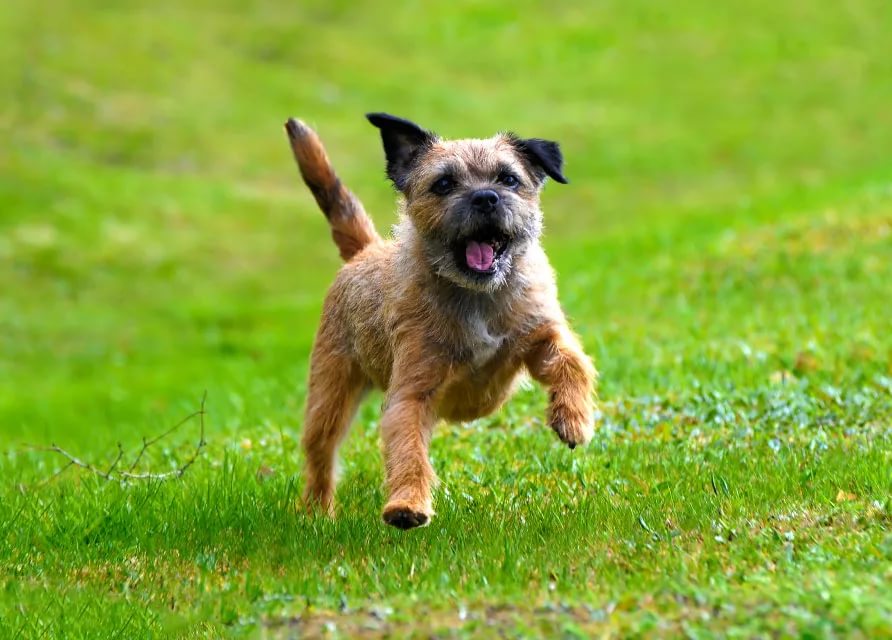
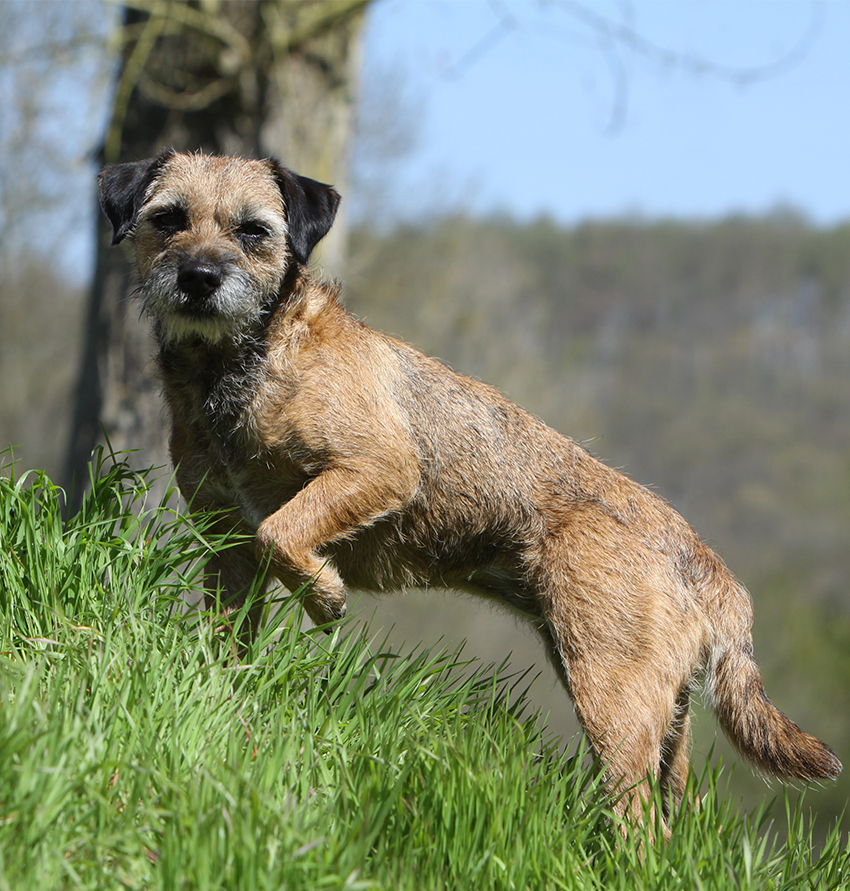
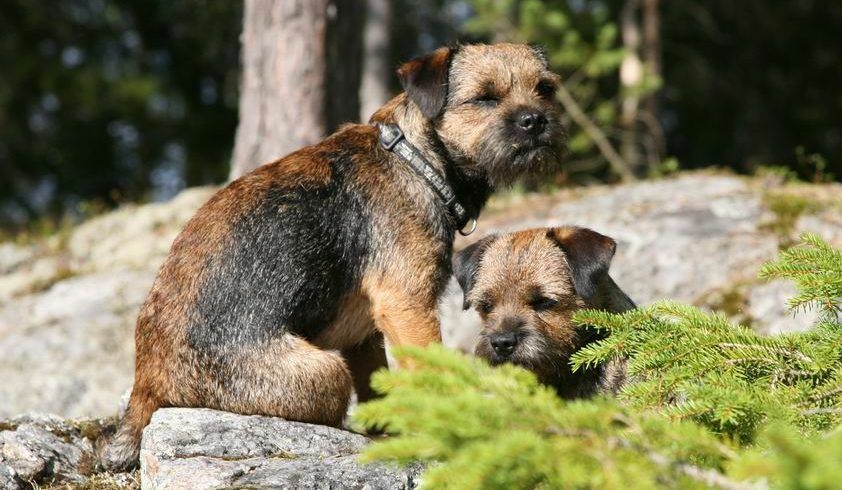
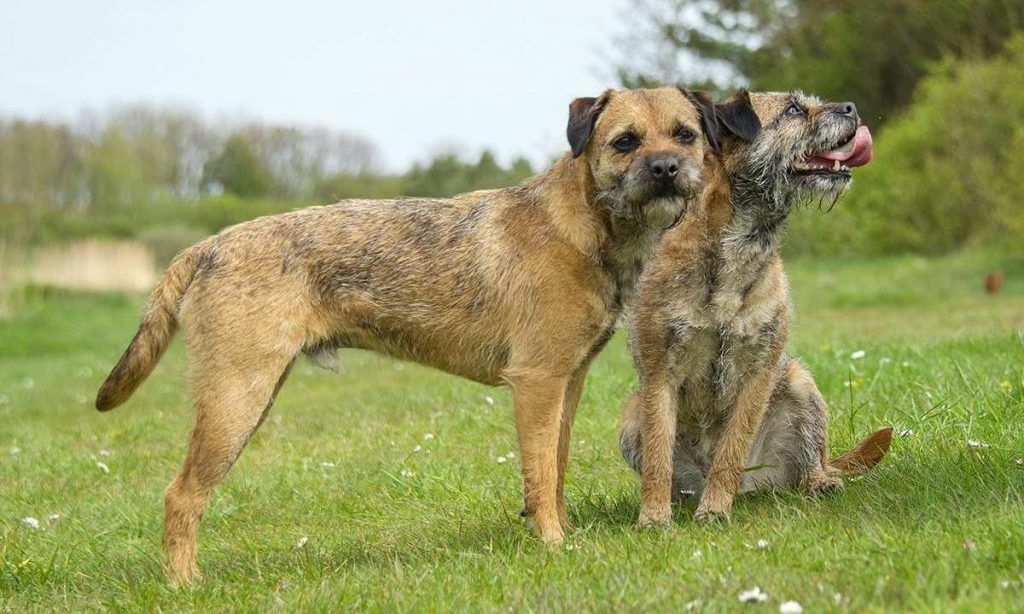
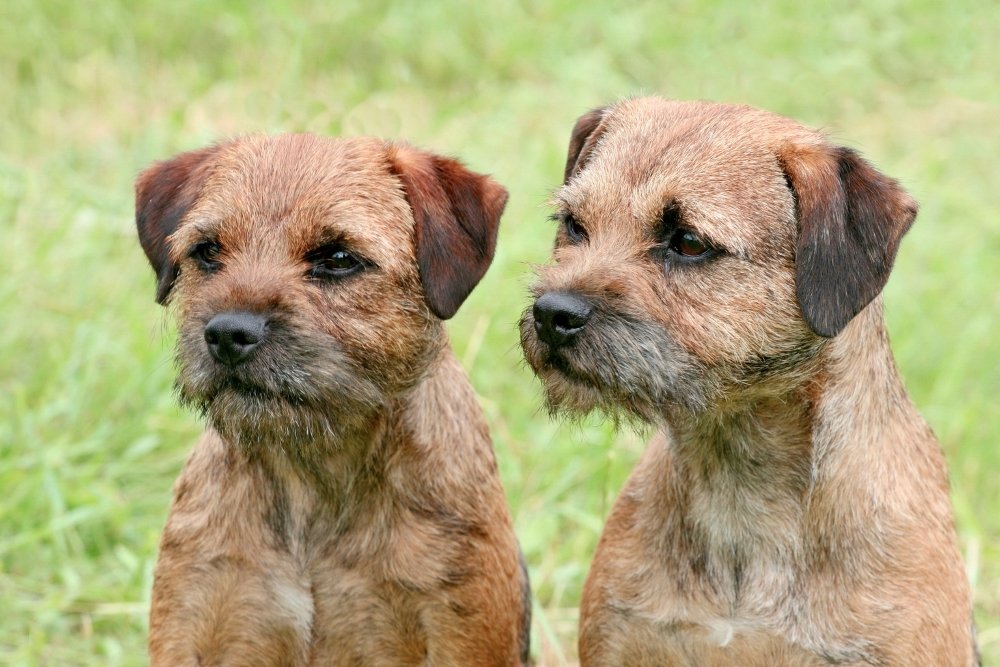
The unusual appearance of the Border Terrier will immediately appeal to owners who want an active small dog that requires almost no upkeep. This sturdy, muscular, lean dog with a light terrier beard is always alert.
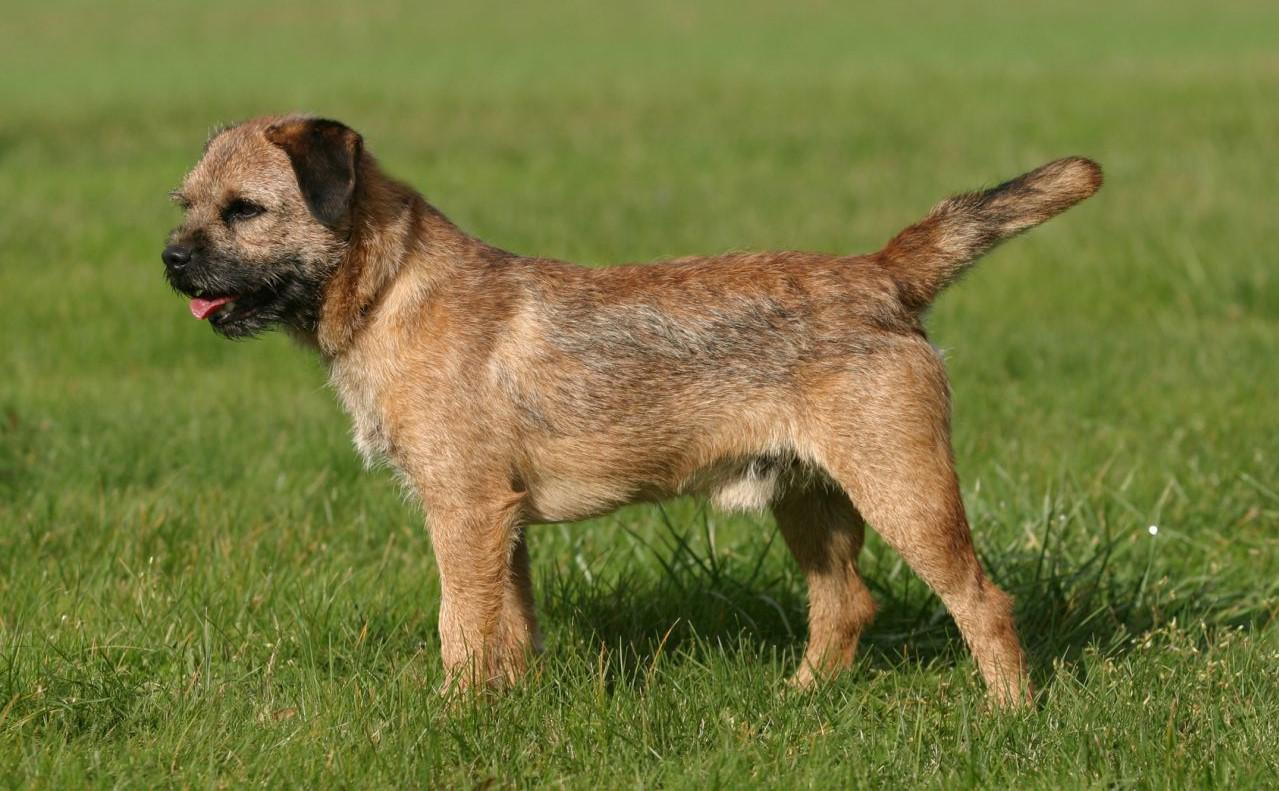
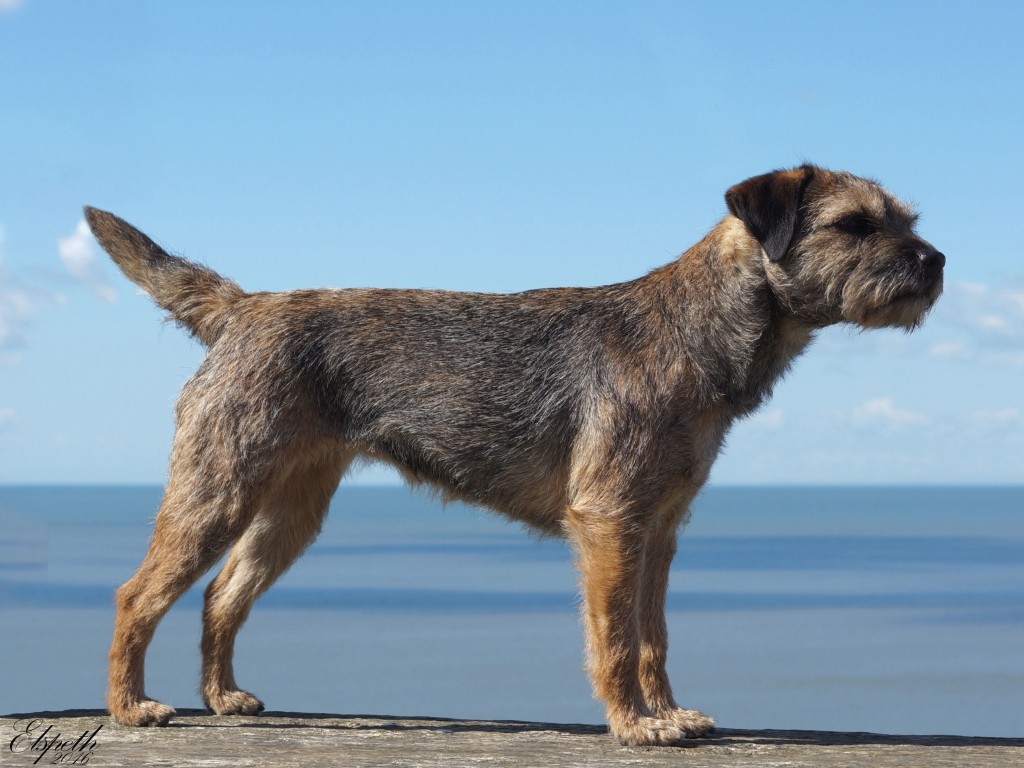
In some sources, Borders are referred to as the smallest of all terriers, but this is not accurate. Standing 33 to 37-40 cm at the shoulder, the weight of an adult Border Terrier is regulated to be between 5.1 and 7.1 kg. Notably, the modern breed standard has no height restrictions, only a weight range. Therefore, there is no basis for claiming that Borders are the smallest terriers. However, it is undeniable that they are among the most striking and effective hunters.
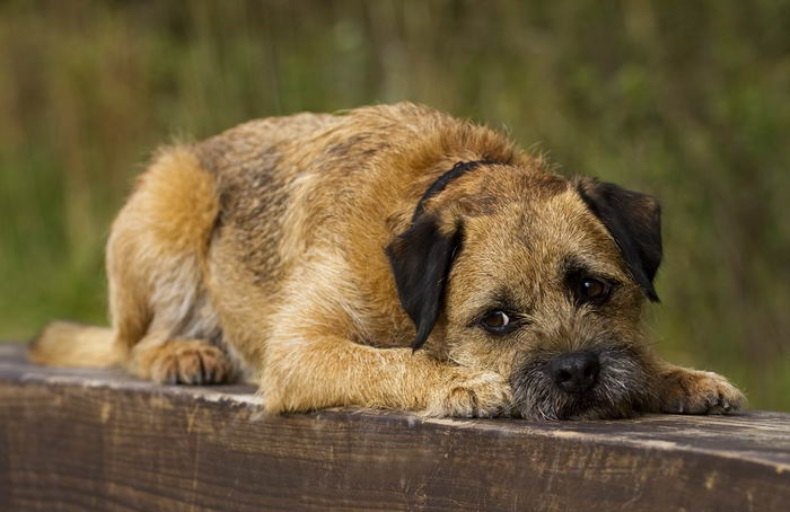
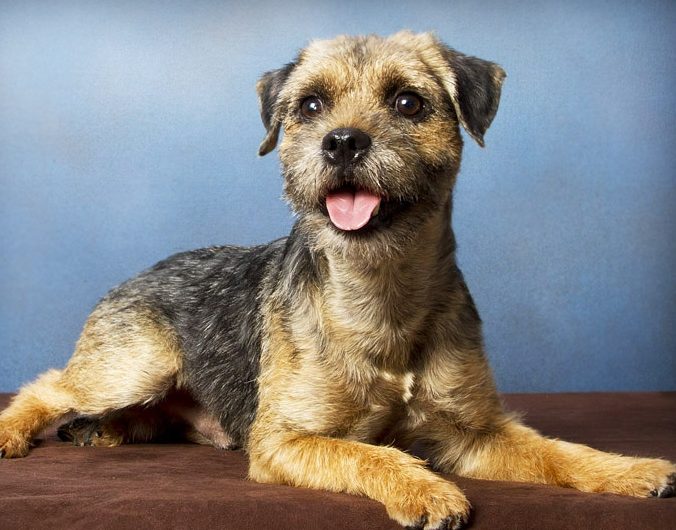
Their coarse coat with a dense undercoat provides excellent protection during rain and can shield the dog from injuries while hunting. But what draws the most attention is the unusual shape of the dog’s head. It immediately brings to mind an otter with its somewhat flattened skull. At the same time, the ears are folded forward like those of an Irish Terrier. Arguably, the Border Terrier is a breed that has incorporated a little bit of all the terriers from the Misty Albion in its appearance.


Отличительные черты

Голова

Морда

Уши

Глаза

Зубы

Корпус

Конечности

Хвост

Шерсть

Окрас
Characteristics
It is quite accurate to say that border terriers are the most easygoing dogs among all terriers of their size. These wonderful family companions are very understanding, good-natured, loyal, playful, and tremendously love children. One can confidently say that they are the best dogs for kids, as children can easily manage them outdoors and play for a long time, feeling safe in their company. Of course, they don’t aspire to be bodyguards, but their loud barking will alert everyone if something unpleasant is happening. Moreover, a border terrier will never abandon its loved ones and would rather perish than fail to protect them. The breed shows great patience towards the antics of the younger generation. While there won’t be any subservient obedience, their capacity for patience is quite significant.
Like all terriers, border terriers love walks. They need to be walked for at least 60 minutes twice a day. However, it’s even better if the number of walks increases. To maintain their health, dogs require a lot of activity, and walks should be made as engaging as possible for the animal. For instance, in a park, your dog can run freely without the risk of getting into a scuffle with more aggressive dogs. Favorite toys can add variety, allowing for playtime where your dog can be the “hunter.” Otherwise, a border terrier can very well bring and place at your feet a squirrel or even a stray cat they have caught-hunting experience is something this breed has a long history of. Their urge to dig is also quite pronounced, and it’s much better if they find “treasure” outdoors rather than in your yard.
These dogs have a tough time being alone. They may start barking out of boredom or create a mess in the house, turning everything upside down. Therefore, busy people might want to think twice before getting such a dog or should try to be home more often.
Joy typically overflows in these otter-headed dogs-they absolutely love to jump, and you should be ready for this every time you come home: the reunion will be filled with joyful leaps, “kisses,” and squeals.
Fully giving their love to their family, these dogs seek reciprocation and require frequent reminders of their “need” and importance.
Sensitive to every change in tone, the breed catches every word. Sadness or bad moods in any family member noticeably troubles the dog, prompting it to seek solutions while reminding everyone of its presence, acting like a therapist and diverting attention from the negative feelings.
Search party member
In many countries around the world, border terriers are involved in search and rescue operations. The dogs are excellent at tracking and finding missing persons.Care and Maintenance
Regardless of where a dog lives, it will feel great if given enough attention. A compact terrier is not picky about the size of the living space.
In a city apartment, it’s important to set up a designated area for the dog and maintain a routine for walks and feeding. Having a variety of toys for both puppies and adult dogs can brighten moments when they’re alone and protect your apartment and shoes from a border terrier’s teeth.
A country house is not much different from an apartment. However, the backyard where the dog will play should be fenced with a sufficiently high barrier. Dogs are very agile, and a fence shorter than 2 meters can be easily cleared by an experienced hunter. Moreover, digging under fences is also a concern, as border terriers have a history of finding and working underground.
So, no matter where the dog lives, it should be fed twice a day. Portions should be limited since the breed tends to overeat. Fresh drinking water must always be available in ample amounts. What should you feed a border terrier? Today, the vast majority of dog owners recommend premium-quality special diets. These foods contain all the necessary vitamins to maintain the animal’s health, taking into account its age and size. They also make it easier to adjust the diet in case of allergic reactions and to control the dog’s weight.
Walking the dog for at least one hour twice a day, along with ample physical exercise, will help smooth out the negative traits that terriers generally exhibit. Naturally, if you can walk more, it will undoubtedly be beneficial. Additionally, mental stimulation is also recommended, as border terriers are very intelligent dogs who enjoy not just running but also thinking.
After each walk, you should check the dog’s paws for injuries on the pads. Nails do not wear down naturally, so they should be trimmed with clippers approximately every 10 days. Of course, these time frames are approximate since nails grow at different rates, but this is a general guideline. About a third of the nail should be clipped at an angle to the pads. Don’t trim too much, as this can damage the blood vessel inside the nail and deprive your pet of activity for a long time.The ears and eyes of border terriers require regular inspections. If there is significant discharge in the ears, it can be cleaned with cotton swabs and a special lotion. Using cotton swabs can risk damaging the inner ear and the eardrum. Eyes should be checked daily, removing any white discharge that may sometimes appear in the corners. Excessive tearing or copious discharge signals an inflammatory process – in this case, don’t hesitate to visit a veterinarian who will provide all the necessary recommendations. Nasal discharge should also not be ignored; it’s best to consult a vet if it appears.The coat of border terriers requires the most attention. It shouldn’t be cut with scissors.
Without fear
This is one of the few breeds that has no fear. Terriers are not afraid of horses or cattle and calmly walk among their hooves.Training and Education
If the dog is acquired for hunting, a professional dog trainer should handle the training. It’s advisable to reach out to a certified dog training center.
If hunting isn’t needed, you can raise a true four-legged champion in various dog sports disciplines. Often, these representatives from Foggy Albion become winners in agility competitions.
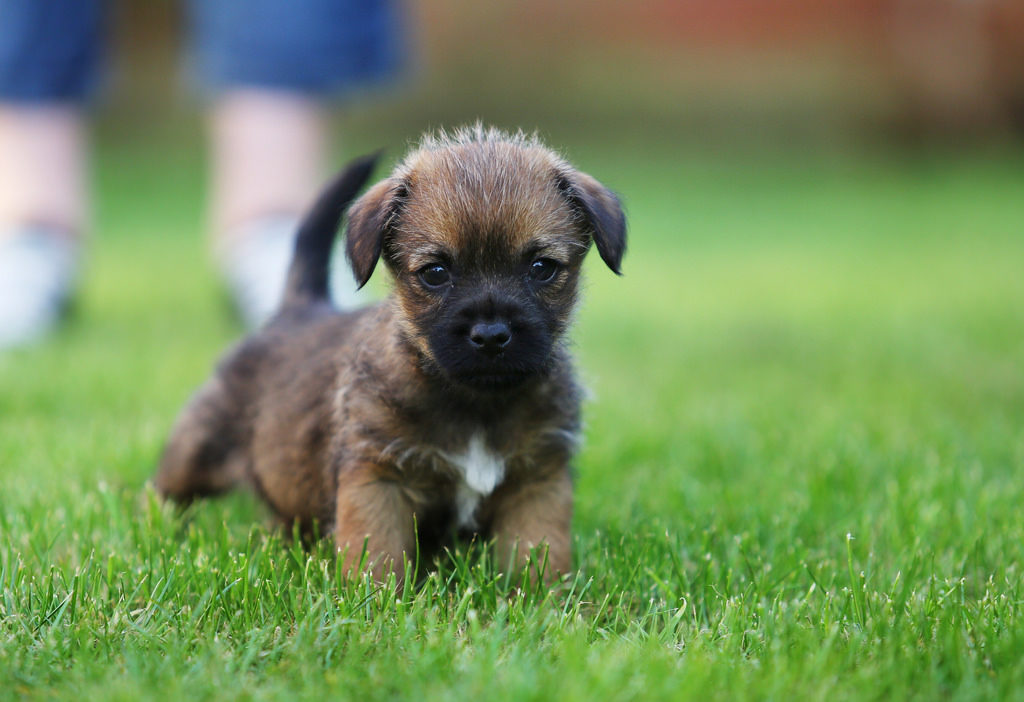
However, even if you get a puppy just for companionship, it still needs to be trained. It’s best to start this from the moment it first arrives home. A border terrier puppy should get used to its place and name. If its place is a crate, the dog should not perceive the crate as a prison. At the same time, the little “border” should be trained to use a toilet pad, which significantly simplifies caring for the dog. Until it develops immunity after vaccinations, the puppy shouldn’t go outside, but you can start teaching basic commands: “place,” “no,” “leave it,” “come,” and “okay.” In city apartments, for the sake of neighbors’ peace, you can teach the command “quieter,” as border terriers are very sensitive watchdogs with loud barks.
Remember that the dog should be walked on a collar and leash. Therefore, before the first outing, it should be accustomed to these dog accessories. Its compact size and hunting background might lead the dog to chase after a neighborhood cat, and in metropolitan areas (especially near hypermarkets), you often encounter rats, so it could be wise to invest in a GPS tracker that helps find the puppy if it goes missing.
Keep in mind that training sessions lasting longer than 15-20 minutes will tire the puppy and distract it from exercises. Training should be conducted by only one person in a calm environment and only when the dog feels well. During training, be consistent, patient, and avoid shouting at your pet. The best results come from a reward-based method, where for every successful repetition of a command, the puppy (or an older dog) receives either a favorite treat, a beloved toy, and definitely affectionate praise. Zooparks offer puppies with pedigrees and health guarantees.
Hospice Assistant
These little dogs serve excellently as volunteers and therapists in boarding schools, hospitals, and nursing homes.
How to Choose a Puppy
Have you decided to buy a Border Terrier puppy? Then clearly define the goals that prompted you to take this serious step. Do you need a hunting dog, a companion, or a dog for show competitions? Answers to these questions will greatly simplify the purchase. A companion dog can be adopted for free or for a symbolic fee from a shelter. However, in this case, there are no guarantees that the puppy will be healthy and purebred.
If you’re looking for a hunting assistant or a champion for dog shows, it’s best to buy from reputable breeders, or even better, from a kennel with good recommendations.
It’s clear that the selection process begins with studying the breed standard and characteristics. Then you need to identify a list of kennels and wait for the puppies to be born. The breed is quite rare in our country, so puppies are usually not available for sale.
When visiting a kennel, verify the dog’s documents: pedigree, veterinary certificate, presence of a microchip or tattoo, and the results of genetic tests, if conducted.
Of course, you can make a purchase remotely, but it’s much more beneficial to meet the puppy’s mother in person and observe her behavior-her traits will likely be present in her offspring.
The most cheerful puppy, one that does not show any signs of timidity or aggression towards its siblings, and has no issues with coat, teeth, joints, or eyes-this is the one you are looking for. Elite breeds at Zoonica-your ideal choice for buying a pet.
Health and Diseases
Border Terriers are one of the healthiest breeds in the United Kingdom. Their strong immune system has been preserved, partly due to minimal human intervention in the breed’s development overall. Timely vaccinations and regular parasite control help dogs remain active into their senior years.
Additionally, it is important to note that “Borderers” tend to gain weight. To avoid this, dogs should not overeat and should maintain an active lifestyle. To monitor their weight, you can simply feel your Border’s ribs. If you can easily feel them with your fingers, the dog’s weight is likely normal. If you detect some fat, it may be necessary to reduce food portions or increase physical exercise.
Despite their healthy heritage, the breed is prone to several health issues. Unfortunately, progressive retinal atrophy is one of them, along with cataracts.
Dogs can also inherit certain orthopedic anomalies: patellar dysplasia and hip dysplasia. However, unlike larger heavy-breed dogs, the consequences for Border Terriers are not as severe; with significant restrictions on physical activity, these conditions cause minimal damage and do not greatly reduce the dog’s quality of life. Epilepsy can occur, but it is very rare.
Thinking about it? There is a vast selection of ads on the map by cities on Zoonyka.
Содержание
-
1. Описание породы
-
2. Внешний вид
- 2.1 Голова
- 2.2 Морда
- 2.3 Уши
- 2.4 Глаза
- 2.5 Зубы
- 2.6 Корпус
- 2.7 Конечности
- 2.8 Хвост
- 2.9 Шерсть
- 2.10 Окрас
-
3. Характер
-
4. Содержание и уход
-
5. Дрессировка и обучение
-
6. Как выбрать котенка
-
7. Здоровье и болезни






Comments
Only registered users can leave reviews.
Enter