
Bordeaux Dog






Warning: Illegal string offset 'label' in /home/panda/sites/zoonika/wp-content/themes/zoonika/template-parts/animals/animals-param-item.php on line 32
Ð


Breed Description
The Bordeaux Mastiff is a historic French dog breed that directly descends from the Roman Molossus. In the 12th century, they were actively used on French farms as hunting dogs, showcasing their skills in hunting pigs, boars, wolves, and even bears. In the Middle Ages, they also assisted in herding cattle. Bordeaux Mastiffs were remarkably versatile and were even used in military actions and for guarding herds. Additionally, they are known to participate in sports such as animal coursing and dog fighting.
The Molossus type has been known since ancient times and played a significant role in many ancient cultures. Babylonians carved their Molossians in granite, serving as battle dogs for rulers like Hammurabi. Molossians are strong and heavy dogs with impressive heads, short muzzles, and long lips. Their ears typically hang down. However, the inner qualities of the Molossus, described in the character section of the Bordeaux Mastiff, are even more remarkable. According to ancient traditions, the main characteristics of Molossians have remained virtually unchanged for thousands of years, and their role in serving humans has also remained constant.
The ancestors of Bordeaux Mastiffs served as hunting dogs for large and defensive game, primarily as catchdogs. They were tasked with catching and holding dangerous boars until the hunter could kill them with a special spear known as the Saufedera. This required speed, endurance, courage, and strength.
The Bordeaux Mastiff has served and continues to serve as a guard and protection dog. In the Middle Ages, it was used in arenas for animal fighting. Large and small Molossians have always been widespread throughout Europe. The Bordeaux Mastiff was established as a distinct breed with the advent of modern pedigree dog breeding. In 1863, the first French dog show took place at the Acclimatization Garden in Paris, where the Bordeaux Mastiff was already exhibited under its current name. It is said that the name originated because these dogs were frequently seen at butchers in the city of Bordeaux. However, at that time, Bordeaux Mastiffs were not as large, heavy, and wrinkled as they are today. The desired monochrome was also absent.
For example, the male “Batai,” who won a prize in Paris in 1883, had a wrinkle-free head and a black mask. The Bordeaux Mastiff often suffered from the political upheavals of humanity. It was nearly destroyed during the French Revolution in 1789, as it was seen as a dog of the wealthy. During the two World Wars, the dogs suffered to such an extent that their population faced the threat of extinction. Since the 1960s, the breed has experienced a revival, reportedly through crossbreeding with short-haired Saint Bernards. The first German club for Bordeaux Mastiffs was established in Germany in 1908. After 1947, breeding practices had to be completely restructured.
Females stand between 58.4 to 66 cm at the shoulder and weigh no less than 44.9 kg, while males stand between 60.9 to 68.5 cm at the shoulder and weigh 49.8 kg. Unlike some other giant breeds, this large dog has a strong, muscular build, is relatively low to the ground, and has a distinctive large head that is wider at the ears than at the eyes and rounded from side to side.At their best, Mastiffs are calm and gentle, but they can also be persistent. When a dog of this size is stubborn and determined, it can be difficult to manage. The dog requires early and careful socialization, along with sensible guidance from its owner; otherwise, it may become aggressive towards other dogs, small animals, and even people. You must learn to communicate, manage, and earn the respect of your Mastiff.The price for a puppy ranges from 30,000 to 120,000 rubles.
Appearance
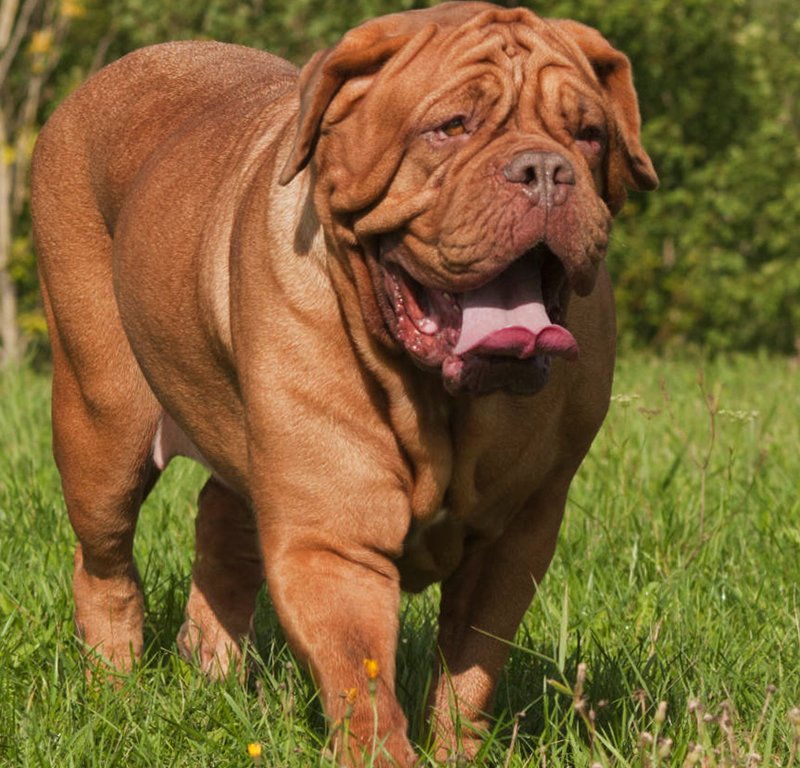
The Bordeaux Mastiff is an exceptionally strong guardian of the mastiff type. They have a very muscular body but maintain overall harmony.
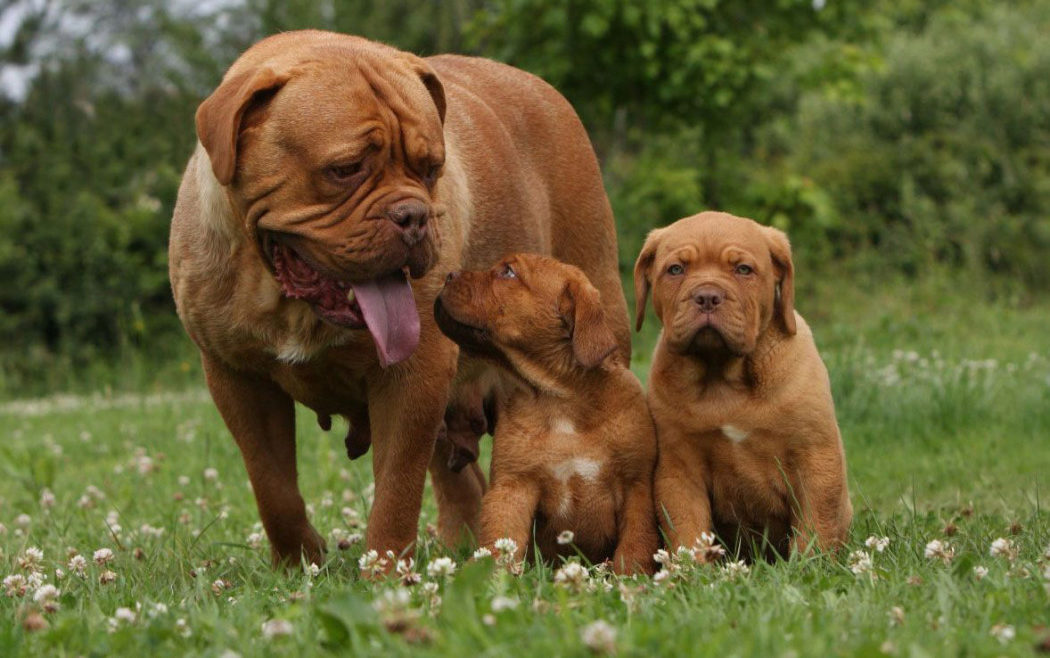
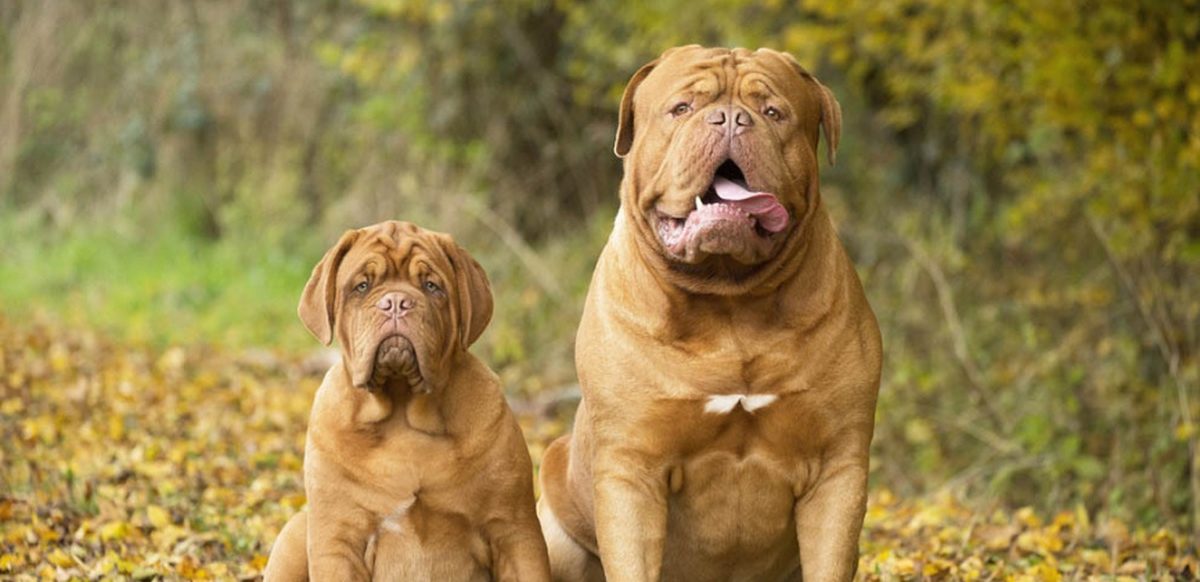
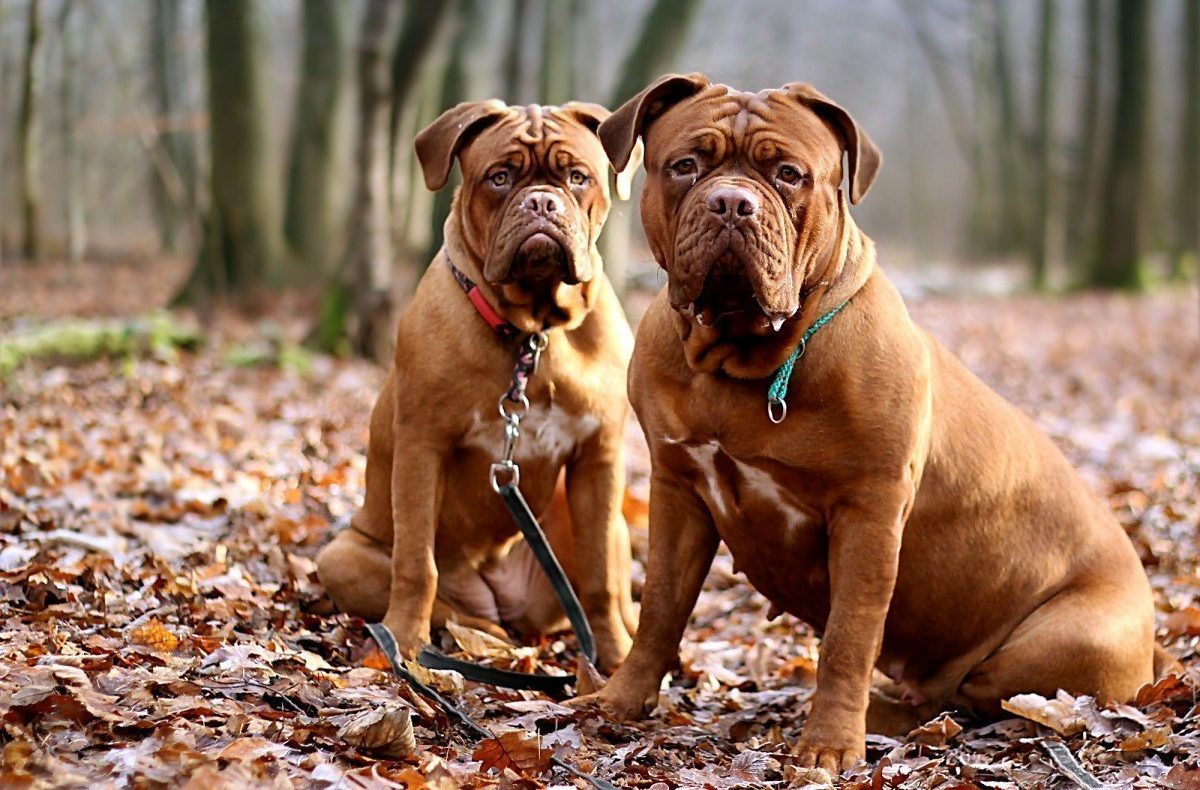
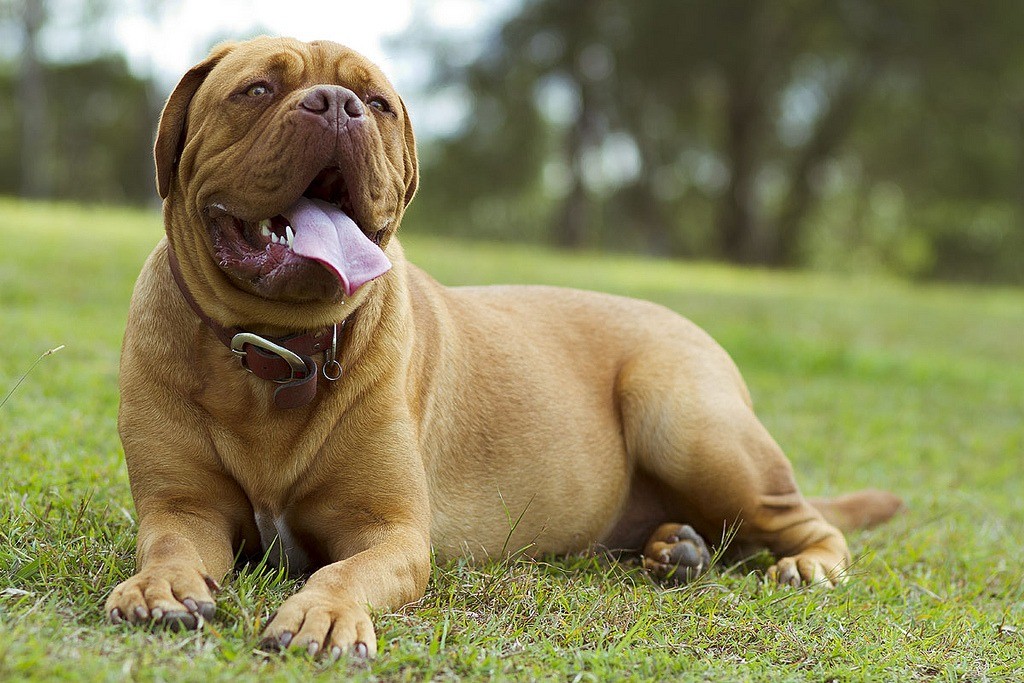
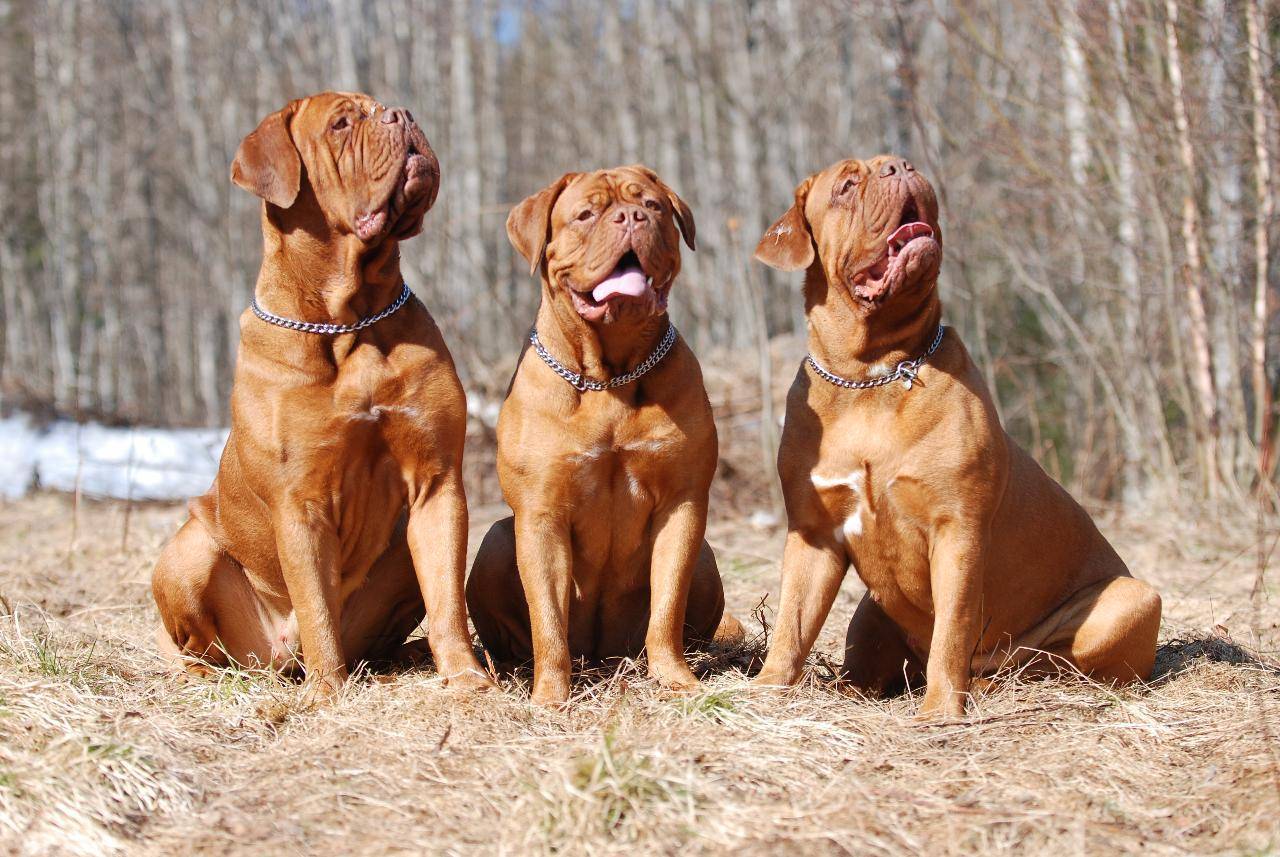
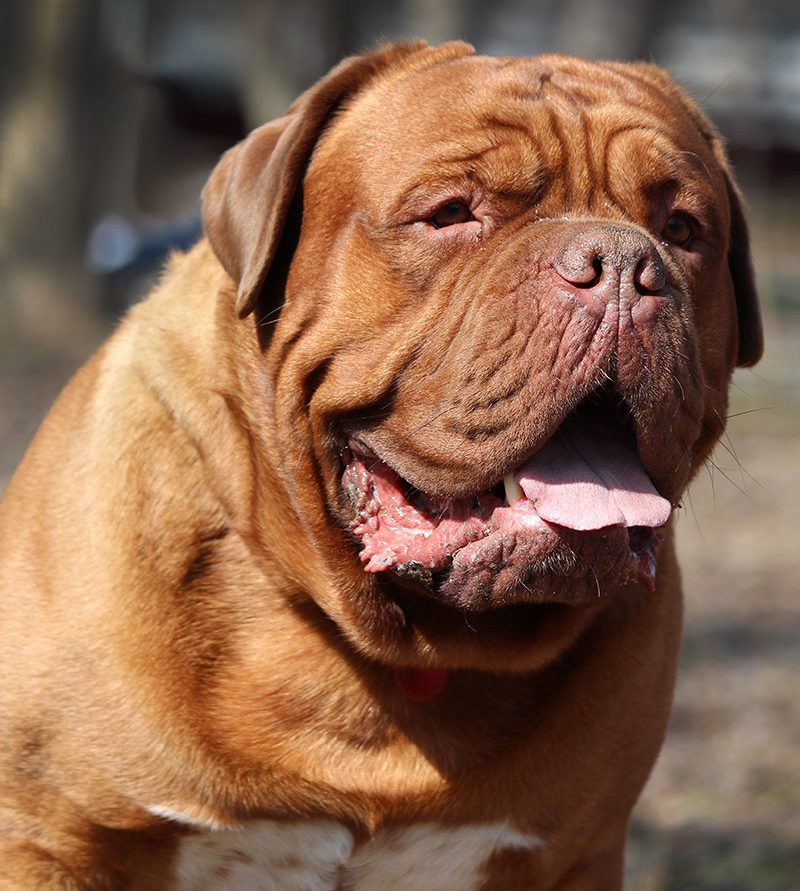
The Bordeaux Mastiff, originally known as the “Bordeaux Dog,” is a Molosser of medium to large size from France. The Bordeaux Mastiff has an imposing appearance, perhaps because it is not as massive as a mastiff or St. Bernard. Undoubtedly, you can see the strength it embodies in its majestic calmness. The coat of the Bordeaux Dog should have a thin, short, and soft texture. It should be uniform in all shades of fawn, ranging from mahogany to Isabella color. Small white markings are often found on the chest and tips of the paws. However, color limitations are not particularly beneficial for preserving the gene pool of the Bordeaux Dog. This indicates that they are considered one of the shortest-lived dog breeds today.
The standard specifies a height of 60 to 68 cm at the withers for males and 58 to 66 cm for females. Males weigh “at least 50 kg,” and females “at least 45 kg.” Unfortunately, there is no upper weight limit specified in the standard. Nowadays, we see individuals weighing 70 kilograms and more. The charm of this breed-as not being overly massive yet still impressive-somewhat diminishes. In particular, such gigantism comes at the expense of the physical shape and health of the dogs. In 1894, Belgian Count Bilandt noted that the weight for males ranged from 54 to 60 kg. In 1905, German cynologist Richard Strebel stated that the ideal weight for a male was 54-55 kg, and for a female, 45-46 kg. Such a weight range would also be extremely suitable for today’s Bordeaux Mastiffs. Unfortunately, the average lifespan of this breed is very short-between 6 and 8 years.
The short, attractive coat is a bright yellow color. The massive head has a bulldog-like underbite, expressive eyes, and deeply furrowed brows.


Отличительные черты

Голова

Морда

Уши

Глаза

Зубы

Корпус

Конечности

Хвост

Шерсть

Окрас
Character
His character reflects his appearance: his defining trait is a sovereign coldness. He keeps his immense strength in check. He has an extremely high threshold and will never act outside of a real emergency. If he does, he will first simply emit a deep “bark.”
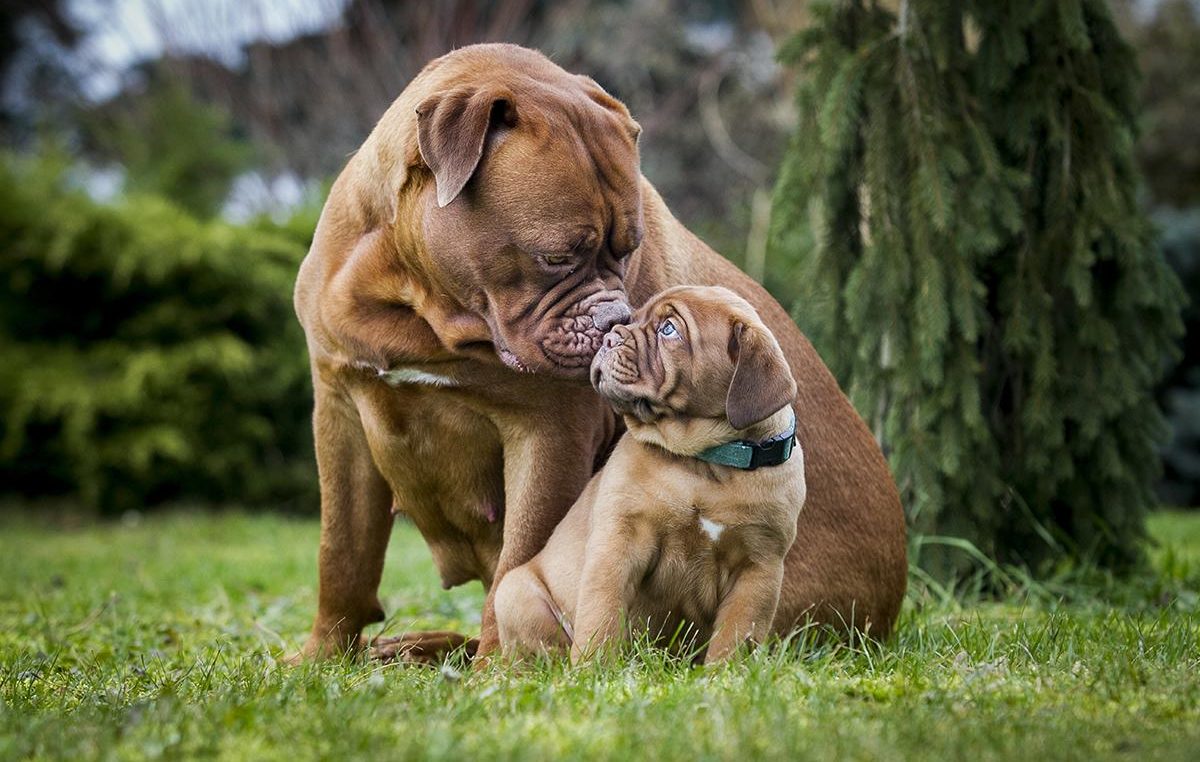
The Bordeaux Mastiff is a very good guardian and protector of his family. He is extremely kind and friendly towards people. His family loves him more than anything in the world. He is a great playmate for children. He radiates peace and calm, which is often a balm for us, people, suffering from the stresses of everyday life. The Bordeaux Mastiff is indifferent to fuss and chaos, and he clearly exudes this. As an adult dog, he does not require constant entertainment and activity. Of course, he enjoys nature walks, but he is not demanding.
The Bordeaux Mastiff is intelligent. He is quiet but a very precise observer. It seems he even has a sense of human justice, as he dislikes unfairness and is very sensitive to it.
This dog adores children and fiercely protects them. The Bordeaux is a dog that bonds closely with its owners. They are not suitable for families where they might be left isolated for long periods, viewing isolation as punishment. If their family or territory is threatened, they will defend it.
They get along well with children, but be cautious with small ones. Giant dogs do not realize how big they are. Overall, the Bordeaux Mastiff is an excellent choice if you are looking for a large dog that can be both a protector and a friend.
If raised with cats and other dogs, the Bordeaux Mastiff will get along with them, but he has a strong prey drive and is likely to chase animals that wander onto his territory. He requires good guidance, firm and consistent training, as well as early and thorough socialization, as he is strong and stubborn.He may become aggressive towards other dogs if he is not socialized with them, and it can be challenging for an inexperienced trainer to control him.Powerful, stocky, athletic, and relaxed. Characteristic head with a fearsome expression. The temperament expresses natural guarding instincts, vigilant and brave, without aggression. A good companion and very affectionate.

History and origin
The Bordeaux dog has an impressive history that dates back several centuries. Their origins are linked to ancient France, where they were used as guard and draft dogs. The Bordeaux dog was highly valued for its work ethic, strength, and courage. Today, they have become popular family pets and display excellent qualities as companion dogs.Care and Maintenance
The Bordeaux Mastiff is a bit more demanding in its needs. It is not suitable for apartment living. Although it is not overly active, it enjoys some freedom of movement, such as in a garden. Here, it spends hours napping and observing. It requires a lot of space since it wants to be able to move freely. It appreciates long walks and, though brief, bike rides. It needs daily exercise but is not an athlete. In hot weather, physical and mental activities should be avoided. You should also keep in mind that large, strong dogs like the Bordeaux Mastiff often face sharp, sometimes aggressive disapproval in modern society, which is supposedly animal-friendly. Some people simply fear them out of ignorance. You should have an adequate budget to afford a substantial amount of good food and, if necessary, veterinary bills.
This breed is known for drooling a lot, and the folds on their faces require extra care, at least regularly if not daily, to keep them clean and dry. Ear cleaning and checks for redness or signs of dirt should be performed at least once a week. Nails should be trimmed once a month.
The Bordeaux Mastiff should be bathed completely approximately every four weeks. Wiping it down with a damp towel between baths will help it look and smell fantastic. This breed has a short coat that sheds year-round; using a rubber curry brush or shedding blade will reduce the amount of hair falling onto the floor.
The Bordeaux Mastiff has light shedding, meaning it sheds somewhat throughout the year, and you will notice this in the form of loose hair in the house and shedding when you pet the dog. The short coat of this breed sheds year-round; using a rubber groomer or shedding blade will help minimize the amount of loose hair on the floor.
You will increase feeding to three times a day when your Bordeaux Mastiff puppy is between 12/16 weeks and 6 months old. Few owners tend to feed adult dogs three times a day with treats in between, as this is thought to minimize the risk of bloating in some circles.
It is a good idea to start with a puppy food formula that includes salmon and potato from the Sensitive puppy line, but if they require a meat-based diet, a good option would be puppy food with venison and rabbit from the 60/40 puppy line.
Distinctive features
The Bordeaux mastiff has several characteristic features that make it a unique breed. They have a massive build with a broad chest and strong limbs. A distinctive feature of this breed is also their expressive face with large eyes and powerful jaws. Being large dogs, Bordeaux mastiffs have a confident gait and noble posture, which makes them truly majestic.Training and Education
The Bordeaux Mastiff is very easy to train when it comes to basic behavioral rules. However, it needs to be well-trained from a young age to ensure you can always guide this powerful breed. It happily rejects learning tricks when their purpose is unclear. Even more so than most other dogs, a close, trusting relationship with the owner is the foundation of successful training. Consistency is also crucial, as the Bordeaux Mastiff is intelligent, notices the slightest inaccuracies, and can use them to its advantage. This breed is also very sensitive; it does not forget unfair treatment. You must always remember that the leash serves merely as a psychological control with these dogs. A Bordeaux Mastiff could easily maneuver the other end of the leash if it chose to, but it does not.
While their behavior and etiquette can be significantly changed with patience and effort, few Bordeaux Mastiffs go beyond simple obedience commands like “lie down” and “sit.” During training, the owner’s trust and assertiveness are vital, as earning the dog’s loyalty is almost as important as enforcing commands.
Bordeaux Mastiffs are sensitive and knowledgeable puppies. They form strong bonds with their owners and are eager to please. This breed craves interaction and love.
Frequent walks should be combined with other purposeful activities and reinforcing exercises. To avoid boredom, they also need plenty of mental stimulation and enrichment.
The Bordeaux Mastiff is not a sporty breed; a half-hour walk each day should be sufficient to keep them fit, and shortly after, many may curl up to sleep. They are mostly passive at home during the day, but having access to a yard for occasional walks is beneficial.
Bordeaux Mastiffs should not be subjected to excessive physical or mental stress in hot weather. Otherwise, they are completely trouble-free. Healthy puppies with documentation and health guarantees are offered at Zoonica.
Care and requirements
The Bordeaux dog is not just a breed that requires physical activity and ample space, but it also consumes a lot of food. Their large size and activity level demand a high-quality, balanced diet, as well as moderate but regular exercise. Special attention should be given to their training and socialization from an early age to develop proper manners and behavior.
How to Choose a Puppy
If you want to share your life with a Bordeaux Mastiff, you should start looking for a breeder well in advance of your purchase and establish contacts. The breeder should be affiliated with VDH and check their German Mastiffs for specific risks related to the issues mentioned above. This is essential for serious breeding. Additionally, there should be no inbreeding, which can be assessed through the pedigree; ideally, no name should appear there more than once. It’s important to look at how long the ancestors lived. If many ancestors died young, you should consider looking for another litter or breeder. The breeder should have well-documented records of their litter with photos. By arrangement, you should be able to see the litter along with the mother dog on-site. The Zoonik portal features verified breeders and kennels from all over Russia.
This breed will undoubtedly be the top choice for all giant dog enthusiasts. In appearance and character, it encompasses all the virtues of this ancient type of dog-if not for the clear breeding flaws. With documentation and pedigree on Zoonik, there’s a wide selection of breeds.
Health and Diseases
The French Mastiff, like many large dogs, suffers from elbow and hip dysplasia. Due to its short muzzle, it is intolerant to heat. Anesthesia is particularly dangerous for it. It is also prone to eyelid drooping, entropion, ectropion, and gastric torsion.
A serious issue for French Mastiffs is bloating, also known as gastric dilatation and volvulus (GDV). Owners should be prepared to recognize the symptoms of bloating and know how to take action if it occurs.
This breed can also be susceptible to heart diseases, strokes, musculoskeletal issues (such as hip and elbow problems), and epilepsy. Responsible breeders closely monitor their stock to identify potential breed problems. Like any other breed, the ears of a French Mastiff should be checked daily for signs of disease, and its teeth should be regularly cleaned.
Thinking about it? There is a wide selection of ads on the Zoonika map by city.
Содержание
-
1. Описание породы
-
2. Внешний вид
- 2.1 Голова
- 2.2 Морда
- 2.3 Уши
- 2.4 Глаза
- 2.5 Зубы
- 2.6 Корпус
- 2.7 Конечности
- 2.8 Хвост
- 2.9 Шерсть
- 2.10 Окрас
-
3. Характер
-
4. Содержание и уход
-
5. Дрессировка и обучение
-
6. Как выбрать котенка
-
7. Здоровье и болезни






Comments
Only registered users can leave reviews.
Enter