
Berger de Brie (Briard)




Warning: Illegal string offset 'label' in /home/panda/sites/zoonika/wp-content/themes/zoonika/template-parts/animals/animals-param-item.php on line 32
Ð


Breed Description
“Berger de Bri” means shepherd dog from the Bri area, which is a landscape in the heart of France known for the famous soft cheese of the same name. Bri refers to the plain in general. This dog is a herder from the lowlands of France, used by shepherds to watch over flocks of sheep and cattle. Written records that may refer to this dog date back to 1387. In 1578, LiГ©bo described a similar dog in “Agriculture and the Rural House.” In 1785, naturalist Count de Buffon noted a long-haired, predominantly black breed called “Chien de Bri,” which was used for guarding herds. The term “Berger de Bri” was first used by Abbot Rozier in 1809. The Briard is one of the oldest and most accurately documented dog breeds, aside from hunting dogs. It is a classic shepherd but can also be used in various ways. During the world wars, it served as a guard and reporting dog, as well as for finding the wounded on battlefields. Sometimes it still works in police as a service or rescue dog among rubble, in earth, and even in avalanches. Its primary role now has become the emotional “protection” of its human family, a task in which it excels.
Appearance
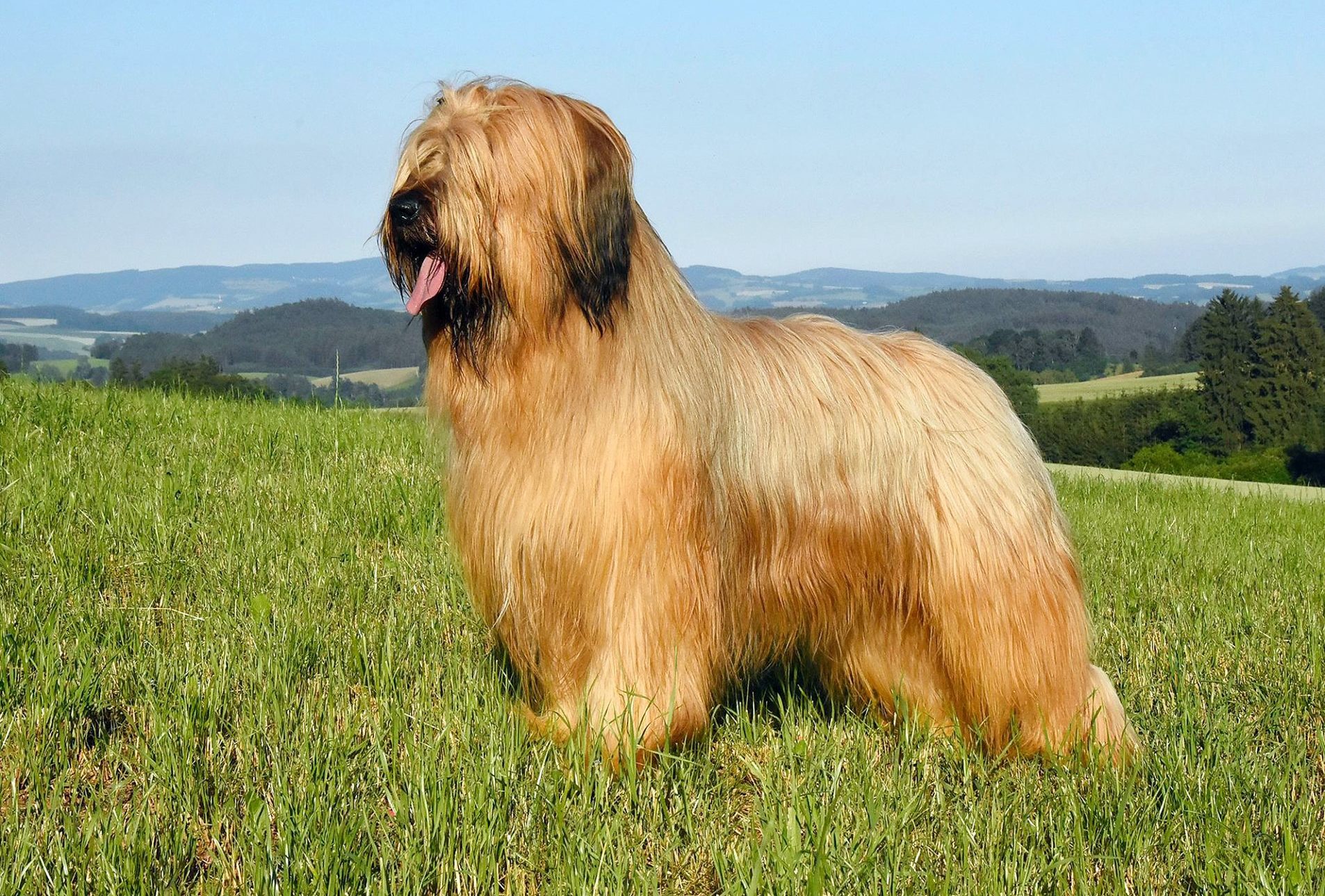
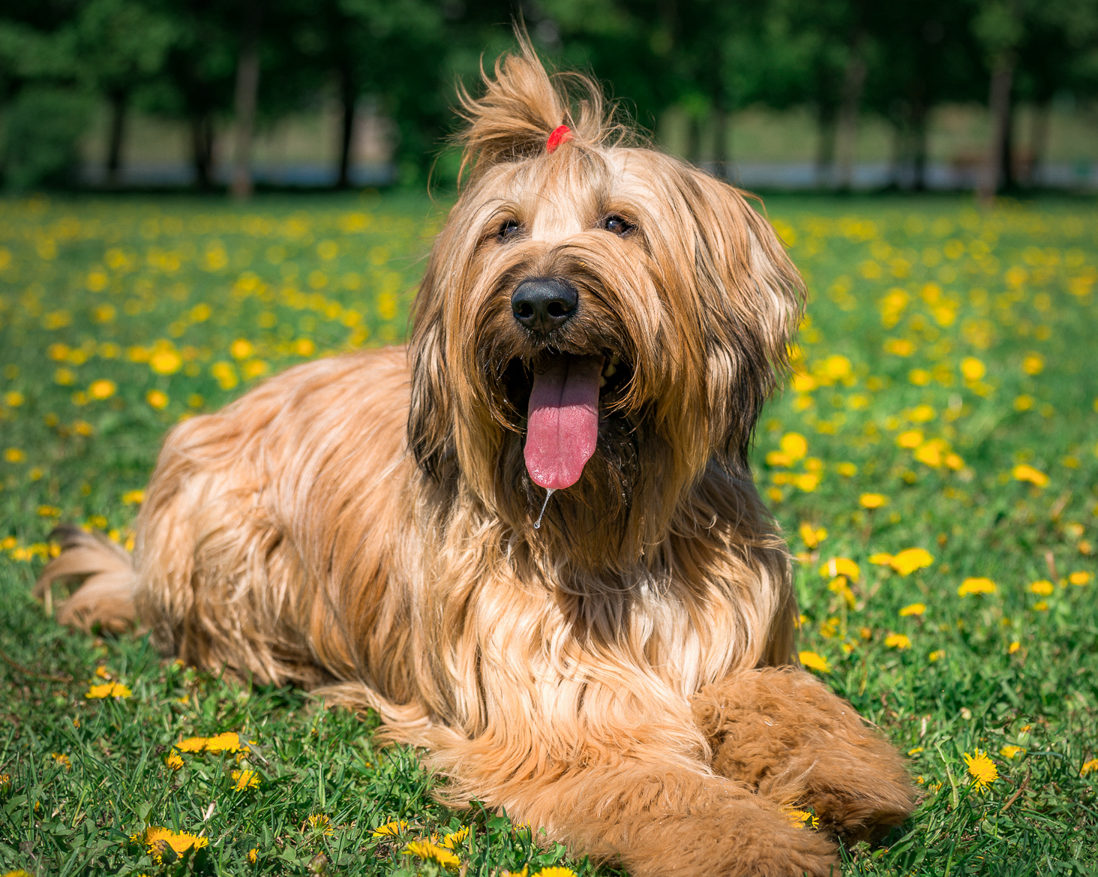
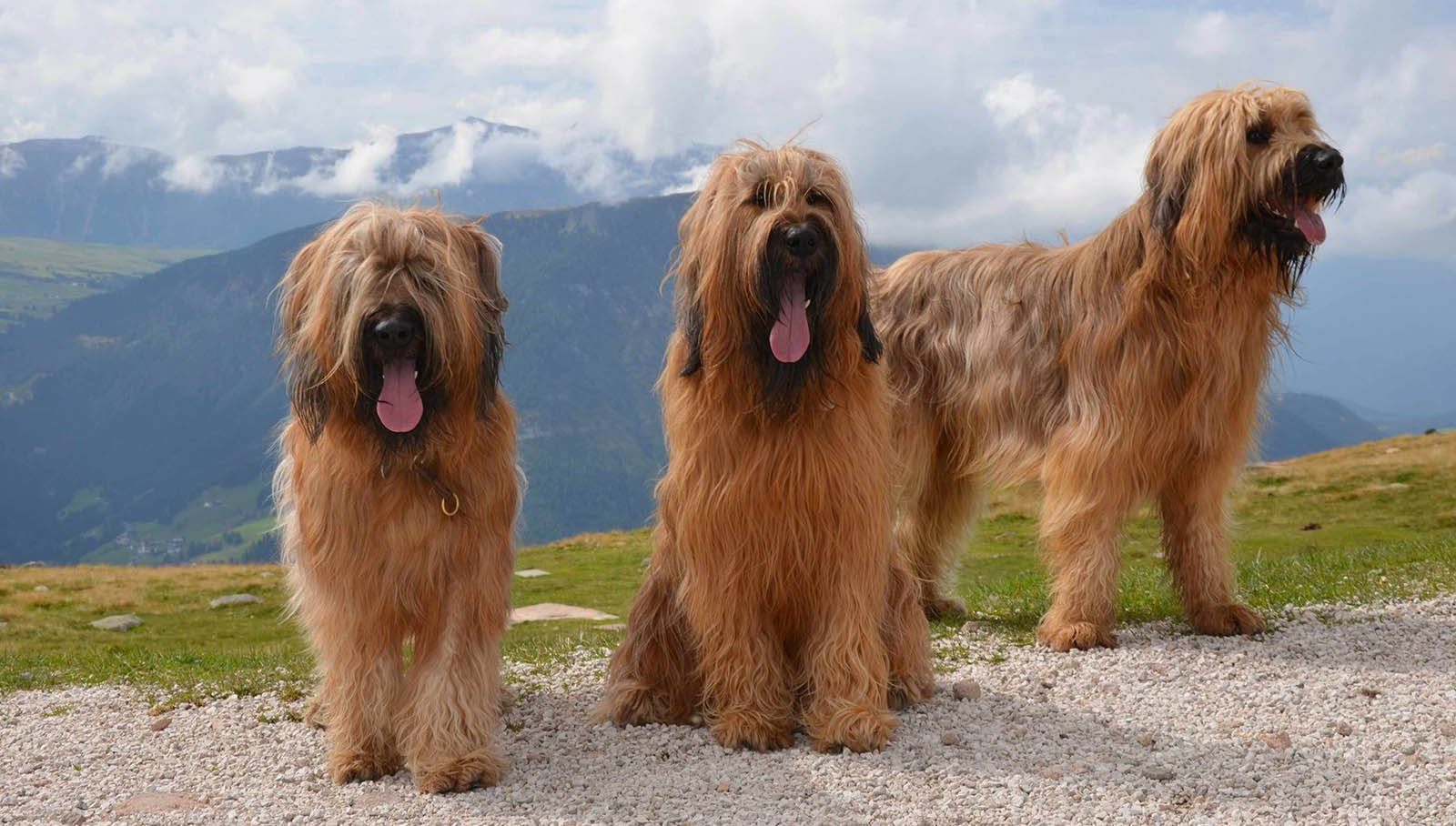
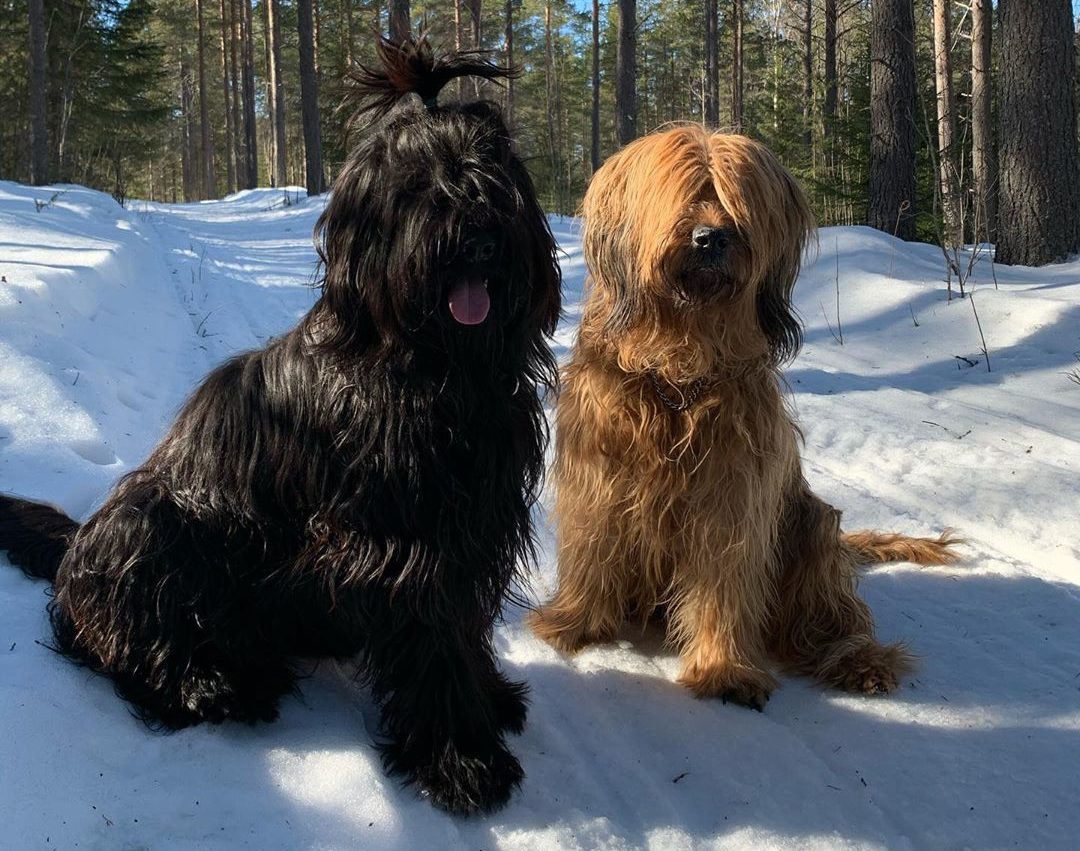
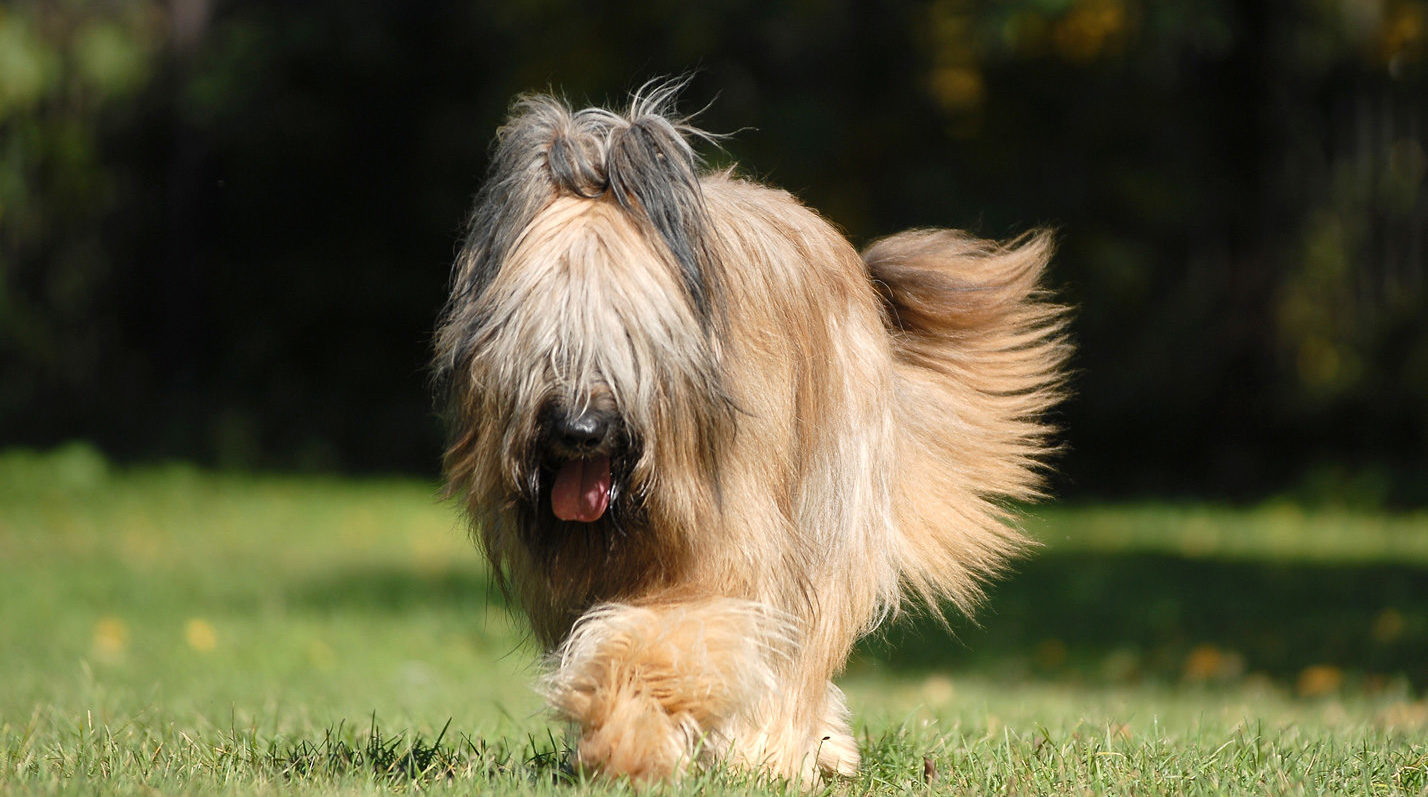
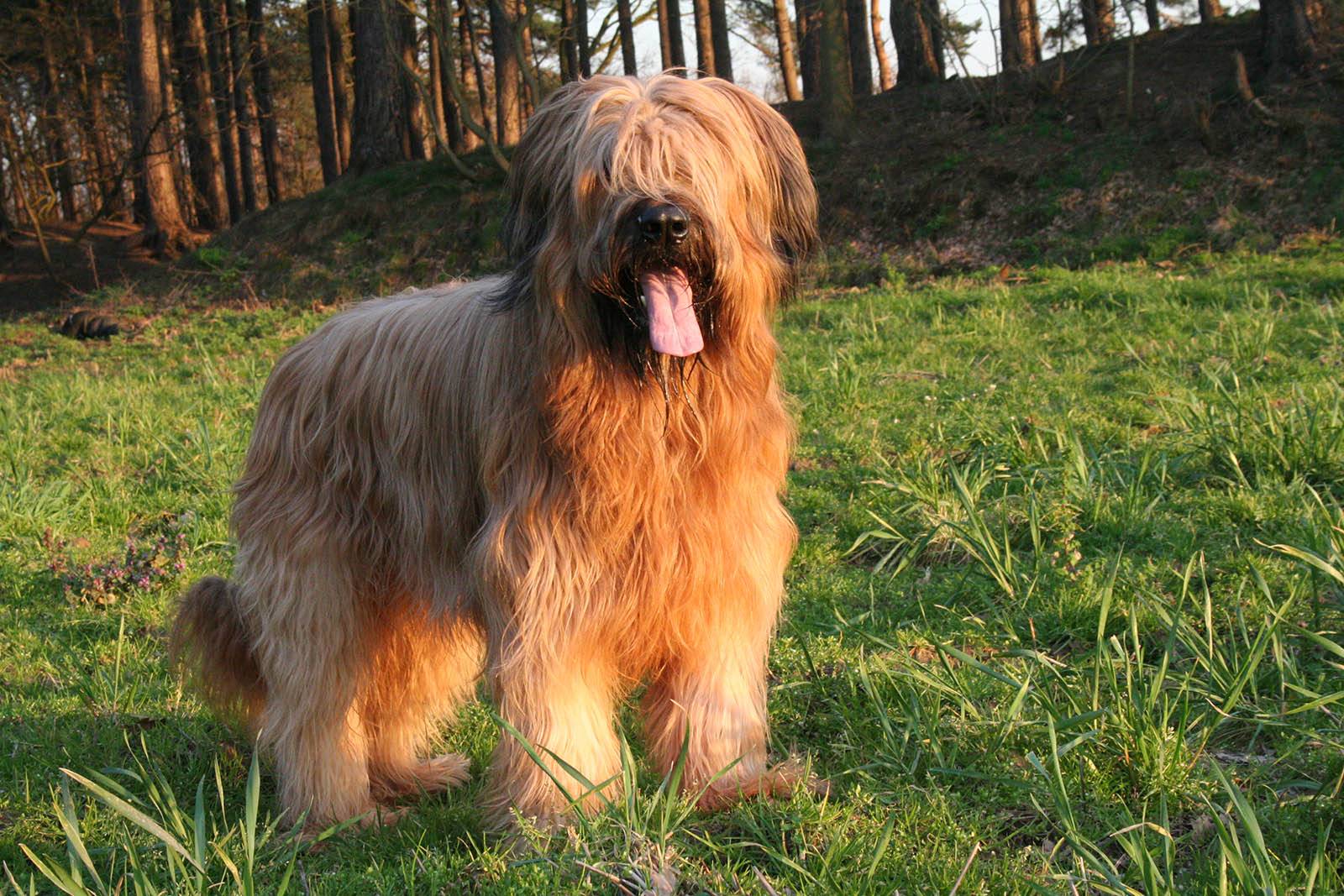
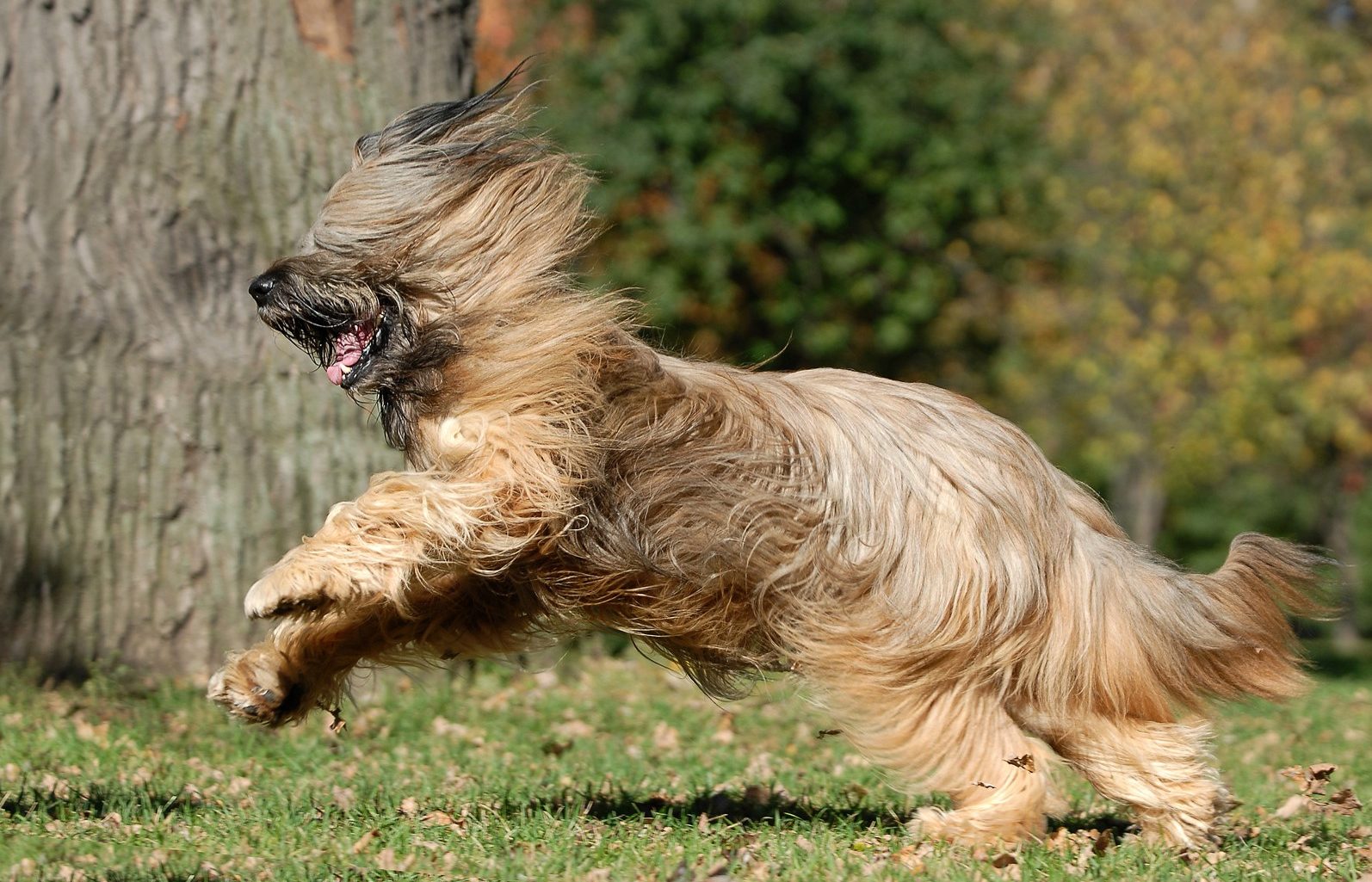
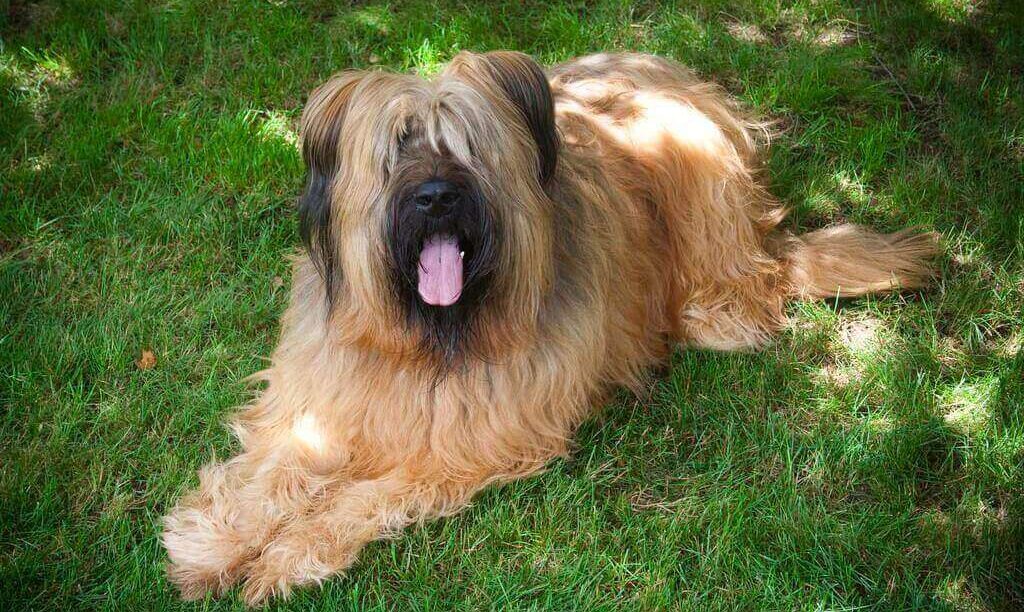
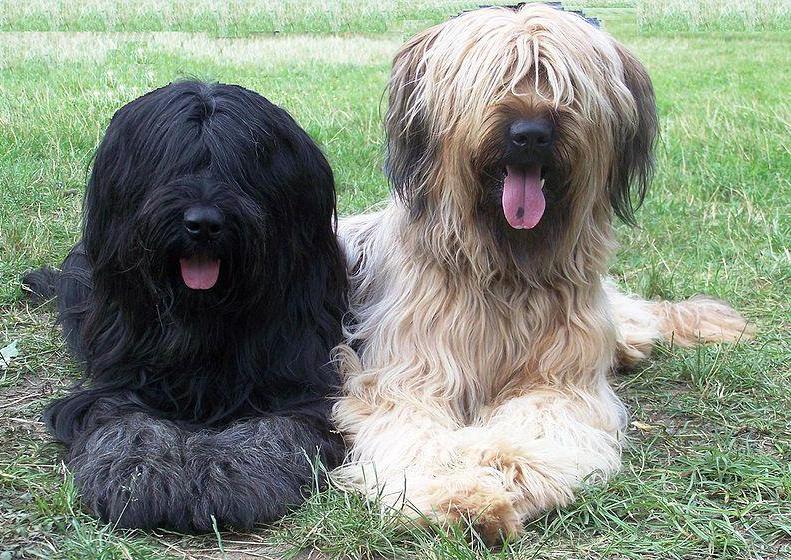
The Briard, more precisely “Berger de Bri,” is an ancient French shepherd dog. The Berger de Bri is a medium to large-sized dog, easily recognized by its long, flowing coat. The fur should be very long and curly all over the body, including the head. The hair is expected to be dry, like goat hair. The Briard has a small undercoat. This long fur is an old, typical feature of the breed that once protected it from winds and bad weather during work, and sometimes from wolf bites. As is often the case, modern breeding practices tend to exaggerate certain traits. The quality of these dogs with strong temperaments is sometimes measured primarily by the length and condition of their fur. Last but not least, excessive growth of the head can impair the dog’s vision and even lead to eye injuries. Although the official FCI standard requires the eyes to be “slightly covered,” it is not uncommon to see breeding dogs with a true mop of hair in front of their eyes. Acceptable coat colors include black, grayish-blue, grayish-brown with black, gray, or blue, often with a mask.
Otherwise, the standard describes it as a “country dog, flexible, muscular, and well-built, lively and intelligent.” The Briard standard also has a peculiar requirement: it calls for a double dewclaw. Most dogs have a simple dewclaw. This is a regressed thumb located above the paw, not touching the ground and not functioning. “Simple dewclaws or the complete absence of dewclaws on the hind legs” are considered defects that exclude breeding, even though this absence would actually be beneficial for the dogs’ physical form and health.
The Briard is a French breed of large shepherd dog with a rugged appearance. They are muscular and slim, with long, thick, and coarse hair, resembling that of a goat.
Males should stand between 62 and 68 centimeters at the withers, while females range from 56 to 64 centimeters. Briards are relatively light for their size, with a normal weight between 30 and 35 kilograms.
The lifespan of a Briard is around 12 years. It is not uncommon to encounter individuals that, despite being in excellent physical condition, live significantly longer.


Отличительные черты

Голова

Морда

Уши

Глаза

Зубы

Корпус

Конечности

Хвост

Шерсть

Окрас
Character
The Briard is an old herding dog with a wide range of skills, making it an excellent family dog today. Friends describe it as “a heart with fur around it.” The old shepherd is still alive in it, along with its protective herding behavior. Now, it looks after its two-legged family, but without being intrusive and lacking any leadership ambitions. Briards are intelligent, willing to work, and vigilant, but not overly demanding. Indeed, this gentle shepherd can also serve well as a protective dog.
Many Briards excel in all dog-related tests and thrive in various dog sports. The Briard is energetic, agile, and persistent, requiring an active owner. With almost no hunting instinct, it is well-suited as a companion in nature. It has a very sensitive nature and needs to be closely integrated into its family. It interacts with children with remarkable gentleness and skill. It is large and agile enough to engage in complex games with bigger friends. The Briard is not suited for use as a farm or kennel dog. Initially, it approaches strangers with caution and aloofness but is not unfriendly.
Caring and playful Briards make wonderful family dogs. They are very protective of their families and love to play while you do household chores or watch TV. They are very sociable and become good friends with children. However, they require early and proper socialization.
If a Briard is raised among other dogs and pets and accepts them as part of its pack, it can get along well with them. Due to their strong prey drive, they will need to be trained not to chase household cats or fight with other animals. Pets that are not close relatives may stimulate its instinct to catch them, so supervision is a wise idea.
While they may be hostile towards other pets, they can learn to coexist with dogs or cats if properly socialized.
The oldest breed
The Briard dog breed, or Briardit, has French roots and is one of the oldest breeds in the world. It is known that these dogs accompanied their owners as far back as ancient Roman times. For many centuries, Briards were used as herding dogs, assistants to hunters, and even as nurse dogs.Care and Maintenance
Regular care is essential for the Briard. Their beautiful coat requires careful grooming, brushing, and attention to keep it in good condition. Although their coarse, dry hair with a light undercoat does not mat as quickly, it still needs careful maintenance due to its length and volume. To remove tartar and insects that may inhabit a Briard’s teeth, brush them occasionally or whenever necessary, or give them a raw bone.
Trim your dog’s nails once or twice a month to prevent them from getting too long, which can cause painful cries and other issues. If you hear their nails clicking on the floor, it’s time for a trim.
To keep them looking smart, groom them regularly. The Briard’s coat is considered minimal or non-shedding. Periodic baths and weekly grooming with a horsehair glove or de-shedding mitt will help keep your dog in excellent shape.
Briards will thrive on 3 to 4 cups of high-quality dog food daily, divided into two meals. Any diet should be appropriate for the dog’s age and life stage. Maintain a healthy weight but be careful not to overfeed. Fresh, clean water should always be available.
Perfect wool
One of the most unique features of the Briard breed is their coat. It is a thick and soft covering with a bristly texture. Briards have the ability to repel dirt and water, making them excellent companions for outdoor activities. Additionally, Briards shed very little, making them suitable for people with pet allergies.Training and Education
The Briard is a gentle yet energetic dog. He wants to be integrated into the family and can behave impeccably within it, provided he has undergone professional training. A country house with a garden is ideal; living in a small apartment in the center of a big city is not recommended. Traveling by car in a professional transport box is best. The Briard is very easy to train. He is open and honest, and loves to work with his owner and caregiver. The key is to find the right balance of consistency and firmness for this highly energetic, hardworking, yet very sensitive dog. A close emotional and trusting bond is always the crucial foundation. Ideally, after training with a Berger de Brie, one should begin training. Various dog sports and training for therapy dogs, protection dogs, or rescue dogs are well suited here.
Known as a very intelligent breed, they learn quickly. However, they can be stubborn and insist on doing things their way. There will be times when you need to show a bit of patience, as they typically do not follow commands and prefer to play around you.
It is best to always practice positive reinforcement to boost their motivation. They do not respond well to harsh communication or punishment, and they admire the authority of a strong pack leader.
Briards require at least 30-60 minutes of daily exercise. Although they are calm and relaxed, they are very active breeds that need work for happiness. A Briard will get bored without enough activity, which can lead to destructive habits. Dog sports, especially herding, are an excellent way for them to release energy and hone their natural herding abilities.
They make great companions for hikers, cyclists, and runners, and love to chase a tennis ball thrown by their owner in a large, securely fenced area where they can run freely.
Briards are suitable for almost any activity you can do with your dog. They enjoy activities that match their character, more quality work. Since nowadays they are unlikely to find this in herding work, they are satisfied with any form of sporting activity. Therefore, you may see Briards in agility and most other dog sports. As rescue and therapy dogs, as well as in dog sports, they regularly showcase their intelligence and hard work. Zoonika offers puppies with pedigree and health guarantees.
Outstanding intellectuals
In addition to their attractive appearance and intelligent eyes, Briards are known for their wonderful temperament. They are friendly, affectionate, and loyal dogs that get along well with children and other animals. Briards also exhibit a high degree of intelligence, which allows them to successfully carry out various commands and tasks. These dogs have incredible energy and love long walks outdoors, making them ideal sports partners and reliable home guardians.
How to Choose a Puppy
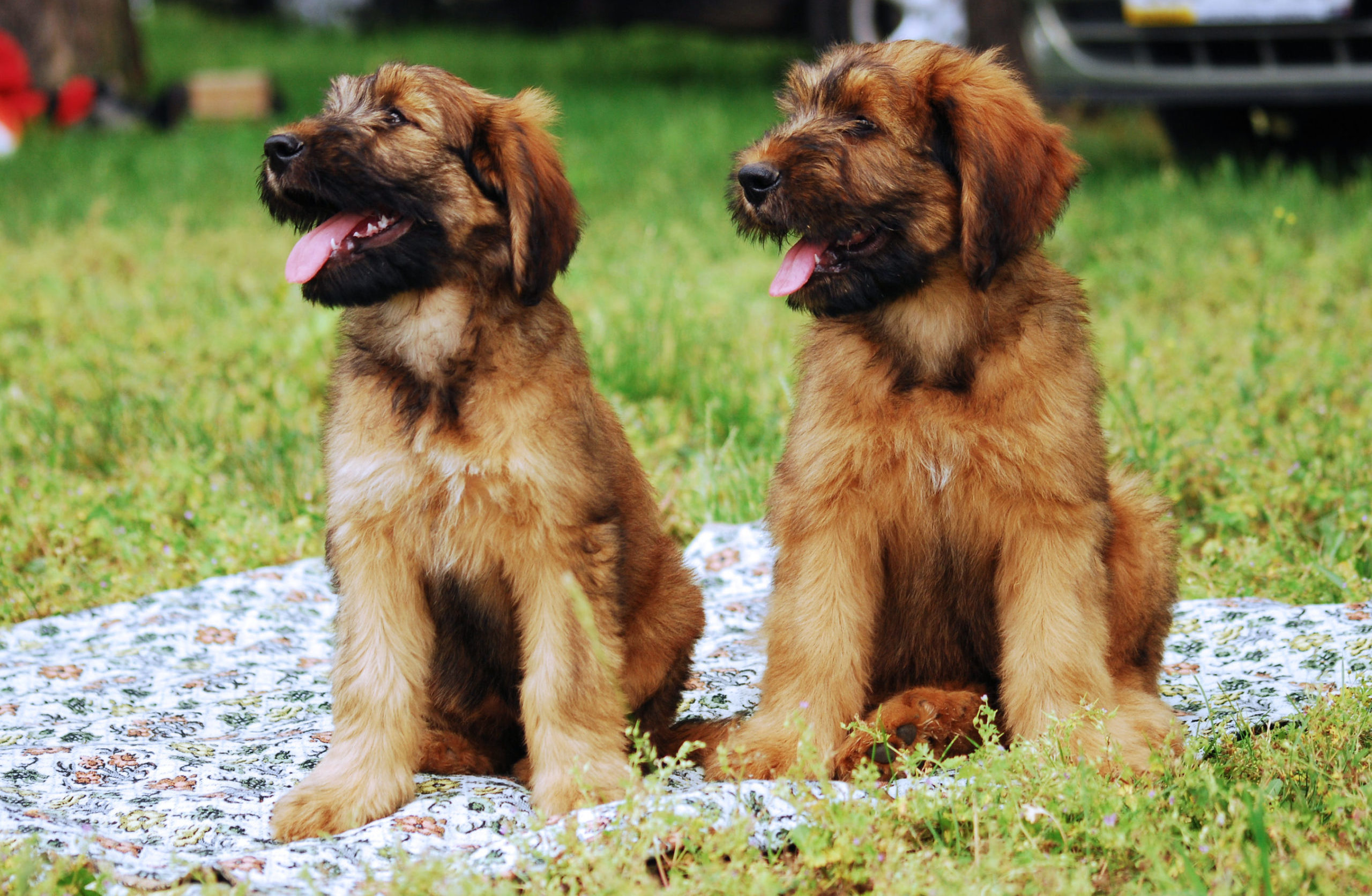
If you are interested in a Briard, you should contact a local breeder who is a member of one of the two VDH clubs or check at an animal shelter. The breeder should not have dogs with excessive coat or double dewclaws. There should be no inbreeding, which can be assessed by the pedigree, ensuring no name appears twice. The breeder should have well-documented litters with photographs. By arrangement, you should be able to see the litter along with the mother dog on-site. Please do not buy a Briard online, as there is a very high risk that the puppy may come from a usually well-disguised dog trader or breeder. Choose a breeder and kennel from the Zoonika dog portal, which only provides verified, up-to-date information.
Briards are often underestimated. This very beautiful dog is both gentle and energetic. It makes an excellent companion and family dog. At the same time, it is suitable for performing complex tasks, such as being a therapy or rescue dog, unless it is being shown in competitions. On Zoonika, it’s simple, quick, and safe, with a quality guarantee.
Health and Diseases
Plan for six-month veterinary check-ups with your veterinarian to ensure that your dog feels good and comfortable throughout their life. During these regular appointments, the vet will conduct a medical examination, check your dog’s temperature, and monitor their heartbeat.
Regular care for your dog allows you to keep track of their growth and progress, as well as address any issues that may arise.
The Briard is a relatively healthy breed of dog, unless they are overly bred for certain physical traits, such as coat length. The standard states that the eyes should be “slightly covered” by hair on the head. Unfortunately, it is common to see dogs whose eyes are literally overshadowed by thick fur. This goes against animal protection. The same applies to the double dewclaw. Briards also have a specific form of congenital eye defect known as chicken blindness (CSNB). Additionally, there is a predisposition to ureter defects (EU). Breeding associations like VDH only allow breeding of dogs that do not have these genetic defects.
Содержание
-
1. Описание породы
-
2. Внешний вид
- 2.1 Голова
- 2.2 Морда
- 2.3 Уши
- 2.4 Глаза
- 2.5 Зубы
- 2.6 Корпус
- 2.7 Конечности
- 2.8 Хвост
- 2.9 Шерсть
- 2.10 Окрас
-
3. Характер
-
4. Содержание и уход
-
5. Дрессировка и обучение
-
6. Как выбрать котенка
-
7. Здоровье и болезни






Comments
Only registered users can leave reviews.
Enter