
Australian Shepherd Aussie





Warning: Illegal string offset 'label' in /home/panda/sites/zoonika/wp-content/themes/zoonika/template-parts/animals/animals-param-item.php on line 32
Ð


Description of the Australian Shepherd Breed
The Australian Shepherd Dog (herding dog) is an amazing representative of the dog breed, possessing numerous virtues and impressive differences from other members of this family. Their appearance clearly does not resemble any shepherd dogs, yet their working and intellectual characteristics are exceptionally commendable. Although the breed bears the name “Australian,” its development took place in the USA, and it has no ties to the Australian continent. It emerged in the 20th century, but there is no data on which breeds served as the foundation for its breeding. According to some information, many breeds contributed to its development, starting from Collies and Pyrenean Shepherds to Australian Kelpies, which have been herding cattle across the continent for over 200 years, as well as Tygeers.
Key qualities for breeders in establishing the breed included endurance, physical strength, work ethic, and intelligence. Those involved in breeding considered it axiomatic to preserve the best traits of all contributing breeds. As a result of this selection process, we have a hardworking shepherd, devoid of aggression, resilient, and independent. The emergence of the Aussie, as it is called by Australians, sparked a desire among farmers to have such a shepherd. Smart and strong, unpretentious and enduring, this breed is not only popular among farmers but is also actively used by search and rescue teams.
The first recognition of the Australian Shepherd occurred in 1957 with the registration of the breed, thanks to a beautiful female named Panda. This was a significant breakthrough in recognizing the breed at that time. Aussies are ideal dogs for active individuals who lead a dynamic lifestyle, requiring long walks with their owner and regular grooming of their thick coat. The first Australian Shepherds appeared in Russia by the end of the 1990s. The price of a purebred Aussie puppy ranges from 60,000 to 85,000 rubles.
Appearance of the Australian Shepherd
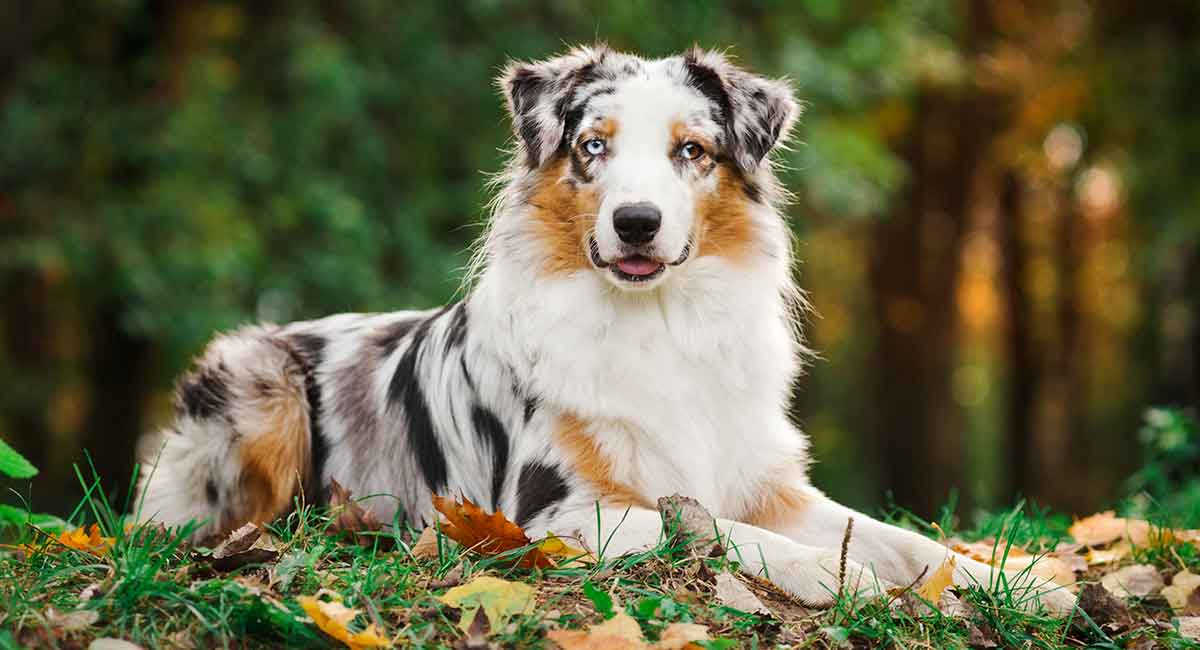
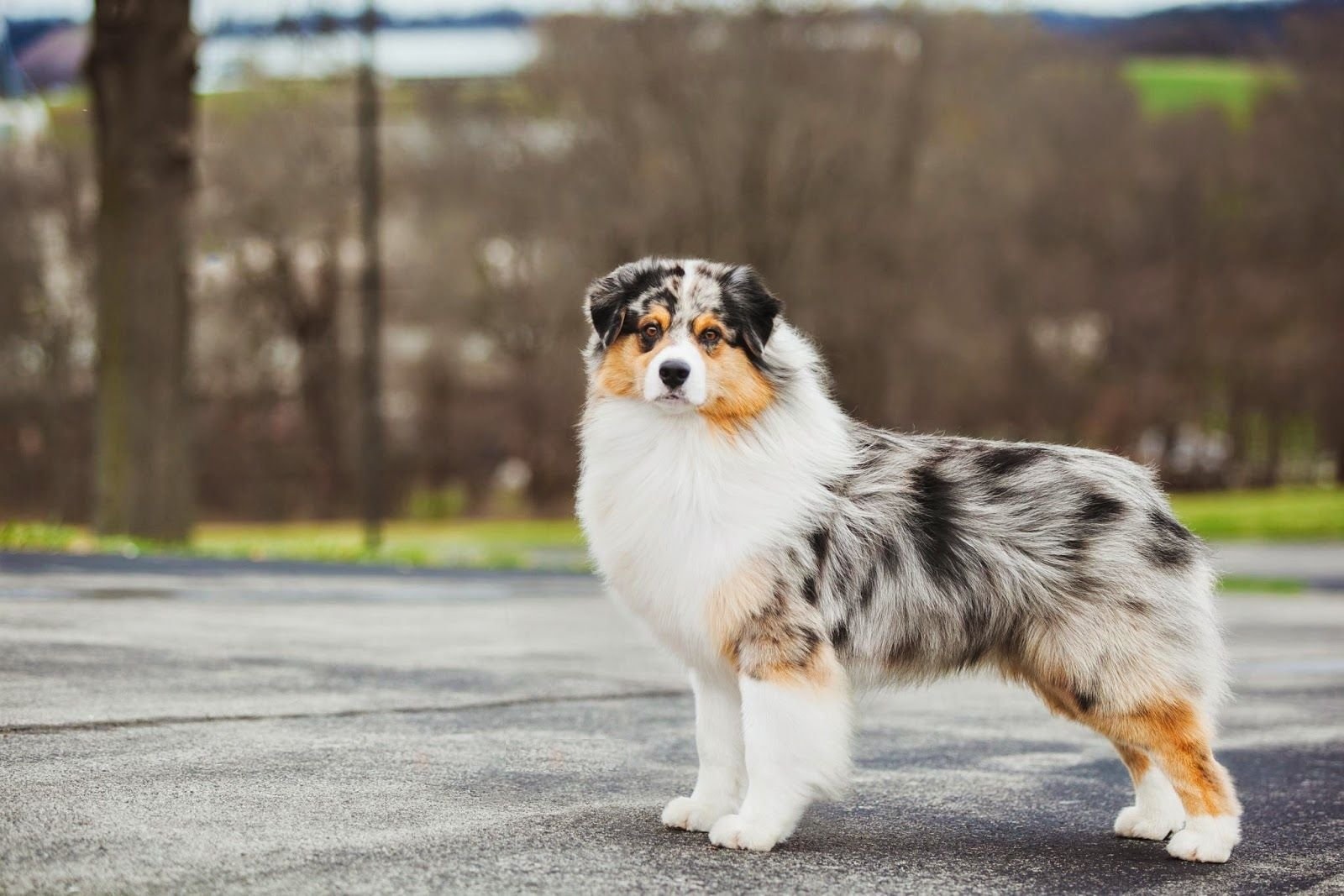
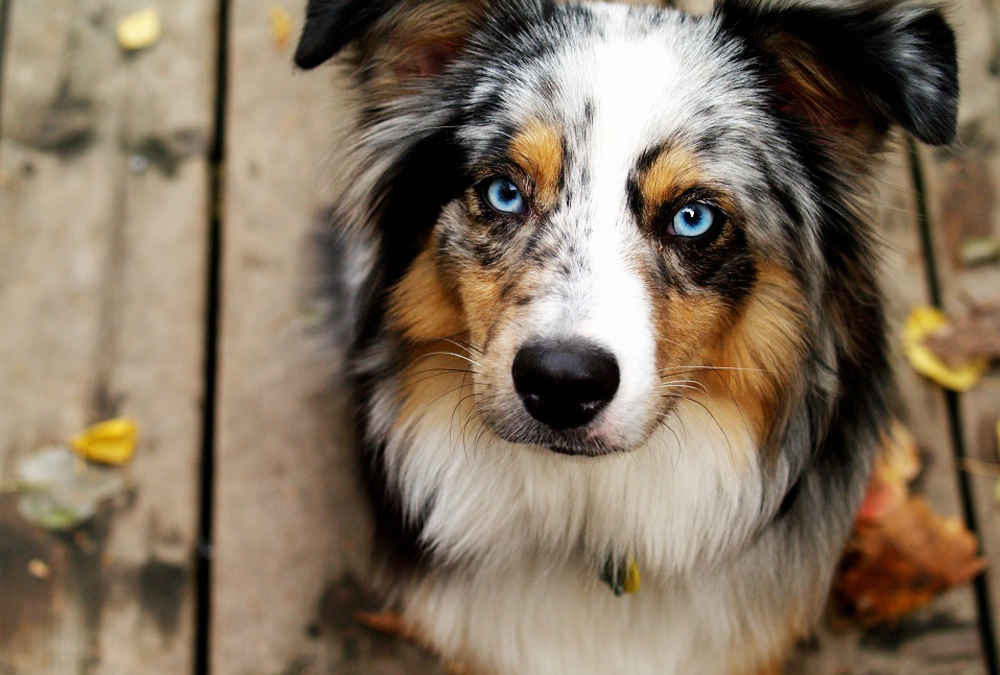
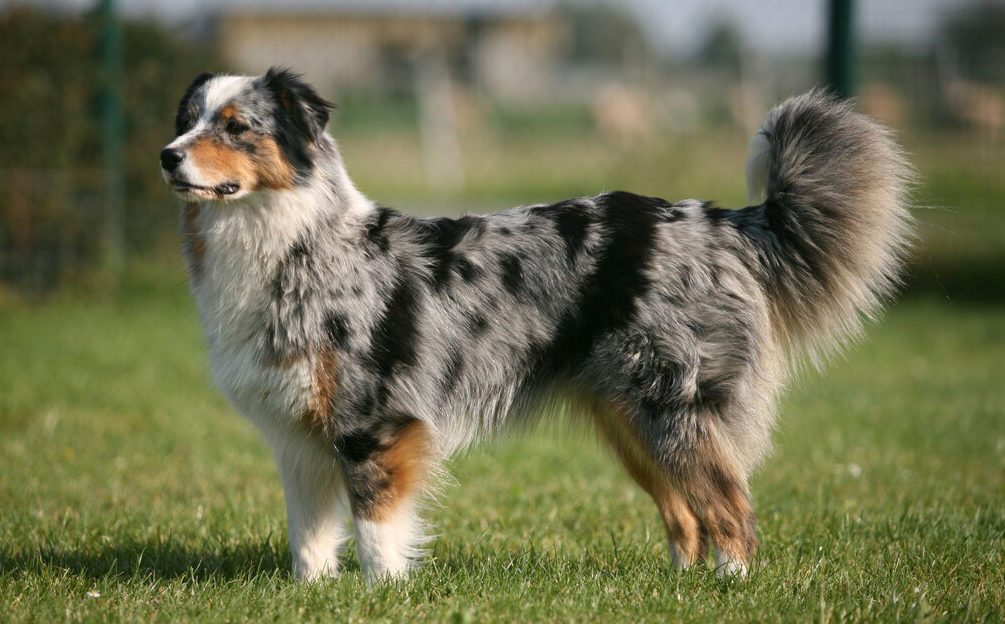
The Australian Shepherd has a proportional and harmonious build that allows it to move easily and gracefully. The Aussie is a medium-sized working dog with well-developed muscles and strong limbs. The height of Australian Shepherds ranges from 46 to 58 cm, and their weight typically varies from 18 to 29 kg, enabling them to remain agile and nimble.
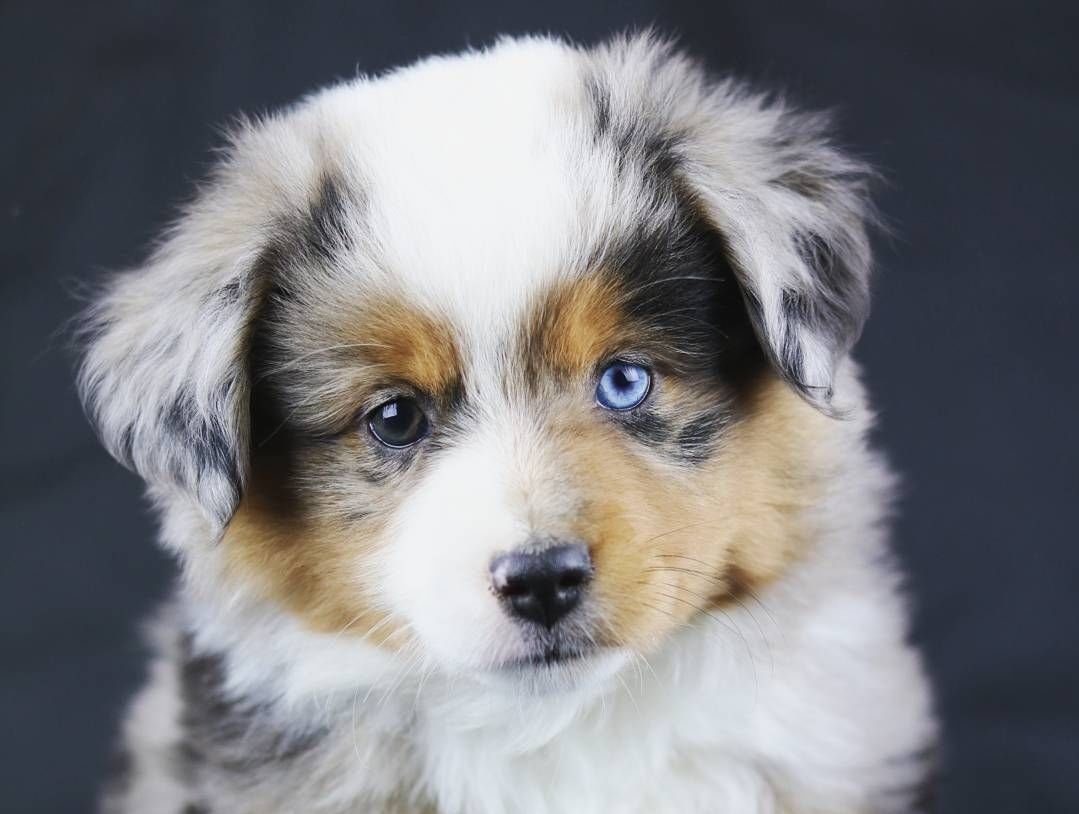
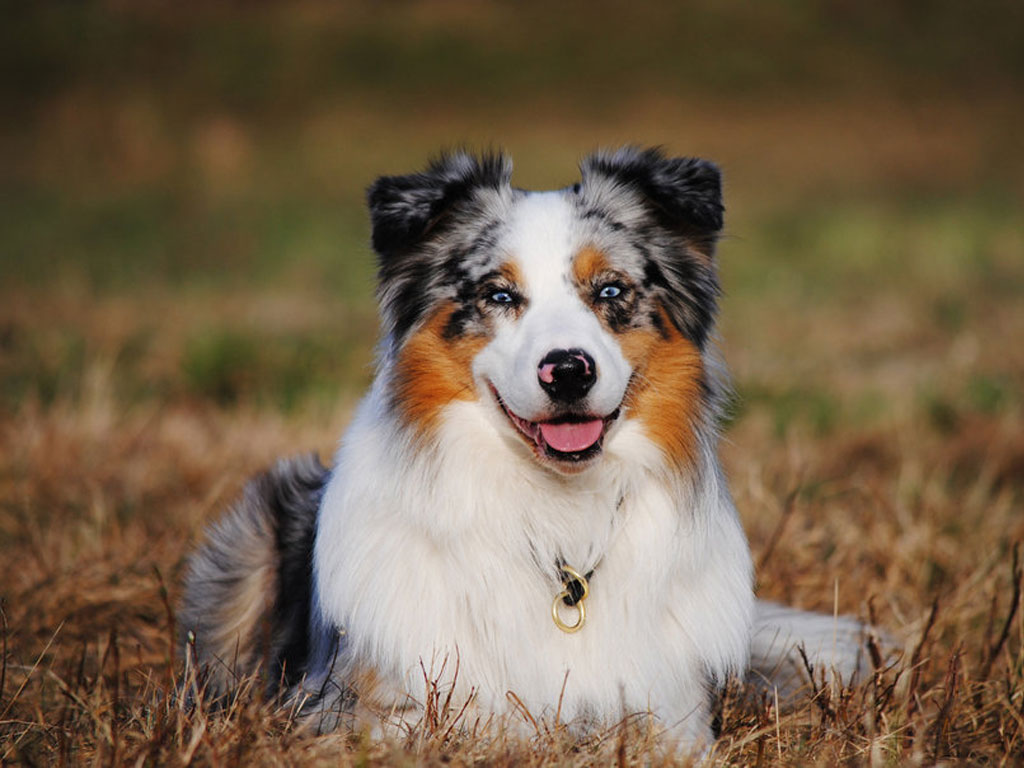
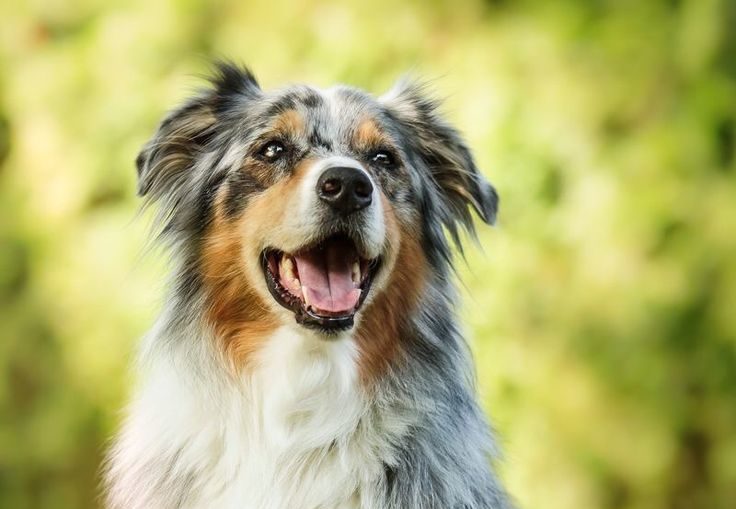
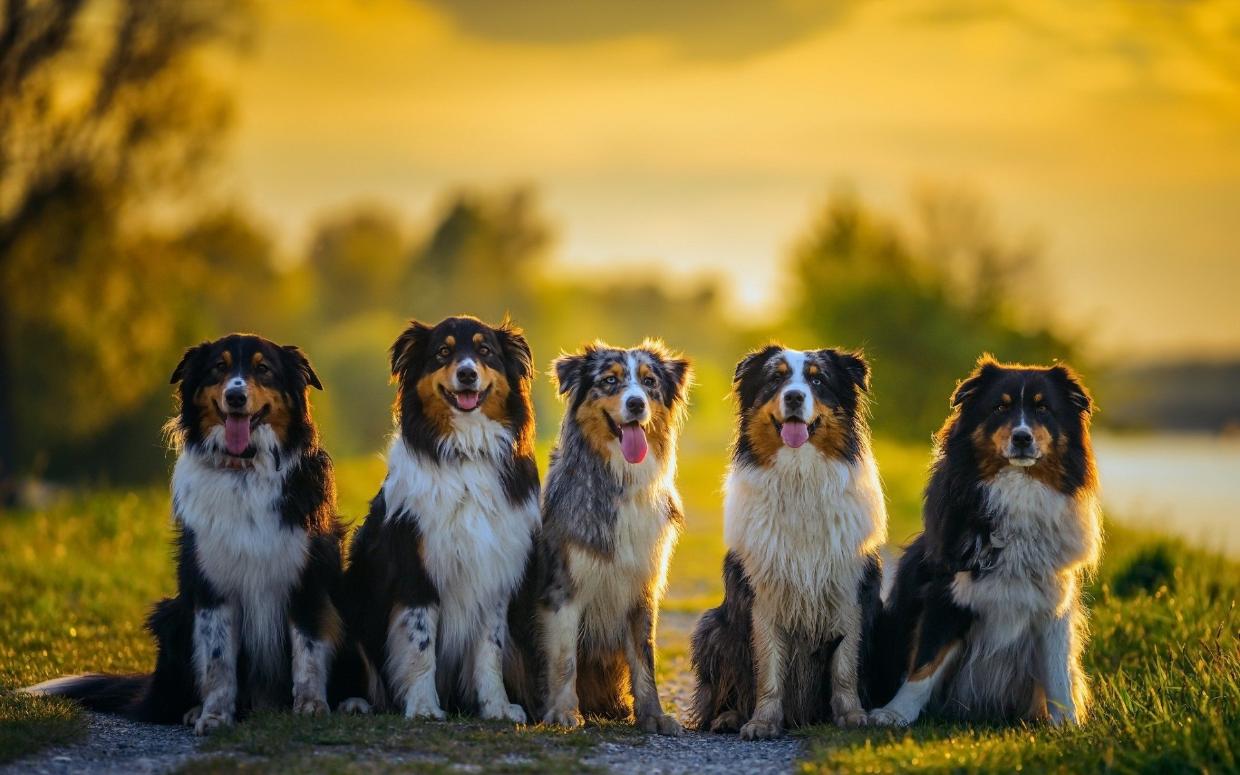
The breed features very dense and moderately long fur, which helps it withstand various weather conditions. The coat can be straight or slightly wavy, dense, with a soft undercoat that protects against cold and heat. The coloration of this breed can be quite diverse, including options such as blue merle, red merle, black, and red, often with white markings and tan patterns. Dogs with merle coloring particularly attract attention due to their unusual coat patterns.


Отличительные черты

Голова

Морда

Уши

Глаза

Зубы

Корпус

Конечности

Хвост

Шерсть

Окрас
Character
The first breeders raised Australian Shepherds solely for protection, as helpers and loyal companions for farming families. They still engage in herding today, enjoying their work, but they are also wonderful companions, and being close to their owner is the ultimate happiness. They love to play actively and socialize closely. When a dog is walked in the woods, fields, or urban parks, it is impossible to stop them. They are constantly in motion. Weather conditions do not matter to them; they thrive in rain, snow, or mud. A distinctive trait of the Aussie is the “smile” that appears on their face when they see their owner, their spouse, or children. To prevent boredom, the dog must be physically stimulated to avoid depressive states and to prevent it from finding its own “jobs” like chewing furniture and shoes or knocking over potted plants. Therefore, a prospective owner of an Australian Shepherd should be aware that long walks are necessary and that there should be ample free time. Long periods indoors are not suitable for Aussies.
Australian Shepherds love children of all ages and enjoy being friends with them. They are cautious around strangers. They are not aggressive towards unfamiliar dogs, so incidents during walks or exhibitions are rare.
Balance, a sense of self-worth, energy, and unrelenting activity are the three main characteristics of Australian Shepherds. They are cheerful and affectionate by nature. They respond well to training, eagerly learning and ready for new tasks. The owner’s role is simply to praise their beloved pet and show interest. Being alone in the house is torture for an Aussie, which often results in property damage.
The dog appeared in Walt Disney films.
The breed gained real fame after the release of films by Walt Disney featuring them. Australian Shepherds quickly became popular by playing the roles of kind, intelligent, and cheerful characters.Caring for an Australian Shepherd: Content and Features
The newly arrived Australian Shepherd puppy brings joy to its owners with its enthusiasm and energy. It quickly endears itself to the whole family, which can eventually lead to everyone spoiling it. The puppy is curious about everything, especially new objects, so chewing becomes a habit. The owner should consider this as the puppy grows and keep valuable items out of reach, offering only chewable toys. If it’s important for you to raise a dog with working qualities, treat the puppy accordingly. It is not a toy. Zooinika is the best place to choose from numerous listings.
Discipline is the foundation of everything, so attention and training are crucial. The first commands the puppy should learn are “no” and “leave it.” However, physical punishment is unacceptable; a discontented tone is sufficient.
The owner will immediately notice the Aussie’s protective instincts. The puppy may gather its toys and refuse to let anyone near them. Even in its early age, it willingly takes on guarding functions, trying to protect small birds and animals to keep them in place. Constant interaction with people, which is essential, helps the puppy understand its place in the “pack.” Daily activities, like play, are necessary to train and develop useful skills.
Australian Shepherds require socialization from an early age since their protective instincts are natural.
The small size of an adult Aussie allows it to live in various human living conditions, whether in a private house or a medium-sized city apartment. However, if the dog lives in an apartment, it inherently requires intellectual and physical stimulation and games. It’s beneficial to challenge the dog with different situations to develop its mind and ability to adapt. Tasks like finding hidden objects or bringing a toy or newspaper can be useful. Some Aussie owners create tunnels and obstacles for their dogs to navigate while training and playing. Engaging in these activities together enhances the bond; the dog will appreciate it, responding with love and loyalty.
If you are pressed for time and can’t adhere to walking rules, this breed is not for you. Beyond material concerns like damaged furniture and shoes, the dog will struggle to understand you, resulting in a lack of obedience. Initially, the puppy and later the dog will bark and howl in your absence, delighting the neighbors.An ideal situation for keeping an Aussie is an outdoor kennel. The dog will clearly know its territory, where it can rest, seclude itself, and eat. The kennel should have a doghouse appropriate for the dog’s size, insulated for cold weather. It should remain open to allow free access. Using a chain is strictly prohibited; otherwise, the owner risks ending up with an aggressive animal.The best place to raise a dog is on a farm, where it can find its place while observing and protecting the animals entrusted to it. It’s important to provide a resting area and allow the Aussie to monitor its surroundings.A dog will display its best qualities only when it feels loved and receives attention from its owner.Grooming is another responsibility of the owner in training a dog that requires meticulous care. Regular hygiene procedures must be sched
"Talkative" breed
The Australian Shepherd is an extremely quiet dog. It rarely barks, so if you live in an apartment, you will never hear complaints from your neighbors.Training and Education
Questions related to training, obedience, and upbringing are what the Australian shepherd dog engages in tirelessly, quickly absorbing “new material” and easily developing skills. True happiness for her comes from being with her owner, which is why she will be tireless in training and gladly follow commands.
The key commands-come, no, sit, and lie down-she remembers easily and promptly demonstrates that she understands them. She enthusiastically embraces the retrieve command, bringing back a stick or toy an endless number of times.
However, she does not enjoy monotony and sameness. Training sessions with an Aussie require creativity and inventiveness to keep her engaged. Repeating the same command too often quickly bores her. It’s essential to alternate commands and include games with objects or obstacles during breaks.
When training the dog, avoid overdoing it with treats. She understands and feels praise, as well as the owner’s affection. Treats should only be given for completing challenging tasks.
In her eagerness to perform, the Aussie will carry out tasks even while ignoring pain, until she exhausts herself. Her boundless energy can lead to sprains and injuries to her paw pads, but she pays no attention to this, striving to please her owner. Therefore, it is important for the owner to be vigilant not to overlook these signs and provide assistance.
Her relentless energy may not be suitable for all dog lovers. She is indeed beautiful, intelligent, and comprehensible, which draws people in. However, there is a significant “BUT.” These are the inevitable downsides that arise in the owner-dog relationship. For a homebody or someone with a limited schedule, as well as in a small apartment, having an Aussie in the house can be quite a burden. The owner will be frustrated by her energetic nature, which will not end well.
The Native Americans considered the aurochs sacred.
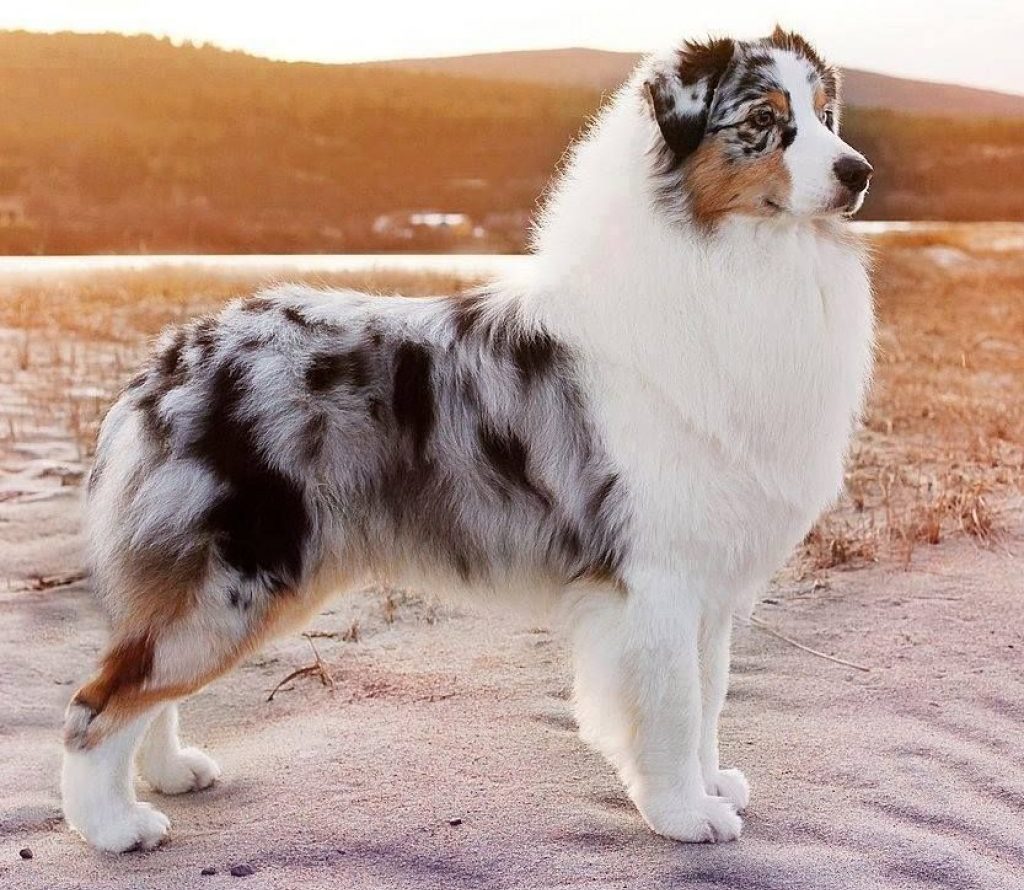
Blue-eyed representatives of the breed are endowed with magical abilities by the indigenous people, who call them “ghost-eyed.” They believe that such dogs can communicate with the spirits of the deceased, and an encounter with them brings good news.
Choosing a Puppy
If you haven’t decided on which breed you want but are fond of the Australian Shepherd, consider visiting an Aussie show. Here, you can talk to owners to see if this dog truly fits your temperament and energy level. Once you decide to buy an Aussie puppy, don’t rush into it with the first breeder you find. A responsible and reputable breeder will provide documentation proving the dog has been screened for vision issues (such as cataracts and retinal atrophy) and musculoskeletal conditions (like hip dysplasia).
A healthy puppy that resembles a toy will be curious, bold, and energetic. Its coat should be clean, free of mats and bald patches. The skin should show no rashes, and there shouldn’t be any subcutaneous hernias. The nose should be cool and moist. The puppy’s movements should not be awkward. Trusted breeders offer healthy puppies with documentation and pedigree.
Health and Illnesses
A balanced diet, adequate physical activity, and proper care are the keys to the health, longevity, and happiness of an Australian Shepherd. Timely vaccinations can prevent many diseases.
Often, many dogs from herding (shepherd) breeds are predisposed to a condition known as juvenile cataracts. This disease is quite complex and progressive, with surgical treatment being necessary.
Additionally, there are other illnesses that Aussies are susceptible to.
Allergies and autoimmune disorders.
Optic nerve dystrophy leading to blindness.
Joint dysplasia.Malignant tumors.Dermatitis and demodicosis.The merle coat color in Aussies is associated with both deafness and blindness. This is a hereditary factor caused by a recessive gene. To avoid this, breeding between dogs with a merle coat coloration is not allowed, as it can result in blind and deaf puppies.
Содержание
-
1. Описание породы
-
2. Внешний вид
- 2.1 Голова
- 2.2 Морда
- 2.3 Уши
- 2.4 Глаза
- 2.5 Зубы
- 2.6 Корпус
- 2.7 Конечности
- 2.8 Хвост
- 2.9 Шерсть
- 2.10 Окрас
-
3. Характер
-
4. Содержание и уход
-
5. Дрессировка и обучение
-
6. Как выбрать котенка
-
7. Здоровье и болезни





Comments
Only registered users can leave reviews.
Enter