
Appenzeller Sennehund





Warning: Illegal string offset 'label' in /home/panda/sites/zoonika/wp-content/themes/zoonika/template-parts/animals/animals-param-item.php on line 32
Ð


Breed Description
The Appenzeller Sennenhund is an ancient Swiss farm dog. It is one of the smallest representatives of the Swiss Sennenhund family. It served as a versatile tool for farmers in the mountains and valleys. It guarded the home and yard and sometimes pulled a small cart, which was particularly useful as a herding dog. When it was necessary to drive a herd of cows from one pasture to another, it ensured that all stayed on the path and that no cow lagged behind. To maintain order, it would pinch a cow from behind if needed. This required quick dodging, as the cow would instinctively kick after the maneuver. Thus, you needed rather small dogs for this work. It was called Trichond.
Swiss Sennenhunde used to be one dog family. They are united by a strong attachment to the family and their home, a confident sense of responsibility, a largely lost hunting instinct, heightened vigilance, a loving attitude towards their own, and wariness of strangers. The “Appenzeller” originated from smaller and more agile lofts, specializing in bustle. Over a hundred years ago, Sennenhunde were divided into four breeds: Entlebucher, Appenzeller, Bernese, and Greater Swiss, in order of their size. Around 1913, breeders developed three coat colors known today, as a distinctive feature for better marketing. They became “typical” for the Appenzeller only after being essentially arbitrarily defined. Experienced Swiss Sennenhund expert, cynologist Hans Reber, writes in his encyclopedia on dog breeds: “From nearly white dogs with a few colored spots to yellow-white, red with small white markings, and black, all varieties.”
Reber appreciated two centuries of illustrations depicting rural life in Switzerland’s Oberland. Today, Sennenhunde in that standard of color are not encountered. However, the gene pool of Swiss Sennenhunde has been artificially narrowed due to the three-color requirement imposed by modern purebred dog breeding. Furthermore, it has been divided into four races once again. This has negatively impacted the health of Sennenhunde. Statistics from the British Kennel Club in 2014 recorded the lifespan of Sennenhunde at just 8 years. Had they been raised healthily, they could easily live 4 years longer. The Appenzeller Sennenhund has become a valuable companion dog but still possesses the skills of a working dog.
In 1923, the Swiss Association of Sennenhunde in Germany was founded, which still represents all four Sennenhund breeds. By 2007, a total of 2000 Appenzeller Sennenhunde had been recorded in its breeding book. All this indicates that the Appenzeller Sennenhund is quite a rare breed. In recent years, over 100 puppies have been born. The Appenzeller is gradually gaining popularity in Russia as well.
The price for a puppy ranges from 35,000 to 40,000 rubles.
Appearance
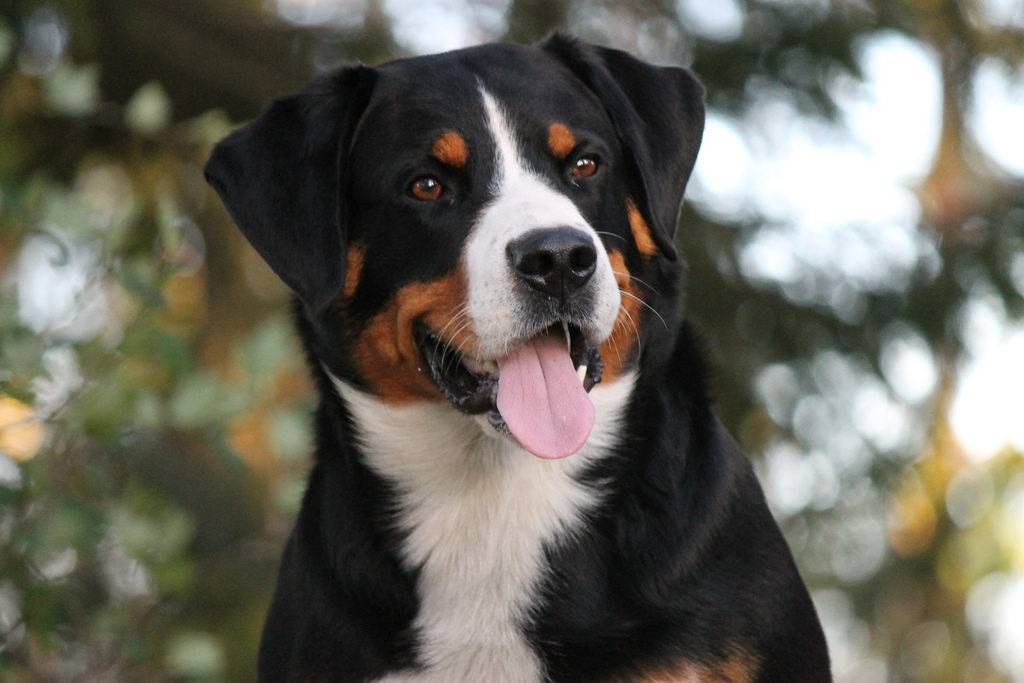
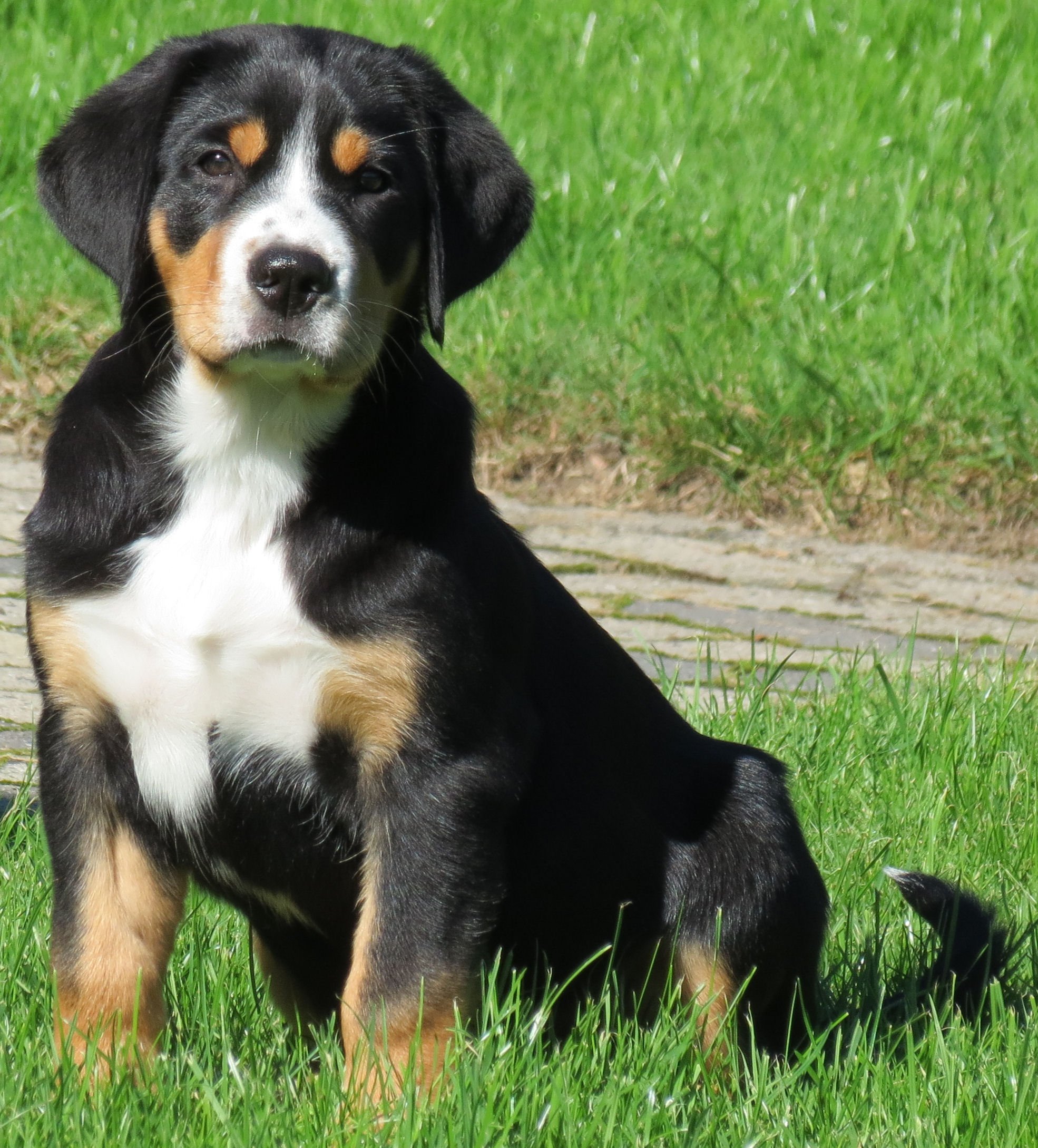
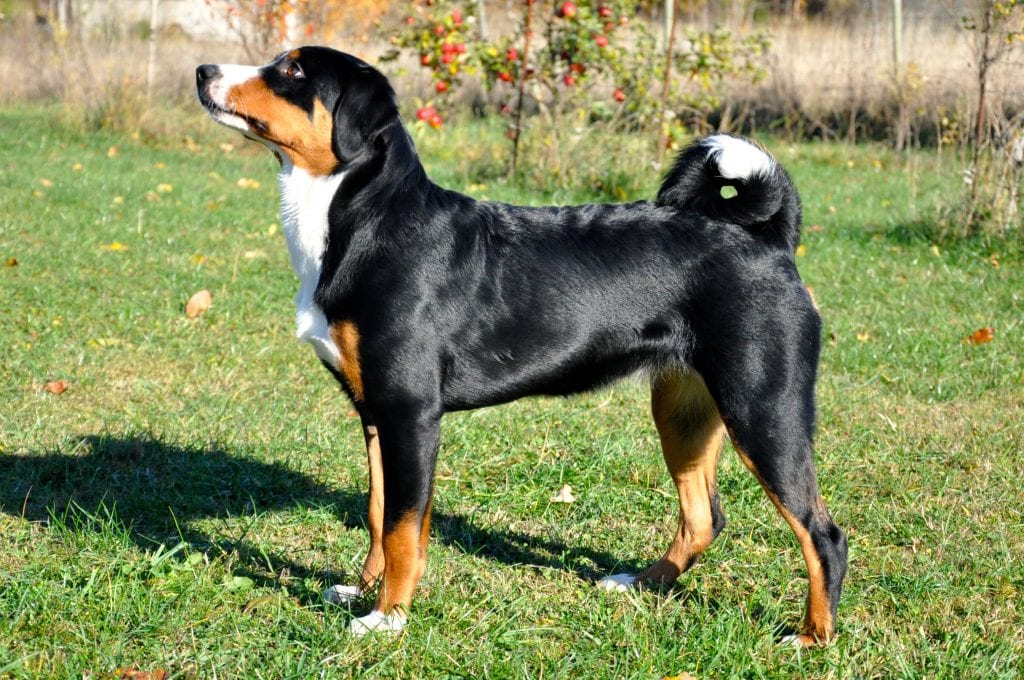
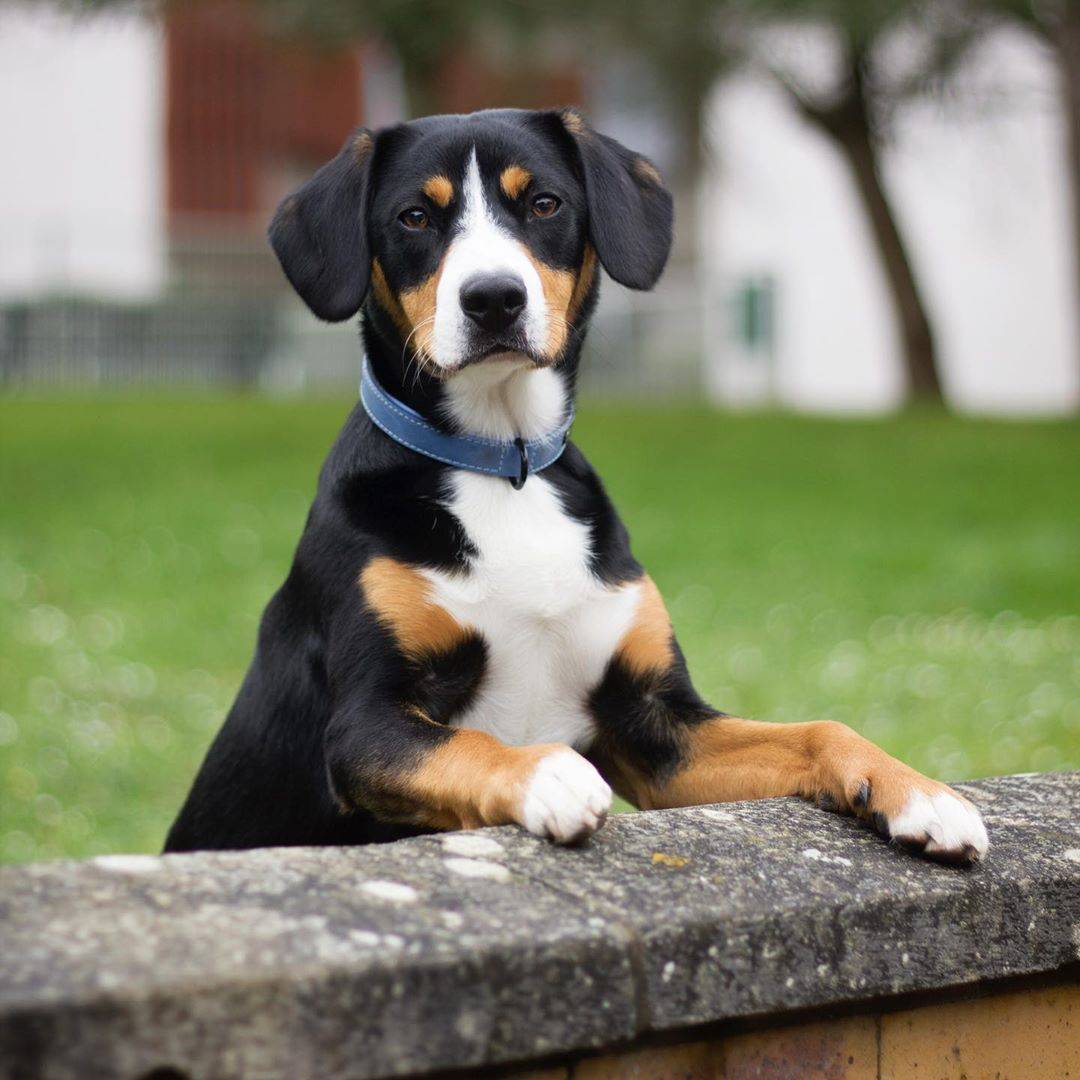
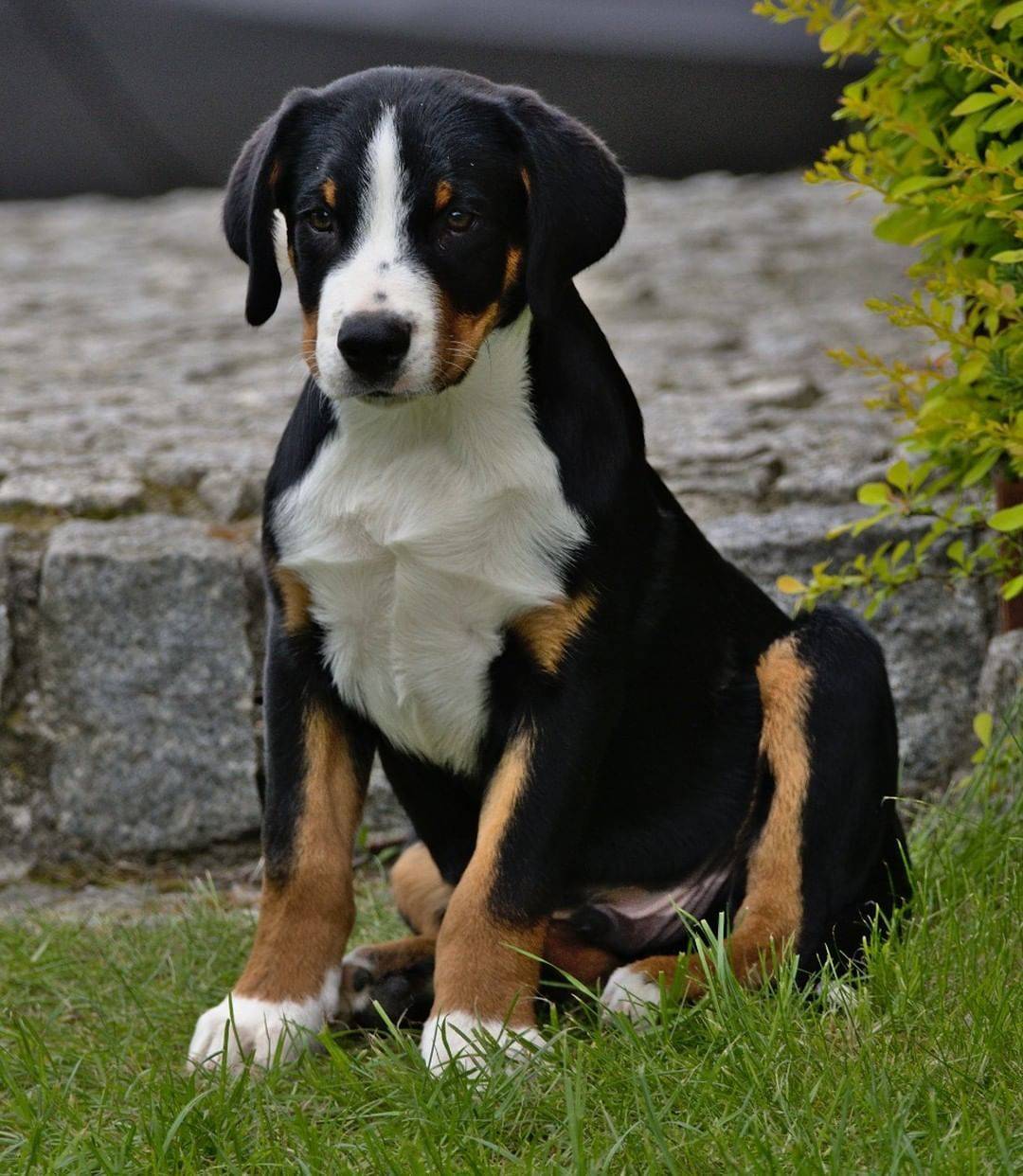
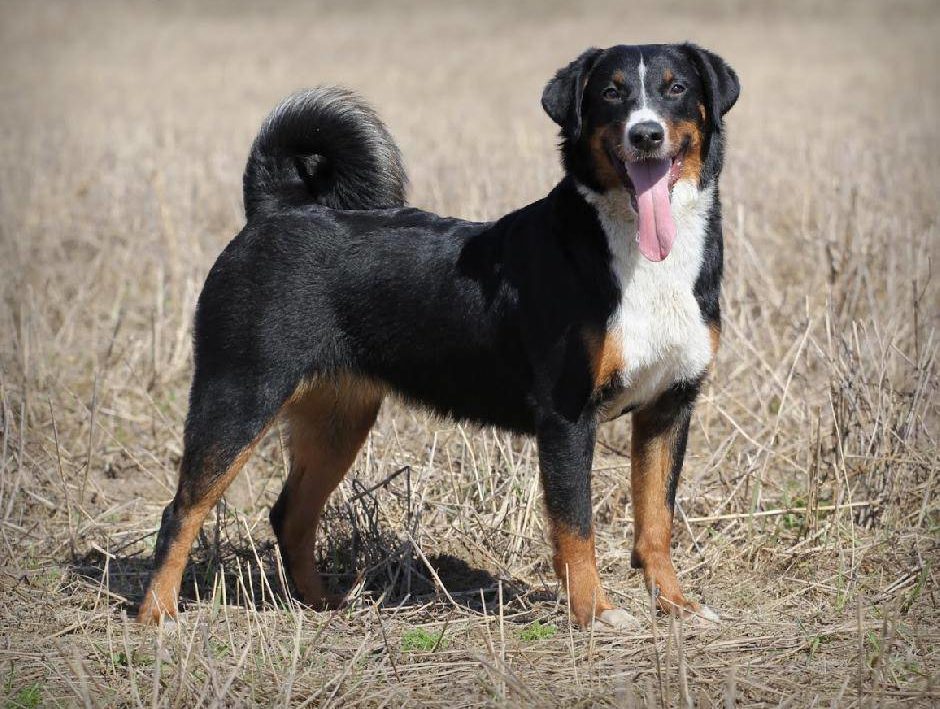
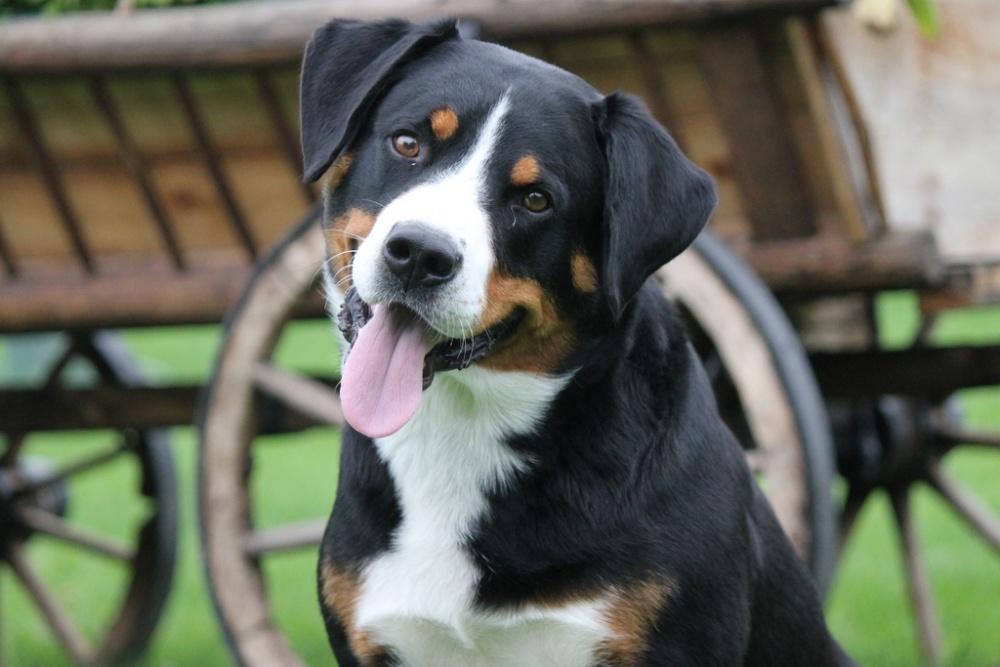
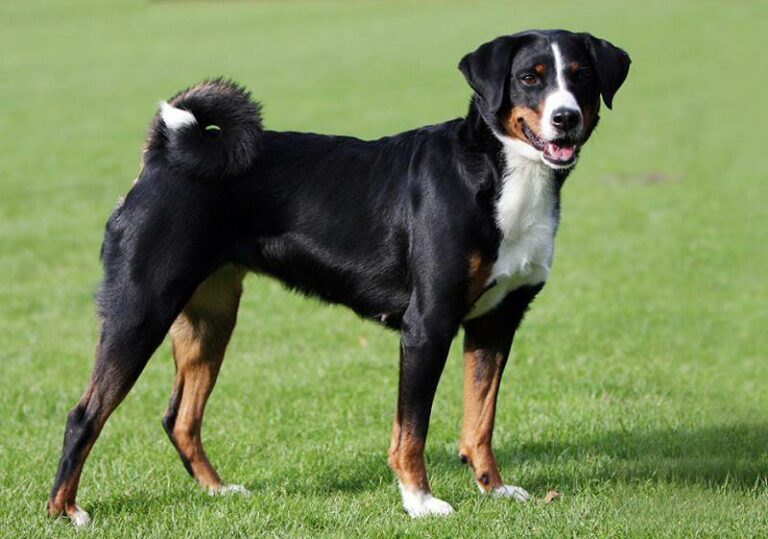
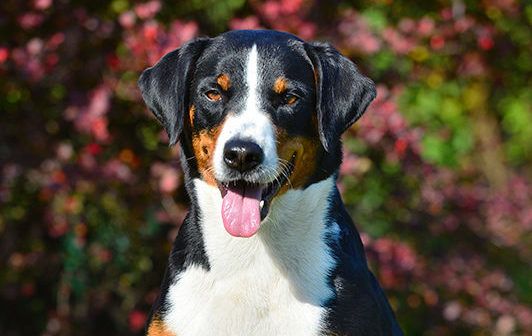
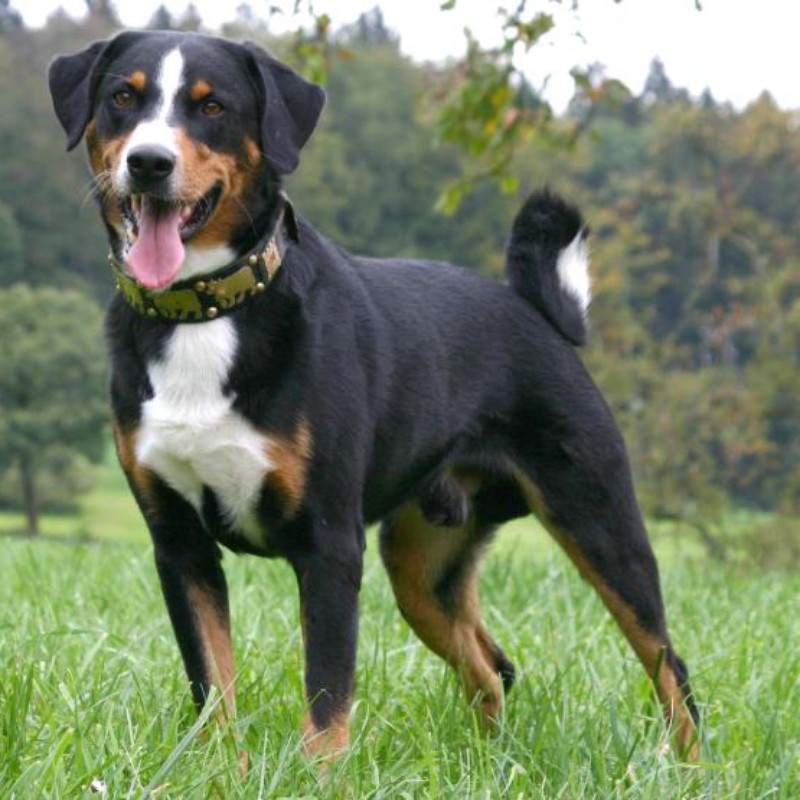
The Appenzeller Sennenhund is a muscular medium-sized dog with an almost square build, a fairly pointed muzzle, and an exceptionally intelligent expression. It is a typical Swiss Sennenhund. One notable characteristic is its tail, which is carried over its back. It is curled and often referred to as a “postal horn.” It appears very agile and lively. The standard includes many specifications regarding coat color, texture, and markings. It should have upright hair and be tricolored. Detailed rules specify where white markings are allowed and where they are not. In the interest of the dogs, such external characteristics should not be taken too seriously, as they are created primarily by breeders. Including these details in breeding criteria does not serve the welfare of the Appenzeller Sennenhunds, which already have an extremely small gene pool. Instead, focus should be on the dogs’ temperament and adaptability.
The Appenzeller Sennenhund stands between 50 and 56 cm at the withers and weighs between 25 and 30 kg. This breed is affected by inbreeding and selective breeding based on external traits like coat color. Consequently, the lifespan of these dogs can significantly decrease-ranging from 8 to 12 healthy and normal years.
The appearance of Appenzeller Sennenhunds is strong and harmonious. They are not only beautiful but also intelligent, making them excellent companions and working dogs. They have a strong posture, a straight back, and a well-developed chest. Their eyes convey energy, and their heads are proportional and expressive.
The overall look of Appenzeller Sennenhunds combines strength, elegance, and athleticism. They are beautiful, have a distinctive coat, and expressive features. But it’s not just their appearance that is impressive; they also possess excellent working qualities and a friendly disposition.


Отличительные черты

Голова

Морда

Уши

Глаза

Зубы

Корпус

Конечности

Хвост

Шерсть

Окрас
Character
Appenzeller Sennenhunds possess a unique and outstanding character, making them ideal companions and work partners. Appenzeller Sennenhunds are medium-sized, muscular, and robustly built. They have a beautiful coarse coat with a classic black and white coloration, making them easily recognizable. Here are some characteristics of this breed:
Smart and trainable: Appenzeller Sennenhunds are very intelligent dogs that quickly learn new commands and tasks. They have sharp minds and quick wits, making them excellent working dogs and competitors.
Loyal and devoted: This breed is known for its loyalty to its owners. They are very attached to their family and always ready to protect it in any situation. Appenzeller Sennenhunds often become great companions and friendly family members.
Active and energetic: These dogs have a high level of energy and activity. They need regular physical exercise to stay happy and healthy. Walks, running, and outdoor play are ideal activities for Appenzellers.
Guard dogs: Originally bred as guard and working dogs, they retain their protective instincts. Appenzeller Sennenhunds are often used as guard dogs and can be very reliable defenders of their home and family.
Appenzellers are friendly and sociable dogs. While they can serve as guards, they also have a friendly and outgoing nature. They get along well with other dogs and children, especially if socialized from an early age.These dogs exhibit remarkable resilience and endurance, making them perfect for active people who love an active lifestyle and long walks in nature. They can be reliable partners for athletes or simply enthusiasts of outdoor activities.Sennenhunds are smart, devoted, and energetic dogs. They are well-suited for active owners willing to dedicate time and care to them. They can become faithful companions and reliable protectors.
Multifaceted history
The Appenzeller Sennenhund has a rather ancient and diverse history. Their ancestors likely appeared in the Alps over 2000 years ago and were used for various tasks. This breed served as a herding dog, a guard dog, and as a helper in heavy farm work. Today, Appenzeller Sennenhunds, although rare, remain loyal and intelligent working dogs that also make excellent sports partners and friendly family pets.Care and Maintenance
The Appenzeller Sennenhund feels most comfortable in the countryside. It craves to be active and engaged. This is not a couch potato dog. A trained herding dog is very active and thrives in the hands of active, sporty owners. It’s not suited for calm individuals or life in the center of a big city but is ideal for working tasks and dog sports. However, it doesn’t necessarily need a home with a large garden, which would certainly be ideal as it can also be content in an apartment. It does not have any specific demands regarding its care, other than the need for daily interaction and activity. The main outcome is its close involvement in the human family.
The care and maintenance of the Appenzeller Sennenhund breed require special attention and care. These dogs are known for their energy, endurance, and loyalty, so proper care is key to their health and happiness. Here are several important aspects of keeping and caring for an Appenzeller:
Physical activity: Appenzellers are very energetic dogs that need daily physical exercise to satisfy their need for movement. Regular long walks, running, and outdoor play are essential. They can also be excellent athletic partners and participants in dog competitions, such as agility.
Socialization: Early socialization is very important for Appenzellers. It helps them develop good manners and communication skills with other dogs and people. It is crucial to regularly take the puppy to public places and arrange meetings with different people and animals.
Proper nutrition: Choosing the right diet for your Appenzeller is important for its health and well-being. Consult a veterinarian to determine optimal nutrition considering the dog’s age, activity, and health. Monitor portion sizes and food quality to avoid weight issues.
Coat care: The Appenzeller’s coat features a classic black-and-white color pattern and has a short texture. Grooming is not complicated, though regular brushing will help reduce shedding and maintain healthy skin.Health and veterinary care: Regular visits to the veterinarian for preventive check-ups and vaccinations are essential for maintaining the Appenzeller’s health. Also, pay attention to the dog’s teeth and clean them regularly to avoid plaque and gum issues.Mental health: Appenzellers need mental stimulation, so provide them with toys, puzzles, and intellectual challenges. This helps prevent boredom and undesirable behavior.Appenzeller Sennenhunde are very attached to their owners and require a lot of attention and love. It’s important to spend time with them, engage in active pursuits, and give them enough attention to strengthen the bond and support their mental well-being. They are amazing companions and partners in work but require active care and attention. Proper care will allow them to reach their potential, and you will enjoy many joyful and loyal moments with your devoted four-legged friend.
A name derived from the canton
The name "Appenzeller Sennenhund" comes from the canton of Appenzell, which is located in Switzerland. This is where the breed was first developed and used for various agricultural tasks. The term "Sennenhund" means "farm dog" or "farm guard dog." This name accurately reflects the functional and versatile nature of this breed.Training and Education
Training and education of the Appenzeller Sennenhund breed is an engaging and crucial process that contributes to the development of well-behaved and harmonious pets. The Appenzeller Sennenhund, also known as the Appenzeller Cattle Dog, originates from Switzerland and is renowned for its intelligent and loyal nature. These dogs possess excellent working abilities and, with proper training, can become ideal companions and helpers.
Before beginning the training of an Appenzeller Sennenhund, it is important to understand the characteristics of this breed. They are medium-sized dogs with a strong build. Research their history, distinctive traits, and needs to comprehend the tasks and skills you can develop in them.
From an early age, Appenzeller Sennenhunde should be socialized with various people, animals, and environments. This will help them develop good manners and prevent aggressive behavior.
Training basic commands such as “sit,” “lie down,” “no,” and “heel” will help the dog adapt to everyday life and behave appropriately in society.
Appenzeller Sennenhunde are active dogs that require plenty of physical activity. Regular walks, runs, play, and outdoor training will help them maintain their health and happiness.
These dogs also need mental stimulation. Tasks, puzzles, and search games will help them develop their intelligence and avoid boredom.Appenzeller Sennenhunde possess unique skills in guarding, search, and rescue. If you plan to use them for specialized tasks, corresponding training should be included in their program.Positive reinforcement, such as praise and treats as rewards, is an effective motivational method for Appenzeller Sennenhunde. They strive to please their owners and are eager to work for praise.Training an Appenzeller Sennenhund may require time and patience. It is important to be consistent and patient in the training process, avoiding punishment for mistakes and encouraging correct behavior instead.Training a dog is an ongoing process. Even after basic training, it is essential to continue reinforcing skills and integrating new tasks into your dog’s routine.A key aspect of training the Appenzeller Sennenhund is establishing a strong bond between you and your dog. Trust and understanding between each other will help you achieve excellent training results.In conclusion, training and educating an Appenzeller Sennenhund is an engaging and important
Symbolic connection with Switzerland
The Appenzeller Sennenhund is one of four dog breeds considered national treasures of Switzerland. The other three breeds are the Bernese Mountain Dog, the Entlebucher Mountain Dog, and the Appenzeller. These dogs have become symbols of the country and part of its cultural heritage.
How to Choose a Puppy
Choosing a puppy of the Appenzeller Sennenhund breed is a serious and responsible step that requires careful consideration of various aspects. This breed is known for its active and loyal nature, so selecting the right puppy will promote a happy and harmonious coexistence between you and your future dog. Here are some recommendations for choosing an Appenzeller puppy:
Research the Breed: Before you start looking for a puppy, take the time to learn about the Appenzeller Sennenhund breed. Understanding their characteristics, needs, and potential health issues will help you make more informed decisions.
Choosing a Breeder: Finding a reliable and responsible breeder is crucial. Look for a breeder with a good reputation who adheres to breed standards and conducts all necessary health tests for the parent dogs. Check reviews and talk to owners of dogs from this kennel.
Look at the Parents: When visiting the kennel, pay attention to the puppy’s parents. They should be healthy, well-cared-for, and exhibit the breed’s distinctive traits. This will give you an idea of what their offspring might be like.
Pedigree: Ask the breeder for information about your puppy’s pedigree. The pedigree is the dog’s family tree and will help you learn about the origins and lineage of your future pet.
Health and Vaccination: Ensure that the puppy has current veterinary records, including vaccinations and deworming. Also, inquire about health checks for the parents, such as tests for hip and elbow dysplasia.Personality and Behavior: Observe the puppies in the kennel and take note of their behavior. Inquire about which personality traits are already showing. Appenzellers should be confident, intelligent, and sociable, but each puppy has its own individuality.Sales Agreement: Before purchasing a puppy, enter into a sales agreement with the breeder that outlines all terms of the transaction, rights, and responsibilities of both parties.Long-term Plans: Remember that a dog is a long-term commitment. Consider your readiness and ability to provide the dog with adequate attention, activity, and care throughout its life.Choosing an Appenzeller Sennenhund puppy is an important decision that will affect both your life and your dog’s life for many years. Conduct thorough research, ask questions of the breeder, and trust your instincts to find the perfect companion for your family.
Health and Diseases
Health and diseases in the Appenzeller Sennenhund breed play a significant role in the lives of these dogs and their owners. This breed is known for its excellent health; however, like other dogs, it has its own characteristics and predispositions to certain diseases. Let’s look at the main health aspects and potential issues in Appenzellers:
Hip and elbow dysplasia: These are the most common diseases in Appenzellers. They can lead to lameness and joint pain. Regular veterinary visits and joint X-rays are crucial for early diagnosis and treatment of these issues.
Heart problems: Appenzellers may be prone to various heart diseases, such as mitral stenosis or aortic stenosis. Regular echocardiograms help detect these problems at early stages.
Allergies: Some Appenzellers may develop allergies to food, pollen, and other allergens. If your dog shows allergy symptoms like itching, rashes, or digestive issues, consult a veterinarian for diagnosis and dietary planning.
Eye problems: Some members of the breed may be susceptible to eye diseases, such as cataracts or progressive retinal atrophy (PRA). Regular eye exams can help identify and treat such issues.
Stomach problems: Appenzellers, like other large dogs, can be prone to bloating or gastric torsion. It’s important to monitor feeding habits, avoid rapid eating, and split meals into smaller portions.Hypophyseal microdisseminated degeneration (HMDD): This genetic condition sometimes occurs in Appenzellers and is accompanied by various neurological symptoms, requiring specialized treatment.To maintain your Appenzeller’s health, regular veterinary visits are essential, along with adherence to vaccination and flea and worm prevention recommendations, proper nutrition, and sufficient exercise. Additionally, socialization and mental stimulation are important for your dog’s overall psychological and emotional well-being.Don’t forget regular check-ups and compassionate care to help your Appenzeller live a long and healthy life. If you have any questions or concerns about your pet’s health, it’s always advisable to consult a veterinarian who can provide professional guidance and assist in making necessary decisions. Thinking about it? There’s a wide selection of listings on the Zoonika map by city.
Содержание
-
1. Описание породы
-
2. Внешний вид
- 2.1 Голова
- 2.2 Морда
- 2.3 Уши
- 2.4 Глаза
- 2.5 Зубы
- 2.6 Корпус
- 2.7 Конечности
- 2.8 Хвост
- 2.9 Шерсть
- 2.10 Окрас
-
3. Характер
-
4. Содержание и уход
-
5. Дрессировка и обучение
-
6. Как выбрать котенка
-
7. Здоровье и болезни






Comments
Only registered users can leave reviews.
Enter