
American Bully








Warning: Illegal string offset 'label' in /home/panda/sites/zoonika/wp-content/themes/zoonika/template-parts/animals/animals-param-item.php on line 32
Ð


Breed Description
The American Bully is a recently developed companion dog breed in the USA. It was first registered in 2004 by a club formed by its breeders – the ABKC. The breed was recognized by the UKC in 2013, while the FCI and its domestic branch, the RKF, have been considering it since 2020. Currently, American Bullies participate in shows, receive breed conformity certificates, but do not earn championship titles. Dogs are not tested for working qualities for participation. American Bullies were bred for about 10 years (1980-1990). Their appearance clearly indicates their origins. The resulting breed closely resembles Amstaffs and Pitbulls, albeit looking like they have been heavily involved in bodybuilding. The first group of breeders claims to have created the American Bully solely from Pitbulls and Amstaffs, while the second admits that Bulldogs also “passed by” in the breeding process, including Old English, English, American, and French Bulldogs. Along the way, Staffordshire Bull Terriers also joined the mix. Nevertheless, breed enthusiasts might not need to confess, as Bulldog traits are noticeably present in the American Bully’s appearance. Amstaffs do
Standard – benchmark individuals with males 43-51 cm;
Classic – same height but with lighter bone structure, closely resembling their ancestors – Pitbulls and Amstaffs;
XL – while the other types are just muscular, the XL type resembles Dwayne “The Rock” Johnson, with males growing 51-57 cm tall and females 48-54 cm.
Pocket undersized dogs and all oversize individuals are disqualified. Breeders aimed to create a friendly dog, a companion and family member, while maintaining a “fighting” appearance but excluding any aggressive traits of the “ancestors.” “Proper” Pitbulls and Amstaffs lack aggression towards people but may show it towards other animals (usually dogs). Ideally, American Bullies should get along with everyone. They somewhat succeeded. The price for a puppy ranges from 150,000 to 500,000 rubles. In Russia, breeders of American Bullies are few and concentrate mainly in the “two capitals.” This accounts for the relatively high prices for puppies: from 150,000 upwards. The cost of a specific puppy depends on the “brand” (status of the kennel), pedigree, and compliance with breed standards. A puppy from a reputable European kennel costs between $1,000 and $20,000. A weakened or aesthetically flawed Bully will be cheaper, but will not be allowed into breeding in the future. However, such a puppy will grow into a wonderful pet, even if it won’t achieve a medal-winning career in shows.
Appearance
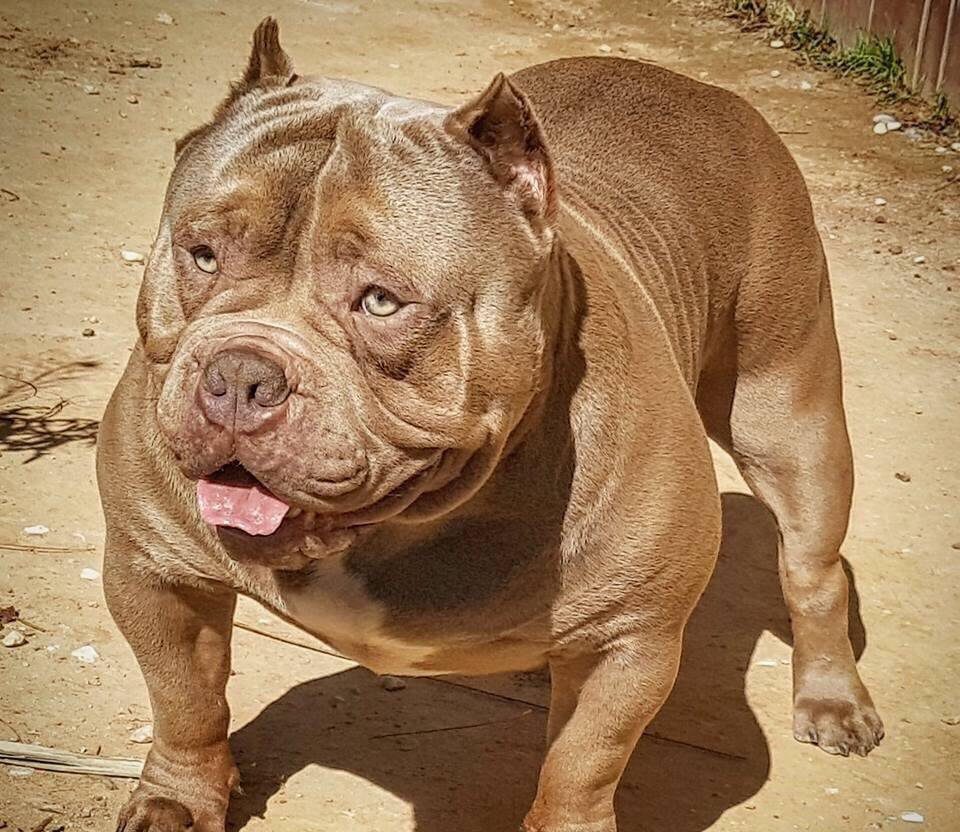
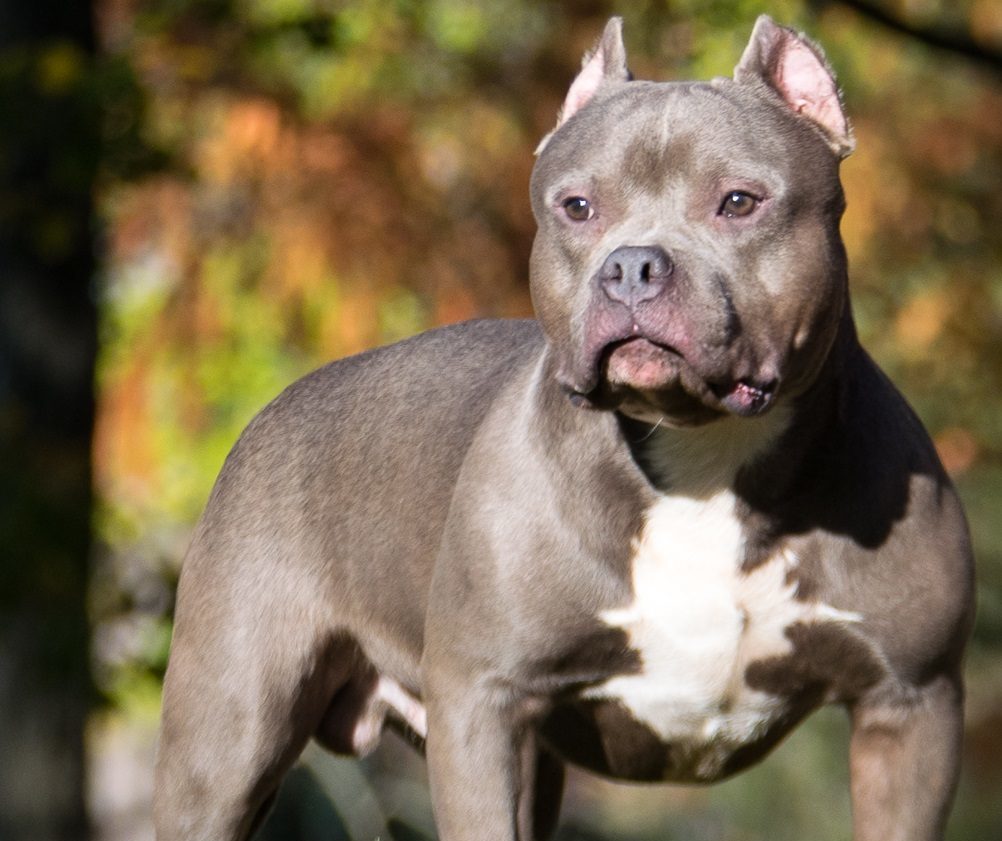
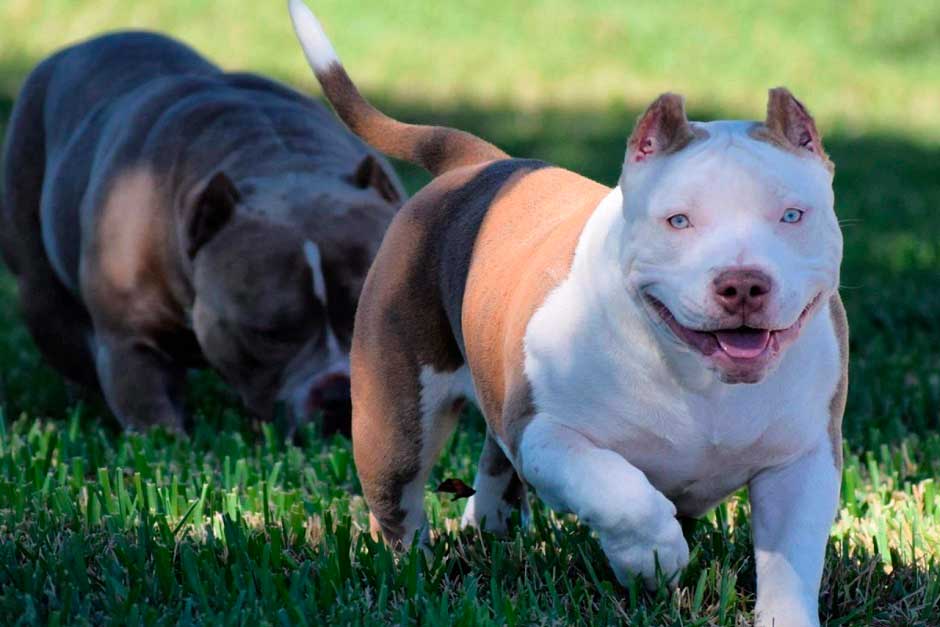
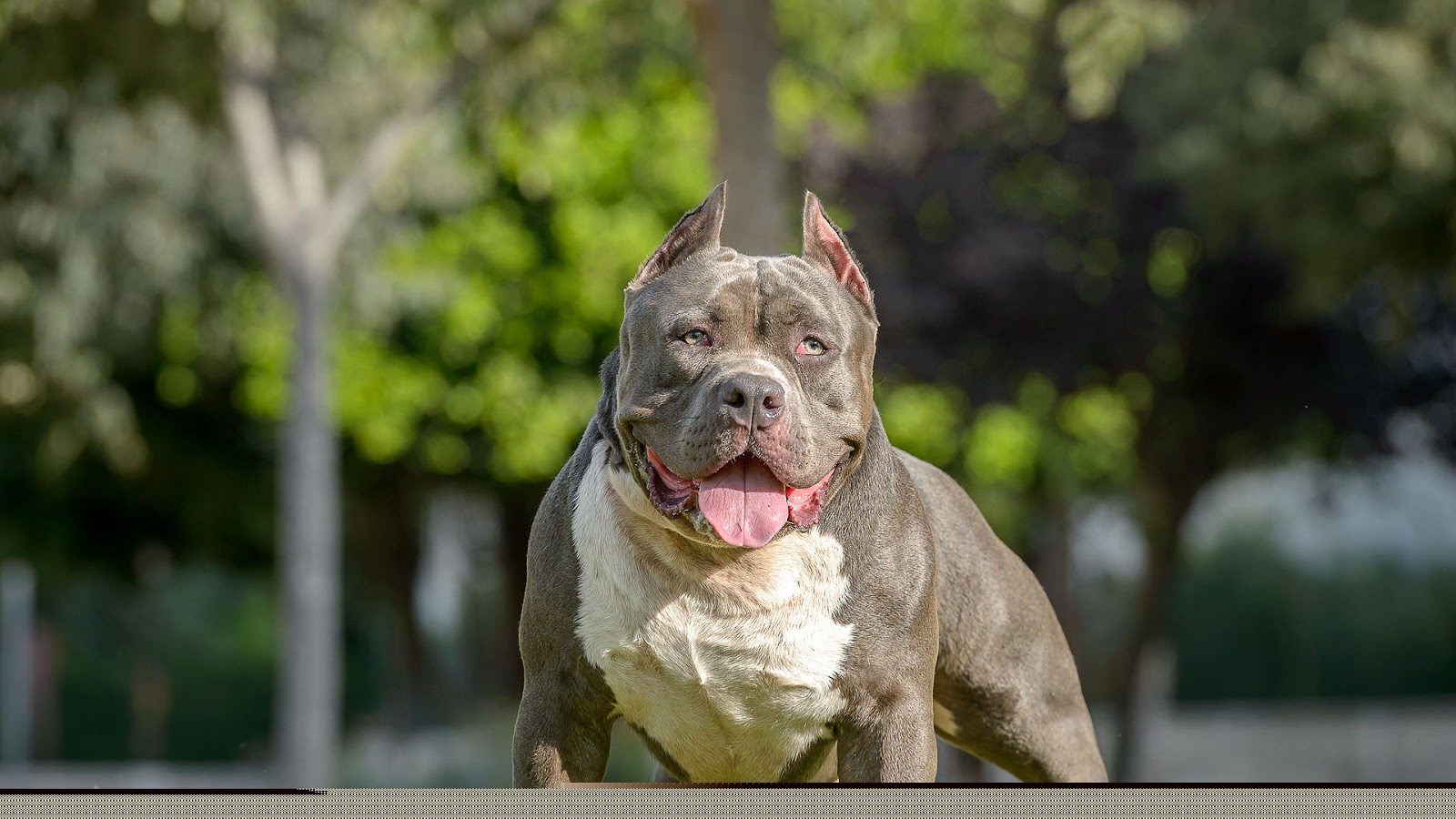
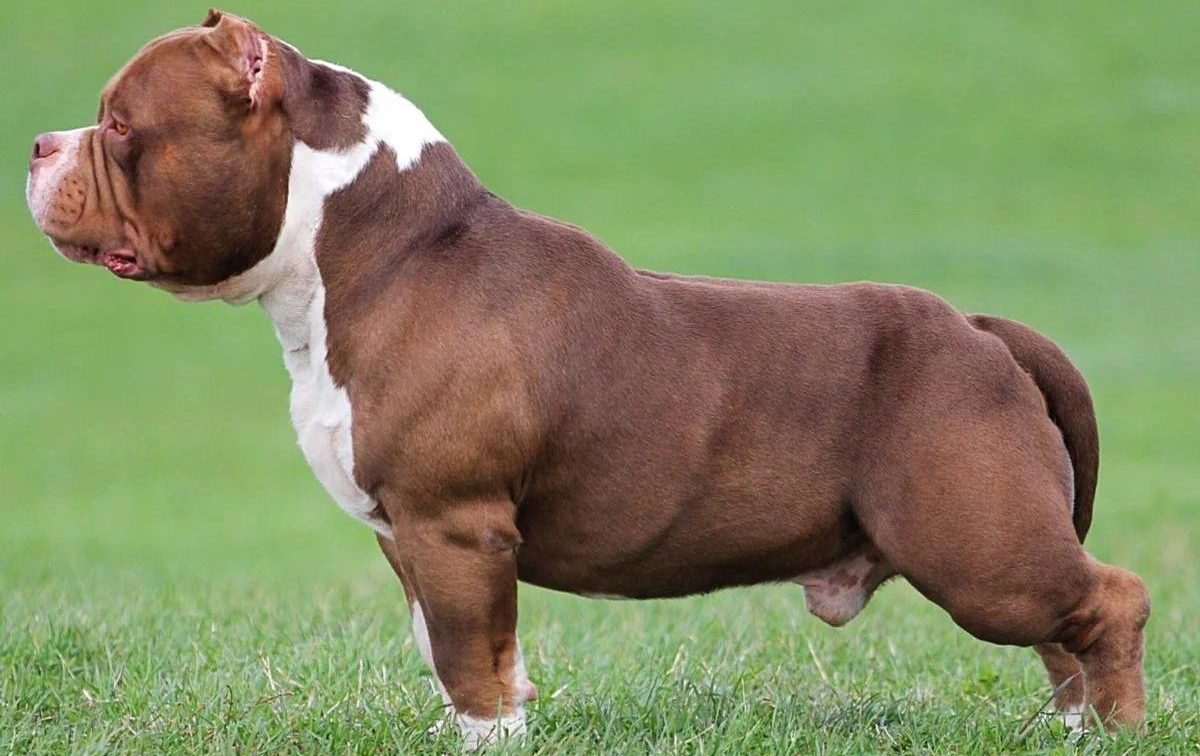
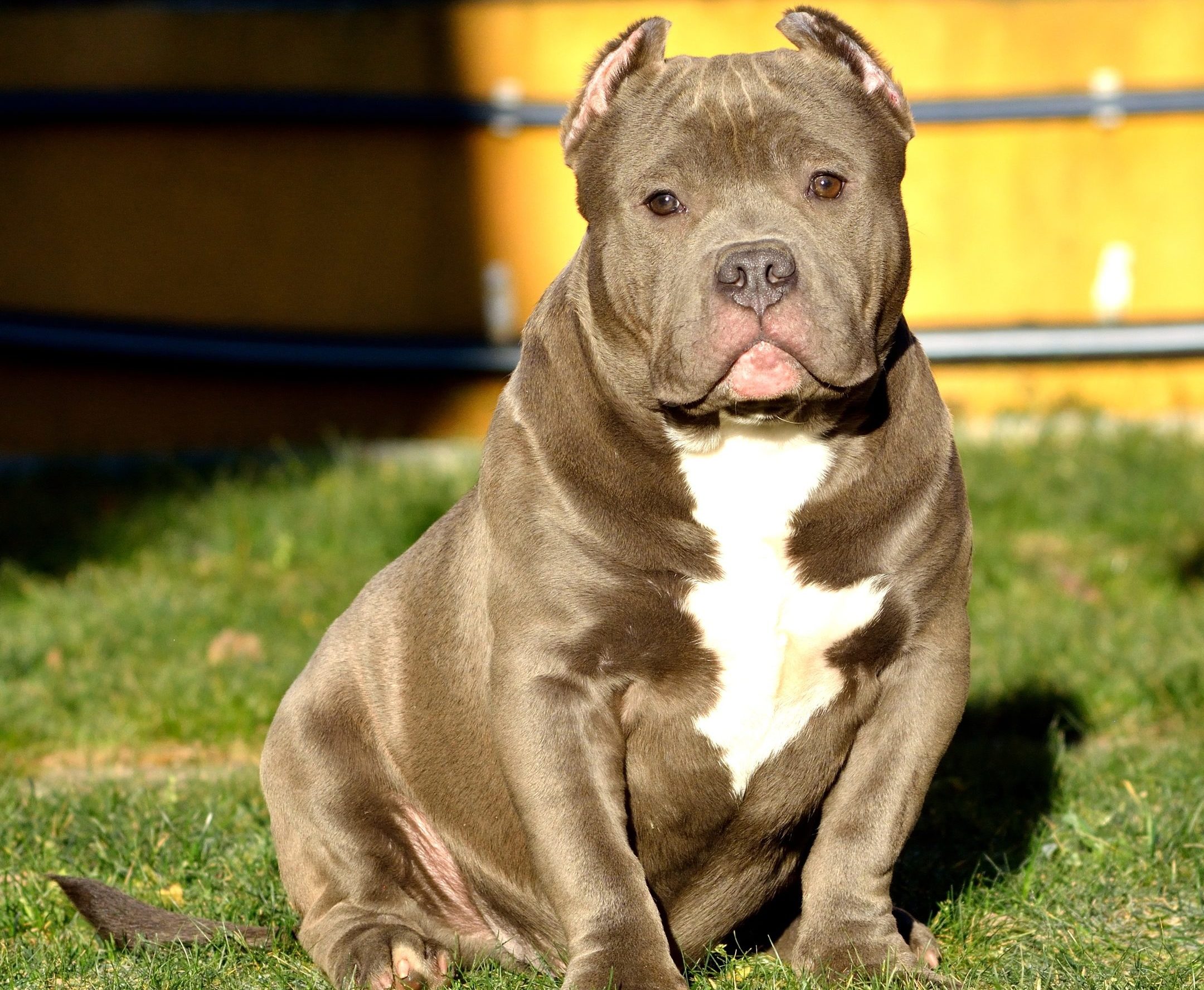
The American Bully is a powerful and expressive breed that captures attention with its unique appearance and muscular build. These dogs were developed in the USA from various breeds including pit bulls and other mastiffs, which has resulted in both a strong physical form and a friendly disposition. The American Bully has well-developed muscles and a compact yet strong body. Its height at the withers ranges from 13 to 20 inches depending on the class, and its weight can reach between 55 to 130 pounds. The head of the American Bully is broad with defined lines and wide cheekbones, giving it a powerful and confident look. The eyes are medium-sized, often round or almond-shaped, and have an expressive and friendly gaze that reflects their gentle nature. Ears can be cropped or left natural depending on the owner’s preference. The coat is short and dense with a slight shine, available in various colors including black, white, red, and brindle, often with different patterns and markings. The body of the American Bully is robust, with a wide chest and strong back, creating an impression of strength and endurance. Their limbs are sturdy and muscular, providing exce


Отличительные черты

Голова

Морда

Уши

Глаза

Зубы

Корпус

Конечности

Хвост

Шерсть

Окрас
Character
A well-raised, harmoniously developing, and properly trained American Bully is like St. Francis among dogs. For that saint, all living beings were “brothers and sisters”; for the Bully, everyone is a friend, but family members will be especially favored. He will tenderly “watch over” the little ones, patiently endure the overwhelming love from preschoolers, eagerly play and romp with schoolchildren, and join teenagers on morning runs.
However, the Bully chooses just one owner. In their absence, he feels lost, and upon the owner’s return after a long absence, he will even follow them to the bathroom. Note: if the owner frequently and for long periods is away from home and from the dog’s life, they risk losing authority. Therefore, at least during the first two years of the Bully’s life (when character is being formed), the more time the owner spends with him, the better.
It’s important to remember the ancestry of the “plush” dog with the wide smile. Deep down, American Bullies tend to be dominant, and authoritative canine experts do not recommend these dogs for beginners. This friendly dog can “bend” an inexperienced and overly gentle owner. If you’re a novice, but the American Bully is your lifelong dream, first find a dog trainer with whom you will stay in constant contact-this person can help you with training and discipline in the future.
The main mistake of novice dog owners (often made by those with small and seemingly harmless “decorative” dogs who later don’t know how to protect their legs and ears from a tiny, biting, and constantly “jingling” creature from hell) is the belief that if a dog is not aggressive, it doesn’t need to be trained or disciplined.
In reality, training and discipline are necessary for any dog simply because it is not a toy or a couch pillow. Dogs need mental and physical stimulation. Lack of activity, absence of boundaries, and unreliable contact with the owner (training is necessary to strengthen this bond) can make a dog lose its mind. It will start causing mischief. A little Yorkie or Chihuahua may not cause significant harm, but an American Bully is a strong dog with powerful jaws and a firm character. The consequences of a lack of training can be really unpleasant.
With other pets, an American Bully can coexist well if they came into the house before him. However, try not to give him reasons to be jealous.
Питомники
Выбор питомника по городу, породе и отзывам
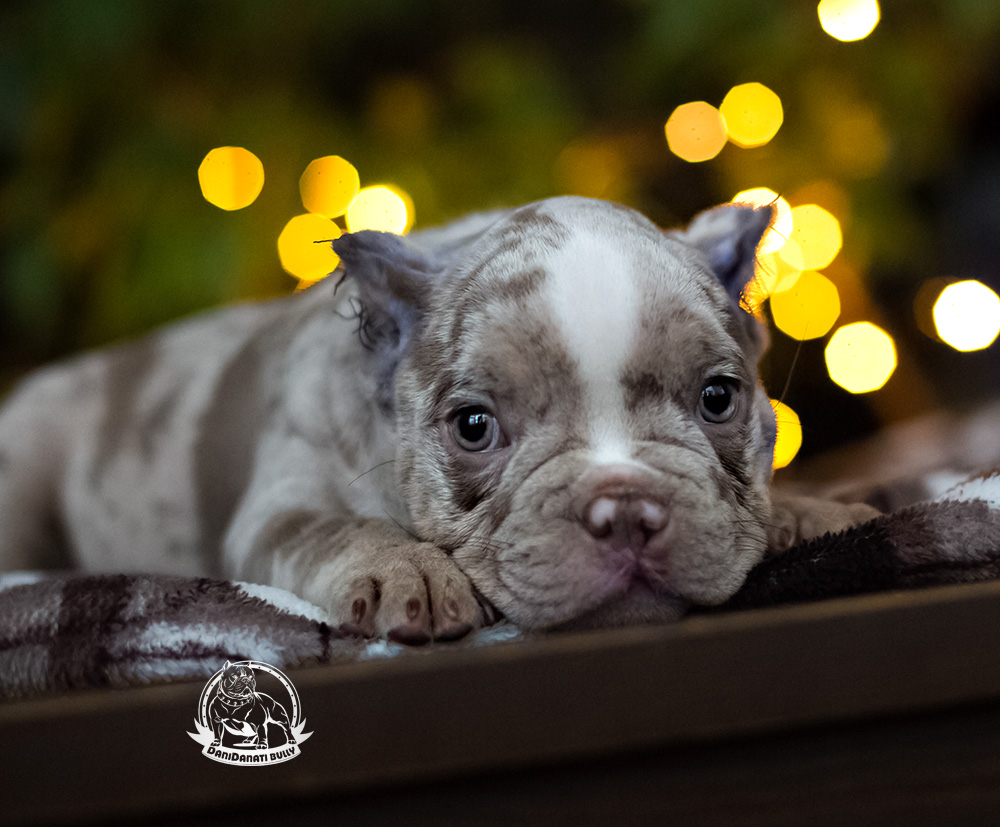
Different children from the same mother.
From one female American Bully, puppies of four different breed types and sizes can be born. It is impossible to determine the type of a newborn puppy. This can only be figured out as the dog approaches one year of age.Care and Maintenance
American Bullies do not like heat and tolerate cold well, but keeping them in an outdoor kennel, even with a roof, is not suitable. If you live in a small apartment, consider getting a pocket bully.
Bullies are not as hyperactive as Staffies or Pit Bulls, but they are also not couch potatoes. They enjoy lounging and relaxing, but they need activity and significant physical exercise.
Plan ahead and assess whether you can dedicate time and energy for long walks with your pet. Bullies need walks, and these cannot be passive, for at least 2-3 hours a day. Ideally, engage your dog in agility training or the sport favored by fighting dogs-weight pulling. Buy them a collar or a vest with pockets for weights, so they can “work out” even while running in the dog park.
After walks, always check their paws (bullies have a high pain threshold and may not signal if their paw pads are injured or cracked from winter street chemicals).
Taking care of a bully is straightforward:
Once a week, brush their coat with a stiff-bristled brush, special glove, or fine-toothed comb. During shedding seasons, do this twice a week to prevent their short hairs from decorating your carpets. Normally, your pet’s coat should have a glossy shine. If it looks dull, wipe it with a damp cloth or use dry shampoo.Do not bathe the dog more than twice a month (unless they’ve rolled in something undesirable during a walk). Overbathing strips the coat of its protective layer and can lead to an unpleasant odor.Regularly check their ears. Clean any dirt using a slightly damp cotton ball or a cotton swab (very gently).If their eyes are crusty, red, or teary, clean them with regular brewed tea.The anatomy of a bully’s mouth encourages plaque build-up. Buy special dog toothpaste and start cleaning their teeth from an early age. To prevent plaque formation, provide rawhide bones and rubber toys from pet stores.Bullies need nail trimming unless they naturally wear them down on pavement during walks. If you are a novice dog owner, it’s best to have this done by a veterinarian. Otherwise, nail clippers for pocket bullies are suitable, and for larger ones, use speciali
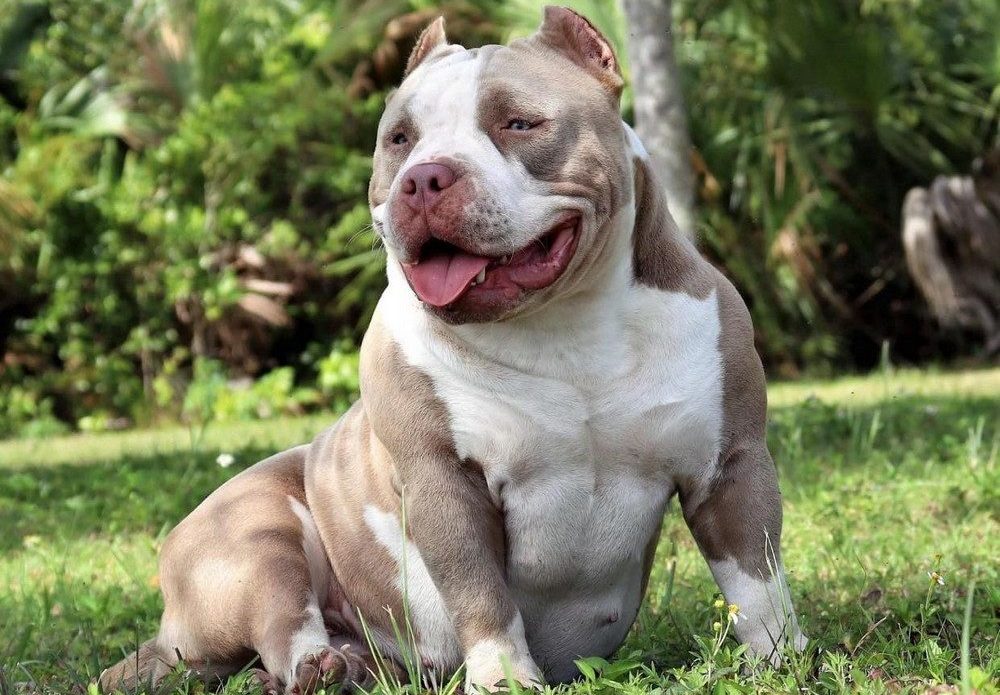
Exotic - a new breed of American bully.
There is also another new type of American Bully - the Exotic. This is the most miniature type, the most attractive and in demand in the market, but it is not yet recognized by any organization.Training and Education
Keep in mind that American Bully puppies grow at a rapid pace and unevenly. Don’t worry if your dog grows longer, wider, or sits down because its back legs have grown longer than the front ones. By six months of age, Bully puppies are already approaching the size of adult dogs. However, they mature psychologically with some delay; even after three years, they can still behave like teenagers.
Starting from around six months, you can begin training your pet on your own (if you are an experienced dog owner) or take an obedience course with a trainer (if you are inexperienced). This course is essential – a dog that doesn’t know basic commands is very difficult to manage in an urban environment.
You can pursue protection training at your discretion, but start no earlier than two years old.
Be prepared for special walking rules. The most important one is maximum socialization of your pet. Remember whose blood flows in its veins. While many Amstaffs have lost their breed-specific aggression (they are also bred as companions), this trait is characteristic of Pitbulls. A major issue with American Bullies can be their aggression towards other dogs, not people. You never know when the genes of a fierce grandparent, a champion in dog fights, might emerge in response to another dog’s aggression or simply from a bad mood. Therefore, socialize your puppy from an early age, encouraging non-conflict interactions and play with other dogs. It is especially crucial not to miss the age of one and a half years. One-and-a-half-year-old Bullies, particularly males, often start to “assert themselves” at the expense of their peers. Curb aggressive behavior by distracting your dog, removing it from the area, and using strict corrections (but not physically).
Gradually accustom your puppy to new walking areas, scents, and experiences. Once he learns to walk “next to” you, take him not just for walks – start with quiet streets and gradually move to busier ones, monitoring his behavior and training him to respond to commands in unusual conditions.
American Bullies have excellent intelligence and good learning ability. If you are a sensible and patient owner, you will ultimately gain an ideal companion. At Zoonyka – simple, quick, and safe, with a guarantee of quality.
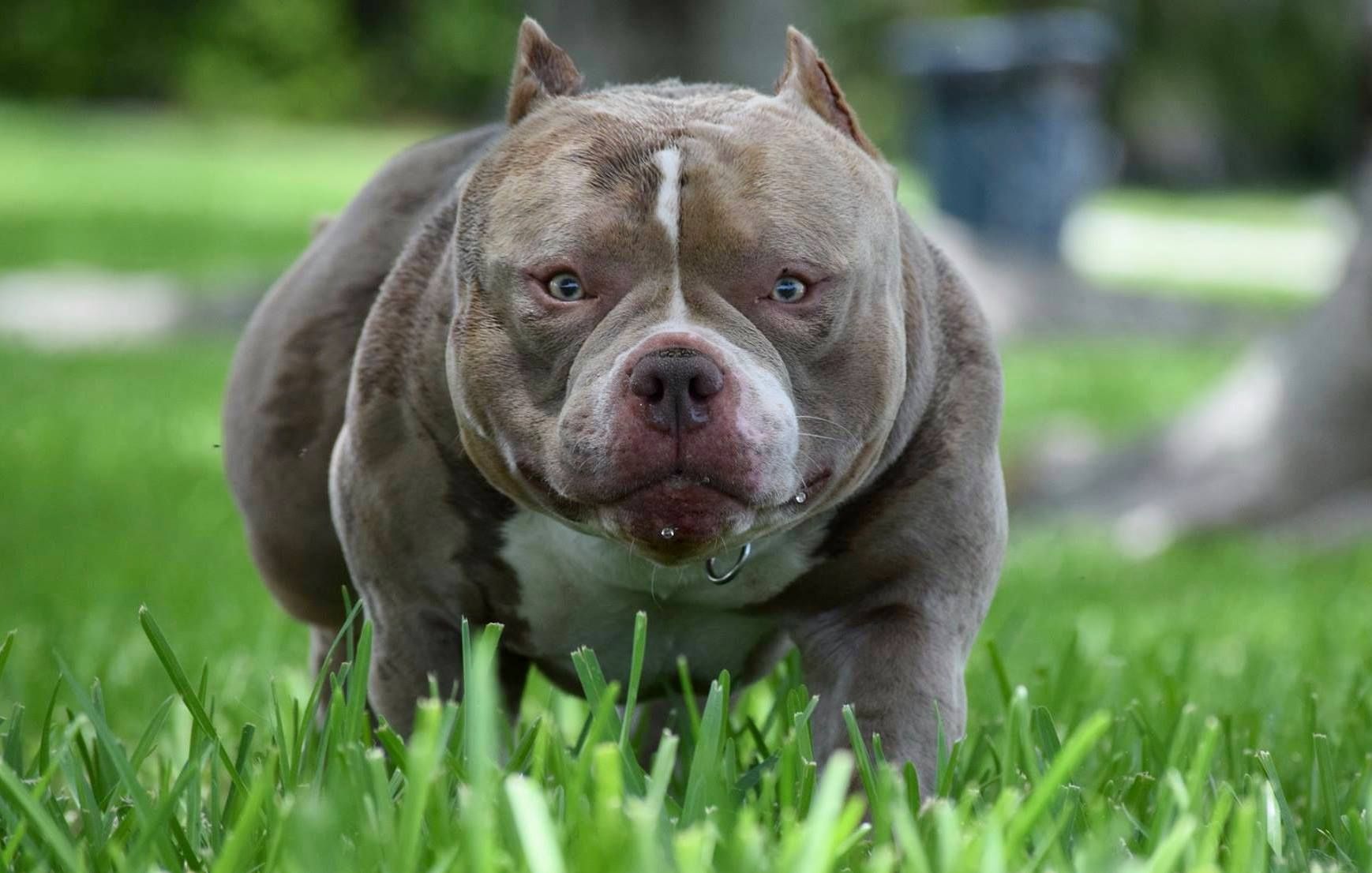
"Terrible on the outside, good on the inside," as the great classic said.
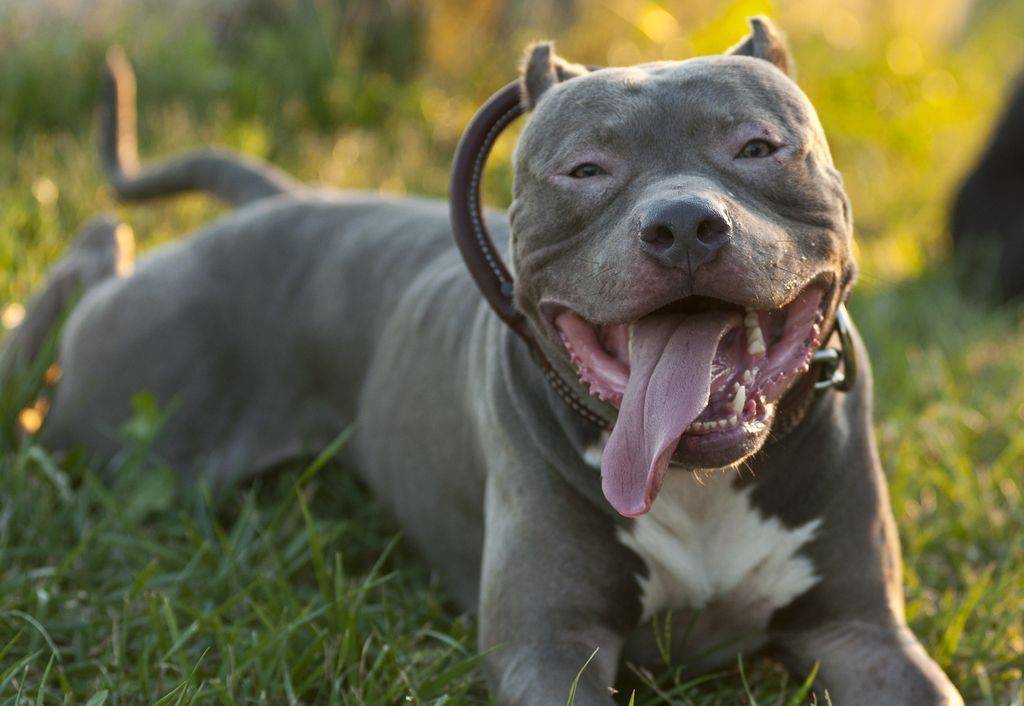
The intimidating, fearsome appearance with a shark-like mouth is a deceptive facade of the American bully; at their core, these dogs are gentle, kind, and friendly companions.
How to Choose a Puppy
Of course, the best option is to acquire a puppy from the homeland of American Bullies or from a European kennel. However, for various reasons, this is practically impossible today. In Russia, you will probably find no more than a dozen kennels breeding them, mainly located in Moscow and St. Petersburg.
Do not even think about buying a puppy from an advertisement on Avito or a similar classifieds site. You risk spending a considerable amount for a Staff or Pit puppy, or even a mix with a rhinoceros. At 1-1.5 months old, only a specialist canine behaviorist with experience in fighting breeds can distinguish an Ambull from a “Staffopit.”
Familiarize yourself with the chosen kennel and the puppy’s parents, as well as its pedigree and veterinary passport. Ask the breeder about its diet.
A healthy litter usually consists of 2 to 4 puppies. Choose the most active and curious one, who shows no fear or overcomes it when meeting a new person (both aggression and cowardice are disqualifying behavioral faults in Ambulls).
If you want a specific type of puppy, you will have to wait until it is 7-9 months old, as the type will not manifest earlier. Until the age of one, all puppies fall into the standard category. Find your puppy through trusted sources on Zoonik.
Health and Illnesses
American bullies have excellent genetics-they inherit strong health and good immunity from pits and amstaffs. However, inadequate nutrition, lack of physical activity, or excessive exercise can lead to acquired joint or heart conditions-the dog may start limping, experiencing drowsiness, lethargy, and shortness of breath. Heat exposure is also a strain on the heart; like all brachycephalic dogs, bullies poorly tolerate heat, and heat strokes and thirst should be avoided.
From birth (genetically), bullies may suffer from:
– Joint pathologies-dysplasia, patellar luxation. You will notice movement difficulties from an early age, and it is essential to consult a veterinarian.
– Cataracts (death of the fibers of the optic nerve) that develop with age.
– Timely removal of dental plaque is required to prevent it from turning into cavities or periodontal disease.
– Allergic reactions-so it’s not advisable to risk with economy-class feeds.Healthy bullies live for 12-13 years. If their diet is organized rationally, a bully can live even longer. Regular veterinary check-ups, adherence to vaccination schedules, and deworming are necessary; the dog should also be treated for skin parasites as needed.Female dogs reach sexual maturity at 1 year, but at this age, they are not ready to produce healthy offspring. If a female is being bred, it is advisable to wait for the third heat (approximately 20 months of age). Mating should occur on the territory of the “male.”
Содержание
-
1. Описание породы
-
2. Внешний вид
- 2.1 Голова
- 2.2 Морда
- 2.3 Уши
- 2.4 Глаза
- 2.5 Зубы
- 2.6 Корпус
- 2.7 Конечности
- 2.8 Хвост
- 2.9 Шерсть
- 2.10 Окрас
-
3. Характер
-
4. Содержание и уход
-
5. Дрессировка и обучение
-
6. Как выбрать котенка
-
7. Здоровье и болезни






Comments
Only registered users can leave reviews.
Enter