
Scythian Toy Bob




Breed Description
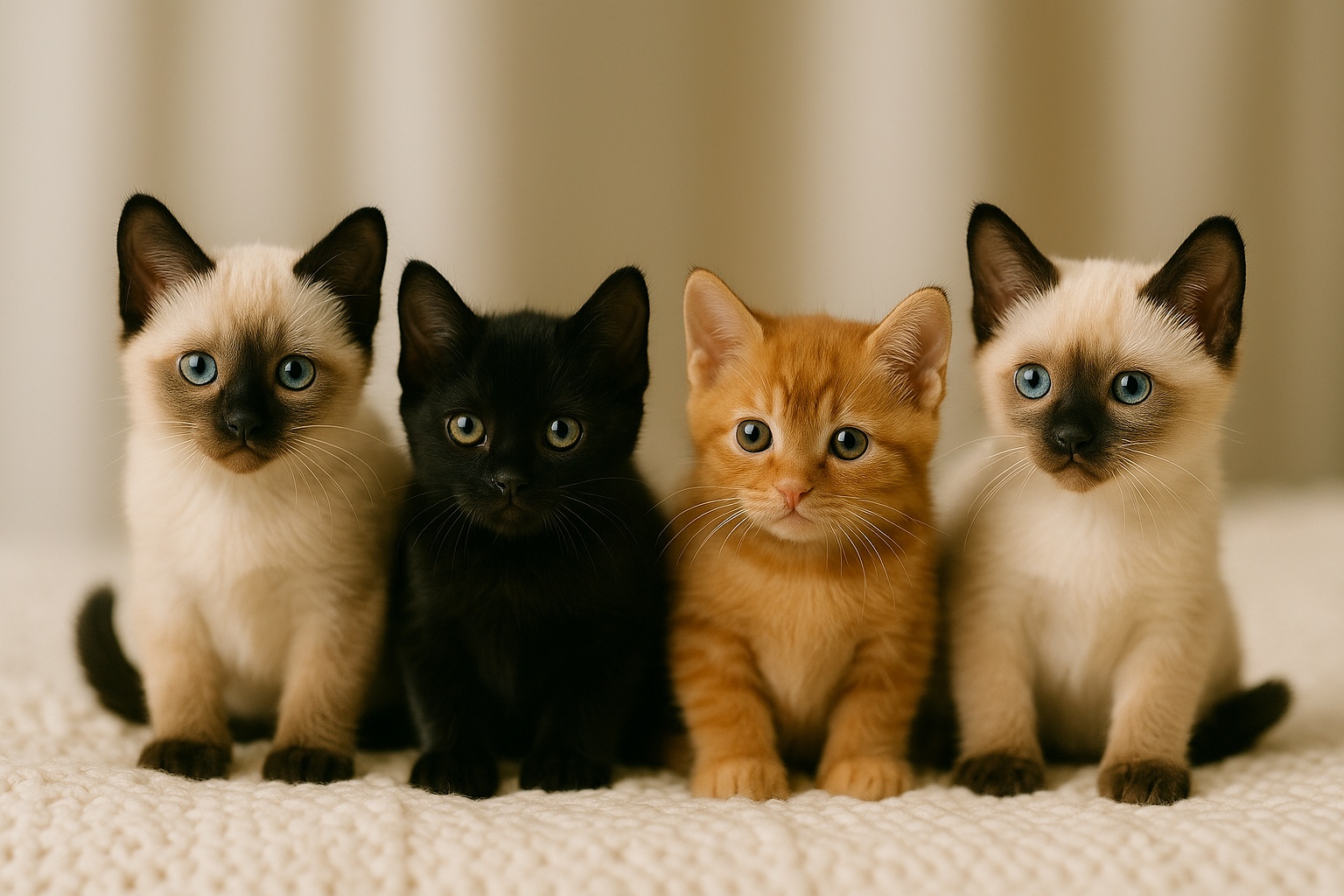
The Skif-Toy-Bob, or Toybob, is a unique miniature breed of cat that originated in Russia in the late 1980s. There are several theories regarding the breed’s origin. One theory suggests that the breed’s miniaturization and short bobtail resulted from a natural spontaneous mutation in domestic cats in the Rostov region. Another theory links its origin to a local population of short-tailed indigenous cats, which possessed a gene responsible for the tail kink and small size. Some feline experts suggest that such traits may have appeared earlier in wild populations; however, it was only in the USSR during the 1980s and 1990s that targeted breeding began to reinforce these characteristics.
The first systematic work with the breed was undertaken by Novosibirsk breeder Elena Krasnitskaya. She created the initial pedigrees, developed breeding principles, and selected cats that met the criteria of a “miniature fully developed cat with a bobtail.” This initiative was later supported by catteries in Moscow and St. Petersburg, which helped expand the population and attract the attention of foreign clubs. Due to these efforts, the Skif-Toy-Bob was included in the WCF registry and later recognized by TICA, where it is registered as Toybob in the status of a new breed.
By “tiny” size, this breed is defined by specific parameters. The weight of an adult female cat rarely exceeds 1.8-2 kg, while males can reach a maximum of up to 2.5 kg, which is half the weight of a standard domestic cat. Their body length ranges from 18 to 22 cm without a tail, making them the smallest recognized cats in the world. It is important to emphasize that this miniaturization is not related to dwarfism; their skeletons and structure are proportional, movements are normal, and joints and limbs are properly developed. They are not “dwarf cats,” but rather small cats of a normal type.
A feature of the Russian line of Skif-Toy-Bobs is the preservation of the historical name and focus on point colors established in the early WCF standards. The international Toybob line recognized by TICA allows for all colors, with breeding efforts aimed at expanding the genetic base and improving the breed’s health. Russian catteries traditionally emphasize their connection to the breed’s origin and its uniqueness as a “national miniature cat.”
For breeders, it remains valuable that the breed standard was formed based on natural mutations. This means that the Skif-Toy-Bob does not have artificially fixed traits associated with health issues. However, as a young breed, it requires careful attention to genetics: it is important to avoid inbreeding, maintain diversity among lines, and monitor the health of offspring. For future owners, the breed’s value lies in the fact that they acquire a truly miniature companion with a full character and developed intelligence, but in a “pocket-sized” format.
Appearance
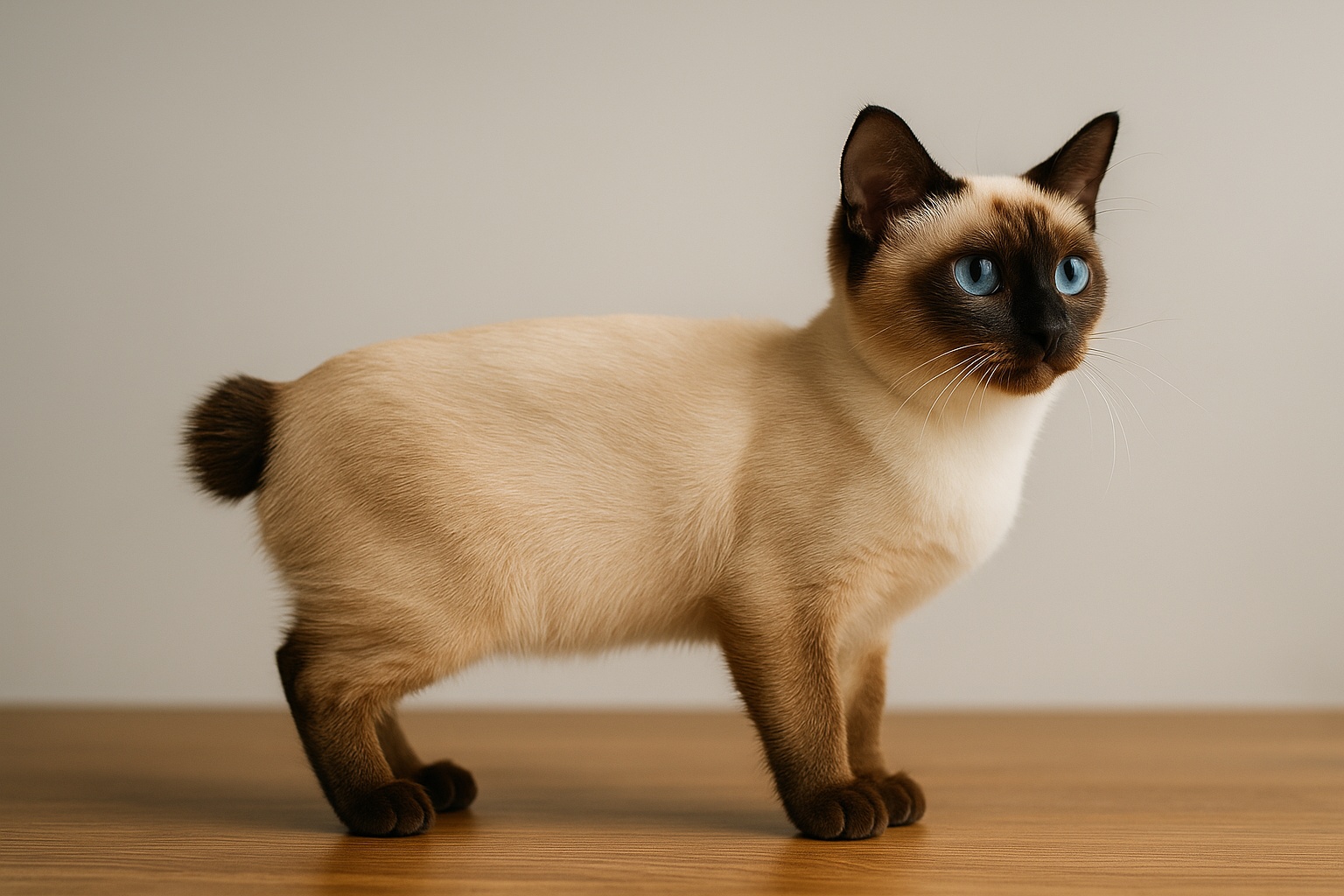
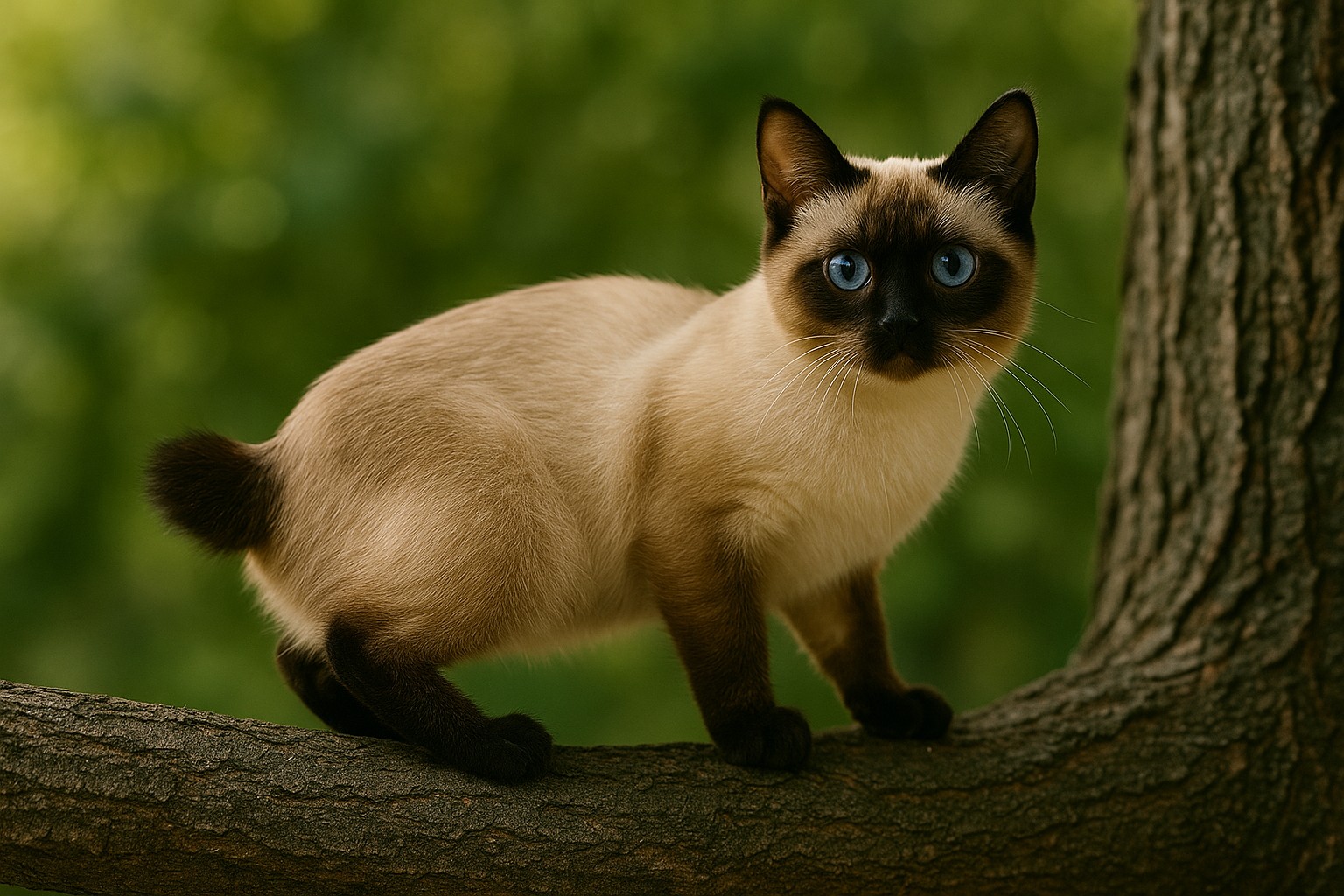
The Scythian Bobtail is the smallest recognized breed of cats, combining a tiny size with a fully formed, harmonious physique. The type is compact, with an almost square body featuring a wide chest and a short, firm waist, without fragility or signs of dwarfism. Adult females typically weigh 1.5-2.0 kg, while males range from 2.0-2.5 kg, all while maintaining a sturdy bone structure; their muscles are well-defined, and movements are precise and light. The silhouette is immediately recognizable: a large expressive head, short neck, solid body, proportional limbs, and the signature short bobtail. Balance is more important than extravagance-long, thin limbs, an overly accentuated waist, or excessively delicate heads are not desirable. The tail is always naturally shortened, composed of a series of broken vertebrae that form a “pom-pom” or a short curved tuft; docking is unacceptable. The coat comes in two types: short-haired with an elastic texture, and long-haired, soft, with moderate tufts but without a heavy “mane.” In Russian tradition, colors are often pointed, while in international standards, there is more variety, which does not influence the type. Duri


Отличительные черты

Голова

Морда

Уши

Глаза

Зубы

Корпус

Конечности

Хвост

Шерсть

Окрас
Character
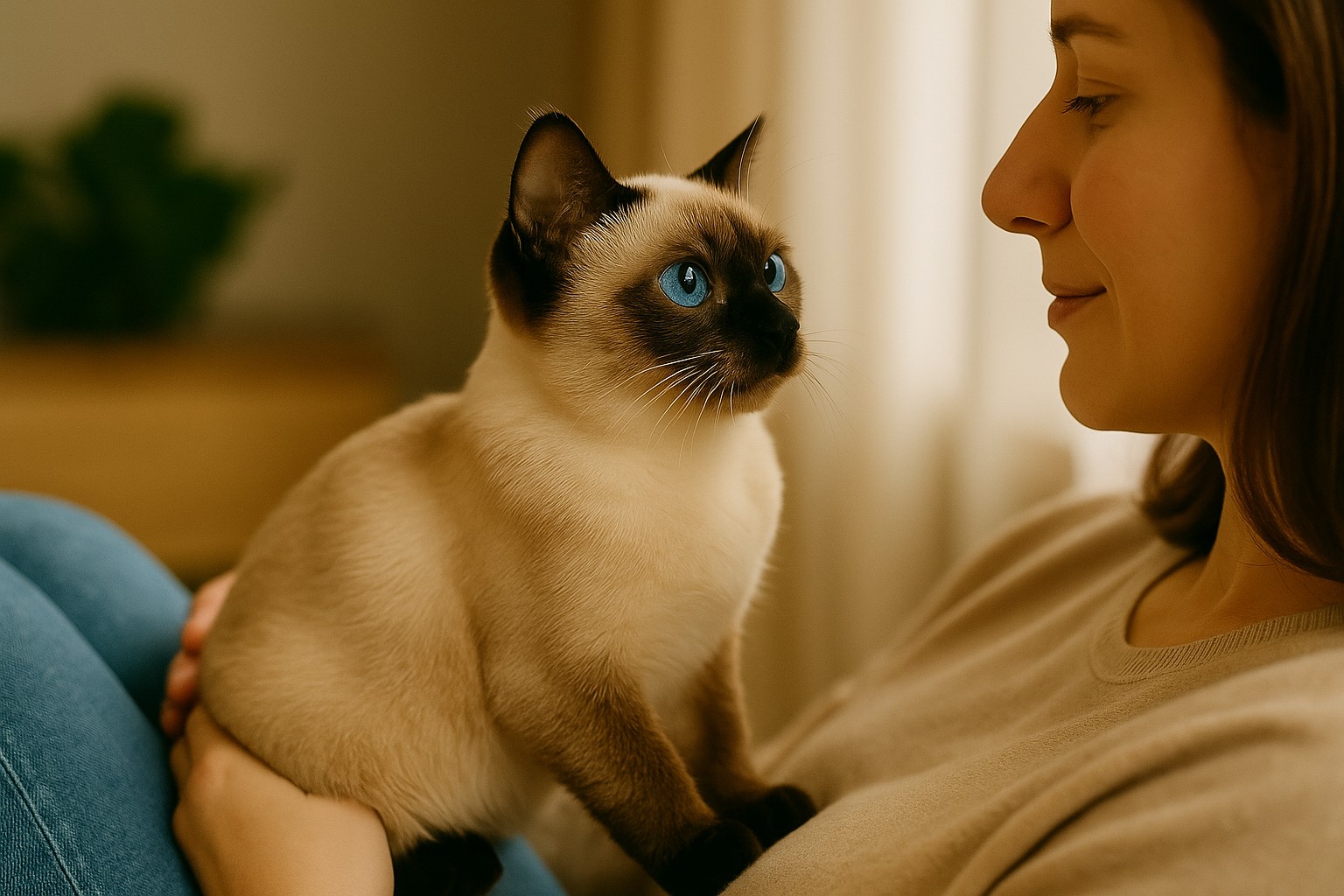
Affection in daily life. The Siberian bobtail is a “sticky” companion: when you lie down on the couch, it settles on your lap; when you work on your laptop, it finds a spot next to you and quietly purrs. If you’re busy, the “silent contact” rule helps: place a soft mat on the table and label it with the word “Place!” – the cat will quickly understand that attention goes there.
Playfulness without destruction. The breed has focused energy – several short hunting sessions a day lasting 7-10 minutes help release energy. Use a fishing rod, a ball track, tunnels; after playing, provide food and rest. This cycle mimics hunting and prevents destructive behavior.
Intelligence and trainability. The Siberian bobtail quickly learns household rituals: “In the carrier!”, “Home!” to the room, “Wait!” at the food bowl. Use a marker like “Yes!” or a clicker, set small goals – 3-5 successful repetitions, pause, change tasks.
Softness in conflict. This breed rarely responds with aggression – instead, it tends to withdraw or request distance. In homes with children, a simple rule works: “play only through a toy,” hands are not prey.
Social attachment. Cats find it hard to be alone for long – if you are often out, consider getting a second pet or plan interactive feeders and play schedules in advance.
Voice and signals. It is not a “screamer,” but emotional signals are varied: a quiet “song” during contact, a short “meow” for requests, a “trill” for play. Teach the cat to “speak” within rules – request attention only on the “communication mat.”Cautious curiosity. It explores every corner but quickly accepts rules if it sees a benefit. Reinforce the desired path in the house with treat crumbs – create safe “routes.”Stress resilience. Adapts well to changes in environment if rituals are preserved – feeding times, sleep spots, familiar scents. During moves, a “tranquility kit” helps: a blanket with a familiar scent, a carrier as a refuge, treats for “searching.”Compatibility. Generally friendly towards other cats, respects hierarchy but values personal space. Coexists with dogs when introduced calmly “through a barrier”; with small rodents and birds, strict territorial separation is necessary as the hunting instinct remains.A taste of bitterness. Over-attachment can turn into obsession – enforce the “three steps back” rule: if it comes to request attention, it waits on the mat, you initiate contact, and you end it first. This gives the cat clear boundaries an
Питомники
Выбор питомника по городу, породе и отзывам
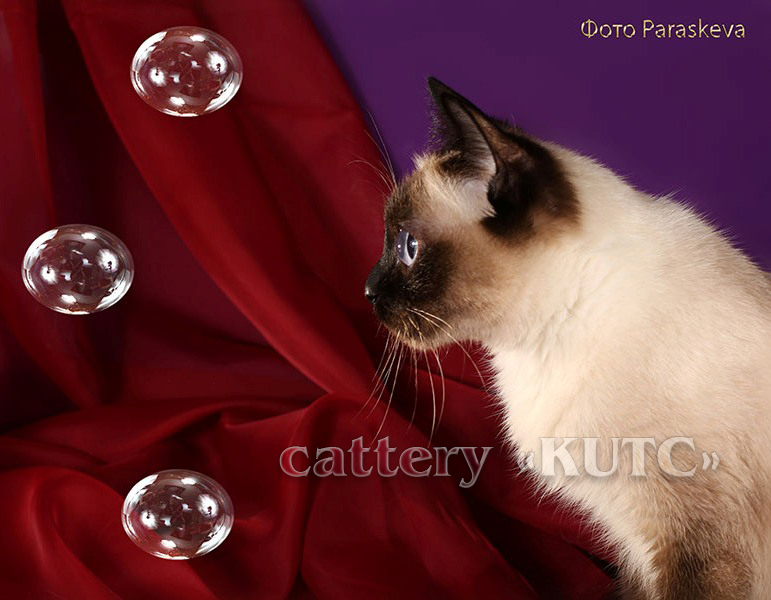
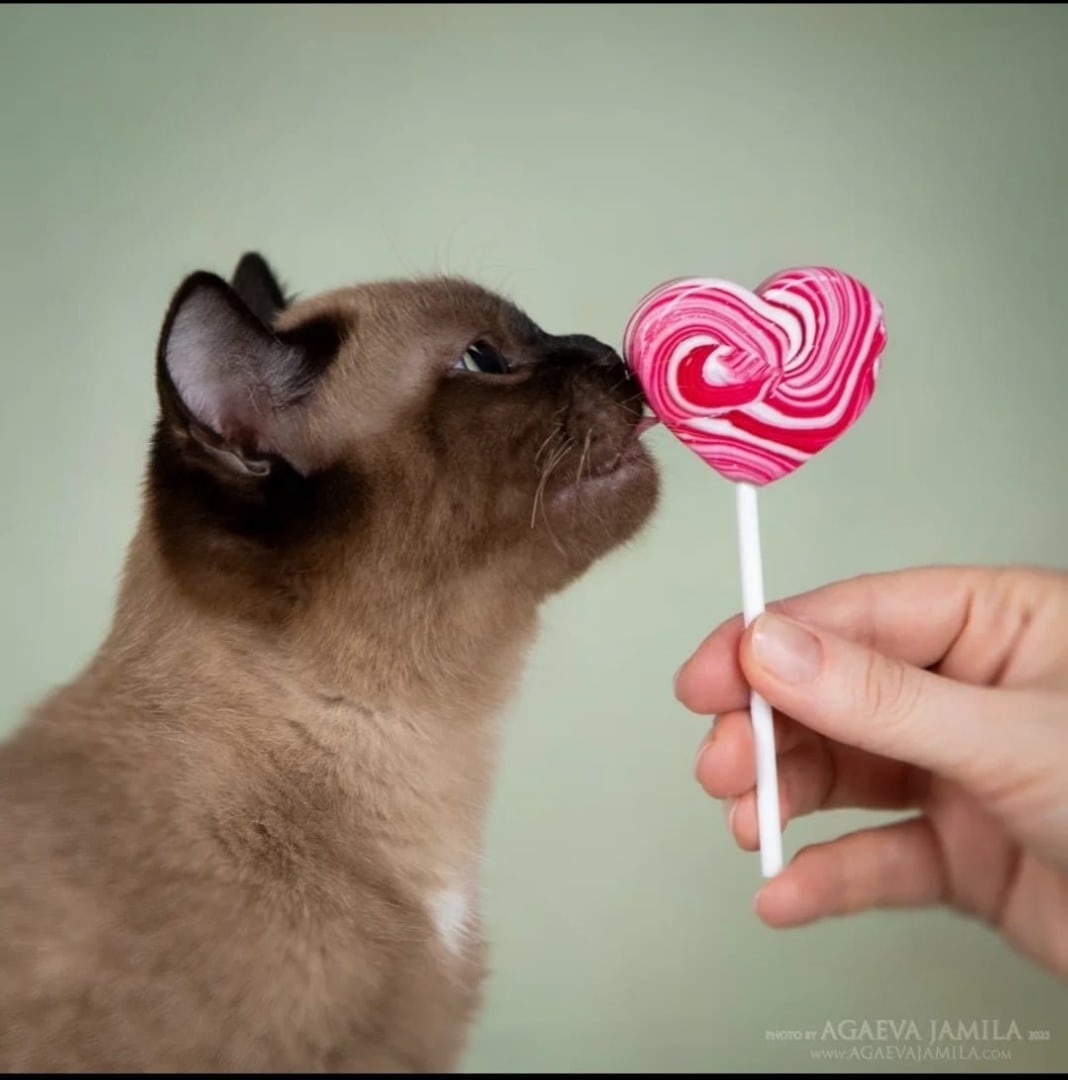
The smallest cat in the world according to breed standards.
The Sphinx cat breed has officially been recorded in the record books as one of the smallest cat breeds. An adult cat typically weighs no more than 2 kg, with some individuals remaining tiny at around 900 grams. Despite their small size, they are fully proportionate and look like "eternal kittens."Content and Care
Windows and Safety. A mosquito net is not a protection: a cat can easily push it out and fall. Install reinforced “anti-cat” nets secured to the frame, opening limiters, and sash locks. The balcony must have complete protection, with no gaps; secure the net around the perimeter and check the fastenings once a season.
Apartment – minimum plan. Two scratching posts of different textures: a vertical sisal one and a horizontal cardboard one, one next to the resting place, the other near “disputed” items. Three levels of activity: a bed on the floor, a shelf at knee height, and one high vantage point. Rotate toys weekly by hiding some and giving others to maintain novelty.
Private House. Safe outdoor access – a pen with a net on top, with a net set back 30-40 cm inward to prevent climbing, and an anti-dig barrier of tiles or netting extending 40-50 cm into the ground. In the garden, exclude toxic plants: lilies, philodendron, dieffenbachia; store fertilizers and chemicals out of reach.
Multi-Pet Households – Cats. Provide at least one bowl for water and food per cat, one litter box plus one extra for the house: for 2 cats – 3 litter boxes. Distribute resources throughout the apartment to reduce competition. Introduce newcomers using the “scent – door – crack” method with exchanges of bedding and short visual contacts.
Cat and Dog. For the first 7-10 days – only through a barrier gate under supervision. The dog should wear a harness, practicing “Lie down!” and “Look at me!”, while the cat has safe spots up high and “Home!” to go back to the room. Keep sessions short, ending with calm behavior from both sides.
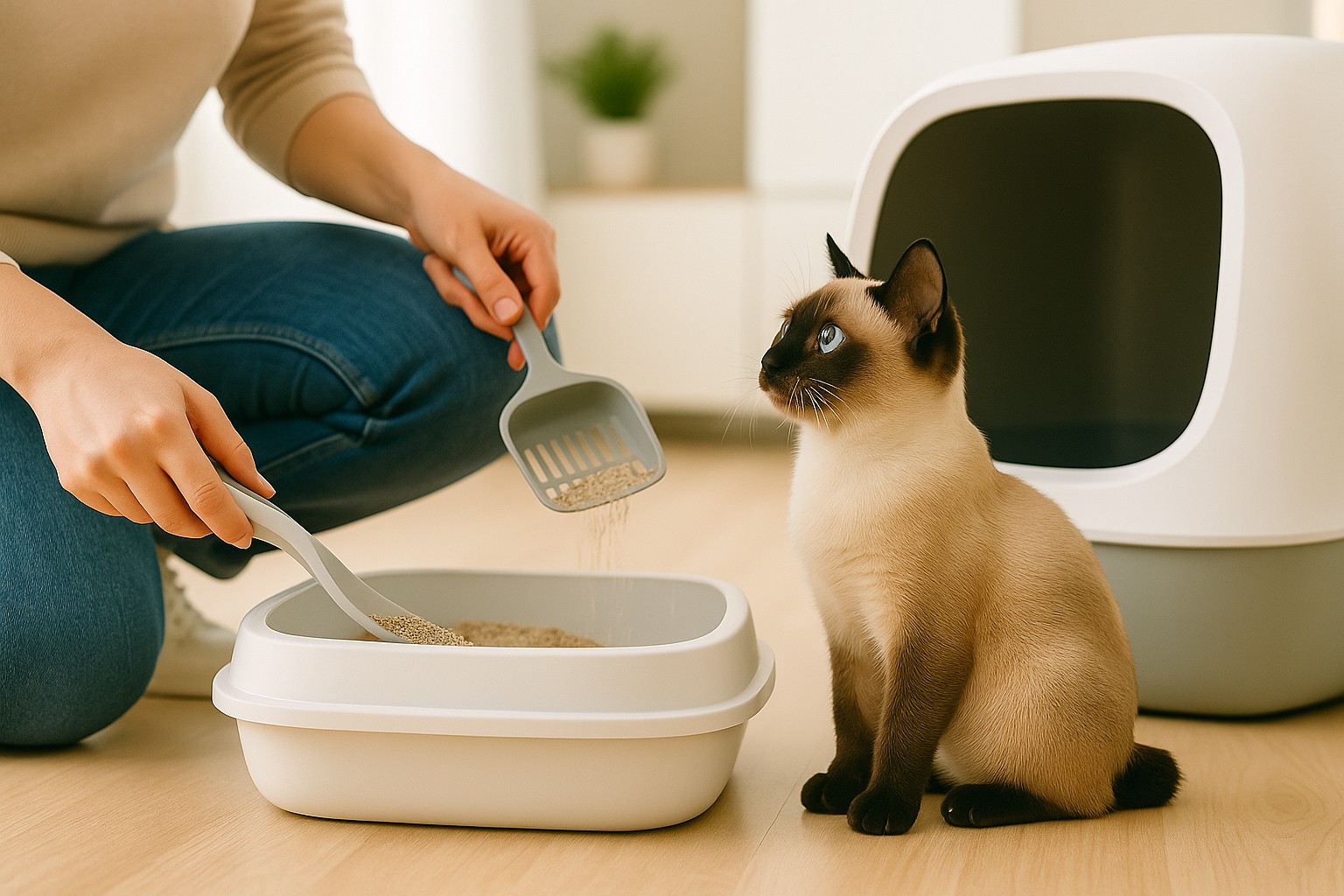
Cat and Small Pets. Territories must be strictly separated: cages out of reach, a separate room during your absence. Even a “rule-knowing” cat remains a predator; this principle is especially strict in guest households and rental apartments.Litter Box and Filler. The standard is a spacious litter box with sides no lower than 12-15 cm and a layer of 5-7 cm. Clumping litter should be sifted 1-2 times a day, with a complete change every 7-10 days, and more often if the cat is highly sensitive to smells. If the cat “misses,” check: cleanliness, layer depth, box size, and noise level. Redirect back to the litter box with a “Home!” marker gently, without punishment.Feeding and Water. Serve small portions – the risk of overfeeding is high; check weight weekly. A water fountain encourages drinking, which is beneficial for preventing urinary issues. Use heavy ceramic bowls; for water, a wide, shallow dish is best.Grooming. For short-haired cats – a glove-scraper 1-2 times a week. For long-haired cats – a fine-toothed comb 2-3 times a week, paying special attention to “pants,” armpits, and the collar. Trim claws every 2-3 weeks while reinforcing scratching habits with cat
Historical symbol of antiquity
The breed was developed in Rostov-on-Don at the end of the 20th century and is named after the ancient Scythians. It is believed that its appearance with a short tail resembles the cats depicted in ancient Scythian artifacts. Therefore, the Scythian Toy-Bob is sometimes referred to as "living museum exhibits."Training and Education
Start – use a marker like “Yes!” or a clicker. The process is simple: show a cue – capture the desired action – mark it – give a reward – pause. Sessions should last 2-4 minutes, with 3-5 repetitions, followed by a change of task.
“Place!”. Designate a resting spot, put 1-2 treats there. Bring the cat over, say: “Place!”, and as soon as both front paws are on the resting spot – mark and reward. After 3-4 repetitions, add “Wait!” for 2-3 seconds, gradually increasing to 20-30 seconds.
“Home!”. Choose a safe room or a carrier. Call the cat, step inside, say: “Home!” – when the cat crosses the threshold, mark and treat. Start with the door open, then introduce a brief closing of 5-10 seconds with a reward for calmness.
“Sit!”. Hold a treat near the cat’s nose, smoothly raise it above its head – as soon as the rear end touches the floor, mark and reward. Do not pressure the back, just lure.
“Wait!”. On a mat or by the bowl. Place the bowl – use your hand as a ‘traffic light’ in front of the nose – “Wait!” for 2 seconds – “You can!” and give access to food. Gradually increase the waiting time and introduce distractions.
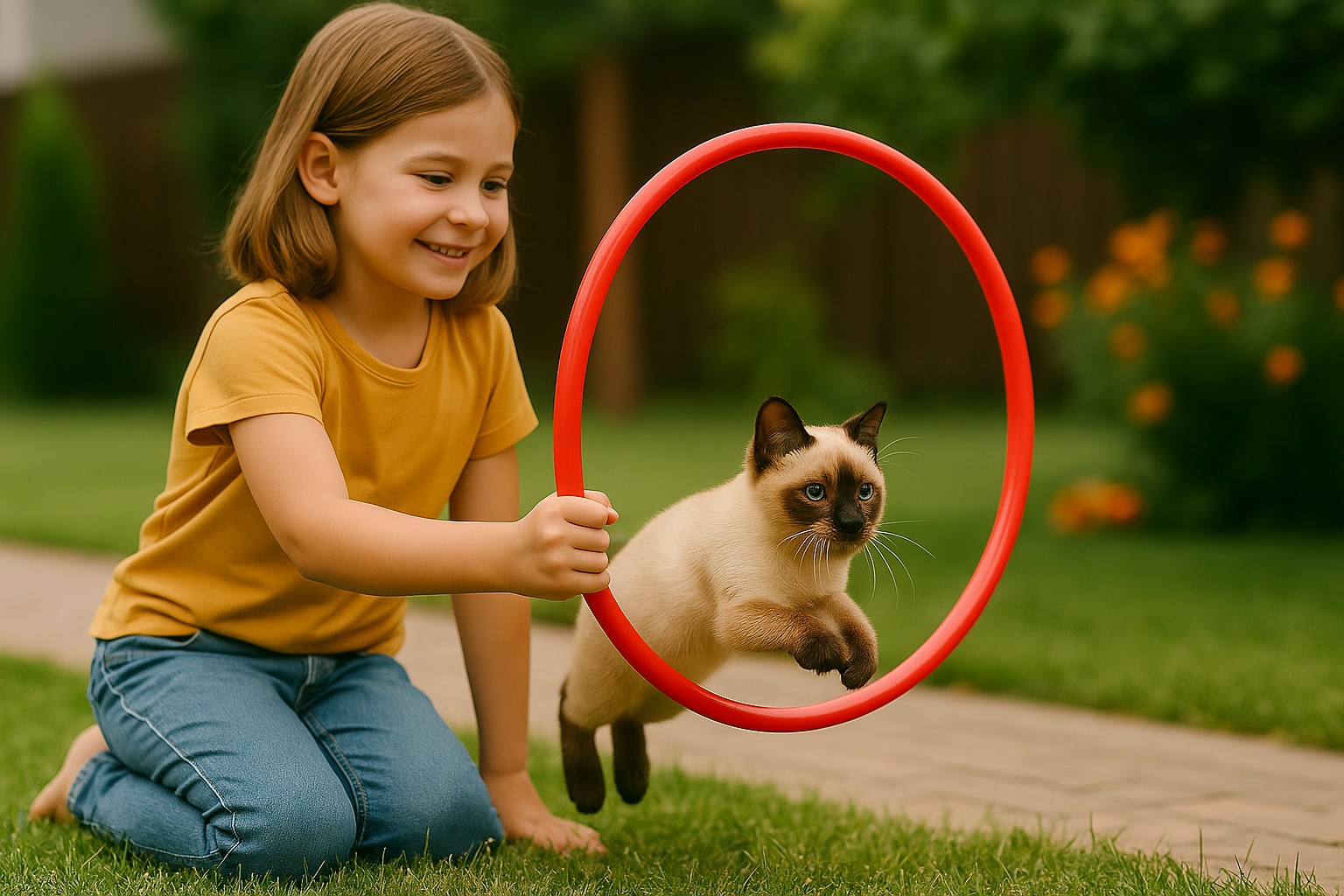
“Into the carrier!”. Place treats and a favorite toy inside. Mark any independent step into the carrier – in 2-3 days, the cat will start to “check” the carrier itself. This command is particularly useful for vet visits and during evacuations.Prohibition “No!”. It’s not punishment, but a clear switch. If you see the cat scratching something inappropriate – a short “No!” – immediately redirect to a scratching post with attractant – mark and reward for 2-3 vertical stretches. After repeating 15-20 times, you will create a stable habit.”Jump through the hoop”. Start with the hoop on the floor. Toss a treat to the other side; when the cat passes through – mark. Raise the hoop 5-10 cm, then 20-30 cm, ensuring the jump remains comfortable, without needing to gain momentum.”Drop it!”. Switch the item for a higher-value treat. When the cat holds a toy, show the treat – as soon as it drops the item – “Yes!” and give the treat plus immediately return the toy. This teaches that letting go of the item is advantageous.General rules. Do not shout, grab, or punish. If the cat is “stuck”, simplify the task, reduce session length, or increase reward value. Generalize –
The serval with the character of a lion.
Please provide the text you would like me to translate.How to Choose a Kitten
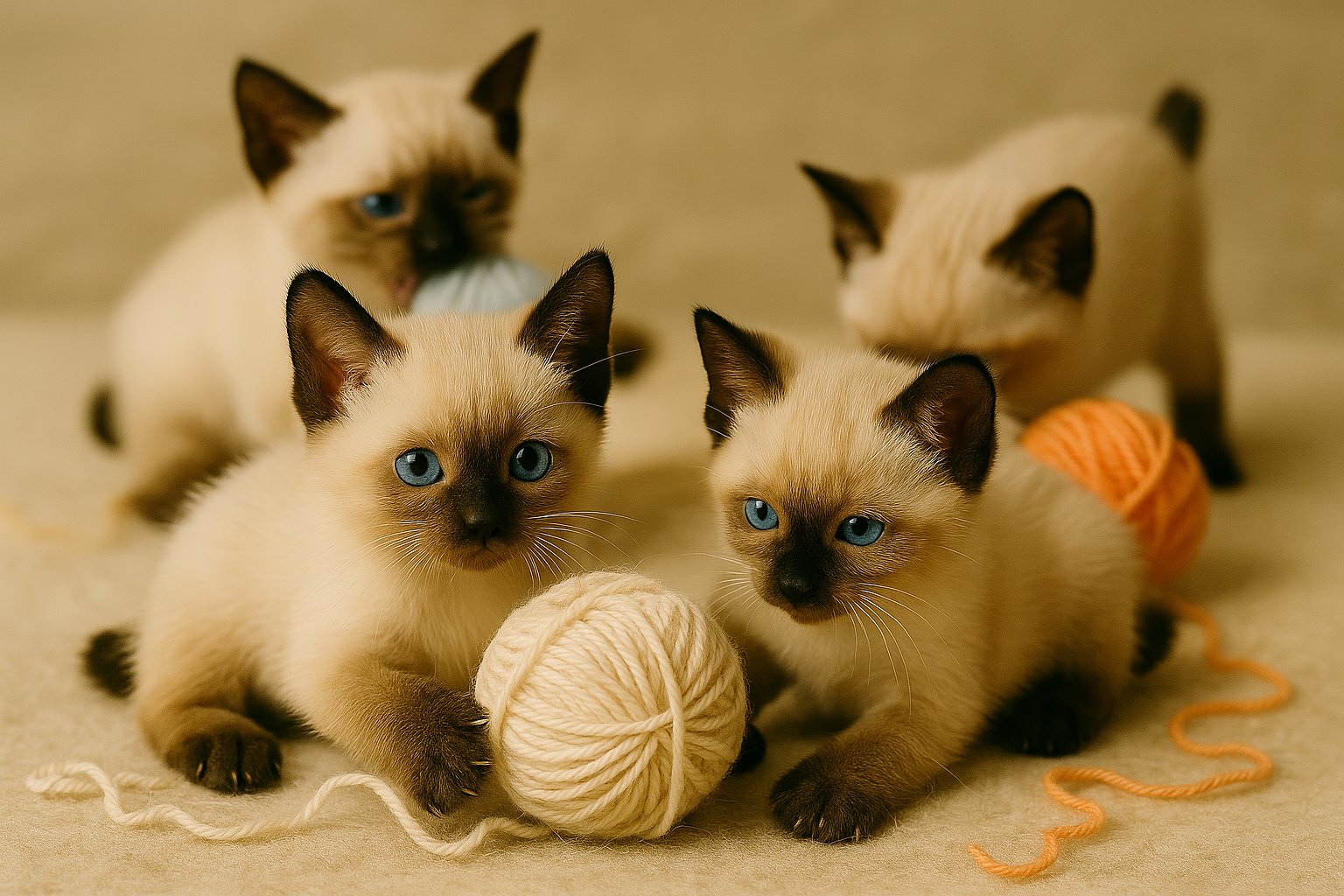
The Skif Toy Bob is a miniaturized breed with full functionality, so selecting a kitten is not about finding the “smallest” one. You need the “most harmonious”: a sturdy body, confident movement, a lively gaze, and a natural short tail without any signs of pain.
Refer to the club’s documents and a transparent breeding program with a low inbreeding coefficient.
Tail. Ensure that the bobtail is natural-short, made of broken vertebrae, without signs of injury. Gently palpate it; the tail should be pain-free. Ask the breeder for photos of the ancestors or descriptions of tails in the pedigree.
Size and condition. At 12 weeks, a kitten of this breed often weighs between 800-1100 grams and appears “well-fed,” not thin. Excessive miniaturization at the expense of strength is a worrying sign; inquire about the weight gain curve.
Teeth and bite. Examine the bite and ask how the kitten is trained to have its teeth cleaned. Light crowding is acceptable, but there should be no damage to the mucosa.
Documents and tests. Look for a WCF pedigree or TICA registration, a veterinary passport, age-appropriate vaccinations, litter registration, and a return agreement. Ask about breeding plans: how they maintain genetic diversity and which catteries they collaborate with.Behavior and socialization. The kitten should be friendly, playful, using the litter box and scratching post, and not scared of household sounds. Request to see how it reacts to a carrier and a brief handling. With a pedigree-find the best pet at Zounika.
Health and Diseases
Clean lines represent a transparent pedigree and a conscious selection of pairs considering their relatedness, aimed at maintaining the breed type without compromising health.
Inbreeding-close relative matings-increases the risk of fixating hidden defects; in our work, we strive for moderate inbreeding coefficient values and regular “blood refreshing.”
The practice for breeders is simple: exchanging sires between kennels, planning breedings with phenotype and health in mind, and tracking offspring until adulthood.
Dental nuances in miniatures. Crowding of teeth without hygiene leads to tartar, gingivitis, periodontitis, tooth mobility, and in severe cases, oronasal fistulas. Prevention includes daily express cleaning, professional sanitation as needed, abrasive-effect foods and treats, and veterinary check-ups every 6-12 months.
Tail. A natural bobtail is not an injury, and nothing should be “corrected.” If there is pain in the tail or an unusual posture, perform an X-ray to rule out old injuries or infections.
Weight and metabolism. Any weight gain in a mini breed is noticeable-monitor the body condition score (BCS), providing a calorie allowance based on age and activity.Anesthesia and procedures. Small size requires precise medication dosage and thermal support during and after procedures-heated bedding, temperature monitoring.Basic prevention. Vaccination according to schedule, parasite treatment, microchipping, a first-aid kit at home and during trips. For stressed cats, prepare a visit plan: carrier-home, pheromones in the car, appointments during quiet hours, and a short stay if needed.
Содержание
-
1. Описание породы
-
2. Внешний вид
- 2.1 Голова
- 2.2 Морда
- 2.3 Уши
- 2.4 Глаза
- 2.5 Зубы
- 2.6 Корпус
- 2.7 Конечности
- 2.8 Хвост
- 2.9 Шерсть
- 2.10 Окрас
-
3. Характер
-
4. Содержание и уход
-
5. Дрессировка и обучение
-
6. Как выбрать котенка
-
7. Здоровье и болезни






Comments
Only registered users can leave reviews.
Enter