
Russian Blue cat





Breed Description
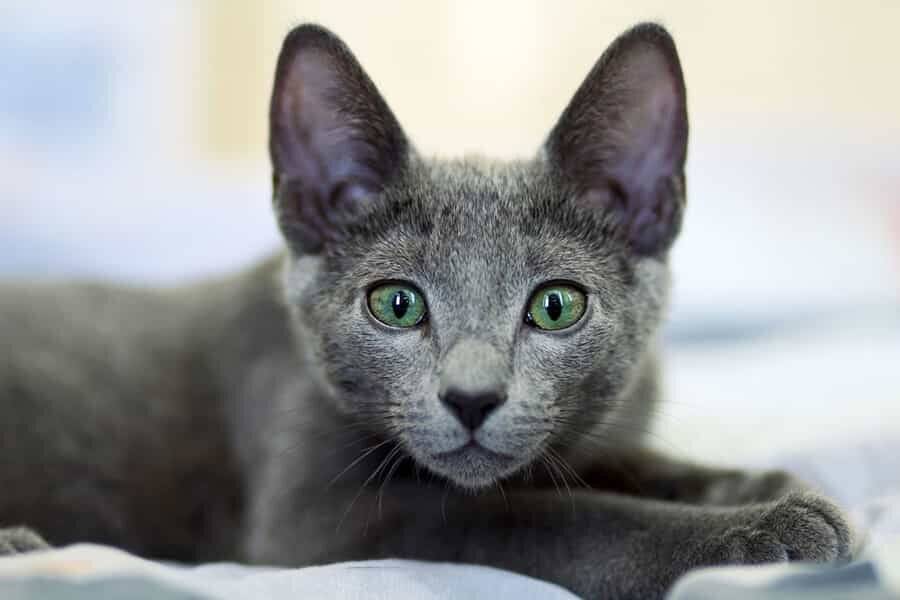
Just as unusual as they are, their true origins are shrouded in mystery. We are talking about Russian Blue cats, which possess not only an extraordinary color and texture of the coat but also a special magnetism in their gaze, a proud posture, and an independent character. While there are countless theories about their emergence in the world of cat lovers, the vast majority of these hypotheses are merely beautiful fabrications.
The roots of the breed undoubtedly lie in Arkhangelsk. However, similar mousers were also found in the southern part of Europe, though the Arkhangelsk ones had a unique double coat and somewhat different build. According to some sources, such cats were kept at the Court, highly valued for their hunting qualities and independent nature. It is said that Empress Catherine II gifted several Arkhangelsk cats for breeding to English envoys, which is essentially where the breed’s formation began. Other reports suggest that sailors of trading ships brought them to Europe and England.
Nonetheless, it is the Foggy Albion that played a pivotal role in the deliberate development of the Russian Blue. Miss Cox, who first saw our cat in the late 18th century, decided to initiate what was then a new breed. The first representative won numerous awards at the exhibition and was duly appreciated by the public. Later, blue cats from Oslo and another representative from Russia arrived in London. The gradual introduction of new bloodlines was documented in the breeding book, accompanied by photographs that have survived to this day. Thanks to these documents, we can trace the development of the Russian Blue cat, which at that time was presented as the Arkhangelsk Blue.
This was in 1871. At the time, it was said: “Arrived from Arkhangelsk. Incredibly beautiful and fluffy. The coat resembles that of a rabbit.” Nearly 20 years later, in 1889, Harrison Weir developed the first breed standard, which specified a yellow color for the cornea.
In 1903, Francis Simpson published “The Book of the Cat,” which clearly distinguished between two separate breeds: the British and Russian Blue. This work especially noted the temperament of the Russians and their well-groomed appearance.
At the same time, it is noteworthy that in different documents, the same cat could be recorded either as a Russian Blue cat or as a British one.The year 1928 added the green cornea to the standard, and only seven years later did the breeding book of Great Britain classify our Russian Blue cat as an “foreign type.”Unfortunately, purchasing a kitten from a cattery became increasingly difficult during that time, as our cats gradually lost their popularity. However, enthusiasts did not lose hope and continued their meticulous work to improve its key characteristics.Soon, World War II broke out, which nearly wiped out the gene pool not only of the described breed but also of all other breeds. To revive the population, specialists decided to introduce Siamese genes. Today, the Russian Blue cat is among the most popular and expensive breeds in the world, occupying prominent places on these lists. A kitten from a cattery can cost between 50,000 and 60,000 rubles and more for a show-class representative.
Appearance
It is important to note that there are currently three types of Russian Blue cats: English, American, and Scandinavian. All three varieties are practically indistinguishable to the average person. The differences between them are only noticeable to true connoisseurs of the breed.
For example, the “English” ones are somewhat bulkier, and their temperament is more tranquil. The “Scandinavians” are very similar to the “English,” but they do differ slightly in color, ear shape, and eye slant. The “Americans,” on the other hand, are noticeably smaller and longer, reflecting their Eastern genetics. However, the characteristic “smile” of this type of Russian Blue cat is very pronounced.
Due to these differences, the breed standards also vary in certain requirements.
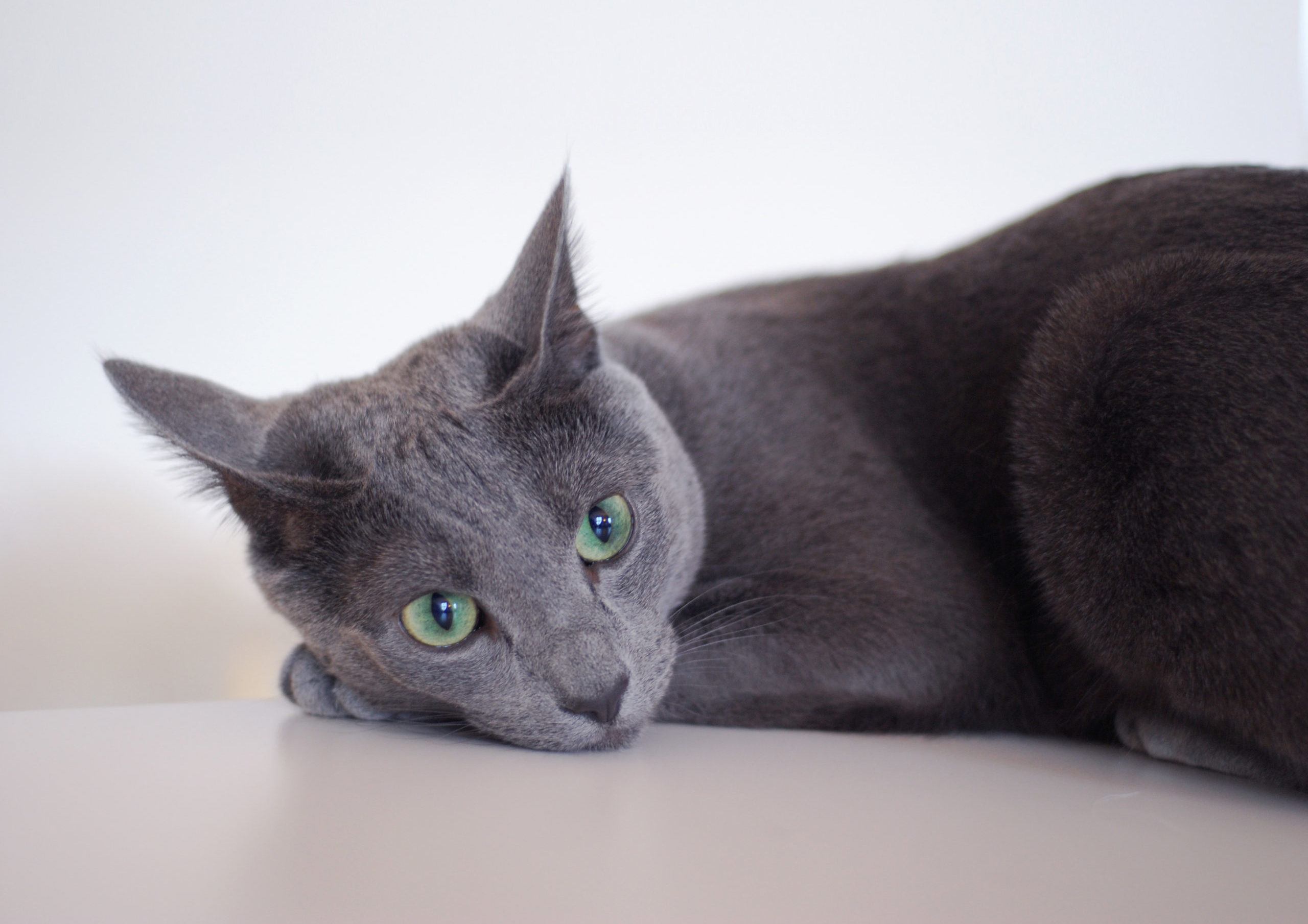
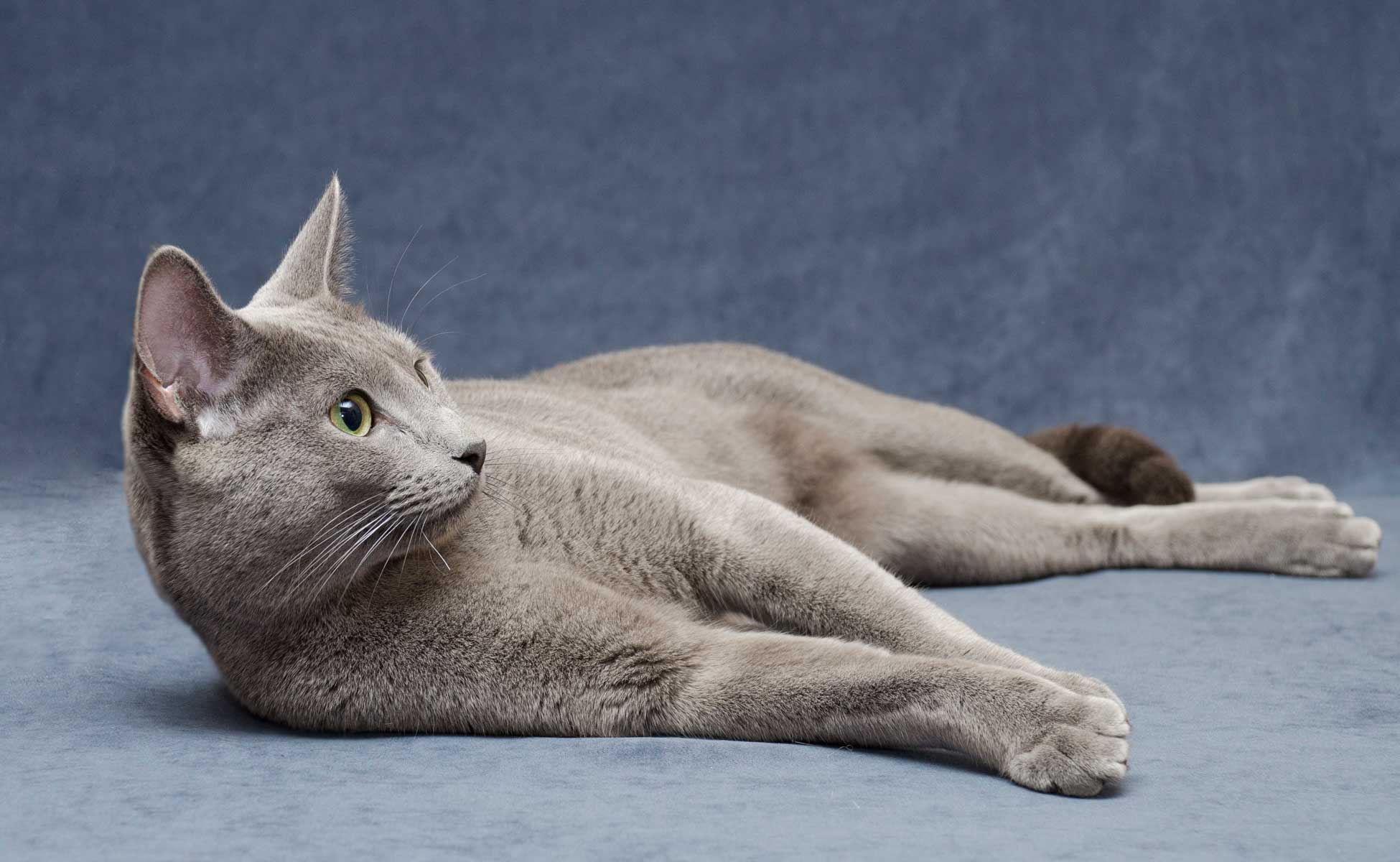
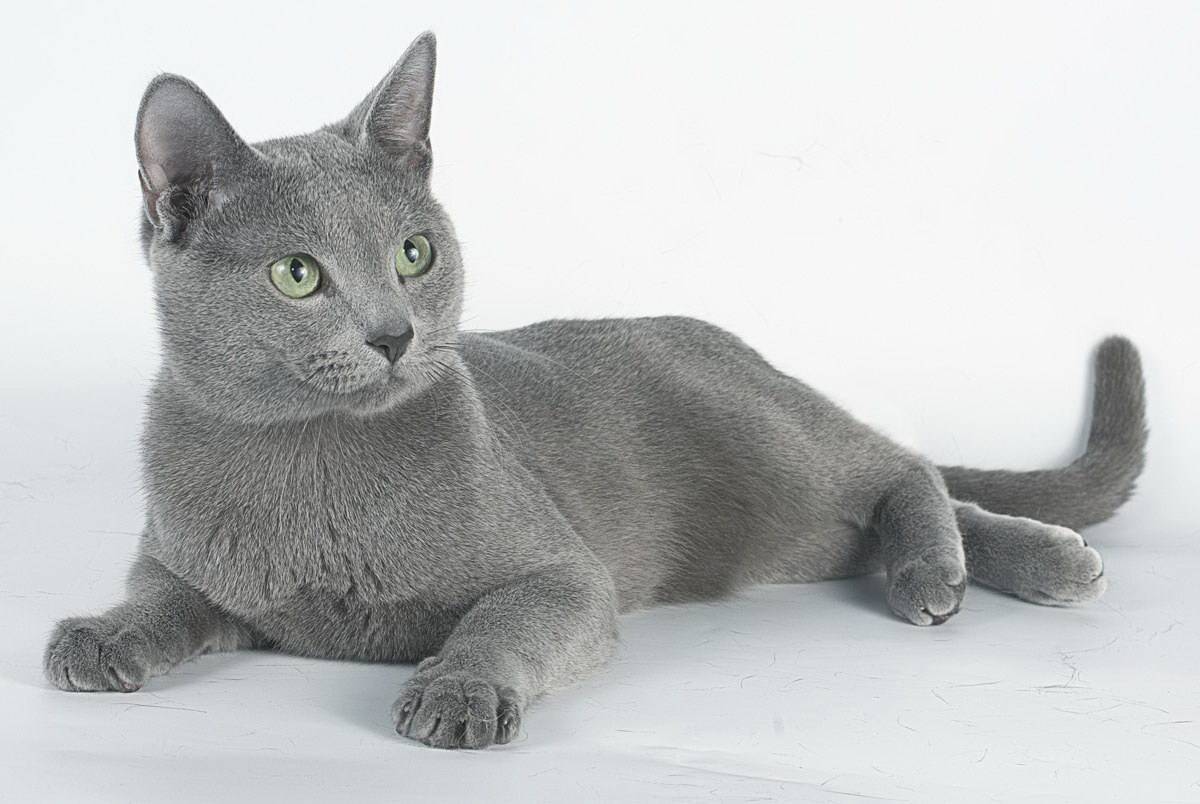
In general terms, the Russian Blue is a graceful cat with the gait of a ballerina, refined manners, a pleasant timbre, and distinctive fur. An adult animal’s height at the withers ranges from 20 to 25 cm, and its weight varies between 3 to 6 kg. Its lifespan is typically 15 to 20 years. The short double coat is very pleasant to the touch, and its gaze has almost a mystical allure. The breed’s popularity worldwide is very high and continues to grow. Additionally, at Zoonika, there is an excellent selection of catteries in Russia where one can buy a purebred Russian Blue kitten.


Отличительные черты

Голова

Морда

Уши

Глаза

Зубы

Корпус

Конечности

Хвост

Шерсть

Окрас
Character
It is important to remember that each cat has its own individuality, and its character can vary depending on its age, socialization, environment, and interaction with its owner. However, many Russian Blue cats share common personality traits that make this breed special and appealing.
Some owners of Russian Blue cats note that their pets love affection and attention. The cat always seeks to be close to its owner and expresses its love and attachment through gentle purring and soft touches. It also shows interest in life and always finds time for play or exploring new places. In other words, nothing happens in the house without its attention.
Other owners point out that their Russian Blue cat displays tenderness and care not only for its owners but also for other pets in the home. It easily finds a common language with other animals, creating harmonious relationships and playing with them. Of course, it remains a predator, and this affection does not extend to rodents and birds, even if they were there before you decided to adopt a kitten from a cattery.
The character of the Russian Blue cat makes it a wonderful companion and pet. However, it’s important to remember that each cat is unique, and variations in personality are possible. When choosing a kitten from a cattery, it’s essential to pay attention to its behavior and interaction to find the perfect match that meets your expectations and needs.
In most cases, representatives of the breed display high tolerance and calmness when interacting with children. They can be patient and playful with their young owners, allowing them to cuddle, pet, or play with them.
The Russian Blue cat usually greets guests calmly and does not show aggression or nervousness. It may come over to say hello and even allow people to scratch behind its ears, showing its openness and friendliness.During thunderstorms or other external noises, it typically demonstrates calm behavior. It does not panic or react strongly to loud sounds or unexpected noises, making it ideal for urban living.The Russian Blue cat is known for its tendency to relax and find comfort in the company of its owners. It can spend time peacefully in their arms or on their lap, enjoying closeness and affection. This characteristic makes the breed an ideal companion for elderly owners who value tranquility.
Питомники
Выбор питомника по городу, породе и отзывам

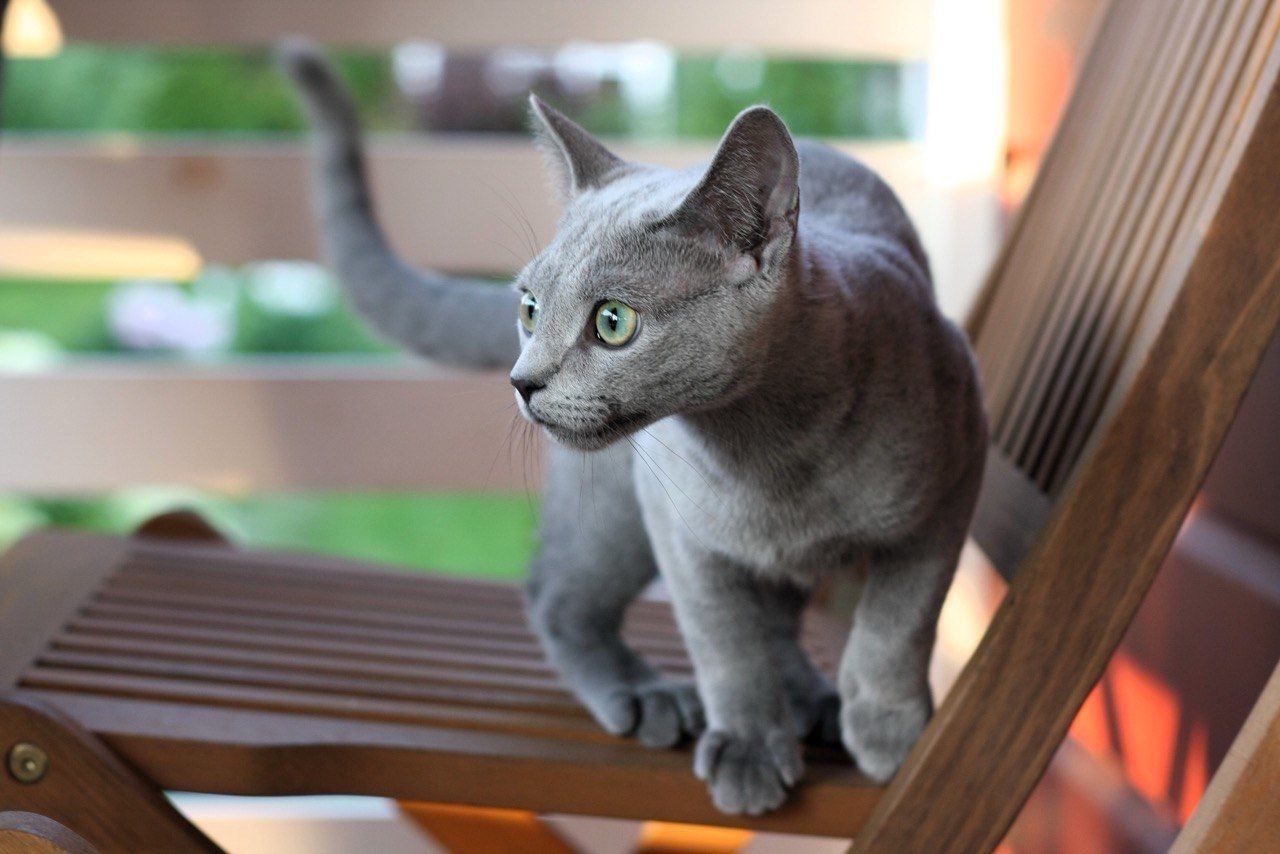
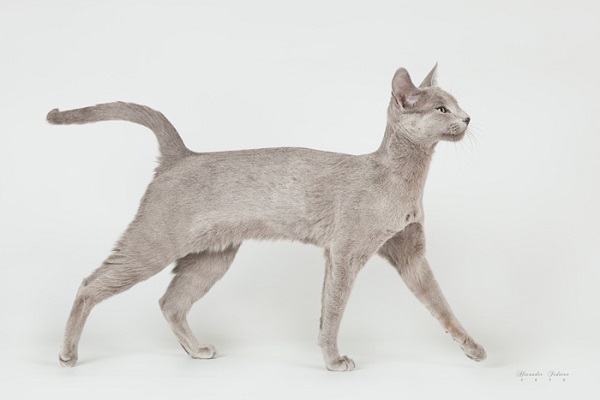
Unique coloration
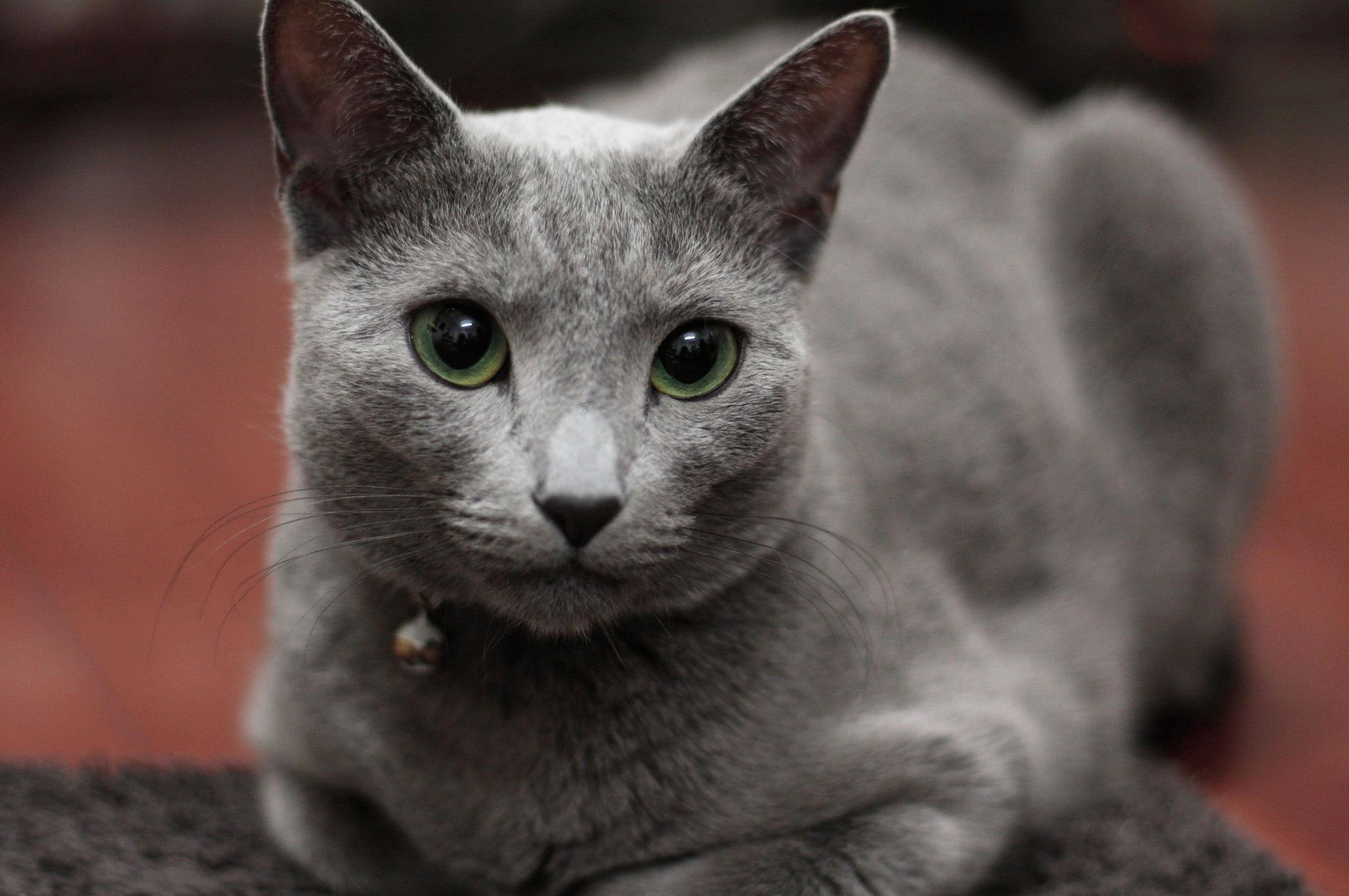
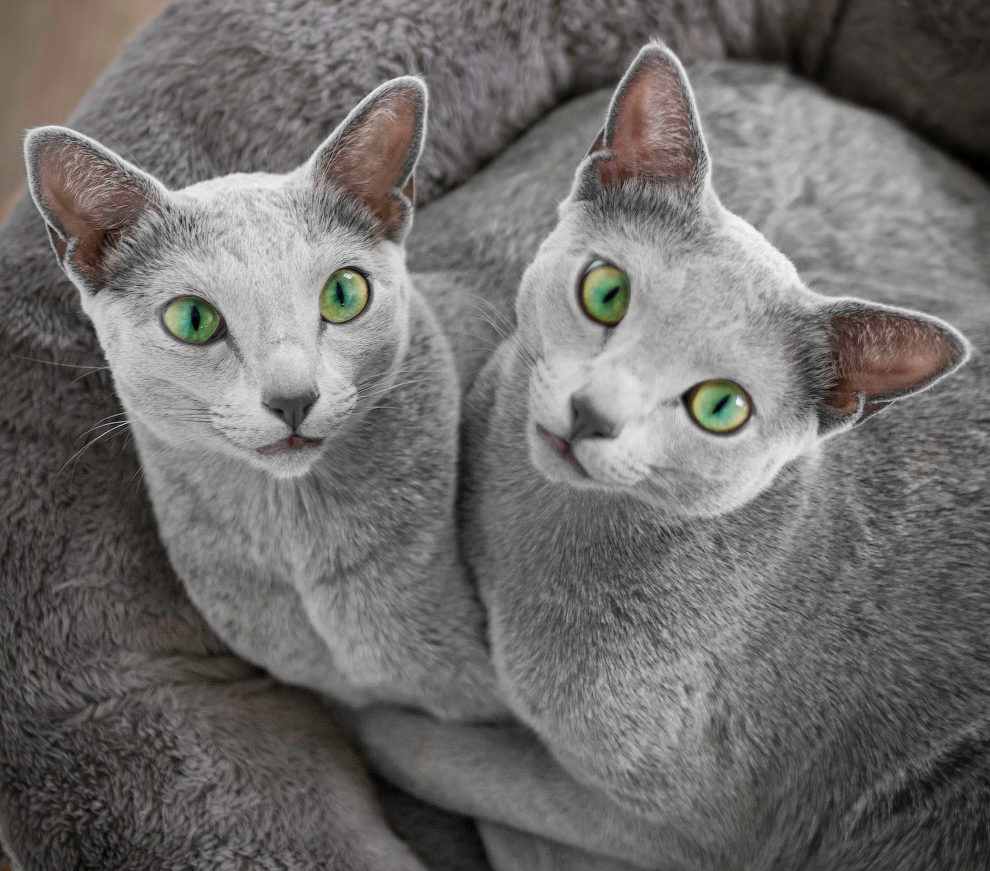
The Russian Blue cat is distinguished by its unique coloration, which is the result of a genetic mutation. Its coat has a silvery or bluish tint with deep blue eyes. This gives it a special elegance and tenderness. Additionally, it has soft and fluffy fur, which makes it even more appealing.Care and Maintenance
The Russian Blue cat requires care and attention for a fulfilling life. Its maintenance includes a proper diet and regular grooming of its fur, claws, eyes, and ears. Here are some basic tips for caring for a Russian Blue cat and creating its diet.
Diet. The need for high-quality animal proteins, fats, carbohydrates, vitamins, and minerals in a Russian Blue cat is well-justified. It is recommended to choose high-quality super-premium commercial feeds or holistic options. Ideally, select food specifically formulated for this breed, as it already contains all necessary vitamin supplements and is tailored to age and other individual characteristics (neutering, sterilization, age-related issues, digestive problems, and more). This means your pet won’t require additional vitamins. While the cost of such food can be high, it is justified and ultimately positive for your budget, saving time and simplifying care. Pets also respond enthusiastically to this nutrition. Some owners prefer to prepare home-cooked meals from fresh, natural ingredients. In this case, remember that the diet should contain sufficient meat, poultry, or fish to meet their protein needs. However, it is better to visit a reputable veterinary clinic for specific recommendations on creating an optimal diet.
Fur care for the Russian Blue cat is essential. Given its dense coat that requires regular brushing, this helps remove dead hairs and prevents matting. Use combs or brushes with soft bristles specifically designed for cats. The frequency of grooming should be tailored to the individual cat, but during shedding periods, it should be done every other day. This procedure also has a calming effect and fosters a bond between the owner and the pet.
Claw trimming. Regularly check the length and condition of your cat’s claws. If necessary, carefully trim them with specialized clippers. Do not cut more than one-third of the claw length. Exercise caution to avoid damaging the blood vessels and nerves inside the claw. Inexperienced owners may find it beneficial to visit a pet salon, where professional groomers can demonstrate the proper technique. Additionally, ensure your cat has access to a scratching post or wooden column to fulfill its scratching needs.
Eye and ear care. Regularly clean the cat’s eyes of any discharge using a soft cotton pad or a piece of gauze. Check the ears for any secretions, inflammation, or dirt and clean them with a special solution and cotton ball. Avoid using cotton swabs as they can easily damage the eardrum. This procedure should be done about once a week.
Regular veterinary visits. Schedule regular check-ups with the veterinarian to assess your cat’s overall health, including its coat, eyes, ears, and claws. If you choose a kitten from a breeder, veterinarian visits should be systematic, as they help detect and treat any potential health issues.Remember that each cat is unique, and recommendations regarding diet and care should be adapted to its individual needs. Regularly monitor your Russian Blue cat’s condition and weight, and consult with your veterinarian for additional advice. Provide your cat with love and care, and it will bring you joy and vitality throughout its life.

Easily trainable
This breed of cat is known for its exceptional trainability, and if the owners desire, their cat can be taught countless tricks and commands. However, the Russian Blue cat possesses other qualities as well- a high level of intelligence and erudition, making it an ideal partner for trainers. The owner won’t need to repeat their requests multiple times, and even the use of treats as a reward can often be forgotten. After all, the Russian Blue cat always strives for perfection and growth.Training and Education
Training a Russian Blue cat is an important step in its upbringing and helps create a harmonious bond between the cat and its owner. Here are some specific recommendations and details to assist you in this process.
Start at an early age. It’s best to begin training your Russian Blue cat when it is still a kitten. At this age, the cat is more flexible and receptive to learning.
Use positive reinforcement. Pets respond better to praise, affection, and treats as motivation. Be generous with compliments and rewards when your cat performs the desired actions.
Training should be step-by-step. Break training into small steps and gradually increase the complexity of tasks. For example, first teach the cat to sit on command, then ask it to sit and wait, and then add other commands like “paw” or “lie down.”
Practice in a calm environment. Avoid training with the television or music on, or with distractions present, as this will make it hard for the cat to concentrate. Create a quiet and peaceful setting to help it better understand instructions and commands.
Be consistent. It’s important to stick to one training system and use the same commands and gestures. The Russian Blue cat, like all cats, thrives on structure and predictability.Learn to read signals. Pay attention to your pet’s body language and reactions during training. If it shows signs of stress or confusion, take a break and resume training later.Play and have fun. Training shouldn’t be boring or stressful for you or your cat. Use games and toys to maintain interest and a positive mood during practice.Be patient. Every animal has its own unique learning pace. Some may grasp commands quickly, while others may take a bit longer. It’s important to be patient and give the necessary time to learn the required skills.Training is an engaging process that helps strengthen the bond between you and your pet. By following these recommendations and approaching training with love and understanding, you will create a happy and well-mannered cat that will be a loyal companion for many years. Buying a kitten from a breeder is an ideal step to begin this journey.
Glutton
Please provide the text you'd like me to translate.How to Choose a Kitten
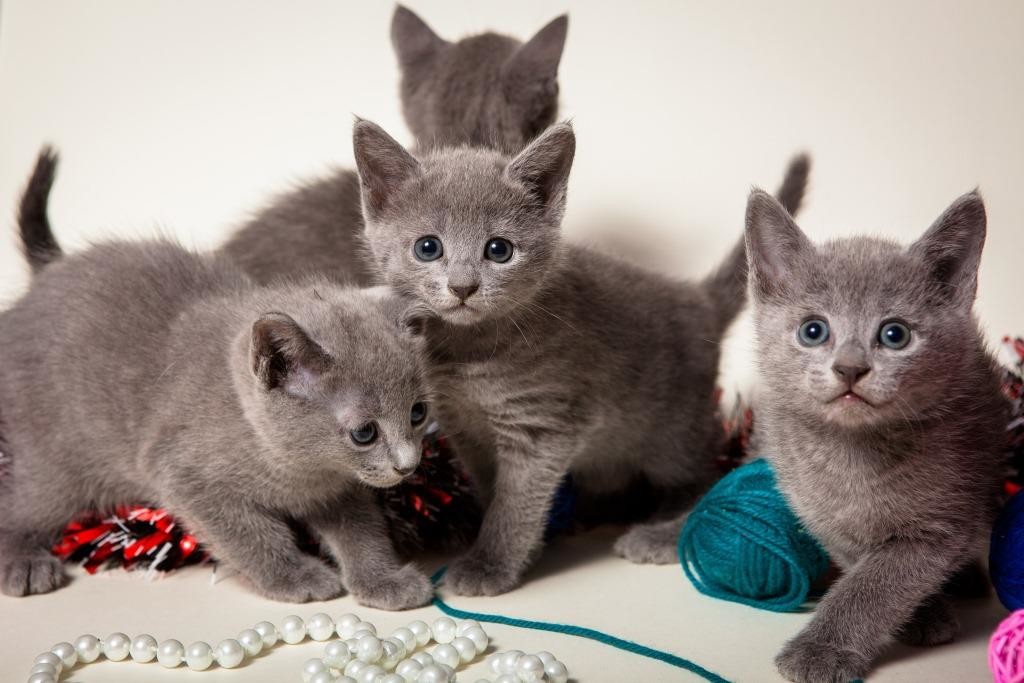
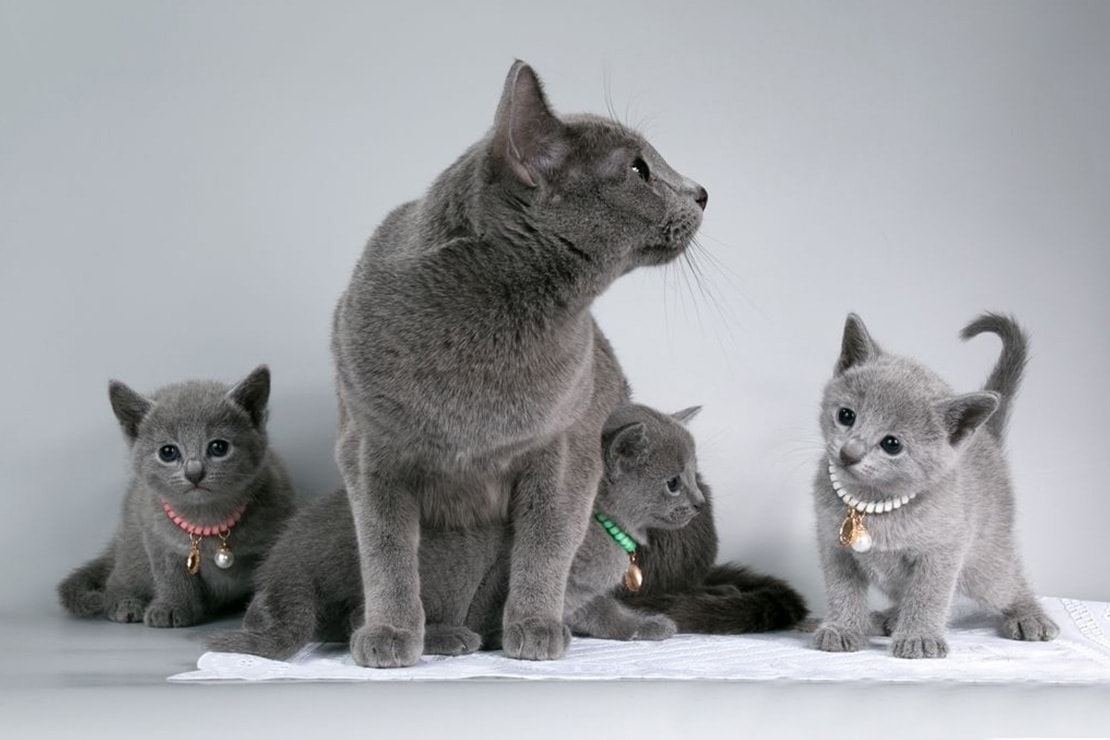
When purchasing a Russian Blue kitten, it is recommended to focus on breeders that specialize in this breed. Buying a kitten from a reputable source is a reliable way to obtain a healthy and purebred pet. Breeders select parents for breeding based on their breed characteristics, health, and good temperament. Typically, they pay great attention to the socialization and early training of the kittens, which positively affects the development of their personality.
Choosing a kitten from a breeder is important because it allows you to assess its lineage, learn about the health status of the parents, and obtain necessary information about the breed’s genetic traits. This also provides an opportunity to receive recommendations and advice from breeders who have extensive experience with Russian Blue cats. They can help you select a kitten that meets your preferences and expectations.
It is important to note that such a purchase requires certain expenses, as the pedigree of purebred cats is highly valued. However, these costs are fully justified by the quality of the appearance of the acquired pet. Remember that buying a kitten from a breeder is not just about acquiring an animal, but also about supporting and promoting professional breeding and the preservation of the Russian Blue breed.
Health and Diseases
The Russian Blue cat not only has an exquisite appearance but also generally good health. However, like any animal, the breed is susceptible to certain diseases and requires care for its well-being.
One of the most common issues faced by the Russian Blue cat is polycystic kidney disease. This genetic condition is characterized by the formation of cysts in the kidneys. In some cases, it can progress and lead to chronic kidney failure. To prevent and monitor this condition, regular veterinary check-ups and testing are recommended. When you decide to choose a kitten from a breeder, request test results for polycystic kidney disease from the owners.
It is also important to be aware of ailments related to the respiratory system, such as asthma and pneumonia. The Russian Blue cat has a hereditary predisposition to allergic reactions and respiratory problems, so it’s essential to ensure clean air and timely treatment when necessary.
Another common issue within the breed is intervertebral disc herniation. This condition is often related to inheritance or injuries and can cause pain and mobility issues. It is important to seek veterinary assistance if you suspect this problem.
Regular visits to the veterinarian, including preventive check-ups and vaccinations, will help prevent other diseases.
Содержание
-
1. Описание породы
-
2. Внешний вид
- 2.1 Голова
- 2.2 Морда
- 2.3 Уши
- 2.4 Глаза
- 2.5 Зубы
- 2.6 Корпус
- 2.7 Конечности
- 2.8 Хвост
- 2.9 Шерсть
- 2.10 Окрас
-
3. Характер
-
4. Содержание и уход
-
5. Дрессировка и обучение
-
6. Как выбрать котенка
-
7. Здоровье и болезни







Comments
Only registered users can leave reviews.
Enter