
Pixiebob





Description of the Pixiebob Breed
The Pixiebob is a unique breed of cat that attracts attention with its wild appearance and friendly nature. These cats look like miniature lynxes, yet remain affectionate domestic pets. The breed was developed in the USA in the 1980s, and since then, Pixiebobs have gained popularity among cat lovers seeking an exotic yet affectionate companion. The Pixiebob breed was created in the 1980s in the USA through the efforts of Bridget Banker, who wanted to produce a cat with the appearance of a wild animal but the temperament of a domestic pet. The breed’s history began with an unusual cat with a short tail found in the state of Washington, which Banker believed was a descendant of a wild lynx and a domestic cat. She decided to create a new breed that preserved the wild appearance while ensuring a friendly nature. Bridget Banker and other enthusiasts began selective breeding using cats with short tails, spotted coats, and large builds. Thus, the first Pixiebob was officially registered in 1986, and in 1995 the breed received full recognition from The International Cat Association (TICA). Today, the Pixiebob is known for its unique lynx-like appearance
Appearance of the Pixiebob
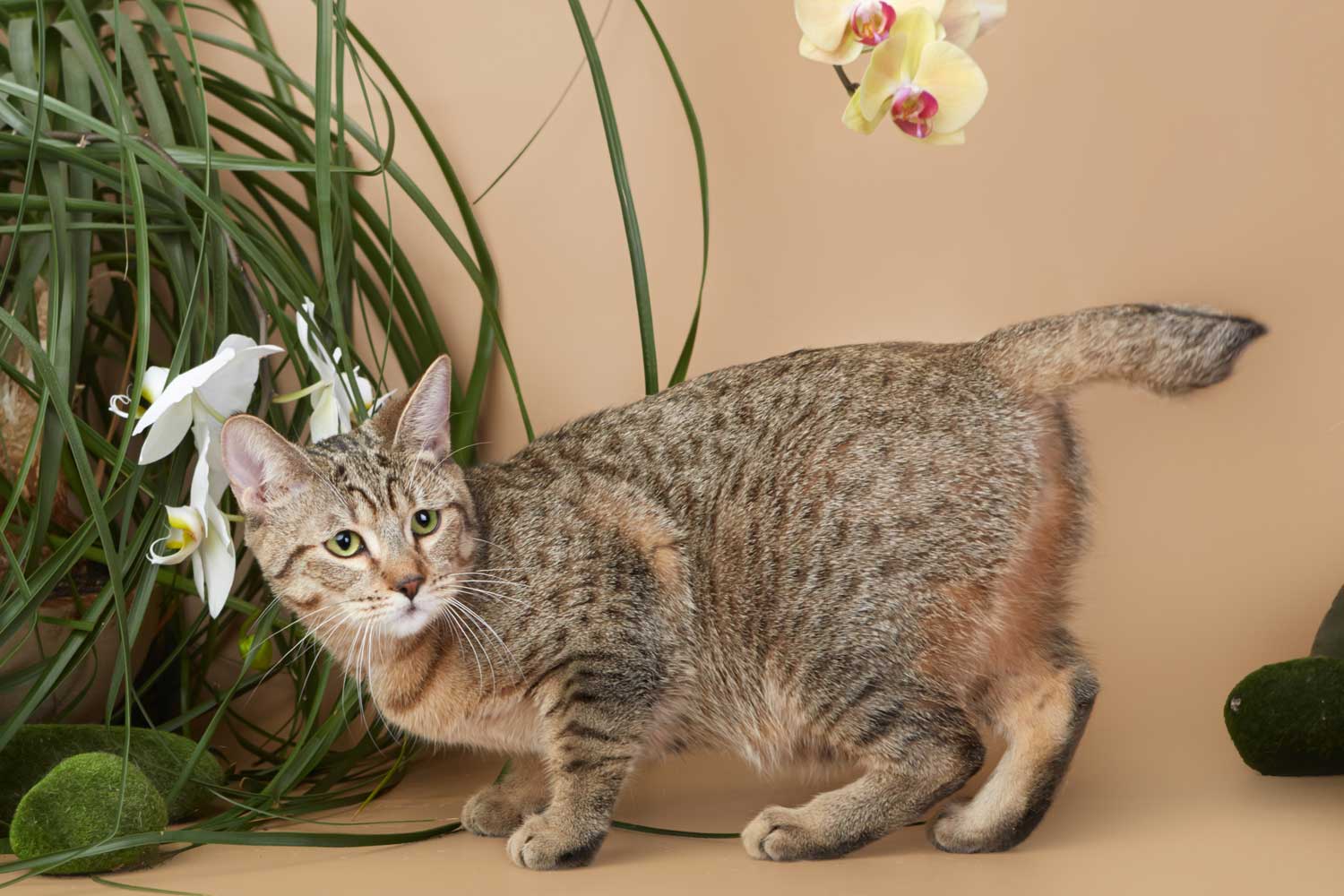
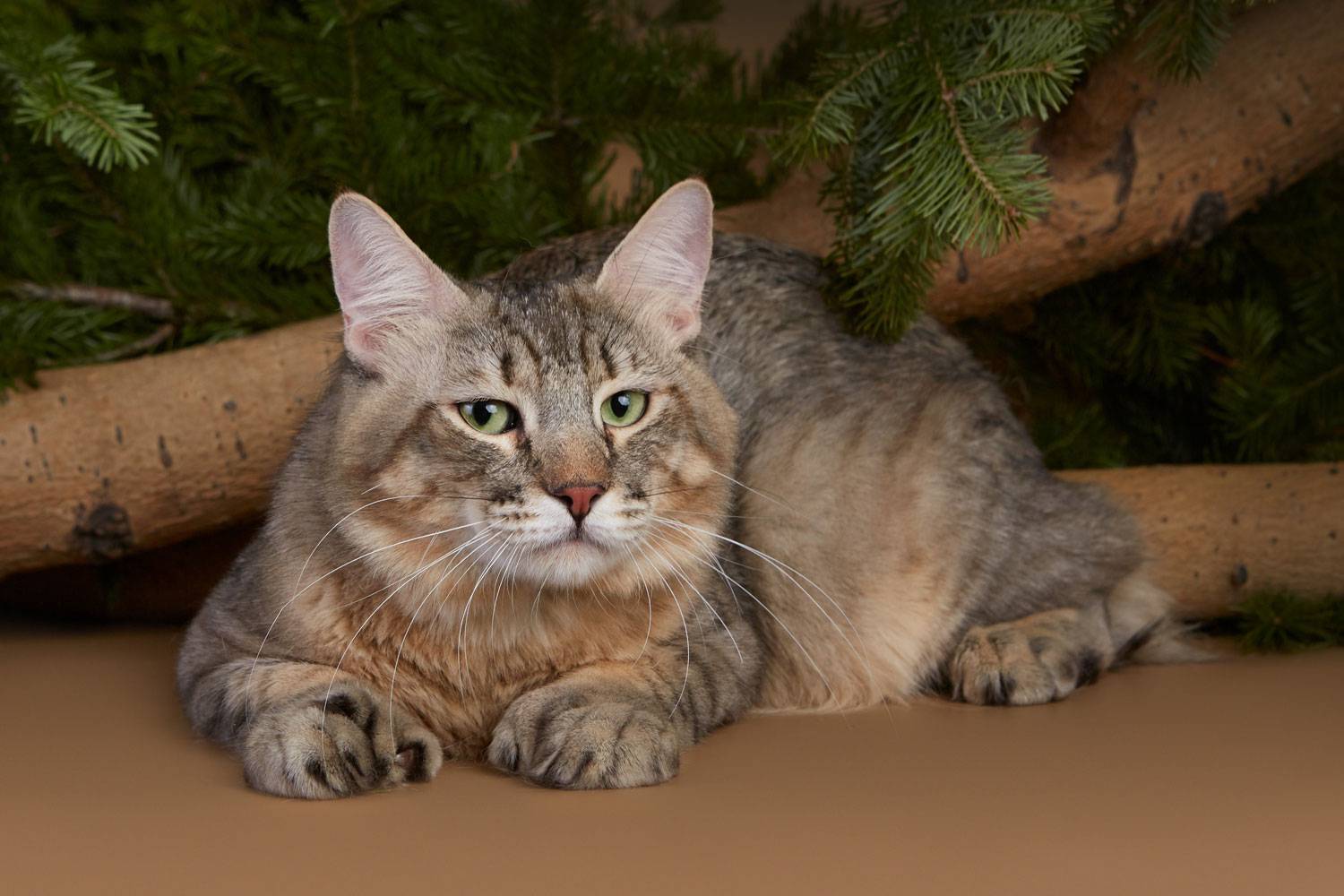
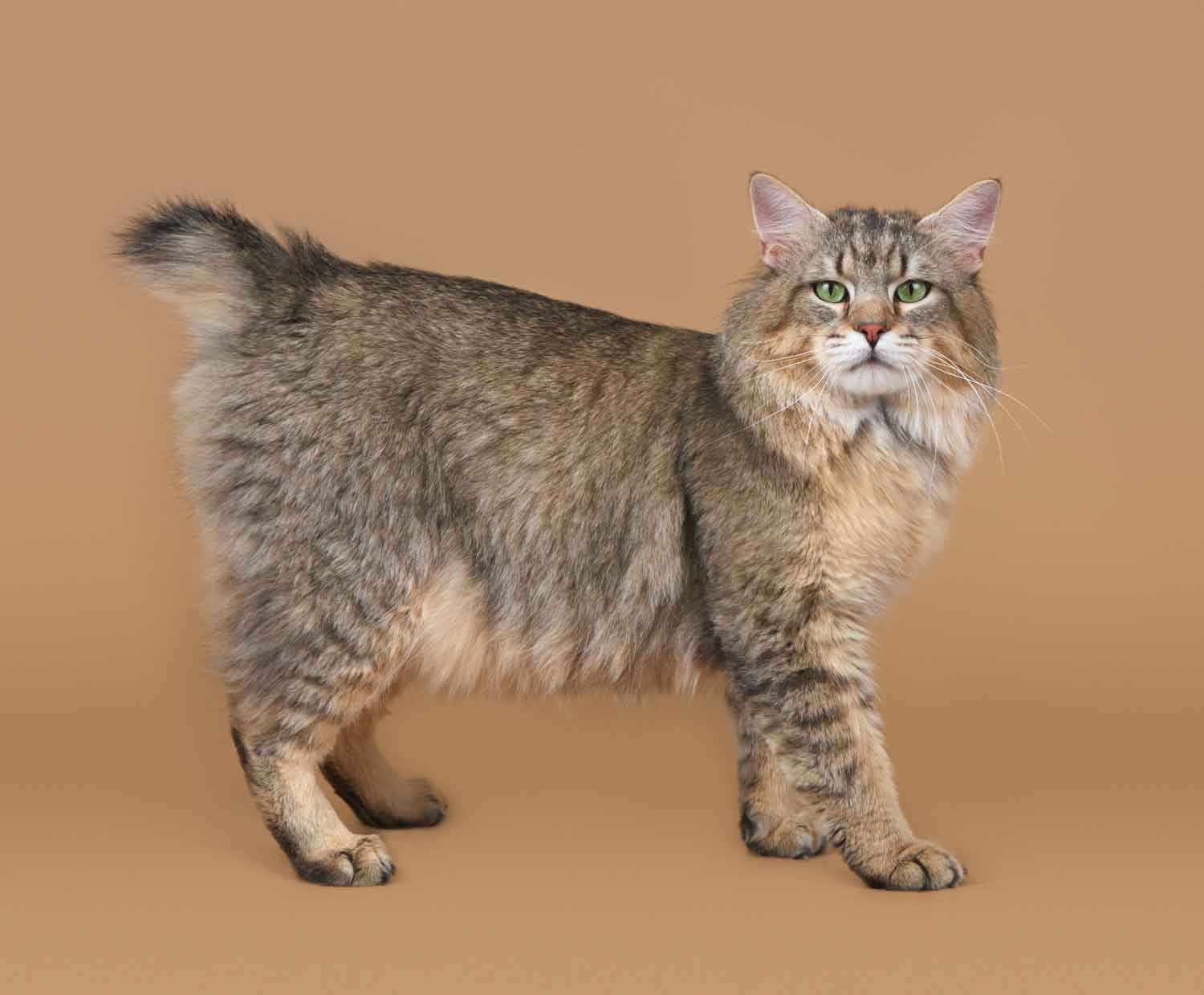
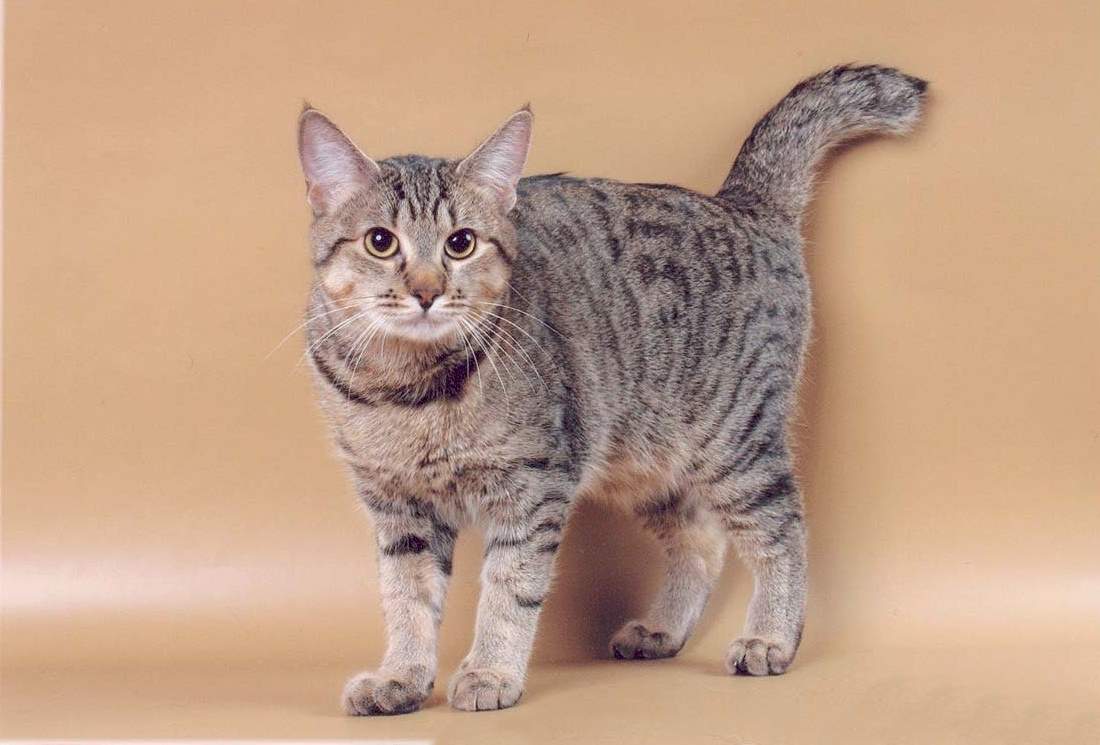
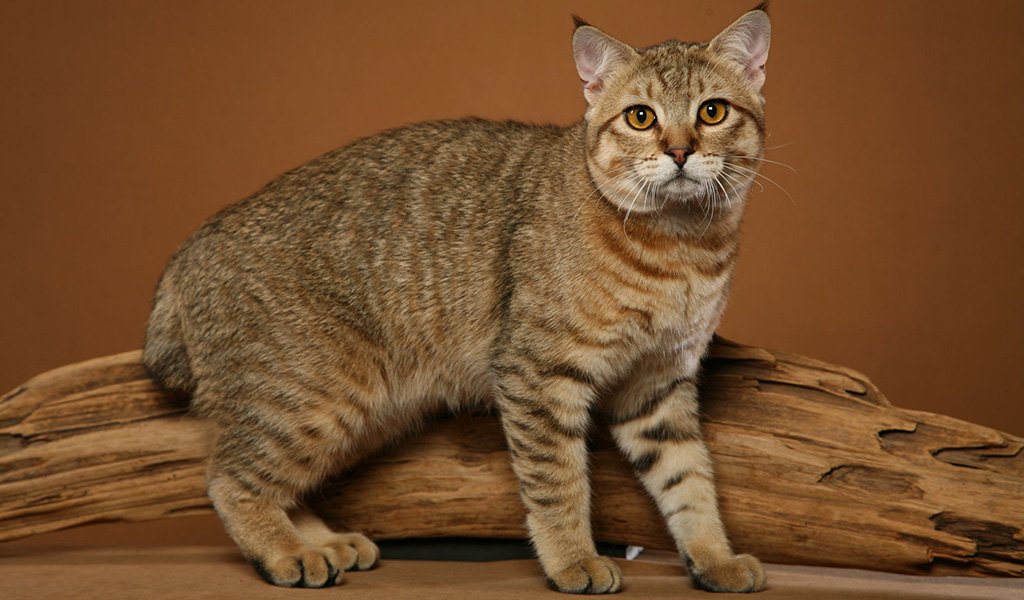
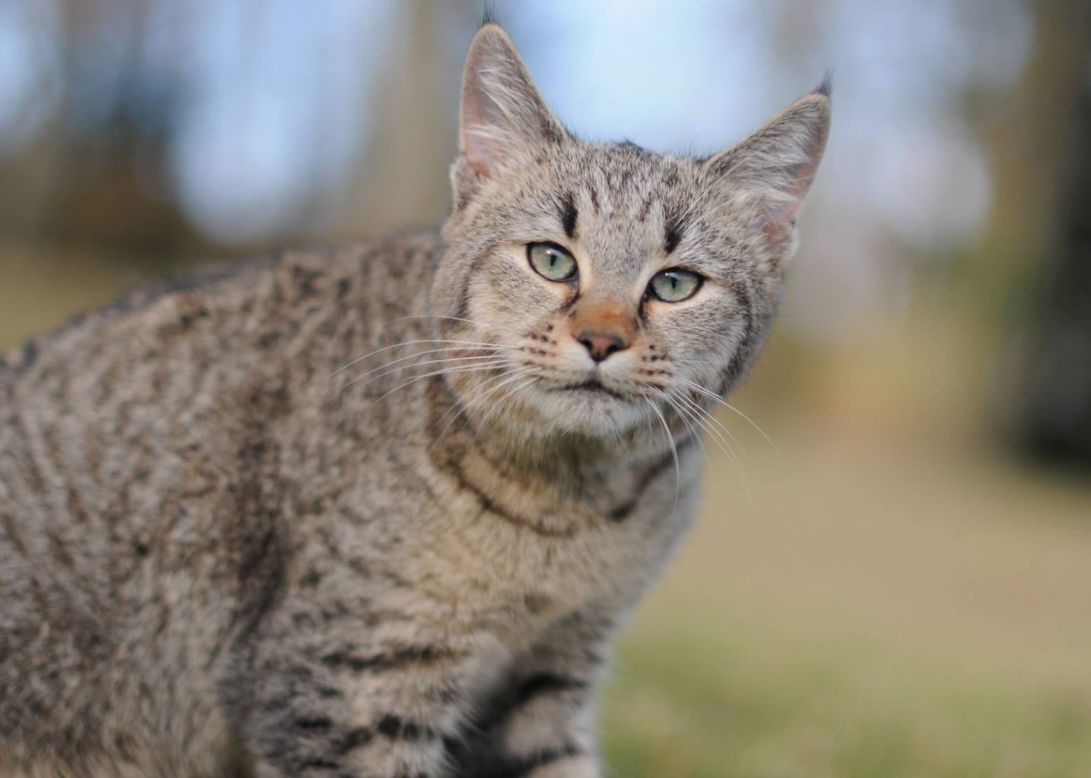
The Pixiebob is a unique breed of cat with an appearance reminiscent of a wild lynx. These cats combine traits of both wild and domestic pets, making them unusual and appealing to lovers of exotic breeds. The appearance of the Pixiebob emphasizes strength and elegance, creating the impression of a miniature wild predator. However, despite their “wild” look, these cats remain affectionate and friendly companions.
One of the most striking features of the Pixiebob is its large and sturdy build. These cats have well-developed muscles and a robust skeleton, making them strong and resilient. An adult Pixiebob can weigh between 4 to 8 kilograms, with males usually being larger and bulkier than females. Despite their impressive size, Pixiebobs maintain flexibility and grace, allowing them to stay active and playful. The body is of medium length, with a broad chest and strong back, adding to their solid appearance.
The head of the Pixiebob also highlights its resemblance to the wild lynx. It is large, pear-shaped, with a wide forehead and strong chin. With smooth lines and prominent cheekbones, the face appears powerful and expressive, making the Pixiebob especially attractive to those seeking a cat with a “characteristic” face. The whisker pads are well-defined, adding extra width to the muzzle. A broad nose, often with a slight curve, completes the image of a wild predator, making it even more recognizable.
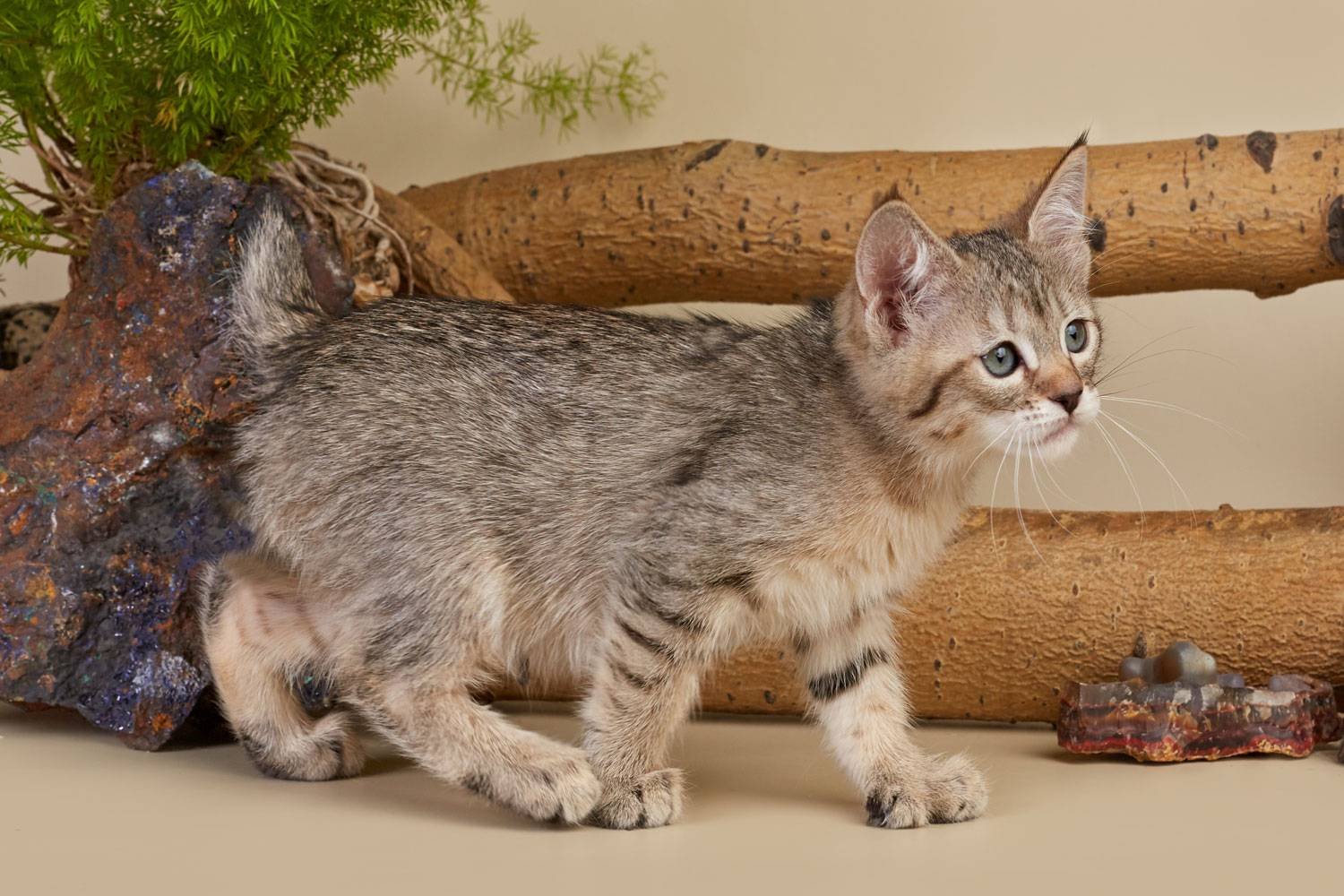
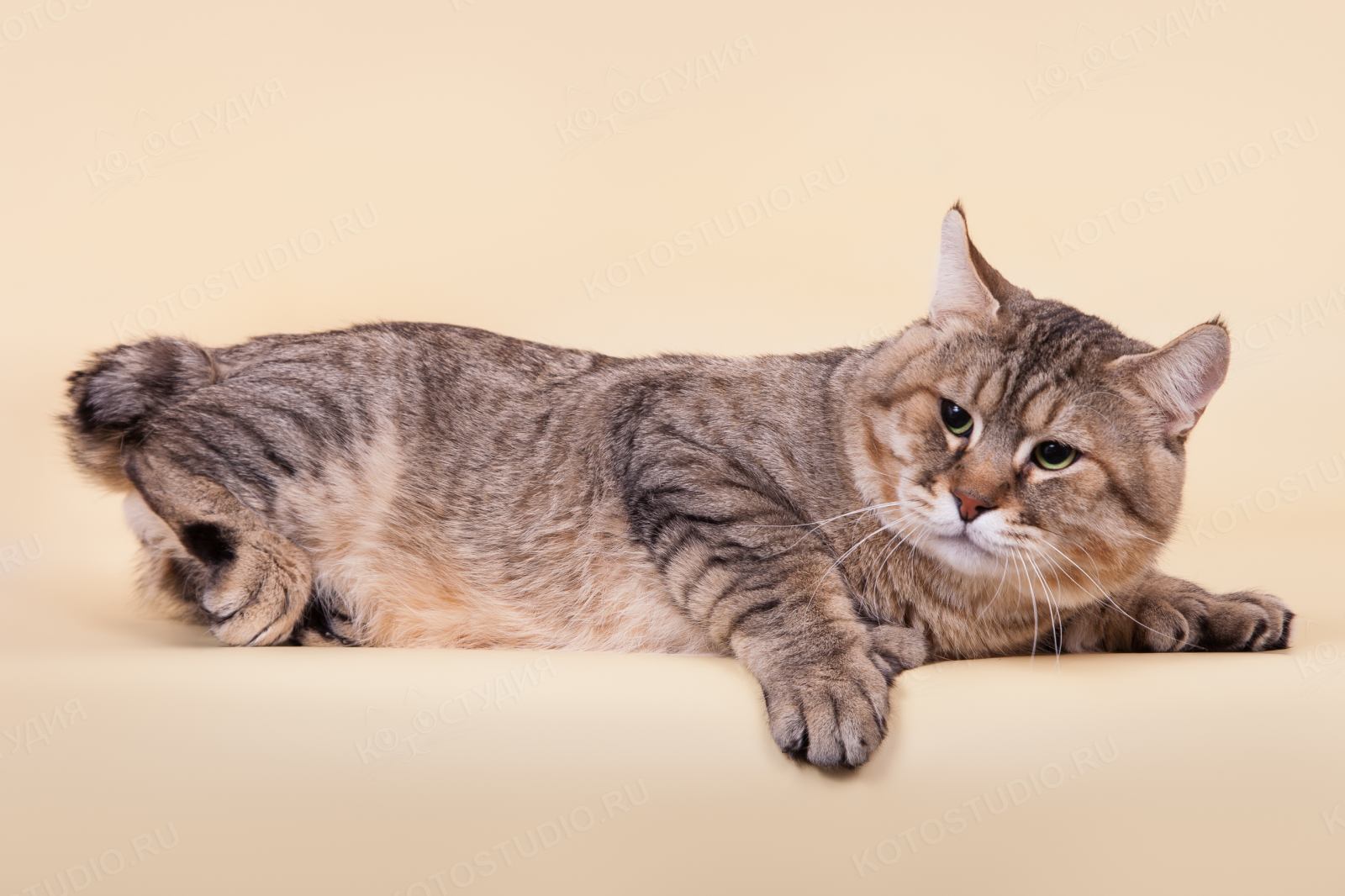
Another characteristic feature of the Pixiebob is its ears. They are medium-sized, with a wide base and rounded tips, creating an impression of alertness. Some representatives of the breed have small tufts at the tips of their ears, reminiscent of those found on wild lynxes. These tufts add a touch of wildness to the cat’s appearance and underscore its exotic origins. The ears are positioned on the head in a way that gives the cat expressiveness and confidence.
The eyes of the Pixiebob play an important role in creating its unique appearance. They are large, almond-shaped, with a slight tilt towards the nose. The eyes often have a green or golden hue that contrasts with the spotted coat, giving the cat an insightful gaze. The Pixiebob’s look always appears attentive and focused, as if the cat is constantly monitoring everything happening around it. This makes its appearance even more captivating and wild.
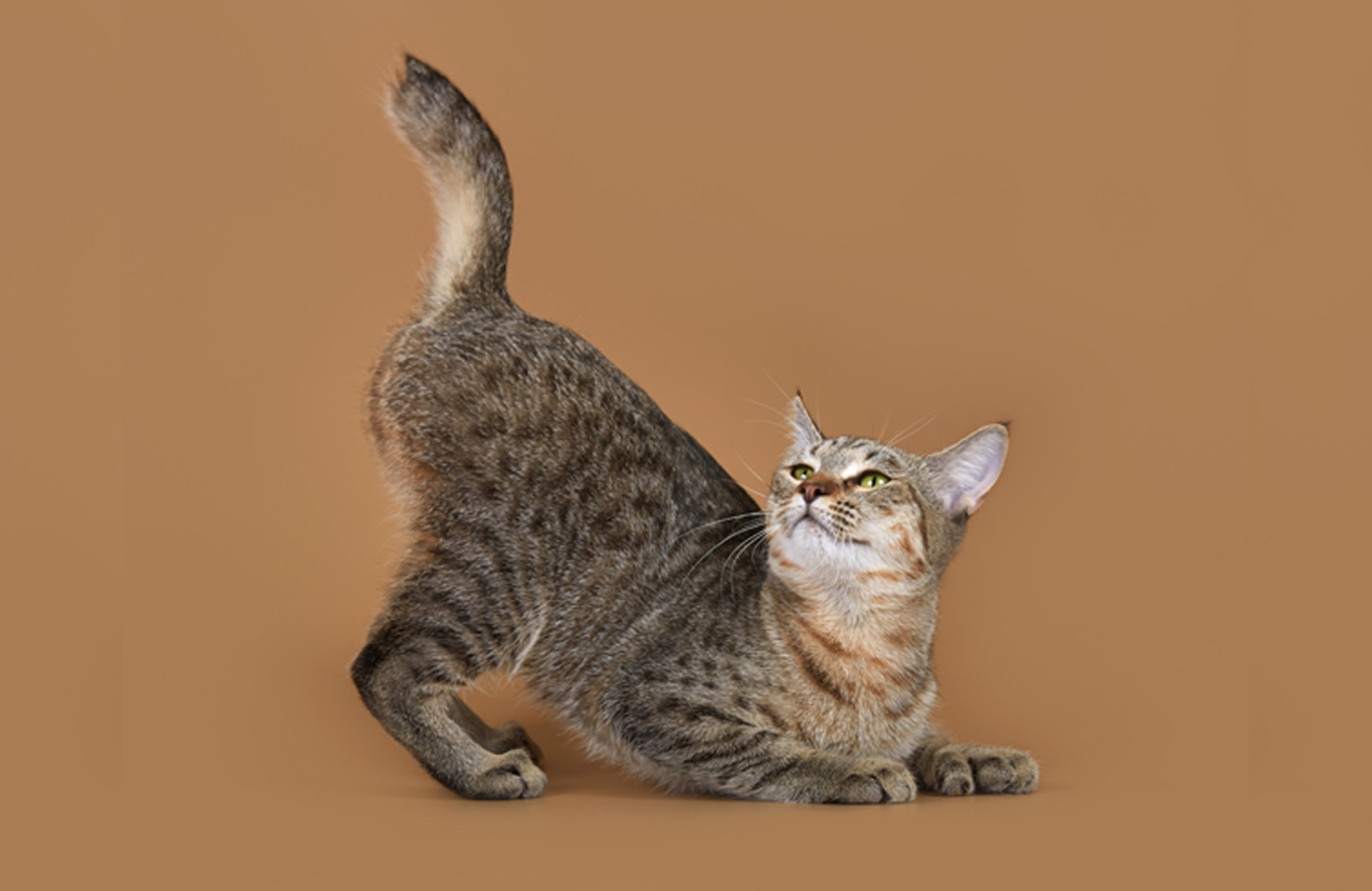
A key feature that sets the Pixiebob apart from other breeds is its short tail. The tail can vary in length from 5 to 15 centimeters and can be either straight or slightly curved. The short tail emphasizes its resemblance to the wild lynx and gives the Pixiebob even more individuality. This characteristic is what inspired the breed’s name, as “pixie” means “short” in English.The fur of the Pixiebob also has its own features. It can be short or medium-length, but is always dense and thick. The coat provides good protection against cold and other unfavorable conditions, making this breed resilient and adaptable to various climates. The texture of the fur is somewhat coarse, highlighting its natural and “wild” look. Medium-haired representatives of the breed have a thick undercoat that helps retain warmth during the cold months.The color of the Pixiebob is another element that creates the impression of a wild animal. The typical color is spotted tabby, with dark stripes or spots on a light background. The base color of the fur can vary from sandy to brown tones. The pattern on the Pixiebob’s coat resembles that of wild cats, such as the lynx, making this breed eve


Отличительные черты

Голова

Морда

Уши

Глаза

Зубы

Корпус

Конечности

Хвост

Шерсть

Окрас
Character of the Pixiebob
The Pixiebob is not only a cat with a wild appearance but also a pet with a gentle, friendly, and loyal character. Despite their resemblance to wild bobcats, these cats possess a loving nature and tend to bond closely with humans. Pixiebobs are true companions who attach themselves to their owners and are ready to spend a lot of time with them. Their character combines the independence typical of all cats with a strong desire for contact and attachment.
Friendliness and Loyalty
One of the most prominent traits of the Pixiebob’s character is its friendliness. These cats bond with their owners and love being near them. They adapt easily to life in large families and can be great friends for children. Pixiebobs show affection and attachment, willingly participating in family activities and often following their owner closely. They may “help” with household chores, lie down next to you when you rest, or simply accompany you around the house, creating a sense of constant presence.
Pixiebobs are very attached to their owners and can demonstrate a “dog-like” loyalty. They love greeting their owner at the door when they return home and often seek physical contact-whether it’s sitting on laps or cuddling. This makes them excellent companions for people looking for a cat that enjoys close interaction and engagement.
Playfulness and Activity
Despite their loyalty and desire for affection, Pixiebobs remain active and playful. These cats are highly energetic and love to spend their time playing. Pixiebobs enjoy participating in interactive games, especially those involving “hunting” toys. Their natural instincts make them excellent “hunters” of balls, feathers, and laser pointers.Unlike some cats, the Pixiebob maintains its activity and curiosity throughout its life, making it a suitable pet for those seeking a playful and energetic cat. With their strong build and powerful paws, Pixiebobs easily overcome obstacles, jump, and climb, making them great climbers. Play structures with shelves, scratching posts, and tunnels will help maintain their interest and activity levels.Intelligence and Learning AbilityThe Pixiebob is a breed with high intelligence. These cats learn quickly and can remember commands and tricks. With the right training approach, Pixiebobs can follow simple commands like “sit,” “come,” and “give paw.” They also easily learn to use a scratching post and litter box, which makes them convenient to care for.The Pixiebob’s intelligence is also evident in its curiosity. These cats lov
Питомники
Выбор питомника по городу, породе и отзывам
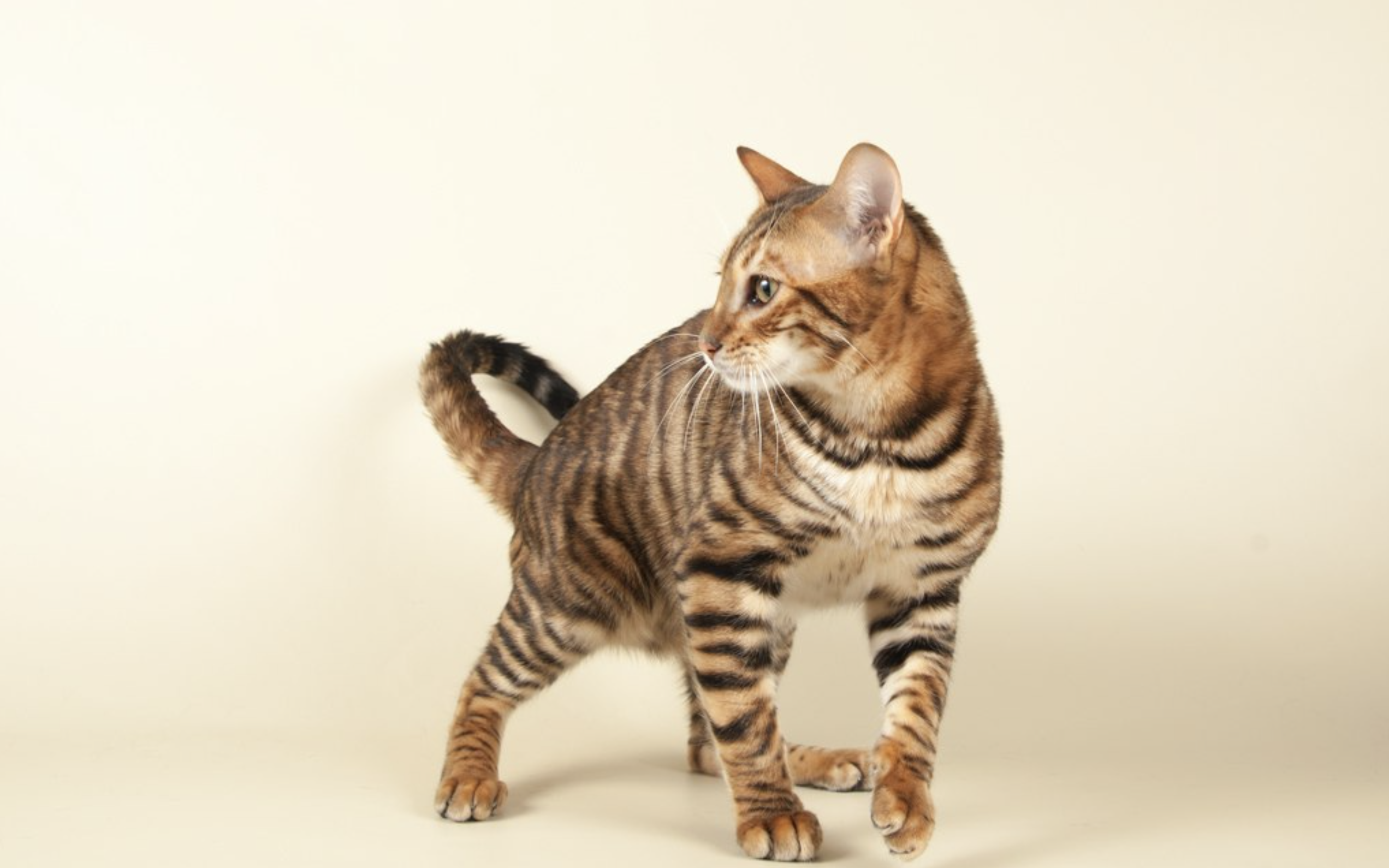
Pixie bob with a record number of toes.
Pixie-bobs are often born with polydactyly, which makes their paws especially unusual and large. The most "multi-toed" pixie-bob was recorded with 28 toes - seven on each paw. This is a rare phenomenon among cats, and such paws give pixie-bobs not only a unique appearance but also make them more agile when climbing and grasping objects.Care and Maintenance of the Pixie-Bob
The Pixie-Bob is a breed that requires a special approach to care and maintenance, considering its unique features. These cats are known for their good health and endurance, but they still need regular care to stay active and healthy. Pixie-Bobs possess a natural beauty and wildness, so their care includes maintaining their coat, dental health, activity level, and diet.
1. Coat Care
Pixie-Bobs can have either short or semi-long hair, and their care varies slightly depending on the hair length. Both types have a dense texture, which helps protect the cat from adverse weather conditions, but regular brushing is needed to maintain a well-groomed appearance.
Short-haired Pixie-Bobs need to be brushed once a week. This helps remove dead hairs and distribute natural oils throughout the coat, keeping it shiny and healthy.
Semi-long-haired Pixie-Bobs require more frequent grooming. Their coat should be brushed two to three times a week to prevent matting and tangling. During shedding periods, you can increase the frequency of brushing.
Bathing a Pixie-Bob is not usually necessary, as these cats tend to keep their fur clean on their own. Bathing may be required on rare occasions, such as when the cat gets particularly dirty. Use a mild cat shampoo to avoid damaging the coat’s texture and prevent drying out the skin.2. Dental, Ear, and Nail CareAs with most cats, it is important to monitor the condition of a Pixie-Bob’s teeth, ears, and nails to avoid the development of diseases.Teeth: Care for a Pixie-Bob’s teeth includes regular brushing with cat-specific toothpaste. This helps prevent the buildup of plaque and tartar. Get your kitten accustomed to having its teeth brushed from an early age to make the process less stressful.Ears: Check the state of the ears once a week. They should be clean and free of discharge. Wipe them with a cotton ball soaked in a special ear-cleaning solution to prevent potential infections.Nails: Trim the nails every 2-3 weeks. Be sure to provide a scratching post for the cat to help naturally wear down its claws. This will help prevent damage to furniture and keep the claws in good condition.3. Nutrition: Key RecommendationsPixie-Bobs are large an
The first therapy cat of the Pixiebob breed.
A Pixie-Bob named Leo became the first representative of his breed to be officially registered as a therapy cat. He worked in a children's hospital in the USA, helping children cope with stress and fear. Due to his friendly and calm demeanor, Leo was able to win the love of the patients and became a well-known "four-legged doctor," providing emotional support.Training and Teaching a Pixiebob
The Pixiebob is a cat breed that not only bears a striking resemblance to the wild bobcat but also boasts high intelligence, making it suitable for training and education. These cats are eager to learn new skills, especially when the process is playful and accompanied by positive reinforcement. A proper training approach allows Pixiebobs to develop behavioral skills that are beneficial for their care and to maintain a high level of activity.
Features of Pixiebob Training
Pixiebobs are curious and highly active, making them excellent candidates for learning. It’s important to consider the following breed characteristics during training:
Positive reinforcement as the primary training method. Pixiebobs respond well to positive reinforcement in the form of praise, treats, and play. Use these methods to reward them for completing commands and tricks. Coercion and punishment do not work with this breed, as they can lead to stress and resistance.
Short and regular training sessions. To keep the cat engaged, sessions should last 5-10 minutes several times a day. Longer sessions might exhaust the cat and reduce its motivation.
Playful training methods. Pixiebobs love to play, and incorporating game elements into the training process can make learning more enjoyable and productive.What Commands and Tricks Can You Teach a Pixiebob?Pixiebobs can learn various commands and tricks, especially in a suitable environment. Here are examples of commands and tricks you can teach this breed:”Sit” and “Lie Down.” These basic commands help kickstart the training process. Use a treat to catch the cat’s attention and gradually raise it above its head or lower it down to have the cat sit or lie down.”Give a Paw.” Pixiebobs can easily learn to offer their paw. Bring your hand close to the cat’s paw and lightly touch it, then give a treat as soon as the cat raises its paw.”Come Here.” This command is useful to call the cat to you when it’s in another room or outside. Use its favorite toy or treat to catch its attention and encourage compliance.Fetch a Toy. Pixiebobs can learn to fetch toys, especially if they enjoy “hunting.” Throw a small toy and encourage the cat to bring it back. Over time, the cat will autonomously return the toy.Intellectual Games and Puzzles for PixiebobsPixiebobs
The largest pixiebob in the world.
Please provide the text you'd like me to translate to English.How to Choose a Pixiebob Kitten
Choosing a Pixiebob kitten is an important process that requires careful consideration. The Pixiebob is a rare and unique breed of cat, known for its wild appearance and friendly character. When selecting a kitten of this breed, it is essential to consider not only its physical attributes but also its health, socialization, and pedigree. To ensure you get a healthy, active, and loyal pet, several key factors must be taken into account.
1. Finding a Responsible Breeder
The first and most important step in choosing a Pixiebob kitten is to locate a responsible breeder. The Pixiebob breed is relatively rare, so it’s crucial that the breeder has experience in breeding and adheres to breed standards. Look for breeders who are registered with cat associations like TICA (The International Cat Association) and can provide documentation regarding the kittens’ origin and health.
Request documents. A responsible breeder will always provide a veterinary passport with vaccination records, pedigree, and information about genetic disease testing. This is especially important, as certain diseases can be hereditary.
Study reviews. Look for reviews from other owners who have purchased kittens from the breeder in question. This will help assure you of the quality of the breeding and the conditions in which the kittens are kept.
2. Inspecting the Living Conditions of the KittensWhen visiting a cattery, pay attention to the conditions in which the kittens and their parents are housed. This is important for the proper development and socialization of the kittens.Cleanliness and order. Ensure that the area where the kittens are kept is clean, bright, and well-ventilated. This indicates the breeder’s care and appropriate animal husbandry.Kitten socialization. Pixiebobs are generally social and friendly, but it’s crucial that they are accustomed to people and other animals from an early age. Well-socialized kittens will be active, curious, and unafraid of humans.3. Determining the Age for Moving to a New HomeThe optimal age to bring a Pixiebob kitten home is 12-16 weeks. At this age, the kitten is already sufficiently socialized, has received essential vaccinations, and is ready to adapt to a new environment.Younger than 12 weeks. Kittens younger than this may struggle with adaptation and may not be ready for independent living without their mother.Older than 16 weeks. Kittens that stay longer with the breeder usually develop established habits, which can facilitate their a
Health and Diseases of the Pixiebob
Pixiebob is a cat breed that is generally known for its robust health and longevity. These cats possess a strong immune system and rarely suffer from genetic diseases, thanks to the breed’s development through natural selection. However, like all purebred cats, Pixiebobs have specific health features and predispositions to certain conditions. To ensure your pet lives a long and healthy life, it is essential to be aware of potential issues and take preventive measures in a timely manner.
1. General Recommendations for Maintaining Health
Regular veterinary check-ups and scheduled vaccinations are key factors in maintaining the health of a Pixiebob. It is important to carry out preventive procedures and monitor the condition of the cat’s teeth, ears, and skin.
Regular check-ups. Visit the veterinarian at least once a year for a general examination and vaccination. Regular check-ups can help detect potential issues early and prevent the progression of serious diseases.
Scheduled vaccinations. It is essential to adhere to the vaccination schedule to protect your cat from infectious diseases such as panleukopenia, rhinotracheitis, and calicivirus. Also, consider vaccination against rabies and feline leukemia virus (FeLV) if your pet has access to the outdoors or interacts with other animals.
2. Genetic Diseases and PredispositionsAlthough Pixiebobs are considered a relatively healthy breed, they do have tendencies toward certain genetic diseases. These issues are not widespread, but it’s important to be aware of them for preventive measures.Hypertrophic cardiomyopathy (HCM). This heart disease involves thickening of the heart muscle walls, which can reduce the functionality of the organ. HCM can occur in Pixiebobs, especially in aging cats. Regular ultrasounds can help detect the disease early and start treatment.Polydactyly. Pixiebobs often exhibit polydactyly, having extra toes on their paws. This is not a disease and does not cause discomfort, but improper claw care may lead to injuries or ingrown nails. It is crucial to regularly trim the nails and monitor the condition of the paws.Joint diseases. Large cat breeds like the Pixiebob may be prone to joint issues, especially in older age. Arthritis or hip dysplasia may manifest as limping or decreased activity. To maintain joint health, consider adding glucosamine and chondroitin supplements to their diet.3. Dental and Oral Health IssuesLike many other purebred cats, Pixiebobs can exp
Содержание
-
1. Описание породы
-
2. Внешний вид
- 2.1 Голова
- 2.2 Морда
- 2.3 Уши
- 2.4 Глаза
- 2.5 Зубы
- 2.6 Корпус
- 2.7 Конечности
- 2.8 Хвост
- 2.9 Шерсть
- 2.10 Окрас
-
3. Характер
-
4. Содержание и уход
-
5. Дрессировка и обучение
-
6. Как выбрать котенка
-
7. Здоровье и болезни






Comments
Only registered users can leave reviews.
Enter