
Oriental cat





Breed Description
The Oriental Shorthair cat is essentially a descendant of modern Siamese cats. It is distinguished from the well-known Siamese by a number of aspects that we will discuss below. The first Oriental Shorthairs appeared around 600 years ago, as evidenced by ancient Siamese manuscripts. Specifically, they were rather willful Siamese cats with a rather capricious character. The difference between modern animals is that their ancestors had a solid coat color.
In the 19th century, a new and completely alien creature emerged as a result of crossing Siamese and Abyssinian mice catchers: the Oriental cat. For quite some time, it remained unnoticed, while its Siamese relatives garnered the glory. Cat shows took place without Oriental Shorthairs, and the pedestal belonged to the Siamese breed. Britain was particularly unkind to them, considering them to be mutts and not true Siamese.
This continued until the mid-20th century, when some representatives of the breed were sent to the USA, Australia, and Oceania. The New World welcomed this extraordinary creature with great enthusiasm. American feline experts accepted the breed standard about two years after their arrival on the continent. In this way, American fans of meowing companions responded to the appearance of these remarkable beings and effectively breathed new life into Oriental Shorthairs.
It is worth noting that with the growing popularity of the breed in the USA, England reacted quite quickly: they recognized them as a separate breed and took to improving it.
A curious fact: there is a legend about the origin of the Orientals. It tells of a young princess from the kingdom of Siam who had a cat she loved dearly and always took with her. One day, while she went swimming, her cat was guarding the princess’s numerous jewels. In an instant, she lost part of them, specifically a ring. When the owner learned of the loss, she tied a knot at the tip of her cat’s tail so that the rings could never slip off again.
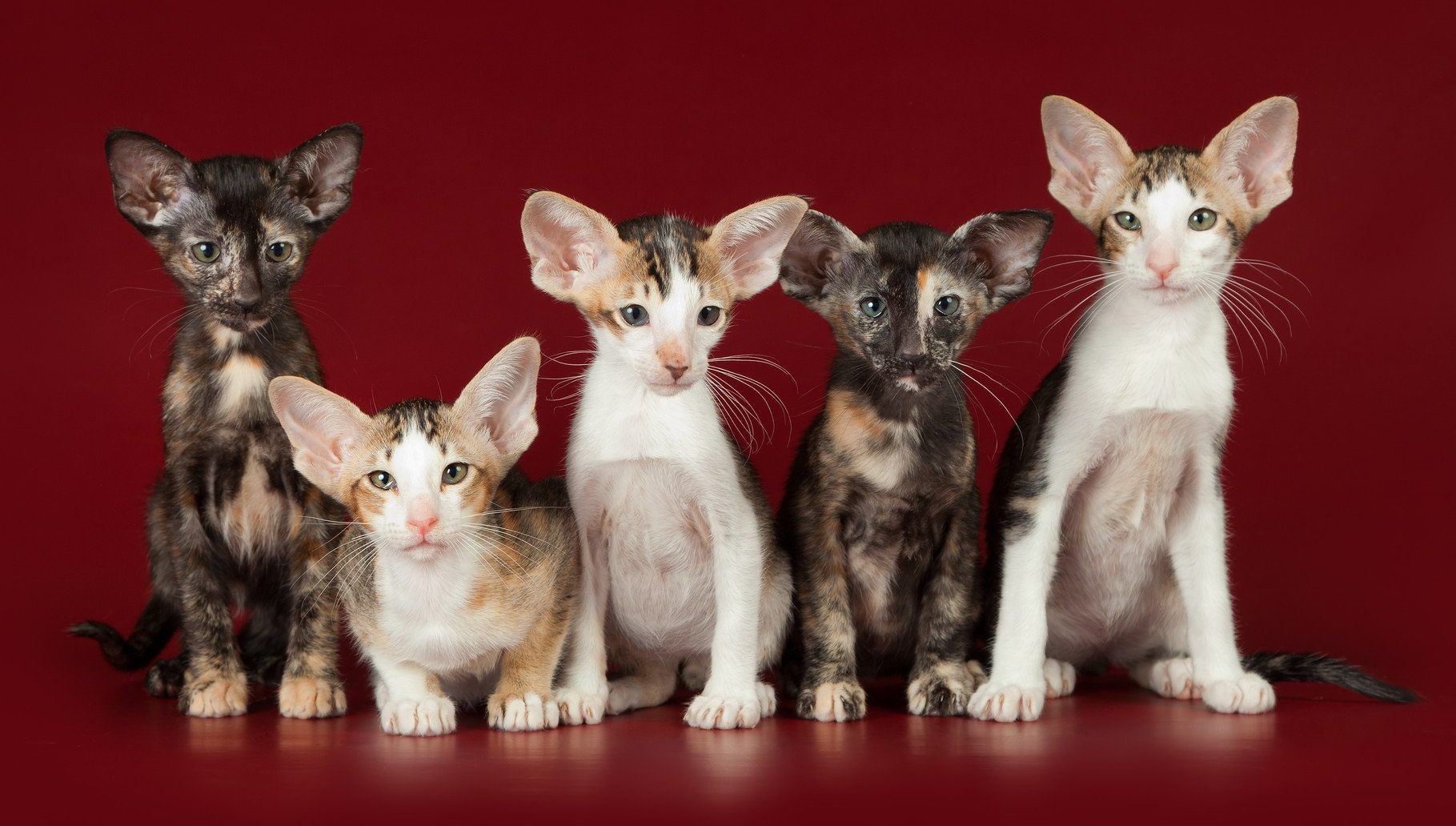
Of course, whether this was true or not, no one knows. However, modern scholars suggest that such a story could have arisen due to a slight bend at the tip of the Oriental’s tail. They associate this with a desire to stabilize the coat color of Siamese cats. After all, the “signature” coat of Siamese cats is a mutation that their owners were trying to preserve. To achieve this, owners engaged in inbreeding among close relatives, which inevitably affected the breed’s health and led to numerous problems, including the infamous bent tail tip.According to another legend, an unheard-of award was given to one of Queen Elizabeth’s subjects-two Siamese kittens-for special merit in establishing peaceful relations between nations. Until then, no cat had left the borders of the kingdom of Siam, as they were considered sacred animals there.As for the cost of Oriental cats, it depends on the class. A pet-class kitten may not exceed 20,000 rubles, while breed-class Orientals, which have been permitted for breeding, cost more-up to 40,000 rubles. If you want to buy a show-class Oriental kitten, be prepared to pay up to 80,000 rubles. The final cost depends on appearance:
Appearance
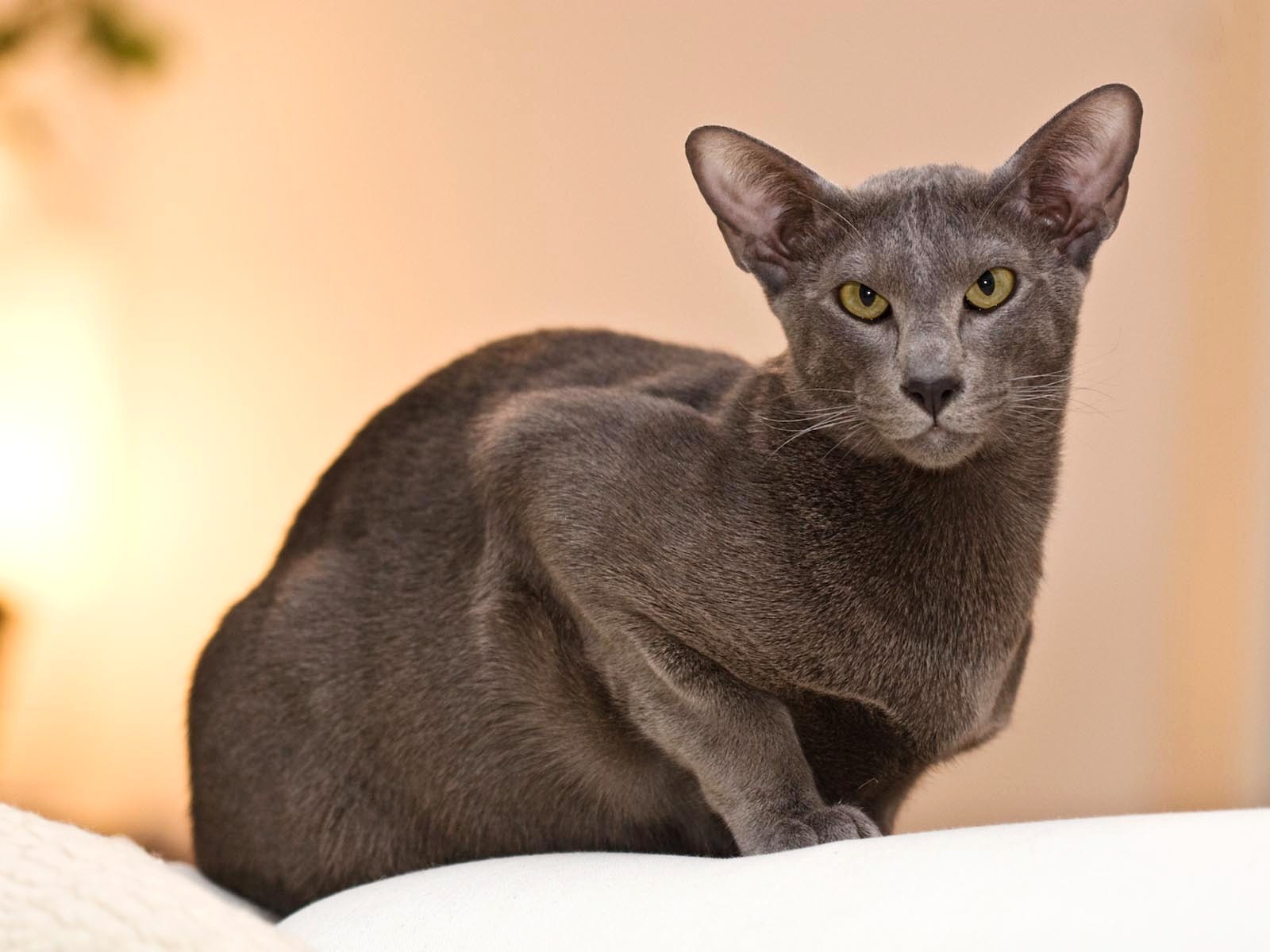
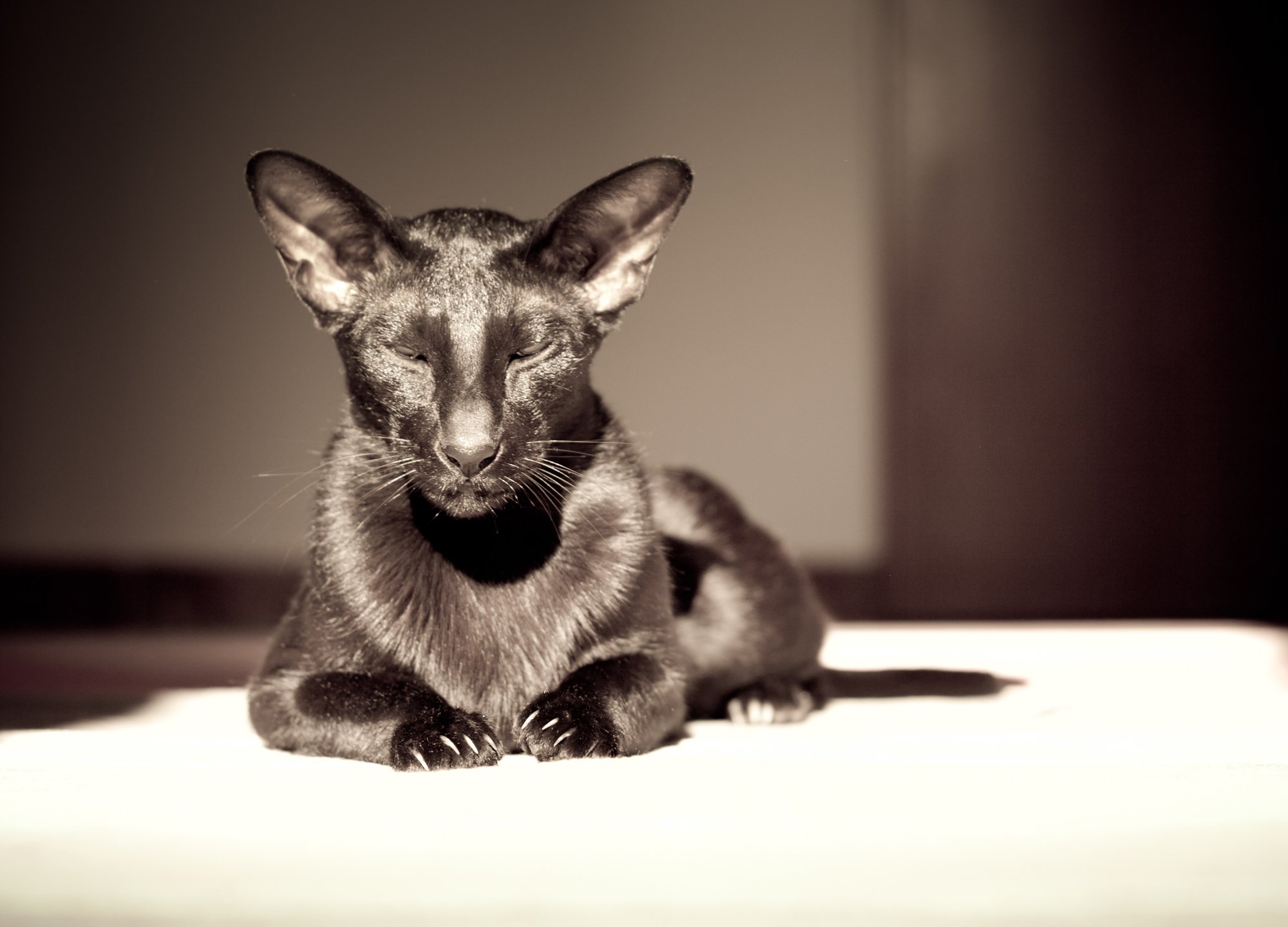
Like all breeds from the Asian region, the Oriental possesses a typical appearance. However, in addition to their looks, they have unique movements, expressions, posture, and an entirely distinct ability to freeze in place. At times, they become silent jade figurines, making it impossible to discern the direction of their thoughts in that moment.
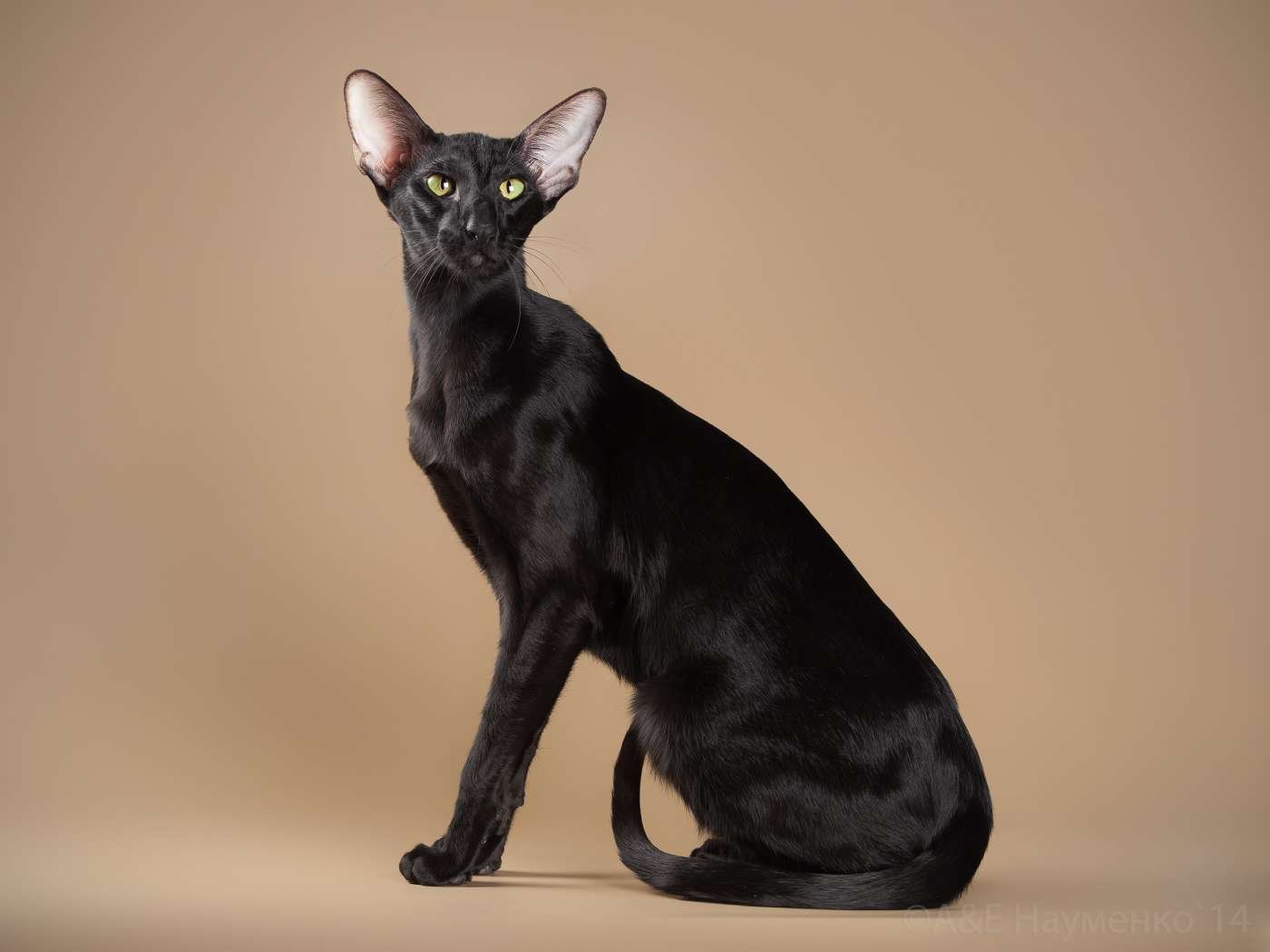
Relatively large yet simultaneously graceful, weightless, and charismatic-this is how owners worldwide describe their beloved cats. Each of their movements is something special, soft and fluid, like hot wax from a candle.
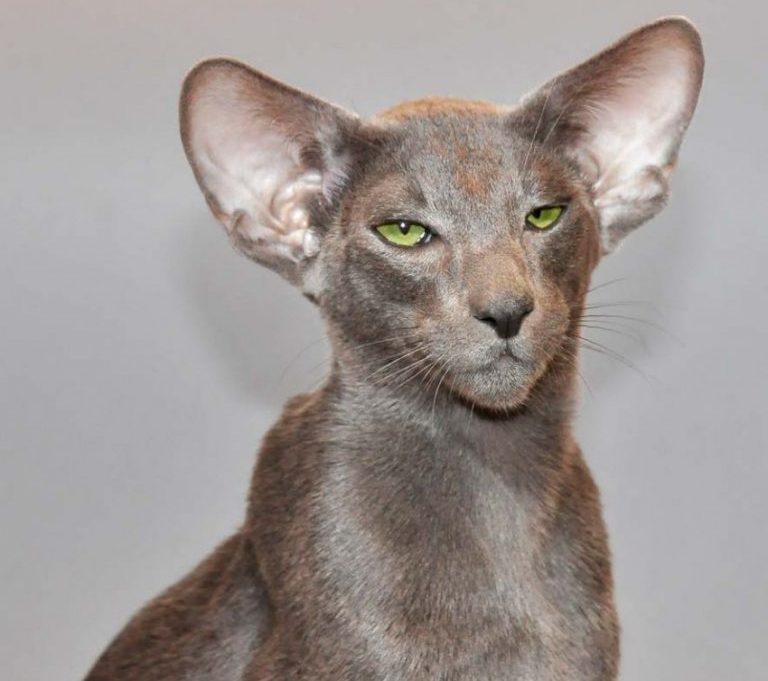
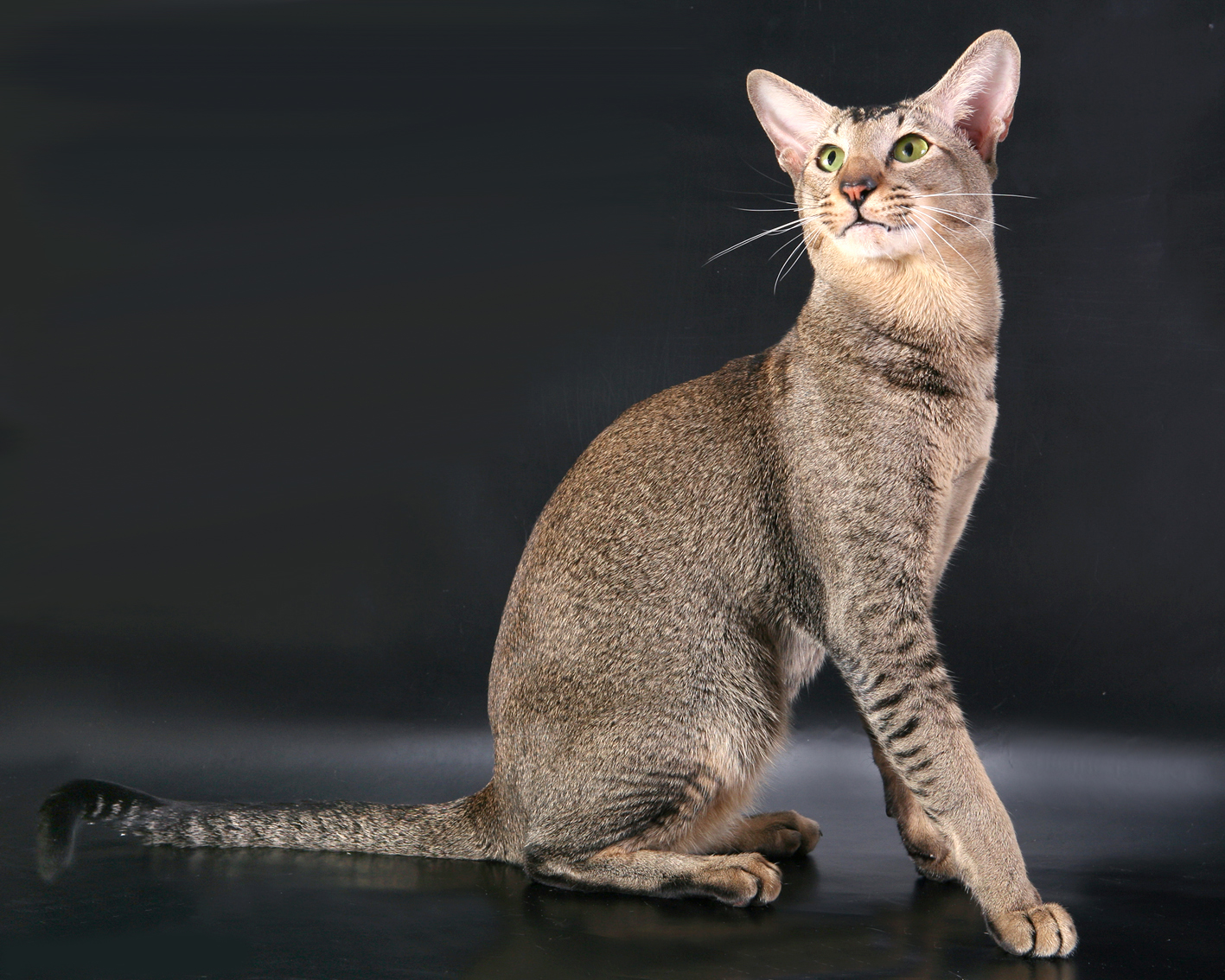
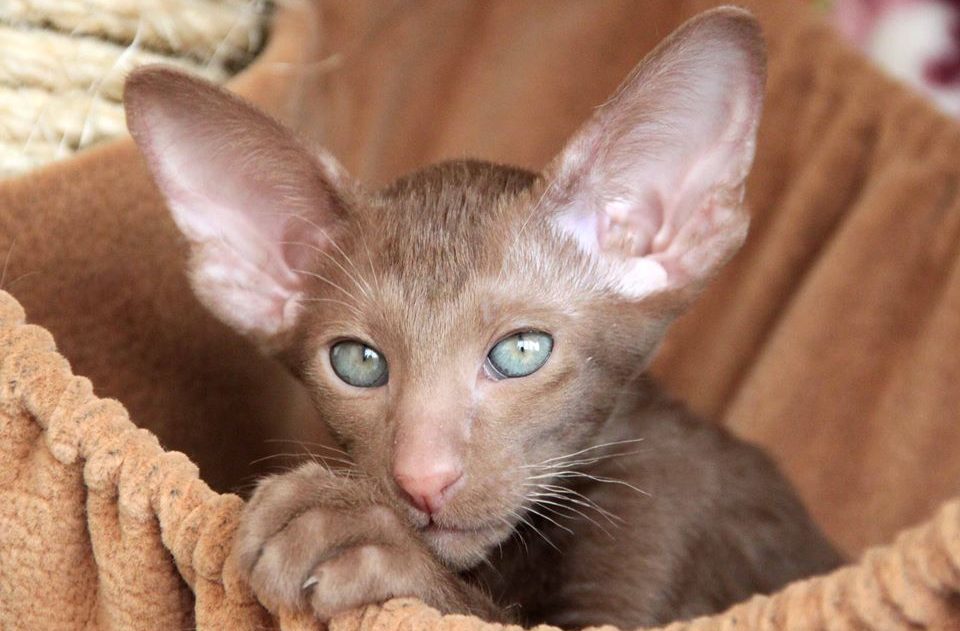
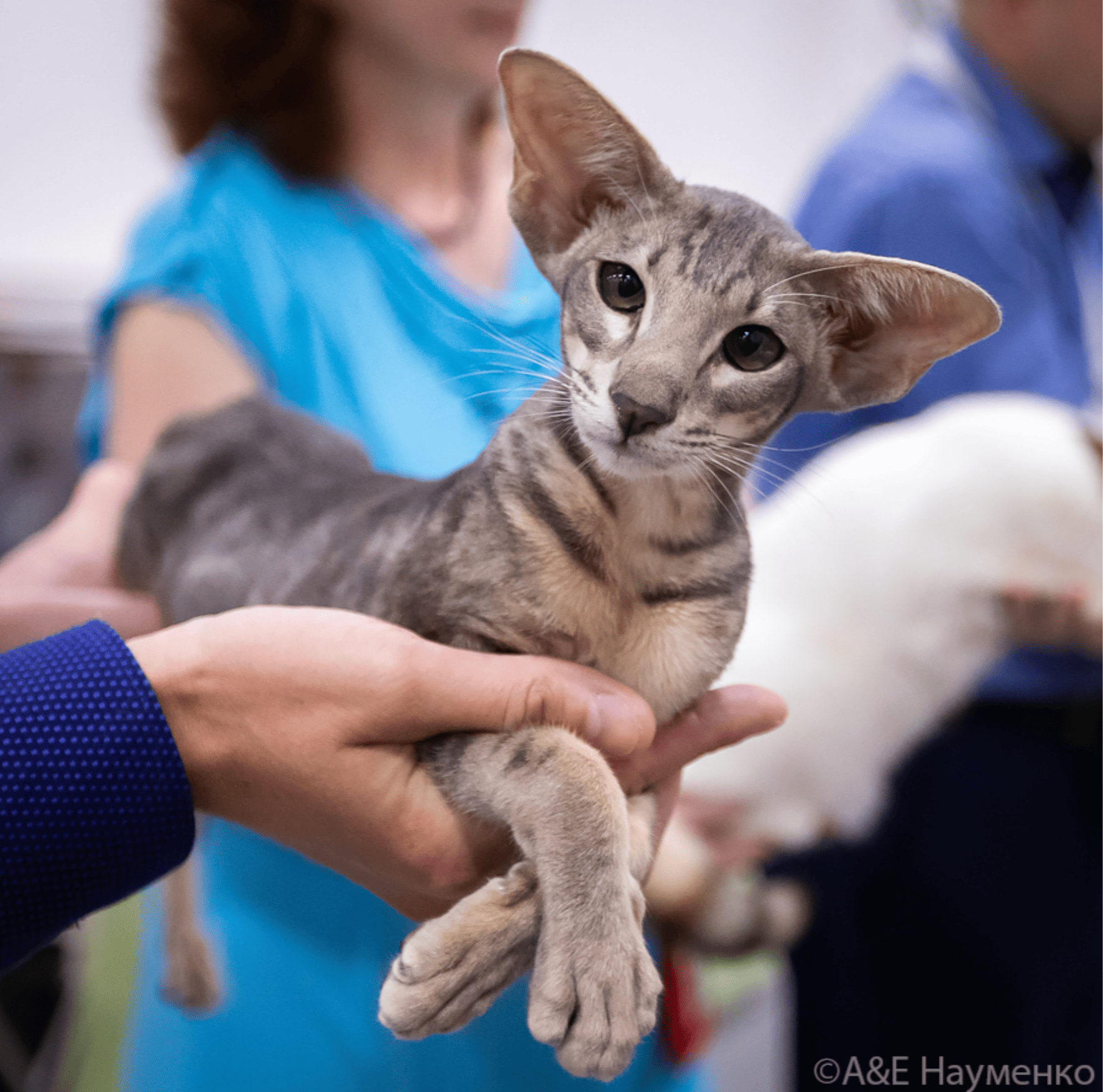
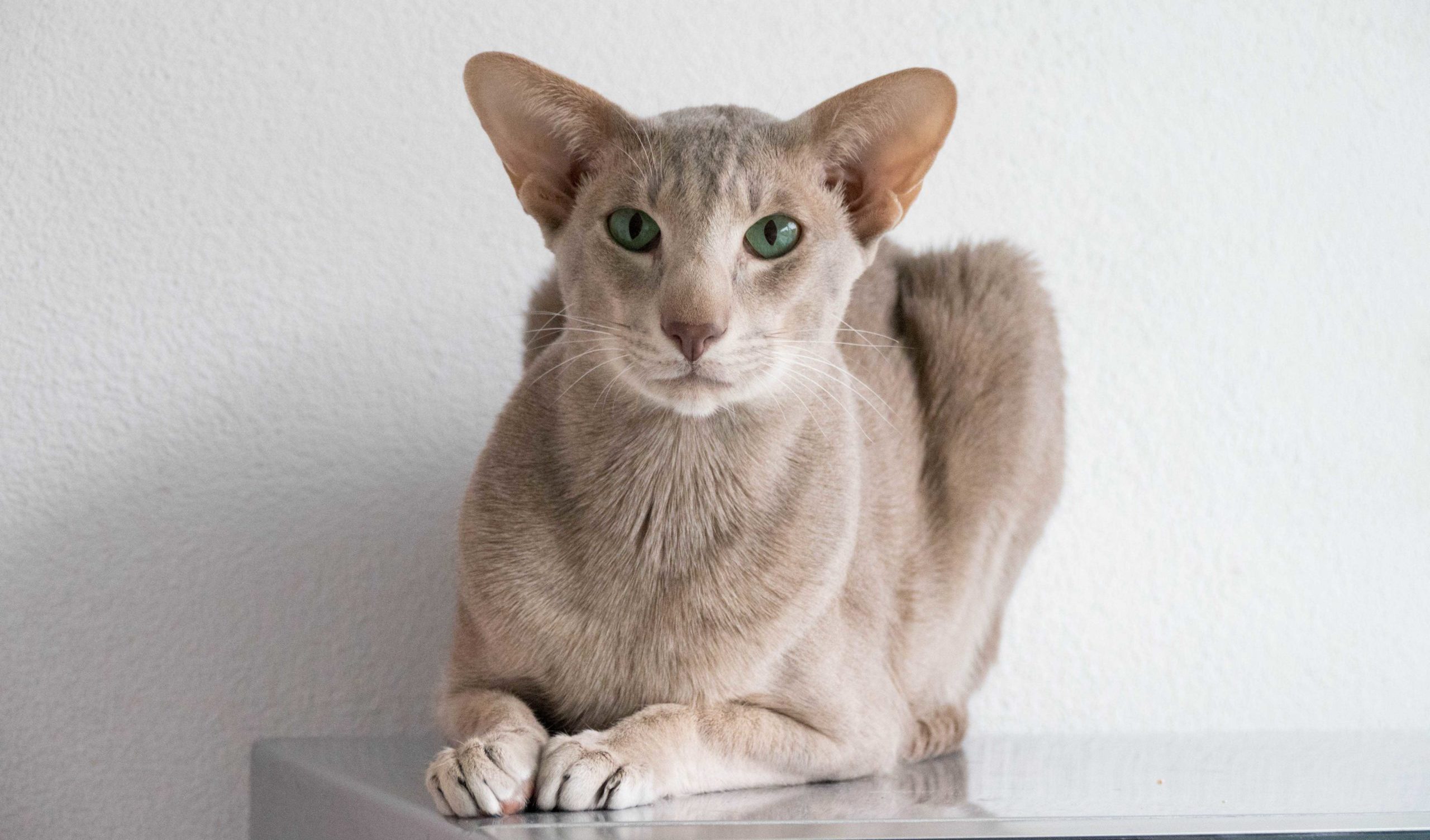
Unlike their long-haired relatives, the short-haired Orientals have several advantages, the first being their shiny short coat that emphasizes the cat’s unique structure. Their slender long legs, wedge-shaped head, large ears, and long tail create a harmonious image that is unforgettable and cannot be confused with other breeds.
Weighing between 3.5 to 6.5 kg, their shoulder height can reach almost 30 cm. However, owners take particular pride in the length of their pets; when picked up under the front legs and gently extended, the cat’s length can reach up to 90 cm.
The languid gaze of these eastern cats remains vibrant throughout their lives. Their average lifespan is reported to be between 12 to 16 years, which translates to over a hundred years in human terms. Careful attention to the Oriental can allow for many more joyful years together. In Russia, there have been instances where these animals lived up to 20 years.


Отличительные черты

Голова

Морда

Уши

Глаза

Зубы

Корпус

Конечности

Хвост

Шерсть

Окрас
Character
If you’ve always dreamed of having a dog but were afraid you couldn’t manage its care, consider getting an Oriental cat. These Eastern beauties have a unique character that closely resembles that of dogs.
They are extremely loyal to their owner, eager to adapt to their daily routine, and are almost always nearby when at home. However, Orientals get very lonely if left alone for too long, which is why they are often purchased in pairs. They maintain the ability and desire to play with any toy, even a thread, well into old age.
In fact, they can be summed up in one phrase: movement is life. Although these meowing creatures love to sleep, Orientals always find a few minutes to play. By gently placing a toy at their owner’s feet, they hint that it’s time to play with them. If this doesn’t happen, the cats will persistently use their feline tricks to get what they want. It’s hard to refuse a pet that purrs loudly while rubbing against their adored owner-this is how they regard every family member.
It’s worth mentioning that Orientals are still cats, and they don’t do anything without a benefit to themselves. They gain something from each family member but repay this affection in kind: having studied their owners’ personalities, these sleek cats give their love to each one of them.
Moreover, the uniqueness of the breed lies in their trainability. For instance, a playful friend will happily fetch their favorite toy if the owner throws it during playtime. Many owners of these alien-like creatures share stories of their pets learning to bring slippers upon greeting them home from work.
Of course, they are predators. They remain alert when birds or rodents are nearby. While hunting, Orientals emit a special sound that signifies extreme tension and focus. Once heard, it’s impossible to forget, making you want to be near the cat while it stalks potential prey.Another characteristic of the breed is their ability to get their way. The term “meowing creature” was chosen for a reason, as these cats tend to converse with their owners. They can adjust their intonation, mimicking that of their human.Lovingly affectionate, they demand attention in return. Such animals are always the center of attention. When they encounter any family members in the hallway, Orientals greet them and check the contents of their bags. Even with strangers, cats from Ancient Siam will approach and study them from a distance.
Питомники
Выбор питомника по городу, породе и отзывам
Resentment is in the blood.
Oriental cats are quite impressionable. This trait has been inherited from Siamese cats. If someone causes a cat distress, orientals will simply ignore the offender and avoid them, but they will be deeply hurt by that meanness.Care and Maintenance
Before bringing an oriental shorthair kitten home, future owners need to prepare and buy some cat accessories: a bed with edges or a cat house, a scratching post, nail clippers, a food and water bowl, various toys, a litter box, and in some cases, a leash and harness. These are useful if you plan to take your pet for walks or on outdoor trips. An anti-flea collar could also be useful, but it’s not absolutely necessary.
The bed for your furry friend should be placed in the safest spot in the apartment or house, away from drafts and doors. Naturally, your cat will sleep wherever it prefers, so it’s important to set up its space in the area where it rests most often.
A scratching post helps protect your furniture. It’s best to introduce it from the first days of the kitten’s arrival: when the little rascal tries to scratch in an inappropriate place, pick it up and take it to the scratching post, helping it “scratch” there with its own paws. Orientals are very intelligent and will quickly understand what is required of them. By the way, nails should be trimmed as they grow, approximately once every 2 to 3 weeks. Nail clippers that trim about a third of the claw work well for this purpose. If you cut more, there is a risk of damaging the nerve endings inside. Some owners use nail files, but animals are usually less willing to cooperate with this procedure. It’s worth noting that kittens sold at reputable catteries are often already accustomed to this operation.
The food and water bowls typically go in the kitchen and should be placed next to each other. Oriental cats are quite picky about the cleanliness of their dishes and may refuse to eat if the bowls are dirty or inconveniently located. Water should be changed multiple times a day and must always be available for the cat, unlike food. Unfortunately, this breed is prone to overeating, so it’s essential to choose the right diet to avoid harming your pet.
Today, more private breeders and catteries are opting for premium and super-premium dry cat foods. Considering that these foods already contain all the necessary vitamins, along with their ease of use and convenient packaging, they truly simplify the care of an oriental beauty. Quality foods usually provide usage recommendations that take the pet’s age and weight into account.
Furthermore, the dry food’s hard texture almost completely replaces the process of cleaning the pet’s teeth. Cats, unlike dogs, are much less willing to let someone clean their sharp teeth. Special toothpastes and brushes for cats often don’t help much with this.Moving on to the litter box, it’s important to remember that it should be large enough for the animal to feel comfortable while doing its business. The type of litter can vary, but clumping litter is best used once the kitten is older; otherwise, there is a risk that the little one might swallow a pellet while playing. Living in urban apartments makes wood litter very convenient, as it doesn’t clog the plumbing. Of course, you can’t completely dump the litter box contents into the toilet, but some fragments can be disposed of this way. For easier cleaning, it’s better to choose a litter box with removable sides – this makes the task easier for the owner. Typically, the box is placed in the bathroom, as the humidity may be too high in the washroom.The large ears of orientals need to be cleaned at least once or twice a month. Cotton swabs can damage the eardrum, so it’s safer to use cotton balls moistened with
High intelligence
The intelligence of a stylish pet allows it to pick up on every nuance of its owner's mood, viewing them as a sort of divine being. However, it's important to remember that cats require just as much attention for themselves. The nature of an Oriental cat clearly indicates that their favorite place to be for an extended period is their owner's lap. If they feel neglected, they begin to meow loudly and insistently.Training and Education
Training a kitten is a necessary process that can refine even a mixed-breed animal. So, what can you teach oriental cats? One of the most important skills is to always respond to their name. Typically, these cats reply with loud meowing, as if having a conversation with their owner.
Another skill that an oriental cat should learn is to use the litter box instead of going wherever they please. Generally, kittens are already trained to do this if purchased from a reputable breeder. If you decide to train your furry friend yourself, be sure to exercise patience and never resort to physical punishment if the kitty has an accident on the floor.
The process of litter box training usually happens in several stages: choosing a suitable location for the box, selecting the box itself, picking a filler that won’t confuse the kitten, and “monitoring symptoms.” By placing the litter box in the bathroom or a warm balcony where the cat feels comfortable, give them time to adjust. Typically, before they need to go, a kitten will start sniffing around or scratching the floor as if trying to bury something. At that moment, you can take them to the litter box and allow them to relieve themselves. You can even help a bit by gently taking their paw and “scratching” the filler. After they successfully use the box, offering praise in the form of gentle petting and kind words is completely natural. Only positive emotions will help them learn the lesson.
If the kitty ignores the litter box, it may be a signal that, for some reason, either the filler or the box itself is not suitable. There may be cleaning products with strong scents nearby that interfere with the animal. Remove any unnecessary items and observe: cats are much smarter than we think, and they will indicate the source of their ongoing issues.
Oriental cats have some dog-like habits, so keep this in mind. You can teach your oriental cat to fetch their favorite toy. Simply play with them whenever they want and repeat the command “Bring it!” each time the cat picks it up in their mouth. This is a fairly simple exercise that these cats learn quickly.
Training a kitten to use a scratching post is quite easy: each time the little rascal tries to scratch the furniture, you need to carry them over to the scratching post, take their paws, and demonstrate how to scratch. They will quickly understand that the scratching post is much more effective for this purpose.
Centenarians
Please provide the text you would like me to translate.How to Choose a Kitten
First of all, consider how ready you are for the arrival of a four-legged companion who will communicate with you on their terms for the next 15 or more years.
If you are ready for such a roommate, ask yourself why you want one. Is it for play, companionship, or to participate in exhibitions? Perhaps you want to start your own breeding of Oriental cats?
Thoroughly research the breed standards, watch numerous videos featuring these fascinating creatures, or even better – visit a cat show and ask all your questions directly to their owners.
Of course, we do not recommend buying kittens from online ads. This breed is quite common in our country, and unscrupulous breeders may be offloading flawed pets, selling kittens with defects or giving them away for free. A very low price and the promise of various bonuses indicate that the breeder is trying to get rid of the kittens quickly.
The best place to buy a purebred Oriental kitten is a reputable breeding facility with a good reputation. A personal visit is considered the preferred method of interaction between buyer and seller. When visiting the breeding facility, be sure to pay attention to the living conditions of the animals and try to ask all your questions to the owner. It’s helpful to prepare these questions in advance and write them down so you don’t forget.
When choosing a kitten of the desired gender, pay attention to the behavior of its parents. If they are absent, this may indicate some exterior defects or other problems that the seller is trying to hide.Carefully inspect the kitten’s ears and eyes (there should be no cloudiness in the cornea), its coat should be shiny, its belly should not be bloated or painful, the mouth should be free of sores, and the kitten itself should be clean and lively.Request a sales contract that outlines the responsibilities of both parties in case any hidden defects are discovered, such as genetic diseases. Upon purchase, you should receive a pedigree, a veterinary passport with vaccination and deworming records, and a contract. Diplomas and certificates are optional; they are not mandatory.The presence of a tattoo or microchip adds credibility to the breeding facility, as an animal with defects bought there can seriously damage its reputation.
Health and Diseases
The Ory breed is considered to have a strong immune system. This allows them to rank among the longest-lived cats. Proper care, good nutrition, and physical activity, along with timely vaccinations, enable these wonderful creatures to be enjoyed for 15 years or more.
However, there are certain diseases that this breed is predisposed to. Talking cats most often suffer from cardiomyopathy (weakening of the heart muscle), gingivitis (the risk of which is minimized by using high-quality dry food), and liver diseases inherited from Siamese cats.
There are also several genetic defects that Orys can suffer from. One sign is a flat chest, which alters the structure of the bones and prevents the lungs from fully expanding, resulting in a significant risk of asphyxiation. Generally, this affects only kittens.
Progressive retinal atrophy is another genetic condition. It is diagnosed only in reputable veterinary clinics, making it extremely difficult to detect at home. This condition can lead to partial or complete loss of vision.
Содержание
-
1. Описание породы
-
2. Внешний вид
- 2.1 Голова
- 2.2 Морда
- 2.3 Уши
- 2.4 Глаза
- 2.5 Зубы
- 2.6 Корпус
- 2.7 Конечности
- 2.8 Хвост
- 2.9 Шерсть
- 2.10 Окрас
-
3. Характер
-
4. Содержание и уход
-
5. Дрессировка и обучение
-
6. Как выбрать котенка
-
7. Здоровье и болезни






Comments
Only registered users can leave reviews.
Enter