
Norwegian Forest Cat
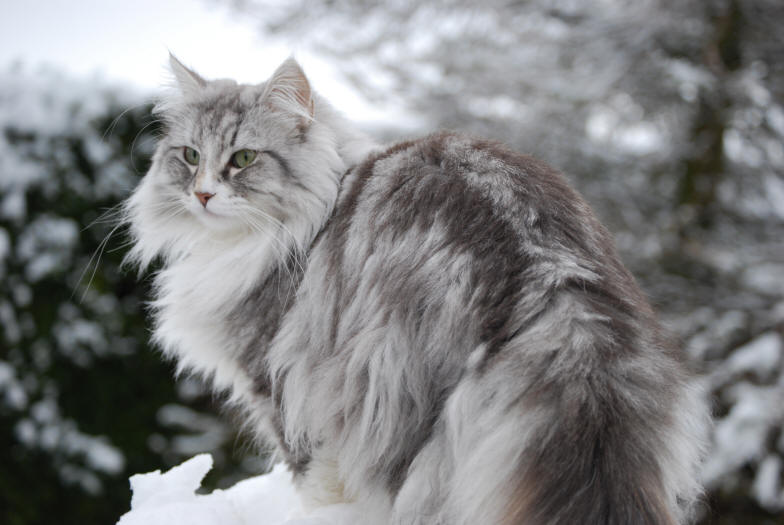
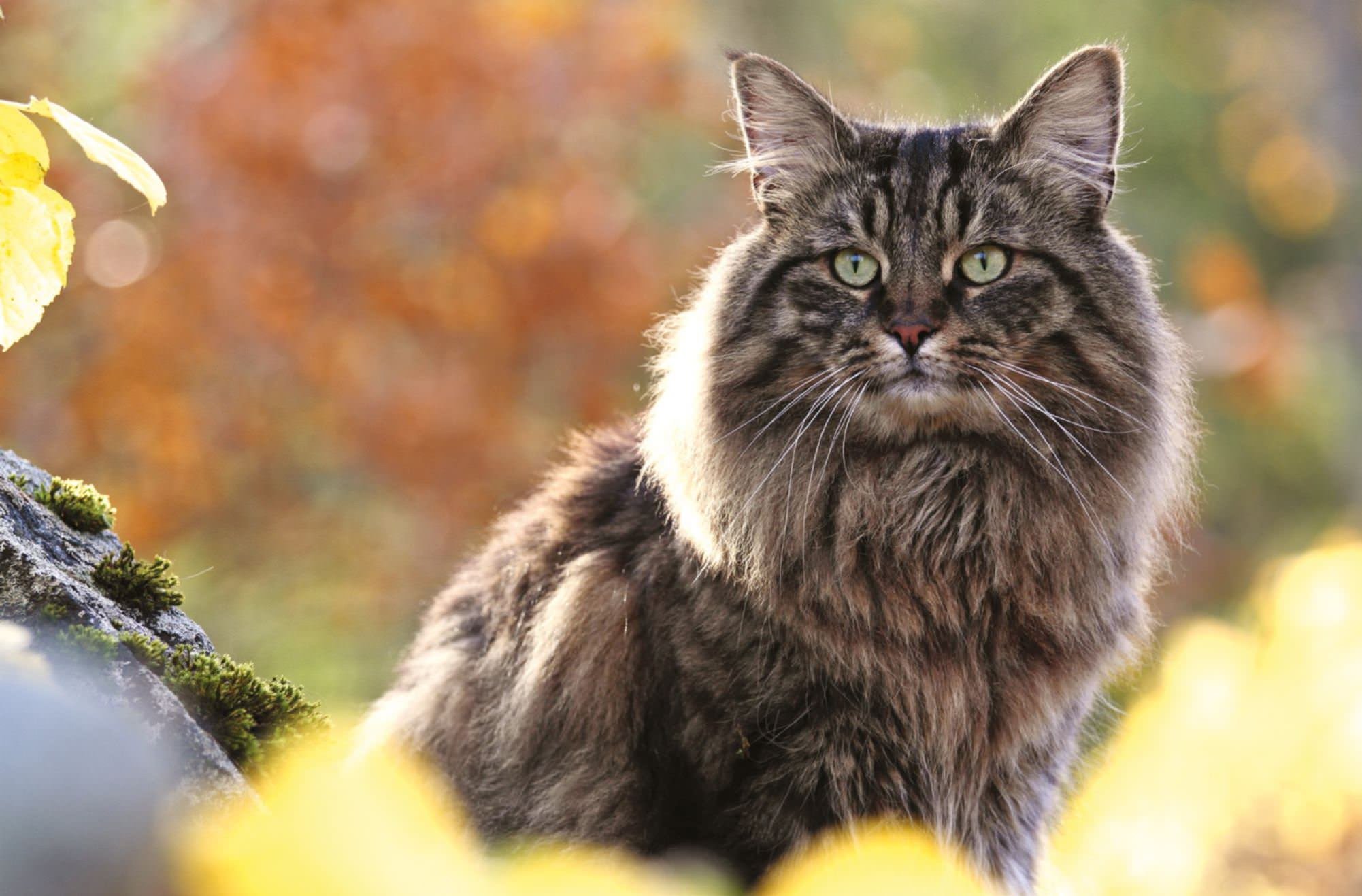

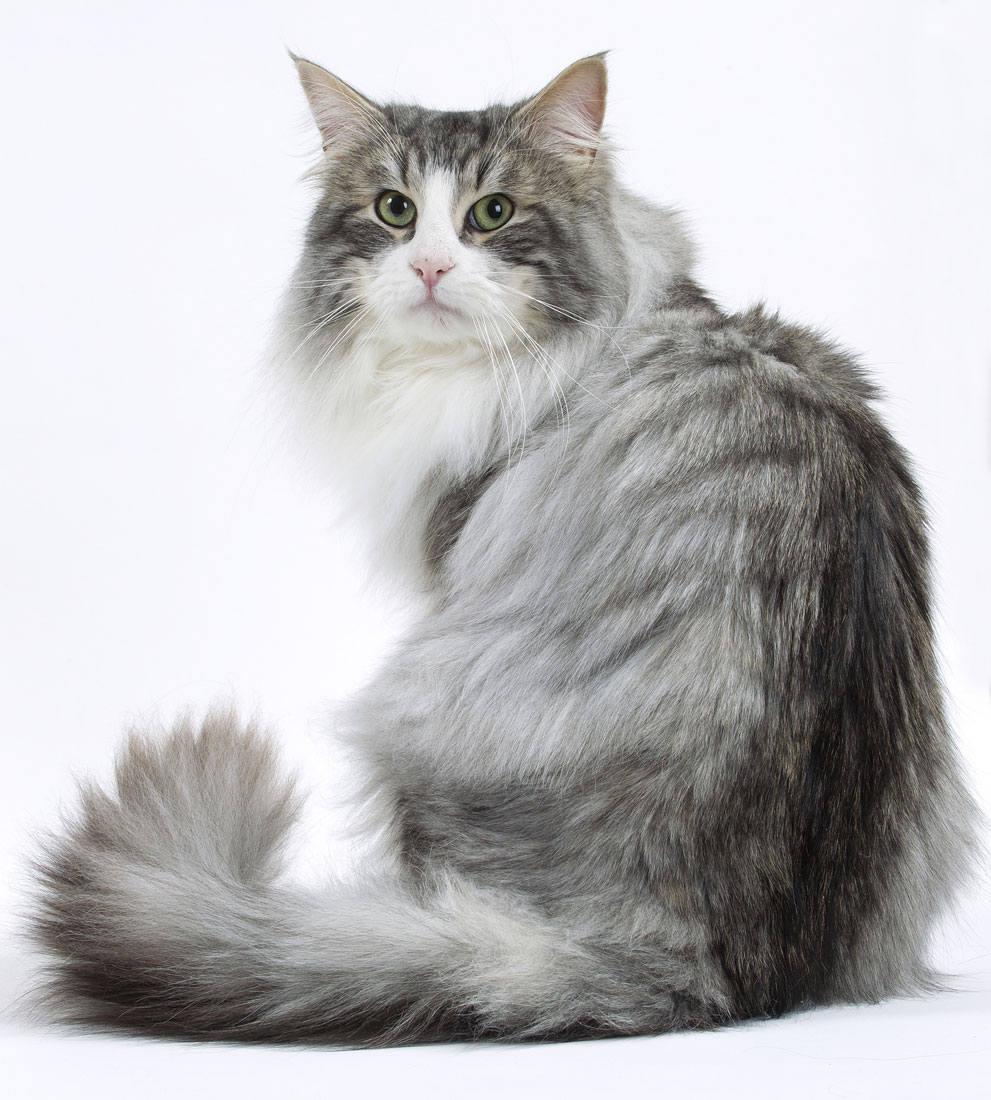
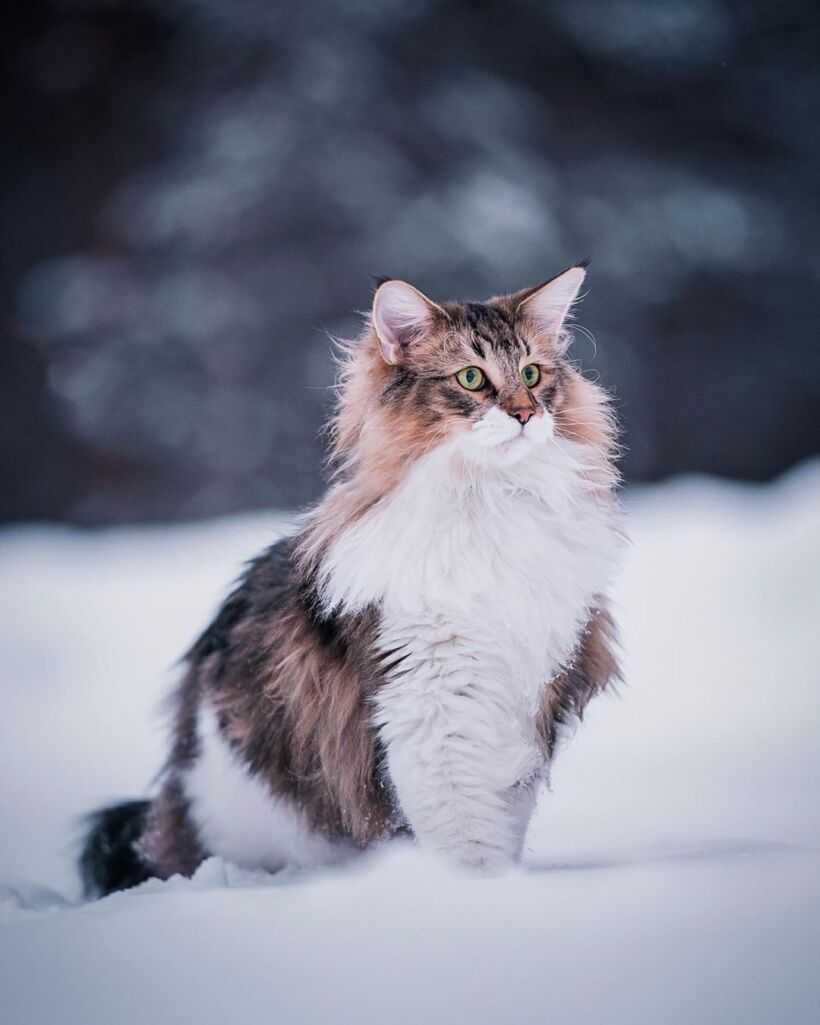





Description of the Norwegian Forest Cat
The Norwegian Forest Cat is a breed famous for its stunning appearance, rich history, and robust health. These cats are considered true survivors, having originally lived in the harsh conditions of the Scandinavian forests. Due to their natural qualities, the Norwegian Forest Cat has become a popular choice among pet lovers worldwide. In this article, we will discuss what makes this breed unique, how to properly care for these cats, and what to look for when choosing a kitten.
The history of the Norwegian Forest Cat dates back to ancient times. This breed is considered one of the oldest in Europe, and its origins are tied to the legends and myths of Scandinavia. According to traditions, these cats accompanied the Vikings on their journeys, helping to protect food supplies from rodents. It is believed that the ancestors of the breed appeared in Norway over a thousand years ago and adapted to the harsh climate with their long, thick fur. The Norwegian Forest Cat lived in forests for centuries, hunting and surviving in the wild, which developed its endurance and strong character.
The breed was officially recognized only in the mid-20th century, when a group of Norwegian enthusiasts began actively working on its restoration and standardization. In 1977, the Norwegian Forest Cat was recognized by the International Cat Association (FIFe), marking an important milestone in the breed’s development. Today, the Norwegian Forest Cat is popular worldwide due to its magnificent appearance, friendly nature, and ability to adapt to any conditions.
Appearance of the Norwegian Forest Cat
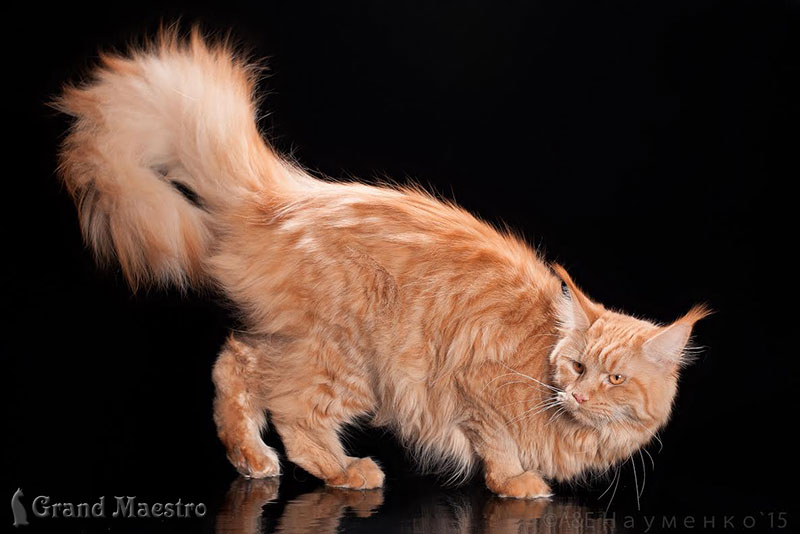
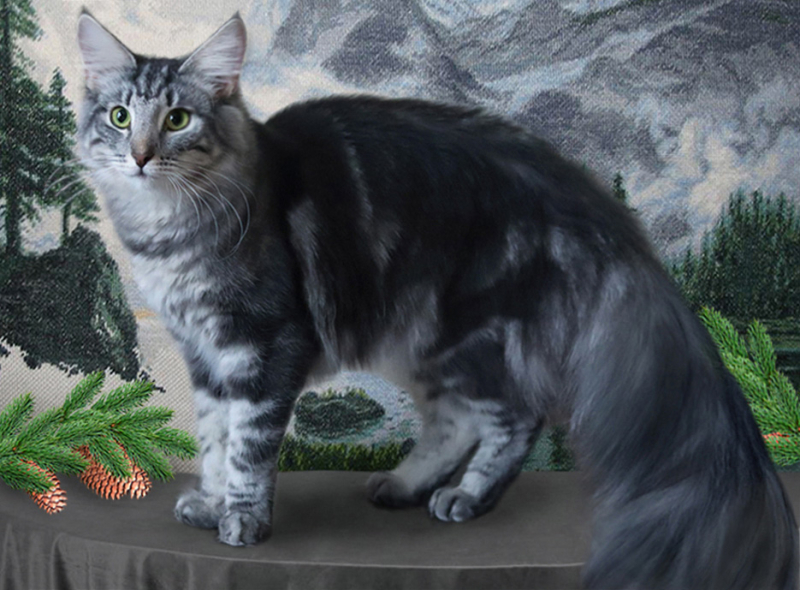
The Norwegian Forest Cat embodies natural strength and elegance. Its appearance resembles that of a wild forest predator, which is not surprising, as this breed has lived for centuries in the harsh conditions of Scandinavian forests. Its unique appearance attracts attention at cat shows and easily captures the hearts of pet lovers. The cat’s look comprises many elements, each playing an important role in adapting to natural conditions. These cats are built for survival in the most extreme climates, and every detail of their physique emphasizes this.
The Norwegian Forest Cat is a large animal with a powerful build, sturdy skeleton, and well-developed musculature. Adult males can weigh between 7-9 kilograms, while females typically weigh 4-6 kilograms. Despite this, the cat maintains its grace and agility, allowing it to climb trees effortlessly and cover significant distances. The body of the Norwegian Forest Cat is elongated with a deep chest, in which it resembles a true predator ready for hunting and active pursuits.
Fur as the Main Element of Protection
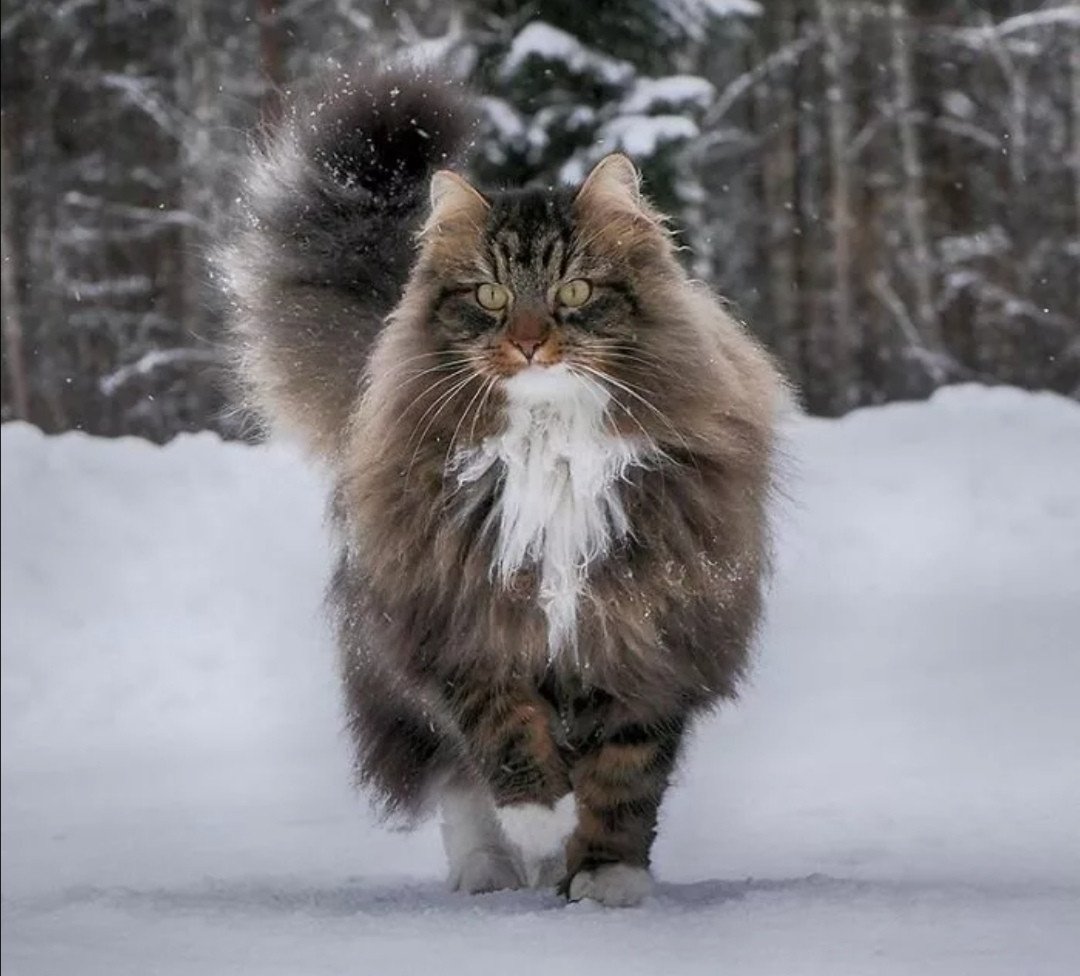
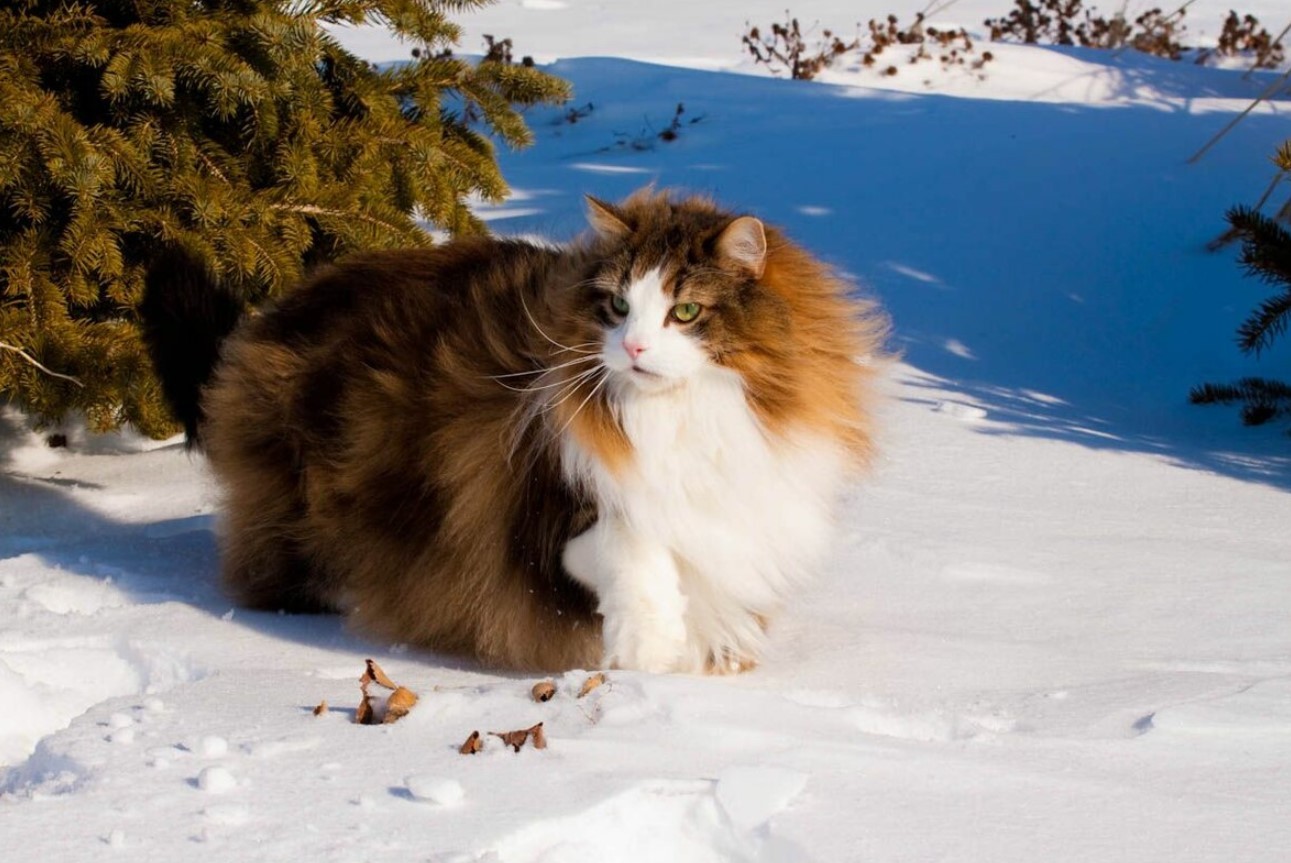
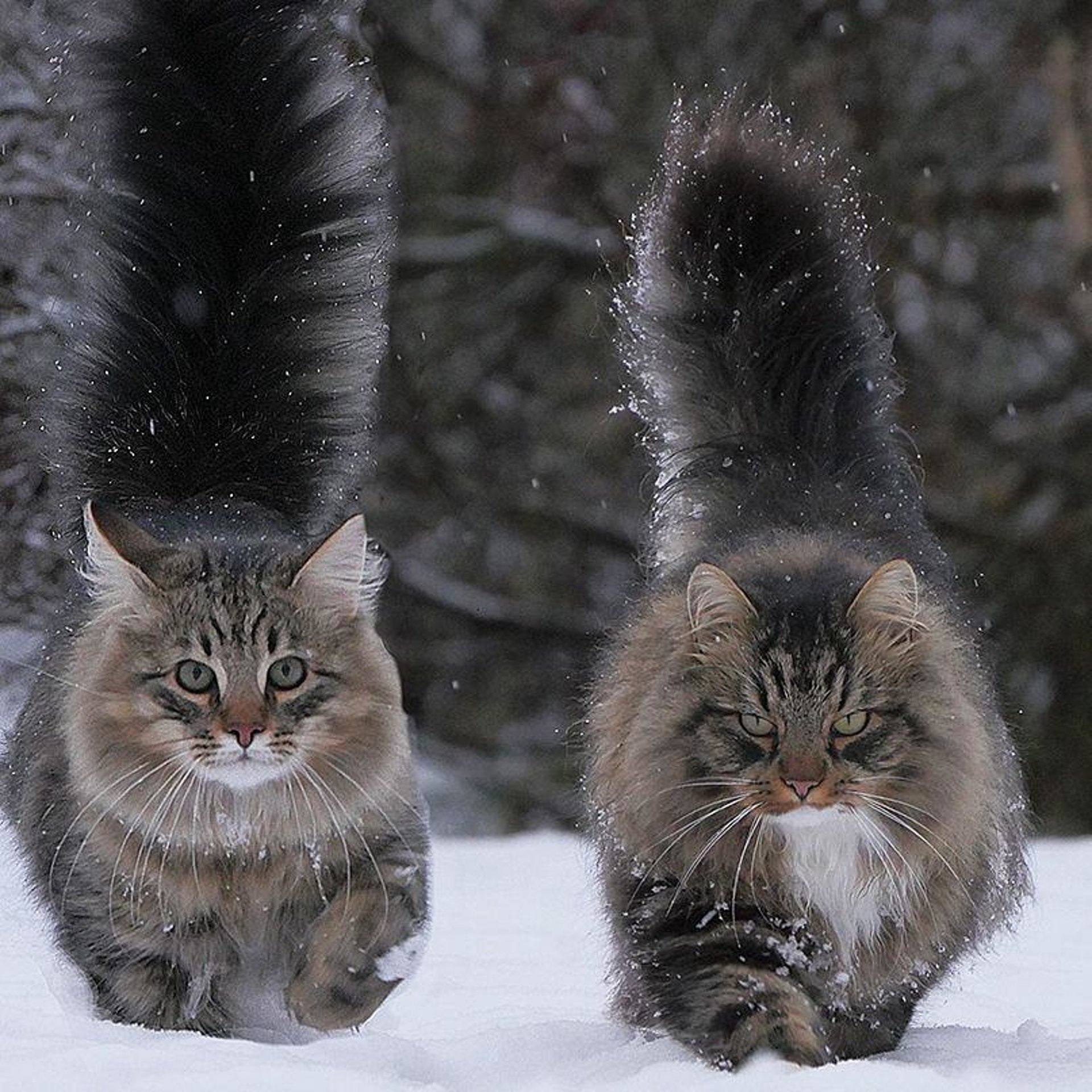
One of the most remarkable features of the Norwegian Forest Cat’s appearance is its thick, long fur. This breed has a double coat that provides excellent protection against cold and moisture. The outer hair is long, dense, and water-repellent, ensuring the cat remains dry even after rain or snow. The undercoat is thick and soft, retaining warmth and protecting the skin from freezing. This fur structure allows the cat to feel comfortable in any weather conditions, be it a harsh winter or a rainy season.
Especially striking is the collar of long fur around the neck, resembling a mane. This “collar” is particularly thick in winter, making the cat look visually larger and giving it a majestic appearance. The hind legs also have “trousers”-elongated sections of fur that serve as additional protection against the cold.
Natural Grace and MusculatureDespite its large size, the Norwegian Forest Cat remains graceful and agile. Its powerful musculature allows it to climb trees easily and make high jumps. The hind legs are slightly longer than the front ones, making it especially effective in jumping and providing stability on slopes. This trait helped the breed’s ancestors successfully hunt and avoid danger in the wild.Long and strong limbs, topped with large paws that have tufts of fur between the toes, not only add stability but also provide extra warmth from the snow. These “snow shoes” help the pet move over snowy surfaces without sinking into the snow.Head and Its Expressive FeaturesThe head of the Norwegian Forest Cat has a characteristic triangular shape with high cheekbones and a strong chin. This shape gives the cat an expression of strength and confidence. The nose is straight and long, without a prominent stop, emphasizing its natural heritage and differing from the more “pedigreed” facial lines of other domestic cats.The eyes of the Norwegian Forest Cat are another distinctive feature of its appearance. They are large, almond-shaped, and slightly slant


Отличительные черты

Голова

Морда

Уши

Глаза

Зубы

Корпус

Конечности

Хвост

Шерсть

Окрас
Characteristics of the Norwegian Forest Cat
The Norwegian Forest Cat is a breed with a rich history and a distinct personality. It has inherited not only endurance and strength from its wild ancestors but also a friendly and playful nature, making it an excellent companion for families. These cats combine independence, courage, and loyalty while retaining their natural instincts. The character of the Norwegian Forest Cat is a blend of wildness and affection, setting it apart from other domestic breeds.
Friendliness and Sociability
Despite their wild origins, Norwegian Forest Cats are very friendly and sociable animals. They love attention and enjoy spending time with family members without being intrusive. These cats prefer to be near people but can occupy themselves calmly if their owner is busy. The Norwegian Forest Cat does not demand constant attention like some more active breeds, but is happy to participate in shared activities.
These cats get along well with children and other pets, especially if they have grown up together. Due to their patient nature, the Norwegian Forest Cat adapts easily to new environments and does not experience stress with changes in surroundings. They are also friendly towards guests, calmly reacting to new people in the home.
Intelligence and Curiosity
The Norwegian Forest Cat is a very intelligent and curious breed. Its high level of intelligence is evident in its ability to quickly solve various tasks, such as opening doors or retrieving favorite toys. The cat learns easily and remembers commands, making it convenient for training. They can master not only basic commands like “sit” or “come” but also more complex tricks, especially if training is conducted in a playful manner.Curiosity in the Norwegian Forest Cat is expressed in its desire to explore its surroundings. These cats love to climb cabinets, investigate shelves, and sneak into closed spaces. Therefore, owners should create designated play and climbing areas to satisfy its natural need for activity.Playfulness and ActivityNorwegian Forest Cats maintain their playfulness throughout their lives. Even as adults, they remain active and love to play with toys, climb scratching posts, or engage in active games with their owners. Their natural energy and hunting instincts make them excellent partners in interactive games, such as catching toy mice on a string or chasing laser pointers.These cats possess well-developed hunting instincts, making
Питомники
Выбор питомника по городу, породе и отзывам
Rescue cat on a hiking trail
A cat named Nana became famous in Norway as the "fluffy rescuer." During a hike along one of the tourist trails, she caught the attention of tourists to a man who had fallen and injured himself. Nana meowed loudly and led people to the victim, helping the rescue team find him faster. This incident became well-known, and Nana received a medal for bravery from the local animal protection society.Care and Maintenance of the Norwegian Forest Cat
The Norwegian Forest Cat is a breed that requires a special approach to care and maintenance, taking into account its unique characteristics. These cats are distinguished by their thick and long fur, robust build, and active lifestyle, which places certain responsibilities on their owners. Caring for a Norwegian Forest Cat includes maintaining fur health, proper nutrition, nail and dental care, and creating suitable conditions for activity and play.
1. Fur Care
The thick and long fur is one of the most notable features of the Norwegian Forest Cat, and its condition depends directly on regular grooming. Because this breed has a double coat (long guard hairs and a dense undercoat), it is essential to pay attention to regular brushing.
Regular Brushing. It is recommended to brush the Norwegian Forest Cat at least twice a week to prevent matting and remove loose hairs. During seasonal shedding, when the cat loses a lot of undercoat (in spring and fall), brushing should be done daily. Use a metal comb with long teeth to remove the undercoat and a brush for the guard hairs.
Bathing. Frequent bathing is not required for the Norwegian Forest Cat, as its fur has water-repellent properties. It is sufficient to bathe the cat as needed, for example, if it gets very dirty. Use a special shampoo for long-haired breeds to avoid damaging the fur’s structure.
Preventing Mats. Although the fur of a Norwegian Forest Cat is resistant to matting, tangled hairs can still occur in areas with long fur, such as the “collar” and “pants.” Inspect these areas carefully and promptly remove any mats that form.2. Nail and Paw CareNorwegian Forest Cats are very active and love to climb, so it is important to monitor the condition of their claws and paws.Regular Nail Trimming. Although cats of this breed actively use their claws, it is recommended to trim them about once a month to prevent excessive growth and possible ingrowth.Scratching Posts. Provide the Norwegian Forest Cat with several scratching posts at home so it can satisfy its need to sharpen its claws. High scratching posts or play complexes with shelves are ideal, as these cats love to climb.3. Dental Care and Oral HygieneDental health is an important aspect of caring for the Norwegian Forest Cat, as plaque and tartar buildup can lead to oral diseases.Regular Tooth Brushing. Get the cat accustomed to having its teeth brushed with specialized toothpaste and a cat toothbrush. This will help prevent tartar buildup and maintain gum health.Use of Special Treat
Outstanding fishing skills.
A Norwegian Forest Cat named Torfinn amazed his owners when he started fishing right from the stream in their garden. His hunting instinct was so well-developed that he successfully caught small fish using his paws. His owners often found Torfinn's "catch" near the house. This unusual behavior was met with admiration, as the cat demonstrated the ability to genuinely hunt in water, which is atypical for domestic pets.Training and Education of the Norwegian Forest Cat
The Norwegian Forest Cat is a breed known for its high intelligence and natural curiosity, making it capable of learning and training. Unlike some more independent breeds, Norwegian Forest Cats show interest in learning new commands and tasks, especially when the process is playful. However, it’s important to consider that successful training should take into account the breed’s natural traits, such as activity level and hunting instincts.
Features of Training the Norwegian Forest Cat
The Norwegian Forest Cat has inherited its natural instincts from its wild ancestors, so training this breed should be engaging and motivating. These cats love solving puzzles and participating in active games, which can be utilized for their training. Their natural energy and curiosity facilitate quick mastery of commands, but training should be conducted in a non-intrusive manner to maintain the pet’s interest.
Using Positive Reinforcement. Like many other breeds, Norwegian Forest Cats are best trained using positive reinforcement. Rewards in the form of treats, praise, and playtime help build positive associations with following commands.
Short and Frequent Training Sessions. These cats have good memories but can quickly lose interest if sessions are too long or monotonous. Therefore, it’s better to conduct several short sessions of 5-10 minutes rather than trying to train the cat for an extended period.
Training Through Play. Norwegian Forest Cats enjoy playing, and this trait can be leveraged in their training. Incorporate elements of play into the learning process to keep the pet engaged and make the experience more enjoyable.What Commands and Tricks Can Be Taught to a Norwegian Forest Cat?The Norwegian Forest Cat can learn both basic commands and more complex tricks, provided the training is done correctly and appropriately.Command “Come.” This is one of the most useful commands to teach a cat. Use favorite treats or toys to attract its attention. When the cat approaches you, reward it with a treat and repeat the command.Command “Sit.” This command is also easy to master, especially if you use a treat. Hold the treat in front of the cat’s nose and slowly lift it upwards, prompting the cat to sit to follow the movement.Training to Fetch a Toy. With their hunting instincts, Norwegian Forest Cats can learn to bring back toys like balls or mice. Start by throwing a toy and encourage the cat to return the item.Training to Climb on Play Structures. Since this breed enjoys climbing, you can train the cat to navigate specially designed play st
Record for speed tree climbing
Please provide the text you would like me to translate to English.How to Choose a Norwegian Forest Kitten
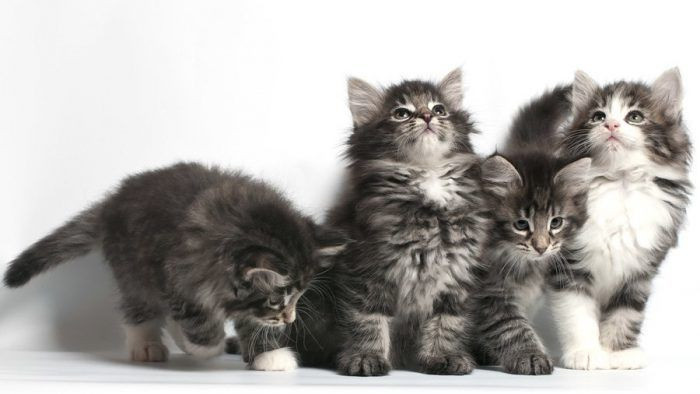
Choosing a Norwegian Forest kitten is a serious step that requires careful consideration. This breed is renowned for its natural beauty, robust health, and unique temperament, so it’s essential to select a kitten that aligns with your expectations and lifestyle. In this section, we’ll discuss what to focus on when choosing a Norwegian Forest kitten to ensure it grows into a healthy and active pet.
1. Finding a Responsible Breeder
The first step is to find a responsible breeder who cares for their animals and adheres to all breed standards. Norwegian Forest cats require a serious breeding approach to avoid health issues and maintain their natural characteristics.
Documentation and Certificates. The breeder should provide the kitten’s pedigree and veterinary passport with vaccination and deworming records. Ensure both parents are registered with a feline association and meet breed standards.
Reviews and Reputation. Research reviews about the breeder and cattery to confirm they genuinely care about the health of their cats. This will help prevent problems in the future.
2. Evaluating Living ConditionsWhen you visit the cattery or the breeder’s home, pay attention to the conditions in which the kittens are raised. This is important because the proper development of the kitten depends on the quality of its life from day one.Cleanliness and Hygiene. Ensure that the space is clean, well-lit, and cozy. Kittens should be kept in clean conditions, with access to fresh water and quality food.Socialization and Activity of Kittens. Observe how the kittens react to people and other animals. Healthy and well-socialized kittens will show curiosity, actively play, and approach people without fear.3. Optimal Age for Acquiring a KittenThe best age to take a Norwegian Forest kitten is between 12 and 16 weeks. At this age, kittens are already vaccinated, sufficiently socialized, and ready for independent living.Before 12 Weeks. A kitten younger than this may not be ready to separate from its mother, which can negatively affect its health and behavior. It’s vital for the kitten to have gained basic socialization skills from its mother.After 16 Weeks. A kitten that has stayed longer in the cattery usually adapts better, as it has already d
Health and Diseases of the Norwegian Forest Cat
The Norwegian Forest Cat is a breed known for its robust health and natural endurance, rooted in its origin and centuries of living in the harsh conditions of Scandinavia. However, like any breed, the Norwegian Forest Cat has specific predispositions to certain diseases that are important to understand for maintaining the health of your pet. In this section, we will discuss the main aspects of the health of Norwegian Forest Cats, the most common diseases, and recommendations for their prevention.
1. Hypertrophic Cardiomyopathy (HCM)
Hypertrophic cardiomyopathy is a heart disease characterized by thickening of the myocardium (heart muscle), which impairs normal heart function. It is one of the most common heart diseases in cats, and Norwegian Forest Cats may be predisposed to it.
Symptoms: difficulty breathing, lethargy, decreased activity, loss of appetite.
Diagnosis: for early detection of the disease, it is recommended to regularly perform echocardiograms (ECHO) and electrocardiograms (ECG).
Prevention and Treatment: timely diagnosis allows for treatment at an early stage, slowing the progression of the disease. If the disease is detected, a veterinarian may prescribe special medications to support heart function.2. Glycogen Storage Disease Type IVGlycogen Storage Disease Type IV is a hereditary metabolic disorder found in Norwegian Forest Cats, characterized by the accumulation of abnormally branched glycogen in the body tissues. This can lead to issues with liver, muscle, and nervous system function.Symptoms: weakness, stunted growth, coordination problems. Signs of the disease may appear as early as the first months of a kitten’s life.Diagnosis: can only be made through a genetic test that can identify the presence of a mutated gene in the parents or the kitten itself.Prevention: before acquiring a kitten, it is recommended to conduct genetic testing to eliminate the possibility of passing the disease to offspring.3. Joint Problems and DysplasiaNorwegian Forest Cats are an active and agile breed, but they can also experience joint problems, especially in older age. One common condition in large cats is hip dysplasia, which can be
Содержание
-
1. Описание породы
-
2. Внешний вид
- 2.1 Голова
- 2.2 Морда
- 2.3 Уши
- 2.4 Глаза
- 2.5 Зубы
- 2.6 Корпус
- 2.7 Конечности
- 2.8 Хвост
- 2.9 Шерсть
- 2.10 Окрас
-
3. Характер
-
4. Содержание и уход
-
5. Дрессировка и обучение
-
6. Как выбрать котенка
-
7. Здоровье и болезни






Comments
Only registered users can leave reviews.
Enter