
Napoleon (Minuet)




Description of the Napoleon (Minskin) Breed
The Minskin, also known as the Napoleon, is one of the most elegant and unusual cat breeds, born from the desire to create the perfect combination of grace, a friendly nature, and charming appearance. The breed emerged in the 1990s thanks to American breeder Joe Smith, who aimed to combine the short legs of Munchkins with the lush fur and expressive features of Persian and exotic shorthair cats. His goal was to create a cat that combined compact size and refined appearance while maintaining a cheerful and friendly character. Initially, Joe Smith named the breed “Napoleon” in honor of the legendary Emperor Napoleon Bonaparte, whose name was associated with short stature but also with strength and grandeur, despite this physical aspect. The short legs of the cats served as a visual allusion to Napoleon’s height, while their polish and elegance emphasized the charismatic image linked to this name. However, the breed later received the alternative name “Minskin” to reflect its grace and refinement, reminiscent of the French dance of the same name. The creation of the breed required meticulous selective breeding to preserve the short-leggedness of the Munc
Appearance of the Napoleon (Mewat)
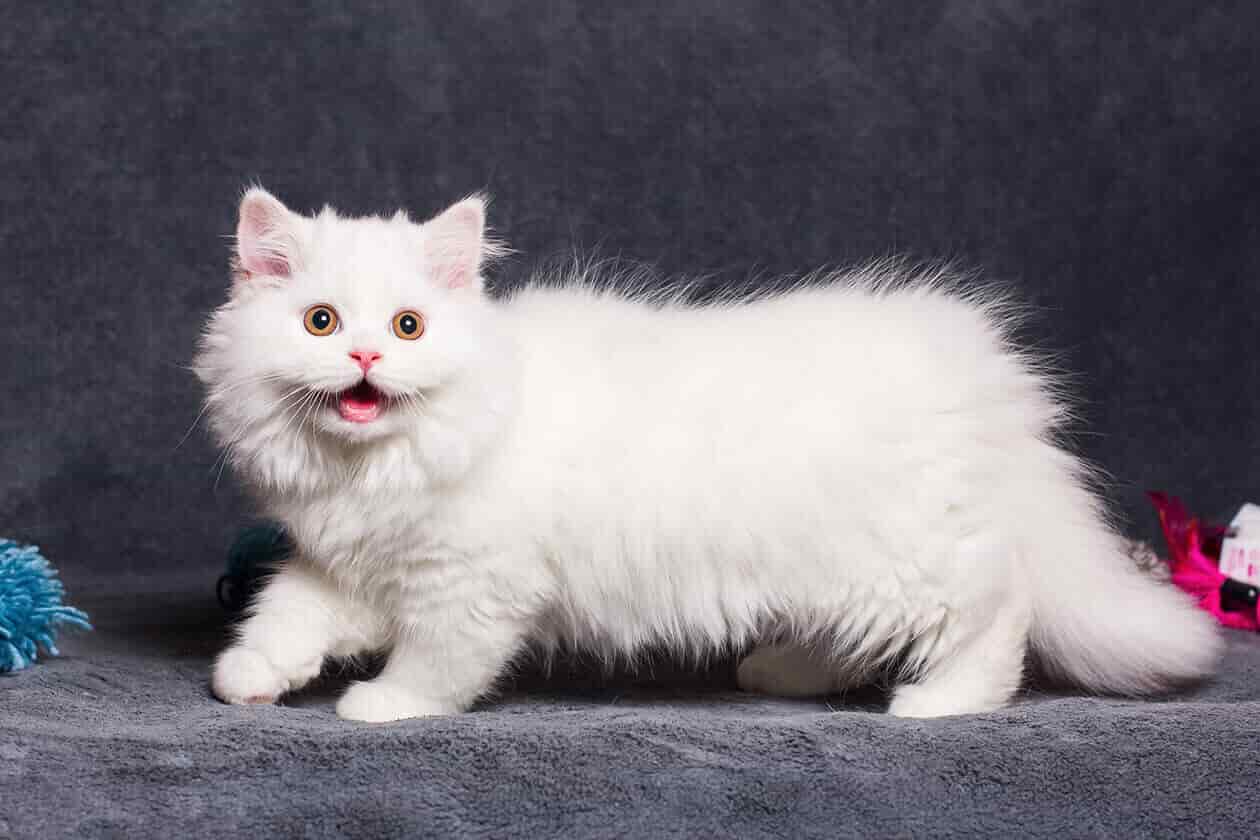
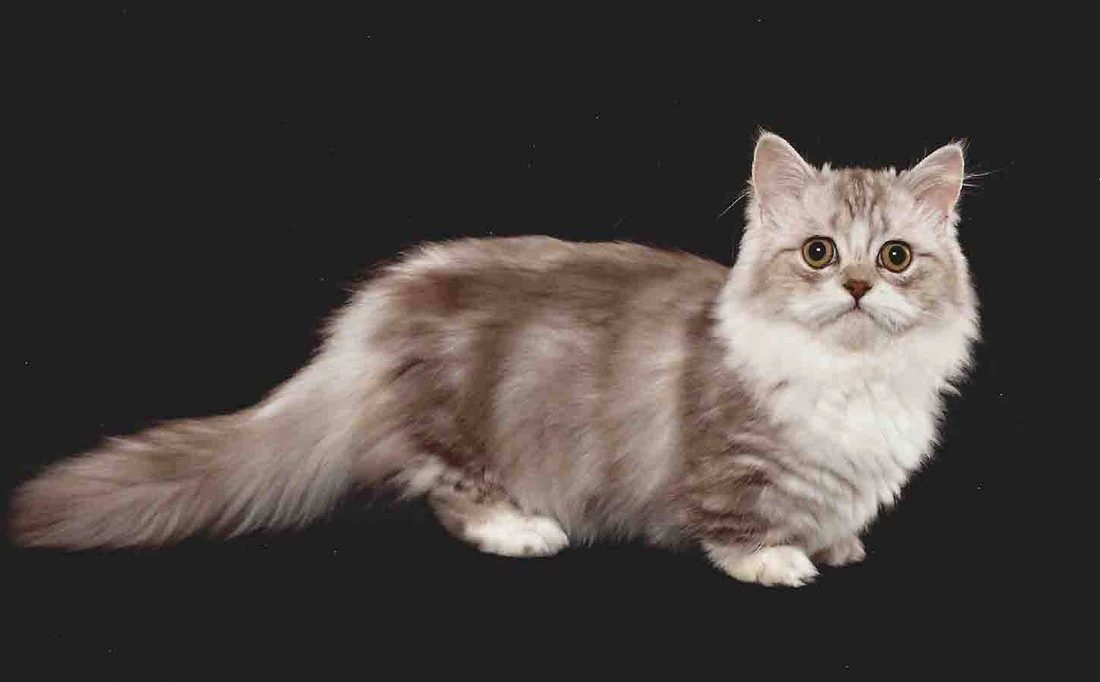
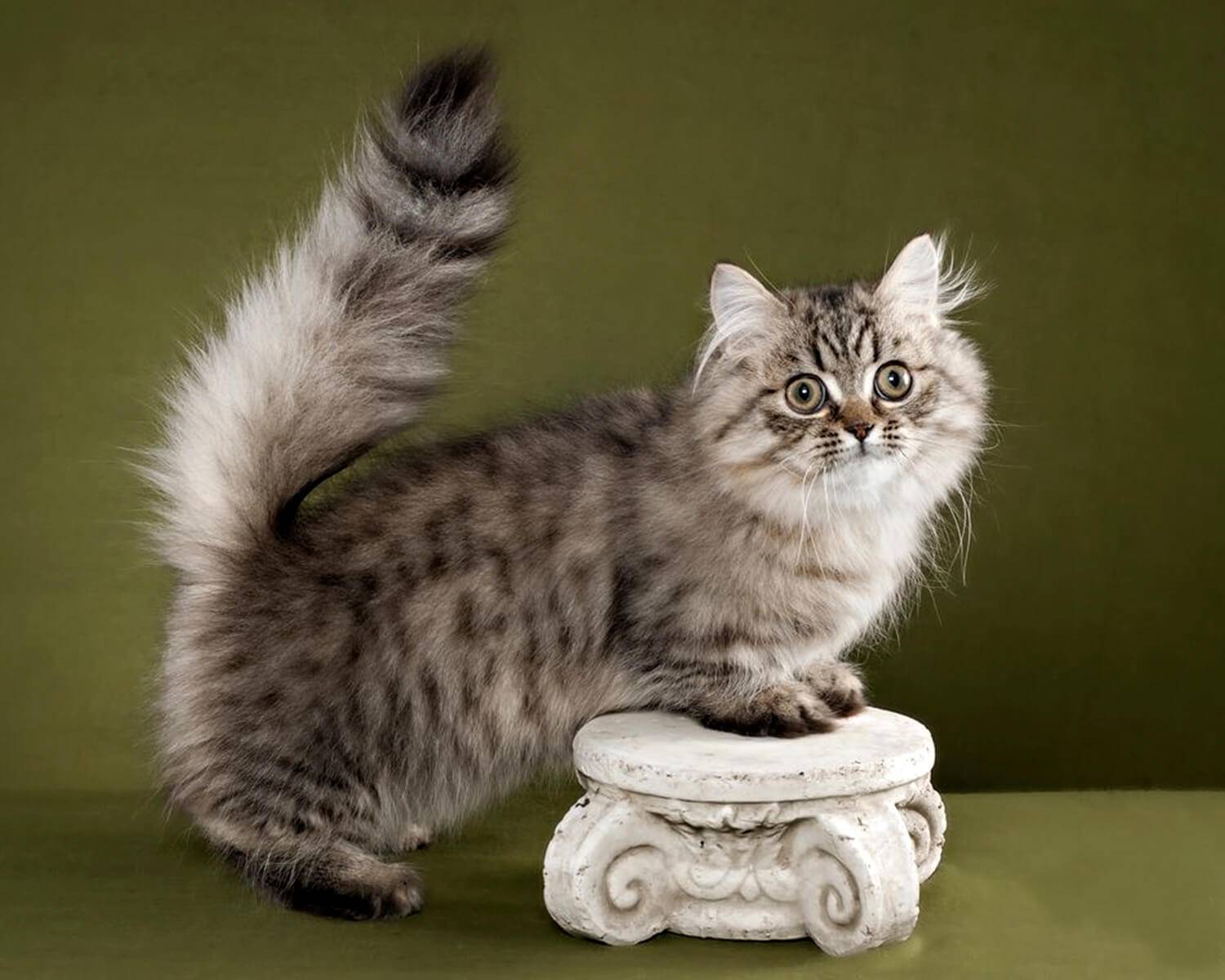
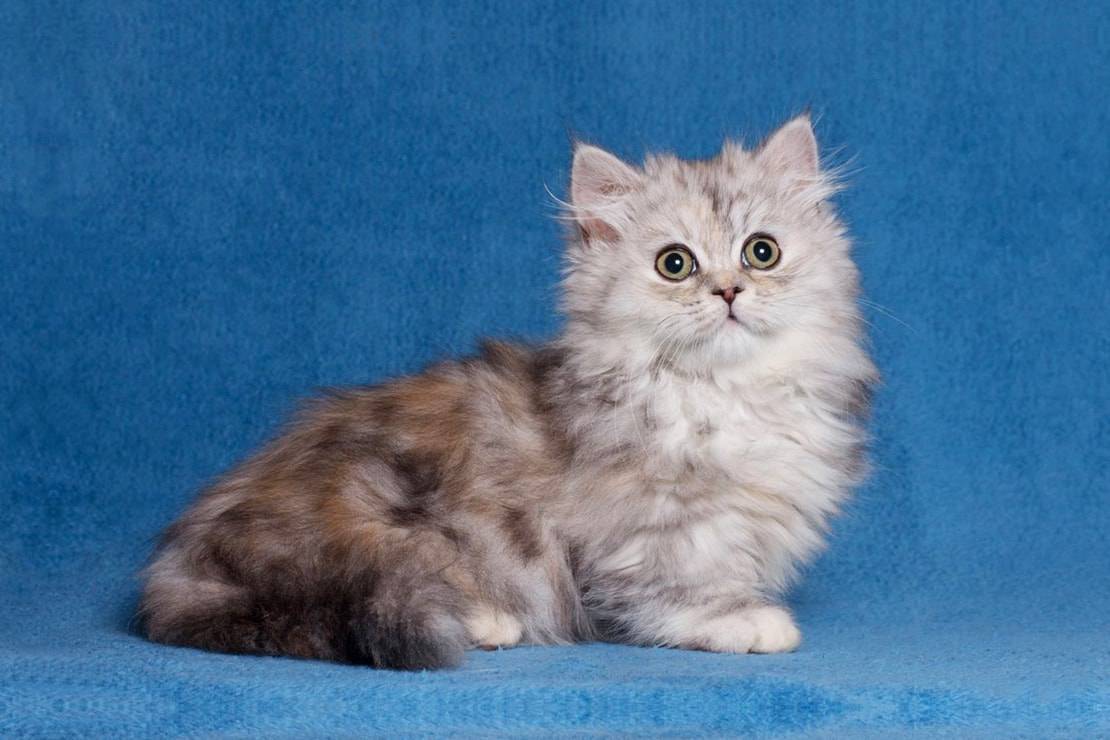
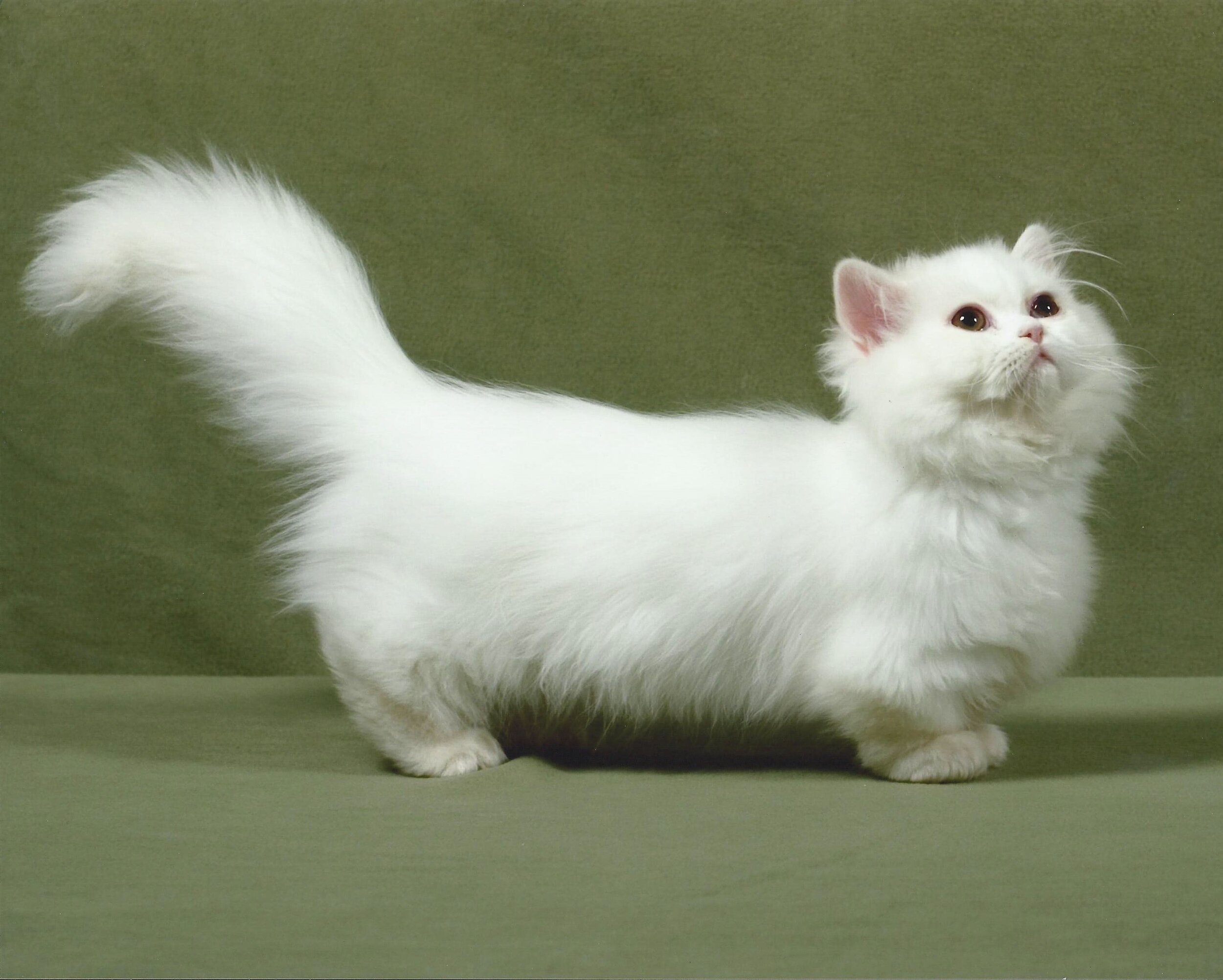
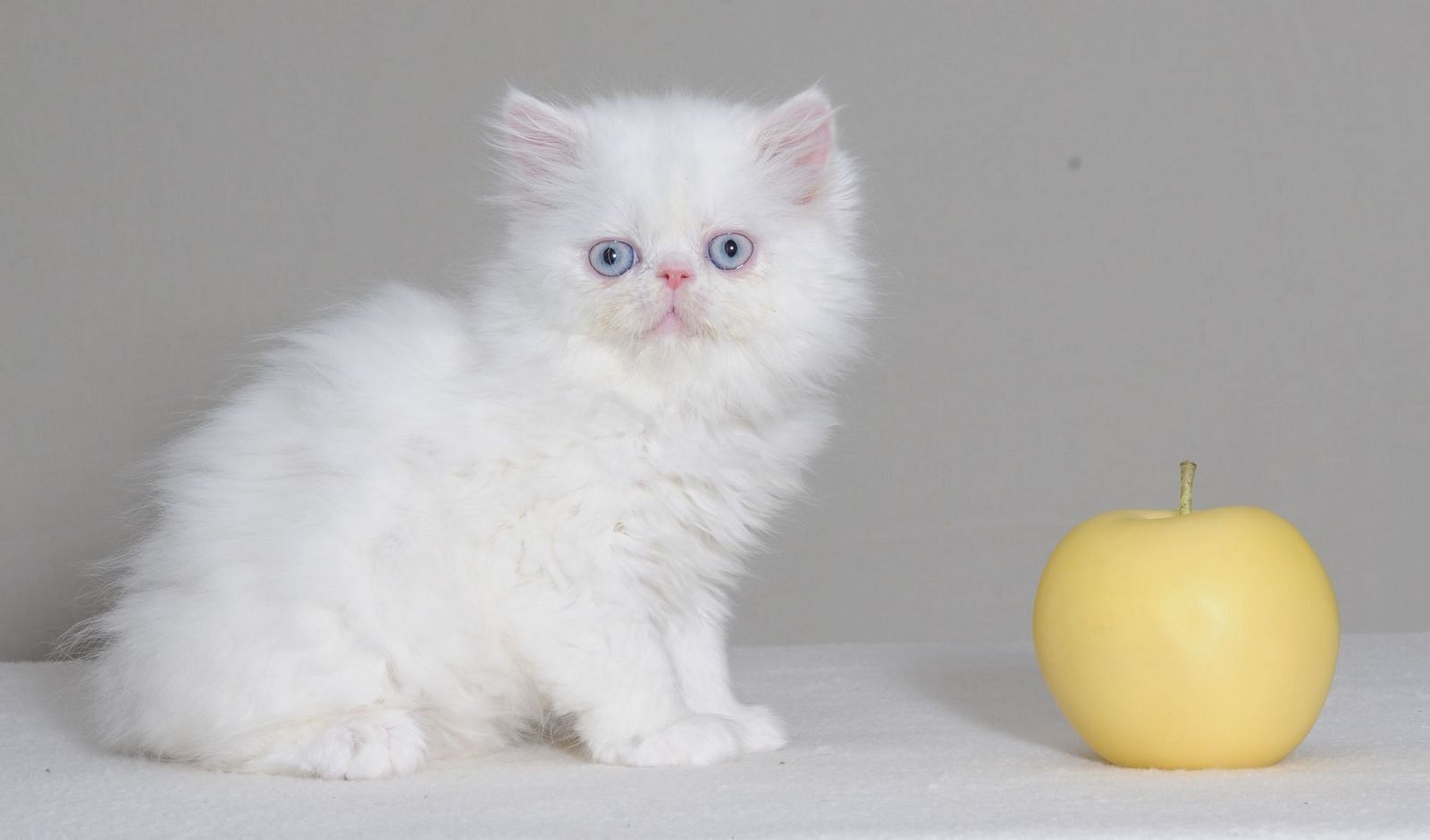
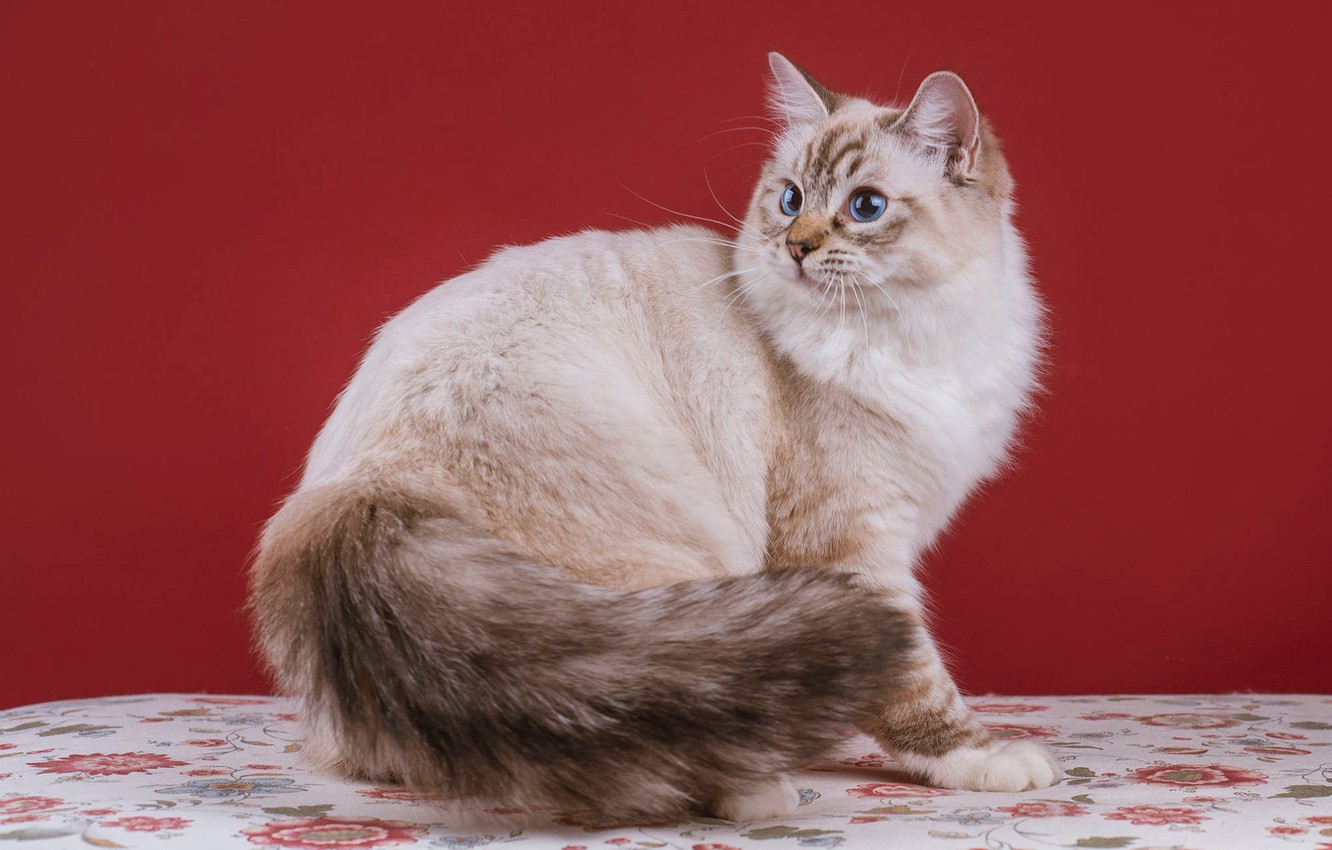
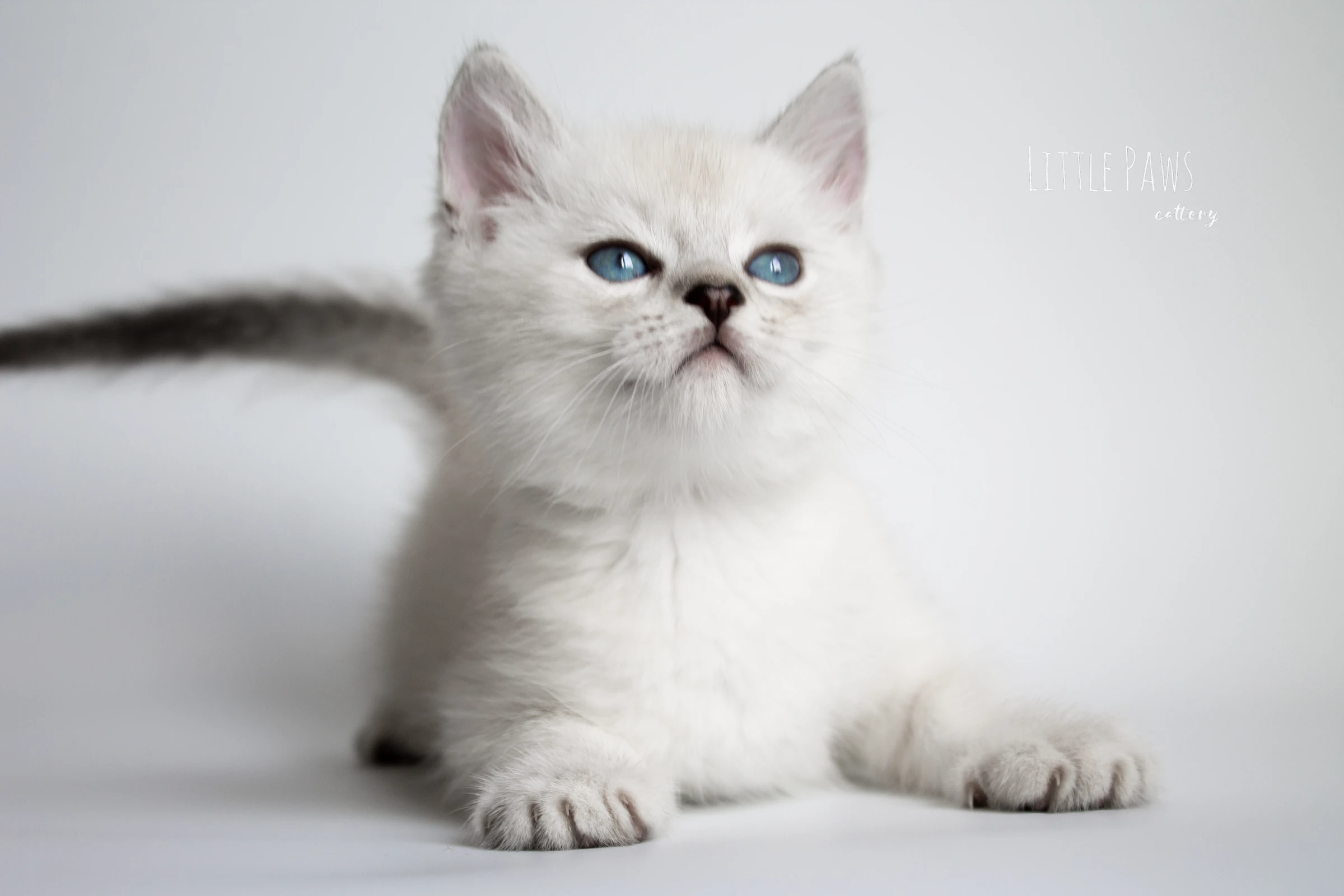
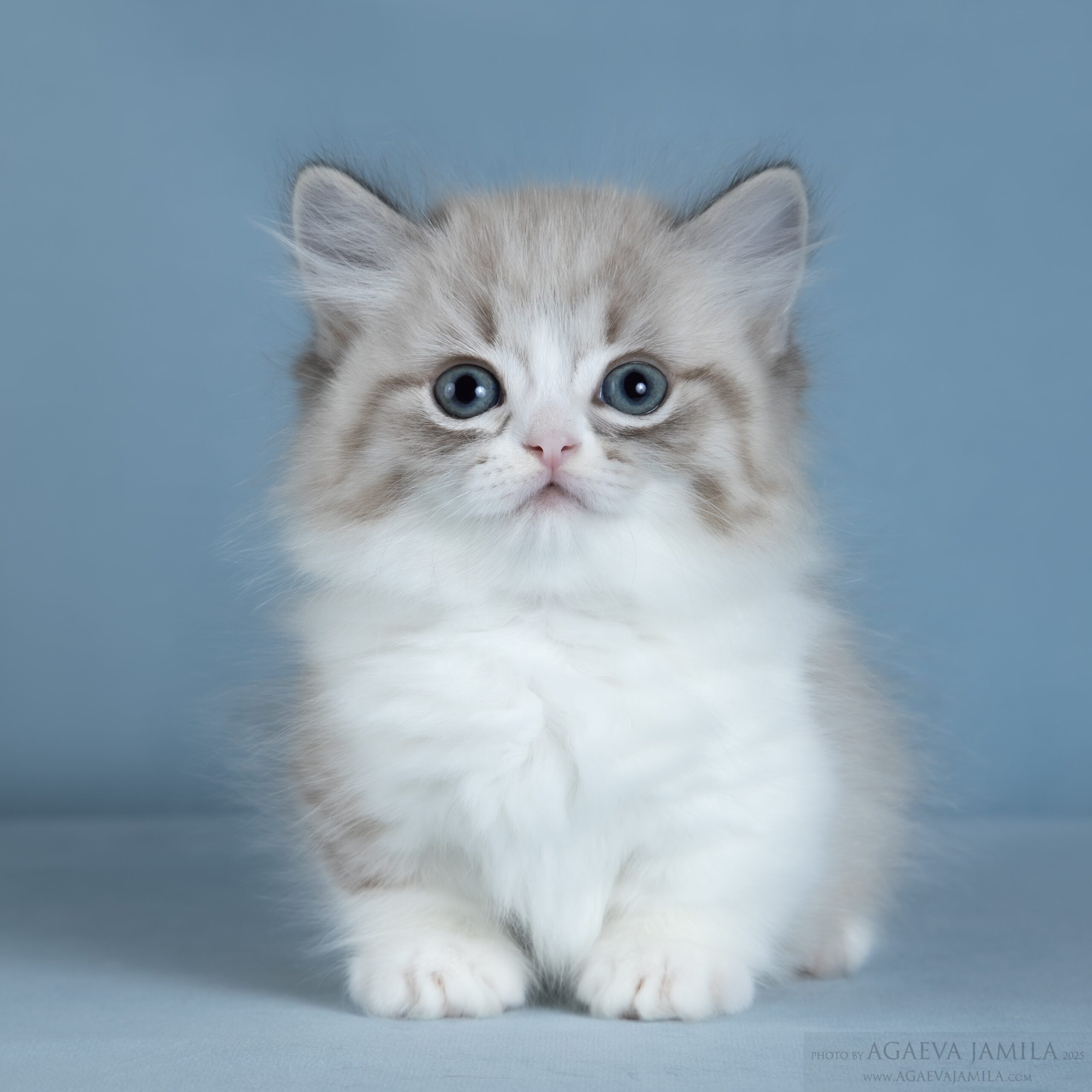
The Napoleon (or Mewat) is a unique breed of cat whose appearance evokes admiration from everyone. These charming animals appear miniature and doll-like due to their compact build, fluffy fur, and sweet facial expressions. The main feature of the breed is its short legs, resulting from a genetic mutation inherited from the Munchkins, one of the parent breeds. The appearance of the Napoleon is a blend of elegance and cuteness, making these cats resemble small plush toys, which is why they are often referred to as “forever kittens.”
The body of the Napoleon is medium-sized, but due to its short legs, it looks compact and even a bit squat. Despite this, the cat’s body is muscular and strong, allowing it to maintain mobility and activity. The slenderness and harmony of its body combine with well-developed muscles, particularly noticeable in the hind legs. This ensures the cat’s stability and ability to jump, although the heights and amplitudes of the jumps are somewhat limited compared to long-legged breeds.
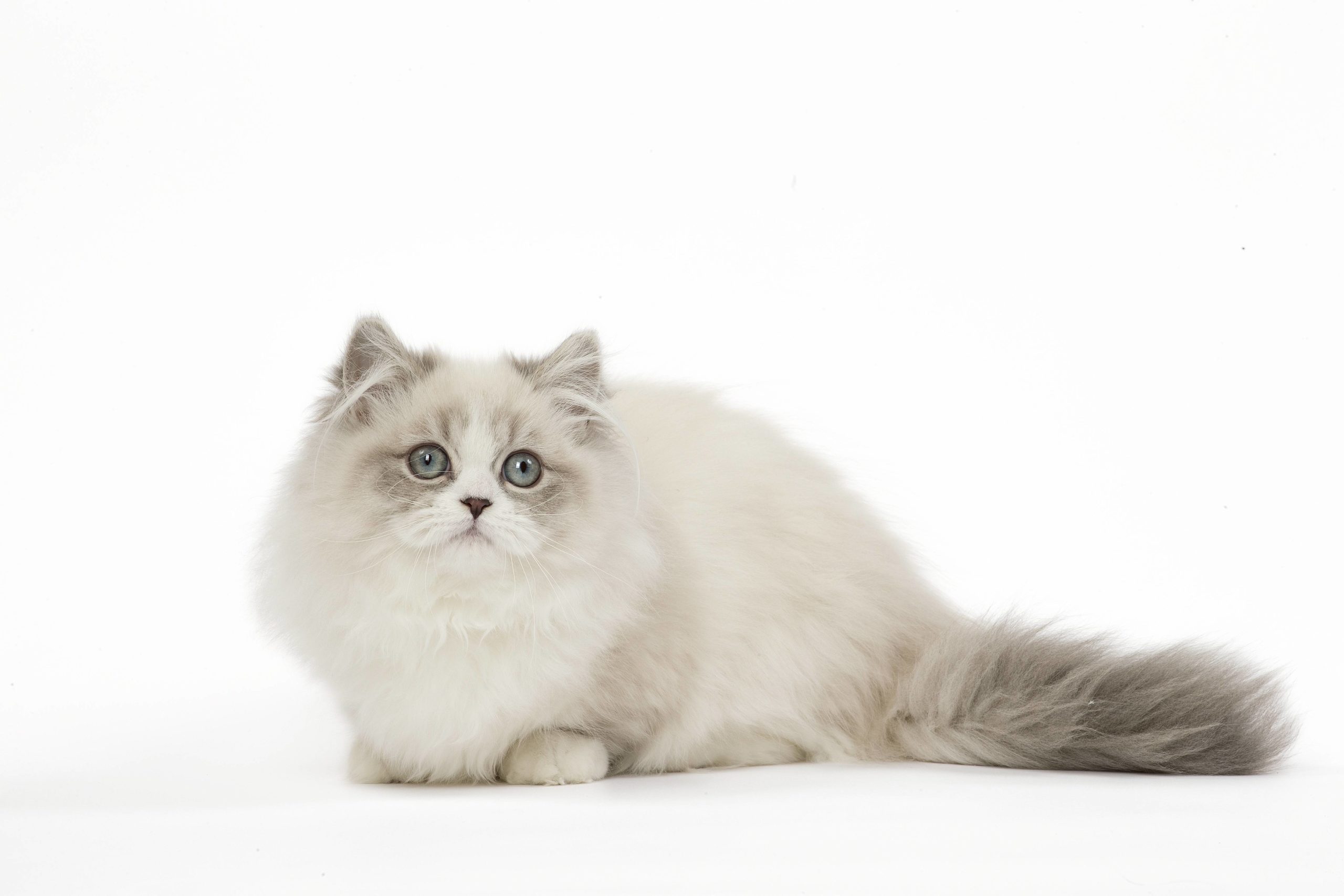
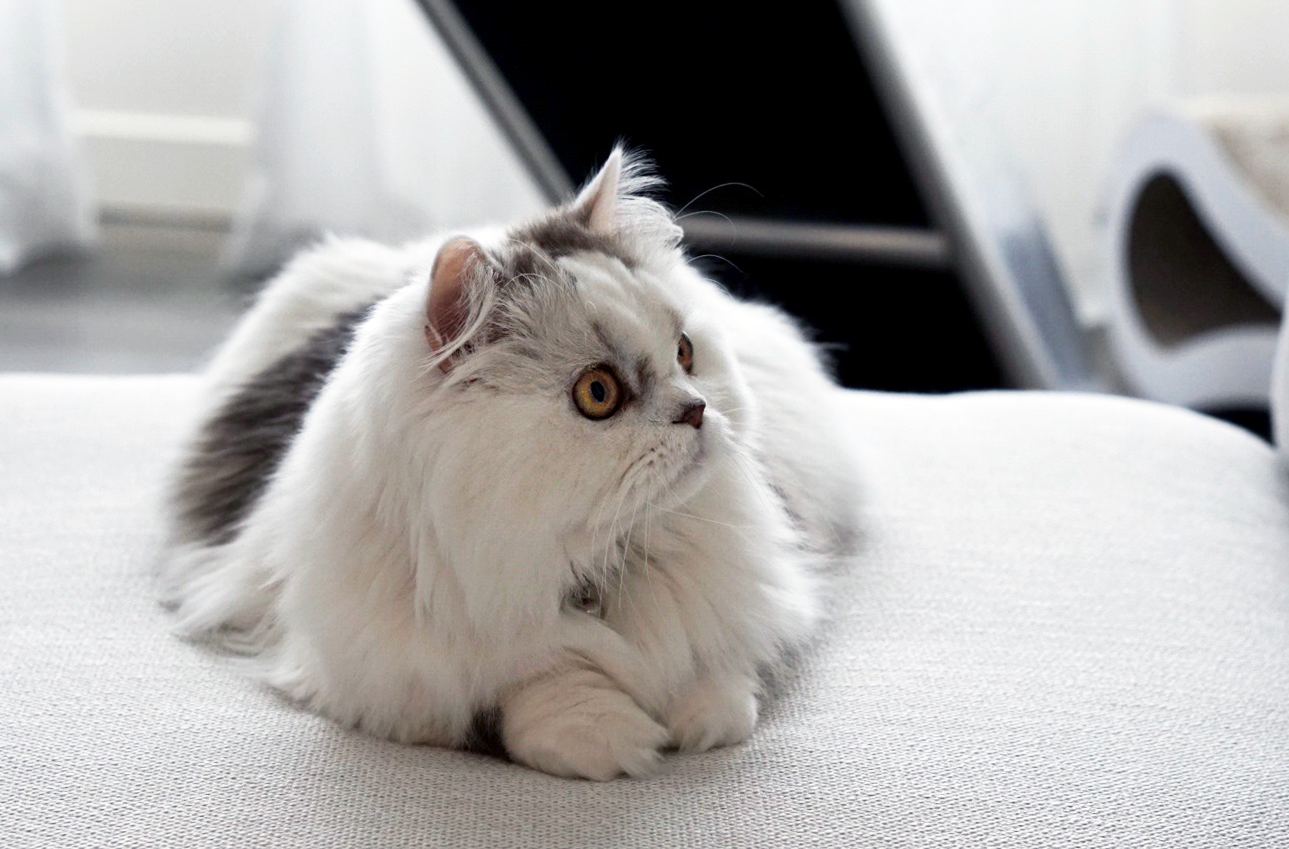
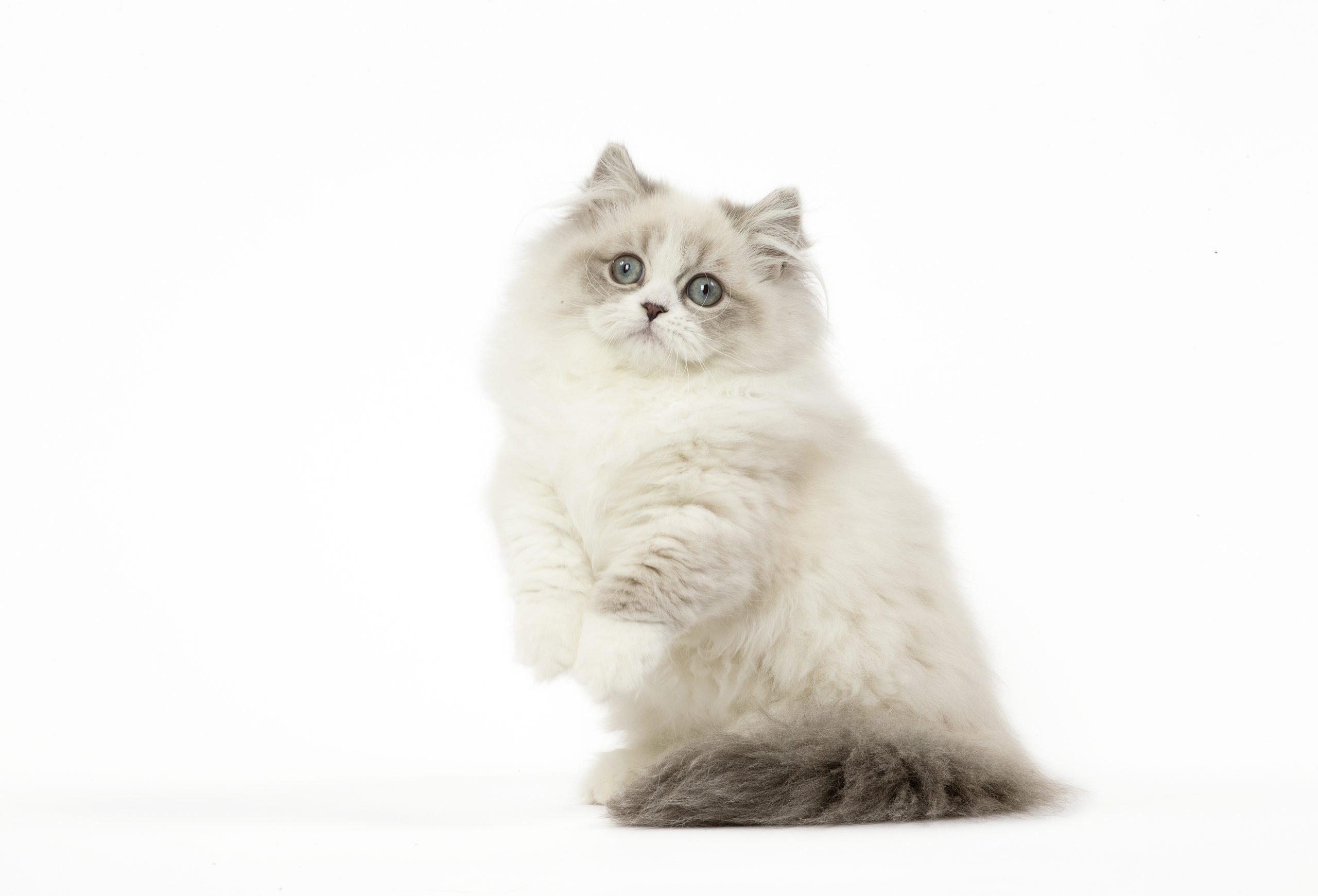
The head of the Napoleon is rounded with smooth lines, giving the cat an expressive and friendly appearance. The combination of a large forehead, round eyes, and soft facial features creates an image of a cat that looks eternally young and adorable. The large expressive eyes, depending on the color of the fur, can be bright blue, green, copper, or even mismatched, adding to the cat’s overall charm.
Special attention in this breed is drawn to its fur. Napoleons can have either long or short fur, but in any case, it remains thick, soft, and fluffy. Long-haired Napoleons often resemble small clouds due to their abundant and dense fur covering their entire body, including the tail. Short-haired individuals appear sleeker, but their fur is also dense and silky. Both types require grooming, especially during shedding periods when the fur can easily mat.
The color palette of Napoleons is extremely diverse. The coat can be any color, from solid shades like white, black, or ginger to more intricate combinations with spots, stripes, or a marble pattern. “Pointed” colors are even possible, with darker markings on the face, ears, paws, and tail, similar to Siamese cats. This variability allows anyone to choose a Napoleon to their liking.
Short legs are a distinctive feature of Napoleons that make their appearance unique. However, these short limbs do not hinder the cat’s activity. Napoleons are playful, love to play, and run quickly, although their jumping heights are somewhat limited. Their short limbs give them a characteristic gait, marked by grace and smoothness. They adapt easily to apartment living, requiring little space for play and being satisfied with moderate physical activity.The Napoleon’s tail is medium-length, covered in thick fur, especially in the long-haired representatives of the breed. It is often fluffy and slightly curved at the tip. The tail helps the cat maintain balance while moving and is used to express emotions. During play or curiosity, the tail can move energetically from side to side, and when calm, it rests on its back or hangs down.The round shape of the head and smooth lines of the skull create an impression of softness and friendliness. Large, widely spaced eyes serve as a bright accent in the cat’s appearance. They give the Napoleon an expressive, somewhat “doll-like” facial expression, enhancing its cuteness. Medium-sized ears with rounded tips co

Отличительные черты

Голова

Морда

Уши

Глаза

Зубы

Корпус

Конечности

Хвост

Шерсть

Окрас
Character of the Napoleon (Minuet)
The Napoleon (or Minuet) is a breed that attracts not only with its appearance but also with its wonderful character. These cats have a gentle, friendly disposition and are well-suited for home life. The character of the Napoleons can be described as a combination of playfulness, affection for their owners, and a balanced nature. Despite their small size, they show a strong attachment to people, becoming true friends and family members. Their behavior is characterized by calmness and affection, making them ideal pets for families with children, the elderly, and even first-time cat owners.
Affection for Owners
Napoleons are highly affectionate towards their owners. They love being near people and often follow them around the house like little “shadows.” Napoleons will sit next to you while you read a book or watch TV and may jump into your lap to enjoy some petting and attention. However, these cats are not overly demanding: they don’t require constant attention but are always happy to interact when you have free time. Only verified breeders offer healthy kittens with complete documentation.
A distinctive trait of Napoleons is their ability to sense their owner’s mood. If you are tired or upset, they may quietly come over and settle beside you to provide comfort with their presence. This breed understands its people well and tries to be near them in any situation. Napoleons often purr, expressing their affection and satisfaction, and can even lift your spirits with their soft, melodic voice.
Playfulness and Activity
Despite their short legs, Napoleons have a high level of activity. They love to play and actively participate in various games with toys. These cats can spend a lot of time chasing a ball, jumping after a toy mouse, or exploring new places. Napoleons adore interactive toys and puzzles that stimulate their mental abilities and hunting instincts.However, their playfulness is not aggressive, and they won’t bother their owners with constant requests to play. Napoleons enjoy active play but are also content to relax quietly when their owner is busy. This makes them great companions for people with different lifestyles: they can be both active and calm, depending on your mood and the time you can dedicate to play.Sociability and Relationship with Other AnimalsNapoleons are social cats that get along well with other pets, whether dogs or other cats. They are not inclined to dominance or aggression, making them excellent playmates for both play and relaxation. These cats can easily coexist in a home with other animals and quickly find common ground with them. Their peaceful nature and calm behavior help avoid conflicts and make adaptation to new conditions as comfortab
Питомники
Выбор питомника по городу, породе и отзывам
Angel Kiss
The "helper" cat in the library.
Napoleon, known as Bouquet, became a real star in one of the public libraries in Japan. He was "hired" as a "library assistant," and his tasks included greeting visitors, accompanying children on tours, and even "helping" them choose books by approaching the shelves that sparked the most interest. Bouquet became a symbol of the library and attracted many visitors, especially children who came specifically to interact with this friendly cat.Care and Maintenance of the Napoleon (Minuet)
The Napoleon (or Minuet) is a breed that requires special attention in care to maintain its unique appearance and health. These cats are characterized by their thick fur, short legs, and miniature size, which imposes certain obligations on their owners. Caring for a Napoleon includes keeping the fur clean, providing regular nutrition, maintaining oral hygiene, looking after claws and ears, as well as ensuring sufficient physical activity. Let’s explore the main aspects of caring for and maintaining this breed in more detail.
1. Coat Care
The fur of Napoleons can be either short or long, but in any case, it is thick and dense. This means that the fur requires regular maintenance to keep it soft and to prevent mats from forming.
Regular brushing. Long-haired Napoleons should be brushed daily to prevent tangling and matting, especially in the belly and armpit areas. Short-haired representatives of the breed can be brushed 2-3 times a week. It’s best to use metal combs or brushes with long teeth for this purpose.
Bathing. Napoleons do not require frequent bathing as their fur has natural water-repellent properties. Baths should be given no more than once a month or as needed, using special cat shampoos. This will help maintain healthy skin and fur without disturbing the natural oil balance.
Mat prevention. It’s important to pay attention to brushing particularly dense areas of fur to avoid mats. If mats do occur, they should be gently detangled by hand or with a special comb.2. Nutrition and Maintaining a Healthy WeightBalanced nutrition is key to the health and well-being of the Napoleon. These cats are prone to gaining excess weight, so it’s important to monitor their diet and calorie intake properly.Choosing food. It is recommended to feed Napoleons high-quality premium food designed for small or medium cat breeds. Pay attention to the composition of the food: it should be rich in proteins and contain the necessary vitamins and minerals to maintain the health of fur and joints.Portion control. Divide the daily food allowance into several meals (2-3 times a day) to maintain a stable energy level and prevent overeating. To maintain a normal weight, avoid overfeeding and excessive treats.Supplements for fur health. You can include supplements with omega-3 and omega-6 fatty acids in their diet to improve the condition of the fur and skin.3. Nail and Paw CareRegular care of a Napoleon’s nails and paws is necessary to prevent excessive growth and potentia
Napoleon as the "therapist"
A cat named Lily works as a therapy animal in a children's rehabilitation center in the UK. Thanks to her gentle nature and affection for people, Lily helps children cope with emotional difficulties and stress. Her soothing purring and gentle behavior have made her a favorite among the little patients.Training and Education of the Napoleon (Minuet)
The Napoleon (or Minuet) is a breed known for its friendly and docile temperament, which makes them relatively easy to train. While cats are generally considered less trainable than dogs, Napoleons demonstrate high intelligence and cleverness, allowing them to quickly learn new skills and commands. These cats aim to please their owners and enjoy human interaction, which can be utilized in the training process. Let’s explore the main methods and approaches to training Napoleons, as well as the unique characteristics of training specific to this breed.
1. Specifics of Training Napoleons
Napoleons have a gentle disposition and a strong attachment to their owners, so training should be based on positive reinforcement and patience. It’s important to understand that cat training differs from dog training: cats require more freedom and independence during the process, and Napoleons are no exception. However, with the right approach, they can be taught many useful commands and tricks.
Using Positive Reinforcement. Napoleons respond best to positive reinforcement, which includes treats, praise, or playtime. It’s important to reward the pet immediately for correct behavior so that it associates following a command with receiving a reward.
Short Training Sessions. Training should be brief (no more than 5-10 minutes) but frequent, to maintain the cat’s interest in the process and avoid fatigue. It’s better to have several training sessions throughout the day than to try to teach the pet all commands in one long session.
2. Commands and Tricks to Teach a NapoleonDespite the stereotype that cats are less inclined to learn, Napoleons are capable of mastering basic commands and even some tricks if the training process is fun. Here are several commands to try:”Come.” Start teaching this command by getting the cat’s attention with a treat or toy. As soon as the cat approaches, say the command “come” and reward it. Repeat this exercise daily so the cat becomes accustomed to the command and responds to the call.”Sit.” While the command “sit” is typically associated with dogs, Napoleons can learn it too. Hold a treat over the cat’s head and slowly raise it up and back, causing the cat to instinctively sit down. As soon as it sits, say “sit” and give the treat. Repeat this exercise several times a day.Using the Scratching Post on Command. Napoleons can be trained to use a scratching post on command, helping to protect furniture. Lead the cat to the scratching post, show it, and say the command “claws.” When the cat starts to scratch, praise it and give a treat.3. Using Interactive Games in TrainingNapoleons love to play, so incorporating play elements into training can be effective. I
Napoleon predicting earthquakes
Please provide the text you'd like translated into English.How to Choose a Napoleon (Minuet) Kitten
Choosing a Napoleon (or Minuet) kitten requires special attention, as this is a rare and unique breed with characteristics that need to be considered. Napoleons are known for their miniaturization, charming appearance, and gentle temperament, so it’s essential to select a pet that meets your expectations and living conditions. In this section, we will explore the main criteria for choosing a kitten, including checking its health, breed characteristics, living conditions, and socialization.
1. Finding a Responsible Breeder
The first and most important step in choosing a Napoleon kitten is finding a reliable and responsible breeder. Since Napoleons are a rare breed, the number of professional breeders is limited, and it’s crucial to pick one who breeds quality kittens responsibly.
Check the breeder’s reputation. Look into reviews about the breeder and cattery to ensure they have a good reputation. Contact specialized feline organizations to find out if the breeder is registered with official associations.
Check the documents. A responsible breeder will provide the kitten’s pedigree confirming its purebred status, as well as a veterinary passport with records of vaccinations and parasite treatment.
Evaluate the living conditions. Pay attention to the conditions in which the kittens are kept: they should be clean, well-maintained, and socialized. Ensure the kittens are housed in good conditions and receive proper nutrition. Zoonika offers the opportunity to choose from a variety of listings.2. Define the Purpose of Purchasing a KittenBefore selecting a kitten, it’s crucial to determine your purpose for acquiring it: for home companionship (pet class), participation in exhibitions (show class), or breeding (breed class). This affects the cost of the kitten and the requirements for its physical characteristics.Pet class. Kittens in this class are meant for home companionship and are not suitable for breeding. They may have minor deviations from breed standards that do not affect their health or temperament.Breed class. These kittens are intended for breeding, marked by pronounced breed characteristics. Their price will be higher than pet-class kittens.Show class. Show-class kittens have the best characteristics and are intended for exhibition participation. They comply with all breed standards and show promise for winning awards.3. Age of the Kitten
Health and Diseases of the Napoleon (Minskin)
Napoleon (or Minskin) is a breed of cat generally considered quite healthy, but like other breeds, it may encounter some specific issues. Genetic predisposition to certain diseases is influenced by breed characteristics, such as short legs inherited from Munchkins and thick fur passed down from Persian cats. This section will discuss the most common health problems faced by Napoleons and preventative measures.
1. Musculoskeletal Issues
The short legs of the Napoleon, resulting from a genetic mutation, create specific structural features of the musculoskeletal system. Although most Napoleons are active and playful, some may experience joint and spine issues.
Lordosis: This condition is associated with an abnormal curvature of the spine, which can press on internal organs and hinder movement. Lordosis occurs in some short-legged breeds, including Munchkins and Napoleons. Symptoms include coordination problems, weakness, and altered gait.
Osteoarthritis: Some Napoleons may develop osteoarthritis due to joint strain, especially in older cats. Symptoms include limping, reluctance to jump, and decreased activity. It is advisable to use supplements that support joint health, such as chondroitin and glucosamine, for prevention.
2. Respiratory IssuesAs Napoleons may have traits inherited from Persian cats (such as a shorter nose and flat face), some individuals of the breed are prone to respiratory diseases.Brachycephalic Syndrome: Napoleons with more pronounced brachycephalic features may experience breathing difficulties, such as snoring, shortness of breath, and labored breathing during physical activity. If you notice your cat struggling to breathe, it’s important to consult a veterinarian.Upper Respiratory Infections: Cats with shorter faces are more susceptible to respiratory infections. It’s crucial to keep their nasal passages clean and to treat even minor colds promptly.3. Eye ProblemsNapoleons often have large, expressive eyes, which can lead to specific ophthalmological issues.Tearing and Conjunctivitis: Short faces and large eyes may contribute to increased tearing. Regularly cleaning the eyes with a cotton pad soaked in warm, boiled water can help prevent infections.Congenital Eyelid Abnormalities: Some Napoleons may have developmental abnormalities of the eyelids, such as entropion (eyelid inversion), where eyelashes irritate the eye. Surgical intervention may be requ
Содержание
-
1. Описание породы
-
2. Внешний вид
- 2.1 Голова
- 2.2 Морда
- 2.3 Уши
- 2.4 Глаза
- 2.5 Зубы
- 2.6 Корпус
- 2.7 Конечности
- 2.8 Хвост
- 2.9 Шерсть
- 2.10 Окрас
-
3. Характер
-
4. Содержание и уход
-
5. Дрессировка и обучение
-
6. Как выбрать котенка
-
7. Здоровье и болезни






Comments
Only registered users can leave reviews.
Enter