
Mekong Bobtail





Description of the Mekong Bobtail
The Mekong Bobtail is a breed of cat that combines an exotic appearance with a short tail resembling a “pom-pom” and an incredibly affectionate nature. These cats are known for their activity, playfulness, and desire for social interaction, making them wonderful pets for families and individuals who appreciate companion cats. In this article, we will explore the breed’s description, its historical origins, distinctive features, and care for the Mekong Bobtail. The Mekong Bobtail is an ancient breed with roots in Southeast Asia, particularly in the Mekong River region, from which its name is derived. The breed was known in Siam (now Thailand) and was highly valued in royal families. Mekong Bobtails were considered sacred cats and were often entrusted with guarding treasures and religious artifacts in temples.
Royal families in Siam not only cherished Mekong Bobtails for their unusual appearance but also for the cultural and spiritual traditions associated with these cats. Symbolizing sanctity and good fortune, Mekong Bobtails were regarded as sacred animals that brought luck and prosperity. They were often kept in temples and royal palaces, where they symbolized purity, harmony, and protection from evil spirits. It was believed that these cats could safeguard important religious artifacts and treasures, so they were frequently called upon to protect valuables.
Guarding Treasures and Relics
Mekong Bobtails were entrusted with the protection of jewels and relics stored in royal palaces. It was believed that these cats could safeguard treasures from theft and predict potential misfortunes. Legends claim that, thanks to their special sixth sense, cats could warn of impending danger.
Gift for Foreign Envoys
Mekong Bobtails were often presented as gifts to foreign envoys and high-ranking guests as a symbol of respect and friendship. This highlighted the breed’s special status and its connection to the royal house, making Mekong Bobtails a symbol of Siam’s cultural wealth.Thus, Mekong Bobtails not only adorned royal palaces but also played an important role in cultural and religious traditions. In the late 19th century, the first representatives of the breed were brought to Europe as gifts to Russian and European diplomats. Interest in these unique short-tailed cats quickly spread, and by the mid-20th century, the breed gained official recognition from several feline organizations. Nevertheless, the Mekong Bobtail remained quite rare until the end of the 20th century, when breeders focused on its preservation and promotion. Today, Mekong Bobtails are officially recognized by various feline federations, including WCF and TICA. These cats retain distinctive traits from their ancestors, such as a short tail with bends and knots, a characteristic coat, and a cheerful temperament.
Appearance of the Mekong Bobtail
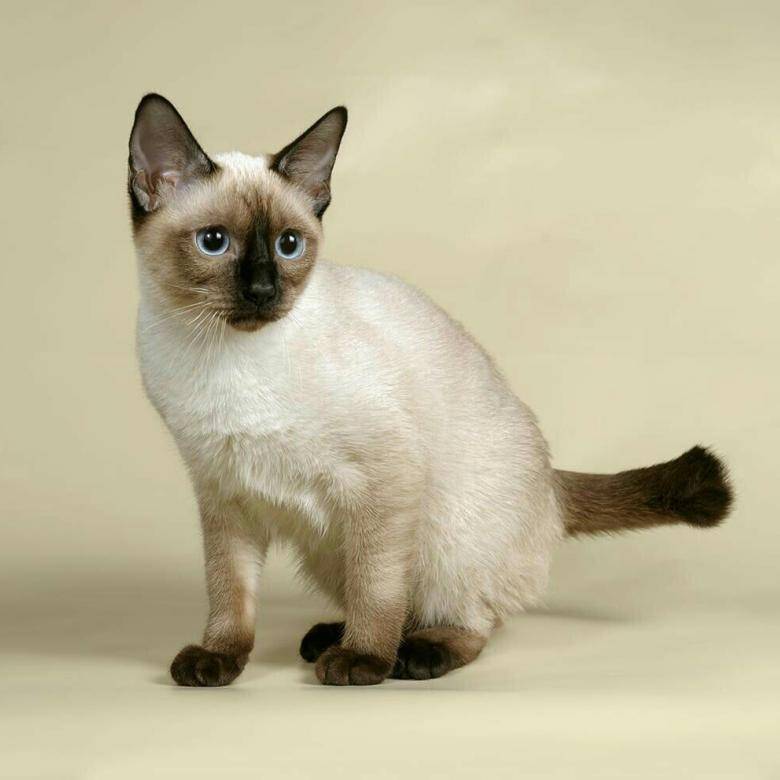
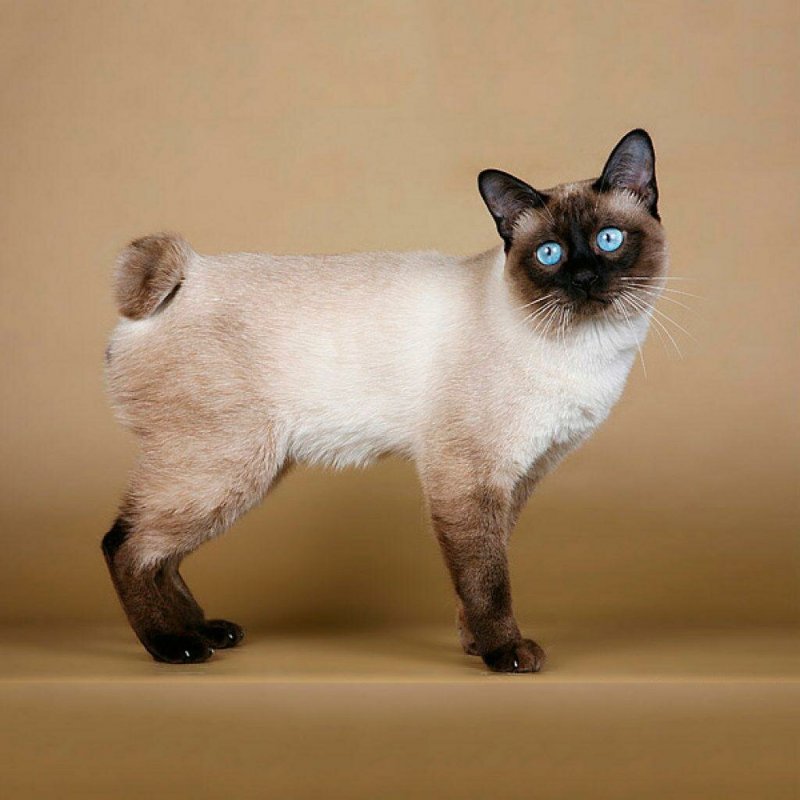
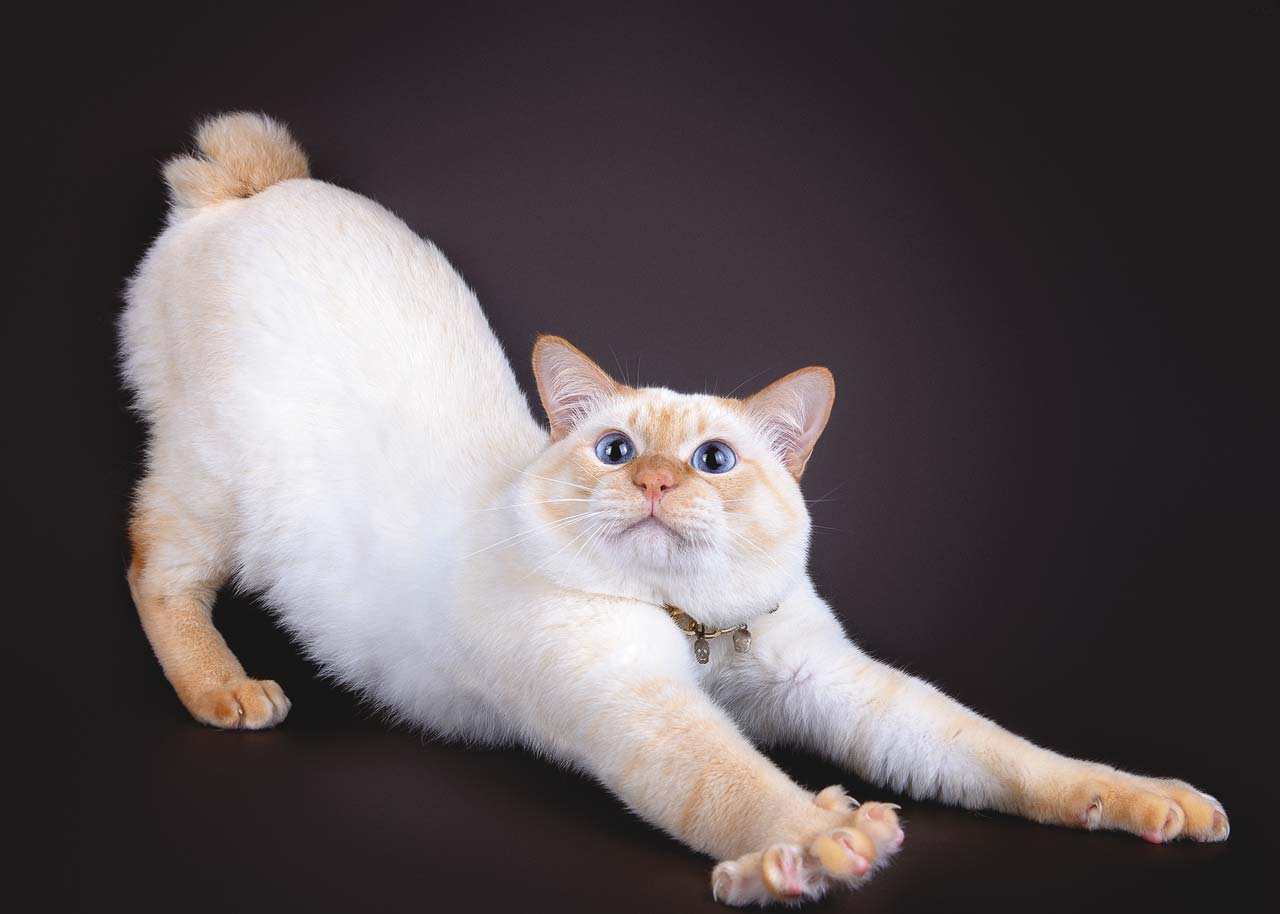
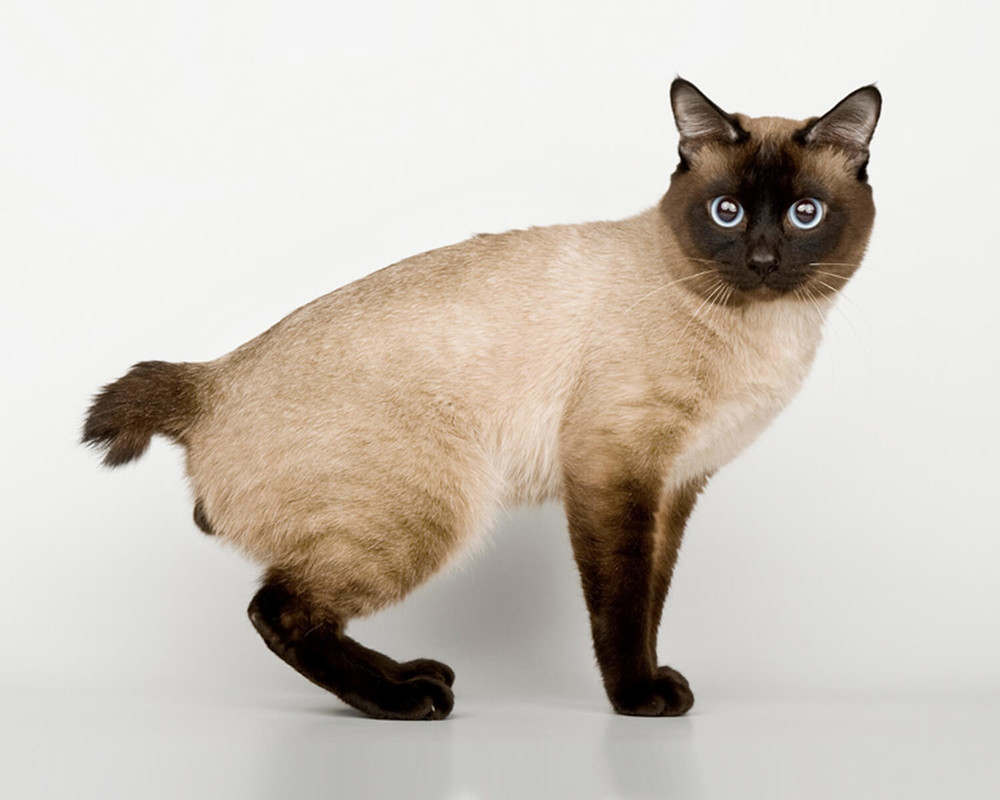
The Mekong Bobtail is a unique breed of cat that captures attention with its exotic appearance and unusual tail. These cats have a graceful look and prominent features that combine elegance and strength. The main characteristic of the Mekong Bobtail is its short tail with distinctive curves, knots, and breaks, which are individual traits of each breed member. This unique feature makes these cats easily recognizable and gives them a special charm.
The breed has a medium build and well-developed musculature. Despite their compact size, Mekong Bobtails demonstrate physical strength and agility characteristic of wild felines. These cats are active, love to jump and climb, making their physique perfectly suited for an active lifestyle. Their bodies are solid yet not heavy, allowing them to maintain grace and elegance in their movements.
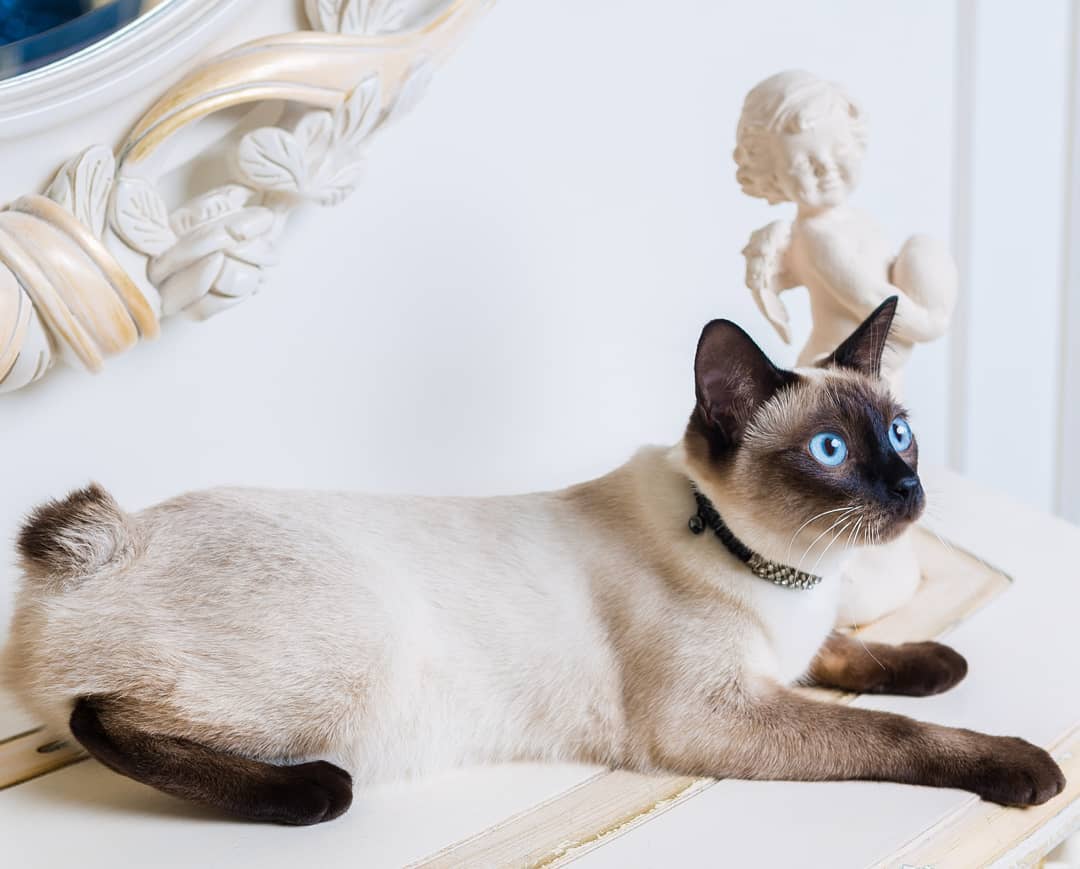
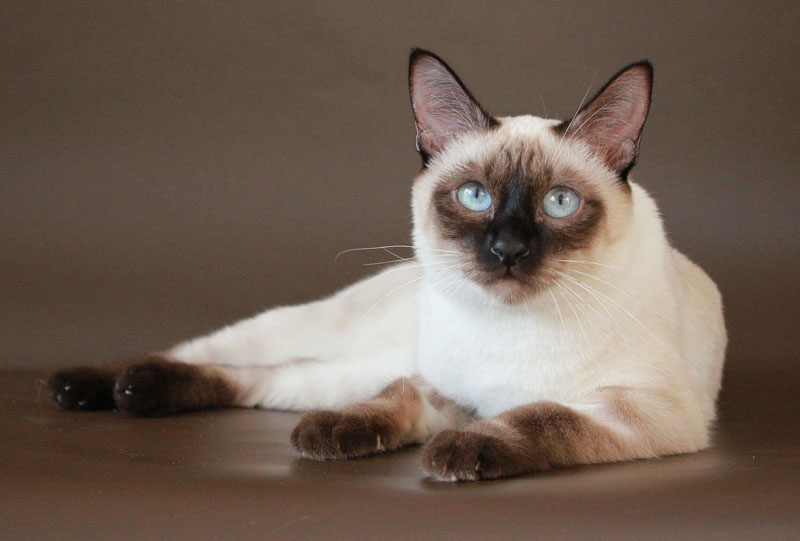
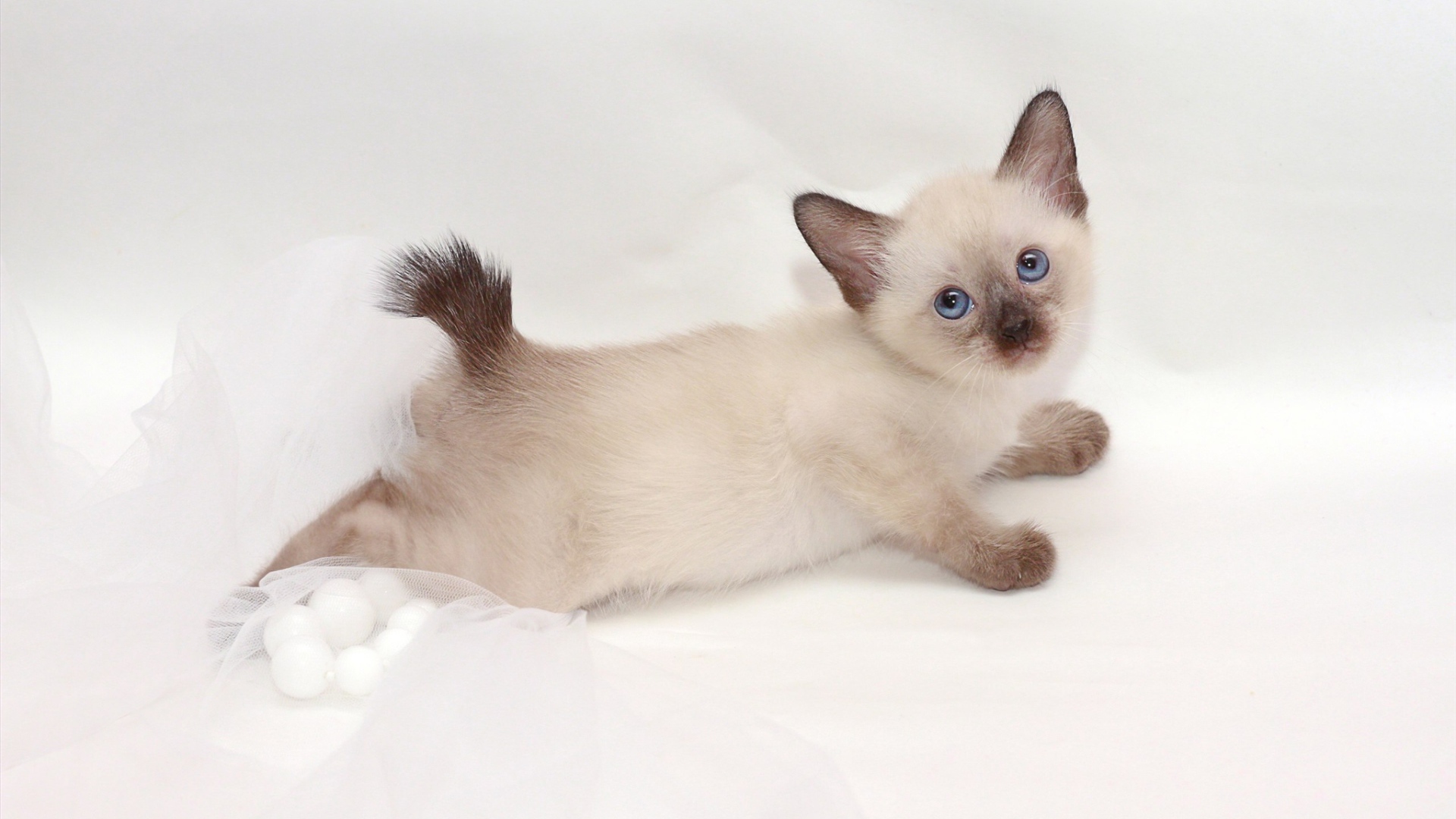
The head of the Mekong Bobtail has a slightly rounded shape with soft lines that create a pleasant expression. The ears are medium-sized, widely set, and tilted forward, giving the cat a vigilant yet friendly appearance. Their expressive eyes are oval-shaped and come in a deep blue or blue hue. These striking eyes create a contrast with the lighter color of the body and the darker markings on the face, ears, and paws.
One of the breed’s main virtues is its coat. The Mekong Bobtail has short, dense fur that lies close to the body and is characterized by its shine and smoothness. The fur feels velvety, adding to the cat’s appeal and making care relatively simple. The lack of a thick undercoat means that shedding in Mekong Bobtails is not as pronounced as in other breeds, making grooming easier and reducing the likelihood of mats.
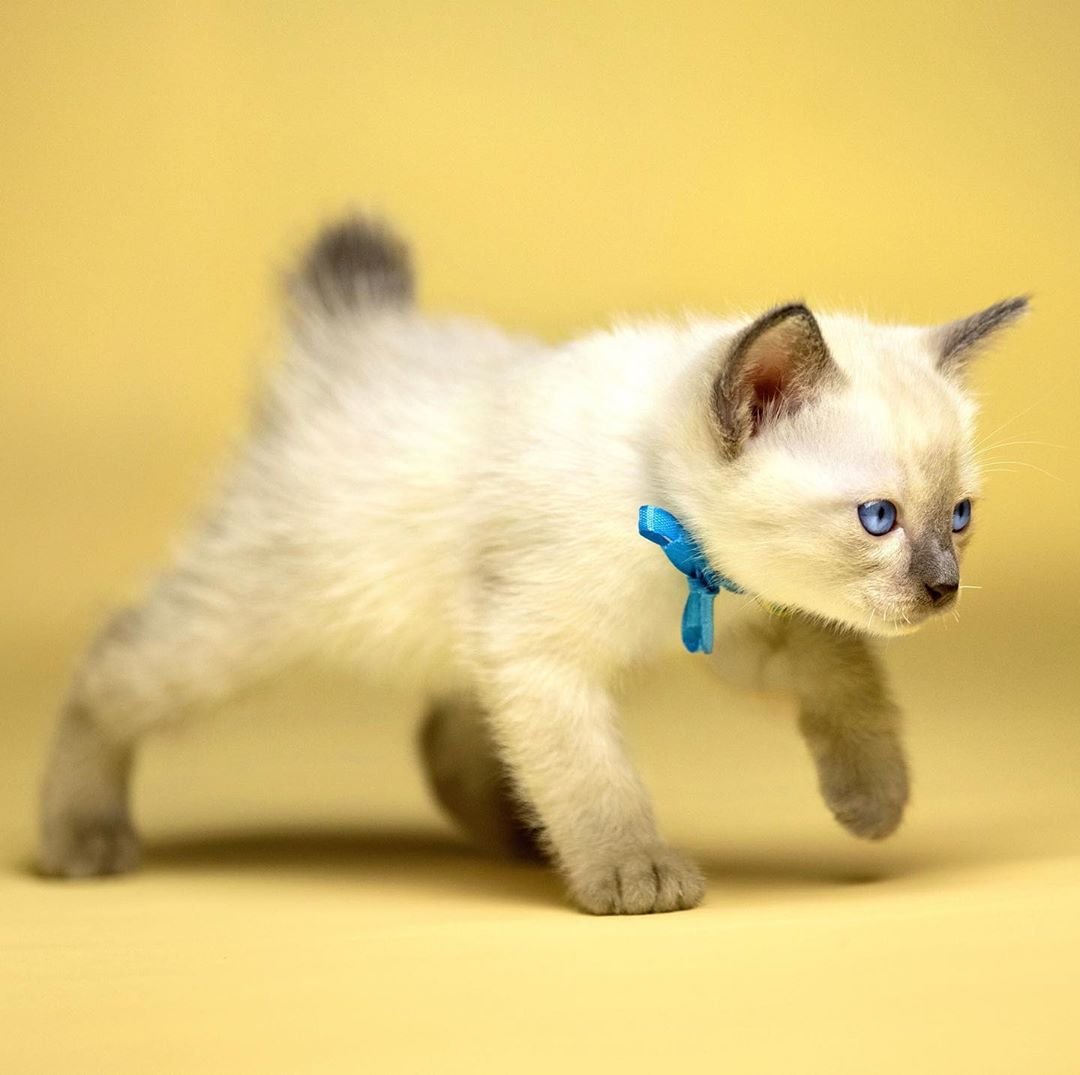
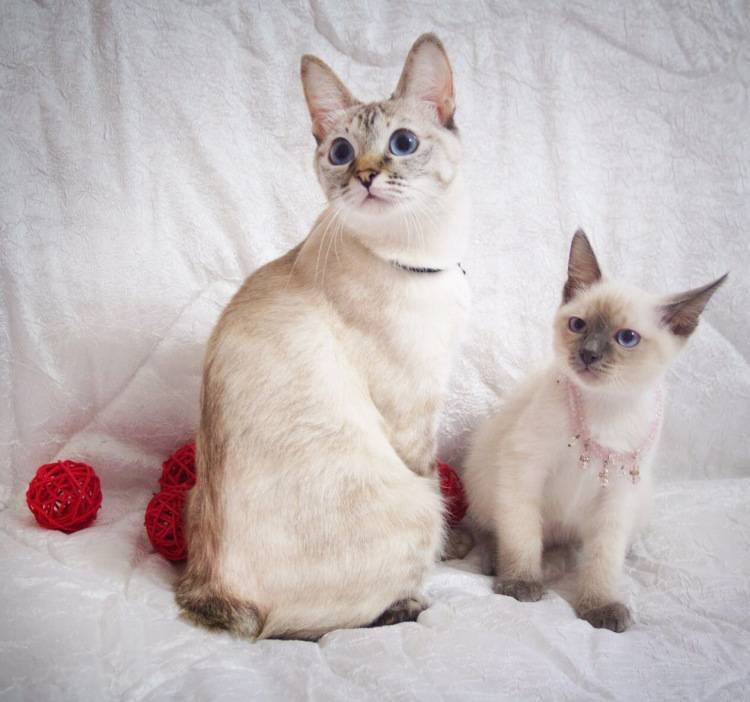
The color-point pattern of the Mekong Bobtail is also a distinguishing feature of the breed. This means that the main body of the cat is a lighter color, while the “points” (face, ears, paws, and tail) are a darker shade. This coloring creates a striking contrast that highlights the breed’s uniqueness and exotic nature. The most common color variations include seal point (dark brown), blue point (bluish-gray), chocolate point, and other variations. Kittens develop this coloring gradually, with the full coloring of the points appearing by the age of one.
The tail of the Mekong Bobtail is the breed’s standout feature. It is short, with numerous bends and knots that can be arranged in a random order. Some individuals have tails that resemble a “pom-pom” or a small fluffy brush, while others may have a smoother tail with breaks. The length of the tail usually ranges from 3 to 7 cm, and each Mekong Bobtail has a unique tail shape, adding individuality to each cat.The limbs of the Mekong Bobtail are long and slender, with well-developed muscles, making them excellent jumpers and explorers. Their paws are round, with soft pads that ensure quiet and confident movement. Mekong Bobtails navigate even complex surfaces easily and can jump to impressive heights, showcasing their physical strength and agility.These cats have a balanced build that allows them to be active and playful while maintaining elegance and fluidity in their movements. Despite their relatively small size, Mekong Bobtails do not appear fragile or vulnerable; rather, they exude confidence and strength. They combine features of typical domestic cats and wild predators, making them unique and appealing to lovers of exotic breeds.The coat of the Mekong Bobta


Отличительные черты

Голова

Морда

Уши

Глаза

Зубы

Корпус

Конечности

Хвост

Шерсть

Окрас
Character of the Mekong Bobtail
The Mekong Bobtail is a cat with a bright and unique character that can be described as a mix of playfulness, affection, and independence. These cats have an incredible ability to connect with people and other animals, making them wonderful companions for families. At the same time, they retain traits common to wild cats, such as a love of freedom, pronounced independence, and a certain wariness of strangers. The Mekong Bobtail is suited for those who value activity, social interaction, and are willing to dedicate attention to their pet.
1. Attachment and Social Behavior
The Mekong Bobtail is a companion cat that forms strong bonds with its owner. They are known for their loyalty and ability to establish a close emotional connection with humans. Unlike many other breeds, Mekong Bobtails often select a “favorite” person in the family, whom they will follow throughout the house. However, despite their strong attachment, they are not intrusive and respect their owner’s personal space. These cats can wait patiently while you finish your tasks and will not insist on attention.
Mekong Bobtails are very social animals; they love being around people and rarely remain alone. They enjoy participating in family activities, whether it’s watching TV, working on the computer, or cleaning. They often choose a spot near their owner and may follow them from room to room. However, if the cat understands that its presence is not needed, it will calmly engage in its own activities.
2. Affection and Tolerance Toward Children and Other Animals
These cats exhibit a high level of tolerance and friendliness, making them suitable for families with children and other pets. Mekong Bobtails love playing with kids, participating in fun activities, and being part of an active lifestyle. They are very patient and not prone to aggression, even if small children accidentally disturb them during play. Nevertheless, it’s always important to explain to children how to properly interact with the cat to avoid any accidental injuries or stressful situations.Mekong Bobtails get along well with other animals, whether they are cats or dogs. Due to their sociable and calm nature, they quickly find common ground with other pets and can become true friends. These cats do not conflict with other animals unless those animals display aggression. When properly introduced to a new pet, the Mekong Bobtail adapts easily and may even show care and friendliness toward its new “housemates.”3. Playfulness and ActivityOne of the most striking traits of the Mekong Bobtail is its playfulness and activity. These cats maintain their agility and curiosity throughout their lives, regardless of age. They enjoy exploring new things, climbing cabinets, ju
Питомники
Выбор питомника по городу, породе и отзывам
The loudest "purring" Mekong Bobtail.
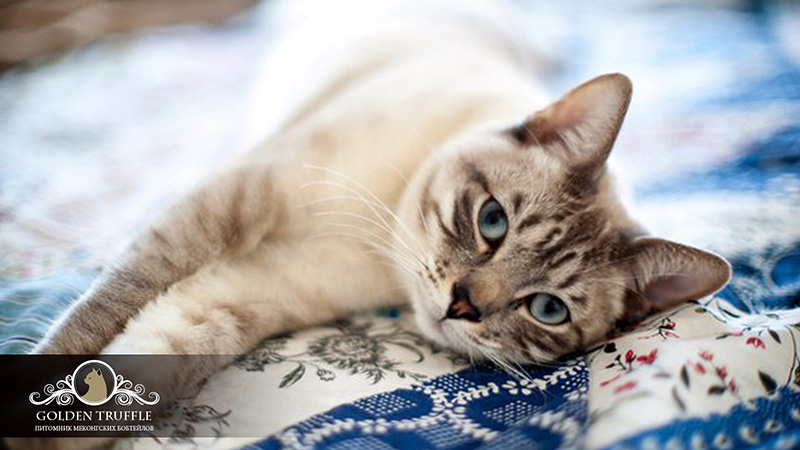
A cat named Lotus from Moscow has set an unusual record, registered in the Russian record book - its purring reached a volume level of 105 decibels. This is comparable to the noise of a running motorcycle! Lotus purred particularly loudly when being petted and became a favorite among visitors at various exhibitions, where everyone could hear his "loud happiness."Care and Maintenance of the Mekong Bobtail
The Mekong Bobtail is an active and curious cat that requires special attention and proper care. Although this breed does not need complex hygiene procedures, there are several important aspects to consider to ensure your pet has a healthy and comfortable life. Including all necessary care elements will help your Mekong Bobtail maintain good health and activity for many years.
1. Coat Care
The Mekong Bobtail has a short, smooth coat that lies close to the body and lacks an undercoat. This makes maintenance comparatively simple compared to long-haired breeds.
Regular Brushing: Despite its short hair, Mekong Bobtails need periodic brushing to remove dead hair and stimulate circulation. It is recommended to brush the cat once a week and two to three times a week during shedding seasons (spring and fall).
Bathing: These cats have water-repellent fur, so frequent bathing is not necessary. Bathe your Mekong Bobtail no more than once every 2-3 months or as needed (for instance, if the pet gets very dirty). Use only special cat shampoos to prevent skin irritation.
Polishing the Coat: To add shine, you can wipe the coat with a soft cloth or a special grooming mitt to remove leftover dead hairs and enhance gloss.2. Care for Ears, Eyes, and TeethMaintaining hygiene for ears, eyes, and teeth is an important part of caring for a Mekong Bobtail.Ear Care: The ears of the Mekong Bobtail should be inspected once a week and cleaned of excess wax and dirt. Use soft cotton pads and a special ear lotion for this purpose. Avoid using cotton swabs to prevent damage to the inner ear.Eye Hygiene: The eyes of these cats rarely require special care, but if there are any discharge, they should be gently removed with a cotton pad moistened in boiled water or a special eye solution. Regular eye checks help avoid inflammation and infections.Teeth Cleaning: Mekong Bobtails are prone to tartar build-up, so oral care is vital. To prevent tartar, it is recommended to brush your pet’s teeth with special cat toothpaste at least once a week. Chew treats that help clean teeth can also be used.3. Care for Claws and PawsMaintaining the health of claws and paws helps the cat feel comfortable and prevents damage to household furniture.Claw Trim
The cat with the most knots on its tail.
A Mekong bobtail named Rami has set a record for the number of bends and knots in his tail - a total of 11. This astonishing phenomenon has made Rami famous among breeders and feline enthusiasts, as Mekong bobtails typically have no more than five bends in their tails. Rami's tail was not only short and uniquely shaped but also remarkably flexible, allowing him to use it actively during play.Training and Educating the Mekong Bobtail
The Mekong Bobtail is a cat with a high level of intelligence and pronounced curiosity, making it easy to train. Members of this breed understand commands and rules of behavior well, exhibit persistence, and quickly learn new skills. However, despite its natural abilities, training a Mekong Bobtail requires an approach that takes into account its independent and self-sufficient nature. To succeed in training, it is important to properly motivate the cat, create conditions conducive to development, and leverage the breed’s characteristics to your advantage.
1. Features of Training the Mekong Bobtail
Training the Mekong Bobtail is based on its natural instincts and tendency for exploratory behavior. These cats love to play, learn new things, and interact with people, so training can be organized in a playful manner to ensure it brings joy to the pet instead of being perceived as an obligation.
Individual Approach. Every cat is unique, so it’s important to consider its temperament and preferences. Some Mekong Bobtails may be more active and playful, while others are calm and balanced. Therefore, choose an appropriate training style based on your pet’s character.
Short Training Sessions. Cats of this breed can quickly lose interest in training if sessions are too long. The optimal duration of a training session is 5-10 minutes. This helps maintain the animal’s attention and interest.
Positive Reinforcement. The main principle of training is using positive reinforcement, which means rewarding the cat for correctly following a command. Treats, praise, or play can be used as rewards.2. Teaching Basic Commands and SkillsAlthough cats do not always respond to training as easily as dogs, Mekong Bobtails can learn several basic commands that are useful in everyday life.Command “Come”. This command is useful for calling the cat to you. Start by using a treat: show it to your pet and call its name while saying “come”. When the cat approaches, immediately give it the treat and pet it. Gradually, it will associate the command with receiving a reward.Command “Sit”. A Mekong Bobtail can be taught to sit on command using the method of positive reinforcement. Take a treat, raise it above the cat’s head so that it instinctively sits to follow the food. Once the cat sits, give it the treat and praise it while repeating the word “sit”.Command “Give a Paw”. This is one of the simplest commands to teach a Mekong Bobtail. Start by gently lifting the cat’s paw, saying “give a paw,” and then give a treat. Gradually, the cat will start offering i
The cat guardian of treasures.
Please provide the text you would like me to translate.How to Choose a Mekong Bobtail Kitten
Choosing a Mekong Bobtail kitten is a responsible and significant step, especially if you want to bring home a healthy and socially adapted pet. This breed is characterized by distinct traits and a unique personality, so it’s important to consider several factors to make the right choice. In this section, we will detail how to choose a Mekong Bobtail kitten, what to look for when inspecting the little one, and how to select a reliable breeder. Finding a kitten on Zoonika is easy and safe with a guarantee of breed purity.
1. Finding a Reliable Breeder
The first step in selecting a Mekong Bobtail kitten is to seek a responsible and trustworthy breeder. A good breeder not only adheres to breed standards but also ensures that kittens are raised in adequate conditions for growth and socialization.
Breeder Reputation and Experience. Look for information about the breeder, read reviews online, and check if their cattery is registered with a feline association (such as WCF or TICA). A reputable breeder will show you their documents, as well as the pedigrees of the kittens.
Visiting the Cattery. Personally visiting the cattery allows you to evaluate the living conditions of the kittens. Pay attention to cleanliness, the condition of adult cats, and the availability of necessary documentation. It’s important that kittens grow up in comfortable conditions, interact with people, and receive adequate attention.
Documents for the Kitten. A responsible breeder will always provide the necessary documents for the kitten, including a veterinary passport with vaccination records, a pedigree, and a sales contract. Ensure the kitten has received all necessary vaccinations for its age and has undergone preventive treatment for parasites.2. Kitten Age for Moving to a New HomeThe optimal age for a Mekong Bobtail kitten to move to a new home is between 12 to 16 weeks. At this age, kittens are adequately socialized, adapted to living in society, and have received necessary vaccinations.Early separation from the mother (before 12 weeks) can lead to behavioral problems and weak immunity, as the kitten does not acquire all essential socialization and communication skills.Kittens older than 16 weeks may be more confident and calm, but it’s important that they continue to be socially engaged during this period.3. Assessing Kitten HealthWhen choosing a Mekong Bobtail kitten, pay attention to its physical condition and behavior. The kitten’s health is one of the most important criteria for selection.Coat and Skin. The kitten’s fur should be smooth, shiny, and free from bald s
Health and Diseases of the Mekong Bobtail
The Mekong Bobtail is a breed of cats known for its robust health and good resistance to various diseases. These cats have a strong immune system, which allows them to adapt easily to climate changes and not fall ill as frequently as some other breeds. However, like any breed, Mekong Bobtails have specific health characteristics and tendencies towards certain diseases. In this section, we will look closely at the main issues that Mekong Bobtail owners may encounter, as well as discuss preventive measures to maintain their pet’s health.
1. Genetic Diseases
The Mekong Bobtail is a breed that has maintained its natural appearance for many years and has not undergone aggressive selection. This means that most cats of this breed enjoy good health and do not show a strong tendency towards genetic diseases. However, some issues can still arise.
Hypertrophic Cardiomyopathy (HCM). This heart condition involves thickening of the walls of the left ventricle. Although HCM is less common in Mekong Bobtails than in some other breeds, it is recommended to regularly conduct echocardiograms, especially for older cats. Early detection of the disease allows for timely treatment and improves the quality of life for the pet.
Joint Problems. Like other breeds with short tails, Mekong Bobtails may have a predisposition to joint diseases, particularly in the tail area. This is due to the structural specifics of the tail section, where there may be curvatures or defects. Usually, such issues do not require treatment, but in rare cases, they can cause discomfort.
2. Tail-Related DiseasesThe tail of the Mekong Bobtail is one of the most distinctive features of the breed, which can lead to specific problems.Tail Mobility Issues. Due to the short tail that may have bends or knots, some cats may experience difficulties with tail mobility. It is important to monitor the condition of the tail and prevent injuries, as this can lead to pain and inflammation.Infections in the Tail Area. Sometimes, bends in the tail can create conditions for inflammation and even abscesses. It is advised to regularly check the condition of the tail and consult a veterinarian if necessary.3. Oral and Dental DiseasesMekong Bobtails may be prone to the formation of dental plaque and tartar, which can lead to gingivitis and other oral diseases.Gingivitis. This is an inflammation of the gums caused by the accumulation of bacteria and plaque. Without treatment, it can progress to more serious diseases like periodontitis. To prevent gingivitis, it is recommended to regularly brush the cat’s teeth and use special chews.Formation of Tartar. If plaque is not removed in a timely manner, it turns into tartar, which can cause gum inflammation and
Содержание
-
1. Описание породы
-
2. Внешний вид
- 2.1 Голова
- 2.2 Морда
- 2.3 Уши
- 2.4 Глаза
- 2.5 Зубы
- 2.6 Корпус
- 2.7 Конечности
- 2.8 Хвост
- 2.9 Шерсть
- 2.10 Окрас
-
3. Характер
-
4. Содержание и уход
-
5. Дрессировка и обучение
-
6. Как выбрать котенка
-
7. Здоровье и болезни







Comments
Only registered users can leave reviews.
Enter