
Lyko





Breed Description
The Lykoi did not originate in a laboratory, but as a rare natural condition called hypotrichosis in ordinary short-haired cats. In 2010, breeder Patti Thomas in Virginia had a litter with “graying” kittens-characterized by rare fur, balding patches, and a salt-and-pepper effect. To rule out diseases, veterinarian Johnny Gobble and his wife Brittany were brought in-examinations, scrapes, and genetic tests revealed that this was not a mutation from sphinx or Devon breeds but a unique feature of the follicles. This led to a seasonal “pendulum” of fur-ranging from almost naked to a short “hedgehog” look, while still retaining the characteristic roan pattern.
In 2011, similar kittens were found in Tennessee, and there, in Vonore, Gobble first bred two unrelated carriers, resulting in Daciana, the first intentionally bred Lykoi. The trait is recessive, so the breeding program was established on broad outcrossings with black domestic short-haired cats-this preserved health and genetic diversity rather than cultivating rarity within a narrow circle. The goal was straightforward and honest: to not lose the natural mutation and to transform it into a stable, thriving population.
The name comes from the Greek “lykos,” meaning “wolf,” which is why they are nicknamed “werecats.” The birthplace of the breed is very specific-USA, with the connection being Virginia and Tennessee. Once it became clear that the phenotype was stable and safe, TICA opened registration in 2012-by 2017, the Lykoi was accepted into championship status. The breed then spread across the world, maintaining the core principle from its inception: rarity is valued only when it does not harm health and is confirmed by honest selection.
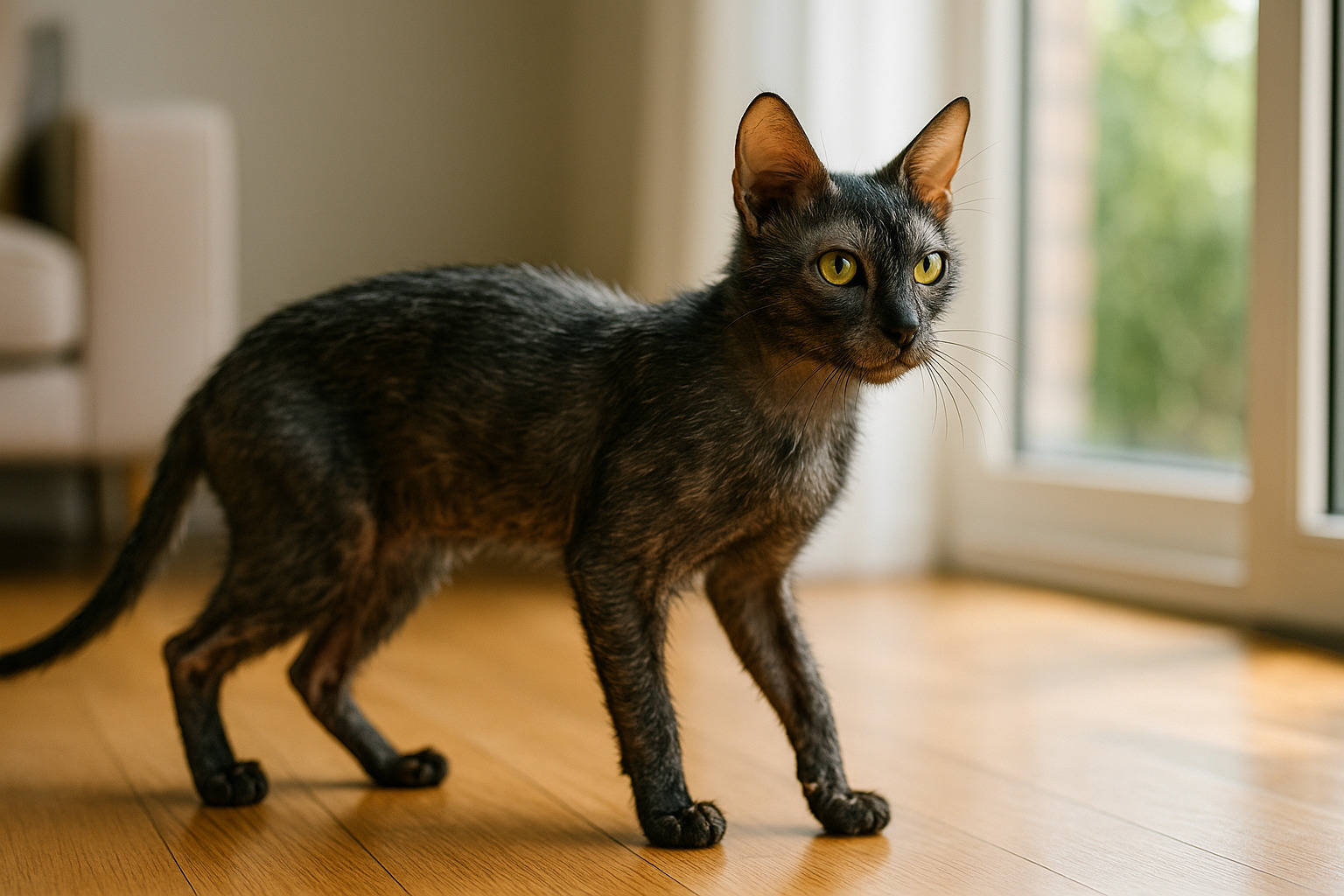
Appearance
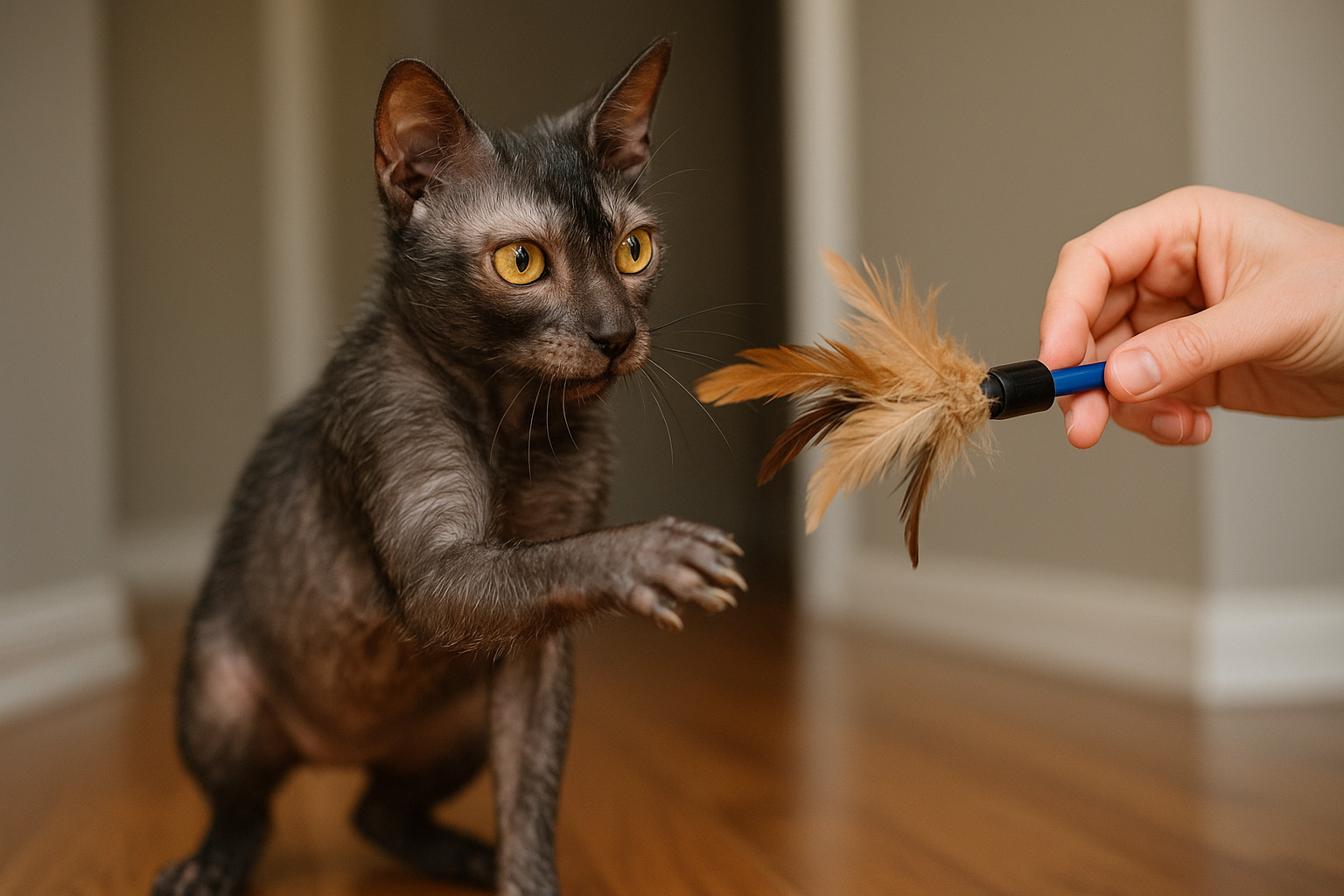
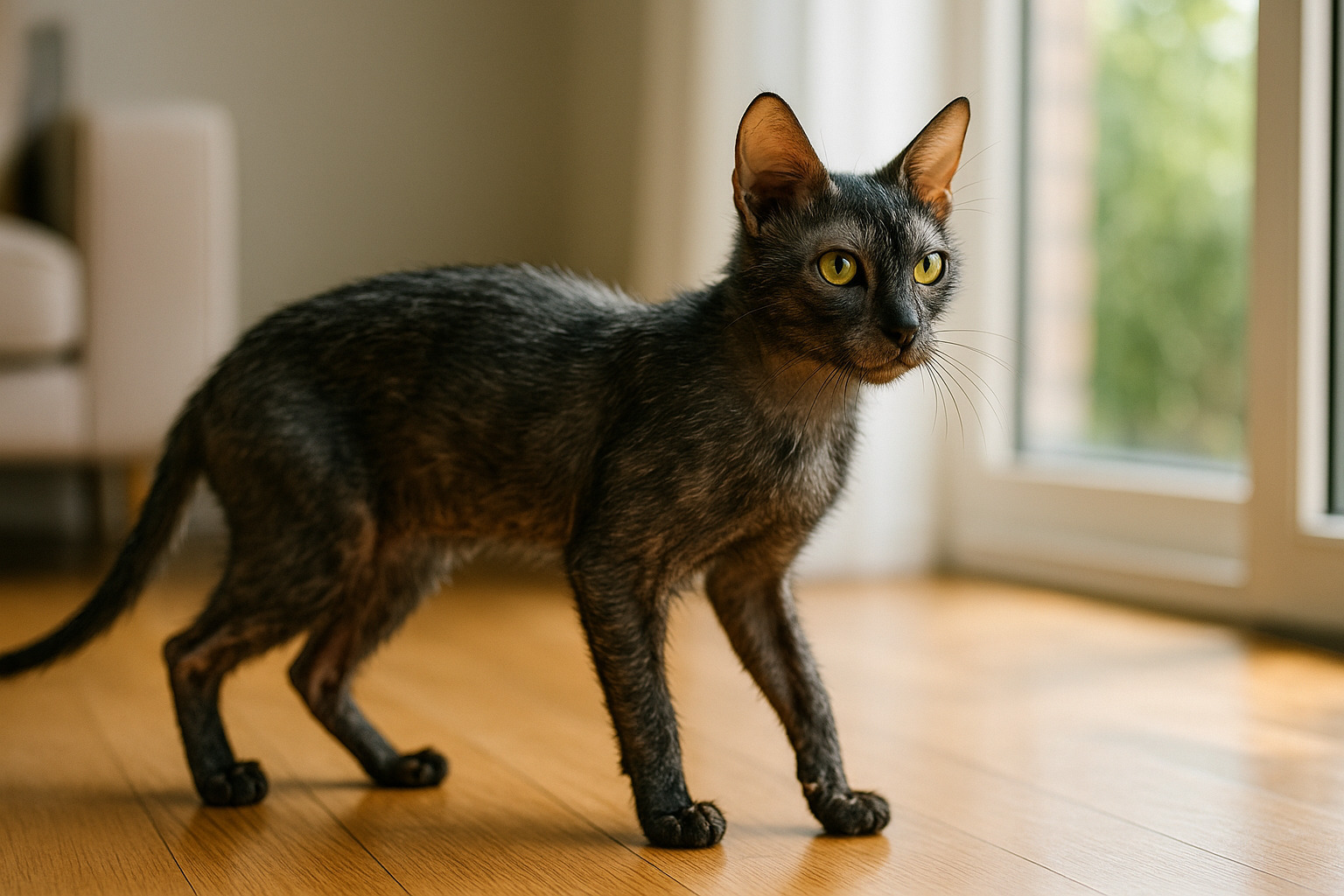
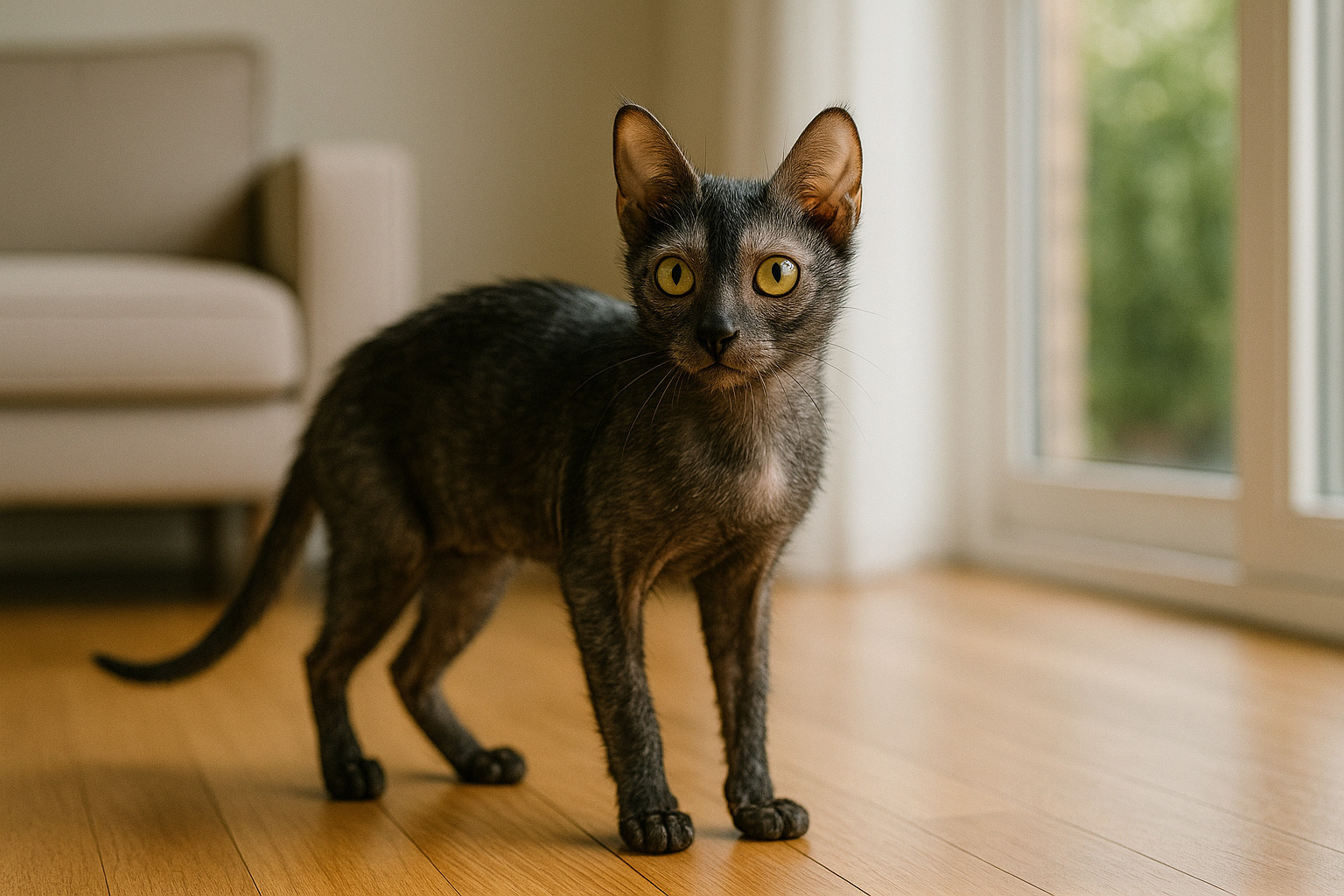
The Lykoi resembles a medium-sized cat with a dry, springy constitution and an unusual “sparse” coat that allows the skin to show through in places, creating a salt-and-pepper effect. Its overall silhouette is elongated, with dry muscles and swift, silent movements. The ears appear larger due to the short fur, and the “mask” around the muzzle and eyes visually enhances its predatory gaze, which has a yellowish-amber tint. The coat operates on a pendulum principle: in warm months, the Lykoi may look almost hairless, while in colder weather, it grows a short “hedgehog-like” coat, with the roan mixture of light and dark hairs maintaining its signature graying. The average size of the breed is as follows: body length is about 33-36 cm without the tail, height at the shoulder is approximately 22-25 cm, and the average weight is 3.2-3.8 kg, though males often reach 4.2-4.8 kg while females remain lighter. The tail and limbs visually elongate the silhouette, but the impression of being “larger” is misleading due to the modest density of the coat. With proper care and normal veterinary preventative measures, their lifespan is estimated at 12-15 years.


Отличительные черты

Голова

Морда

Уши

Глаза

Зубы

Корпус

Конечности

Хвост

Шерсть

Окрас
Character
The Lika breed is people-oriented and maintains a “radio connection” with its owner all day long-checking in on matters, carrying toys, inviting play, and then returning to its patrol. It usually chooses one or two “favorite” people but willingly participates in daily rituals: following from room to room, peeking into bags, responding to calls, and quickly grasping household rules. It approaches strangers cautiously, entering observer mode and warming up to guests gradually, without hissing or theatrics.
The play drive is pronounced: fetch, chasing a lure, tunnels, boxes, and any scenarios involving “search-ambush-sprint” keep it engaged for a long time, making puzzles with food and hide-and-seek games very effective. It communicates softly-more often with short “chirps” and purrs than long monologues. Typical household habits include “sunbathing” and seeking warmth: due to its sparse coat, the Lika enjoys burrows, blankets, and warm windowsills, eagerly snuggling under blankets at night. Vertical spaces are important-trees, shelves, or safe ledges provide a sense of control and reduce boredom.
Generally, it gets along with cats and dogs when introduced calmly, valuing predictability and a gentle tone, while harsh play is disliked. In daily life, it is not overly clingy but a partner that respects distance: it seeks physical contact but easily shifts to independent mode if it senses the owner is busy.
Total shedding of fur after stress.
After a move, anesthesia, or a major event, some licos experience a sudden loss of most of their fur. It looks dramatic, but with calm skin, normal appetite, and behavior, this is a reversible phase - the fur will grow back.Care and Maintenance
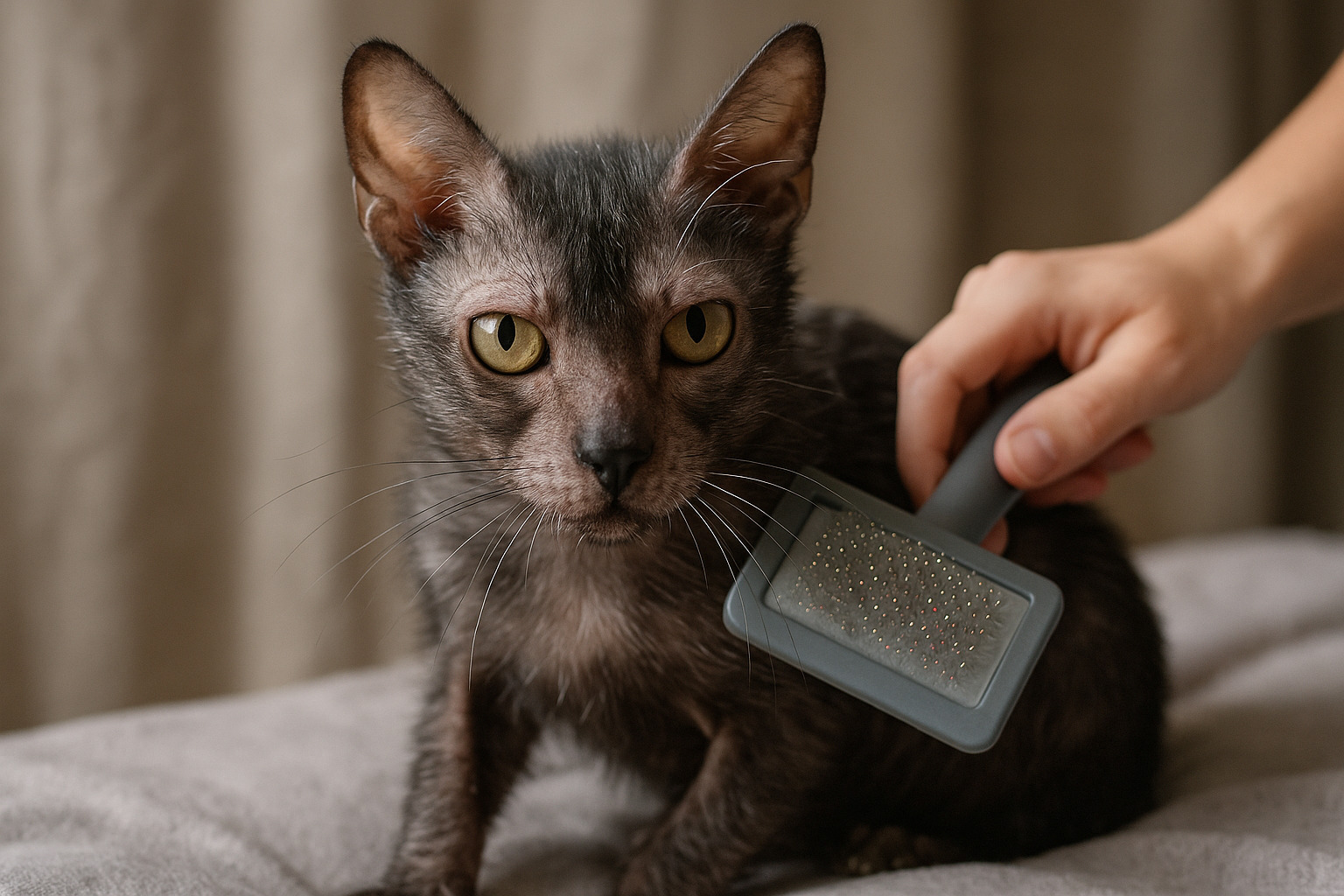
Lykoi cats require gentle skin and fur care: bathe them as needed every 4-6 weeks using warm water at 37-38 В°C with a neutral cat shampoo, avoiding aggressive scents and scrubs. After bathing, gently pat them dry with a towel; do not use a hot hairdryer. Between baths, it is sufficient to wipe their body with a soft, alcohol-free pet wipe. Metal-toothed brushes are not suitable; a fabric mitt or a very soft rubber glove is preferable. Trim their claws every 7-10 days to prevent them from scratching their own skin. Check their ears every 2-3 weeks and clean them with a special cat lotion; do not use cotton swabs. Choose low-dust litter, as dust can irritate the skin and mucous membranes.
Temperature comfort is more important for Lykoi cats than for regular short-haired cats: maintain a stable temperature of 22-24 В°C at home, ensure a warm “nook” bed, and provide sunny windowsills with shade. Limit direct sunlight at noon, as their skin can easily burn; do not use human sunscreen, discuss safe options for cats with your veterinarian if necessary. They dislike drafts and cold surfaces; they appreciate soft blankets, hammocks on radiators, and closed hideaways.
For nutrition, focus on high animal protein content and moderate fat-Lykoi cats often have a slightly higher metabolism than fluffy breeds. Feed them in portions 2-3 times a day, monitor their body condition by assessing their ribs and waist, and make sure freshwater is always available. Interactive feeders and sniff mats are excellent for alleviating boredom.
Their habits prominently feature a love for warmth and vertical spaces: they need high vantage points and warm spots. Give them 2-3 short play sessions daily with a wand toy and fetch games; hiding treats and tunnels are ideal. They dislike strong smells and heavy perfumes, as well as intrusive cuddles-physical contact should be initiated by them. Schedule regular check-ups with the vet every 6-12 months, and follow a parasite treatment schedule for indoor cats. With this care, their skin remains clean, seasonal shedding happens without issues, and Lykoi cats behave actively and comfortably. Certified elite breed kittens can be found at Zooinika.
Superfast path to recognition.
Less than a decade passed from the first intentional breedings to entering major competitions - a near-record for a rare mutation. The type and health were stabilized early on, allowing the breed to quickly find its place among the recognized ones.Training and Education
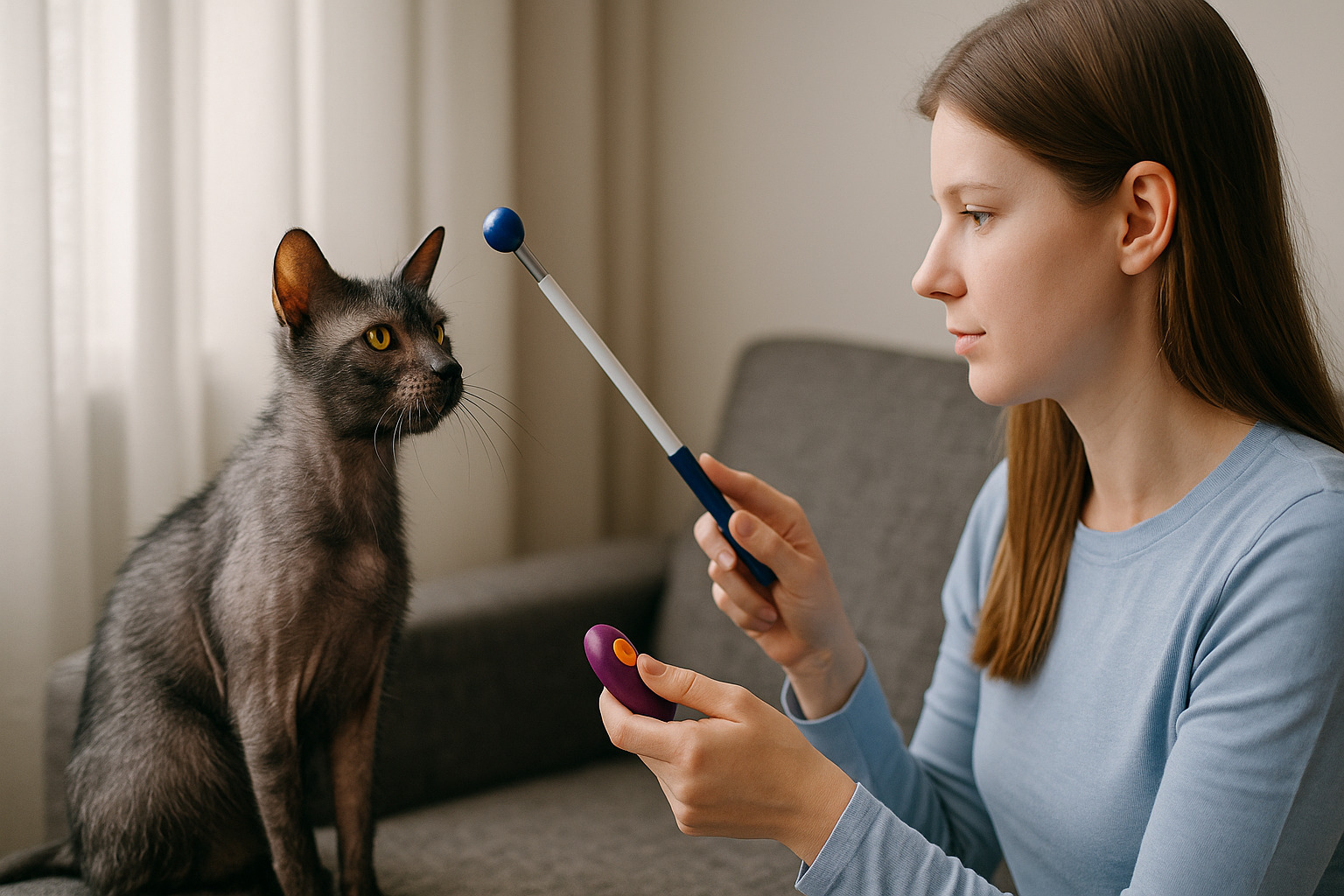
Start with short sessions of 3-5 minutes, 2-3 times a day in a quiet room, focusing solely on positive reinforcement-using a clicker or the marker word “yes” along with offering a treat within 1-2 seconds after the desired action. Lika responds well to shaping and target techniques: first, teach her to touch a target stick or your palm with her nose, then progress to “come here,” “go in the carrier,” and “stand on the mat.” A useful tip for responding to calls: choose a unique anchor word, and secretly reward her with 5-7 peas of a “super treat” each time she comes when called. Gradually shift from constant reinforcement to variable-2-3 times out of 5-to maintain motivation. For the harness, take it step by step: show the harness-give a treat, touch it with her body-give a treat, put it on for a second-give a treat, and only after several short repetitions add steps in the hallway and on the landing. Make the carrier a safe base: place a familiar blanket inside, feed part of her daily ration from a bowl inside, and establish the habit of “first to the carrier-then play.” Daily hunting games are essential, with 2-3 sessions of 5 minutes each: using a fishing
It’s best for the person conducting the training to be the one who interacts most with the cat and can maintain a consistent daily rhythm-this person will become the “anchor” owner. Other family members can join later using the same command words and gestures, without variations or baby talk-a unified vocabulary significantly speeds up learning. Lika chooses her owner based on three criteria: predictability and a soft tone, the ability to respect distance and allow the cat to take initiative, and control of key resources like playtime, warmth, and feeding. She listens to those who calmly and consistently reinforce the right behaviors, not to those who ask the loudest-sharp shouts, clapping, splashing water, and punishment break the bond and reduce trust. Routines and rituals work well: “call-came-sat on the mat-treat,” “bowl noise-wait in place-allow to eat with a command,” “opened the window-no on the window-but can go on the high shelf.”
For children, the rules are simple: touch only when invited by the cat, feed from an open palm, use a target stick instead of hands, and conclude each mini-session with a short playtime. Signs of fatigue or overstimulation from training include turning away, licking her nose, leaving, or starting to groom herself-pause here and reschedule the session for later. With this approach, Lika will quickly acquire a basic set of skills for home living-recall, carrier, harness, mat as a “place”-and she will reliably connect with someone who is consistent and honest with the rules. For a pedigree, find the best pet at Zooneek.
"Torn" mustaches and short eyebrows
Please provide the text you'd like me to translate.How to Choose a Kitten
First, look for basic health signals: clean, bright eyes without tear streaks, dry pink nose without cracks, clean ears without odor, gums a uniform pink color, bite without obvious misalignment, soft, non-distended belly, fur and skin areas free from crusts and weeping spots. For Lykoi, having sparse fur and a “mask” around the face is normal, but concentric baldness with redness and itching is a cause for concern. Request to see recent results for dermatophyte PCR or culture testing, along with a general examination by a vet-this is especially important for this breed. A normal activity level for a kitten is average or above: it shows interest in you, eagerly plays with a “fishing rod,” quickly recovers after a new sound or smell, and resumes exploring the space after about 20-30 seconds-this indicates a stable psyche. Avoid a kitten that freezes systematically, hides for more than a minute, shows aggression with normal handling, or smells of medications and bleach.
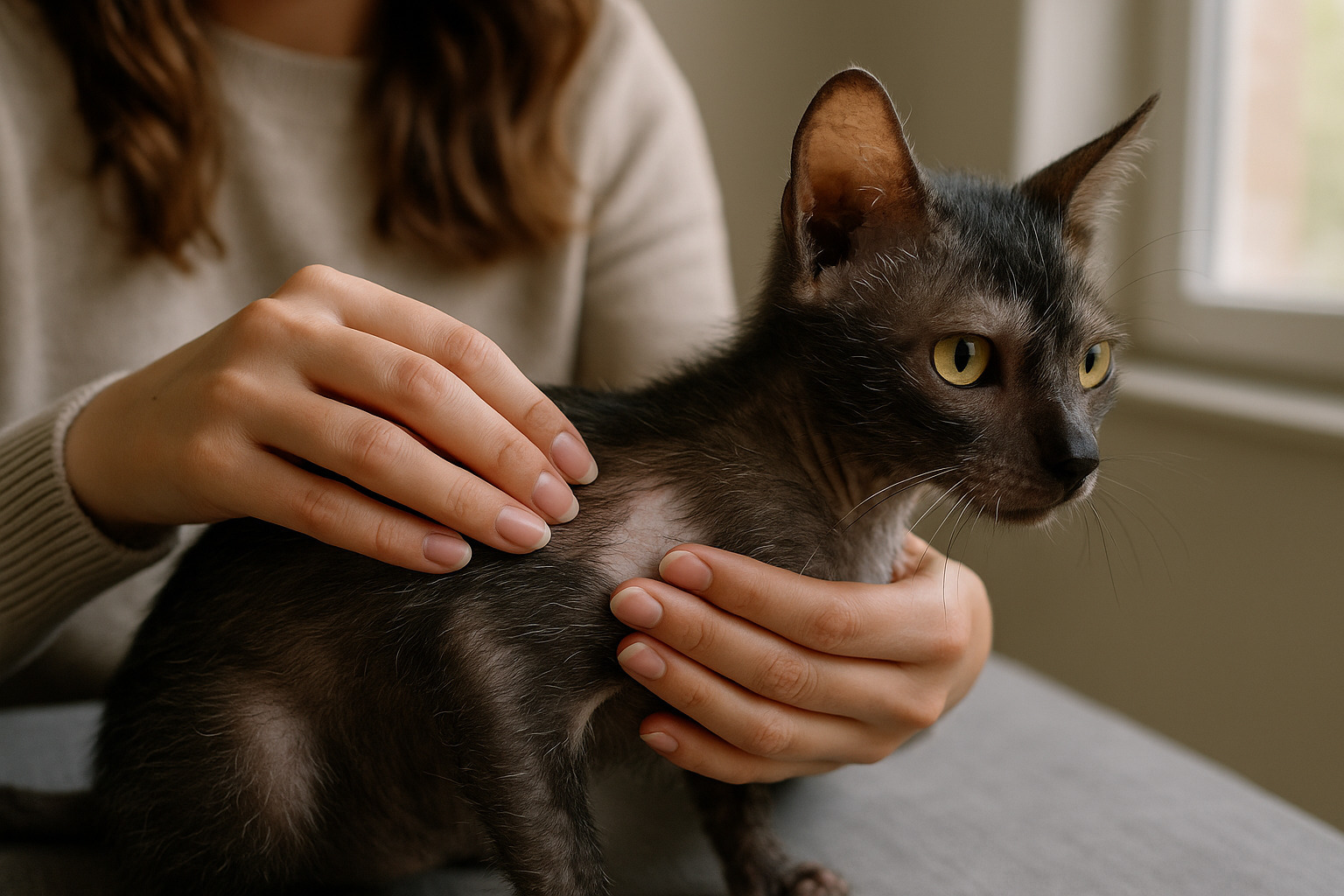
Next, assess the conditions in the cattery: clean litter boxes without a strong ammonia smell, uniform stool consistency among the litter, clean bowls and water dishes, and kittens in similar body condition-there should be no contrast with “one fat, one skinny.” The optimal age for release is 12-14 weeks after the full vaccination and revaccination course-earlier release poses higher risks for immunity and behavior. Ask to see the mother of the kittens and, if possible, photos or videos of the father; pay attention to their behavior with people-calm interest is preferable to lethargy or nervous pacing. Conduct a short contact test: gently hold the kitten, supporting its body, pet it on the chest and shoulders, observe its reaction to a light check of its paws and ears-a healthy and balanced kitten tolerates brief handling and quickly “recovers,” eager to play.
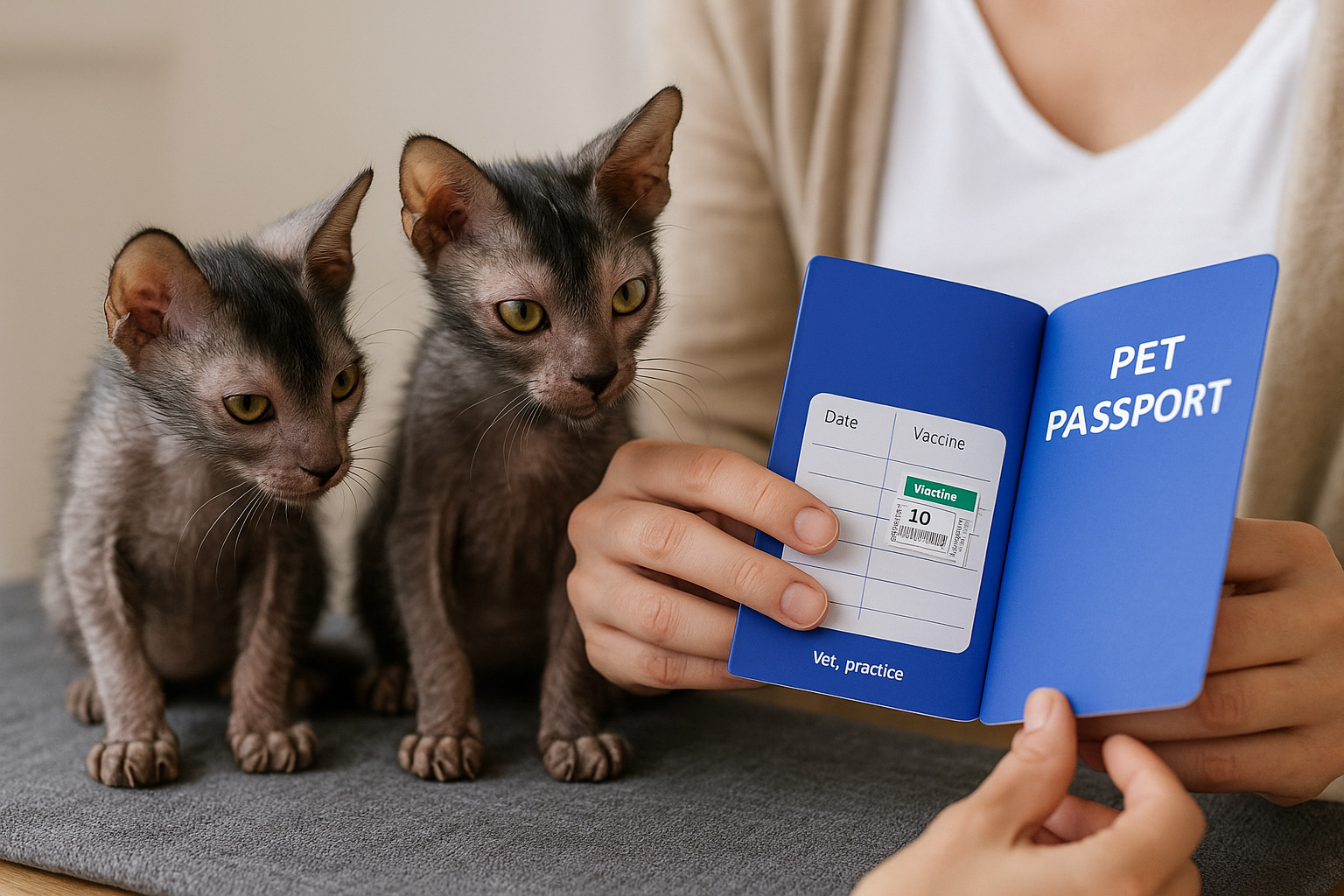
Check the documentation rigorously: a veterinary passport with vaccination stickers, dates, series, and the vet’s signature, notes on deworming and treatments for ectoparasites, the microchip number with its match in the contract. The pedigree document-either the kitten’s metric or a pedigree from TICA or another recognized system with a stamp and parent data, the cattery’s name, the kitten’s classification as a pet or breeding category, and breeding conditions. The sales contract should include strict health guarantees, provisions for returning the deposit in force majeure situations, post-sale support duration, obligations for sterilization for pet-class kittens, and penalties for violations-without vague formulations. For Lykoi cats, it is appropriate to request copies of veterinary skin reports and negative tests for FeLV and FIV, as well as a report of the litter inspection with the release date. Attachments with recommendations for feeding, litter training, and adapting to a new home, along with the initial diet, are important markers of a responsible breeder.
Ask about socialization and routine: from what age the kittens were trained to use the litter box, scratching post, carrier, and nail trimming, how they react to household sounds such as vacuum cleaners, dishes, and doorbells, and their play and eating schedule. Clarify their diet-brand of food, frequency, portion sizes, tolerance, and any episodes of diarrhea. Request to see videos of normal life-not staged clips-showing how kittens eat from a communal bowl, play, and rest, and how they enter the carrier. A positive choice is a kitten with steady energy, good appetite, stable interest in people and objects, with clear health tests and a transparent set of documents, as well as a breeder who calmly answers complex questions, doesn’t rush you into decisions, and provides ongoing support after the move.
Health and Diseases
The Lika breed is generally considered robust with no confirmed breed-specific ailments, but it does have a “dermatological area of concern” due to natural hypotrichosis. The fur of such cats may thin out or grow back in a short “bristle,” creating a salt-and-pepper effect, which is normal. The breeding program originally focused on outcrossing with domestic short-haired cats, resulting in good genetic diversity and above-average health resilience.
From practice, the most common issues encountered include skin sensitivity, blackheads, mild folliculitis episodes, and accelerated shedding in bright sunlight. Prevention is simple: use warm water and a neutral cat shampoo as needed, blot with a towel, avoid hot hair dryers, use a soft glove instead of stiff brushes, choose low-dust litter, and maintain a consistent home microclimate. Limit exposure to midday sun, as overheating and sunburn are unacceptable, and avoid aggressive fragrances and scrubs. If itching, redness, pustules, oozing crusts, tenderness, or a strong odor occurs, this is no longer a “breed trait,” but a reason to consult a dermatologist.
Basic prevention includes scheduled veterinary visits every 6-12 months, weight and dental checks, scheduled parasite treatments, maintaining a proper diet with high animal protein and moderate fat content, and ensuring constant access to water. When introducing to other cats or before breeding, it’s wise to test for FeLV and FIV, incorporating general DNA panels for common risks in cats and keeping track of skin condition in breeders. Rigorous health screening and clear lineage records help eliminate animals with chronic dermatitis and recurrent infections.
It is important to distinguish the normal “wolfing out” cycle from pathology. Even seasonal partial shedding on calm skin, with a good appetite and normal behavior, does not require treatment. Focal alopecia with itching, pain, pustules, or persistent dandruff is already a symptom rather than an aesthetic issue, and delaying diagnosis is unnecessary. With predictable care, protection from overheating, and proper prevention, the Lika can live a full life and typically demonstrates a lifespan similar to that of other healthy short-haired cats.
Содержание
-
1. Описание породы
-
2. Внешний вид
- 2.1 Голова
- 2.2 Морда
- 2.3 Уши
- 2.4 Глаза
- 2.5 Зубы
- 2.6 Корпус
- 2.7 Конечности
- 2.8 Хвост
- 2.9 Шерсть
- 2.10 Окрас
-
3. Характер
-
4. Содержание и уход
-
5. Дрессировка и обучение
-
6. Как выбрать котенка
-
7. Здоровье и болезни


Комментарии
Отзывы могут оставлять только зарегистрированные пользователи
Войти