
Don Sphinx (Russian Hairless)




Description of the Don Sphynx Breed
The Don Sphynx is a unique and unusual breed of cat that attracts attention with its exotic appearance and friendly nature. This breed is one of the few hairless varieties, but its history, characteristics, and needs deserve special attention. Don Sphynxes are known for their lack of fur, distinctive skin folds, and incredible attachment to humans. In this article, we will explore all aspects related to the Don Sphynx breed, including its origin, appearance, and care recommendations.
The Don Sphynx (Russian Hairless) appeared in Russia in the late 1980s when a hairless cat was discovered in the city of Rostov-on-Don. It was found by Elena Kovaleva, who became the first breeder of this unique breed. The cat, named Varvara, had an unusual lack of fur and several skin folds, which attracted the attention of breeders. Over time, it became evident that this was a genetic mutation that could be inherited. Varvara eventually became the progenitor of a breed that began to actively develop and spread throughout Russia.
Unlike the Canadian Sphynx, the Don Sphynx has a different type of hairlessness. The gene responsible for the lack of fur in Don Sphynxes is dominant, which makes this breed unique. In 1997, the breed was officially recognized by The International Cat Association (TICA), and later by other feline organizations. Since then, the Don Sphynx has gained popularity not only in Russia but also beyond its borders, becoming a symbol of exotic beauty and a devoted companion.
Appearance of the Don Sphynx
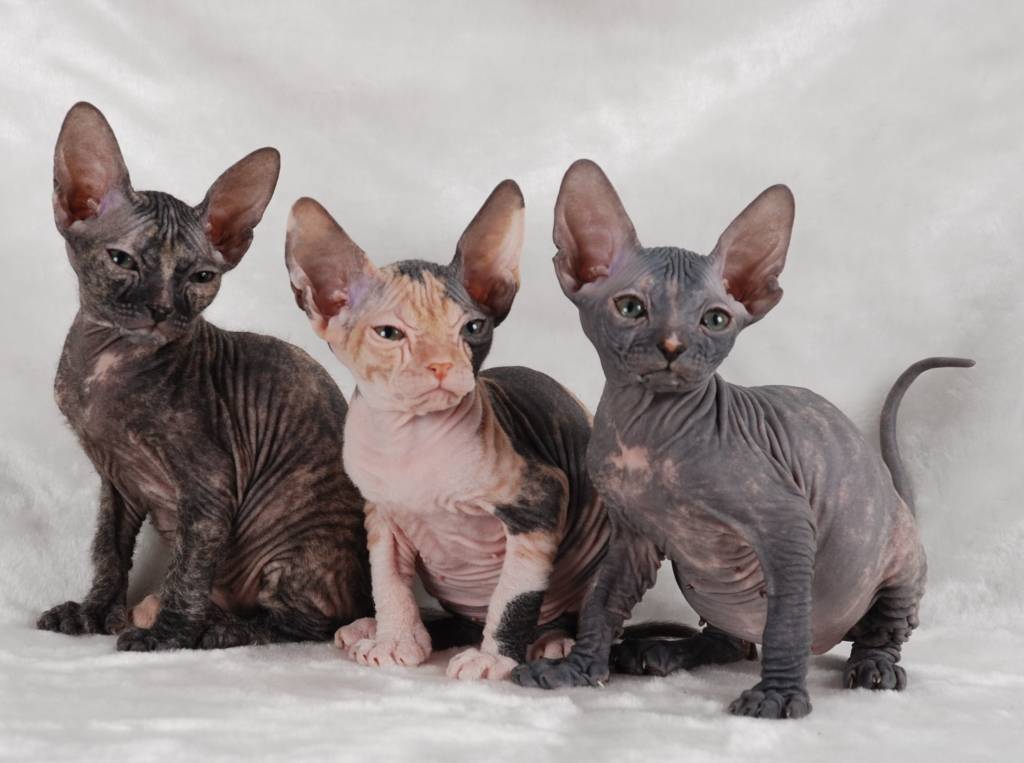
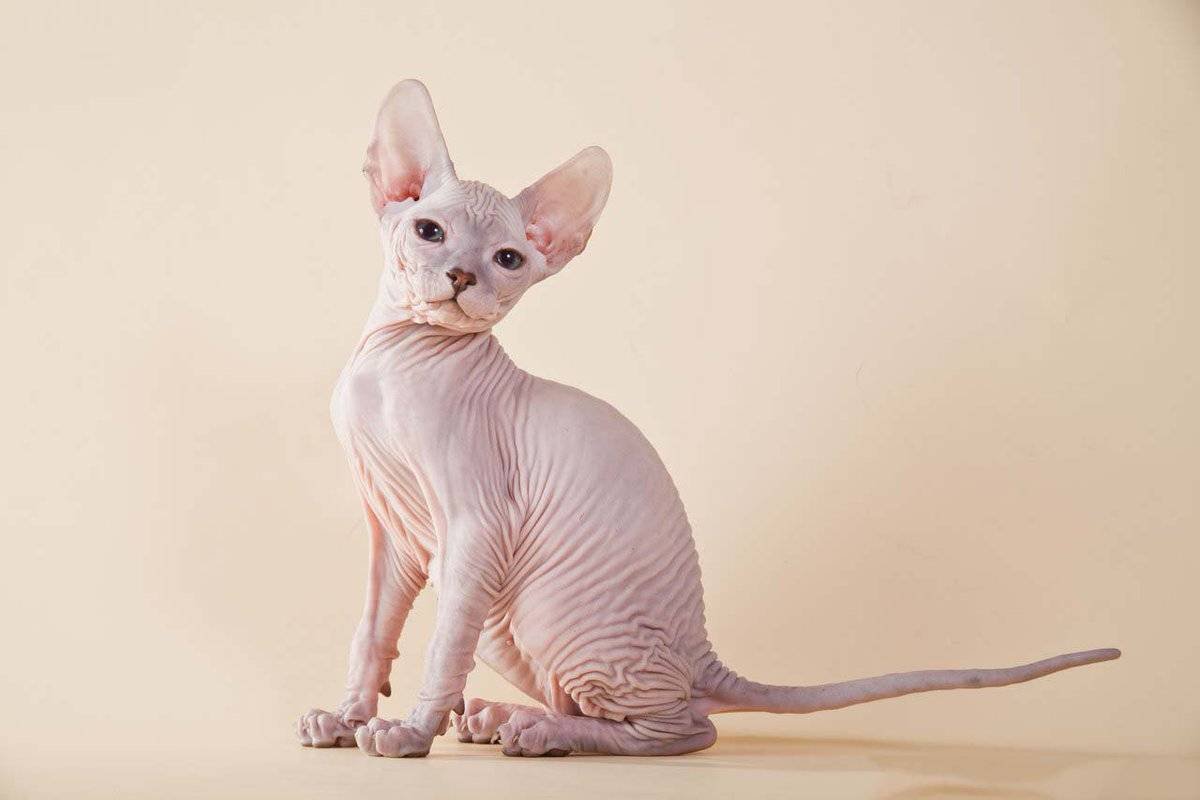
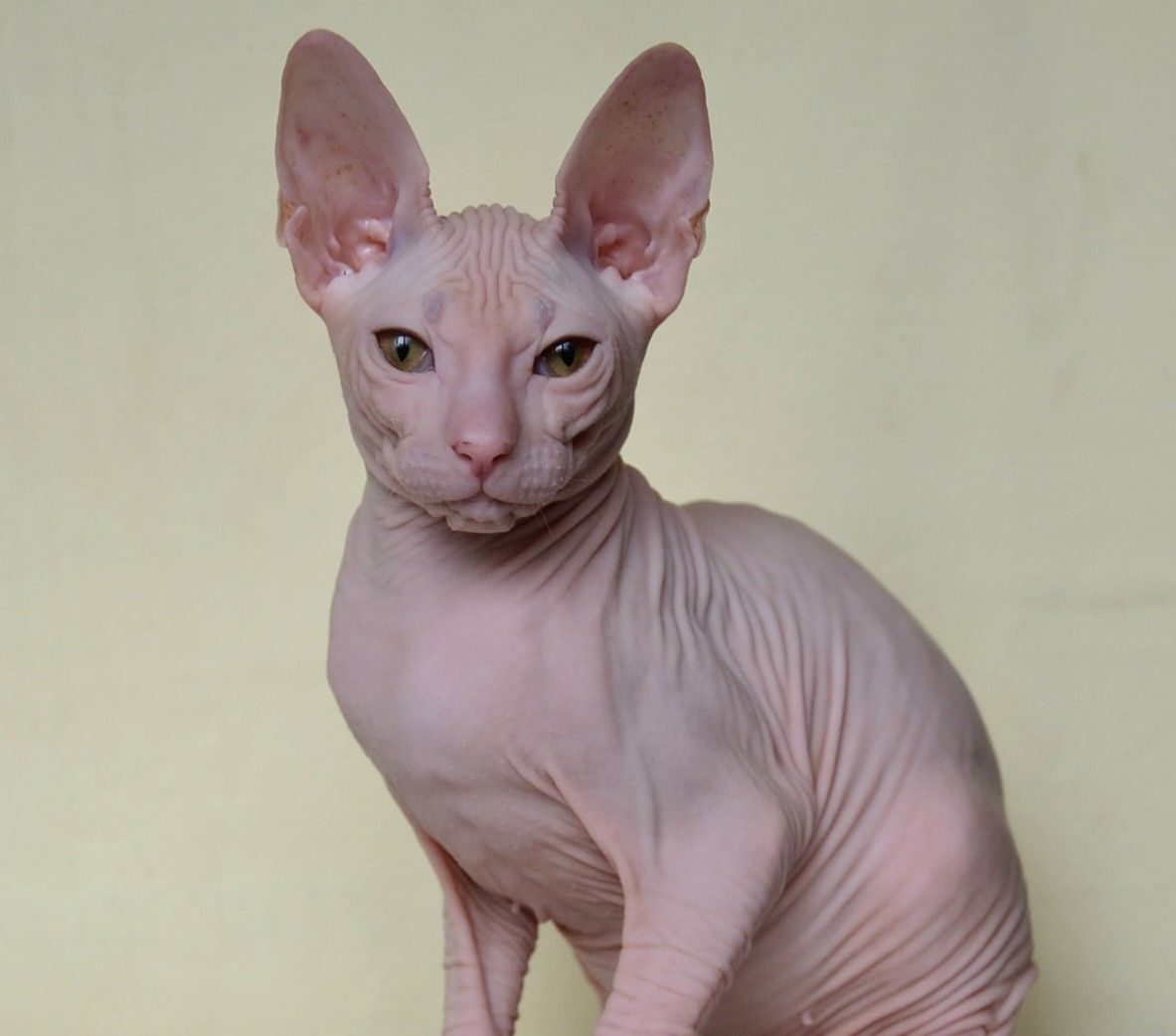
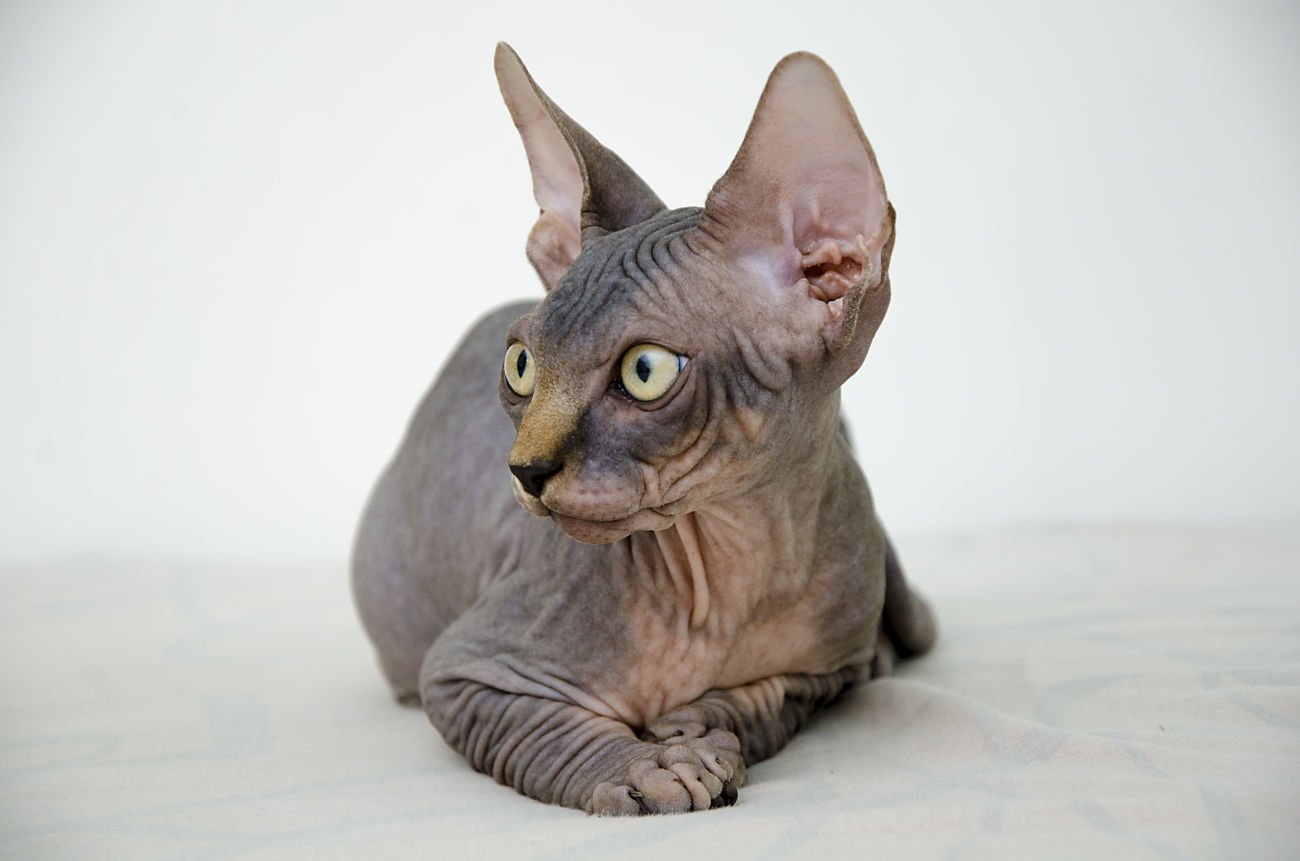
The Don Sphynx is a breed that immediately catches the eye with its unusual appearance. These cats are one of the most unique breeds due to their hairlessness, elegant build, and characteristic skin folds. The appearance of the Don Sphynx may surprise those unfamiliar with the features of hairless cats, but their charm, expressive eyes, and soft, velvety skin make them favorites among many exotic pet lovers.
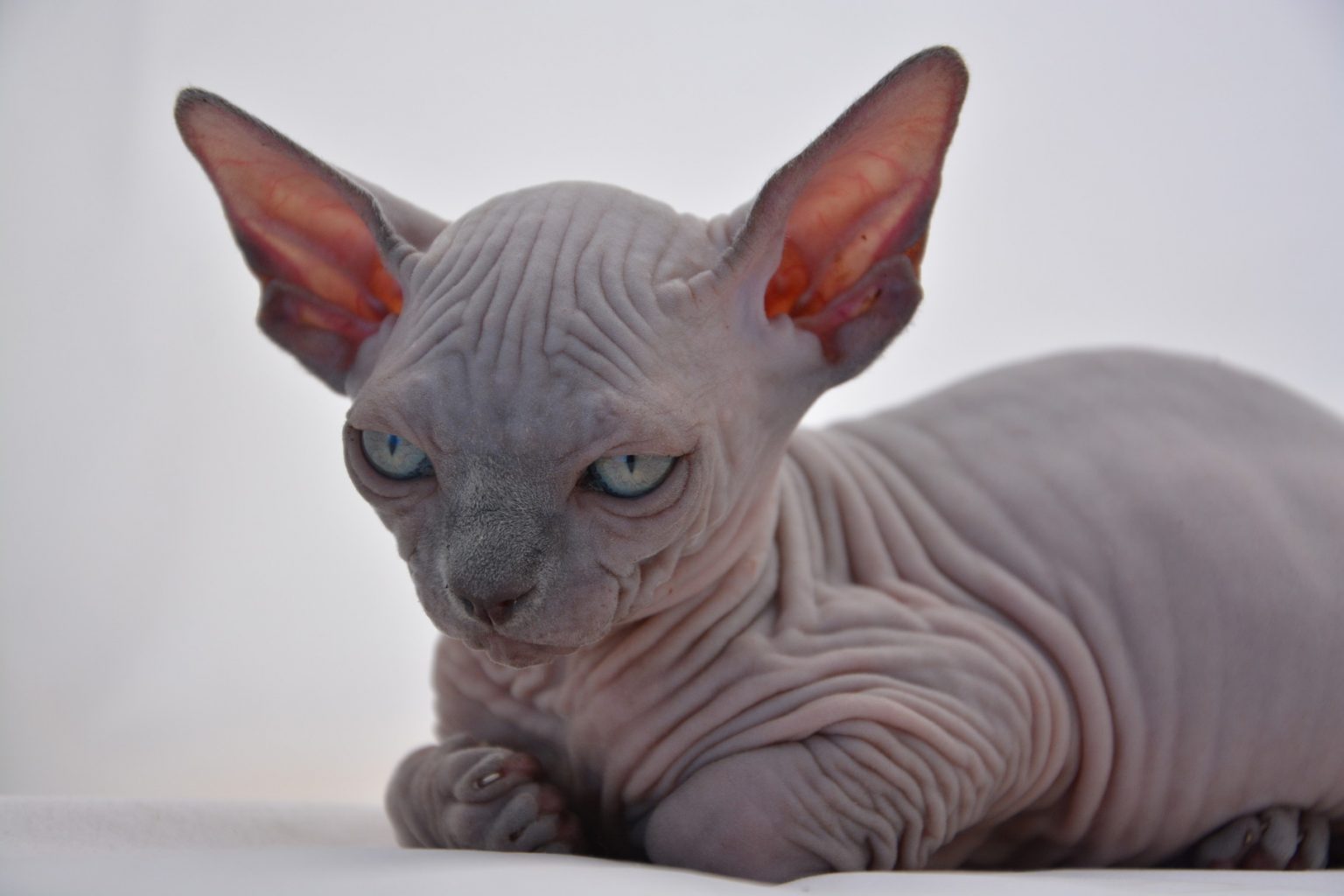
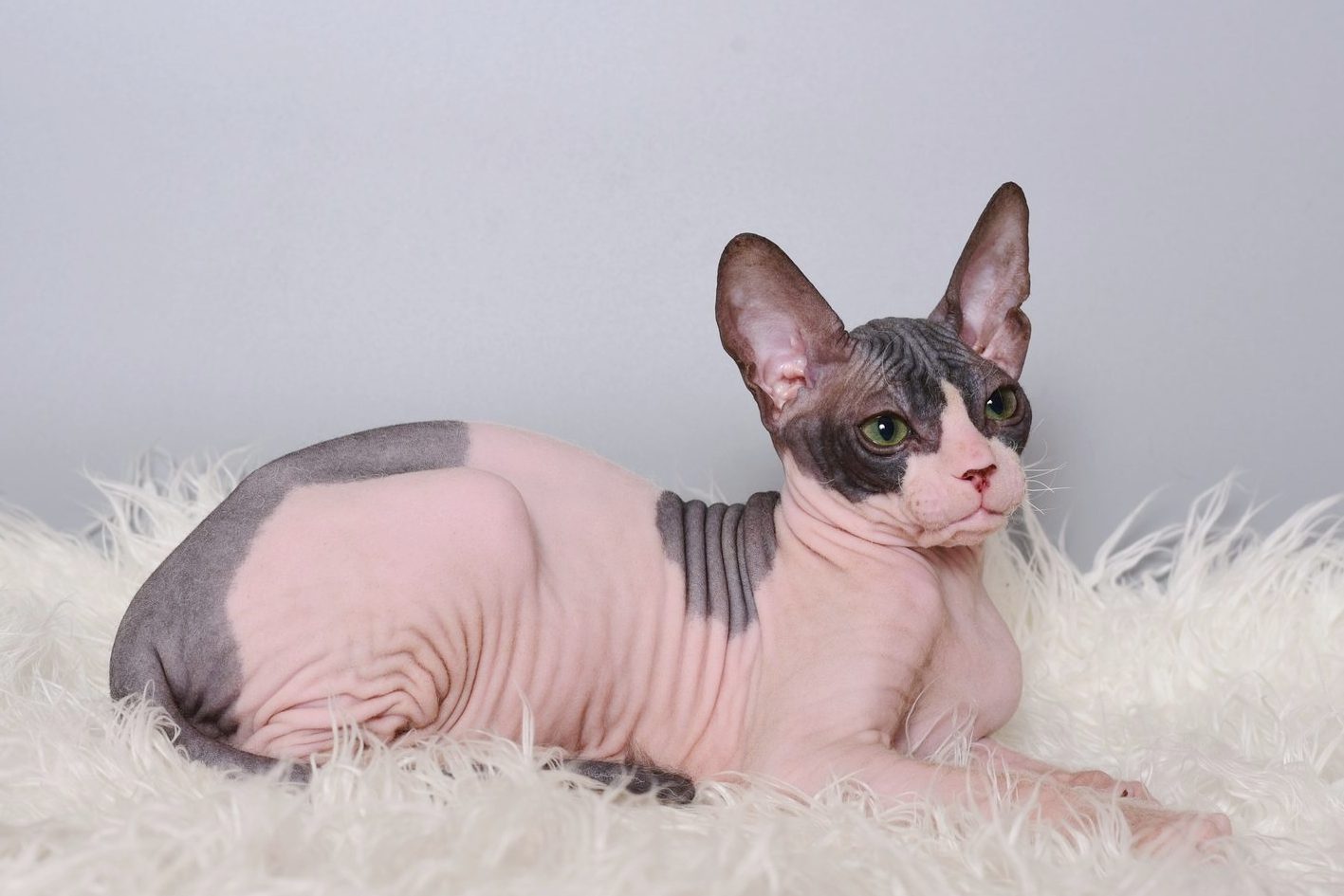
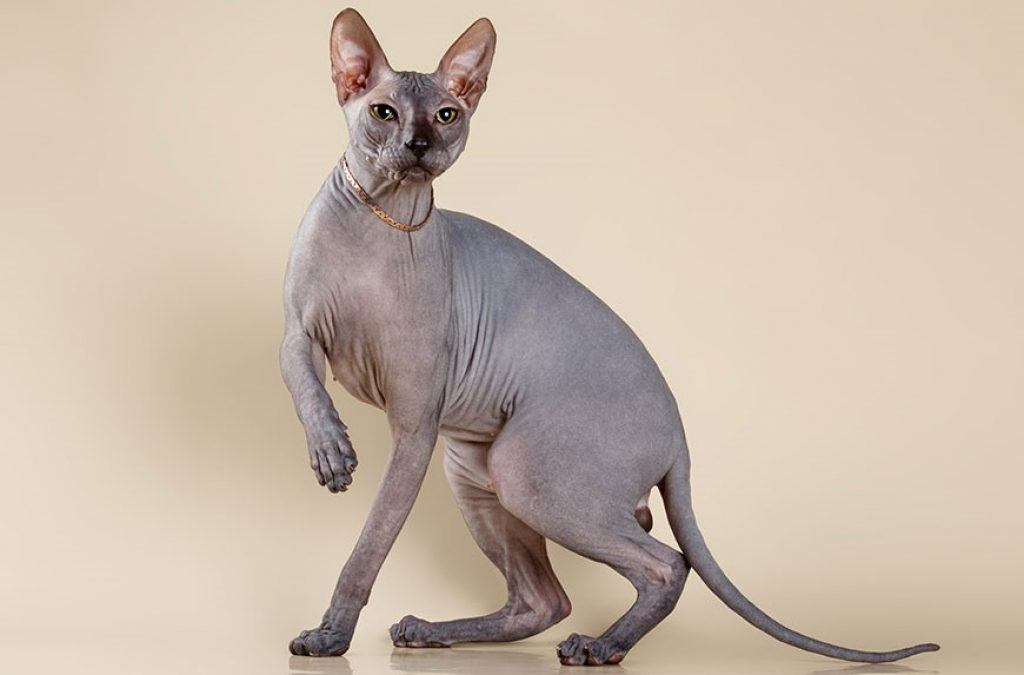
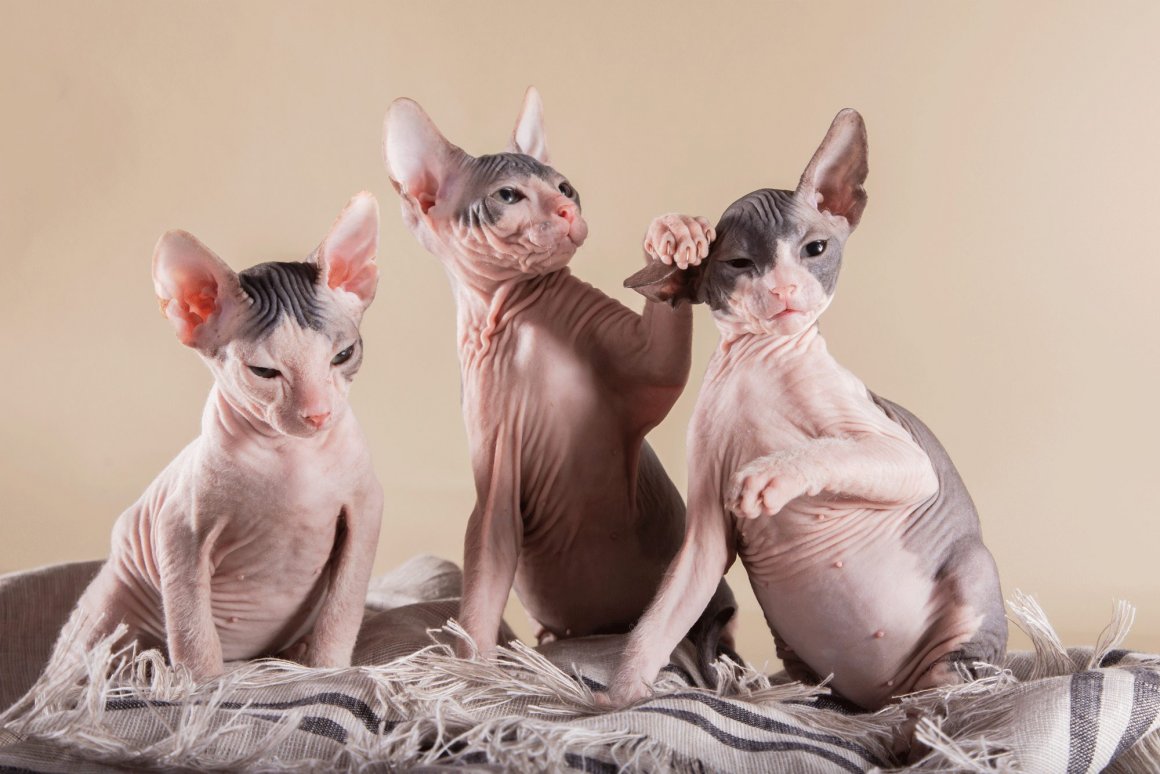
The Don Sphynx is a medium-sized cat, but its lack of fur and slender body create an impression of lightness and grace. Without hair, all aspects of its physique are visible, emphasizing the graceful lines and natural beauty. These cats are physically well-developed: their bodies are sturdy, muscular, and possess well-defined curves. The folds of skin particularly draw attention, as they are one of the breed’s key characteristics, giving Don Sphynxes their distinctive look. Folds can be found all over the body, especially on the neck, chest, abdomen, and legs, creating a “plushy” or “tapestry” appearance.
The head of the Don Sphynx is wedge-shaped, with pronounced cheekbones and a high forehead. The chin is well-defined, and the nose is straight with a slight curve. This combination gives the cat a refined expression, highlighting its exotic nature. The eyes of the Don Sphynx are almond-shaped, slightly angled, and can be of various colors, ranging from green and yellow to blue. This gaze makes the cat even more expressive and mysterious.
The ears of the Don Sphynx deserve special attention – they are large, set high, and slightly angled forward, which gives the cat a watchful expression and accentuates its unusual appearance. The absence of fur on the ears makes their contours sharper and adds even more elegance to the breed.
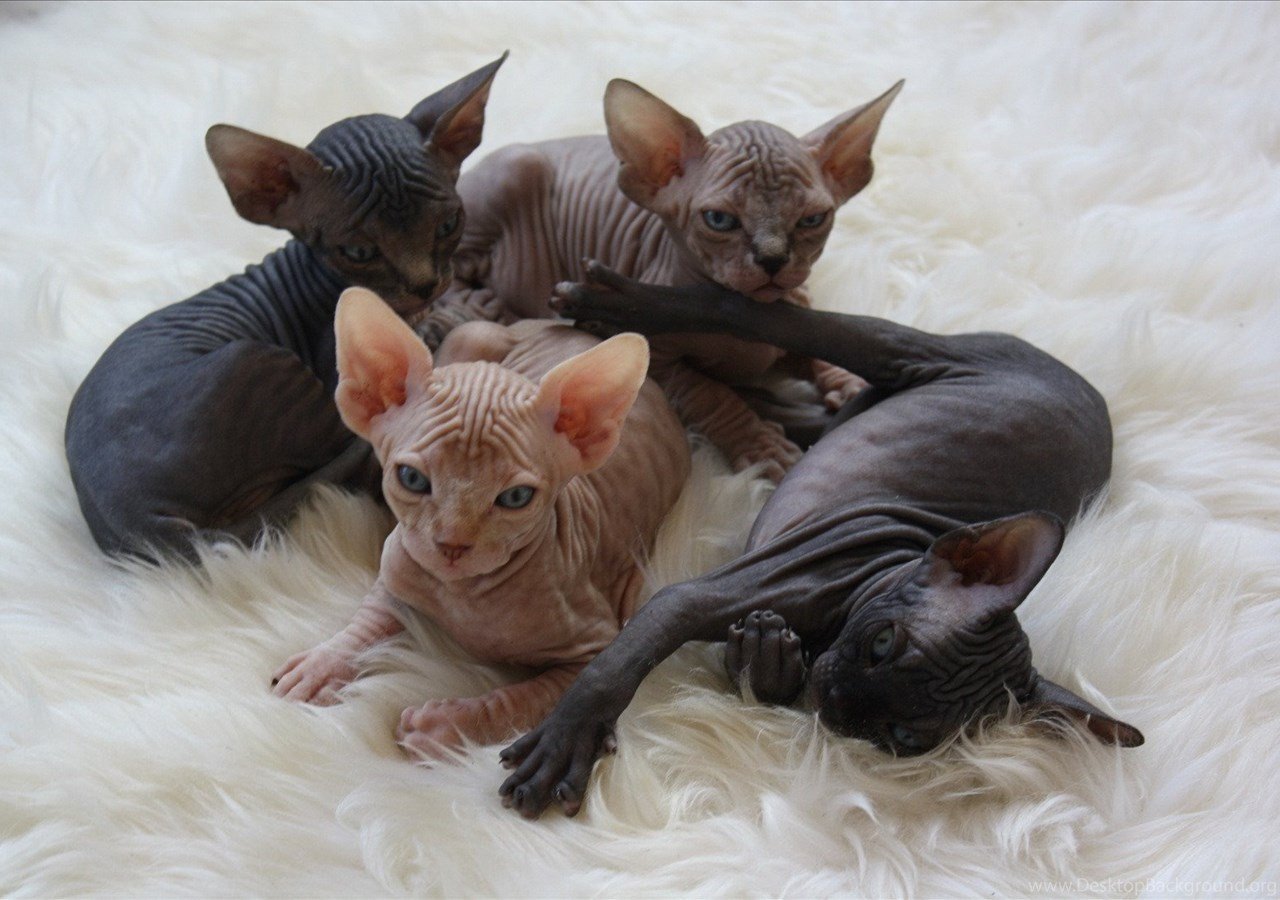
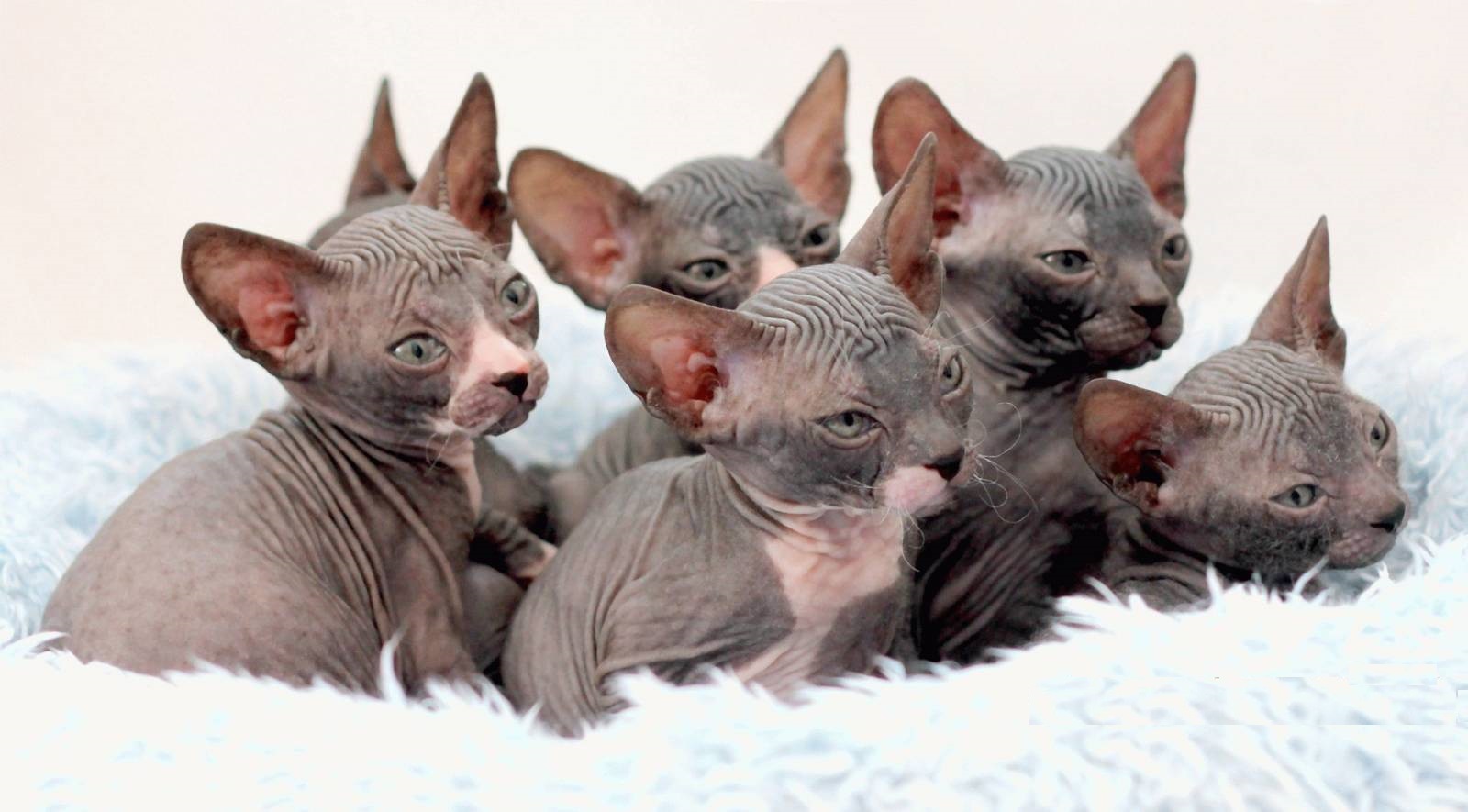
Among hairless breeds, Don Sphynxes stand out with their unique skin features. The skin of these cats is soft and velvety to the touch, often compared to suede or fine velvet. Despite lacking fur, their skin is quite warm, as the body emits more heat to maintain a normal temperature. Some Don Sphynxes may exhibit a slight fuzz on their bodies, especially in winter when the cat tries to conserve warmth. This fuzz may be more pronounced in kittens and fade as they mature.
The body of the Don Sphynx is proportional, with well-developed muscles and a strong chest. Their legs are slender and muscular, of medium length, with elongated toes. The paws are rounded, allowing the cat to move confidently and climb objects. The tail of the Don Sphynx is long and flexible, tapering at the end, and is often covered in small folds, adding to its exotic look.A unique feature of the Don Sphynx is the variety of colors. Since these cats lack fur, their “color” is the skin color, which can range from solid (black, white, red, blue) to spotted or marbled. The skin of a Don Sphynx may be covered in pigment spots or patterns that create interesting and even unique designs. Since all traits of the skin are visible, this truly makes Don Sphynxes an exclusive breed.The gene responsible for hairlessness in the Don Sphynx is dominant, distinguishing it from other hairless breeds like the Canadian Sphynx. This means that Don Sphynx kittens are often born hairless or with slight fuzz that disappears with age. Hairlessness makes these cats more sensitive to environmental conditions, so comfortable living conditions must be provided for them.The skin


Отличительные черты

Голова

Морда

Уши

Глаза

Зубы

Корпус

Конечности

Хвост

Шерсть

Окрас
Character of the Don Sphynx
The Don Sphynx is not just an exotic and rare breed of cat but also a remarkable companion in terms of character. These cats are very friendly, affectionate, and loyal, making them ideal for family environments and apartment living. The personality traits of Don Sphynx cats include sociability, intelligence, and a strong attachment to people. They astonish with their behavior and can become true friends to their owners.
1. Attachment to Owners and Sociability
Don Sphynx cats possess a high level of attachment to their owners and require constant contact with people. They prefer to be close by at all times, whether sitting on your lap, following you around the house, or even sleeping in the same bed. A Don Sphynx does not like to be left alone for long periods, and if they do not receive enough attention, they may feel lonely and anxious. This makes them wonderful companions for those seeking a cat that can form genuine emotional bonds.
These cats actively seek to participate in their owners’ lives and strive to be at the center of attention. They may follow you everywhere, join in your daily activities, “helping” with cleaning, working, or cooking. A Don Sphynx is a typical “shadow” of its owner, who loves constant interaction and attention.
2. Affection and Contact
One of the main traits of the Don Sphynx is its exceptional affection. These cats love being petted, hugged, and carried around. They enjoy physical contact and often look for opportunities to jump onto your lap or snuggle up beside you. Don Sphynx cats are “cuddle cats” that adore being the center of attention and are always ready for affection. Their skin, soft and velvety to the touch, makes petting especially enjoyable for both the owners and the cat.Due to their affectionate nature, Don Sphynx cats are excellent for families with children, elderly individuals, and even those who are getting a cat for the first time. They respond gladly to friendly treatment and reciprocate attention. However, it’s important to remember that they also need their personal space and time to rest.3. Playfulness and CuriosityDon Sphynx cats are active and playful. They love to explore their surroundings and engage in games with various toys. Play is an important part of their lives, as these cats maintain a childlike curiosity and activity throughout their lives. They will gladly play hide-and-seek, chase after a ball, or enjoy interactive toys that stimulate their hunt
A sphinx musician that "sings" along with its owner.
The Don Sphynx cat named Mozart became an internet sensation thanks to his "musical" abilities. When his owner played the piano, Mozart would join in and start "singing," producing purring and melodic sounds. This behavior captured the hearts of many viewers, and videos of Mozart's performances went viral, garnering millions of views.Care and Maintenance of the Don Sphynx
The Don Sphynx is a unique breed of cat that requires special care and attention. The lack of fur, sensitivity to temperature changes, and a tendency to have skin issues make caring for this breed distinct. For a Don Sphynx to be healthy and happy, the owner must consider numerous factors related to skin care, nutrition, hygiene, and creating comfortable living conditions. Below we will discuss the main aspects of caring for a Don Sphynx.
1. Skin Care
The absence of fur in the Don Sphynx means that its skin lacks natural protection from dirt and external factors, requiring particular attention.
Regular Bathing. The skin of the Don Sphynx produces more sebum than that of furred cats, so they need regular bathing. Typically, bathing the cat every two to three weeks is sufficient, using special shampoos for hairless breeds. This helps prevent excessive accumulation of oil and dirt on the skin, which can lead to irritations and inflammations.
Cleaning Skin Folds. The Don Sphynx has distinctive skin folds, especially on the neck, belly, and legs. These areas require extra care, as dirt and sebum can accumulate in the folds. Regularly wipe the folds with damp wipes or cotton pads soaked in warm water to avoid skin infections.
Sun Protection. The skin of the Don Sphynx is prone to sunburn, so avoid prolonged exposure to direct sunlight. In the summer, consider using pet sunscreen with a high SPF.2. Maintaining Comfortable TemperatureThe Don Sphynx’s lack of fur makes it sensitive to temperature fluctuations. It’s essential to provide comfortable conditions in the home.Keeping Warm. During cold weather, ensure the cat has a warm place to sleep, such as soft blankets or heated pet beds. You can also buy clothes for cats to help the Sphynx retain heat. It’s especially important to monitor the temperature in your home if you live in a cold climate.Avoiding Drafts. The Don Sphynx is sensitive to drafts, which can lead to colds. Make sure its resting area is away from windows, doors, and air conditioners.3. Ear and Eye CareThe Don Sphynx lacks protective hair in its ears, so they require regular care.Cleaning Ears. As the ears of the Don Sphynx are more exposed than those of furred cats, dirt and earwax can accumulate. It’s recommended to clean the ears once a week with cotton swabs and a special ear care lotion to help prevent infections.Eye Care. Some Don Sphynx cats may
Don Sphynx - "living barometer"
A cat named Lily became famous among meteorologists for her remarkable ability to predict changes in the weather. Whenever rain or a cold snap was approaching, Lily would start acting restlessly, seeking a warm spot and "hiding" under blankets. Her predictions turned out to be accurate 9 times out of 10, making her a true "cat weather forecaster" in her town.Training and Education of the Don Sphynx
The Don Sphynx is one of the smartest and most trainable cat breeds, making the training and education process not only possible but also engaging. These cats possess a high level of intelligence, curiosity, and a desire to interact with humans, allowing them to quickly learn new commands and even perform tricks. Unlike most cats that prefer independence, Don Sphynx cats are very people-oriented and enjoy participating in shared activities. This section will explore the unique aspects of training the Don Sphynx, useful teaching methods, and approaches that will help unlock the potential of this breed.
1. Features of Training the Don Sphynx
Don Sphynx cats are known for their active and sociable nature, making them more inclined to learn than many other cats. Their highly developed intelligence allows them to easily adapt to new situations and remember commands. However, it’s important to remember that despite their trainability, Don Sphynx cats are still cats that require a gentle and patient approach.
Positive reinforcement. The Don Sphynx responds best to training when based on positive reinforcement, such as treats, praise, or playtime. Using negative methods or punishment can cause stress and mistrust in the cat, so it’s advisable to avoid these.
Short and frequent sessions. Training the Don Sphynx should be fun and playful. It’s better to conduct several short sessions of 5-10 minutes each day rather than one long one, to prevent the cat from becoming tired and losing interest.
Encouragement for successes. Always praise and reward the cat for correctly executed commands. This helps strengthen the association between completing a task and receiving a reward, which accelerates learning.2. Teaching Basic CommandsTeaching the Don Sphynx basic commands can be an enjoyable activity for both the cat and its owner. Some commands to try:”Come here.” Start the training with the “come here” command so the cat gets used to coming when called. Use a treat, show it to the cat, and call its name while saying “come here.” When it approaches, give it the treat and praise. Repeat the exercise daily to reinforce the command.”Sit.” Training for this command is also possible, even though it is more commonly used for dogs. Bring a treat to the cat’s nose, then raise it above its head so the cat instinctively sits. At that moment, say “sit” and give the treat.”Give paw.” Take the cat’s paw and say “give paw,” then give it a treat. Over time, the cat will learn to offer its paw on its own.3. Interactive Games and Intellectual StimulationDon Sphynx cats love games and entertainment, so incorporating interactive toys and puzzles into the
Don Sphinx in space
A cat named Aelita became the first representative of her breed to participate in a simulated space mission on Earth. As part of a scientific experiment conducted in a closed environment, Aelita was chosen for her hairlessness and ability to adapt to changing conditions. She easily endured the experiment, confirming her unique adaptive abilities.How to Choose a Don Sphynx Kitten
Choosing a Don Sphynx kitten is a responsible step that requires attention to the breed’s characteristics, the kitten’s health status, and its proper socialization. Don Sphynxes are a rare breed with unique needs, and it is important for the future owner to know how to select a healthy kitten that meets breed standards. In this section, we will examine the main criteria and tips for choosing a Don Sphynx kitten. Zoonika offers a convenient website to guarantee health and breed purity.
1. Finding a Responsible Breeder
The first and perhaps the most important step in choosing a Don Sphynx kitten is to find a reliable and responsible breeder. Since the Don Sphynx is a breed with special health and care requirements, selecting a breeder who monitors the quality of breeding and the health of their cats is crucial.
Reputation and Reviews: Learn about the breeder’s reputation by reading reviews and recommendations from other buyers. You can find information on specialized forums and social media dedicated to the breed.
Documents and Breeding Registration: Ensure that the breeder is registered with one of the official feline organizations and provides all necessary documents: the kitten’s pedigree, veterinary passport with vaccination and parasite treatment records.
Visiting the Breeder: If possible, visit the breeder in person to assess the living conditions of the kittens and adult cats. Kittens should be kept clean and comfortable, and be active and playful. Make sure the breeder is attentive to the health of their pets and provides appropriate care.2. Kitten Age for Moving to a New HomeThe optimal age for acquiring a Don Sphynx kitten is between 12 to 16 weeks. At this age, kittens are sufficiently independent, have received their first vaccination, are socialized, and are ready to move to a new home.Early separation from the mother (before 12 weeks) can lead to behavioral and health issues, as the kitten may not have acquired all necessary skills and immunity from the mother.Kittens older than 16 weeks may be better prepared for independent living, which is especially beneficial if you have other pets or children.3. Assessing the Kitten’s HealthWhen choosing a Don Sphynx kitten, it is important to pay special attention to its health, as some issues may not be immediately visible.Skin Condition: Check the kitten’s skin for inflammation, rashes, or wounds. A healthy Don Sphynx’s skin should be soft, velvety to the t
Health and Diseases of the Don Sphynx
The Don Sphynx is a breed that generally has good health; however, like other cat breeds, they have some specific issues. These cats are characterized by the absence of fur, which brings about special requirements for skin care and protection. Additionally, the breed’s characteristics may predispose them to certain diseases that must be considered when caring for a Don Sphynx. In this section, we will discuss the most common health issues, prevention methods, and care recommendations for the Don Sphynx.
1. Skin Problems
The lack of fur makes the skin of the Don Sphynx more vulnerable to external factors, such as pollution, sunburns, and irritations. Therefore, skin health requires special attention.
Seborrhea and Oily Skin. Don Sphynxes produce more sebum than coated cats, which can lead to seborrhea (oily skin). Regular baths (every two to three weeks) using special shampoos can help control sebum production and keep the skin in good condition.
Acne. Due to increased oiliness, blackheads and pimples can form on the skin of Sphynxes, particularly around the chin and neck. To prevent acne, it is recommended to regularly clean the problem areas with wet wipes or special products for cats.
Sunburns. The lack of fur makes the skin of the Don Sphynx susceptible to sunburn. It is important to avoid prolonged exposure to direct sunlight. During warm weather, animal sunscreen can be used to protect the skin.2. Respiratory DiseasesThe Don Sphynx may be prone to respiratory diseases, especially if there are drafts or sharp temperature changes in the indoor environment.Frequent Colds. Due to sensitivity to cold, Sphynxes can catch colds, so it is important to provide them with comfortable conditions and avoid drafts. If the cat starts sneezing, shows nasal congestion, or has discharge from the eyes, it is necessary to consult a veterinarian for diagnosis and treatment.Bronchitis and Pneumonia. In severe cases, a cold can develop into bronchitis or pneumonia, so it is crucial to treat illnesses at early stages. Symptoms include shortness of breath, wheezing, and decreased activity.3. Oral DiseasesDental and gum problems can occur in Don Sphynxes, making regular oral care an important part of prevention.Gingivitis and Stomatitis. Inflammation of the gums and oral mucosa is often seen in Sphynxes. To prevent this, it is recommended t
Содержание
-
1. Описание породы
-
2. Внешний вид
- 2.1 Голова
- 2.2 Морда
- 2.3 Уши
- 2.4 Глаза
- 2.5 Зубы
- 2.6 Корпус
- 2.7 Конечности
- 2.8 Хвост
- 2.9 Шерсть
- 2.10 Окрас
-
3. Характер
-
4. Содержание и уход
-
5. Дрессировка и обучение
-
6. Как выбрать котенка
-
7. Здоровье и болезни






Comments
Only registered users can leave reviews.
Enter